Quick answer: A standard blood draw (venipuncture) takes about 3 to 7 minutes from sleeve up to bandage on. The phlebotomist ties a tourniquet on your upper arm, cleans the inner elbow, and inserts a small needle to fill one or more vials. For blood draw what to expect, plan on a quick pinch and mild pressure for a few seconds, then nothing while the vials fill. Most routine panels use 1 to 4 tubes, roughly 2 to 6 milliliters each, so 10 to 30 mL total. That is a tiny fraction of the 4,500 to 5,700 mL of blood in an average adult body, and you will not feel any different afterward.
The dread is almost always worse than the event. The sharpest sensation, the needle going in, lasts one or two seconds, and everything after that is sitting still while a vacuum tube does the work. Below is the process broken down second by second, plus the numbers that calm people down: how many vials, how much blood, what it costs, and how to make a draw faster and easier on yourself.
Blood draw what to expect, step by step
Here is exactly how a venipuncture goes once you sit down, so there are no surprises. Knowing the sequence is the best way to stay calm, because the part people dread is over in under ten seconds.
- Check-in. The phlebotomist confirms your name and date of birth and matches the lab order. Say now if you have a fainting history or a “better” arm.
- Tourniquet. A stretchy band goes around your upper arm to make the veins in the crook of your elbow stand up. It feels tight for a minute, not painful.
- Site selection. They palpate (press with a finger) to find a vein. The median cubital vein in the bend of the elbow is the usual target because it is large and well anchored.
- Clean. An alcohol wipe, then a few seconds to dry. Wet alcohol stings, so good phlebotomists wait.
- The stick. A quick pinch as the needle goes in. Then a vacuum tube (Vacutainer) clicks on and fills on its own. You feel almost nothing during the fill.
- Tube changes. If you need several tests, they swap tubes on the same needle without re-sticking you.
- Out and pressure. Needle out, gauze pressed on for 30 to 60 seconds, then a bandage. Keep light pressure to avoid a bruise.
Insider note most people never hear: the order of the tubes is not random. Labs follow a fixed “order of draw” by tube color so additives from one tube do not contaminate the next. That is why a phlebotomist may grab a light blue tube before a red one even if the blue test seems minor.
What the second-by-second timeline actually looks like
People imagine the whole visit is needle time. It is not. Of a typical five-minute appointment, the needle is in your arm for maybe 20 to 90 seconds, and the uncomfortable part is a single second. Here is where the time goes.
| Stage | Roughly how long | What you feel |
|---|---|---|
| Check-in and label printing | 30 to 120 sec | Nothing |
| Tourniquet on, finding a vein | 20 to 60 sec | Arm feels tight |
| Alcohol wipe and drying | 15 to 30 sec | Cool, then nothing |
| Needle insertion | 1 to 2 sec | Quick pinch (the worst part) |
| Tubes filling | 10 to 60 sec | Almost nothing |
| Needle out, pressure, bandage | 60 sec | Mild pressure |
If you are watching the clock, count to two during the insertion and you are past the only part that stings. The tourniquet usually comes off right before the needle does, which relieves the tight feeling first.
What is actually in those colored tubes
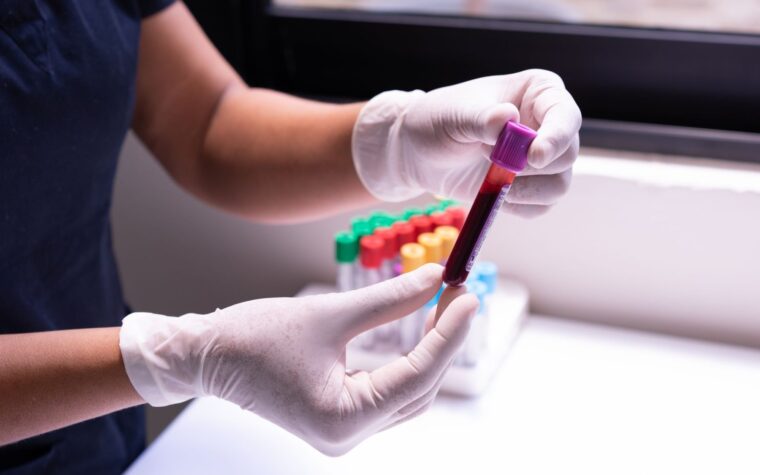
The colored stoppers are not decoration. Each signals a different additive that prepares blood for a specific kind of test, which is why one panel can need several tubes from a single draw. A lavender top holds EDTA, an anticoagulant used for a complete blood count. A gold or red top has a clot activator for chemistry tests like a metabolic or lipid panel. A light blue top has sodium citrate for clotting studies and must be filled to an exact line, which is why a phlebotomist sometimes redraws if it underfills. It explains why “just one blood test” can still mean three tubes.
Does a blood draw hurt?
The simplest way to actually get this done
Superpower is a full-body lab membership that runs 100+ biomarkers, has each result reviewed by a doctor, and tracks your numbers year over year (about $199/year). It is what we point readers to when they would rather get one clean, complete draw than chase single tests one at a time. Here is superpower reviewed in full.
The needle stick itself is a brief sharp pinch, usually a 2 or 3 out of 10, and it is over in a second or two. The fill that follows is painless because the needle is sitting still inside the vein. Phlebotomy needles are thin (commonly 21 or 23 gauge), much smaller than the IV catheters used in a hospital, which is why a blood draw stings far less than people expect.
Pain goes up when the vein is hard to find and the needle has to be repositioned, or when the site is in a sensitive spot like the back of the hand. If a draw genuinely hurts, shoots pain down your arm, or the phlebotomist is digging, it is completely fair to say “please stop and try the other arm.” A good tech would rather restart than fish.
One distinction worth knowing: a sharp electric zing that shoots down toward your hand is different from ordinary needle pain. That can mean the needle brushed a nerve, and it is the one sensation to report immediately so the phlebotomist withdraws and repositions. A dull ache or pressure during the fill is normal and harmless.
How to make it hurt even less
A few things genuinely lower the sting. Over-the-counter numbing cream (lidocaine) applied 30 to 60 minutes before a draw blunts the pinch, useful for kids and the needle-averse. A cold pack for a minute beforehand or simply distracting yourself with your phone also works, because pain you are not anticipating registers lower. Breathing out slowly as the needle goes in keeps your arm relaxed, and a relaxed vein is a gentler stick.
If you faint or feel woozy
Vasovagal reactions (feeling lightheaded or sweaty) are common and not dangerous. They happen when the sight or thought of the needle triggers a sudden drop in heart rate and blood pressure, not because of blood loss, which is why even a tiny single-tube draw can make someone faint. Tell the phlebotomist before they start so you can lie down or recline. Eating a normal meal beforehand, when your test does not require fasting, and looking away from the needle both help a lot.
If you have fainted at a draw before, two techniques have real evidence behind them. Applied tension means tensing the muscles of your arms, legs, and torso for 10 to 15 seconds, releasing, and repeating, which keeps blood pressure up and heads off the faint. Lying down for the whole draw removes the distance blood has to travel to your head. Phlebotomists deal with woozy patients every day, so flagging it is never an imposition.
How much blood do they take, and how many vials?
For routine blood work they take 1 to 4 vials, about 10 to 30 mL total, which is one to two tablespoons. A single common panel like a complete blood count or a metabolic panel is often just one tube. More tests mean more tubes, but each one is small.
| Test ordered | Typical tubes | Approx. volume |
|---|---|---|
| Single test (e.g. A1C, TSH) | 1 | 2 to 4 mL |
| Complete blood count (CBC) | 1 | 3 to 4 mL |
| Comprehensive metabolic + lipid panel | 1 to 2 | 5 to 10 mL |
| Broad annual wellness panel | 3 to 6 | 15 to 35 mL |
| Hospital workup or many specialty tests | 5 to 10+ | 30 to 50+ mL |
People worry that several vials mean a lot of blood, but the math is reassuring. The average adult body holds about 4,500 to 5,700 mL of blood (roughly 1.2 to 1.5 gallons), scaled to body size. Even a generous 30 mL draw is well under one percent of your total. By comparison, a blood donation takes about 470 mL, more than fifteen times a typical lab draw, and donors walk out the same day. Your body replaces the plasma within a day or two and the red cells over a few weeks.
| Volume removed | Amount | Share of total blood | How you feel |
|---|---|---|---|
| Single tube | ~4 mL | Under 0.1% | Nothing |
| Routine panel | 10 to 30 mL | Under 0.7% | Nothing |
| Large hospital workup | 30 to 50 mL | About 1% | Nothing for most |
| Whole blood donation | ~470 mL | About 8 to 10% | May feel briefly tired |
The one real exception is repeated draws in a short window, which is why hospitals use smaller pediatric tubes for inpatients who get stuck daily. For a once-a-year wellness draw, blood volume is a non-issue, and that is the core of blood draw what to expect: a small, fast, low-stakes event.
One practical takeaway: if you are getting blood drawn anyway and your clinician is open to it, it is often smarter to capture a full baseline at once rather than book a second stick next month for the test you forgot. Here is how a full-body panel compares, and what a complete blood panel typically includes so you can match the order to the questions you actually want answered. If you are not sure which markers earn their place, see the biomarkers worth tracking.
How much does a blood test cost?
How much a blood test costs depends almost entirely on where you go and who is billing, not on the needle in your arm. With insurance, a preventive panel can be $0, but the same blood can be billed as diagnostic and land on your deductible if a diagnosis code is attached. Cash and direct-to-consumer prices are often cheaper than a surprise insurance bill.
- In-network, preventive, with insurance: often $0 to a small copay, if it is coded as screening.
- Single cash test (Quest, Labcorp, online labs): roughly $29 to $150 depending on the test.
- Cash wellness panel (10 to 40 markers): about $79 to $300.
- Hospital outpatient lab, billed to insurance: frequently the most expensive route, sometimes hundreds even after coverage.
The insider detail worth knowing: the exact same CBC can cost wildly different amounts at a hospital lab versus an independent draw site versus a direct-to-consumer order. A CBC ordered cash through a discount lab can run about $10 to $30, while the identical test billed through a hospital outpatient lab can land at $100 or more after coding and facility fees. The blood is the same. The bill is a function of the building it was drawn in. If you are paying cash, ask for the price up front and use an HSA or FSA card, since lab tests are eligible. For a full breakdown of price by setting, see Where to Get Blood Work Done in 2026. And if you only need a quick vital checked, you do not always need a full draw, here is where to get your blood pressure checked for free.
Why a “free” preventive test sometimes generates a bill
This is the cost trap that catches people. A truly preventive screening panel, ordered with a screening code while you have no symptoms, is usually covered at $0. But the moment a clinician adds a symptom-based diagnosis code, say you mentioned feeling tired so they code fatigue, the same draw becomes diagnostic and can apply to your deductible. The lab work did not change. The code did. If a preventive visit is the goal, confirm the order is coded as screening so a routine draw does not become a surprise bill.
How to get a blood test done
There are three common paths, and only one of them requires a doctor visit first. Pick by how much hand-holding and how much speed you want.
- Through your doctor. Your clinician sends an electronic order to a lab, you book a draw, results post to your portal. Best when you want a provider to interpret findings and bill insurance.
- Walk-in or appointment at a patient service center. Quest and Labcorp both let you schedule online, and some retail clinics like CVS MinuteClinic draw blood. Faster than a doctor visit.
- Direct-to-consumer online order. You buy a test online, get an order, draw blood at a partner lab, and read results yourself. No appointment with a physician needed in most states.
| Path | Need a doctor first? | Speed | Best for |
|---|---|---|---|
| Through your doctor | Yes | Days to weeks | Insurance billing, provider interpretation |
| Patient service center walk-in | Order needed, not a visit | Same week | Speed with a standing order |
| Direct-to-consumer online | No (online order included) | Days | Self-directed, no appointment |
Whichever route you take, the draw itself is identical. What changes is who orders it, who pays, and who explains the numbers. Speaking of which, it helps to know in advance what a blood test shows so you order the right panel and are not surprised by what bloodwork can and cannot detect.
Simple tips for an easy, fast draw
- Hydrate. Drink water the night before and that morning (unless told to fast from water, which is rare). Plump veins are easier to hit, fewer sticks.
- Stay warm. Warm arms dilate veins. If it is cold, keep your sleeves down until the last minute or ask for a warm pack.
- Know your fasting status. Lipids and fasting glucose usually need 9 to 12 hours fasting; A1C and most others do not. Confirm so you are not turned away.
- Flag your easy vein. If you know which arm works best, say so before the tourniquet goes on.
- Relax the arm and look away. A tense arm and a fixed stare make fainting and pain more likely.
- Wear short or loose sleeves. Sleeves you can push above the elbow without a tight cuff cutting off the arm save time and prevent a bruise-prone constricted draw.
A worked example: a typical annual wellness draw
Say you book a yearly check ordering a CBC, a comprehensive metabolic panel, a lipid panel, an A1C, and a thyroid test. You fasted 10 hours overnight for the lipids and glucose, drank plenty of water, and wore a t-shirt. The phlebotomist draws three tubes on a single needle stick: a lavender top for the CBC and gold tops for the chemistry. Total blood is around 12 to 18 mL, the needle is in for under a minute, and you are bandaged and out in about five minutes, with results posting to your portal in a day or two. That is the standard experience, and it is genuinely that uneventful.
Common mistakes that make a draw harder
Most rough draws trace back to a handful of avoidable things, and almost all of them are within your control. These are the ones phlebotomists see again and again.
- Showing up dehydrated. Skipping water, especially after an overnight fast, shrinks veins and is the single most common reason a phlebotomist has to dig or restick. Water is the cheapest fix there is.
- Fasting when you did not need to, or eating when you should have fasted. Both cause problems. An unnecessary fast can leave you lightheaded; eating before a lipid or fasting glucose test can invalidate the result and force a return trip.
- Pumping your fist hard or repeatedly. A single gentle squeeze is fine, but vigorous pumping can skew potassium and a few other values. Let the phlebotomist guide your hand.
- Lifting the arm or bending the elbow right after. This is the top cause of bruising. Keep the arm straight and apply steady pressure for a full minute, longer if you take a blood thinner.
- Not mentioning blood thinners or a fainting history. Tell them up front. It changes how long they hold pressure and whether you sit or lie down.
- Hiding that you are anxious. Phlebotomists are far better with a heads-up. A warned tech recliners you, slows down, and talks you through it.
After-care: bruising, soreness, and what is normal
After-care is simple, and most issues come from skipping the boring part: pressure. Keep firm pressure on the site for at least 60 seconds, longer if you are on aspirin, warfarin, or another blood thinner, and keep the arm straight rather than bending it onto the gauze. That alone prevents most bruises.
A small bruise (an ecchymosis) is common and harmless, fading from purple to yellow-green over a week. A pea-sized firm lump under it can be a small collection of blood (a hematoma) and also resolves on its own. A cold pack the first day reduces swelling; a warm compress after that helps the bruise clear. Avoid heavy lifting with that arm for a few hours, but you can drive and work normally right away.
What is not routine and deserves a call: spreading redness, warmth, and increasing pain over the following days (a possible infection), numbness or tingling that persists in the hand (a possible nerve irritation), or a bruise that keeps growing rather than fading. These are uncommon, but they are the signs worth acting on rather than waiting out.
Edge cases: hard sticks, kids, needle phobia, and more
The standard draw covers most people, but a few situations call for a different approach. If any of these is you, knowing the playbook in advance makes the visit smoother.
Hard sticks and difficult veins
Some people have small, deep, rolling, or scarred veins that make a textbook draw tricky. If you are a known hard stick, lead with it: ask for an experienced phlebotomist, request a smaller butterfly needle (a winged set that is gentler on delicate veins), and hydrate aggressively the day before. Heat helps, so a warm pack for a few minutes can surface a hiding vein. If two sticks fail, it is reasonable to ask to switch to the hand or other arm, or to come back better hydrated rather than enduring repeated attempts. Many labs also have ultrasound-guided draw capability for difficult access.
Kids and infants
For children, the approach shifts toward comfort and speed. Numbing cream applied 30 to 60 minutes ahead dulls the pinch. A butterfly needle is standard for small veins. A parent holding the child, sitting them on a lap, and offering distraction (a screen, a song, a sweet drink for older kids) all reduce distress, and pediatric tubes mean very little blood is taken. For infants, some tests use a heel stick instead of a vein. Tell the staff the child’s history; a calm setup is half the battle.
Needle phobia (trypanophobia)
True needle phobia is real and can trigger a faint, so it deserves a plan rather than willpower. Lie down for the entire draw, use applied tension to keep blood pressure up, apply numbing cream beforehand, and look away while breathing out slowly during insertion. Tell the staff in plain terms: “I have needle phobia and I faint.” That sentence gets you reclined and watched, which is exactly what you want.
Older adults, blood thinners, and chemotherapy patients
Thin, fragile skin and veins bruise more easily, so pressure should be held longer and the bandage left on a bit more. People on blood thinners should always flag it; the phlebotomist holds pressure for several minutes rather than one. Chemotherapy patients and anyone with a port or a history of mastectomy lymph node removal have arm-use rules (often draw from the non-affected side), so mention any of that before the tourniquet.
Which path should you actually choose?
Once you know blood draw what to expect, the only real decision left is which route to take, since the three suit different people. If you have insurance and want a clinician to interpret findings and bill your plan, go through your doctor, especially for anything that might be diagnostic. If you already know what you want tested and value speed, a patient service center at Quest or Labcorp with a standing order gets it done fast. If you want to self-direct, skip an appointment, and pay cash, a direct-to-consumer online order is the cleanest path, and it is often cheaper than you expect.
One more decision worth making before you book: how many markers to run. If you are getting stuck anyway, a single broad baseline draw usually beats trickling out one test at a time, both for cost and for the simple fact that one needle covers many tubes. A reader weighing a single thyroid test against a full panel is often better served capturing the full picture once. To decide what belongs on that panel, it helps to read the Superpower blood test review alongside the list of biomarkers worth tracking, then match the order to your real questions.
If your results come back abnormal or you are unsure what a number means, talk to a clinician rather than self-diagnosing from a reference range online.
FAQ
How much is a blood test?
A single cash test usually runs about $29 to $150, while a cash wellness panel runs roughly $79 to $300. With in-network insurance a preventive panel can be $0, though hospital outpatient labs are often the most expensive option even with coverage.
How much blood do they take for blood work?
Routine blood work takes about 10 to 30 mL total across 1 to 4 small tubes, roughly one to two tablespoons. Larger workups can fill 5 to 10 or more tubes, but that is still under one percent of your total blood volume.
How many mL of blood are in the body?
An average adult holds about 4,500 to 5,700 mL of blood, near 1.2 to 1.5 gallons, scaled to body size and weight. A typical lab draw of 30 mL is a tiny share of that, which is why you feel completely normal afterward.
How much does it cost for a blood test without insurance?
Paying cash, expect roughly $29 to $150 for a single common test and $79 to $300 for a multi-marker wellness panel. Independent labs and direct-to-consumer orders are usually cheaper than a hospital lab, and you can pay with an HSA or FSA card.
How long do blood draw results take?
Common tests like a CBC or metabolic panel often post within 1 to 2 business days, sometimes same day. Specialty or send-out tests can take a week or more, so ask the lab when you check in.
Why do they take so many vials for one blood test?
Different tests need different tube additives, and each additive lives in its own colored tube, so a single panel can need several vials drawn on one needle stick. A complete blood count needs an anticoagulant tube while chemistry tests need a clot-activator tube, for example. It is still one stick and a small total volume.
Does it hurt more to give multiple tubes?
No. The pain is the needle going in, which happens once. After that the phlebotomist swaps tubes on the same needle, so filling three vials feels the same as filling one. You will not feel the tube changes at all.
Can I eat before a blood draw?
It depends on the test. A1C, a CBC, thyroid tests, and most others do not require fasting, so eat normally. A lipid panel or fasting glucose usually needs 9 to 12 hours without food, though water is fine and encouraged. Confirm with the lab so you are not turned away or made to return.
What should I do if I always faint during blood draws?
Tell the phlebotomist before they start and ask to lie down for the entire draw. Use applied tension (tense and release your arm, leg, and core muscles in cycles), eat beforehand if the test allows it, and look away from the needle. Fainting is a reflex, not blood loss, and these steps prevent most episodes.
How long should I keep the bandage on after a blood draw?
Keep firm pressure for at least 60 seconds at the site and leave the bandage on for a few hours. If you take a blood thinner, hold pressure for several minutes and leave the bandage longer. Keep the arm straight rather than bending it, which is the main way to avoid a bruise.