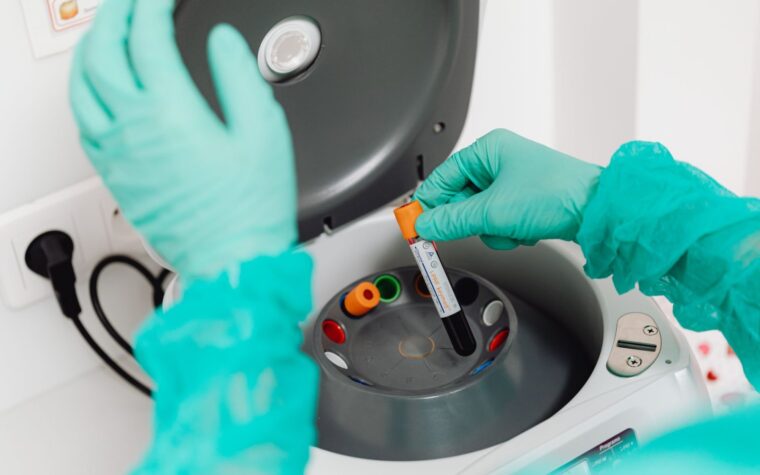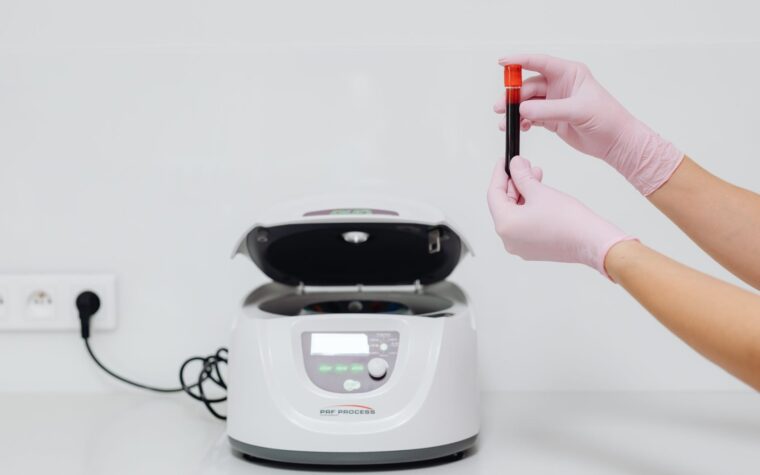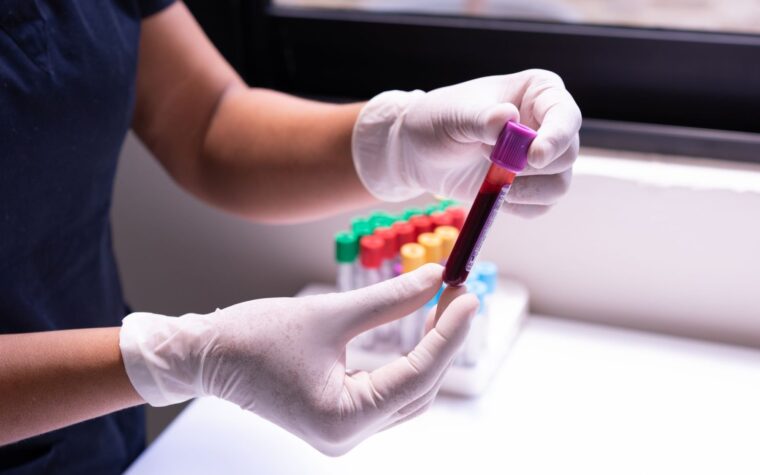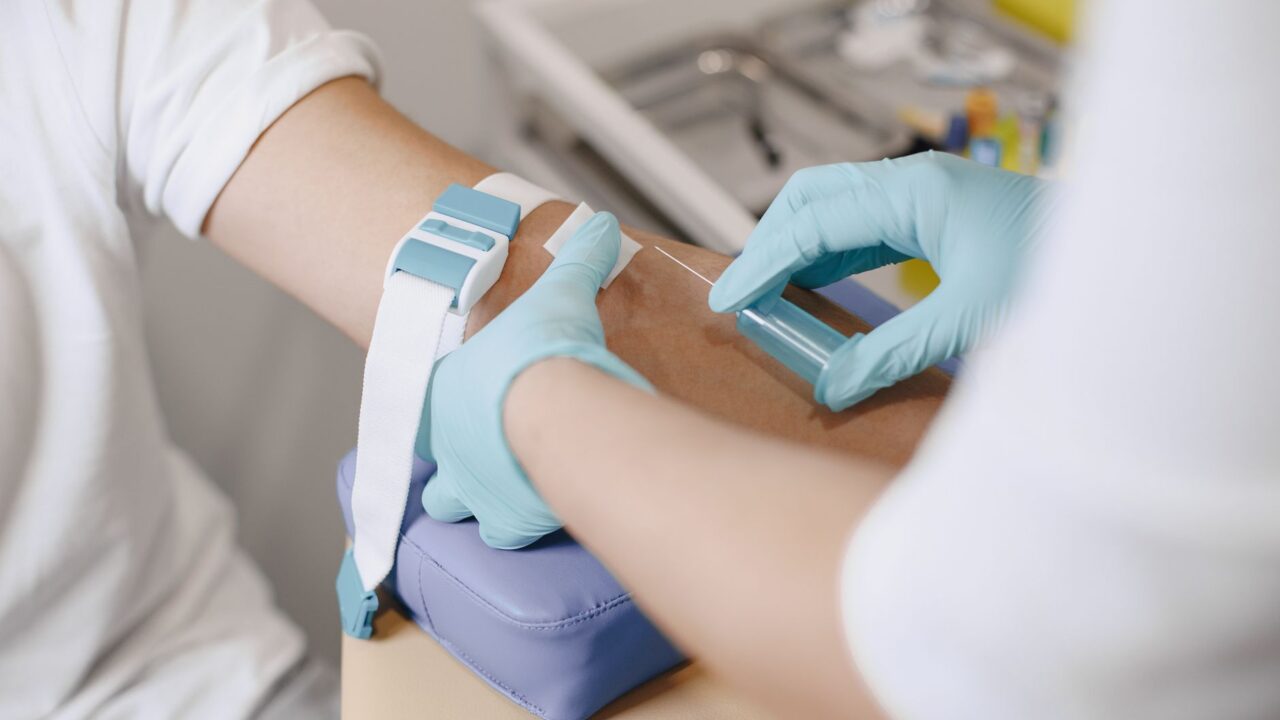
Quick answer: What does a blood test show depends entirely on which panel you order. Standard bloodwork measures the count and health of your blood cells, your blood sugar, cholesterol, kidney and liver function, electrolytes, thyroid hormones, and markers of inflammation or vitamin status. It can flag anemia, infection, diabetes, kidney or liver trouble, and many chronic risks years before symptoms appear. It does not, on its own, diagnose most cancers, see structural problems like a torn ligament or a blocked artery, or detect a virus the test was never designed to look for.
Here is the part most people miss: a blood test only reports on the markers you (or your doctor) chose to run. A routine physical might include a basic metabolic panel and a CBC, while a screen you booked for fatigue might add thyroid and iron. So before asking what a blood test reveals in general, it pays to know exactly which boxes were checked on the order. This guide walks through what each standard panel measures, what your blood can and cannot detect, what it tells you about specific organs, and how to read the report you get back.
What a blood test shows depends entirely on which panel you order, so why not order the broadest one available? One at-home Superpower draw checks 100+ biomarkers, physician-reviewed.
What does a blood test show on a standard panel?
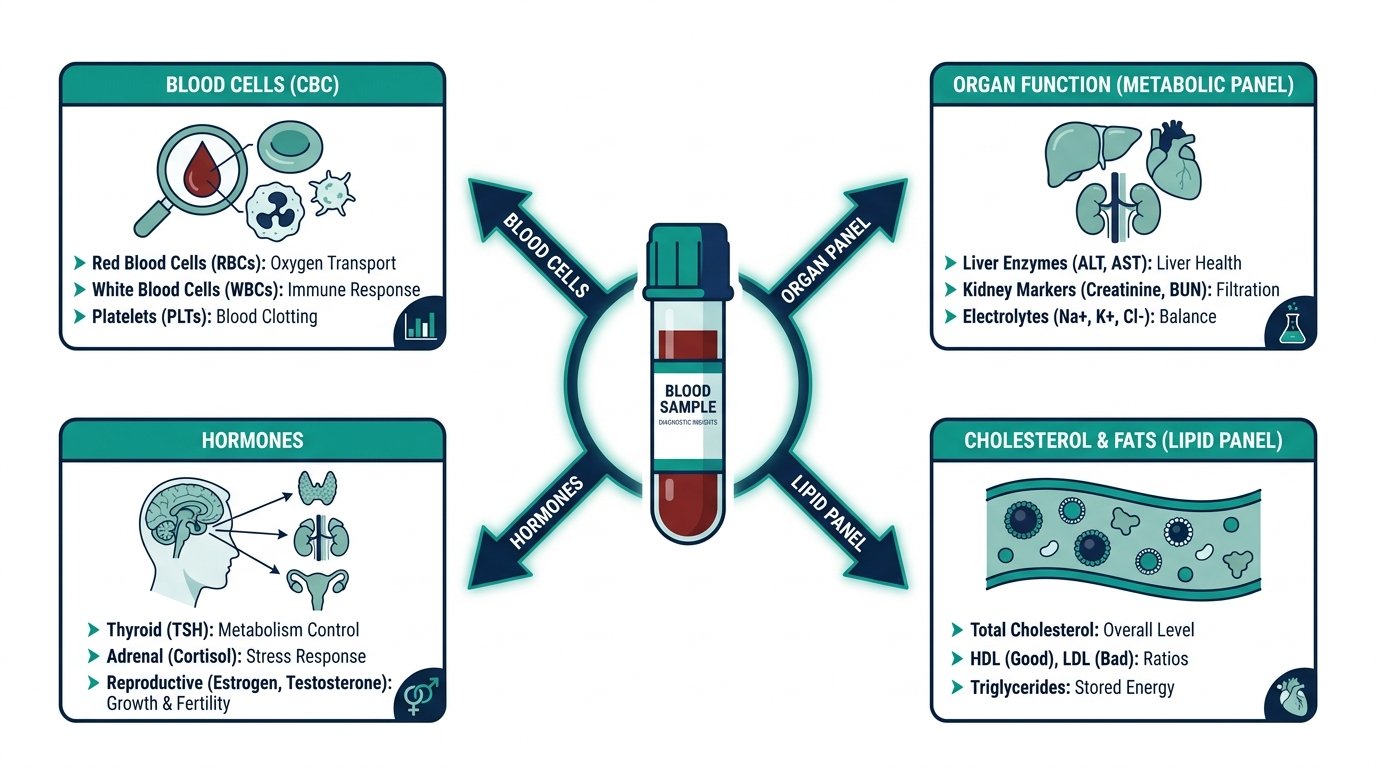
A standard blood test usually shows your blood cell counts, your basic chemistry, and your fasting glucose and lipids. Most adults who walk into a Quest or Labcorp for routine bloodwork get some combination of three workhorse panels, often bundled and called a “wellness” or “executive” profile.
- Complete blood count (CBC): red cells, white cells, hemoglobin, hematocrit, and platelets. This is how a clinician spots anemia, signs of infection, and clotting issues. If you want the full breakdown, see a complete blood panel and what each line item means.
- Comprehensive metabolic panel (CMP): glucose, electrolytes (sodium, potassium, chloride, bicarbonate), kidney markers (BUN, creatinine), and liver enzymes (ALT, AST, ALP), plus total protein, albumin, and calcium. This single panel touches your kidneys, liver, blood sugar, and hydration.
- Lipid panel: total cholesterol, LDL, HDL, and triglycerides. This is your cardiovascular risk snapshot.
Add a thyroid panel (TSH, sometimes T3 and T4), a hemoglobin A1c for longer-term blood sugar, and vitamin D or ferritin for iron, and you have covered what most primary care visits actually order. That is the honest answer to what is tested in a full blood test at the basic level: not hundreds of things, usually closer to 15 to 30. The reason it feels like more is that one tube of blood can be split and run through several analyzers, so a single draw produces a long printout from a short order.
What does each standard panel actually measure?
Each panel has a job, and knowing what each one covers tells you exactly which part of your body it is reporting on. Here is what the common panels measure and the organ or system behind each.
Complete blood count (CBC): your blood cells
The CBC counts the three cell types floating in your blood and the proteins inside red cells. Red blood cells and hemoglobin carry oxygen, so low values point to anemia and high values can suggest dehydration or, rarely, a marrow problem. White blood cells are your immune army, so a high count often means infection or inflammation and a low count can mean a suppressed marrow or certain medications at work. Platelets handle clotting, so a low platelet count raises bleeding risk and a high one can raise clot risk. The CBC also reports MCV, the average size of your red cells, which is the clue that separates iron deficiency (small cells) from a B12 or folate problem (large cells). That one number often tells the doctor what kind of anemia they are dealing with before any extra test is run.
Comprehensive metabolic panel (CMP): kidneys, liver, sugar, salts
The CMP is the busiest panel because it touches four systems at once. Glucose reflects your blood sugar at the moment of the draw. BUN and creatinine are waste products your kidneys clear, so when they rise it signals the kidneys are filtering less, and the lab usually calculates an eGFR (estimated filtration rate) from creatinine to put a number on kidney function. ALT and AST are enzymes that leak out of liver cells when the liver is stressed or inflamed, while ALP and bilirubin point more toward bile flow and the gallbladder. Sodium, potassium, chloride, and bicarbonate are electrolytes that govern hydration, nerve signaling, and acid balance, and a potassium that is too high or too low is one of the few blood results that can be an emergency on its own. Albumin and total protein round out the picture and hint at nutrition and liver synthesis.
Lipid panel: cardiovascular risk
The lipid panel measures the fats moving through your blood. LDL is the “bad” cholesterol that drives plaque, HDL is the “good” cholesterol that helps clear it, and triglycerides reflect both diet and metabolic health. Doctors read these together, not in isolation, because a high HDL can partly offset a borderline LDL, and a high triglyceride with low HDL is a classic metabolic-syndrome pattern. This is also the panel where fasting matters most, since a recent meal inflates triglycerides.
Thyroid panel: metabolism and energy
A basic thyroid screen is just TSH, the pituitary hormone that tells your thyroid to work harder or ease off. A high TSH usually means an underactive thyroid (the brain is shouting at a sluggish gland) and a low TSH usually means an overactive one. When TSH is off, the lab or doctor adds free T4 and sometimes free T3 to measure the actual thyroid hormone in circulation, and antibody tests like TPO to check for autoimmune thyroid disease. This counterintuitive direction (high TSH equals low function) trips up a lot of people reading their own report.
A1c and metabolic markers: months of blood sugar
Hemoglobin A1c measures the percentage of your red cells coated in sugar, which reflects your average blood glucose over roughly the prior three months, the lifespan of a red cell. That is why A1c does not need fasting: it is a long average, not a snapshot. An A1c of 5.7 to 6.4 percent is prediabetes and 6.5 or higher meets the threshold for diabetes. Pairing A1c with a fasting glucose catches both the long trend and the current state.
| Panel | Main markers | Organ or system it reports on | Fasting needed? |
|---|---|---|---|
| CBC | RBC, WBC, hemoglobin, hematocrit, platelets, MCV | Blood cells, marrow, immune system | No |
| CMP | Glucose, BUN, creatinine, ALT, AST, electrolytes | Kidneys, liver, blood sugar, hydration | Usually (for glucose) |
| Lipid panel | Total cholesterol, LDL, HDL, triglycerides | Cardiovascular risk | Yes (for triglycerides) |
| Thyroid (TSH) | TSH, sometimes free T4, free T3 | Thyroid, metabolism | No |
| A1c | Glycated hemoglobin | 3-month average blood sugar | No |
| Iron studies | Ferritin, serum iron, TIBC | Iron stores, anemia cause | Morning preferred |
What can blood tests find that you would never feel?
Blood tests find silent problems, and that is their real value. Plenty of conditions cause measurable changes in your blood long before they cause a single symptom you would notice at home.
Here is what blood work can show while you still feel completely fine:
- Prediabetes and diabetes: a creeping A1c or fasting glucose. People are often shocked, because high blood sugar is famously quiet until it is not.
- Kidney decline: rising creatinine and a falling eGFR can show kidney function slipping years before any swelling or fatigue.
- Liver stress: elevated ALT and AST flag fatty liver or alcohol load before the liver hurts (it rarely does until late).
- Anemia and iron deficiency: low hemoglobin or ferritin explains the tiredness people blame on stress.
- Thyroid imbalance: an off TSH explains weight, mood, and energy shifts that get dismissed for months.
- Inflammation: markers like CRP can hint at hidden inflammatory or cardiovascular risk.
- Vitamin and mineral gaps: low vitamin D, B12, or folate show up clearly and explain fatigue, mood, or nerve symptoms.
This is why an annual draw is worth it even when nothing feels wrong. The point of bloodwork is to catch the trend, not just the crisis. If you want a shortlist of high-value markers, here are the biomarkers worth tracking year over year.
A worked example: the “tired for no reason” draw
Picture a 38-year-old who books bloodwork for months of fatigue. The CBC comes back with a hemoglobin of 10.9 (low) and a small MCV, which points at iron-deficiency anemia rather than a B12 problem. Ferritin confirms it at 8, well under the floor. Her TSH is a normal 2.1, so the thyroid is cleared. Her A1c is 5.4, so sugar is fine. In one draw, the fatigue she blamed on a busy job has a concrete, fixable cause: low iron. No imaging, no specialist, just the right markers read together. That is the pattern-reading that makes bloodwork powerful, and it is also why a single panel without iron studies might have missed the answer entirely.
What does a blood test detect for specific concerns?
Beyond the routine panels, targeted blood tests detect specific things when there is a reason to look. A doctor adds these based on your symptoms, age, family history, or risk factors, not by default.
| If the concern is | The blood test that helps | What it shows |
|---|---|---|
| Heart attack risk | Lipid panel, hs-CRP, Lp(a), ApoB | Cholesterol load and vascular inflammation |
| Recent infection or immunity | Antibody (serology) tests | Whether you have been exposed or vaccinated |
| Hormone or fertility issues | Testosterone, estradiol, FSH, LH | Hormone levels and reproductive function |
| Certain cancers (limited) | PSA, CA-125, tumor markers | A signal, not a diagnosis, that needs follow-up |
| Autoimmune disease | ANA, rheumatoid factor | Immune system activity against your own tissue |
| Clotting and bleeding | PT, INR, PTT | How quickly your blood clots |
| Nutrient deficiency | Vitamin D, B12, folate, ferritin | Stores of key vitamins and minerals |
Notice the cancer row. Blood can hint at a few cancers through tumor markers, but those markers rise for benign reasons too, and most cancers have no reliable blood marker at all. That is the single biggest misunderstanding about what blood work can show. PSA can be elevated by an enlarged prostate or even a recent bike ride, and CA-125 rises with endometriosis or menstruation, so these are starting points for a workup, never verdicts.
The simplest way to actually get this done
Superpower is a full-body lab membership that runs 100+ biomarkers, has each result reviewed by a doctor, and tracks your numbers year over year (about $199/year). It is what we point readers to when they would rather get one clean, complete draw than chase single tests one at a time. Here is superpower reviewed in full.
What does a blood test reveal about each organ?
A blood test reveals organ health indirectly, by measuring the chemicals each organ produces, clears, or leaks. No blood test “sees” an organ, but the right marker is a reliable proxy for how that organ is doing its job.
- Liver: ALT and AST rise when liver cells are inflamed or damaged, ALP and bilirubin point to bile flow, and albumin reflects the liver’s ability to make protein. A high ALT with normal everything else is one of the most common quiet findings, usually fatty liver.
- Kidneys: creatinine, BUN, and the calculated eGFR show how well the kidneys are filtering waste. A urine albumin test adds the earliest warning, often before blood creatinine even moves.
- Heart: blood does not show a blockage, but troponin spikes during a heart attack, and the lipid panel plus hs-CRP and ApoB estimate long-term risk of one.
- Thyroid: TSH, free T4, and free T3 cover the gland that sets your metabolic pace.
- Pancreas: glucose and A1c report on its insulin work, while amylase and lipase flag inflammation (pancreatitis).
- Bone marrow: the CBC reflects how well your marrow is producing the three blood cell lines.
This is why a doctor can learn so much from a single tube. They are reading a chemistry report and inferring the state of organs they never touch.
What blood tests cannot show
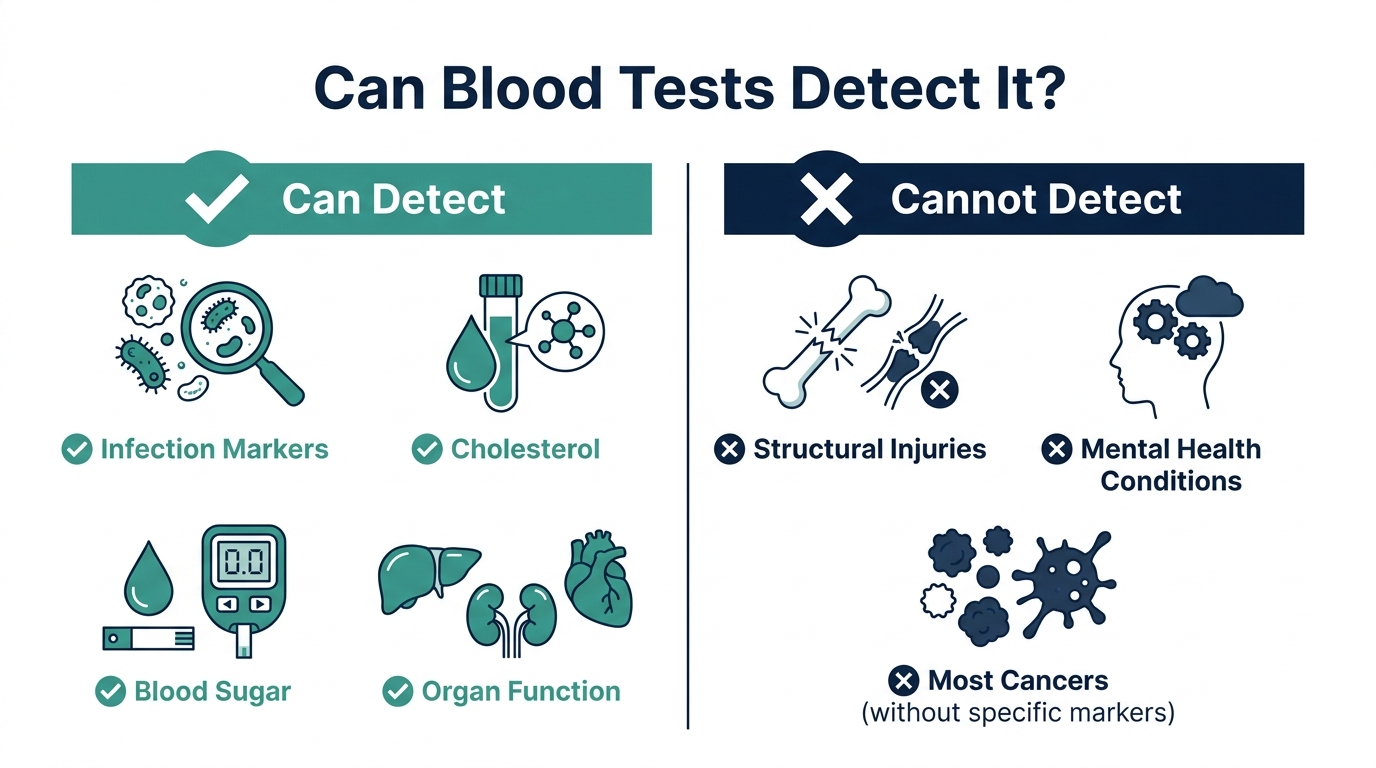
Blood tests cannot show structural problems, and that is the limit people run into most. Your blood is a chemistry sample, not a picture. It tells you what is flowing through your veins, not what your organs physically look like.
Bloodwork will not catch:
- Structural injuries: a torn ligament, herniated disc, or broken bone needs imaging, not a draw.
- Most solid tumors: a lump in your breast, lung, or colon is found by mammogram, CT, or colonoscopy, not routine blood.
- Blocked arteries: blood shows your cholesterol risk, but a calcium score or angiogram shows the actual blockage.
- Early-stage cancers without a marker: many cancers simply do not shed anything measurable into blood until they are advanced, which is why screening imaging exists.
- Whatever was not ordered: a panel checking your thyroid will not stumble onto an STI or a vitamin you did not request. Labs run exactly what is on the order and nothing more.
That last point is the insider truth. A common frustration is a patient saying “but I had a full blood test, how did it miss this?” It missed it because the marker was never on the requisition. To see how panels get assembled, read What Do They Test For in Routine Bloodwork? and you will understand why “full” almost never means “everything.”
| You want to know | Blood test | Better test |
|---|---|---|
| Is my cholesterol high? | Yes, lipid panel | Blood is the right tool |
| Do I have a blocked artery? | No, only risk | CT calcium score, angiogram |
| Is this lump cancer? | Rarely, tumor markers hint only | Imaging plus biopsy |
| Did I tear my ACL? | No | MRI |
| Is my thyroid underactive? | Yes, TSH and free T4 | Blood is the right tool |
| Do I have a kidney stone? | No, only kidney function | CT or ultrasound |
How to read what your blood report shows
Your blood report shows each marker next to a reference range, and a value outside that range is flagged, usually with an H (high) or L (low). The reference range is the band where most healthy people fall, but it is not a hard pass or fail line.
A few things worth knowing when you read your own results:
- One flagged value is not a diagnosis. Labs, hydration, recent meals, and even hard exercise can nudge numbers. Doctors look at the pattern across markers, not a single star next to one line.
- Fasting matters for some tests, not others. Triglycerides and glucose shift after a meal, so they want you fasted. A1c reflects months of blood sugar, so you can eat first. This is why instructions differ.
- Trends beat snapshots. A creatinine of 1.1 means little alone. The same number climbing for three years is a story. Tracking the same markers over time is where blood work earns its keep.
- Reference ranges are not goals. Being “in range” means you are within the statistical middle, not that the value is optimal for you. A vitamin D at the very bottom of normal still leaves many people symptomatic.
- Ranges vary by lab, sex, and age. Quest and Labcorp can list slightly different cutoffs, and a normal hemoglobin for a woman differs from a man. Always read your value against the range printed on your own report.
If a result is flagged, talk to a clinician about your results before you panic or self-treat. Context is everything, and your doctor has the rest of your picture. If you are getting blood drawn anyway, it is often smarter to capture a full baseline at once, and it is worth knowing how much Superpower costs versus paying for single tests piecemeal.
What does a blood test cost, and does insurance change what it shows?
A blood test costs anywhere from about $29 cash for a basic panel at a discount lab to well over $200 for the same panel billed through a hospital. The price does not change what the test shows, but it changes how much you order, and how much you order is what really determines what you find out.
| Where you draw | Typical cash cost for a basic panel | Notes |
|---|---|---|
| Discount online lab (order yourself) | $29 to $60 | You pick the panel, results in days |
| Quest or Labcorp direct | $40 to $120 | Self-pay menu without a doctor visit |
| Primary care with insurance | $0 to $50 copay | Often covered if coded preventive |
| Hospital outpatient | $150 to $250+ | Same panel, highest facility markup |
| Full-body membership | About $199/year | 100+ markers, doctor review, tracking |
Here is the insider billing twist worth knowing: a test ordered as “preventive screening” is often fully covered, but the moment a code makes it “diagnostic” (ordered to investigate a symptom), the same blood draw can land you a bill. That is why two people getting the identical CMP can pay wildly different amounts. None of this affects what the panel measures, but it absolutely affects whether you order the extra markers that would have caught something.
Common mistakes people make with blood tests
The biggest mistakes with bloodwork are not about the test itself, they are about how people order and interpret it. These are the ones we see again and again.
- Assuming “routine” covers everything. A routine panel skips iron studies, vitamin D, B12, hormones, and most inflammation markers. If you have a symptom, the relevant marker has to be requested by name.
- Skipping the fast when it matters. Eating before a triglyceride or fasting-glucose test can throw the result high enough to trigger an unnecessary recheck. A1c and most others are fine non-fasted.
- Panicking over a single flag. One slightly high liver enzyme or white count is usually noise. The repeat draw, two weeks later, is the real test.
- Treating “in range” as “optimal.” Sitting at the bottom of the iron or vitamin D range while feeling exhausted is common, and the report still says normal.
- Never comparing to last year. A value that jumped from 0.8 to 1.2 within the normal range can matter more than a stable value sitting just outside it. Without a prior result, that trend is invisible.
- Drawing dehydrated. Showing up dry can falsely concentrate several markers, including sodium and hematocrit. Normal hydration the day before gives a cleaner read.
Who should get which blood test?
The right blood test depends on your age, symptoms, and risk, and matching the two is how you avoid both under-testing and wasting money. Here is practical decision guidance.
- Healthy adult, no symptoms: a yearly CBC, CMP, lipid panel, and A1c is a sensible baseline, with vitamin D and a thyroid TSH worth adding once.
- Tired or low energy: add iron studies (ferritin), thyroid (TSH), vitamin D, and B12 to the basics. These four explain a large share of unexplained fatigue.
- Family history of heart disease: go beyond a basic lipid panel to ApoB, Lp(a), and hs-CRP, since standard cholesterol numbers can look fine while risk is real.
- Family history of diabetes or extra weight: A1c and fasting insulin catch trouble before fasting glucose does.
- Over 50: keep the annual basics and discuss age-appropriate markers with a clinician, while remembering blood does not replace colon and other imaging-based screening.
- Uninsured or cash-pay: a discount online panel or a full-body membership often costs less than chasing single tests at a hospital, and you keep the results to track.
- Minors and employer-required draws: these are usually narrow and specific (a pre-employment drug screen or a school physical CBC), so do not expect them to double as a full health check.
The thread running through all of these is the same: blood tells you an enormous amount, but only about the markers you actually order. Decide what you want to learn first, then build the panel to answer it.
Don’t just read about your health, track it.
A single result is a snapshot. Superpower re-tests 100+ markers over time so you can watch them move as you change sleep, food, and training.
FAQ
What do blood tests reveal about my overall health?
Blood tests reveal how your major organs are functioning, whether your blood cells are healthy, and how your sugar, cholesterol, hormones, and inflammation levels look. Together these give a strong snapshot of metabolic and organ health, though they cannot replace imaging or physical exams.
What is a blood report?
A blood report is the printed or digital summary of your results. It lists each tested marker, your value, the lab’s reference range, and a flag if your number falls outside that range. Think of it as a chemistry readout of your blood at the moment it was drawn.
What is blood investigation versus a routine test?
Routine bloodwork screens healthy people for common risks like high sugar or cholesterol. A blood investigation is targeted, ordered to chase a specific symptom or rule out a suspected condition, and usually adds markers a routine panel would skip.
What can a blood test show about infection?
A blood test can show infection through a raised white blood cell count on a CBC and through inflammation markers like CRP. Specific antibody or PCR blood tests can also confirm exposure to particular pathogens when a doctor knows what to look for. What it cannot do is name a random infection it was not designed to detect.
What is tested in a full blood test?
A so-called full blood test typically bundles a CBC, a comprehensive metabolic panel, a lipid panel, thyroid markers, and often A1c and vitamin D. That covers blood cells, organ function, blood sugar, cholesterol, and thyroid, roughly 15 to 30 markers, not every possible test that exists.
Can a blood test detect cancer?
For most cancers, no, not reliably. A handful have tumor markers (PSA for prostate, CA-125 for ovarian) that can hint at a problem, but these rise for harmless reasons too and miss many cancers entirely. Blood is a clue that prompts imaging or biopsy, not a cancer diagnosis on its own.
How long do blood test results take?
Most routine panels (CBC, CMP, lipids) come back within 24 to 72 hours, and many appear in your patient portal the next day. Specialized tests like hormone assays, autoimmune panels, or cultures can take several days to a week because they run on different equipment or need incubation.
Do I need to fast for a blood test?
It depends on the test. Fast 8 to 12 hours for a fasting glucose or a triglyceride-sensitive lipid panel. You do not need to fast for an A1c, a CBC, thyroid testing, or most hormone and vitamin tests. When in doubt, follow the lab’s instructions on the order, since a needless fast just makes the morning harder.
Why was a marker normal but I still feel sick?
A normal result only means that specific marker was in range, and the cause of your symptoms may sit in a marker that was never ordered, or in something blood cannot measure at all, like a structural or nerve problem. It can also mean a value is technically normal but suboptimal for you. This is exactly why doctors read the whole pattern and add imaging when blood comes back clean but symptoms persist.
How often should I get blood work done?
For a healthy adult with no symptoms, once a year is a reasonable cadence for the core panels, which also builds the year-over-year trend that makes results far more useful. People managing a condition like diabetes, thyroid disease, or high cholesterol often test every three to six months so their clinician can adjust treatment to the numbers.
Vital Signs Today may earn a commission if you buy through links on this page. It does not affect our editorial assessments.