Quick answer: When comparing function health vs parsley health, the two services solve different problems. Function Health is a lab-only membership: you pay about $499 per year, get 100-plus biomarkers drawn twice yearly at Quest or Labcorp, and receive results with detailed explanations but no physician visit. Parsley Health is a functional-medicine practice: you pay $150 to $375 per month depending on your plan, get multiple video appointments with a functional medicine doctor, and blood tests are often ordered as part of care, though the lab work itself may carry additional cost. If your goal is comprehensive annual data at low cost, Function wins on price. If you genuinely want a clinician guiding your lifestyle and interpreting results over months, Parsley is structured for that, at a significantly higher price.
What exactly does each service include?
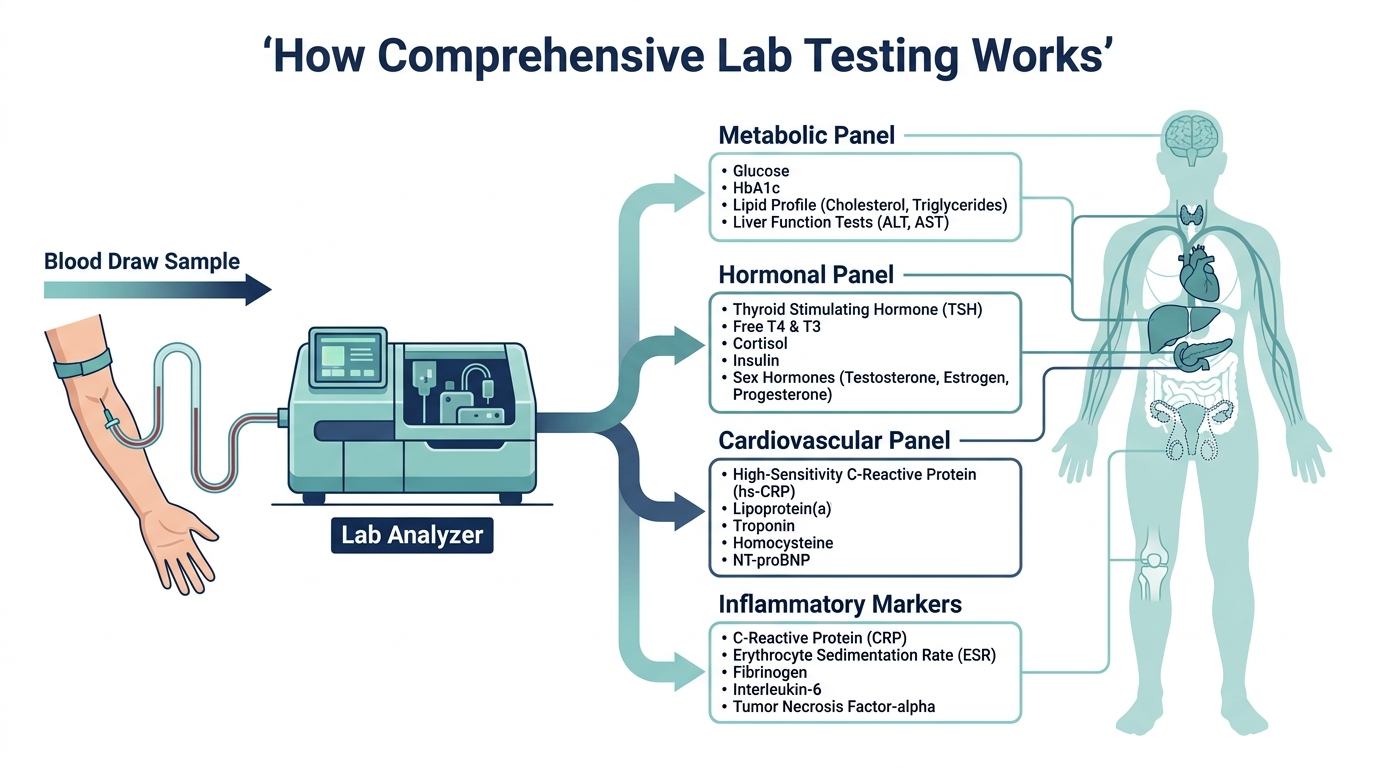
Function Health is a data platform first. You join, complete a short intake, schedule a blood draw at a Quest or Labcorp patient service center near you, and receive a dashboard with your results, reference ranges, and explanatory text. The two draws per year cover about 100 biomarkers on the standard panel, with optional add-ons available. There is no scheduled physician appointment baked into the membership. You can message their clinical team with questions, but do not expect a 45-minute consult. Read the full function health review for a deep breakdown of every panel included.
Comparing lab-only memberships to doctor visits? See what 100+ biomarkers plus a physician review actually looks like. One at-home Superpower draw checks 100+ biomarkers, physician-reviewed.
Parsley Health is organized as a care practice. Membership includes an initial 60-minute comprehensive visit with a clinician, follow-up video appointments (typically three to five per year depending on your plan tier), access to a health coach, and a care plan that evolves over time. Doctors at Parsley are trained in functional and integrative medicine, meaning they look at lifestyle, nutrition, sleep, and stress alongside labs. Blood tests can be ordered as part of your care plan, but Parsley uses outside labs, and depending on your insurance situation, those draw fees may be additional.

How much does Parsley Health cost compared to Function Health?
Parsley Health typically costs $150 to $375 per month, billed monthly or as an annual lump sum. Their tiered plans (sometimes called Complete or Premium) differ in visit frequency and coaching access. Annual billing can save roughly 10 to 15 percent. So the realistic annual spend is $1,800 to $4,500 depending on the tier you choose.
Function Health costs about $499 per year for the standard two-draw membership. Add-on panels (hormone deep dives, heavy metals, genetic panels) run $50 to $200 extra each. The total is still well under $1,000 for most members in a given year. For the exact current pricing see our function health cost breakdown.
| Feature | Function Health | Parsley Health |
|---|---|---|
| Annual cost (base) | ~$499/year | $1,800 to $4,500/year |
| Lab draws included | 2 per year (100+ markers each) | Ordered by clinician; may cost extra |
| Physician visits | None (messaging only) | 3 to 5 video visits/year |
| Health coaching | No | Yes (on higher tiers) |
| Lab network | Quest, Labcorp | Third-party labs via order |
| HSA/FSA eligible | Partial (labs yes, membership fee varies) | Check with plan; visits may qualify |
| Insurance accepted | No | Limited (some plans, some states) |
Does Parsley Health accept insurance?
Parsley Health does accept insurance on some plans in some states, but coverage is limited and patchy. As of 2026, Parsley contracts with a handful of insurance networks in select markets. The honest reality is that most members pay out of pocket. Functional medicine visits, even when structured like primary care, often fall outside what traditional insurers reimburse fully, so expect to treat most of the membership fee as a self-pay expense. Before signing up, call your insurance carrier directly and ask whether Parsley Health is in-network in your zip code. Do not rely on Parsley’s own website to confirm coverage, because network status changes.
Function Health does not bill insurance at all. The lab draws may qualify for partial reimbursement if you submit an out-of-network lab receipt yourself, but the platform is designed as a cash-pay service. Your HSA or FSA card can typically cover the blood draw portion.
Does Parsley Health do blood tests?
Yes, Parsley Health orders blood tests as part of their care approach. A Parsley physician will review your intake history and often order a baseline panel that goes beyond what a standard primary care visit would request. They look at things like fasting insulin, vitamin D, inflammatory markers, thyroid (including free T3 and T4, not just TSH), and hormones, which standard annual physicals often skip. However, the lab work is ordered separately through outside labs, and the cost may or may not be covered depending on your insurance. Some members find they owe lab bills on top of their monthly membership fee. This is an important hidden cost to account for when comparing Parsley to a service like Function Health, where the lab cost is already bundled.

What does the typical Parsley Health member get wrong?
The single biggest misconception is that the monthly fee covers everything, including labs. It often does not. A Parsley member who assumes the membership fee is all-in can end up with surprise bills from Quest or Labcorp for $80 to $400 depending on which panels the doctor ordered and what insurance picks up. The second misconception is that functional medicine is a substitute for urgent or specialist care. Parsley doctors are generalists trained in a systems-biology framework. They are exceptional at chronic optimization, but they are not replacing your cardiologist or your endocrinologist for active disease management.
With Function Health, the common mistake is treating the dashboard as a diagnosis. Getting a flagged result on ferritin or homocysteine and then adjusting supplements without a clinician’s guidance is the wrong move. The data is the starting point, not the verdict.
Is Parsley Health worth it?
Parsley Health is worth it for a specific type of person: someone with complex, chronic, multi-system symptoms who has bounced between conventional doctors without answers, has the budget for $150 to $375 per month, and wants an ongoing relationship with a clinician who will actually spend an hour reviewing their full history. Examples include people managing thyroid disorders, autoimmune conditions, gut issues, or hormonal dysregulation where the typical 15-minute PCP visit has not moved the needle.
Parsley is not worth it if your main goal is getting comprehensive labs once or twice a year to know where you stand. That is a $499 problem, not a $2,400-plus problem. For baseline monitoring, health-conscious adults who are not managing an active condition get dramatically better ROI from a data-first service.
The simplest way to actually get this done
Superpower is a full-body lab membership that runs 100+ biomarkers, has each result reviewed by a doctor, and tracks your numbers year over year (about $199/year). It is what we point readers to when they would rather get one clean, complete draw than chase single tests one at a time. Here is superpower blood test reviewed in full.
Functional medicine membership vs lab testing: which model makes sense for you?
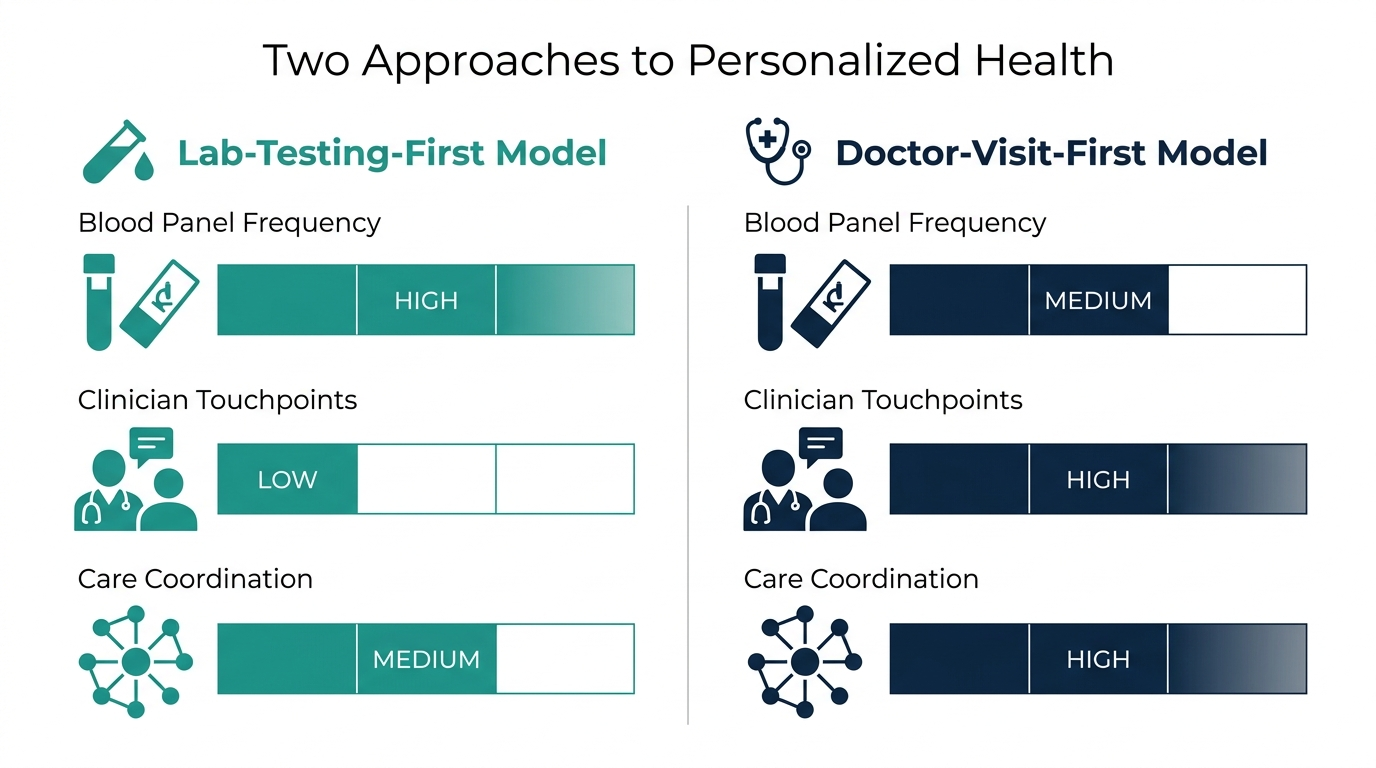
The functional medicine membership model (Parsley, Wild Health, Lifeforce, and similar) bundles physician time, care coordination, and labs into a recurring fee. The lab-testing model (Function Health, Superpower, Ulta Lab Tests, and similar) strips out the clinical relationship and sells you data directly. Neither is inherently superior. They answer different questions.
Ask yourself one question: do I need a clinician to guide me, or do I need better data to bring to my existing clinician? If you already have a PCP, a naturopath, or a functional medicine doctor you see regularly, paying for a second layer of physician access is probably redundant. Buy the comprehensive labs, share the dashboard with your existing doctor, and save $1,500 to $4,000 per year. If you have no clinical relationship and genuinely need someone to translate your health story into a plan, a practice like Parsley may be appropriate, assuming the budget is there.
For a side-by-side look at how Function stacks up against other data-heavy competitors, see our comparison of function health vs 10x health and function health vs empirical health.
Which service is better for tracking trends over time?
Function Health has a clear structural advantage here. Their dashboard is built around longitudinal trending. Every draw populates the same visual graph, so you can see exactly how your ferritin, HbA1c, or testosterone moved from spring to fall to spring again. The visual presentation is genuinely good, and the year-over-year comparison is automatic.
Parsley Health generates care summaries and lab orders through their care platform, but the lab data itself lives in outside lab portals (Quest MyQuest, Labcorp Patient, etc.). Parsley does not own the data infrastructure in the same way. Comparing your numbers over multiple years at Parsley requires manually pulling lab reports, which most members do not bother doing. For pure longitudinal data management, a purpose-built testing platform wins.
Superpower takes a similar data-first approach to Function: each annual draw is stored, compared, and scored. Read our detailed superpower blood test review for how their tracking stacks up, and our how much does superpower cost breakdown for the exact fee structure.
What do the panels actually test?
Function Health’s standard panel covers roughly 100 biomarkers organized into categories: metabolic health (glucose, insulin, HbA1c, lipids), thyroid (TSH, free T3, free T4, TPO antibodies), hormones (testosterone, estrogen, DHEA-S, SHBG), nutrients (vitamin D, B12, folate, ferritin, zinc, magnesium), inflammation (CRP-hs, homocysteine), kidney, liver, complete blood count, and more. This is significantly broader than what most primary care annual physicals order.
Parsley Health orders labs based on clinical judgment at each visit. A first visit typically generates a panel that overlaps substantially with Function’s list, since Parsley doctors specifically value the same under-tested markers like fasting insulin, ferritin, and free thyroid hormones. But the exact markers vary by clinician and patient. There is no fixed Parsley panel the way there is a fixed Function panel. This means your Parsley labs might be more targeted, or they might miss markers that a fixed comprehensive panel would catch simply because no one thought to order them.
How to decide between the two in 2026
The most common reason people hesitate is the price difference. Function Health at roughly $499 per year comes to about $42 per month. Parsley Health starts at $150 per month and can run higher. That gap closes quickly if you factor in what each service actually delivers. Function Health gives you data. Parsley Health gives you data plus clinical time. Whether that extra clinical time is worth $100 to $300 per month depends almost entirely on what you plan to do with it.
Consider your history with healthcare. If you have spent years feeling unwell despite normal standard blood work, and you have never had a clinician actually sit with you for 60 minutes to take a detailed history, Parsley Health could represent a meaningful shift in how you engage with your own health. The first comprehensive visit alone often surfaces patterns that a typical 15-minute PCP appointment would never reach.
On the other hand, if you are relatively healthy and mostly want annual confirmation that your key metabolic, hormonal, and cardiovascular markers are trending correctly, paying for physician time on top of labs is likely excess. Function Health or a comparable lab-first service covers that use case well at a fraction of the cost.
A practical middle path is to start with Function Health for one year, accumulate two sets of panels, and then assess whether you have questions that genuinely require a clinician to answer. If you do, bring those Function Health reports to a Parsley Health intake visit. You arrive better informed, the clinician covers more ground per session, and you have not paid for clinical time when you did not need it.
One additional factor worth naming: geographic availability. Parsley Health operates in select states and may have waitlists. Function Health is available nationally wherever Quest and Labcorp have patient service centers, which covers most of the country. If you live in a rural area, lab-first services are simply more accessible in practice.

Normal vs Optimal: The Reference-Range Gap That Drives Functional Medicine
The reason functional-medicine practices like Parsley exist at all comes down to a distinction most standard labs blur: a result inside the reference range is not the same as an optimal result. A reference range is a statistical band, usually the middle 95 percent of a reference population, many of whom are not healthy. Functional clinicians read a subset of markers against tighter “optimal” targets. Understanding that gap is the single most useful thing you can take from either service.
| Marker | Standard “normal” range | Where functional clinicians aim |
|---|---|---|
| TSH | 0.4 to 4.0 mIU/L | Roughly 1.0 to 2.5 mIU/L |
| Fasting insulin | Often not flagged until well into double digits | Below about 10 uIU/mL, ideally single digits |
| Vitamin D (25-OH) | Above 20 to 30 ng/mL called sufficient | Frequently 40 to 60 ng/mL |
| hs-CRP | Under 3.0 mg/L is “low risk” | Under 1.0 mg/L |
| Ferritin | Low teens can be labeled normal | Often 50 to 100 ng/mL for symptom resolution |
These optimal targets are not universally agreed clinical cutoffs, and they should be interpreted with a clinician, not self-applied. But they explain why a person can be told repeatedly that their labs are “normal” while still feeling unwell. A TSH of 3.8 mIU/L clears the standard range yet sits high in the functional target zone, and a fasting insulin of 12 uIU/mL rarely gets flagged on a conventional panel even though it signals the body straining to keep glucose down. This is precisely the territory a Parsley visit is built to explore and a bare lab dashboard leaves you to notice yourself.
The Under-Ordered Markers That Change the Picture
A conventional annual physical often orders TSH, a basic metabolic panel, and a lipid panel, then calls it complete. Functional practices and comprehensive lab memberships add several markers that routinely reframe a case. If you only remember a handful, remember these.
- Free T3 and free T4, not just TSH. TSH is the pituitary’s signal, not the active thyroid hormone. Free T4 (roughly 0.8 to 1.8 ng/dL) is the storage form and free T3 (roughly 2.3 to 4.2 pg/mL) is the active one. Someone converting T4 to T3 poorly can have a normal TSH and still feel hypothyroid. TPO antibodies then reveal whether autoimmunity (Hashimoto’s) is the driver.
- Fasting insulin alongside glucose. Glucose is a lagging indicator. Insulin rises years earlier as the body compensates. Pairing the two catches insulin resistance long before an HbA1c crosses into prediabetes.
- hs-CRP for silent inflammation. High-sensitivity CRP under 1.0 mg/L is favorable, 1 to 3 is intermediate, above 3 is elevated. It is a cardiovascular and general inflammation signal that a standard panel skips entirely.
- Ferritin, not just hemoglobin. You can have “normal” hemoglobin and still be iron depleted. Ferritin reflects iron stores and often explains fatigue, hair shedding, and poor exercise recovery that a basic CBC misses.
The practical difference between the two service models shows up here. A fixed comprehensive panel guarantees these markers are drawn every time. A clinician-ordered approach draws them when the clinician thinks to, which is usually thorough at a functional practice but variable elsewhere.
Do You Fast for These Tests? Prep That Protects Your Results
Prep quietly determines whether your numbers mean anything. A few evidence-based rules:
- Fast 8 to 12 hours for glucose, insulin, and lipids. A recent meal spikes glucose and triglycerides and can distort the insulin reading that matters most for catching early insulin resistance.
- Thyroid testing does not strictly require fasting, but timing still matters. TSH is highest in the early morning and drifts down through the day, so consistent morning draws make year-over-year comparison honest. Biotin supplements can interfere with several thyroid immunoassays and should be paused for a couple of days beforehand.
- Keep the draw time consistent across visits. For trending to be meaningful, compare like with like: same lab, same time of day, same fasting state. This is where a data-first platform with a fixed protocol has a structural edge over ad hoc ordering.
Getting prep right is not a formality. A non-fasted insulin or an afternoon TSH can push a borderline result across a line and send you chasing a problem that a clean draw would not have shown.
Don’t just read about your health, track it.
A single result is a snapshot. Superpower re-tests 100+ markers over time so you can watch them move as you change sleep, food, and training.
FAQ
What is the main difference between Function Health and Parsley Health?
Function Health is a direct-to-consumer lab membership: you pay once per year and get comprehensive blood work without physician visits. Parsley Health is a functional medicine practice: you pay monthly for ongoing doctor access, care coordination, and health coaching, with labs ordered as part of your care. The key trade-off is price versus physician relationship.
How much does Parsley Health cost per month?
Parsley Health membership runs approximately $150 to $375 per month depending on the plan tier and whether you pay monthly or annually. Annual prepayment typically offers a discount. Lab costs ordered through Parsley may be additional, billed through your insurance or as cash-pay lab fees.
Is Parsley Health covered by insurance?
Parsley Health accepts insurance through select carriers in certain states, but coverage is limited. Most members pay out of pocket. Always verify directly with your insurer and confirm Parsley’s in-network status in your specific zip code before assuming coverage. HSA and FSA dollars may apply to eligible visit charges.
Does Function Health have doctors?
Function Health does not provide scheduled physician visits as part of the standard membership. Their clinical team can answer questions through the platform, and results come with explanatory text written with clinical oversight, but the service is explicitly not a medical practice. Talk to a clinician about results that fall outside normal ranges or that concern you.
Can I use Function Health and Parsley Health together?
Yes, and some people do. Using Function Health to generate comprehensive bi-annual data, then bringing those results into Parsley visits, can actually improve the quality of the clinical conversation. The Parsley doctor starts with richer data than they would have ordered on their own. The downside is the combined cost: $499 plus $1,800 or more per year.
Is Parsley Health good for thyroid issues?
Parsley Health is well-regarded for thyroid management specifically because their physicians routinely order the full thyroid panel including free T3, free T4, and TPO antibodies rather than just TSH. This matters because TSH alone misses subclinical hypothyroidism in a meaningful portion of patients. If you have been told your thyroid is normal based on TSH alone but still have symptoms, Parsley’s approach is likely to be more thorough than a standard PCP visit.
What is the cancellation policy for Parsley Health?
Parsley Health membership terms vary by plan. Monthly plans can typically be cancelled with 30 days notice. Annual plans are generally non-refundable or have a limited refund window. Read the cancellation terms carefully before committing to annual billing, particularly if you are unsure whether you will engage consistently with the platform.
Which is better for someone who is generally healthy and just wants to track biomarkers?
For a healthy adult who wants comprehensive annual data to monitor trends and catch early warning signs, a lab-only service like Function Health or Superpower is almost always the better value. You do not need $2,400 per year in physician time to track your HbA1c and ferritin. Save the clinical membership budget for if and when you develop a condition that genuinely needs ongoing management.
Vital Signs Today may earn a commission if you buy through links on this page. It does not affect our editorial assessments.