Quick answer: Function Health and 10X Health System both sell comprehensive blood testing, but they operate in entirely different modes. Function Health charges around $499 per year for 100-plus biomarker panels reviewed by physicians, with transparent lab partnerships and no upsells. 10X Health System, popularized by human biologist Gary Brecka, bundles blood work with genetic testing and supplement programs at a much higher entry price, typically $1,000 to $3,000 or more depending on the package. If you want clean data and clinical oversight, Function is the stronger buy. If you want a celebrity-endorsed lifestyle overhaul with your labs, 10X is designed for that, at a cost.
What Is 10X Health and Who Is Gary Brecka?
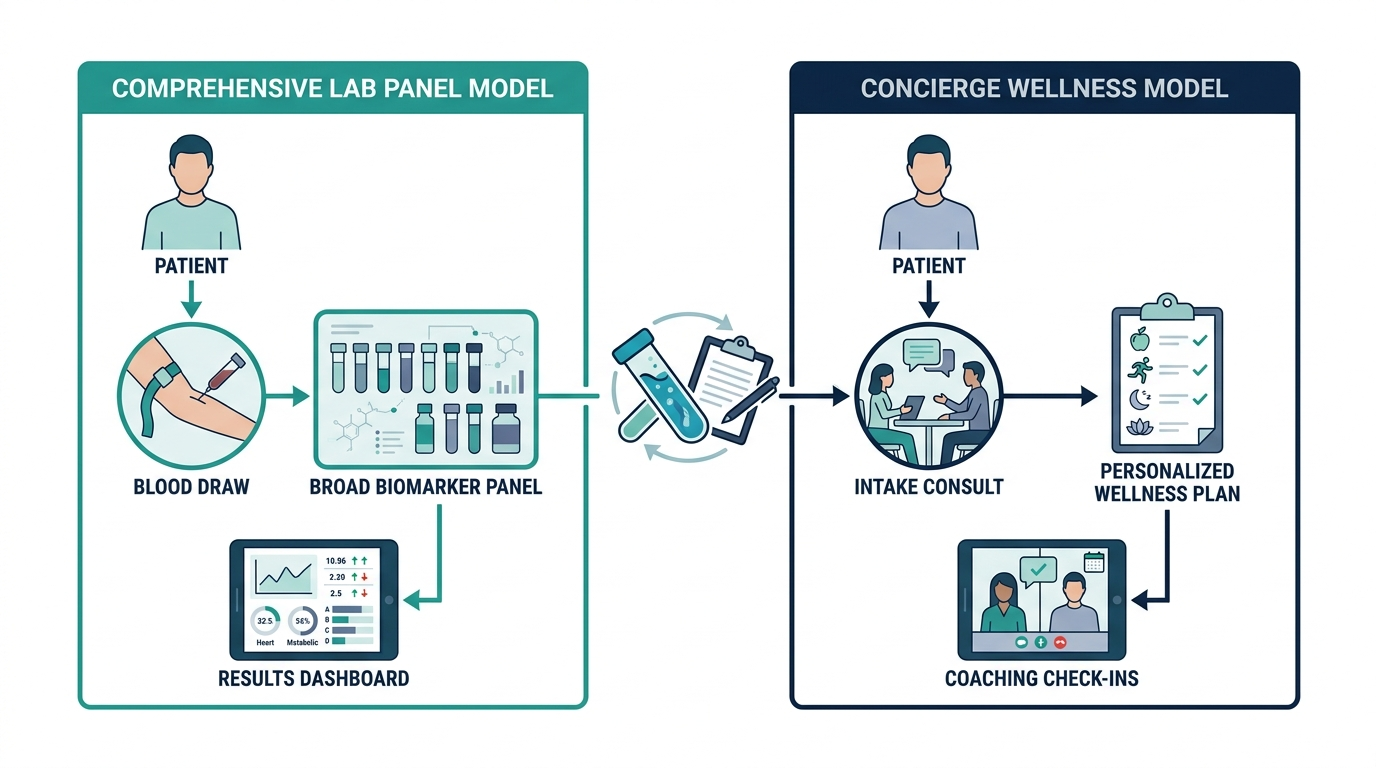
10X Health System is a health optimization company co-founded by Gary Brecka, who describes himself as a human biologist and longevity expert. Brecka gained mainstream attention through appearances on podcasts, the Joe Rogan Experience, and social media clips where he explains how MTHFR gene variants and methylation deficiencies drive chronic illness. His central pitch is that a simple blood and genetics test can reveal why you feel off, and that targeted methylated B vitamins and lifestyle changes can reverse it within weeks.
Comparing a transparent lab membership to a bundled genetics-and-supplements program? See exactly what your $199 covers. One at-home Superpower draw checks 100+ biomarkers, physician-reviewed.
The company sells several product lines: a Gene Test that screens for common polymorphisms related to methylation and detoxification, a Blood Test package that mirrors functional medicine panels, and supplement bundles personalized to your results. They also sell an at-home continuous glucose monitor program and a broader “X Factor” membership. Brecka’s social media reach is enormous, and 10X has built its brand almost entirely through influencer marketing and before-and-after testimonials from celebrities and athletes.
Understanding this context matters because it shapes what you are actually buying. With 10X Health, a significant portion of your spend is going toward the brand experience, the coaching infrastructure, and the supplement ecosystem. The lab work itself, as we will see, is not dramatically different from what a good functional medicine physician would order independently.
How Does Function Health Compare on Biomarker Count and Panel Depth?
Function Health runs between 100 and 160 biomarkers per draw depending on the current panel configuration, covering thyroid (TSH, Free T3, Free T4, Reverse T3, TPO antibodies), sex hormones (testosterone total and free, estradiol, DHEA-S, SHBG), a full metabolic panel, lipids with particle counts (ApoB, Lp(a)), inflammation markers (hsCRP, homocysteine, ferritin), complete blood count with differential, kidney and liver function, heavy metals, vitamins D and B12, folate, insulin, HbA1c, and uric acid. The panel is genuinely comprehensive and is reviewed by a licensed physician who flags abnormal results and follows up via the app.
10X Health’s blood test panel is smaller by default and more focused on the methylation pathway story Brecka tells. You get standard metabolic markers, a lipid panel, CBC, thyroid, and a handful of nutrients, but the panel leans into homocysteine, methylfolate, and B12 as the anchors. The genetic test adds MTHFR C677T and A1298C variants, COMT, and a few other SNPs. For context, MTHFR variants are genuinely common (roughly 40 percent of the US population carries one copy of C677T) and do affect methylation capacity, but the clinical significance of the heterozygous form is debated among physicians and is nowhere near the dramatic driver 10X marketing implies for the average person.
Function does not currently offer genetic testing as part of its core membership, which is a real gap if you want methylation pathway data in one place. But for sheer biomarker breadth and the quality of clinical review behind each result, Function’s panel is more comprehensive per dollar spent. Read the full function health review for a line-by-line breakdown of what the panel includes.
10X Health Cost vs Function Health Cost
This is where the two services diverge most sharply. Function Health membership costs roughly $499 per year, which includes two full blood draws (one baseline, one follow-up), physician review of results, and access to the app dashboard with historical trending. For most adults, that works out to about $250 per draw for a 100-plus biomarker panel with a doctor in the loop. That is competitive with ordering a la carte tests through Quest or Labcorp at retail cash prices, where a comprehensive thyroid panel alone can run $150 to $350 before the lipid and hormone markers.
10X Health pricing is significantly less transparent and varies by package. As of 2026, the core Gene Test starts around $499 on its own. A combined Gene plus Blood Test bundle runs roughly $999 to $1,299. Add a supplement protocol and ongoing coaching calls, and total first-year spend commonly lands between $1,500 and $3,000. Some higher-tier programs with continuous glucose monitoring and physician consultations push past $5,000. These numbers are not listed clearly on the website and require going through a sales conversation, which is itself a signal about the company’s sales model.
For a detailed look at how Function’s pricing stacks up against other services, the function health cost breakdown covers cash-pay versus membership comparisons.
| Feature | Function Health | 10X Health System |
|---|---|---|
| Annual price (core) | ~$499/year | ~$999 to $3,000+ depending on package |
| Biomarkers (blood) | 100 to 160 | ~50 to 70 (blood panel) |
| Genetic testing included | No | Yes (MTHFR, COMT, select SNPs) |
| Physician result review | Yes, every draw | Included in higher-tier packages |
| Supplement upsells | None | Central to the model |
| Lab partner | Quest Diagnostics | Proprietary / third-party varies |
| Results turnaround | 3 to 7 business days | 7 to 14 days |
| App and trending | Yes, longitudinal tracking | Yes, via 10X app |
| Insurance accepted | No (HSA/FSA eligible) | No |

Is 10X Health Legit? What the Science Actually Says
10X Health is a legitimate company in the sense that it delivers real lab results and real genetic reports. It is not a scam. The concern is whether the interpretation framework Gary Brecka uses to sell supplements based on those results is supported by the clinical evidence, and here the picture is more complicated.
Brecka’s core argument is that MTHFR mutations cause widespread methylation deficiency, which in turn drives depression, fatigue, cardiovascular disease, and dozens of other conditions, and that supplementing with methylfolate, methylcobalamin, and other methyl donors corrects the problem within weeks. This narrative is compelling and contains a real kernel of truth: people with the homozygous C677T variant (both copies mutated) do have meaningfully reduced enzyme activity and elevated homocysteine, which is a real cardiovascular risk factor. Supplementing with active B vitamins helps this population.
However, the majority of people who buy 10X gene kits are heterozygous or have variants with minimal functional impact. For that group, the evidence for dramatic symptom reversal from methylated B vitamins is thin. The American Heart Association and mainstream clinical guidance do not recommend routine MTHFR testing for the general population. The supplements themselves are not harmful (they are water-soluble B vitamins), but the degree of certainty Brecka implies about the cause-effect relationship is overstated compared to what the research supports.
That said, the blood panel component of 10X is genuine laboratory medicine. If your 10X results show low thyroid function or high homocysteine, those are real findings worth acting on. The genetic layer adds context that Function does not provide. The issue is more about the marketing confidence level than the underlying data quality.
The Gary Brecka Factor: Marketing vs Clinical Authority
Gary Brecka holds a degree in human biology and has a background in life insurance mortality analytics, which he used to predict lifespans for insurance applicants. That background is genuinely interesting and gave him pattern recognition across large disease datasets. He is not a licensed physician or a board-certified clinical genetics counselor.
This matters for one reason: the depth of interpretation you receive with your 10X results depends heavily on whether you are accessing a physician-level consultation or a trained health coach following a proprietary protocol. In the standard 10X packages, the interpretation is protocol-driven (your methylation profile suggests X, therefore take Y supplement), not the kind of individualized clinical reasoning a physician brings when they see your full history, medications, and symptoms in context.
Function Health, by contrast, has every result reviewed by a licensed physician who flags abnormals, writes notes visible in the app, and in some cases reaches out directly about critical findings. The physician layer is built into the product, not an optional upgrade.
For a broader comparison of how these celebrity-adjacent health companies stack up against more clinically grounded alternatives, function health vs empirical health covers another high-end option.

The Supplement Upsell Problem
This is the part of the 10X model that should give thoughtful consumers pause. The business model is structured so that your lab and genetic results feed directly into personalized supplement recommendations, which you then purchase from 10X Health at premium prices. Methylated B complex, omega-3s, magnesium glycinate, and other protocols commonly recommended can run $100 to $300 per month in ongoing subscription costs.
There is nothing inherently wrong with selling supplements. The problem is that it creates an incentive to interpret test results in ways that generate supplement sales. When the company doing your testing is also selling you the solution to your test results, the objectivity of the interpretation is structurally compromised, even when the people involved are acting in good faith.
Function Health has no supplement line. Their business model is the membership. If Function flags that your vitamin D is low, they tell you to take vitamin D and they do not care where you buy it. That is a cleaner conflict-of-interest structure.
The simplest way to actually get this done
Superpower is a full-body lab membership that runs 100+ biomarkers, has each result reviewed by a doctor, and tracks your numbers year over year (about $199/year). It is what we point readers to when they would rather get one clean, complete draw than chase single tests one at a time. Here is superpower blood test reviewed in full.
Who Should Choose 10X Health vs Function Health
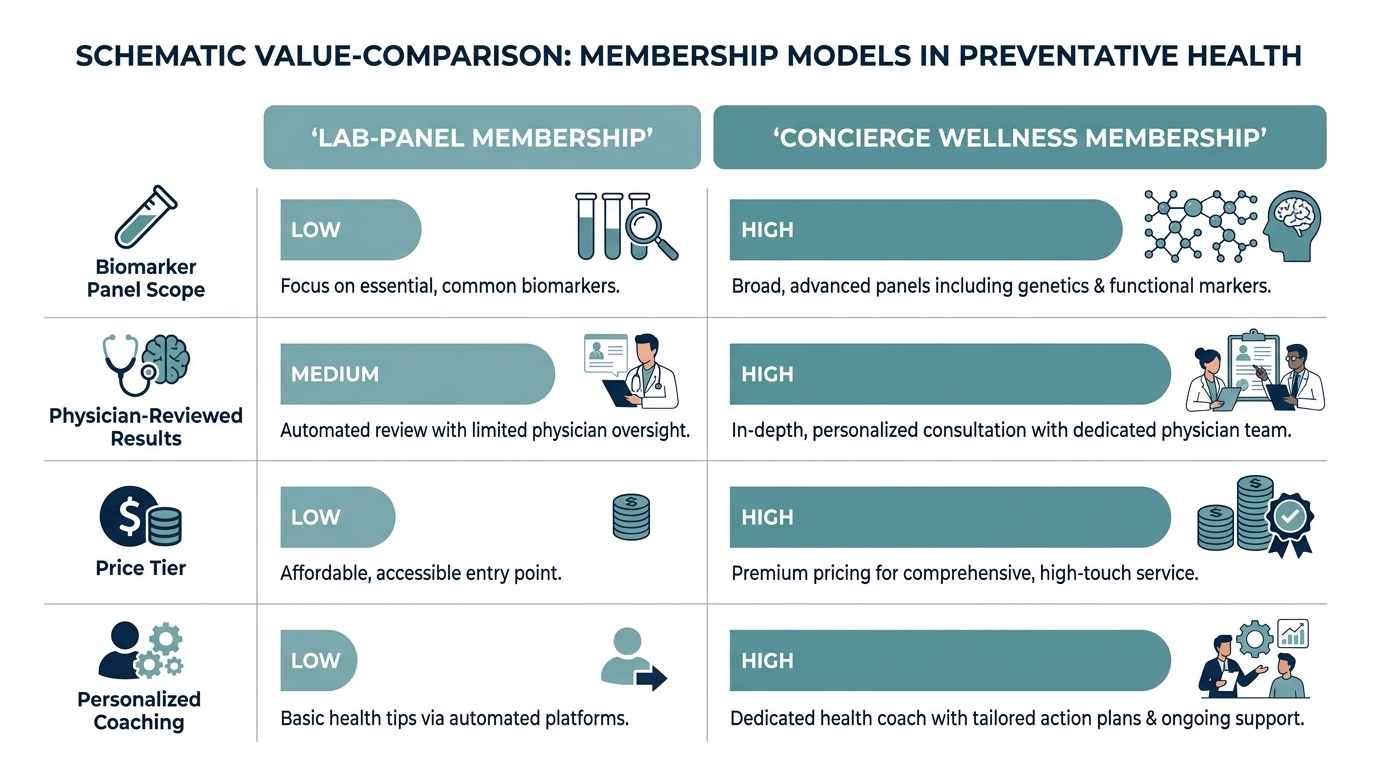
Choose 10X Health if your primary interest is understanding your methylation genetics, you suspect you have a methylation issue based on symptoms (chronic fatigue, elevated homocysteine on prior labs, poor response to standard antidepressants), and you are willing to pay for a more hands-on coaching model. The genetic testing component is a real differentiator. If you have a family history of cardiovascular disease and want MTHFR context alongside your standard lipid panel, 10X’s bundle is one way to get that in a single purchase.
Choose Function Health if you want the broadest possible biomarker sweep, transparent pricing, a physician reviewing every result, longitudinal tracking, and no supplement upsells pushing you toward a particular product ecosystem. Function is better suited for the person who wants their full metabolic, hormonal, thyroid, inflammatory, and nutritional status in one report and wants a doctor’s eyes on it.
For people on a tighter budget who still want comprehensive coverage with physician oversight, Superpower is worth a direct look. The how much does superpower cost breakdown shows how the annual membership compares per biomarker. For comparison shoppers evaluating other alternatives, function health vs joi and blokes covers the hormone-focused competitors.

What People Get Wrong About Celebrity Health Testing Companies
The biggest mistake people make when evaluating 10X Health versus Function Health versus any other direct-to-consumer lab service is conflating marketing confidence with clinical accuracy. A company can run CLIA-certified labs (which both do, through their respective partners) and still overinterpret results in ways that serve their business model.
Lab results are not self-interpreting. An ApoB of 110 mg/dL means something different in a 35-year-old with no family history versus a 55-year-old with metabolic syndrome and a sedentary lifestyle. A homocysteine of 14 micromol/L is mildly elevated and worth addressing, but it is not the root cause of every chronic symptom the person has. Any service that gives you the impression your results have a single clean narrative and a single clean product solution is almost certainly simplifying the clinical picture.
Real functional medicine physicians spend 60 to 90 minutes going through a comprehensive panel with a patient before drawing conclusions. App-based services, including Function, give you a dashboard and a physician note, which is genuinely useful but is not a replacement for that conversation. Talk to a clinician about any results that concern you before making major supplement or medication changes.
The MTHFR Question, Straight From the Guidelines
Because the entire 10X narrative rests on MTHFR, it is worth knowing where formal medical genetics actually stands, not where a podcast clip stands. The American College of Medical Genetics and Genomics (ACMG) issued a practice guideline stating that MTHFR polymorphism testing has minimal clinical utility and should not be ordered as part of a routine workup, including for clotting risk or recurrent pregnancy loss (ACMG Practice Guideline, 2013). That is the mainstream position, and it has not been overturned.
A few specifics that the marketing tends to blur:
- The common variants do not cause very high homocysteine. The dramatic homocysteine elevations tied to real disease come from rare severe enzyme deficiencies, not from carrying one or two copies of the common C677T variant.
- Homocysteine itself is measurable directly. If the concern is methylation status, you can test homocysteine on any standard panel without a gene test, and the number tells you more about your current state than the genotype does.
- Meta-analyses have weakened the homocysteine-heart-disease link. Lowering homocysteine with B vitamins has repeatedly failed to reduce cardiovascular events in large trials, which undercuts the idea that a methylation gene is the master switch for chronic disease.
None of this means the B vitamins are harmful or that homocysteine is worthless to know. It means the genotype is far less actionable than the pitch implies, and a direct homocysteine measurement, which the broader panels already include, captures the clinically useful part without the gene-test upcharge.
How to Read the Blood Markers Both Services Share
Strip away the branding and both companies report many of the same core numbers. Knowing how to read a handful of them yourself makes you a far better judge of any interpretation you are handed.
- Homocysteine: commonly reported in micromoles per liter, with most labs treating the mid-to-high single digits as typical. Mild elevations are worth addressing with folate, B12, and B6 status in mind, but a single mildly high value is not a diagnosis. Recheck after correcting nutrient intake.
- ApoB: this is the count of atherogenic particles and is a stronger predictor of cardiovascular risk than LDL cholesterol alone. Lower is generally better, and the target depends heavily on your overall risk profile, which is exactly why context beats a one-size number.
- hs-CRP: a general inflammation marker. Because it spikes with any recent infection or hard workout, a single high reading should be repeated on a calm day before you read anything into it.
- TSH plus free T4: the anchor pair for thyroid. A TSH outside range with a matching free T4 shift is more meaningful than either alone, and antibodies help explain the cause when they are positive.
The interpretation rule that protects you from any upsell: a single out-of-range value rarely tells a clean story. Corroboration across related markers, plus your symptoms and history, is what turns a number into a decision.
A Decision Matrix: Match the Service to Your Actual Goal
The two products are built for different buyers. Line your goal up against the model rather than the marketing.
| Your primary goal | Better fit | Why |
|---|---|---|
| Broadest biomarker sweep with a doctor’s read | Function or Superpower | More markers per dollar, physician review built in, no product to sell you |
| Lowest cost for a comprehensive annual baseline | Superpower | Comprehensive panel with review at the lowest entry price |
| Methylation genetics specifically | 10X (with skepticism) | Includes SNP panel, but weigh the ACMG guidance on clinical utility |
| Hands-on coaching and a done-for-you protocol | 10X | Built around coaching and supplement bundles, at a much higher price |
| Clean conflict-of-interest structure | Function or Superpower | Membership revenue, not supplement sales, funds the business |
If your honest goal is data plus a doctor’s interpretation, the membership models win on both price and objectivity. If you specifically want the methylation coaching experience and accept the premium, 10X is designed for that, just go in knowing which parts are strong lab medicine and which parts are marketing confidence.
Questions to Ask Before You Buy Any Optimization Package
Before handing over a credit card to any celebrity-adjacent health company, get clear answers to these. Vague responses are themselves a signal.
- Who interprets my results, a licensed physician or a coach following a protocol? This determines the quality of the clinical reasoning you actually receive.
- Is the price all-in, or does it lead into a supplement subscription? Ask for the twelve-month total cost including anything recommended, not just the entry fee.
- Which lab runs the samples, and is it CLIA-certified? Reputable services name their lab partner without hesitation.
- Can I take my raw results to my own doctor? The answer should be an unqualified yes, with a standard lab report you can export.
- What happens to the recommendation if I decline the supplements? If the whole value proposition collapses without the product purchase, you are buying a sales funnel more than a diagnostic.
Run those five questions and the difference between a clean diagnostic membership and a supplement-driven funnel becomes obvious fast. Talk to a clinician about any results that concern you before starting new supplements or making medication changes.
Don’t just read about your health, track it.
A single result is a snapshot. Superpower re-tests 100+ markers over time so you can watch them move as you change sleep, food, and training.
FAQ
Is 10X Health the same as Function Health?
No. They are competing companies with different founders, different product structures, and different business models. Function Health was co-founded by physician Mark Hyman and offers a physician-reviewed blood panel membership. 10X Health System was co-founded by Gary Brecka and focuses on methylation genetics combined with blood work and supplement protocols. They serve overlapping customers but with different approaches and price points.
How much does 10X Health cost?
10X Health does not publish a single flat price. The Gene Test alone starts around $499. Combined gene plus blood test bundles typically run $999 to $1,299. Full coaching and supplement programs can push total first-year costs to $1,500 to $3,000 or more. Unlike Function’s fixed annual membership, 10X pricing involves sales conversations and varies by package.
Is 10X Health legit or a scam?
10X Health is a legitimate company delivering real CLIA-certified lab results and actual genetic reports. It is not a scam. The reasonable criticism is that the marketing claims around MTHFR and methylation overstates clinical certainty compared to what the peer-reviewed evidence supports for the general population, and the supplement upsell model creates structural incentives worth being aware of.
What does Gary Brecka actually test?
10X Health’s core testing protocol covers a blood chemistry panel (metabolic, lipids, thyroid, CBC, key nutrients including homocysteine and B12) combined with a genetic SNP panel focused on MTHFR C677T and A1298C variants, COMT, and a handful of other methylation and detoxification pathway genes. The panel is real functional medicine territory, though narrower in scope than what services like Function or Superpower run.
Does 10X Health take insurance or HSA/FSA?
10X Health does not accept insurance. HSA and FSA cards are generally accepted for the lab and genetic testing components, since those qualify as medical expenses, but you should confirm with your plan administrator before assuming the supplement protocols qualify. Function Health also does not accept insurance but is HSA/FSA eligible for the membership cost.
Can you use 10X Health results with your own doctor?
Yes. Your 10X results include standard lab values from a CLIA-certified lab, which any physician can interpret. The genetic report is also readable by a clinical genetics counselor or an internist familiar with MTHFR literature. The proprietary framing 10X puts around the results is their interpretation; the underlying numbers are yours to share with whoever you trust clinically.
How does 10X Health blood test compare to a standard doctor’s bloodwork?
A typical annual physical through a primary care physician covers CBC, metabolic panel, lipids, TSH, and HbA1c, roughly 20 to 30 data points. 10X Health’s blood panel adds homocysteine, more thyroid detail, and a few nutrient markers, bringing it closer to 50 to 70 markers. Function Health and Superpower go further still, running 100-plus markers that most PCPs would not order without a specific complaint, including ApoB, Lp(a), free hormones, heavy metals, and advanced inflammatory markers.
Which celebrity health testing companies are worth taking seriously?
The landscape includes 10X Health, Function Health, Next Health, Lifeforce, and a handful of others. Of these, Function and Superpower have the most transparent pricing and the cleanest conflict-of-interest structure (no supplement upsells). Next Health and Lifeforce are higher-cost concierge models with in-person clinic components. 10X is worth considering specifically if methylation genetics is your focus question. For general comprehensive baseline labs at a reasonable annual cost, Function or Superpower are the stronger default choices.
Vital Signs Today may earn a commission if you buy through links on this page. It does not affect our editorial assessments.