
Last updated June 2026. Educational content, not medical advice. Talk to your healthcare provider before starting any new supplement.
Short answer: Bovine collagen peptides are short-chain proteins made by hydrolyzing (breaking down) collagen extracted from cow hides and bones, yielding mainly Type I and Type III collagen with a molecular weight of roughly 3,000 to 6,000 daltons. They dissolve in liquid, digest easily, and supply the glycine-proline-hydroxyproline tripeptides your body uses as raw material for skin, joints, bones, hair, and gut lining. A 10-gram daily dose is the most studied amount in clinical trials for joints and skin.
Bovine collagen peptides rebuild Type I and Type III collagen, so what’s your own connective-tissue and joint profile look like? One at-home Superpower draw checks 100+ biomarkers, physician-reviewed.
So what exactly are bovine collagen peptides?
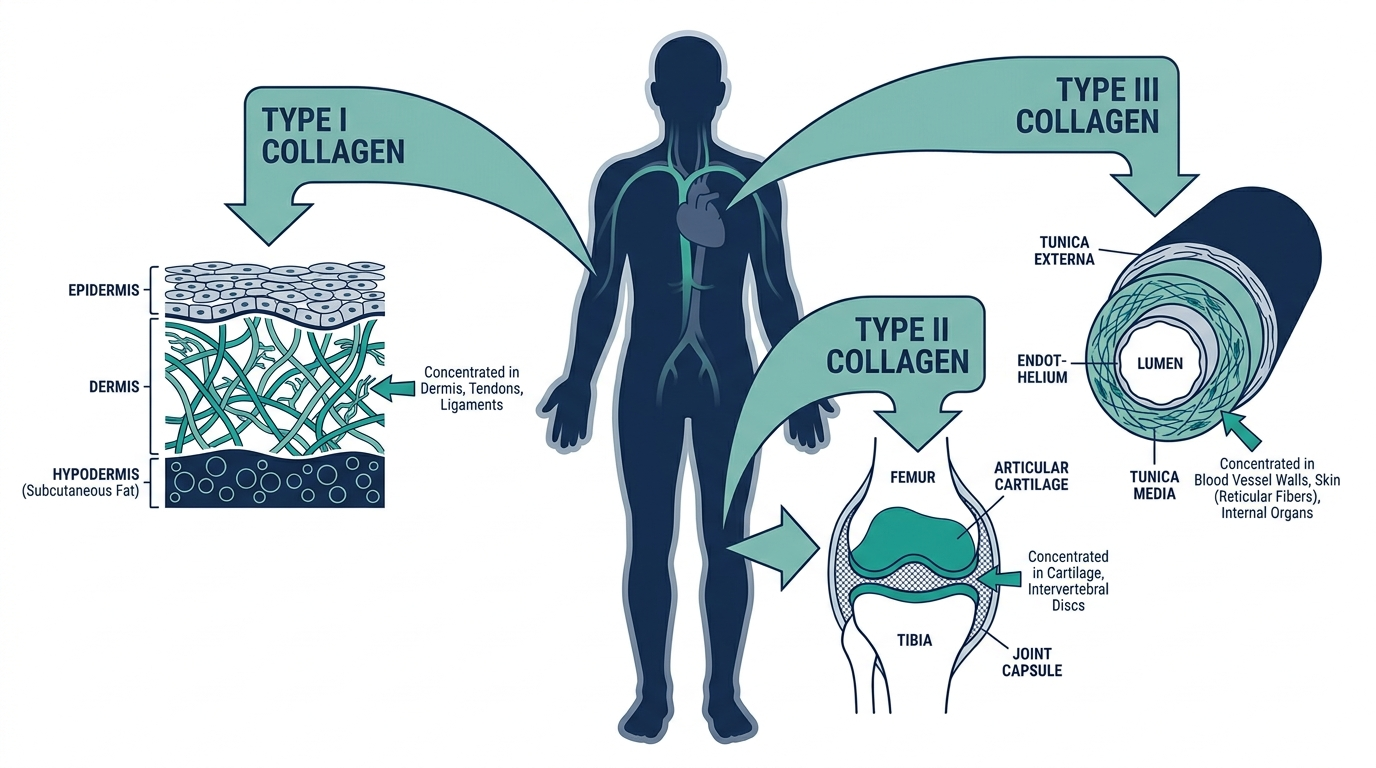
Collagen is the most abundant protein in the human body, making up roughly 30 percent of total protein mass. It is the structural scaffold behind skin firmness, tendon strength, cartilage cushion, and bone density. The problem is that native collagen is a triple-helix protein with a molecular weight around 285,000 to 300,000 daltons, far too large for your gut to absorb in any meaningful quantity.
Hydrolysis solves that. Manufacturers clean and pre-treat cow hides (the same hides left over after beef processing, making this a byproduct use rather than a dedicated slaughter), then use enzymatic hydrolysis to cleave the long triple-helix chains into short peptide fragments averaging 3,000 to 6,000 daltons. The result is a powder that dissolves in hot or cold liquid and that your small intestine can absorb as di- and tripeptides, primarily Pro-Hyp (proline-hydroxyproline) and Hyp-Gly (hydroxyproline-glycine). These circulate in blood and signal fibroblasts to ramp up endogenous collagen synthesis.
That signaling mechanism is what separates collagen peptides from a plain protein powder. The amino acid profile is almost identical on paper, but the specific sequences that survive digestion, particularly Pro-Hyp, have been shown in vitro and in human trials to directly stimulate collagen production in skin and cartilage.
Full-body lab membership: 100+ biomarkers, doctor-reviewed, tracked over time.
What types of collagen are in bovine peptides?
This is the question most supplement labels answer badly. Bovine collagen peptides contain primarily Type I and Type III collagen. Here is what each one does and why the pairing matters.
| Collagen Type | Where it lives in the body | Primary role |
|---|---|---|
| Type I | Skin (80%+ of dermal collagen), bone, tendons, ligaments, cornea | Tensile strength, skin firmness, bone matrix |
| Type II | Cartilage (90% of cartilaginous collagen) | Cushioning in joints, ear cartilage, intervertebral discs |
| Type III | Skin alongside Type I, blood vessels, intestinal wall, muscles | Elasticity, vessel integrity, gut lining repair |
| Type IV | Basement membranes (kidney, skin-dermis boundary) | Filtration layer in organs |
Bovine hides are rich in Type I and III because hide is connective tissue and skin, not cartilage. If you want Type II specifically for joint cartilage, you need chicken sternum collagen (sold as “undenatured Type II” or UC-II) or cartilage-specific bovine products. Bovine peptides still support joints, but the mechanism is different: they supply building-block amino acids rather than a cartilage-specific matrix protein.
Personally, I think the overemphasis on “type” in supplement marketing is mostly noise once the product is hydrolyzed. A 2024 crossover bioavailability study in Frontiers in Nutrition found that regardless of collagen source or molecular weight, all hydrolysates yielded comparable plasma concentrations of Pro-Hyp and Hyp-Gly, the key absorbed peptides, as long as the molecular weight was under 10 kDa (PMC11325589). Type matters most when the product is not fully hydrolyzed, which is rare with reputable brands.
How are bovine collagen peptides made?
The sourcing step is where quality diverges in ways most buyers never see. The manufacturing sequence looks like this:
- Hide sourcing: Hides from cattle are collected as a slaughterhouse byproduct. Grass-fed and pasture-raised sourcing signals fewer antibiotic residues and no synthetic growth hormones, though no peer-reviewed study has shown hydrolyzed peptides from grass-fed cattle perform differently in the body once fully hydrolyzed. The amino acid backbone of collagen does not change based on diet.
- Cleaning and pretreatment: Hides are soaked and washed to remove fats, impurities, and non-collagen proteins. Hair is removed at this stage.
- Hydrolysis: Enzymatic hydrolysis at controlled pH and temperature cleaves the triple-helix chains into short peptides averaging 3,000 to 6,000 daltons. This is the step that makes bovine collagen “bioavailable.”
- Filtration and sterilization: The liquid hydrolysate is filtered and pasteurized to remove bacterial contamination.
- Spray drying: The liquid is spray-dried into the pale, nearly tasteless powder in your container.
One detail the label never mentions: the enzyme chosen for hydrolysis affects the resulting peptide profile. Different proteases (pepsin, alcalase, papain, bromelain) produce different peptide sizes and sequences, which is why two “10g bovine collagen” products can have meaningfully different bioactive peptide fractions. Brands using proprietary or patented hydrolysates like Fortigel (developed by GELITA) typically have clinical data specific to that peptide blend, unlike generic collagen powders sold on raw-ingredient price alone.
What does the research actually show? (Benefits with real numbers)
Do not believe any single claim that collagen peptides are magic for everything. The evidence is strongest for skin and joints, more modest for other outcomes, and nonexistent for several popular claims.
Skin elasticity and hydration: A 2025 randomized double-blind placebo-controlled trial enrolled 66 women aged 35 to 55 and found that 2.5 grams per day of specific bioactive bovine collagen peptides for 8 weeks improved eye wrinkle volume, skin elasticity, and hydration compared to placebo (Journal of Cosmetic Dermatology, 2025). A 2025 review in Cosmetics also confirmed that oral bovine-derived bioactive collagen peptides stimulate dermal matrix synthesis and improve multiple clinical skin parameters (MDPI Cosmetics 2025).
Joint health and osteoarthritis: A 2025 double-blind randomized placebo-controlled trial in Joint Diseases and Related Surgery tested Type I and Type III collagen peptides specifically for osteoarthritis-related pain, quality of life, and physical function. A systematic review covering Type I collagen hydrolysate supplementation across multiple studies found the most commonly used dose was 10g per day across trial durations averaging 19.5 weeks (Orthopedic Reviews). The 2024 Sage Journals multicentric five-arm trial on knee osteoarthritis used a novel high-functional bovine collagen peptide and reported measurable improvement in pain and mobility scores (Journals SAGE 2024).
Athletic performance and hypoxia tolerance: A 2025 combined animal and human study published in PMC found bovine collagen peptide supplementation produced a 61.54 percent improvement in hypoxia tolerance and a roughly twofold increase in anti-fatigue capacity, with findings suggesting the effect may relate to improved oxygen-carrying efficiency in connective tissue (PMC12079017).
Gut health: The glycine in collagen (glycine is the most abundant amino acid in the molecule, at roughly 33 percent) has direct anti-inflammatory effects on gut epithelial cells and helps regulate tight junction proteins, the structures that control intestinal permeability. A 2024 Belgian study on Peptin, a Rousselot bovine collagen peptide product, showed benefits for bloating and digestive discomfort. This is a promising but underdeveloped research area.
Hair and nails: A 2024 randomized placebo-controlled trial in the Journal of Cosmetic Dermatology tested collagen peptide supplementation in 85 women aged 43 to 65 and reported improvements in nail health and visible aging signs (Wiley, 2024). Effects on hair are more modest in the literature; nail brittleness has the stronger signal.
Weight and metabolism: A 2025 animal study found low-molecular-weight bovine collagen peptides reduced adipose tissue by 15 to 28 percent in diet-induced obese mice and improved gut microbiota diversity (PMC12470321). Do not extrapolate that to humans yet. The metabolic data in human subjects is thin.
Hydrolyzed type I & III collagen peptides, third-party tested, unflavored.
Bovine collagen peptides vs. marine collagen: which should you take?
This comparison is asked constantly and answered sloppily. Here is the honest breakdown.
| Factor | Bovine collagen peptides | Marine collagen peptides |
|---|---|---|
| Source | Cow hides and bones | Fish skin, scales, and bones |
| Collagen types | Type I + Type III | Type I (predominantly) |
| Molecular weight (typical) | 3,000 to 6,000 Da (hydrolyzed) | 500 to 1,500 Da (often smaller) |
| Bioavailability | High once hydrolyzed | Reportedly 1.5x more bioavailable due to smaller native peptide size |
| Best clinical evidence for | Joints, skin, gut, anti-aging | Skin, hair (Type I specific) |
| Cost | Generally lower ($0.45 to $1.49 per 10g serving) | Generally higher |
| Allergen concern | Beef allergy (rare) | Fish or shellfish allergy (more common) |
| Environmental | Byproduct of beef industry | Byproduct of fishing/aquaculture |
| Vitamin C synergy | Same for both | Same for both |
The claim that marine collagen is universally “better absorbed” needs context. Marine collagen often has a smaller native peptide size, but when bovine collagen is fully hydrolyzed to under 3,000 Da (which reputable brands do), the absorption gap narrows considerably. The 2024 Frontiers in Nutrition crossover study found comparable plasma Hyp concentrations across sources at matched doses. If you have a fish allergy, bovine is the clear choice. If you eat no beef for ethical or religious reasons, marine is the alternative. For most people, the evidence is similar enough that cost and palatability should decide.
What are common myths about bovine collagen?
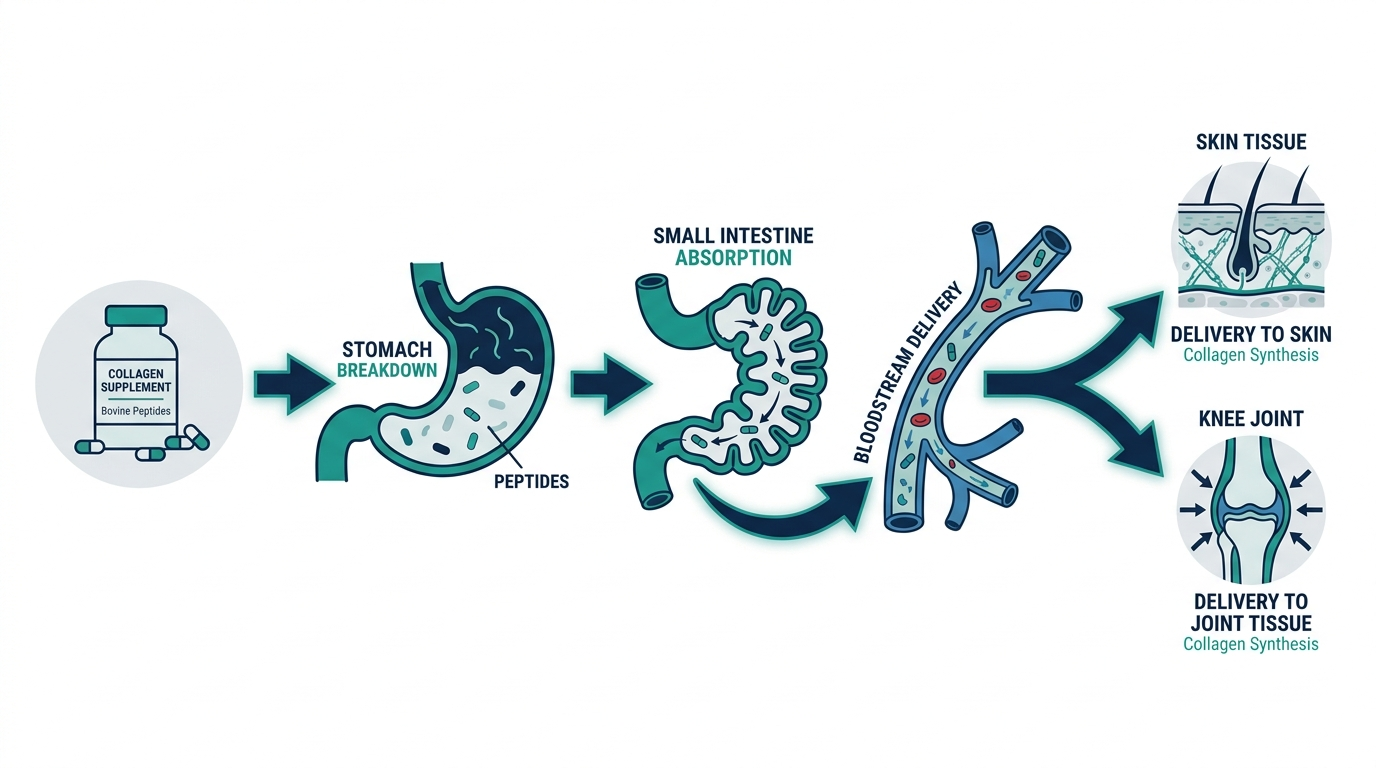
Myth: Collagen peptides from powder become collagen in your body directly. Not quite. The peptides are absorbed and signal your fibroblasts to produce collagen; they do not “become” skin collagen like Lego bricks snapping together. The body makes its own collagen from the amino acid precursors you supply.
Myth: More is always better. Clinical trials showing meaningful benefit used 2.5 to 10 grams per day. There is no strong evidence that 30 grams per day does more than 10 grams. The excess is metabolized as protein, not stored as skin.
Myth: Grass-fed bovine collagen peptides are clinically superior. No peer-reviewed study has shown that hydrolyzed collagen from grass-fed cattle produces different outcomes in human subjects compared to conventional sources. “Grass-fed” signals cleaner sourcing and no synthetic hormones, which is reasonable to prefer, but it is not a performance claim with clinical backing.
Myth: You need special “collagen protein” rather than regular protein. Collagen peptides work partly because the specific Pro-Hyp and Hyp-Gly dipeptide and tripeptide sequences survive digestion and have direct fibroblast-signaling effects. This is different from getting the amino acids from whey. But collagen is not a complete protein (it is low in tryptophan, leucine, and isoleucine), so it should not replace a full protein source in your diet.
What is the correct dose and timing?
The clinical literature clusters around these ranges:
- For skin: 2.5 to 5 grams per day for 8 to 12 weeks, minimum. The 2025 skin trial used 2.5g.
- For joints: 10 grams per day for 12 to 24 weeks. Most joint trials used 10g.
- For gut support: No established clinical dose; 10g per day is common practice.
Timing matters less than consistency, but there is one real nuance: collagen peptides are not a complete protein, so do not count them toward your daily protein target the way you would count whey or eggs. Take them in addition to, not instead of, a protein-sufficient diet.
Take them with Vitamin C. Vitamin C is a required cofactor for prolyl hydroxylase, the enzyme that converts proline to hydroxyproline during collagen synthesis. No Vitamin C, no hydroxylation, no stable triple helix. Most collagen powders do not include Vitamin C, but Vital Proteins’ “Advanced” formula and several others now add it. If yours does not, take it with a glass of orange juice or a 250 to 500mg Vitamin C supplement.
When should you NOT take bovine collagen peptides?
Bovine collagen peptides are classified as a dietary supplement under DSHEA and are broadly recognized as safe. They are not FDA-approved drugs. Situations where you should talk to a doctor first:
- Beef allergy: Rare, but bovine collagen is derived from cattle and can trigger a reaction.
- Kidney disease: Collagen is high in glycine and proline; elevated amino acid load may matter at reduced GFR. No evidence of harm in healthy kidneys.
- Phenylketonuria (PKU): Collagen does not contain phenylalanine in significant amounts, but check the label on flavored versions that may add sweeteners.
- Pregnancy and breastfeeding: Not enough data to recommend specific doses. Conservative approach: discuss with your OB.
One honest tradeoff worth flagging: collagen peptides are not calorie-free. A 10g serving is roughly 35 to 40 calories and about 9 to 10 grams of protein. If you are in a strict calorie-counting context, that counts.
How to read a bovine collagen peptide label
Most of the confusion buyers have comes from labels that use five synonyms for the same thing. A quick decoder:
- Hydrolyzed collagen = collagen hydrolysate = collagen peptides: All mean the native collagen has been broken into absorbable peptide fragments. These are the forms with bioavailability data.
- Gelatin: Partially hydrolyzed collagen. Has collagen amino acids but larger molecular weight and lower bioavailability. It gels when cooled.
- Native/undenatured collagen: Not hydrolyzed. Rarely used in powder supplements except for Type II joint products (UC-II).
- Molecular weight: Look for products specifying a range under 5,000 Da. A few premium products (GELITA’s Fortigel, Rousselot’s Peptan) publish molecular weight data and have clinical studies on those specific fractions.
- “Grass-fed”: Look for “pasture-raised” on the label. No third-party certification body like USDA Organic covers the “grass-fed” claim for hide collagen specifically, so it relies on the manufacturer’s attestation.
One insider detail worth knowing: the country of origin for the hides matters for regulatory oversight, not for amino acid content. US and EU hides are processed under stricter food-safety protocols. Some budget brands source from South American or Asian hides where documentation is thinner. This matters for heavy-metal testing and pathogen control, not for the collagen peptide biochemistry itself.
Don’t just read about your health, track it.
A single result is a snapshot. Superpower re-tests 100+ markers over time so you can watch them move as you change sleep, food, and training.
Frequently asked questions
What is the difference between bovine collagen and bovine collagen peptides?
“Bovine collagen” refers to the native, intact collagen protein extracted from cattle. It is enormous (roughly 300,000 daltons) and poorly absorbed. “Bovine collagen peptides” (also called hydrolyzed bovine collagen) have been enzymatically broken into short fragments of 3,000 to 6,000 daltons that dissolve in liquid and absorb efficiently in the small intestine. Supplement labels use both terms, but “peptides” or “hydrolyzed” is what you want for bioavailability.
How long does it take for bovine collagen peptides to work?
For skin, most clinical trials show measurable changes in elasticity and hydration by week 8 at 2.5 to 5g per day. For joints, meaningful pain and mobility changes typically emerge at 12 to 24 weeks at 10g per day. You will not feel anything in the first two weeks. Anyone promising visible results in 7 days is selling hope, not data.
Are bovine collagen peptides safe?
Collagen peptides are broadly considered safe for most adults. They are regulated as dietary supplements under DSHEA and must comply with FDA Good Manufacturing Practice rules, though they do not require pre-market FDA approval. No significant adverse effects have been reported in clinical trials at doses up to 15 grams per day. People with beef allergies and those with kidney disease should consult a physician first.
Can bovine collagen peptides replace protein powder?
No. Bovine collagen is not a complete protein. It is deficient in tryptophan (an essential amino acid) and relatively low in leucine and isoleucine, which are critical for muscle protein synthesis. It is a supplement that targets connective tissue, not a meal replacement protein. Pair it with a complete protein source for muscle support.
What is the best form: powder, capsule, or liquid?
Powder at 10 to 20 grams per serving is the most practical for hitting therapeutic doses. Capsules typically max out at 1 to 3 grams per serving, requiring 5 to 10 capsules to match a clinical dose. Ready-to-drink collagen waters (like Vital Proteins Collagen Water) typically contain 10 to 15 grams but cost significantly more per gram. Powder is the most cost-effective.
Does heating destroy collagen peptides?
No. Hydrolyzed collagen peptides are already denatured and broken down. Adding them to hot coffee, tea, or cooked recipes does not degrade their amino acid content or the active dipeptide sequences. This is a genuine advantage over some delicate nutrients. Stir into your morning drink without concern.
Is bovine collagen peptides the same as bone broth protein?
Related but different. Bone broth protein is made by simmering bones and connective tissue in water, which extracts collagen partially hydrolyzed by the cooking process. It contains collagen peptides alongside other proteins and minerals. Commercial hydrolyzed bovine collagen peptides are more completely processed, with a defined and consistent molecular weight profile. Bone broth is whole food; collagen peptides are a standardized extract.
Author: Vital Signs Today Editorial Team, [credential]”]. Educational content, not medical advice. Sources linked inline.
Hydrolyzed type I & III collagen peptides, third-party tested, unflavored.
Primary sources:
- Wang et al., “The Sustained Effects of Bioactive Collagen Peptides on Skin Health,” Journal of Cosmetic Dermatology 2025: https://onlinelibrary.wiley.com/doi/10.1111/jocd.70565
- “The Oral Intake of Specific Bovine-Derived Bioactive Collagen Peptides Has a Stimulatory Effect on Dermal Matrix Synthesis,” MDPI Cosmetics 2025: https://www.mdpi.com/2079-9284/12/2/79
- “Absorption of Bioactive Peptides Following Collagen Hydrolysate Intake,” Frontiers in Nutrition 2024: https://www.ncbi.nlm.nih.gov/pmc/articles/PMC11325589/
- “Bovine Collagen Peptide Improves Hypoxia Tolerance and Anti-Fatigue Capacity,” PMC 2025: https://www.ncbi.nlm.nih.gov/pmc/articles/PMC12079017/
- “Low-Molecular-Weight Bovine Collagen Peptides Reduce Fat Accumulation,” PMC 2025: https://www.ncbi.nlm.nih.gov/pmc/articles/PMC12470321/
- “Effect of Supplementation with Type 1 and Type 3 Collagen Peptide on Osteoarthritis,” Joint Diseases and Related Surgery 2025: https://www.jointdrs.org/full-text/1642
- Devasia et al., multicentric knee osteoarthritis RCT, Journals SAGE 2024: https://journals.sagepub.com/doi/10.1177/19476035231221211
- “The Effects of Type I Collagen Hydrolysate Supplementation on Bones, Muscles, and Joints: A Systematic Review,” Orthopedic Reviews: https://orthopedicreviews.openmedicalpublishing.org/article/129086-the-effects-of-type-i-collagen-hydrolysate-supplementation-on-bones-muscles-and-joints-a-systematic-review
- Vleminckx et al., skin and nail collagen trial, Journal of Cosmetic Dermatology 2024: https://onlinelibrary.wiley.com/doi/10.1111/jocd.16458
- Illuminate Labs, “Best Collagen Powder 2026”: https://illuminatelabs.org/blogs/health/best-collagen-powder
- Treeline Review, “9 Best Collagen Powders of 2026”: https://www.treelinereview.com/gearreviews/best-collagen-powders
- FDA GRAS notice GRN 1171 (Geltor PrimaColl): https://www.fda.gov/media/186898/download
Related reading
Vital Signs Today may earn a commission if you buy through links on this page. It does not affect our editorial assessments.