You got your blood work back, scanned the metabolic panel, and there it was near the bottom: magnesium, with a single number beside it. Maybe it sat inside the reference range and you moved on. Here is what almost nobody tells you. That one number is measuring less than one percent of all the magnesium in your body, and that gap is the most important thing to understand about it.
Magnesium runs hundreds of reactions in you, from your heartbeat to your blood sugar. The test that checks it is simple. Reading it correctly is not, and that is where most explainers stop short.
Magnesium sitting quietly in range doesn’t always tell the whole story. See it alongside your full metabolic panel. One at-home Superpower draw checks 100+ biomarkers, physician-reviewed.
What is a magnesium blood test?
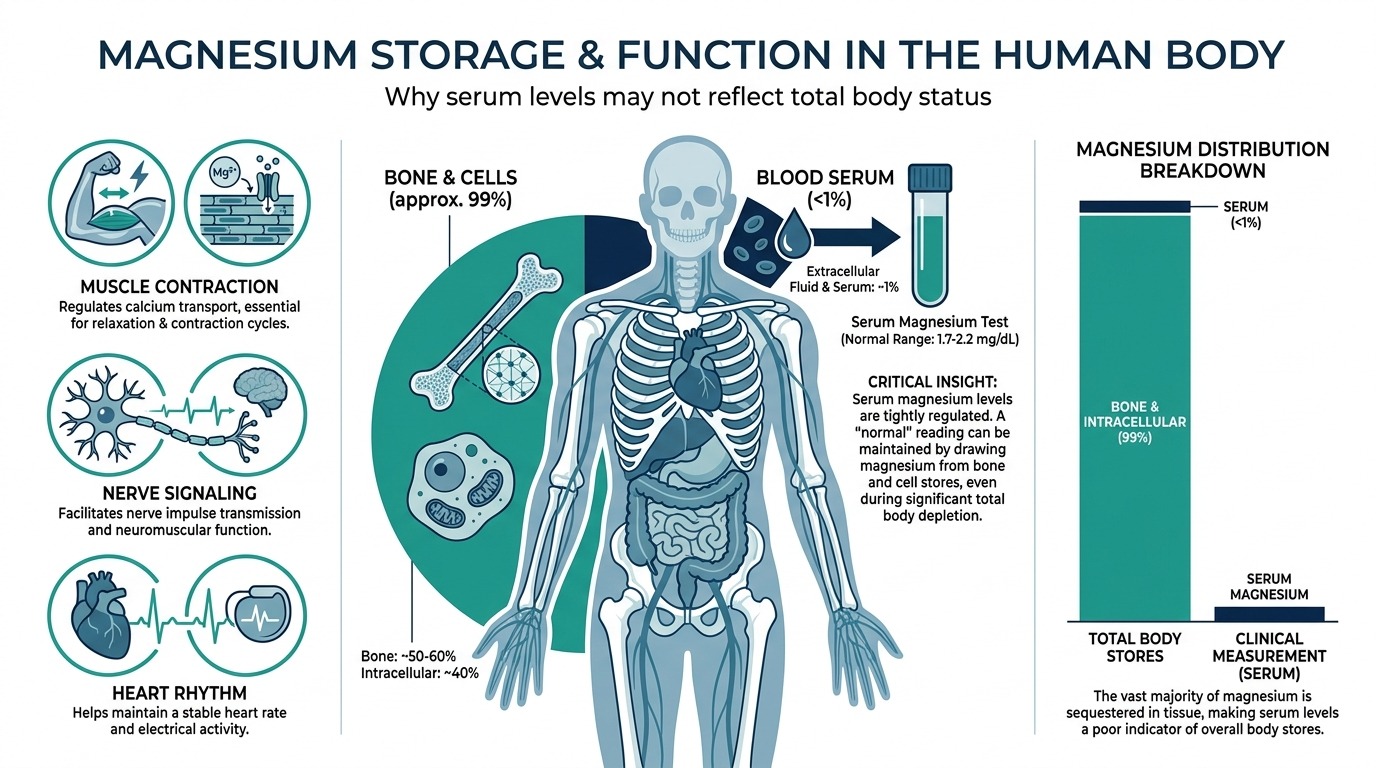
A magnesium blood test measures the amount of magnesium in a sample of your blood, usually the magnesium dissolved in your serum (MedlinePlus). Magnesium is an electrolyte, a mineral that carries an electrical charge and is needed for many chemical processes in the body. It helps maintain normal muscle and nerve function, keeps your heartbeat steady, supports strong bones, and helps regulate blood pressure and blood sugar (MedlinePlus). In plain terms, the test is a quick snapshot of whether the magnesium circulating in your blood is too low, too high, or where it should be.
The blood draw itself is ordinary. A technician takes blood from a vein in your arm, the lab measures the magnesium, and you get a number back in milligrams per deciliter (mg/dL) or millimoles per liter (mmol/L). The interesting part is what that number can and cannot tell you, which we will get to.

What is magnesium in a blood test, and what does it actually measure?
When you see magnesium on a blood test, it is reporting the concentration of magnesium floating in the liquid part of your blood at the moment of the draw. That distinction matters more than it sounds. Most of your body’s magnesium is locked away inside your bones and your cells, and only the small fraction dissolved in your blood plasma is freely available for your cells and organs to use (Cleveland Clinic).
So a standard magnesium blood test is measuring the easy-to-reach pool, not the total reserve. Think of it like checking the cash in your wallet rather than the balance in your bank account. The wallet can look fine while the account quietly drains. That is the single most useful idea to carry through the rest of this article, because it explains why a normal magnesium result does not always mean you have enough magnesium.
What blood test is for magnesium, and when is it ordered?
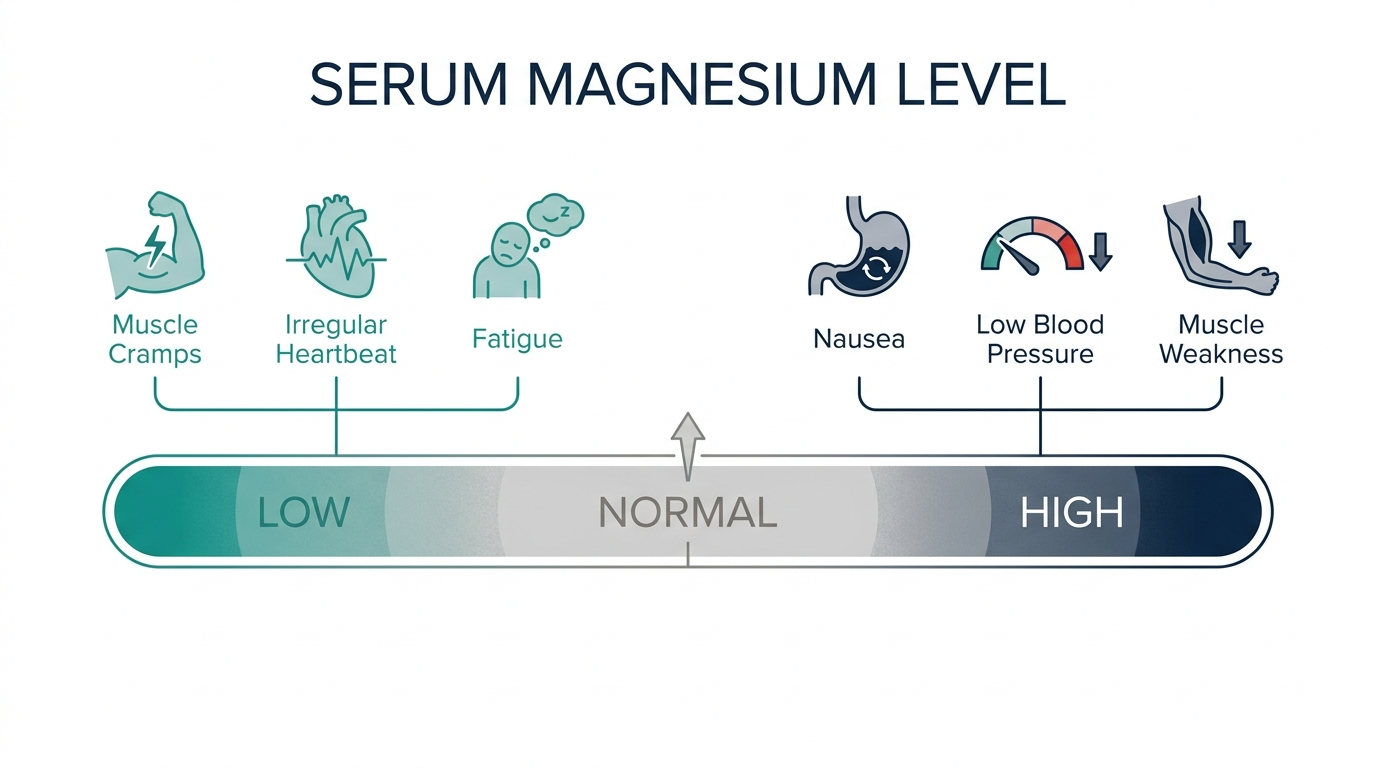
The standard order is called a serum magnesium test, and it is the blood test for magnesium that most clinicians use first. Your provider typically orders it when they suspect your magnesium is off, either too low or too high (MedlinePlus). Common triggers include unexplained muscle cramps, tremors, numbness or tingling, fatigue, an irregular heartbeat, nausea, or loss of appetite (Cleveland Clinic).
It is also ordered in specific situations where magnesium tends to drift, such as poorly controlled diabetes, alcohol use disorder, chronic diarrhea, kidney disease, or while you are taking medications that deplete magnesium like diuretics, proton pump inhibitors, and certain antibiotics (MedlinePlus). Because magnesium, potassium, and calcium are tightly linked, a magnesium test is frequently run alongside those electrolytes rather than alone.
If your provider wants a deeper look, there is a second option. A magnesium RBC test measures the magnesium inside your red blood cells, and it may be better at finding low magnesium than a regular serum test (MedlinePlus). It is the closest common blood test to peeking at your bank account instead of your wallet.
What is a normal magnesium level on a blood test?
A normal blood magnesium level generally runs from about 1.7 to 2.2 mg/dL, which is roughly 0.70 to 0.91 mmol/L (MedlinePlus). Reference ranges vary slightly by laboratory and the equipment they use. Cleveland Clinic, for example, describes normal magnesium as falling between 1.7 and 2.3 mg/dL (Cleveland Clinic). The honest takeaway is to read your result against the reference range printed on your own report, because that is the range your lab actually calibrated.
Here is the practical version. A result comfortably inside the range is reassuring on its face, but as you will see in a moment, it does not fully rule out a magnesium problem. Numbers below or above your lab’s cutoffs are the ones that get a clinician asking why.

What does a low magnesium level mean?
A low magnesium level, called hypomagnesemia, means there is not enough magnesium circulating in your blood, and it is far more common than a high level (Cleveland Clinic). It usually comes down to one of three things: you are not taking in enough, your gut is not absorbing it, or your body is losing too much.
The usual culprits include (Cleveland Clinic):
- Poor intake or absorption. A low-magnesium diet, celiac disease, inflammatory bowel disease, gastric bypass surgery, or long-term proton pump inhibitor use.
- Excess loss through the kidneys. Alcohol use disorder, uncontrolled diabetes, and certain drugs including diuretics, some antibiotics, and chemotherapy agents.
- Excess loss through the gut. Chronic or severe diarrhea.
- Magnesium shifting out of the blood, as can happen in acute pancreatitis or after surgery for an overactive parathyroid.
Mild deficiency can cause tremors, muscle cramps, numbness in the hands and feet, abnormal eye movements, fatigue, and weakness. Severe cases can trigger seizures, confusion, and dangerous heart rhythms (Cleveland Clinic). Because low magnesium often drags potassium and calcium down with it, correcting magnesium is sometimes the missing key when those electrolytes will not stay normal.
What does a high magnesium level mean?
A high magnesium level, called hypermagnesemia, means too much magnesium has built up in your blood, and it is genuinely uncommon (Cleveland Clinic). Cleveland Clinic considers a level above 2.6 mg/dL to be high. The reason it is rare in healthy people is that working kidneys are excellent at flushing out extra magnesium.
That is why the most common cause is kidney failure: when the kidneys cannot clear magnesium, it accumulates (Cleveland Clinic). Other causes include taking large amounts of magnesium-containing antacids, laxatives, or supplements, as well as adrenal insufficiency, hypothyroidism, and severe dehydration or diabetic ketoacidosis (MedlinePlus). Mild elevations often cause no symptoms, but rising levels can bring nausea, weakness, confusion, low blood pressure, and at the extreme, problems with breathing and heart rhythm (Cleveland Clinic).
Why a normal magnesium result can still be misleading
This is the part that separates a casual reading from a clinician’s reading. Your blood magnesium can sit squarely in the normal range while the magnesium stored in your body is actually running low. The reason is that your body fiercely protects its blood level by pulling magnesium out of your bones to keep the number stable (MedlinePlus).
In other words, serum magnesium is the last thing to fall. By the time the blood number finally drops, your reserves may have been depleted for a long while. This is exactly why a magnesium RBC test, which looks inside your red blood cells, can catch a deficiency that a standard serum test misses (MedlinePlus).
The takeaway a knowledgeable clinician keeps in the back of their mind: if your symptoms scream low magnesium, the cramps, the tremors, the stubborn potassium that will not normalize, a normal serum result does not necessarily close the case. It can be worth treating the picture, not just the printout, or ordering the RBC test for a truer reading. A normal number is reassuring, but it is not a guarantee that your tank is full.

Why magnesium is read alongside potassium and calcium
Magnesium rarely travels alone on a lab report, and there is a deep physiological reason it is grouped with potassium and calcium. The three electrolytes are functionally interlocked, and magnesium sits at the center as a kind of gatekeeper. This relationship produces one of the most useful clinical patterns in electrolyte medicine.
The classic example is refractory hypokalemia, low potassium that stubbornly refuses to correct no matter how much potassium is replaced. Magnesium is often the hidden reason. Low magnesium promotes potassium loss through the kidneys, so until the magnesium is restored, supplemental potassium simply washes out. Experienced clinicians who see a potassium that will not stay up learn to check the magnesium, because fixing magnesium is frequently the missing key that lets potassium finally normalize.
Calcium is tied in too. Severe magnesium deficiency can lower calcium by impairing the release and action of parathyroid hormone, the hormone that regulates calcium. So a low calcium that resists correction can also, in some cases, trace back to magnesium. When a report shows a stubborn potassium or calcium, magnesium is the number a thoughtful reader checks next.
Medications and conditions that quietly drain magnesium
A large share of low-magnesium results come not from diet but from something depleting the mineral in the background. Knowing the common drainers helps explain an unexpected result.
- Proton pump inhibitors, the widely used acid-reducing drugs, can lower magnesium with long-term use by reducing gut absorption. This is common enough that regulators have flagged it, and it is worth raising with a clinician if you take one for years.
- Diuretics, especially loop and thiazide types used for blood pressure and fluid, increase magnesium loss through the urine.
- Alcohol, particularly with heavy or chronic use, both reduces intake and increases urinary loss, which is why magnesium is often low in alcohol use disorder.
- Uncontrolled diabetes, where high blood sugar drives extra magnesium out through the urine.
- Chronic diarrhea or gut disease such as celiac or inflammatory bowel disease, which reduce absorption.
- Certain antibiotics and chemotherapy agents, which can increase kidney losses.
The pattern to notice: if your magnesium is low and you take one of these long-term, the medication or condition is often the story, and the fix involves addressing the source, not just swallowing more magnesium.
Where magnesium comes from and why supplement form matters
Most people can meet magnesium needs from food, and knowing the sources helps put a borderline result in context. Magnesium is concentrated in leafy green vegetables, nuts and seeds, legumes, whole grains, and dark chocolate. A diet heavy in processed food and light on these is a common reason intake falls short.
When supplements are used, the form affects both absorption and side effects, which is a practical detail patients rarely hear. Forms such as magnesium citrate and magnesium glycinate tend to be reasonably absorbed, while magnesium oxide is poorly absorbed and more likely to cause a laxative effect, which is exactly why magnesium-containing laxatives exist. Because the kidneys clear excess magnesium efficiently in healthy people, supplements are usually safe, but they are a genuine risk in someone with reduced kidney function, where magnesium can accumulate to dangerous levels. This is a case where “more is better” is simply wrong, and where kidney status decides safety.

How to prepare and what can distort a magnesium result
The magnesium blood test does not usually require special preparation, but a few factors can shift the number and are worth knowing.
- Recent supplements or antacids. Magnesium-containing antacids, laxatives, or supplements taken shortly before the draw can transiently raise the reading, so mention what you have taken recently.
- Hemolysis in the sample. Because cells hold far more magnesium than serum, red cells breaking in the tube can falsely raise the result. A lab may flag a hemolyzed sample and request a redraw.
- Timing with other electrolytes. Since magnesium interacts with potassium and calcium, drawing them together gives a fuller picture than magnesium alone.
- Kidney function context. A high magnesium is read very differently in someone with kidney disease, where clearance is impaired, than in someone with healthy kidneys.
Why clinicians care about magnesium beyond the number
Magnesium participates in hundreds of enzymatic reactions, so its effects ripple into several systems that make the test clinically important.
- Heart rhythm. Magnesium helps stabilize the electrical activity of the heart, and low levels can contribute to certain arrhythmias. This is why magnesium is checked and often corrected in patients with rhythm problems.
- Blood pressure and blood sugar. Magnesium plays a role in vascular tone and insulin signaling, and chronically low intake has been associated with higher blood pressure and poorer glucose control in population studies.
- Muscle and nerve function. The cramps, tremors, and tingling of deficiency come from magnesium’s role in normal nerve and muscle signaling.
- Bone health. A large fraction of the body’s magnesium is stored in bone, where it contributes to structure alongside calcium.
Understanding these roles explains why a magnesium result is not just a number to file away. It touches the heartbeat, the blood pressure, and the metabolism all at once.
Reading three sample magnesium results in context
- Magnesium 1.5 mg/dL with muscle cramps and a low potassium that will not correct. This is the textbook picture where magnesium is the root cause. Correcting the magnesium is often what finally allows the potassium to stabilize.
- Magnesium 2.0 mg/dL (normal) but classic deficiency symptoms and long-term PPI use. A normal serum value does not fully rule out depletion, because the body defends the blood level. Here a clinician may consider an RBC magnesium test or treat the clinical picture.
- Magnesium 2.9 mg/dL in someone with kidney disease. A high value in the setting of impaired kidney clearance is the expected and concerning pattern, and it prompts a review of magnesium-containing medications and supplements rather than reassurance.
Who should get tested, and what a result steers next
A magnesium test is not part of every routine panel, so it usually gets added when there is a reason. Good candidates for checking magnesium include people with unexplained muscle cramps or an irregular heartbeat, those with a potassium or calcium that will not correct, anyone on long-term diuretics or acid-reducing drugs, people with alcohol use disorder or poorly controlled diabetes, and patients with kidney disease where either extreme is possible. If a result comes back low, the sensible path is to look for the source (diet, absorption, or loss), correct the deficiency, and address any driving medication or condition rather than treating the number in isolation. If it comes back high, the first question is almost always about the kidneys and about any magnesium-containing products being taken. In both directions, the result is a prompt to find the underlying cause, and a normal result in someone with strong symptoms may still justify a closer look, such as an RBC magnesium test.
Common misunderstandings about the magnesium test
- “A normal serum magnesium means my magnesium is fine.” Not necessarily. The blood level is defended by pulling from bone, so it can read normal while stores are low. Symptoms and context still matter.
- “Low magnesium is just a diet problem.” Often it is a drainage problem instead, from medications like PPIs and diuretics, from alcohol, or from gut and kidney conditions.
- “More magnesium is always safe.” Not with reduced kidney function. When the kidneys cannot clear it, supplements can push magnesium to dangerous levels.
- “All magnesium supplements are the same.” They are not. Forms differ in absorption and in how likely they are to loosen the bowels, which is why the form on the label matters.
- “Magnesium only affects muscles.” It reaches far wider, influencing heart rhythm, blood pressure, blood sugar, bone, and nerve function.
Curious where your magnesium really sits?
Baseline magnesium and 100+ biomarkers today and retest as life changes, all in one membership with physician review.
Frequently asked questions
What is a magnesium blood test used for?
It measures the magnesium dissolved in your blood to check for levels that are too low or too high (MedlinePlus). Clinicians order it for symptoms like muscle cramps, tremors, fatigue, or irregular heartbeat, and in conditions such as diabetes, kidney disease, and alcohol use disorder.
What is a normal magnesium level on a blood test?
A normal blood magnesium level is generally about 1.7 to 2.2 mg/dL, or roughly 0.70 to 0.91 mmol/L, though ranges vary slightly by lab (MedlinePlus). Always compare your result to the reference range printed on your own report.
Can my magnesium be low even if the blood test is normal?
Yes. Your body pulls magnesium from your bones to keep the blood level steady, so serum magnesium can read normal while your stored magnesium is low (MedlinePlus). A magnesium RBC test may detect a deficiency that a standard test misses.
What does a high magnesium level mean?
A high level, or hypermagnesemia, usually points to the kidneys not clearing magnesium, with kidney failure being the most common cause (Cleveland Clinic). Excess magnesium from supplements, antacids, or laxatives can also raise it.
What blood test is best for finding low magnesium?
The serum magnesium test is the standard first step, but a magnesium RBC test, which measures magnesium inside red blood cells, may be better at detecting low magnesium (MedlinePlus). Your clinician decides which is appropriate based on your symptoms.
This article is for general educational purposes and is not medical advice. It cannot diagnose or treat you and does not replace your clinician. Always discuss your lab results and any health decisions with a qualified healthcare professional.
Vital Signs Today may earn a commission if you buy through links on this page. It does not affect our editorial assessments.