
Part of our Comprehensive Metabolic Panel guide.
You got your blood work back, scanned the electrolyte section, and there it was, tucked between sodium and CO2: chloride. Sodium gets all the attention, potassium gets the worried phone calls, and chloride just sits there quietly, almost always inside the reference range. Most people glance at it and move on.
Here is what they miss. Chloride is the electrolyte that experienced clinicians read last but think about hardest, because of all the numbers on a basic panel it is the one most tied to your body’s acid and base balance. Read correctly, it tells a story the other electrolytes cannot.
What is chloride in a blood test?
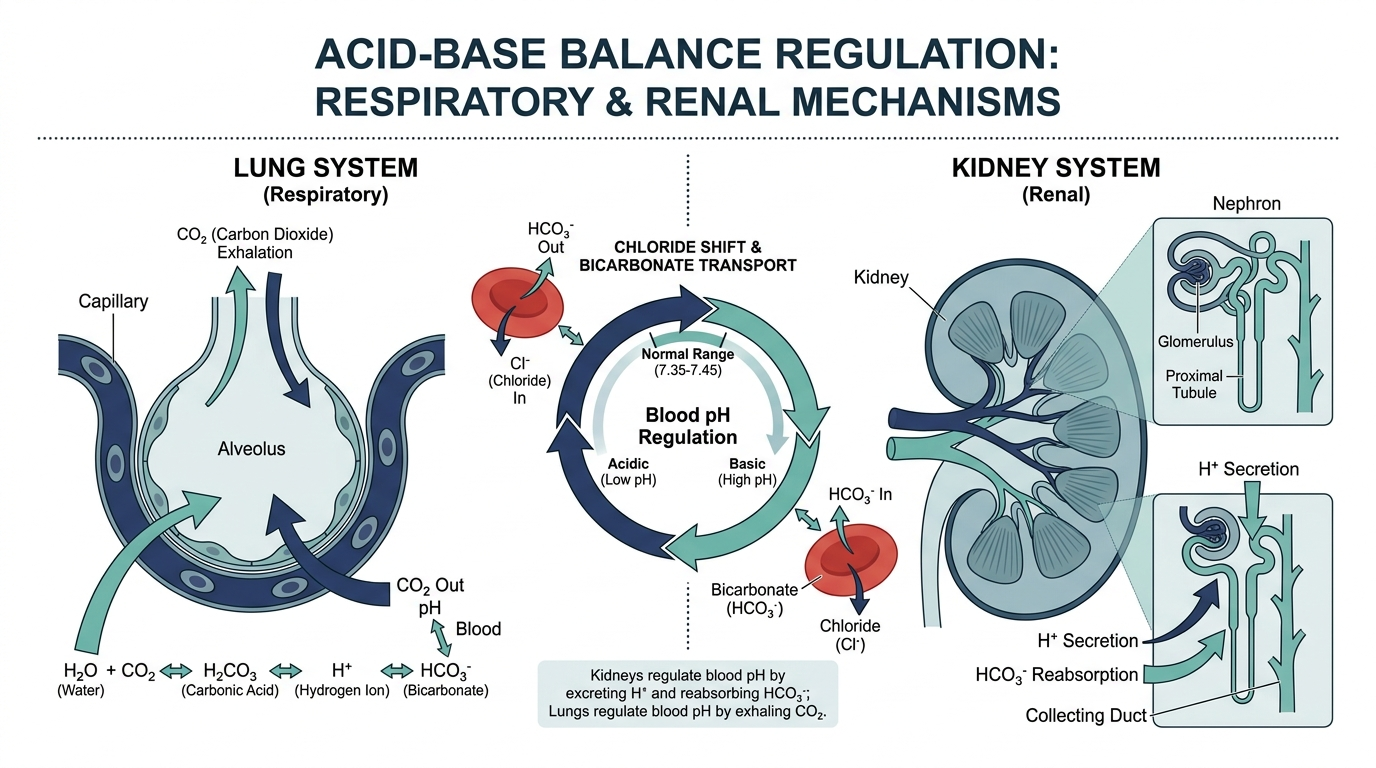
Chloride in a blood test is a measurement of the amount of chloride, a negatively charged electrolyte, dissolved in the liquid part of your blood. It is one of the core electrolytes your body uses to control fluid balance and to keep the acidity of your blood (your pH) within a tight, survivable window (MedlinePlus). In plain terms: chloride is a fluid and acid-base regulator, and the number on your report reflects how much of it is circulating right now.
Chloride almost never travels alone. Your kidneys handle it in close partnership with sodium and bicarbonate, which is exactly why it rarely gets ordered as a standalone test. When you understand that it is a tag-team player, the rest of the report starts to make sense.

What does chloride mean in a blood test, and why is it measured?
When people ask what does chloride mean in a blood test, the honest answer is that chloride is a marker of two things at once: how much fluid your body is holding and where your acid-base balance is sitting. It is measured because shifts in chloride often signal dehydration, kidney problems, or a disturbance in blood pH before you feel obviously sick (Cleveland Clinic).
So what is a chloride blood test in practice? It is almost always a single line item inside a larger panel rather than a test you book on its own. Chloride is routinely included in the basic metabolic panel (BMP), the comprehensive metabolic panel (CMP), the electrolyte panel, and the renal function panel (Cleveland Clinic). A clinician may pay closer attention to it if you have had repeated vomiting, diarrhea, dehydration, weakness, or trouble breathing, all of which can throw off your fluid and acid-base state.
What is a normal chloride level in a blood test?
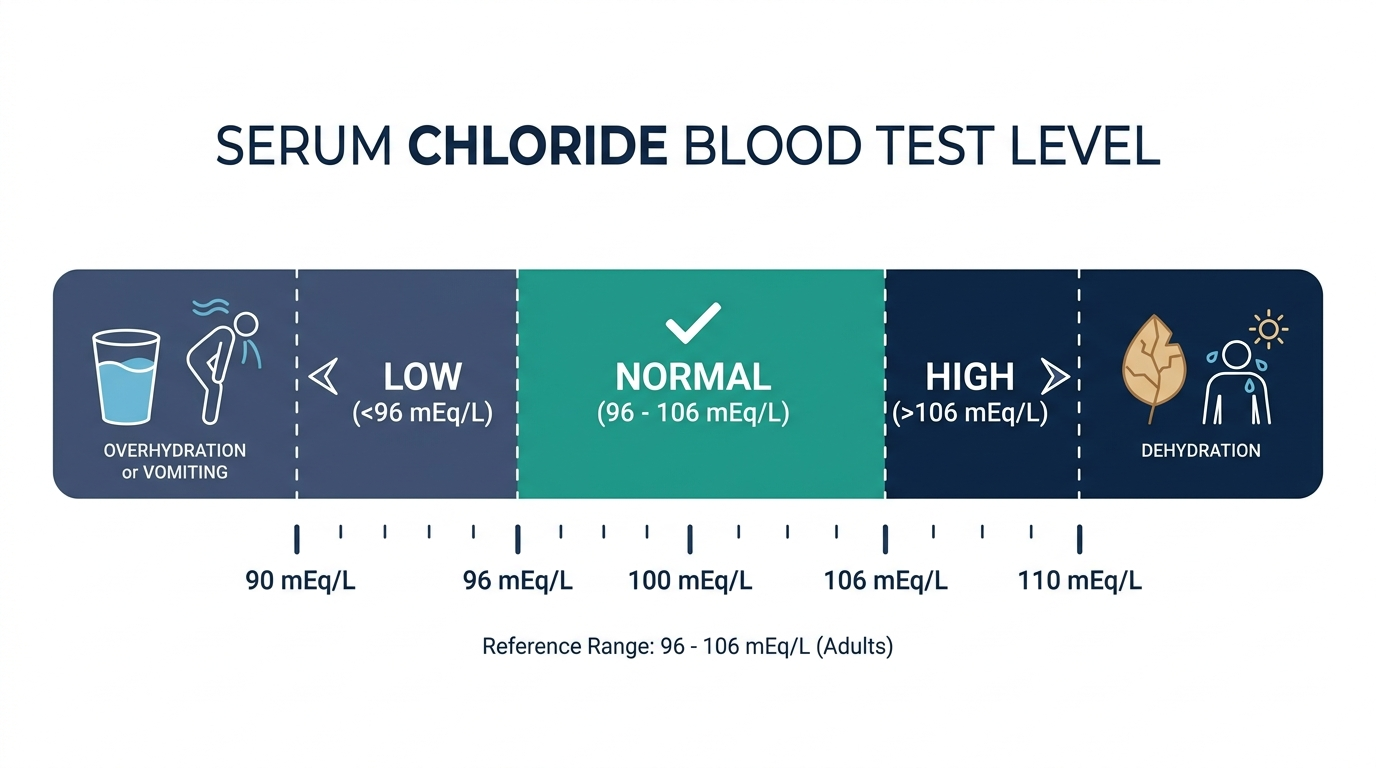
A normal chloride level in a blood test for adults is generally about 96 to 106 milliequivalents per liter (mEq/L), which is the same as 96 to 106 millimoles per liter (mmol/L) (Cleveland Clinic). That same range, 96 to 106 mEq/L, is the figure cited in the classic clinical reference literature as well (NCBI Bookshelf, Serum Chloride).
The important caveat: laboratories calibrate their own instruments, so the exact cutoffs can differ slightly from one lab to the next. Always read your chloride result against the reference range printed on your own report, not against a number you found online, because that printed range is the one your lab actually validated.
What does a high chloride level mean?
A high chloride level, known as hyperchloremia, usually points to one of two situations: your body has lost too much fluid relative to chloride, or your blood has become too acidic. It is a clue, not a diagnosis (Cleveland Clinic). Common explanations include:
- Dehydration. When you lose water, the chloride that remains becomes more concentrated, nudging the number up (MedlinePlus).
- Metabolic acidosis. When bicarbonate is lost, for example through severe diarrhea, chloride tends to rise to fill the gap, a pattern sometimes called hyperchloremic acidosis (NCBI Bookshelf, Serum Chloride).
- Kidney disease. Because the kidneys regulate chloride, impaired kidney function can let it climb (MedlinePlus).
- Large volumes of IV saline, which is essentially salt water and can push chloride up in hospitalized patients.
Here is the insider point that rarely makes the patient version. A chloride above roughly 110 mEq/L, paired with a low bicarbonate and a blood pH below 7.35, is the fingerprint of hyperchloremic metabolic acidosis (NCBI Bookshelf, Serum Chloride). Clinicians do not just look at chloride in isolation; they watch how it moves opposite to bicarbonate. When chloride goes up and bicarbonate goes down by a similar amount, that inverse dance is itself the diagnostic signal, often more informative than either number alone.

What does a low chloride level mean?
A low chloride level, called hypochloremia, generally signals that you have lost chloride faster than your body can replace it, or that your blood has tilted toward being too alkaline. Like a high result, it is interpreted in context rather than treated as a standalone verdict (Cleveland Clinic). Typical causes include:
- Prolonged vomiting or stomach suction, which strips out hydrochloric acid and drags chloride down (NCBI Bookshelf, Serum Chloride).
- Heart failure, where fluid retention dilutes the chloride that is present (MedlinePlus).
- Chronic lung disease such as emphysema, where the body retains CO2 and shifts chloride down to compensate (MedlinePlus).
- Addison disease and metabolic alkalosis, both of which disturb the electrolyte balance (MedlinePlus).
Mild hypochloremia often causes no symptoms at all. When the drop is significant and tied to alkalosis, it can show up as muscle cramps, twitching, and in severe cases more serious neuromuscular problems, which is why a markedly low chloride is worth following up rather than ignoring.
Why is chloride read together with sodium and bicarbonate?
Chloride is read alongside sodium and bicarbonate because those three electrolytes move as a system, and the relationships between them carry more meaning than any single value. This is the difference between someone who skims the report and someone who actually reads it (NCBI Bookshelf, Serum Chloride).
The clearest example is the anion gap, a calculation that subtracts chloride and bicarbonate from sodium to check the balance of charges in your blood (Cleveland Clinic). Chloride is a load-bearing input in that math. A high anion gap can point toward metabolic acidosis from causes such as undiagnosed diabetes or kidney disease, while a normal anion gap acidosis with high chloride points elsewhere, for example to bicarbonate loss from the gut (Cleveland Clinic).
In short: your chloride value is one of the dials clinicians turn to figure out whether your blood is too acidic, too alkaline, or in balance, and whether the cause is fluid, gut, lung, or kidney. That is a lot of insight from one quiet number.
The part most people never hear: chloride is the acid-base detective
This is where chloride earns respect. Most patients think of it, if they think of it at all, as just another salt. Experienced clinicians treat it as a sensitive readout of acid-base status, because chloride and bicarbonate behave like two ends of a seesaw (NCBI Bookshelf, Serum Chloride).
When the body becomes too alkaline because of chloride depletion, for instance after days of vomiting, the kidneys preferentially hold onto sodium bicarbonate instead of sodium chloride. The result is a bicarbonate that climbs above 30 mEq/L while chloride falls, a textbook signature of chloride-responsive metabolic alkalosis (NCBI Bookshelf, Serum Chloride). The practical upshot is that this kind of alkalosis often corrects simply by giving back chloride, usually as saline, which is why the chloride number directly shapes treatment.
So the next time chloride sits on your report looking unremarkable, remember what a trained eye sees: a fluid gauge, an acid-base sensor, and a key input to the anion gap, all in one line. It is rarely the headline, but it is often the number that ties the whole electrolyte story together.

The sodium and chloride partnership, and when they split
For most of the day, chloride shadows sodium. The two are the main salt pair in your blood, and they usually rise and fall together, which is why chloride often looks unremarkable when sodium is normal. The interesting clinical information appears precisely when they stop moving in step. A useful reflex among clinicians is to compare chloride and sodium as a pair rather than reading chloride alone.
When chloride climbs while sodium stays put, the change is usually about acid-base balance rather than fluid, and it points toward a bicarbonate problem. When chloride falls while sodium holds steady, the picture often involves a loss of stomach acid or a shift toward alkalosis. This is why a chloride that has drifted away from its usual relationship with sodium is more telling than a chloride that has moved together with it. The gap between the two is the message.
There is also a laboratory subtlety worth knowing. Very high blood fats or proteins can produce a falsely low reading for sodium and chloride on some analyzers, a phenomenon called pseudohyponatremia. A result that seems impossible next to the clinical picture is sometimes a lab artifact rather than a real electrolyte crisis, which is one more reason numbers are read in context.
How chloride guides a fluid decision
One of the most practical reasons clinicians care about chloride is that it directly shapes which intravenous fluid a patient receives. This is a place where a quiet electrolyte has a real effect on treatment.
Ordinary saline, the fluid most people picture in a drip bag, contains a high concentration of chloride, considerably more than blood normally holds. Giving large volumes of it can raise blood chloride and, in some patients, contribute to a hyperchloremic metabolic acidosis. Because of this, when a patient needs a lot of fluid, some clinicians choose a balanced solution with a chloride content closer to that of blood. Reading the chloride trend, alongside bicarbonate, helps a care team decide whether to continue plain saline or switch. So a rising chloride in a hospitalized patient is not just a number; it can be a prompt to change the bag hanging on the pole.
Chloride-responsive alkalosis, explained simply
The clearest story chloride tells is the alkalosis that follows days of vomiting. When you vomit repeatedly, you lose hydrochloric acid from the stomach, which strips out both acid and chloride. The blood tilts alkaline, bicarbonate rises, and chloride falls. The elegant part is what fixes it. Because the underlying problem is missing chloride, replacing chloride, usually by giving saline, often corrects the alkalosis on its own. Clinicians describe this as chloride-responsive metabolic alkalosis, and a low urine chloride can confirm that the body is chloride-depleted. For a reader, the takeaway is that a low blood chloride after prolonged vomiting is not a random abnormality; it is the signature of a specific, treatable pattern.

Symptoms and red flags tied to chloride shifts
Chloride itself rarely produces symptoms directly, because its abnormalities usually reflect the fluid or acid-base problem behind them. Still, certain features raise the urgency of an abnormal chloride.
- Signs of dehydration such as intense thirst, dark urine, dizziness, and a dry mouth often accompany a high chloride from fluid loss.
- Rapid or deep breathing can accompany the metabolic acidosis that a high chloride sometimes signals.
- Muscle cramps, twitching, or weakness can appear when a low chloride is tied to significant alkalosis.
- Persistent vomiting or diarrhea, confusion, or a markedly abnormal value in someone who is unwell are reasons to seek prompt care rather than wait.
A mildly off chloride in a well person is usually minor. The same value in someone dehydrated, vomiting for days, or short of breath deserves attention because of the process driving it.
Preparing for the test and what can shift the result
- Fasting is usually not required for chloride itself, but companion tests drawn at the same time, such as glucose, may call for it, so follow the specific instructions you are given.
- Hydration status matters. Being significantly dehydrated at the time of the draw can concentrate chloride, while fluid overload can dilute it, so a single value is read against how you felt and what you had been doing.
- Intravenous fluids given before or during a hospital stay can move chloride, which is why trends over time are more informative than one reading.
- Very high blood fats or proteins can produce artifactual low readings on certain analyzers, a reason a surprising result is sometimes rechecked.
Reading three sample chloride results the way a clinician does
- Chloride 112, bicarbonate low, sodium normal, after days of diarrhea. This is normal anion gap (hyperchloremic) acidosis from gut bicarbonate loss. Chloride rose to replace lost bicarbonate, and the story is the diarrhea, not a primary chloride problem.
- Chloride 90, bicarbonate high, after a week of vomiting. This is chloride-responsive metabolic alkalosis. The low chloride and high bicarbonate are the fingerprint, and giving back chloride as saline often corrects it.
- Chloride 108 with a high sodium after a hot day with little water. Here chloride and sodium rose together, pointing to dehydration rather than an acid-base problem. Rehydration is the likely fix.
Who gets a chloride result, and what happens after an abnormal one
Almost nobody is tested for chloride on its own. It arrives as a standard line on the basic metabolic panel, comprehensive metabolic panel, electrolyte panel, and renal function panel, so most people get a chloride value every time they have routine blood work. Clinicians pay closer attention to it in specific situations: repeated vomiting or diarrhea, suspected dehydration, kidney disease, breathing problems, or any acid-base disturbance under investigation.
When a chloride comes back abnormal, the follow-up is rarely about the chloride alone. The first move is to read it next to sodium and bicarbonate and to compute the anion gap, which sorts the problem into a manageable category. The second is to consider the obvious drivers: has the person been vomiting, had diarrhea, been short of water, or received large volumes of intravenous fluid? The third is to look at the trend if earlier results exist, since a moving chloride is more meaningful than a single snapshot. From there, treatment targets the underlying cause, whether that is rehydration, replacing chloride with saline in a chloride-depleted alkalosis, or addressing a kidney, gut, or lung problem. The chloride does not usually get treated by itself; it points the way to what does.
Common misunderstandings about chloride
- “Chloride is just table salt in my blood.” It is more than that. Chloride is a key regulator of fluid balance and, especially, acid-base status, and it is a load-bearing input to the anion gap.
- “A normal chloride means my electrolytes are fine.” Not necessarily. Chloride is most informative in relation to sodium and bicarbonate, so a normal chloride can still sit within an abnormal overall pattern.
- “High chloride always means kidney disease.” Often it is simple dehydration or bicarbonate loss from the gut. Kidney disease is one cause among several.
- “A low chloride is dangerous by itself.” Mild low chloride frequently causes no symptoms. It matters most when tied to significant alkalosis or an underlying condition like heart or lung disease.
- “Chloride does not affect treatment.” It can directly influence which intravenous fluid a patient receives, because saline is chloride-rich and alternatives are not.
Questions patients ask most about a chloride result
Once people spot chloride flagged on a report, a handful of questions come up almost every time, and the answers usually calm the worry. The first is whether an abnormal chloride alone is dangerous. On its own it rarely is. Chloride is most useful as a supporting clue, read next to sodium and bicarbonate, so a single value slightly outside the range often reflects hydration, a recent illness, or the acid base balance shifting for a reason that the rest of the panel explains. The number earns its weight in company, not in isolation.
The second common question is whether eating too much salt raises blood chloride. Table salt is sodium chloride, so it is a reasonable guess, but in a healthy body the kidneys handle a normal dietary load without pushing the blood level out of range. A meaningfully high chloride more often points to fluid loss, certain kidney patterns, or an acid base disturbance than to last night’s dinner. That is why clinicians look at the whole picture before blaming the saltshaker.
People also ask what symptoms a chloride problem causes. Chloride itself tends to be silent, and the symptoms that show up, such as fatigue, weakness, or changes in breathing, usually come from the underlying fluid or acid base state rather than the chloride number directly. Because of that, treating the cause matters more than treating the value on the page.
Finally, many want to know how to make sense of the number over time. The sensible rhythm is to draw under consistent conditions, keep testing at the same laboratory where possible so the reference range stays constant, and bring the series to one clinician who can read chloride alongside sodium, bicarbonate, and the anion gap. A chloride that moves in step with a clear cause is easy to interpret, while a lone reading pulled out of context invites more anxiety than it deserves.
Frequently asked questions
Is a high chloride level something to worry about?
Not on its own. A high chloride result, or hyperchloremia, is a clue rather than a diagnosis, and it does not necessarily mean you have a medical condition (Cleveland Clinic). It most often reflects dehydration, metabolic acidosis, or kidney issues, and your clinician will interpret it alongside sodium, bicarbonate, and the anion gap.
What is a normal chloride level in a blood test?
For adults, a normal chloride level is generally about 96 to 106 mEq/L, which equals 96 to 106 mmol/L (NCBI Bookshelf, Serum Chloride). Ranges vary slightly by laboratory, so compare your result to the reference range on your own report.
What does low chloride mean in a blood test?
A low chloride level, called hypochloremia, often points to chloride loss from prolonged vomiting, or to conditions like heart failure, emphysema, Addison disease, or metabolic alkalosis (MedlinePlus). Mild cases may cause no symptoms.
Why is chloride tested with sodium and CO2?
Because the three move as a system. Chloride is combined with sodium and bicarbonate to calculate the anion gap, which helps reveal whether your blood is too acidic or out of electrolyte balance (Cleveland Clinic).
Do I need to fast before a chloride blood test?
Usually not for the chloride test itself, since it is typically part of a routine panel and you do not need to stop eating or drinking beforehand (Cleveland Clinic). However, other tests drawn at the same time, such as glucose, may require fasting, so follow your clinician’s instructions.
This article is for general educational purposes and is not medical advice. It cannot diagnose or treat you and does not replace your clinician. Always discuss your lab results and any health decisions with a qualified healthcare professional.
Vital Signs Today may earn a commission if you buy through links on this page. It does not affect our editorial assessments.