Disclosure: Vital Signs Today may earn a commission if you buy through links on this page, at no extra cost to you. This does not influence our evidence-based assessments. We are not a medical provider; talk to a clinician before acting on test results.
Related: sodium blood test: the full guide
You scanned your metabolic panel, saw most numbers sitting inside their reference ranges, and then hit one line with a small flag next to it: sodium, slightly high. Maybe the lab printed an “H” beside it. Your first instinct was probably the dinner table, all that salt you have been eating. Here is the part that surprises almost everyone. A high sodium level on a blood test is rarely about how much salt you eat. It is almost always about water.
That single reframe changes how you read the result, and it points you toward the right questions instead of the wrong ones.
Part of our Comprehensive Metabolic Panel guide.
What does high sodium mean in a blood test?
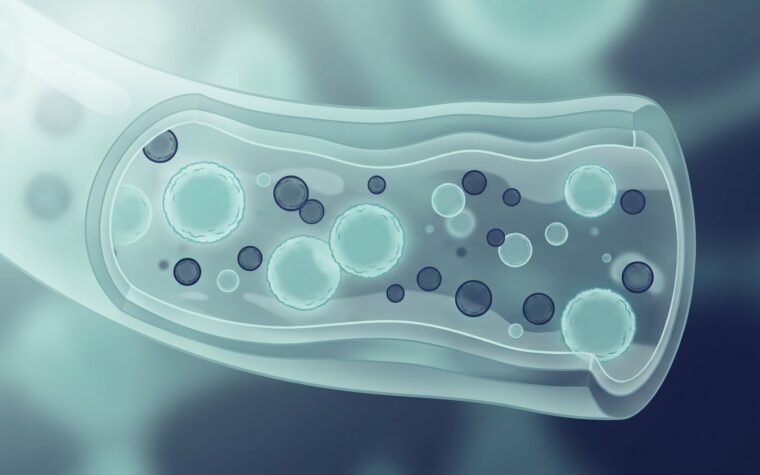
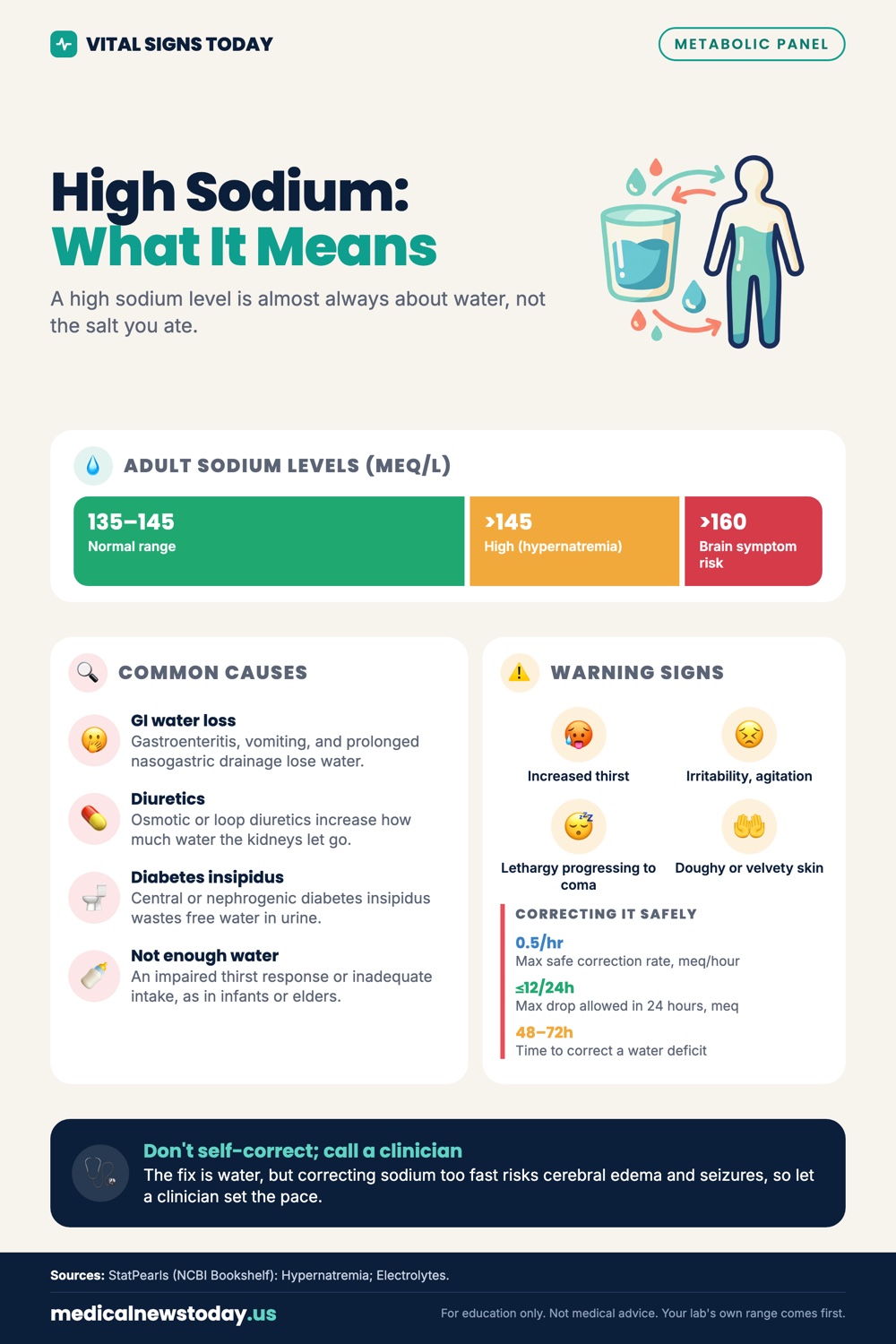
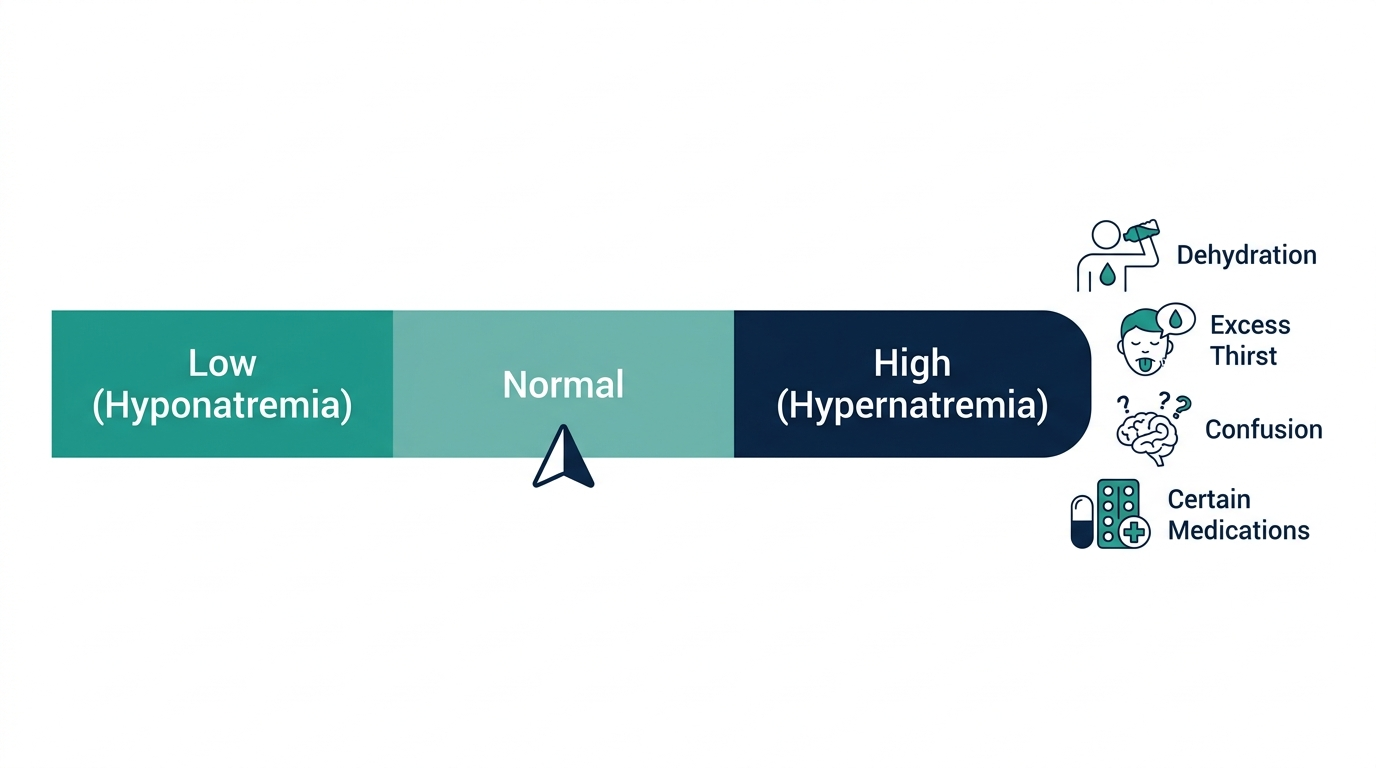
To answer what does high sodium mean in a blood test directly: it means the concentration of sodium in your blood is too high relative to the amount of water in your bloodstream. The medical name is hypernatremia. Normal blood sodium runs about 135 to 145 milliequivalents per liter (mEq/L) (MedlinePlus), and hypernatremia is generally defined as a level above 145 mEq/L (StatPearls, NCBI).
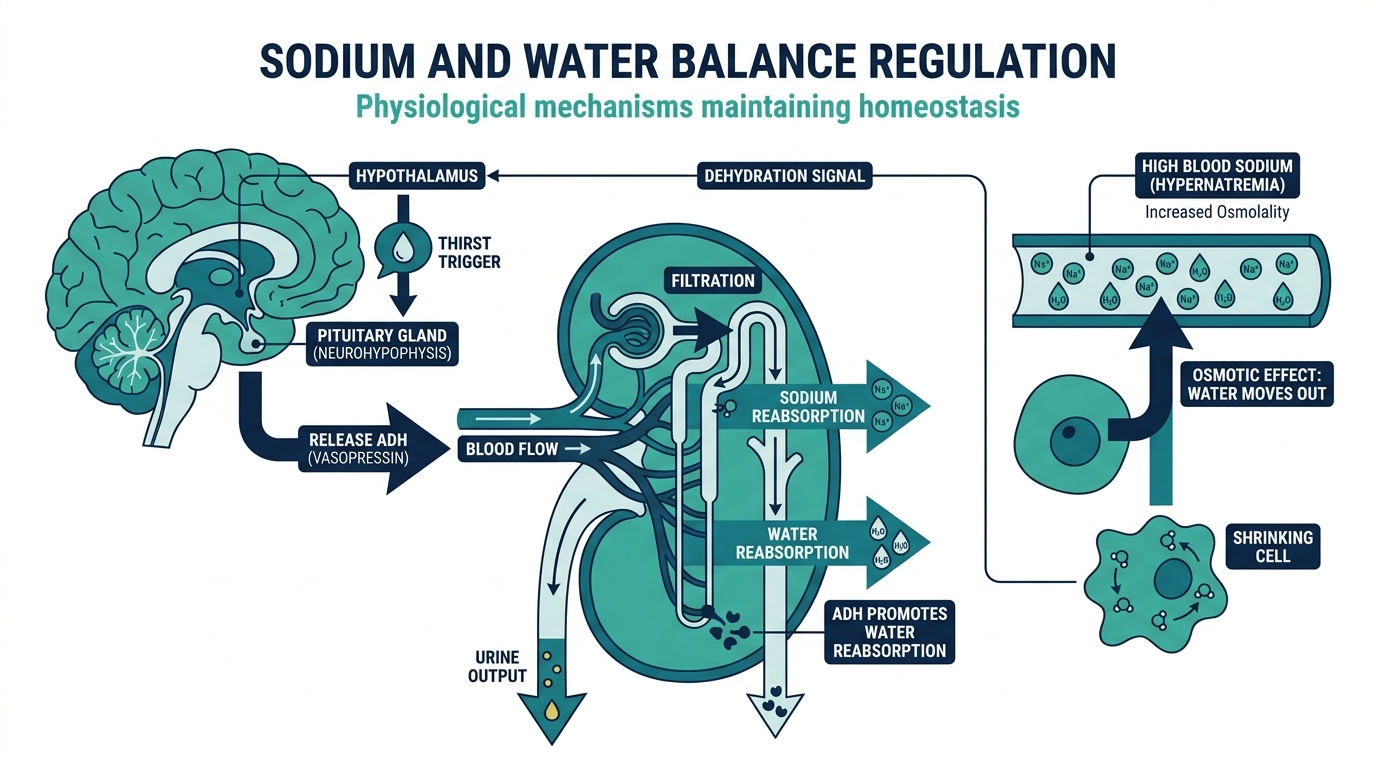
The key insight is that sodium is a concentration, not a total amount. Your body keeps the ratio of sodium to water in a tight band. When you lose more water than sodium, or take in extra sodium without enough water, the sodium becomes more concentrated and the number climbs. So a high sodium result is usually shouting one thing: there is not enough water in the system. That is why clinicians treat hypernatremia as a water problem far more often than a salt problem.

What causes a high sodium level?
By far the most common cause of high sodium is losing body water faster than you replace it. Total body water loss relative to solute loss is the single most frequent reason people become hypernatremic (StatPearls, NCBI). Here is the real differential, with the everyday causes first:
- Plain dehydration. Not drinking enough fluid, especially when you cannot easily get to water, is the leading driver (MedlinePlus). This is why the elderly and people who are bedbound or confused are so vulnerable.
- Water loss through the gut. Vomiting and diarrhea strip water out of the body, and gastroenteritis is a classic trigger (Merck Manual).
- Heavy sweating and burns. Intense heat, fever, exercise, or large burns push out water through the skin (StatPearls, NCBI).
- Diuretic medicines. Water pills increase urine output, and that can tip sodium upward if fluid is not replaced (MedlinePlus).
- Kidney and hormone problems. Kidney disease and adrenal gland disorders interfere with how the body holds onto water (MedlinePlus).
- Diabetes insipidus. This rarer condition causes the kidneys to dump large volumes of dilute urine, draining free water. It comes in a central form, where the brain makes too little antidiuretic hormone, and a nephrogenic form, where the kidneys do not respond to it (StatPearls, NCBI).
Notice what is mostly absent from that list: salty food. Eating a lot of salt can nudge your sodium, but in a person with normal kidneys and a working thirst drive, the body simply makes you thirsty and dumps the excess. Sustained high blood sodium almost always means the water side of the equation has broken down, not the salt side.
What are the symptoms of high sodium?
A mildly high sodium level often produces no symptoms at all, which is exactly why it tends to be caught by accident on a routine panel. When symptoms do appear, the earliest and most reliable one is thirst, sometimes intense (Merck Manual). That thirst is your body’s alarm system working correctly, trying to pull in water and dilute the sodium back down.
As sodium rises further, symptoms shift toward the brain, because brain cells are sensitive to changes in fluid balance. Common signs include (MedlinePlus):
- Weakness, fatigue, and loss of appetite
- Restlessness or irritability
- Confusion or changes in behavior
- Muscle twitching and unusually strong reflexes
- In severe cases, seizures and coma
Cleveland Clinic describes the same progression for hypernatremia: confusion or behavior changes, unusually strong reflexes and loss of muscle control, then seizures and coma as it worsens (Cleveland Clinic). The pattern matters more than any single symptom. Thirst is the gentle warning. Confusion is the system starting to fail.

When is high sodium dangerous or a medical emergency?
Severity tracks with both the number and how fast it got there. A useful framework breaks hypernatremia into mild (roughly 145 to 150 mEq/L), moderate (about 151 to 155 mEq/L), and severe (above 155 mEq/L), with the most dangerous symptoms tending to appear above 160 mEq/L or when sodium rises very quickly (StatPearls, NCBI).
Speed is the part people miss. A sodium of 150 that climbed over weeks is very different from a sodium of 150 that arrived in a day. The brain can adapt to a slowly rising level, but a sharp jump gives it no time, and that is when seizures and brain injury become real risks. Treat any of these as a reason to seek care urgently:
- New confusion, drowsiness that is hard to shake, or strange behavior
- Muscle twitching, jerking, or a seizure
- Severe thirst paired with very little urination
- Inability to keep fluids down because of vomiting or diarrhea
In a vulnerable person, particularly an older adult or a young child, severe hypernatremia is genuinely life threatening and carries high mortality in hospitalized patients (StatPearls, NCBI). It is not a number to wait out at home.
What should you do about a high sodium level?
What you do depends entirely on how high it is and why. For a mild, incidental elevation in someone who feels fine, the cause is usually simple under-hydration, and the fix is often just steadier fluid intake plus a repeat test. Merck notes that healthy adults generally need on the order of 2 liters of fluid a day to stay properly hydrated (Merck Manual).
Beyond that, sensible next steps your clinician may take include:
- Repeat the test. A single borderline value gets confirmed before anyone acts on it.
- Hunt for the cause. Doctors may measure urine volume and concentration to figure out whether the kidneys are conserving water properly or leaking it, which helps separate dehydration from diabetes insipidus (Merck Manual).
- Review your medicines. Diuretics and other drugs that affect fluid balance get a second look (MedlinePlus).
- Treat with carefully controlled fluids when needed. In all but the mildest cases, dilute fluids are given intravenously, and the sodium is lowered slowly on purpose (Merck Manual).
One thing not to do: do not try to fix a significantly high reading by chugging huge amounts of water in a panic, especially if you are unwell. Correcting sodium too fast is itself dangerous, which is exactly why this belongs in a clinician’s hands when the number is more than mildly elevated.

When should you see a doctor?
See your clinician promptly if a blood test shows high sodium and you also have ongoing vomiting, diarrhea, fever, or you simply cannot keep up with fluids. Go to emergency care right away for confusion, drowsiness, muscle twitching, or a seizure, since these point to sodium high enough to affect the brain (Cleveland Clinic).
For a mild elevation with no symptoms, you do not need to panic, but you should not ignore it either. Bring it to your provider, mention your medications and how much you have been drinking, and ask whether a repeat test makes sense. Hypernatremia is especially worth flagging in older adults and anyone who depends on others for fluids, because those are the people in whom it quietly turns serious (StatPearls, NCBI).
The insider nuance: a high sodium is often telling you about the water, and sometimes about the draw
Here is the detail that gets lost in patient-facing summaries. The body has a near-perfect defense against high sodium built into it: the thirst response and antidiuretic hormone. When sodium starts to rise, a healthy person gets thirsty, drinks, and the kidneys hold onto water. For that defense to fail, usually one of two things has to be true: the person cannot feel thirst normally, or the person cannot get to water (StatPearls, NCBI).
That is the single most useful thing to understand about a high sodium result. It is rarely the salt shaker. It is far more often a story about access to water or a blunted thirst drive, which is why it clusters in infants, in nursing home residents, in people with dementia, and in anyone too sick to drink. A high sodium in one of these settings is a flag to ask “is this person actually getting enough fluid,” not “are they eating too much salt.”
There is a second, more technical trap worth knowing. Sodium results can occasionally be thrown off by how the blood is drawn and handled, for example a sample taken from an arm where intravenous fluids are running, or other lab interferences. That is a major reason clinicians confirm an unexpected value with a repeat draw rather than acting on a lone surprising number. If your sodium result does not fit how you feel at all, a recheck is reasonable before anyone concludes anything.
The three flavors of high sodium: volume status is the key
Clinicians do not just ask how high the sodium is. They ask what the body’s total fluid volume is doing at the same time, because hypernatremia comes in three distinct patterns and each points to a different cause and treatment.
- Low-volume (hypovolemic) hypernatremia. You have lost both water and sodium, but more water than sodium, so the concentration rises. This is the common picture with vomiting, diarrhea, heavy sweating, and diuretics. Signs of dehydration, dry mouth, low blood pressure on standing, poor skin turgor, usually accompany it.
- Normal-volume (euvolemic) hypernatremia. You have lost mostly pure water without much sodium, so total volume looks close to normal but the sodium concentrates. This is the pattern of diabetes insipidus, where the kidneys leak dilute urine, and of poor intake in someone who cannot access water.
- High-volume (hypervolemic) hypernatremia. Less common, this is an excess of sodium, from things like large amounts of hypertonic fluids or, rarely, salt ingestion. Here total body sodium is genuinely up rather than water being down.
This framework explains why two people with the same sodium number get treated differently. One needs volume plus free water; another needs mostly free water; a third needs the sodium source removed. The number alone cannot tell you which, which is why your clinician assesses hydration and blood pressure alongside the lab value.
Want to check your sodium?
Three ways to get it measured. Pick whichever fits you.
Affiliate links: we may earn a commission at no extra cost to you. A lab test does not replace a visit with your clinician.
Reading sodium with the rest of the metabolic panel
Sodium sits inside the basic metabolic panel, and its neighbors sharpen the interpretation:
- BUN and creatinine. A rising BUN, often with a high BUN-to-creatinine ratio, supports dehydration and volume loss as the driver behind a high sodium.
- Glucose. Very high glucose actually pulls water into the bloodstream and can lower measured sodium, so in someone with markedly high glucose, the “true” sodium is higher than it looks once corrected. A high sodium alongside high glucose therefore signals significant water deficit.
- Chloride. Chloride usually tracks with sodium, so the two often rise together in dehydration. A sodium that moves without chloride can hint at an acid-base process worth a closer look.
- Potassium and bicarbonate. These round out the electrolyte picture and can point toward diuretic effects or hormone-driven causes when they are also off.
Read as a set, these markers usually reveal whether a high sodium is simple dehydration, a kidney or hormone problem, or something that needs a blood gas to untangle.
Why sodium must be corrected slowly
This is one of the most important safety points in all of electrolyte medicine, and it is the reason a significantly high sodium belongs in clinical hands rather than being self-treated with frantic water drinking.
When sodium has been high for more than a day or so, brain cells adapt by generating internal solutes that hold water and keep the cells from shriveling. If you then lower the sodium too fast, water rushes into those primed brain cells and they swell, which can cause cerebral edema and permanent injury. Because of this, when hypernatremia is not brand new, clinicians deliberately bring the sodium down gradually, commonly aiming for a limited drop over each 24-hour period rather than a rapid normalization. The mirror-image principle applies to correcting low sodium too quickly, and both directions carry real neurological risk. The practical takeaway for you is simple: do not try to crash-correct a high sodium at home, and do not panic-drink large volumes if you are unwell. Steady rehydration and clinical guidance are the safe path.
Worked examples: same number, different story
Imagine two reports that both show sodium modestly above 145 mEq/L.
In the first, an older adult recovering from a stomach bug has dry mucous membranes, a raised BUN, and has not been drinking well. This is hypovolemic hypernatremia from water and fluid loss, and the answer is careful rehydration plus treating the gut illness. The high sodium is a marker of dehydration, not a salt problem.
In the second, a person feels well, is drinking normally, but reports passing large volumes of dilute urine and constant thirst that water never quite satisfies. Volume looks normal, yet the sodium is high. That euvolemic pattern raises the possibility of diabetes insipidus and points toward measuring urine concentration rather than simply pushing fluids. The lab number looked nearly identical, but the surrounding clues sent the workup in a completely different direction.
Prevention and monitoring in people at risk
Because high sodium clusters in people who cannot regulate their own water intake, prevention is largely about access and attention rather than diet. The groups worth extra vigilance are older adults, especially nursing home residents, people with dementia or an impaired thirst drive, infants and young children, and anyone on long-term diuretics or with kidney disease.
Practical monitoring for these groups includes offering fluids regularly rather than waiting for someone to ask, watching intake during heat waves and febrile illnesses when losses spike, and rechecking a metabolic panel when a vulnerable person becomes confused, weak, or less responsive, since a rising sodium can be an early and easily missed driver. For most healthy adults with a mild, incidental elevation, the reliable prevention is simply consistent hydration and a repeat test to confirm the value has settled.
Practical hydration for a mild, incidental high sodium
If your result is only mildly high and you feel well, the correction is usually straightforward, steadier fluid intake, but a few practical habits make it more reliable than simply telling yourself to drink more.
- Spread intake through the day: sipping regularly keeps you ahead of thirst rather than gulping a large amount at once, which the body largely passes as urine.
- Water is the default: for ordinary under-hydration, plain water is usually all that is needed. There is no requirement to reach for salty or heavily electrolyte-loaded drinks unless a clinician advises it for a specific loss.
- Increase during heat and illness: fevers, hot weather, and hard exercise raise water losses, so intake should rise to match rather than stay at your usual baseline.
- Watch your urine as a rough gauge: pale, regular urine generally signals adequate hydration, while dark, infrequent urine suggests you are behind.
Crucially, this gentle approach applies to a mild, symptom-free elevation. A significantly high value, or any brain symptom, is not a do-it-yourself situation, since correcting sodium too fast is itself dangerous and belongs in clinical hands.
Common myths about sodium and salt
Because the word sodium points straight at the salt shaker, a high result is widely misread. Clearing up a few myths keeps you focused on the real driver.
- “High blood sodium means I eat too much salt.” Usually not. In someone with healthy kidneys and a normal thirst drive, the body simply makes you thirsty and clears the excess. A sustained high value points to a water problem far more often than a salt one.
- “Cutting salt will fix a high sodium reading.” Rarely the answer. The fix is almost always restoring water balance or treating the cause of water loss, not a low-salt diet.
- “A high number always means something is seriously wrong.” A mild, incidental elevation in a well person is often simple under-hydration that settles with fluids and a repeat test.
- “I should drink as much water as possible to bring it down fast.” Overcorrecting quickly is dangerous, especially if you are unwell. Steady rehydration under guidance is the safe path.
The throughline is the same reframe the whole article rests on: read a high sodium as a question about water and access to it, not as a verdict on your diet.
Frequently asked questions
What is considered a high sodium level on a blood test?
Normal blood sodium is about 135 to 145 mEq/L, and a level above 145 mEq/L is generally considered high, a condition called hypernatremia (StatPearls, NCBI). Levels above roughly 155 to 160 mEq/L are considered severe. Always read your value against the reference range printed on your own report.
Does high sodium in a blood test mean I eat too much salt?
Usually not. A high blood sodium level is most often a sign of too little water in the body rather than too much salt in your diet, because the most common cause is dehydration or water loss (MedlinePlus). In a person with healthy kidneys and a normal thirst drive, dietary salt rarely keeps blood sodium elevated on its own.
What are the symptoms of high sodium?
The earliest symptom is usually thirst. As sodium rises, people may develop weakness, restlessness, confusion or behavior changes, muscle twitching, and in severe cases seizures and coma (Cleveland Clinic). A mildly high level often causes no symptoms at all.
When is high sodium a medical emergency?
High sodium becomes an emergency when it causes brain symptoms such as confusion, drowsiness, muscle twitching, or seizures, or when the level is very high or has risen rapidly (StatPearls, NCBI). Severe hypernatremia in older adults and young children is life threatening and needs urgent care.
How is high sodium treated?
Mild cases are often corrected by improving fluid intake and finding the underlying cause. In more significant cases, dilute fluids are given intravenously, and the sodium is deliberately lowered slowly because reducing it too quickly can cause brain swelling and permanent injury (Merck Manual).
This article is for general educational purposes and is not medical advice. It cannot diagnose or treat you and does not replace your clinician. Always discuss your lab results and any health decisions with a qualified healthcare professional.
Vital Signs Today may earn a commission if you buy through links on this page. It does not affect our editorial assessments.