A high T4 result on a blood test usually means your thyroid gland is putting too much thyroxine into your bloodstream, a state doctors call thyrotoxicosis. The most common driver is hyperthyroidism, but inflammation of the thyroid, too much thyroid medication, and even pregnancy can push the number up. The result is a clue, not a diagnosis, and it is almost always read alongside your TSH.
- A high T4 (thyroxine) result means your blood holds more thyroid hormone than the normal range, typically above 1.8 ng/dL for free T4 or above 12 mcg/dL for total T4, and most often points to an overactive thyroid.
- The leading causes of a high T4 are hyperthyroidism (such as Graves disease), thyroiditis (thyroid inflammation), too much thyroid hormone medication, and rising estrogen in pregnancy that lifts total T4.
- A high T4 with a low TSH usually confirms true hyperthyroidism, while a high T4 with a normal or high TSH is unusual and needs a doctor to investigate further.
Part of our Thyroid Panel guide.
High T4 usually points to your thyroid. See the fuller thyroid panel behind that single number. One at-home Superpower draw checks 100+ biomarkers, physician-reviewed.
What does a high T4 result mean, and what is the cutoff?
A high T4 means the level of thyroxine in your blood is above the laboratory reference range. For free T4, a common adult normal range is 0.8 to 1.8 ng/dL, and for total T4 it is roughly 5 to 12 mcg/dL (MedlinePlus; Cleveland Clinic). Anything above the top of your lab’s printed range is flagged high. Reference ranges differ slightly between labs, so always read your result against the range printed on your own report rather than a number you saw online.
T4 comes in two forms. Total T4: all the thyroxine in your blood, including the portion bound to carrier proteins. Free T4: the small, active fraction that actually enters your tissues. Free T4 is usually the more useful number because protein changes, such as those in pregnancy, can raise total T4 without raising the active hormone.
Total T4 versus free T4, and why the difference matters
Most of the thyroxine in your blood is not actually doing anything. It rides around bound to carrier proteins, chiefly thyroxine-binding globulin, and only a tiny free fraction is available to enter your tissues and act. That single fact explains most of the confusion around a high T4 result. Total T4 counts everything, bound and free. Free T4 counts only the active portion, which is why free T4 is usually the more meaningful number when a clinician is deciding whether your thyroid is truly overactive.
The gap between the two opens up whenever the carrier proteins change. Rising estrogen, whether from pregnancy, the birth control pill, or estrogen therapy, pushes carrier protein levels up, which lifts total T4 while the free, active hormone stays close to normal. Liver disease and certain other conditions shift the proteins the other way. This is exactly why a pregnant woman can show a high total T4 and feel perfectly well, and why reacting to a total T4 in isolation is a classic misread. When the two numbers disagree, free T4 usually wins.
What causes a high T4 in blood tests?
The simplest way to actually get this done
Superpower is a full-body lab membership that runs 100+ biomarkers, has each result reviewed by a doctor, and tracks your numbers year over year (about $199/year). It is what we point readers to when they would rather get one clean, complete draw than chase single tests one at a time. Here is superpower reviewed in full.
The most common cause of a high T4 is hyperthyroidism, an overactive thyroid that overproduces hormone, with Graves disease the single most frequent driver in the United States (Cleveland Clinic). High T4 reflecting excess hormone is grouped under the term thyrotoxicosis. The usual causes include:
- Graves disease: an autoimmune condition where antibodies stimulate the thyroid to overproduce hormone. It is the most common cause of hyperthyroidism.
- Toxic nodules or toxic multinodular goiter: one or more thyroid lumps that make hormone on their own, ignoring the body’s signals.
- Thyroiditis: inflammation (subacute, postpartum, or silent) damages thyroid cells and dumps stored hormone into the blood, causing a temporary high-T4 phase that often resolves on its own (MedlinePlus).
- Too much thyroid medication: an excess dose of levothyroxine, or taking it when not needed, raises T4. This is a frequent and easily fixable cause.
- Pregnancy: higher estrogen raises carrier proteins, which lifts total T4. Free T4 usually stays closer to normal, which is why doctors lean on free T4 in pregnancy.
- Excess iodine: from contrast dye, amiodarone, or some supplements, which can trigger overproduction in susceptible people.
Thyroiditis versus Graves: the temporary spike people mistake for disease
One of the most useful distinctions to grasp is that a high T4 can come from two opposite mechanisms, and they are treated in completely different ways. In Graves disease and toxic nodules, the thyroid is actively overproducing hormone, so the gland is running hot and hungry for iodine. In thyroiditis, the thyroid is not overproducing at all. Inflammation is breaking thyroid cells open and spilling their stored hormone into the blood all at once, like a burst reservoir. The blood level looks high in both cases, but the story underneath is reversed.
The test that separates them is a radioactive iodine uptake scan. Uptake is high in Graves, because the overactive gland grabs iodine to make even more hormone, and it is low in thyroiditis, because the gland is inflamed and not manufacturing anything. The practical payoff is large. Thyroiditis, including the postpartum and subacute forms, is usually self-limited and managed with supportive care and a beta-blocker for symptoms, and the T4 drifts back to normal on its own over weeks to months. Graves and toxic nodules generally need active treatment. Giving antithyroid drugs to someone whose high T4 is really thyroiditis would be aiming at the wrong target.
What are the symptoms of high T4, or is it silent?
A high T4 from true hyperthyroidism often produces symptoms because thyroid hormone speeds up metabolism throughout the body. Up to about 1.2% of people in the United States have hyperthyroidism, and many notice clear signs (Cleveland Clinic). Common symptoms include a fast or pounding heartbeat, unexplained weight loss, feeling hot or sweating more, shaky hands, anxiety or irritability, trouble sleeping, more frequent bowel movements, and lighter or skipped menstrual periods.
It can also be silent. In subclinical hyperthyroidism, T4 sits within or just above the normal range while TSH is low, and many people feel nothing at all. Older adults in particular may show only subtle signs such as a fast heart rhythm or low energy, which is why the lab number sometimes appears before any obvious symptom.
How is a T4 test done, and what can throw the number off?
A T4 test is an ordinary blood draw, usually bundled with TSH, and it does not require fasting on its own. What it does require is a little skepticism, because several everyday things can move T4, or the assay that measures it, without any real change in your thyroid.
- Biotin supplements. This is the big one. High-dose biotin, common in hair, skin, and nail products, can interfere with the lab method and falsely raise free T4 while you feel completely normal. Most labs advise stopping biotin for about two days before the draw.
- Estrogen and pregnancy. Higher estrogen raises carrier proteins and lifts total T4, which is why free T4 is preferred in pregnancy and in anyone on estrogen therapy or the pill.
- Iodine exposure. Recent CT contrast dye, the heart drug amiodarone, and some iodine-rich supplements can trigger overproduction in susceptible people, showing up as a high T4 weeks later.
- Certain medications. Steroids and some other drugs lower T4, while a few raise it, so a full medication and supplement list is part of interpreting the result.
- Serious acute illness. Hospital-level illness can distort thyroid tests in a pattern called non-thyroidal illness, which is why elective thyroid testing is usually done when you are well.
None of these mean your thyroid is actually overactive. They mean the number needs context, and the fix is often as simple as pausing a supplement or measuring free T4 instead of total.
When is a high T4 dangerous?
A high T4 becomes dangerous when it is very high or builds up over time, because excess thyroid hormone strains the heart and bones. The most severe form is thyroid storm, a rare emergency where extreme hormone excess causes a very fast heart rate, high fever, confusion, and can be life threatening if untreated (Cleveland Clinic). It needs immediate hospital care.
Even without a storm, long-standing high T4 raises real risks. Heart: atrial fibrillation, an irregular rhythm that raises stroke risk. Bones: faster bone loss and a higher chance of osteoporosis and fractures. Eyes: in Graves disease, bulging or irritated eyes. Seek urgent care for chest pain, a racing irregular heartbeat, high fever with confusion, or severe shortness of breath. These warrant emergency evaluation rather than waiting for a routine appointment.
What should you do next, and when should you see a doctor?
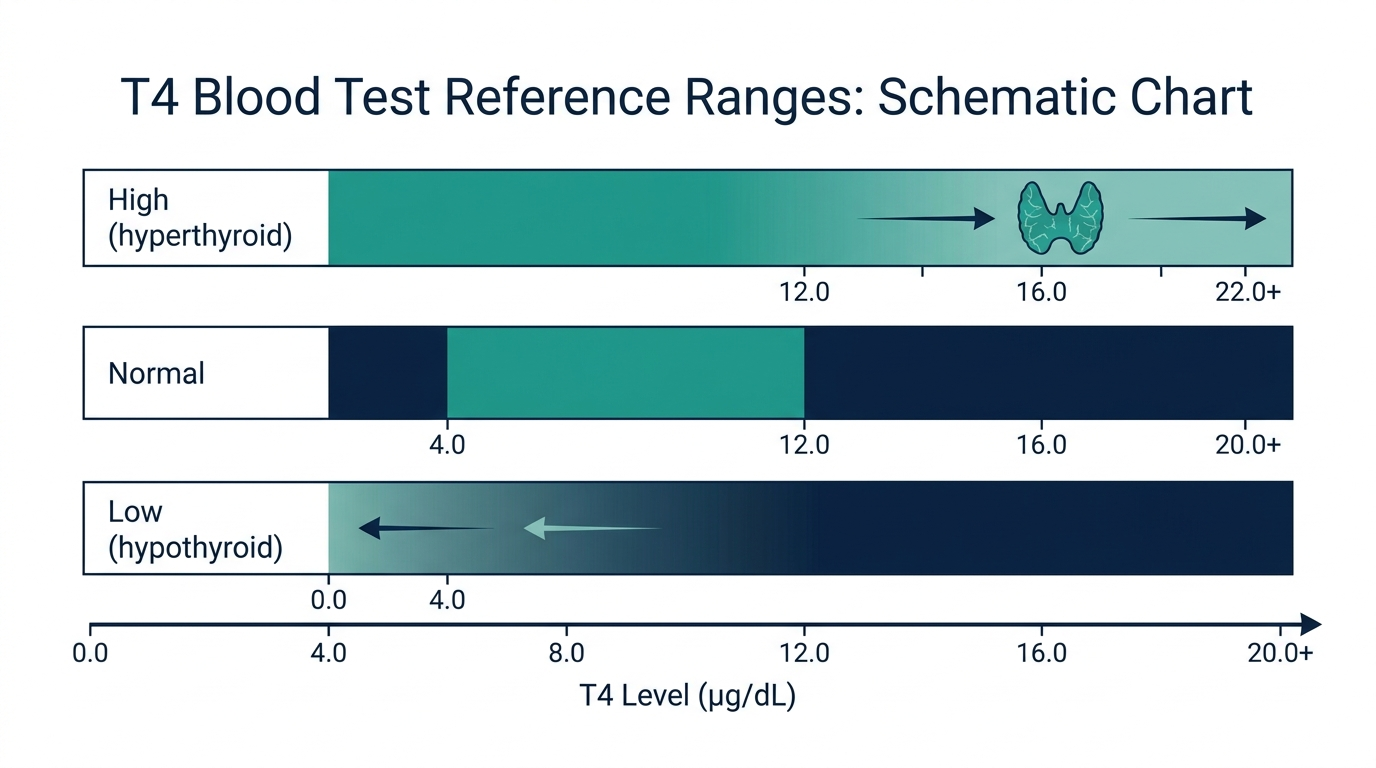
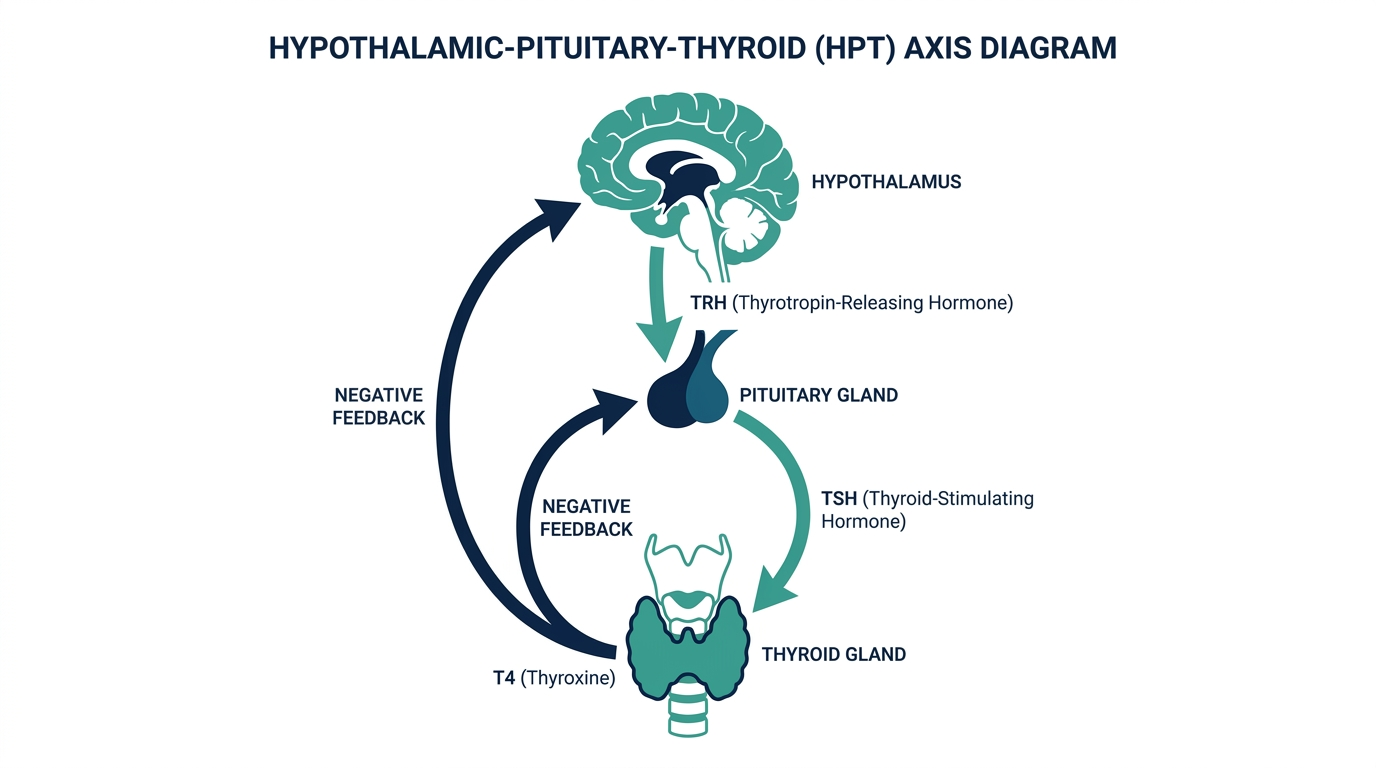
The most useful next step after a high T4 is to pair it with a TSH test, because the combination tells your doctor what is happening. A high T4 with a low TSH usually confirms true hyperthyroidism, the pattern seen in Graves disease and toxic nodules (Cleveland Clinic). Your clinician may then add T3, thyroid antibodies, or imaging such as a thyroid uptake scan to pin down the cause.
See a doctor promptly if your result is flagged high, especially with symptoms like a racing heart, weight loss, or tremor. Bring a list of every medication and supplement you take, since levothyroxine, amiodarone, biotin, and iodine products can all change the result. One practical tip: stop biotin supplements for at least 2 days before testing if your doctor agrees, because biotin can falsely raise some free T4 assays.
How is a high T4 treated?
Treatment follows the cause, not the number, which is the whole reason clinicians work so hard to pin down why T4 is high before acting. There is no single pill that simply lowers T4 for everyone.
When the cause is genuine overproduction, as in Graves disease or a toxic nodule, the main options are antithyroid medication such as methimazole (or propylthiouracil, often preferred early in pregnancy), radioactive iodine to shrink the overactive tissue, or surgery to remove it. Beta-blockers are frequently added early to calm the racing heart, tremor, and anxiety while the underlying treatment takes effect, even though they do not change the T4 itself. When the cause is thyroiditis, the high T4 phase is usually temporary and managed supportively, with a beta-blocker for symptoms, while the level normalizes on its own. When the cause is too much thyroid medication, the fix is straightforward: adjust the dose under medical guidance rather than stopping abruptly.
The one move to avoid is self-adjusting. Because high T4 can strain the heart and bones, and because thyroid storm is a real if rare emergency, the safe path is to let a clinician match the treatment to the mechanism and to recheck the numbers as treatment takes hold.
The insider nuance most people miss about high T4
Here is the detail that trips up even careful patients: a high free T4 reading does not always mean your thyroid is overactive. Lab assay interference, most notably from biotin supplements, can falsely elevate free T4 while you feel completely normal, and case reports document this on widely used analyzer platforms (NCBI/PMC). This is why a single high number is never the whole story.
The smarter read is the TSH plus T4 pattern, not T4 alone. If T4 is high but TSH is also high or normal, that is not classic hyperthyroidism and points to rarer issues like assay interference, a pituitary problem, or thyroid hormone resistance, which need specialist input. Always interpret T4 in context, and let a clinician connect the dots rather than reacting to one flagged value.
Two scenarios that show why the cause matters more than the number
Picture a woman four months after giving birth who suddenly feels jittery, sweaty, and unable to sleep. Her free T4 comes back high and her TSH is low. Rather than assume lifelong Graves disease, her clinician recognizes the timing, orders antibodies and an uptake scan, and diagnoses postpartum thyroiditis. The high T4 is a transient spill of stored hormone. A beta-blocker eases the symptoms, and over the following weeks her levels settle without antithyroid drugs.
Now picture a 29-year-old with the same high free T4 and low TSH, but also bulging eyes, a visibly enlarged thyroid, and a high radioactive iodine uptake. This is Graves disease, true overproduction, and it needs active treatment with antithyroid medication, radioactive iodine, or surgery. Same lab pattern at first glance, two very different diseases, and the workup, not the T4 value, is what tells them apart.
Curious what your own levels look like?
Baseline 100+ biomarkers today and retest as life changes, all in one membership with physician review.
Frequently asked questions
What is considered a high T4 level?
A free T4 above about 1.8 ng/dL or a total T4 above about 12 mcg/dL is generally flagged high in adults (MedlinePlus; Cleveland Clinic). Ranges vary by lab, so compare your result to the range printed on your own report.
Does high T4 always mean hyperthyroidism?
No. Hyperthyroidism is the most common cause, but thyroiditis, excess thyroid medication, pregnancy, and lab interference from biotin can also raise T4. Doctors confirm the cause by checking TSH and sometimes T3, antibodies, or imaging.
Can high T4 go back to normal on its own?
Sometimes. T4 elevated by thyroiditis is often temporary and can normalize as the inflammation settles (MedlinePlus). High T4 from Graves disease or toxic nodules usually needs treatment and will not resolve without medical care.
What is the difference between high T4 and high TSH?
T4 is the thyroid hormone itself, while TSH is the pituitary signal that tells the thyroid to make it. In typical hyperthyroidism, T4 is high and TSH is low. High T4 with high TSH is unusual and needs further evaluation.
Should I be worried about a slightly high T4?
A mildly high T4 is worth checking but is not an emergency on its own. Book a doctor visit, especially if you have symptoms like a fast heartbeat or weight loss. Seek urgent care for chest pain, a racing irregular heartbeat, or high fever with confusion.
Do I need to fast for a T4 test?
No. A T4 test does not require fasting. If it is drawn with a glucose or lipid panel, follow any fasting instructions for those. The more important prep is to tell your clinician about supplements, especially biotin, which most labs suggest pausing for about two days because it can falsely raise free T4.
Can stress or other supplements raise T4?
Ordinary daily stress does not truly raise thyroid hormone production, though it can produce symptoms like a fast heartbeat that feel similar. Supplements are a bigger issue: biotin can skew the assay, and iodine-rich products can nudge a susceptible thyroid to overproduce. If your T4 looks high and you feel fine, review your supplement shelf with your clinician before drawing conclusions, and ask whether a free T4 rather than a total T4 gives a cleaner reading.
Sources
- MedlinePlus, Thyroxine (T4) Test
- Cleveland Clinic, T4 (Thyroxine) Test
- Cleveland Clinic, Subclinical Hyperthyroidism
- MedlinePlus, Free T4 Test
- NCBI/PMC, Interference with free thyroid hormone measurements
This article is for general educational purposes and is not medical advice. It cannot diagnose or treat you and does not replace your clinician. Always discuss your lab results and any health decisions with a qualified healthcare professional.
Related: compare at-home thyroid hormone tests.
Vital Signs Today may earn a commission if you buy through links on this page. It does not affect our editorial assessments.