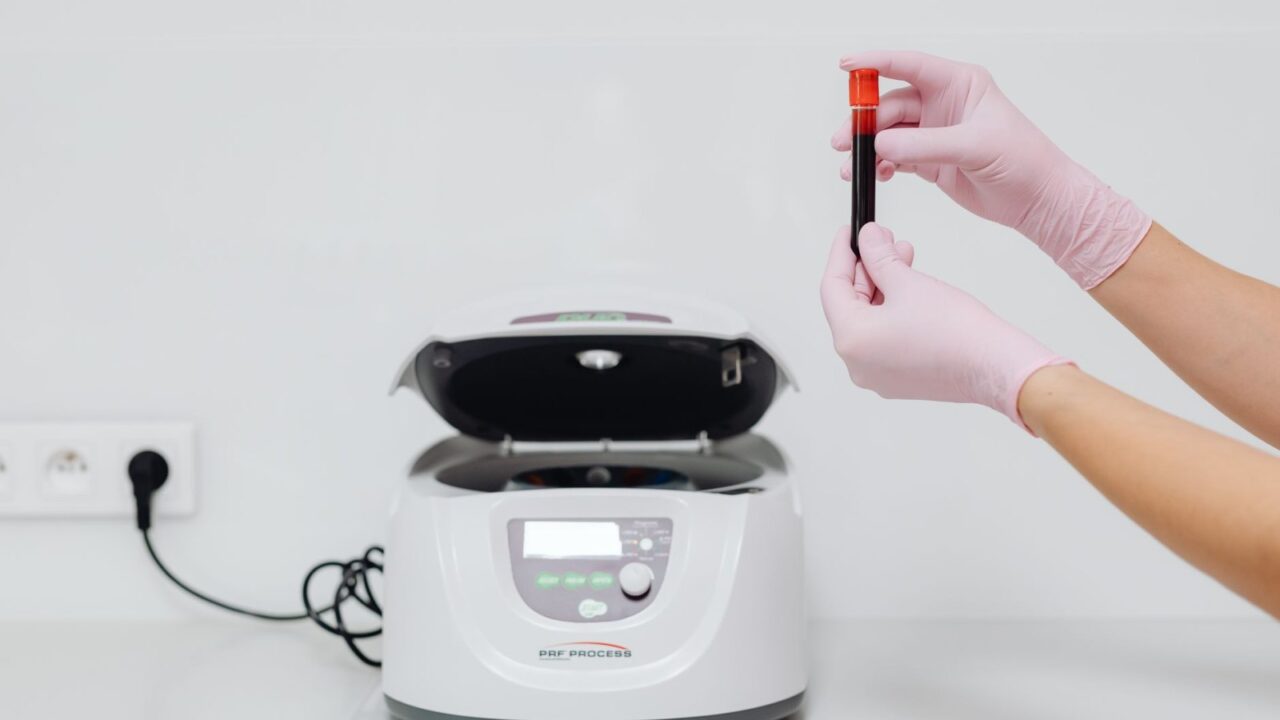
Quick answer: A vitamin D test measures 25-hydroxyvitamin D (25-OH D) in your blood, the storage form that best reflects your body’s actual vitamin D status. Conventional labs flag anything above 20 ng/mL as sufficient, but most clinicians focused on performance and bone health aim for 40 to 60 ng/mL. The test costs $29 to $150 cash at national labs, often less through a membership panel, and results come back within one to three business days.
Related: See the vitamin D reference chart by age and sex
What the Vitamin D Test Actually Measures
The standard vitamin D test is a serum 25-hydroxyvitamin D assay, not a measure of the active hormone (1,25-dihydroxyvitamin D, also called calcitriol). That distinction matters. Calcitriol is tightly regulated by parathyroid hormone and kidneys, so it can look normal even when your stores are depleted. The 25-OH form, by contrast, has a half-life of roughly two to three weeks and faithfully tracks how much vitamin D you have in reserve from sun exposure, food, and supplements combined.
Most commercial labs report results in nanograms per milliliter (ng/mL). Some international labs use nanomoles per liter (nmol/L); to convert, multiply ng/mL by 2.5. A result of 50 ng/mL equals 125 nmol/L. Labs vary slightly in their assay method, which is why your number can shift a few points if you switch labs, even with stable supplementation.
A few situations call for the 1,25-dihydroxyvitamin D test instead: suspected vitamin D toxicity, certain granulomatous diseases (sarcoidosis, tuberculosis), or chronic kidney disease. If your 25-OH level is oddly high despite no supplementation, that is the test a clinician will add.
Vitamin D Normal Range vs. Optimal Range: They Are Not the Same
The Institute of Medicine set 20 ng/mL as the deficiency cutoff for bone health, and most lab reference ranges still use that number. Clinicians who treat beyond fracture prevention tend to target higher, typically 40 to 60 ng/mL, based on observational data linking this window to immune regulation, muscle function, and reduced all-cause mortality risk.
| Level (ng/mL) | Clinical Category | Practical Meaning |
|---|---|---|
| Below 12 | Severe deficiency | Rickets risk in children, osteomalacia in adults, immune suppression |
| 12 to 19 | Deficiency | Elevated PTH, accelerated bone loss, fatigue common |
| 20 to 29 | Insufficient (by IOM) | Technically meets IOM cutoff but leaves no buffer for variation |
| 30 to 39 | Sufficient | Most guidelines call this adequate; borderline for many practitioners |
| 40 to 60 | Optimal (functional) | Target range for performance, immunity, and mood support |
| 60 to 100 | High normal | Generally safe with reasonable supplementation; monitor if climbing |
| Above 100 | Potential toxicity zone | Hypercalcemia risk, especially above 150; supplement audit needed |
The Endocrine Society places vitamin D deficiency at below 20 ng/mL and insufficiency at 20 to 29 ng/mL, but notes that some patients may need levels above 30 to suppress parathyroid hormone fully. There is genuine scientific debate above 60 ng/mL, so "more is better" logic does not hold here. If your level is sitting in the 40 to 60 range, there is no clinical reason to push it higher.
25-Hydroxy Vitamin D: Why This Specific Form Is Tested
When your skin is exposed to UVB radiation, it converts 7-dehydrocholesterol into vitamin D3 (cholecalciferol). The liver then hydroxylates D3 into 25-hydroxyvitamin D3, the storage form. A second hydroxylation in the kidneys produces the active calcitriol. The 25-OH step is where the body stockpiles vitamin D for later use, which is why it is the clinically meaningful measure for assessing status.
Vitamin D2 (ergocalciferol, found in some mushrooms and older prescription supplements) is also converted to 25-OH D2 and included in a standard total 25-OH D result. Some labs break out D2 and D3 separately, which can reveal whether a prescription supplement is being absorbed. D3 supplementation is generally more potent at raising serum 25-OH levels than equivalent D2 doses, a finding replicated across multiple meta-analyses.
One insider detail labs do not print on your report: the assay method matters. Immunoassay platforms (most routine labs) can underestimate true 25-OH D compared to liquid chromatography-tandem mass spectrometry (LC-MS/MS), the gold standard. If you are clinically deficient by symptoms but your number looks borderline, it is worth asking whether the lab uses LC-MS/MS.
Vitamin D Deficiency Symptoms That Actually Send People to the Lab
Vitamin D deficiency symptoms are nonspecific, which is exactly why the test matters. Fatigue, bone aches, and frequent illness are easy to dismiss for months before anyone orders a 25-OH D panel.
- Persistent fatigue and low energy that does not improve with sleep is the most common complaint. Vitamin D receptors exist in nearly every tissue, including mitochondria, and deficiency impairs ATP production pathways.
- Bone or joint pain, particularly diffuse aching in the lower back, hips, and legs. In adults, uncorrected deficiency causes osteomalacia (soft bones), which is distinct from osteoporosis and often missed on standard bone density scans.
- Muscle weakness and cramps, especially proximal weakness (difficulty climbing stairs, rising from a chair). This is common in people whose levels are below 20 ng/mL.
- Frequent respiratory infections. Vitamin D modulates innate and adaptive immunity; deficiency is consistently linked to higher rates of upper respiratory illness across population studies.
- Mood changes and low-grade depression, particularly in winter months or in people living above 35 degrees latitude who get limited sun exposure.
- Hair thinning, less commonly, particularly in women with concurrent iron deficiency.
None of these symptoms are diagnostic on their own. The vitamin D test settles the question in 24 to 72 hours. Talk to a clinician about your results if symptoms are severe or if you have comorbidities like kidney disease, inflammatory bowel disease, or obesity (adipose tissue sequesters vitamin D, reducing bioavailability).
Who Is Most Likely to Be Deficient
About 29% of US adults have serum 25-OH D below 20 ng/mL, according to NHANES data, but rates run much higher in specific groups. People with darker skin require more UVB exposure to synthesize equivalent vitamin D because melanin competes for UVB photons. Older adults synthesize less efficiently through skin and often eat less fatty fish. People with fat malabsorption syndromes (Crohn’s disease, celiac, gastric bypass patients) absorb dietary vitamin D poorly regardless of intake.
Geographic risk is real. In cities like Boston, Chicago, or Seattle, UVB intensity from October through March is too low to trigger meaningful cutaneous synthesis even on cloudless days. Sunscreen above SPF 15 blocks roughly 93% of UVB, though the benefit to skin cancer prevention outweighs the vitamin D trade-off for most people. Indoor workers and people who cover their skin for cultural reasons are high-risk year-round regardless of latitude.
Medications that accelerate vitamin D catabolism include anticonvulsants (phenytoin, carbamazepine), glucocorticoids, and some antifungals (ketoconazole). If you are on any of these long-term, a baseline vitamin D test and annual follow-up is worth the minimal cost.
How to Raise Vitamin D Levels: What Actually Works
Supplementation with D3 (cholecalciferol) is the most reliable way to raise 25-OH D levels. The general dose-response relationship: each 1,000 IU of daily D3 raises serum 25-OH D by roughly 8 to 10 ng/mL in most adults, though response varies widely based on body weight, baseline level, and genetics (particularly VDR gene variants). A person starting at 18 ng/mL who wants to reach 50 ng/mL needs to close a 32 ng/mL gap, suggesting a starting dose in the 2,000 to 4,000 IU range for most adults.
Practical Supplementation Protocol
- Baseline test first. Guessing a dose without a starting number is inefficient and occasionally causes overshoot.
- Take D3 with a fat-containing meal. Vitamin D is fat-soluble; absorption improves roughly 50% when taken with fat. A handful of nuts or olive oil dressing is enough.
- Add vitamin K2 (MK-7 form) if supplementing above 2,000 IU daily. D3 increases calcium absorption; K2 directs calcium to bones rather than arterial walls. This is a standard clinical precaution, not a supplement industry upsell.
- Retest after 8 to 12 weeks. Serum 25-OH D reaches a new steady state within about two to three months of consistent supplementation.
- Adjust dose based on result, not symptoms. Many people feel subjectively better at 30 ng/mL but are still below their optimal functional range.
Dietary sources alone are rarely sufficient. Fatty fish (wild salmon at roughly 600 to 1,000 IU per 3.5 oz serving, mackerel, sardines), fortified dairy, and UV-treated mushrooms are the primary food sources, but even an excellent diet rarely delivers more than 400 to 600 IU daily. Sun exposure helps in the right season and latitude, but it is not a reliable primary strategy for anyone living above 35 degrees north from November through February.
One thing people frequently get wrong: they take vitamin D once a week at a high dose because it is convenient. Pharmacokinetically, daily lower doses maintain steadier serum levels than weekly boluses. The weekly 50,000 IU prescription dose (ergocalciferol) is a loading protocol for diagnosed deficiency, not a maintenance strategy.
Vitamin D Test Cost: What You Will Pay in 2026
The vitamin D test is one of the more expensive single-biomarker draws relative to its simplicity, largely because the assay is not bundled into basic metabolic panels. Cash prices at major labs vary significantly.
| Where You Get It | Typical Cash Price (2026) | Notes |
|---|---|---|
| Quest Diagnostics (direct) | $49 to $89 | Order via QuestDirect, walk in to any patient service center |
| Labcorp OnDemand | $49 to $79 | Online order, Labcorp draw site; results in 1 to 3 days |
| CVS MinuteClinic | $59 to $120 | Convenience premium; clinician orders the test |
| Urgent care | $80 to $150 | Office visit fee often added on top |
| Primary care with insurance | $0 to $30 copay, or full lab cost if not covered | Many insurers require documented deficiency or risk factors; denied claims are common |
| Full-panel membership (e.g., Superpower) | Included in annual membership | 25-OH D is one of 100+ markers; cost per test is effectively under $2 |
Insurance coverage is inconsistent. Medicare Part B covers vitamin D testing for beneficiaries with documented osteoporosis, chronic kidney disease, or certain other diagnoses. For otherwise healthy adults who simply want a baseline, out-of-pocket is the realistic path. HSA and FSA funds are eligible for lab costs, which makes the $49 to $89 direct-lab price essentially pre-tax for most salaried workers.
A practical note: if you are ordering a vitamin D test, it is almost always more cost-effective to run it alongside a complete blood panel. You are already going to the draw site, and bundling markers reduces the per-biomarker cost substantially. Single-test draws also have a flat venipuncture fee that does not change whether you run one marker or twelve.
The simplest way to actually get this done
Superpower is a full-body lab membership that runs 100+ biomarkers, has each result reviewed by a doctor, and tracks your numbers year over year (about $199/year). It is what we point readers to when they would rather get one clean, complete draw than chase single tests one at a time. Here is superpower blood test reviewed in full.
How to Read Your Vitamin D Test Results
Your lab report will show a number in ng/mL alongside a reference range. Most labs flag below 20 ng/mL as "deficient" and above 30 ng/mL as "sufficient." That range is set for population bone health, not individual optimization. Here is how a clinician reads the same number differently.
If your result is below 20 ng/mL, you have documented deficiency that warrants treatment-level supplementation, typically 4,000 to 6,000 IU daily for eight to twelve weeks followed by a maintenance dose. A physician may prescribe 50,000 IU weekly ergocalciferol for loading, which is a reasonable short-term strategy. Retest at eight weeks.
If your result is 20 to 39 ng/mL, you are in the "sufficient but suboptimal" zone. Most patients at this level notice an improvement in energy and immune resilience when they supplement to 40 to 60 ng/mL. A daily dose of 2,000 IU is usually enough to close that gap over two to three months.
If your result is 40 to 60 ng/mL without supplementation, you are one of a small minority. Check your diet and sun exposure habits as a curiosity. No supplementation needed unless you live at high latitude and want a buffer for winter.
If your result is above 100 ng/mL, audit your supplements immediately. Toxicity (hypercalcemia) typically appears above 150 ng/mL, with symptoms including nausea, confusion, kidney stones, and cardiac arrhythmia. At above 100 ng/mL, discontinue supplementation and schedule a serum calcium and parathyroid hormone draw. Vitamin D toxicity from food or sun alone is essentially impossible; it always involves supplements.
Vitamin D does not operate in isolation. Results make more sense in context. Pairing it with parathyroid hormone (PTH), serum calcium, and magnesium gives a complete picture of bone metabolism. The best biomarkers to test as a baseline set cover exactly these interactions. Similarly, fat-soluble vitamins interact with each other: if you are tracking D, a vitamin A test, vitamin E test, and magnesium round out the fat-soluble picture.
Vitamin D and Specific Health Conditions
Vitamin D research is sprawling and sometimes contradictory. Here is what the evidence actually supports versus what is still speculative.
Bone health: The relationship is solid and mechanistic. Vitamin D is required for intestinal calcium absorption. Deficiency causes secondary hyperparathyroidism, which pulls calcium from bone to maintain serum levels. The USPSTF recommends supplementation for older adults at risk of falls and fractures.
Immune function: Compelling observational data links lower 25-OH D to higher rates of respiratory infection, autoimmune disease incidence, and worse outcomes in several inflammatory conditions. Randomized trial evidence is more mixed, but the biological mechanism (vitamin D receptor activation in macrophages and T cells) is well-established.
Cardiovascular disease: Large RCTs including VITAL (2,000 IU D3 daily, 25,000 participants) found no reduction in major cardiovascular events in people who were not severely deficient at baseline. This does not mean vitamin D is irrelevant to cardiovascular health, but supplementing into deficiency correction territory rather than chasing levels above 60 ng/mL is the defensible clinical stance.
Cancer: VITAL did find a roughly 25% reduction in cancer mortality in the vitamin D arm, driven largely by gastrointestinal cancers. This is a secondary endpoint and needs replication, but it is a credible signal.
Depression and mood: Meta-analyses show a modest association between low vitamin D and depression severity, with some RCTs showing benefit at correcting deficiency. Effect sizes are small and this should not replace psychiatric treatment, but it is a reasonable adjunct for patients who are deficient.
For context on how vitamin D fits alongside B vitamins in neurological function, see our piece on the vitamin B6 test, another fat-soluble-adjacent micronutrient with overlapping mood and nerve function implications.
FAQ
How often should I get a vitamin D test?
Once you have a baseline, annual testing is appropriate for most adults, ideally in late winter (February to March) when levels are at their seasonal nadir. If you are actively supplementing and recently changed your dose, retest after eight to twelve weeks to confirm you hit your target range. People with malabsorption conditions or who are on medications that affect vitamin D metabolism may benefit from twice-yearly monitoring.
Do I need to fast before a vitamin D blood test?
No. The 25-OH D assay is not affected by recent food intake. You can eat and drink normally before the draw. If your vitamin D test is bundled with a fasting metabolic panel (glucose, lipids), you will fast for that panel, and the vitamin D result will not be affected.
Can I order my own vitamin D test without a doctor?
Yes. Direct-to-consumer lab ordering is available nationwide through Quest Diagnostics QuestDirect, Labcorp OnDemand, Ulta Lab Tests, and a handful of other services. You order online, receive a requisition, walk into a draw site, and get results in one to three days. A physician must sign off in a small number of states (New York, New Jersey, Rhode Island), but most Americans can self-order without any barrier.
What is the difference between vitamin D2 and D3 on a test?
A standard total 25-OH D result adds both forms together. If you have been prescribed ergocalciferol (vitamin D2), some labs report D2 and D3 separately, which confirms the supplement is being absorbed. For most people supplementing with over-the-counter D3, the total number is all that matters. D3 raises serum levels more efficiently than D2, so if your level is not rising as expected, confirming the supplement form is a reasonable check.
Is vitamin D deficiency linked to weight?
Yes. Adipose tissue sequesters 25-OH D, meaning people with higher body fat stores have lower circulating levels even at equivalent sun exposure and intake. Research suggests that individuals with obesity may need 1.5 to 2 times the standard supplemental dose to reach the same serum level as a lean person. This is a volumetric effect, not a metabolic one; the vitamin D is present but sequestered in fat tissue rather than circulating freely.
Can vitamin D levels be too high?
Yes, though toxicity from supplementation requires sustained very high doses, generally above 10,000 IU daily for months. Toxicity manifests as hypercalcemia: nausea, vomiting, weakness, frequent urination, kidney stones, and in severe cases cardiac arrhythmia. The serum threshold where toxicity becomes a genuine concern is typically above 150 ng/mL. Levels between 100 and 150 ng/mL warrant supplementation reduction and monitoring. Vitamin D toxicity cannot occur from sun exposure because the skin has a feedback mechanism that limits further synthesis once stores are adequate.
Does magnesium affect vitamin D levels?
Yes, and this is one of the most overlooked interactions in clinical practice. Magnesium is a cofactor for the enzymes that convert vitamin D to its active form, and magnesium deficiency impairs this conversion. A patient who is supplementing with D3 and not seeing expected level increases is worth checking for magnesium status. About 45% of Americans consume less than the RDA for magnesium, making this a common and easily correctable barrier to vitamin D efficacy.
What is the vitamin D optimal level for immune function specifically?
Immune-focused clinicians generally cite 40 to 60 ng/mL as the target, based on studies showing that macrophage and T-cell vitamin D receptor activity is maximized in this range. Below 30 ng/mL, cathelicidin (an antimicrobial peptide induced by vitamin D) production is measurably reduced. There is no high-quality evidence that levels above 60 ng/mL confer additional immune benefit, and the dose-response relationship flattens considerably in that range.
How does a full-panel membership compare to ordering just a vitamin D test?
A standalone vitamin D test costs $49 to $89 cash and gives you one number. A comprehensive panel membership includes vitamin D alongside dozens of biomarkers that interact with it directly: PTH, calcium, magnesium, inflammatory markers, thyroid function, and metabolic markers, all reviewed in context by a physician. For someone who wants to understand their health rather than just check a single box, the per-marker value of a membership panel is substantially higher. The superpower blood test review covers exactly what is included and what physician review actually looks like in practice.