
- A high TSH means your thyroid is underactive, and most adults can lower it by treating the cause, since the normal reference range runs about 0.4 to 4.0 mIU/L (Cleveland Clinic).
- The most reliable way to lower a TSH above 10 mIU/L is levothyroxine replacement, while mild elevations between 4.5 and 9.9 mIU/L are often watched and rechecked first (StatPearls, NIH).
- TSH responds slowly, so doctors retest no sooner than 6 weeks after starting or changing a dose because the medication needs that long to reach steady state (American Thyroid Association).
A high TSH (thyroid-stimulating hormone) is one of the most common abnormal results on a routine blood panel. The good news is that it is usually fixable. This guide explains what counts as high, why it matters, and the evidence-based ways to bring it down, from diet and lifestyle to medication. Numbers come from Cleveland Clinic, the NIH, the American Thyroid Association, and peer-reviewed trials.
Part of our Thyroid Panel guide.
A high TSH means an underactive thyroid, so where does your number actually fall in the 0.4 to 4.0 range? One at-home Superpower draw checks 100+ biomarkers, physician-reviewed.
What counts as high TSH?
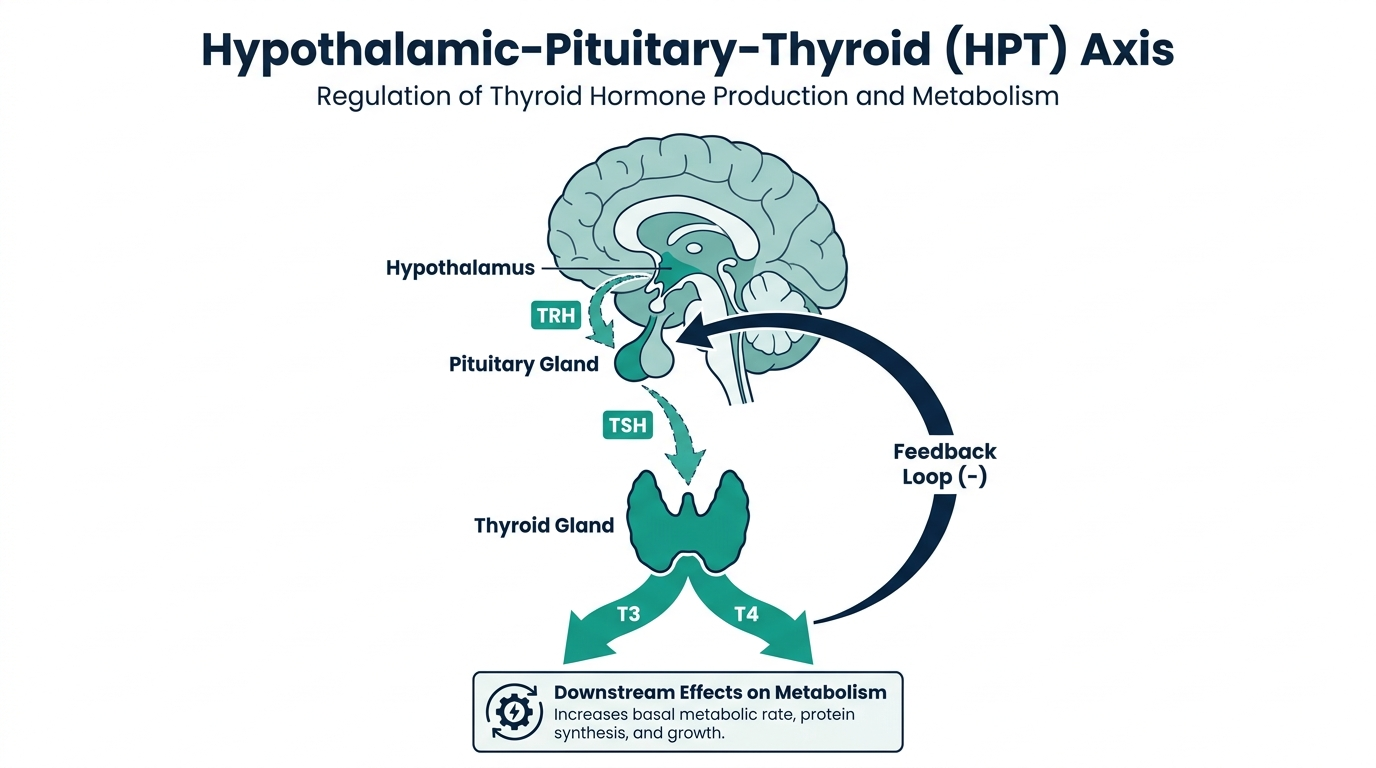
TSH is considered high when it sits above the upper limit of the normal reference range, which Cleveland Clinic puts at roughly 0.4 to 4.0 mIU/L for non-pregnant adults. A value of about 4.0 mIU/L and above signals an underactive thyroid (hypothyroidism). The TSH test works backward from what most people expect: a high TSH means a low thyroid output, because the pituitary gland pumps out more TSH to push a sluggish thyroid into action.
Clinicians often split mild elevations into grades. Cleveland Clinic describes subclinical hypothyroidism as grade 1 when TSH is between 4.5 and 9.9 mIU/L, and grade 2 when TSH reaches 10 mIU/L or higher. Always read the reference range printed on your own lab report, because labs use slightly different cutoffs (some run 0.5 to 5.0 mIU/L) and pregnancy ranges are lower.
Confirm before you treat: why one high TSH is not a diagnosis
The most important step after a high TSH is the least dramatic one: repeat it. TSH swings with time of day, illness, sleep, and even the season, so a single elevated reading, especially a mild one, is a snapshot rather than a verdict. It is normal practice to recheck a borderline TSH a few weeks to three months later, ideally in the morning and when you are well, before anyone reaches for a prescription.
The second step is to look at free T4 alongside the TSH, because that pairing is what separates the two grades of underactive thyroid. A high TSH with a normal free T4 is subclinical hypothyroidism, the mild, often watch-and-wait category. A high TSH with a low free T4 is overt hypothyroidism, where the gland is genuinely underproducing and treatment is clearly indicated. Adding a thyroid antibody test (TPO antibodies) answers the next question, whether the cause is Hashimoto autoimmune thyroiditis, which predicts that a subclinical case is more likely to progress to overt disease over time.
Why lower it?
The simplest way to actually get this done
Superpower is a full-body lab membership that runs 100+ biomarkers, has each result reviewed by a doctor, and tracks your numbers year over year (about $199/year). It is what we point readers to when they would rather get one clean, complete draw than chase single tests one at a time. Here is superpower reviewed in full.
Lowering an elevated TSH matters because a persistently high level reflects too little thyroid hormone, which slows nearly every system in the body. The clearest case for treatment is a TSH above 10 mIU/L, where guidelines summarized in StatPearls (NIH) recommend levothyroxine in adults aged 70 or younger. Left untreated, overt hypothyroidism can raise LDL cholesterol and contribute to cardiovascular strain.
Common symptoms of a high TSH include:
- Fatigue: feeling tired even after a full night of sleep.
- Cold intolerance: feeling chilly when others are comfortable.
- Weight gain: modest gain despite no change in diet.
- Dry skin and hair: coarse hair, brittle nails, dry skin.
- Mood and focus: low mood, brain fog, slowed thinking.
That said, mild elevations between 4.5 and 9.9 mIU/L do not always need treatment. Major guidelines stress that the decision should be individualized by age, symptoms, antibody status, and cardiovascular risk (Cleveland Clinic Journal of Medicine).
What is actually raising your TSH?
Lowering TSH sensibly means knowing why it is high, because the same number can come from very different situations. These are the common ones.
Hashimoto thyroiditis (the leading cause)
In iodine-sufficient countries, autoimmune Hashimoto thyroiditis is by far the most common reason for a persistently high TSH. The immune system gradually damages the thyroid, output falls, and the pituitary pushes TSH up to compensate. TPO antibodies are usually positive, and this is the group most likely to end up needing levothyroxine long term.
A thyroid that was treated or removed
People who have had part or all of the thyroid removed, or who were treated with radioactive iodine for an overactive thyroid, often run a high TSH because there is simply less gland left to make hormone. Here replacement is expected, not optional.
Medications
Several drugs raise TSH. Lithium and the heart-rhythm drug amiodarone are well known for it, and some others can interfere too. If a high TSH appears after starting a new medication, that timing is worth flagging to your clinician rather than assuming a new thyroid disease.
The recovery phase after illness or thyroiditis
After a viral thyroiditis, or in the months following pregnancy, the thyroid can pass through an underactive phase where TSH climbs temporarily before settling. Postpartum thyroiditis in particular can look like permanent hypothyroidism but often recovers, which is exactly why rechecking matters before committing to lifelong treatment.
Already on levothyroxine but still high
If you take thyroid medication and your TSH is creeping up, the usual culprits are dose, absorption, or timing rather than a new problem. Taking the pill with coffee or food, or too close to iron and calcium, blunts absorption. Weight change, pregnancy, and switching brands can all shift how much you need. The fix is usually a dose or routine adjustment, not a different diagnosis.
Evidence-based ways to lower TSH
The most effective way to lower TSH depends on the cause, but every approach starts with confirming the result and addressing the thyroid itself. For overt hypothyroidism, levothyroxine restores normal TSH in the large majority of people. For mild cases, diet, micronutrients, and lifestyle can help, and a repeat test alone resolves many borderline results, since TSH normalizes on its own within three months in many people (StatPearls, NIH).
Diet and micronutrients
Diet helps most when a specific deficiency or imbalance is driving the high TSH, rather than as a cure-all. In people with Hashimoto thyroiditis who are not yet on thyroid medication, selenium supplementation lowered TSH and reduced thyroid antibodies (TPOAb) in a 2024 systematic review and meta-analysis of randomized trials published in Thyroid. Practical points:
- Iodine: both too little and too much can disrupt the thyroid. Use iodized salt and seafood, but avoid high-dose iodine or kelp supplements unless a clinician advises them.
- Selenium: found in Brazil nuts, fish, and eggs. Benefit was clearest in Hashimoto patients not on levothyroxine; do not megadose, since excess selenium is harmful.
- Overall pattern: there is no single “thyroid diet,” so focus on balanced, whole-food eating and correcting documented deficiencies.
Lifestyle
Lifestyle changes do not replace medication for a high TSH, but they support thyroid health and help your body use whatever hormone you make. No randomized trial shows that exercise alone normalizes an elevated TSH, so treat these as foundations rather than fixes:
- Sleep: consistent, adequate sleep supports the pituitary-thyroid axis.
- Stress: chronic stress and acute illness can transiently shift TSH, so retesting when well gives a truer reading.
- Smoking: stopping smoking benefits thyroid and cardiovascular health.
- Weight and activity: regular movement supports metabolism and cholesterol, which hypothyroidism tends to worsen.
Medical options
Levothyroxine is the standard, guideline-backed medication to lower a high TSH, and it works by replacing the thyroid hormone (T4) your gland is not making. For subclinical hypothyroidism with a TSH above 10 mIU/L, StatPearls (NIH) notes that starting doses commonly range from 25 to 75 mcg daily, adjusted to your weight, age, and heart history. To get the most from each dose:
- Take it on an empty stomach: 30 to 60 minutes before food or coffee, since food and coffee can cut absorption (Mayo Clinic).
- Separate from minerals: keep iron, calcium, and antacids at least 4 hours apart, because they block absorption.
- Be consistent: same time, same way, every day, so your TSH stays stable.
How does TSH fit with your other thyroid numbers?
TSH is the sensitive early-warning gauge, but on its own it does not tell you how severe the problem is or what is causing it. That is why a proper thyroid workup reads it alongside free T4, sometimes free T3, and thyroid antibodies.
- TSH high, free T4 normal: subclinical hypothyroidism, the mild form that is often monitored and rechecked rather than treated immediately.
- TSH high, free T4 low: overt hypothyroidism, where the gland is underproducing and levothyroxine is clearly warranted.
- TSH high, TPO antibodies positive: Hashimoto thyroiditis is the likely cause, and progression to overt disease is more likely over time.
- TSH high, free T4 high: an unusual, discordant pattern that can signal a lab quirk, poor medication adherence with a recent catch-up dose, or a rare pituitary problem, and it needs specialist review.
The takeaway is that a high TSH is the start of the conversation, not the end. The number next to it, free T4, decides how urgent the situation is, and the antibody result tells you whether it is likely to stay.
How fast can it change?
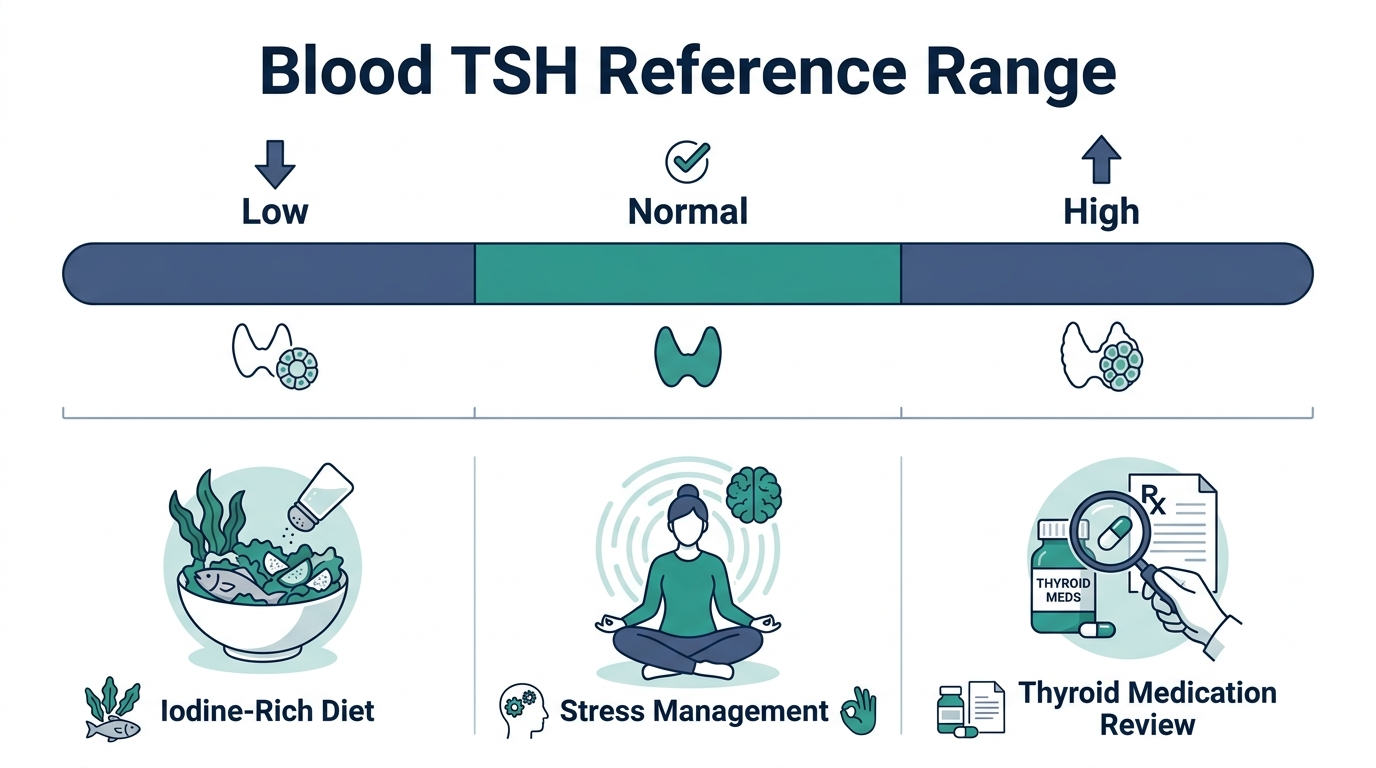
TSH changes slowly, so do not expect a fast drop. Because levothyroxine has roughly a one-week half-life, it takes about 6 weeks (six half-lives) to reach steady state, which is why the American Thyroid Association advises rechecking TSH no earlier than 6 weeks after starting or adjusting a dose. The full effect on TSH may not appear until about 8 weeks.
Symptoms often lag behind the numbers. You may start feeling better within a few weeks, but the lab value is the objective marker, and chasing it too early leads to needless dose changes. For diet and lifestyle measures, any effect is gradual and best judged at the next scheduled blood test, not week to week.
A realistic example
Take a 38-year-old woman who feels tired and cold and whose TSH comes back at 6.2 mIU/L. Rather than starting medication that day, her clinician rechecks it eight weeks later with a free T4 and TPO antibodies. The repeat TSH is 5.9 mIU/L, free T4 is normal, and TPO antibodies are positive. This is subclinical hypothyroidism from early Hashimoto. Because she has symptoms and antibodies, a low starting dose of levothyroxine is a reasonable trial, with a recheck at six weeks.
Compare that with a 60-year-old man on levothyroxine whose TSH has drifted to 8 mIU/L. Nothing new is wrong with his thyroid. On questioning, he recently started taking his tablet with breakfast coffee and a calcium supplement. Moving the pill to an empty stomach first thing, well away from the calcium, brings his TSH back into range at the next test without any dose change at all. Same high number, but the fix was routine, not a new drug.
When do you need medication or a doctor?
See a doctor whenever a high TSH is confirmed, and expect medication if your TSH is above 10 mIU/L or you have clear hypothyroid symptoms, since that threshold is where StatPearls (NIH) and major guidelines recommend levothyroxine in adults 70 or younger. A single high result is not a diagnosis, so your clinician will usually repeat the test, often within three months, and may add a free T4 and thyroid antibody panel.
Talk to a clinician promptly if you:
- Are pregnant or trying to conceive: TSH targets are lower and untreated hypothyroidism affects the baby.
- Have heart disease or are older: dosing is started low and raised slowly.
- Have a very high TSH or strong symptoms: these need prompt evaluation, not self-treatment.
Do not start, stop, or change any supplement or thyroid medication on your own. The safest path to a lower TSH is a confirmed diagnosis and a dose your clinician adjusts using repeat blood tests.
Don’t just read about your health, track it.
A single result is a snapshot. Superpower re-tests 100+ markers over time so you can watch them move as you change sleep, food, and training.
Frequently asked questions
Can I lower my TSH without medication?
Mild elevations between 4.5 and 9.9 mIU/L sometimes normalize on their own or with selenium in Hashimoto patients not on medication. But a TSH above 10 mIU/L or overt hypothyroidism generally needs levothyroxine, so confirm the cause with your doctor first.
What foods lower TSH naturally?
No food reliably lowers TSH, but correcting deficiencies can help. Selenium sources (Brazil nuts, fish, eggs) and adequate, not excessive, iodine support thyroid function. Avoid high-dose iodine or kelp supplements, which can worsen the problem.
How long does it take levothyroxine to lower TSH?
Levothyroxine reaches steady state in about 6 weeks because of its one-week half-life. The American Thyroid Association advises rechecking TSH no sooner than 6 weeks after starting or changing the dose, and the full effect may take about 8 weeks.
Is a TSH of 5 high?
A TSH of 5 mIU/L is slightly above many labs’ upper limit of about 4.0 to 4.5 mIU/L, placing it in the mild subclinical range. It is usually rechecked rather than immediately treated, and the decision depends on symptoms, antibodies, and age.
Does stress raise TSH?
Acute illness, poor sleep, and significant stress can temporarily shift TSH readings. That is why clinicians often retest when you are well and stable, since a single result taken during illness may not reflect your true thyroid status.
Can biotin supplements affect a TSH result?
Yes, and it is a common hidden cause of confusing thyroid labs. High-dose biotin, found in many hair, skin, and nail supplements, can interfere with the immunoassays labs use to measure TSH and thyroid hormones, producing falsely low or falsely high readings depending on the test. Most labs advise stopping biotin for a couple of days before a thyroid blood draw. If your thyroid results look strange and you take a biotin supplement, mention it, because the numbers may not be real.
Should I stick to the same levothyroxine brand?
Ideally, yes. Different levothyroxine products can be absorbed slightly differently, so switching between brands or generics can nudge your TSH up or down even at the same dose. If your pharmacy substitutes a different version, it is reasonable to ask for a TSH recheck about six weeks later to confirm you are still in range.
Will lowering my TSH help me lose weight?
Treating genuine hypothyroidism can reverse the modest weight gain and fluid retention that came with it, but levothyroxine is not a weight-loss drug. Once your TSH is in range, extra thyroid hormone does not melt away fat, and pushing the dose higher to chase weight loss is unsafe. Expect a return of normal energy and metabolism, not dramatic loss on the scale.
Sources
- Cleveland Clinic, Subclinical Hypothyroidism: Symptoms and Treatment
- StatPearls (NIH/NCBI), Subclinical Hypothyroidism
- American Thyroid Association, Guidelines for the Treatment of Hypothyroidism
- Cleveland Clinic Journal of Medicine, Subclinical hypothyroidism: When to treat
- Mayo Clinic, Levothyroxine (oral route)
- Thyroid (PMC), Selenium Supplementation in Patients with Hashimoto Thyroiditis: A Systematic Review and Meta-Analysis
This article is for general educational purposes and is not medical advice. It cannot diagnose or treat you and does not replace your clinician. Always discuss your lab results and any health decisions with a qualified healthcare professional.
Related: best thyroid and hormone tests of 2026.
Vital Signs Today may earn a commission if you buy through links on this page. It does not affect our editorial assessments.