
Quick answer: A comprehensive lab test ordered online typically bundles a comprehensive metabolic panel (CMP), lipid panel, and often insulin or HbA1c into a single blood draw you can schedule at Quest Diagnostics or Labcorp without a doctor’s visit. Cash prices range from $29 to $150 for the core CMP alone, rising to $80 to $350 for multi-panel metabolic workups depending on the service. Results arrive online in 1 to 5 business days. The process is fully legal in most US states through direct-to-consumer (DTC) lab services.
What does a comprehensive metabolic panel actually measure?
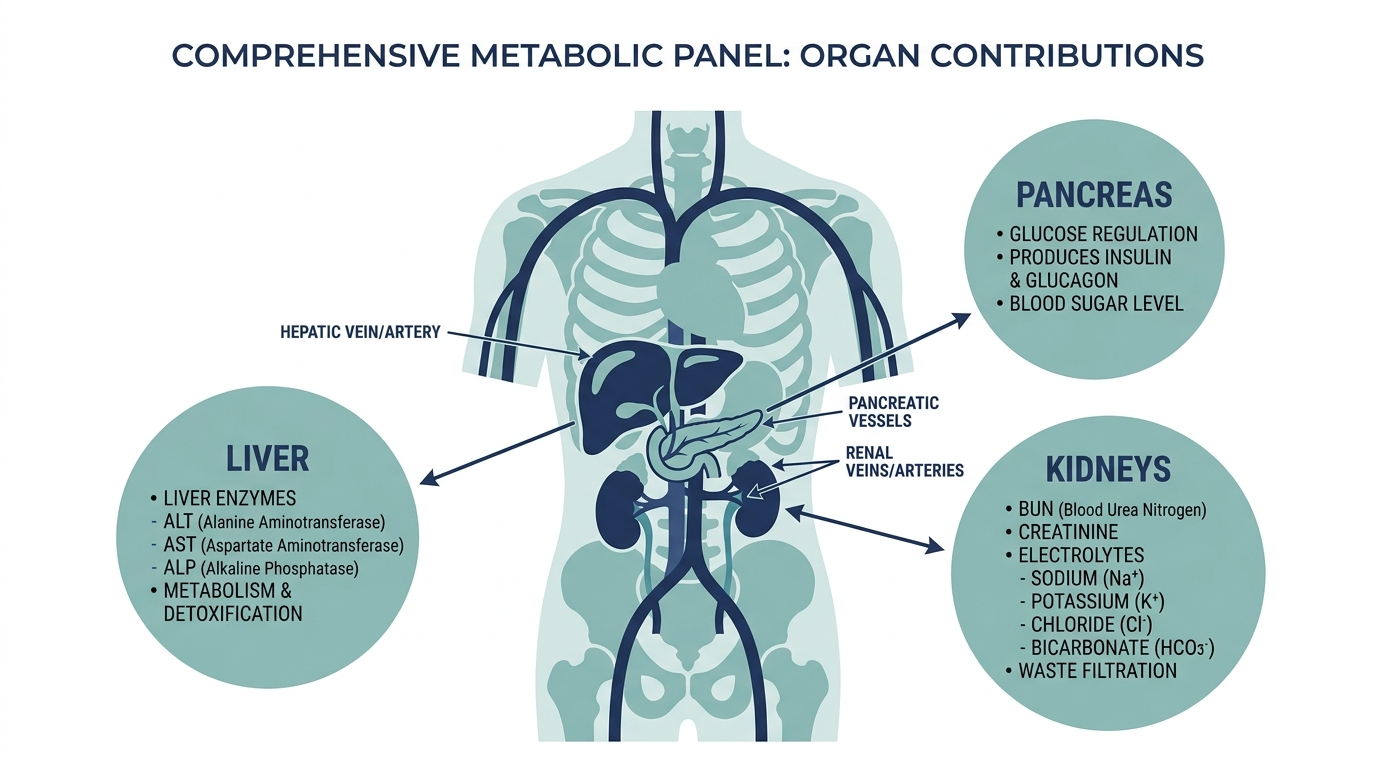
The standard CMP is a 14-marker blood test that gives a simultaneous snapshot of blood sugar regulation, kidney filtration, liver function, and electrolyte balance. Every result feeds into a different organ story, which is why ordering them together is far more clinically efficient than ordering them one at a time.
A CMP and lipid panel are a start. See how a 100+ biomarker panel extends that same glucose-to-liver picture. One at-home Superpower draw checks 100+ biomarkers, physician-reviewed.
The 14 markers fall into four groups:
- Glucose metabolism: fasting glucose (reference 70 to 99 mg/dL)
- Kidney function: BUN (7 to 20 mg/dL), creatinine (0.6 to 1.2 mg/dL for most adults), eGFR (above 60 mL/min/1.73m2), BUN/creatinine ratio
- Liver function: ALT (7 to 40 U/L), AST (10 to 40 U/L), ALP (44 to 147 U/L), total bilirubin (0.1 to 1.2 mg/dL), total protein, albumin
- Electrolytes and fluid balance: sodium, potassium, chloride, CO2 (bicarbonate)
The CMP does not include lipids, insulin, or thyroid markers. That distinction matters when you are shopping for an online metabolic panel: a listing that says "comprehensive metabolic" may mean the 14-marker CMP only, or it may bundle additional tests. Read the panel description, not just the name.

What a truly comprehensive metabolic blood test online should include
A minimally complete metabolic workup for a health-conscious adult in 2026 goes beyond the basic CMP. Here is what a thorough metabolic screen looks like, and what each addition costs when ordered separately at a DTC lab service:
| Test | Why it matters | Typical DTC cash price (standalone) |
|---|---|---|
| CMP (14 markers) | Liver, kidney, glucose, electrolytes | $29 to $69 |
| Lipid panel (total cholesterol, LDL, HDL, triglycerides) | Cardiovascular risk baseline | $25 to $55 |
| Fasting insulin | Detects insulin resistance before glucose rises | $35 to $75 |
| HbA1c | 3-month average blood sugar; catches pre-diabetes | $29 to $55 |
| TSH | Thyroid function affects metabolism systemically | $25 to $55 |
| uric acid | Gout risk, metabolic syndrome marker | $20 to $45 |
| GGT | More sensitive liver marker than ALT alone for alcohol and NAFLD | $25 to $50 |
If you buy all seven individually on a DTC platform, you are looking at $188 to $404 in cash pricing before any membership discount. That math is why bundled panels and annual memberships tend to win on value for anyone doing a serious metabolic review. For a full breakdown of one such service, read the superpower blood test review.
How to order a comprehensive lab test online, step by step
The process is straightforward in the 46 US states that allow DTC lab testing (exceptions: New York, New Jersey, Rhode Island, Maryland, and a handful of others with partial restrictions).
- Choose a DTC lab service. Major options include Labcorp OnDemand, Quest Health (QuestDirect), Ulta Lab Tests, Any Lab Test Now, HealthLabs, and membership services like Superpower. Each partners with one or both national lab networks.
- Select your panel and pay. You pay upfront at checkout. Most platforms accept HSA and FSA cards, which is worth using if you have one.
- Schedule your draw. You receive a requisition order. Find a patient service center at Quest or Labcorp (there are roughly 2,200 Quest locations and 1,800 Labcorp draw sites nationwide), schedule online, and show up fasting if glucose or lipids are included.
- Get your results. Most DTC services deliver results in a secure patient portal within 1 to 5 business days. Some services include a physician review or flagging of abnormal values; others just send the raw numbers.
One insider detail: Quest and Labcorp operate their own DTC portals (Quest Health and Labcorp OnDemand) with competitive pricing, but they offer no physician interpretation. Third-party platforms like Superpower layer a clinical review on top, which meaningfully changes how actionable the results are for most people. If you are doing this for the first time, that interpretation layer matters more than you think.
If you are not sure whether going DTC is the right move for your situation, can you buy blood tests online covers the state-by-state rules in detail.

What does a comprehensive metabolic panel cost online in 2026?
Cash prices for a comprehensive lab test online span a wide range depending on what is bundled and which platform you use. Here is a realistic price map:
| Panel scope | Platform type | Approximate cash price |
|---|---|---|
| CMP only (14 markers) | Quest Health, Ulta Lab Tests | $29 to $69 |
| CMP + lipid panel | Most DTC platforms | $55 to $110 |
| CMP + lipid + HbA1c + insulin | Bundled "metabolic" panels | $99 to $220 |
| Full metabolic + thyroid + CBC + more (50+ markers) | Annual membership services | $150 to $350 per draw, or $99 to $299/year |
| 100+ biomarker full-body panel with physician review | Superpower, similar premium services | About $199/year |
With insurance, a CMP ordered through a traditional physician visit is usually covered fully under preventive care. The DTC route costs more out of pocket but gives you control over timing, panel selection, and frequency without waiting for a referral. HSA and FSA dollars offset the difference for most people in high-deductible plans.
See how much does superpower cost for a detailed comparison of membership pricing versus per-draw DTC pricing across 2026 platforms.
The simplest way to actually get this done
Superpower is a full-body lab membership that runs 100+ biomarkers, has each result reviewed by a doctor, and tracks your numbers year over year (about $199/year). It is what we point readers to when they would rather get one clean, complete draw than chase single tests one at a time. Here is superpower reviewed in full.
Glucose, insulin, and lipid panel online: what you learn from combining them
Ordering glucose, insulin, and a lipid panel together in a single draw reveals metabolic interactions that each test misses alone. This is the core insight most people skip when they order labs piecemeal.
Consider the fasting insulin number. Normal fasting glucose (under 100 mg/dL) with elevated fasting insulin (above 15 to 20 uIU/mL in most labs) is textbook early insulin resistance. Your pancreas is already compensating to keep glucose normal. That window, before glucose rises, is exactly when lifestyle intervention is most effective. A CMP alone will show nothing wrong.
The lipid-insulin connection is just as useful. High triglycerides (above 150 mg/dL) combined with low HDL (below 40 mg/dL in men, below 50 in women) and even slightly elevated fasting insulin is the triad of metabolic syndrome. You cannot identify that triad without running all three together.
A practical worked example: a 38-year-old man gets a CMP at his annual physical. Glucose 94, everything else normal. A year later he adds a fasting insulin and lipid panel online. Insulin 22 uIU/mL. Triglycerides 178. HDL 38. The three numbers together changed his clinical picture entirely, despite his glucose staying under 100.
Clinicians who specialize in metabolic health typically want at minimum: fasting glucose, fasting insulin, HbA1c, full lipid panel, CMP, and uric acid at baseline. That combination gives a 360-degree view of carbohydrate metabolism and vascular risk. Talk to a clinician about your results, especially if insulin or triglycerides come back elevated.

Liver markers: what ALT, AST, and GGT are actually telling you
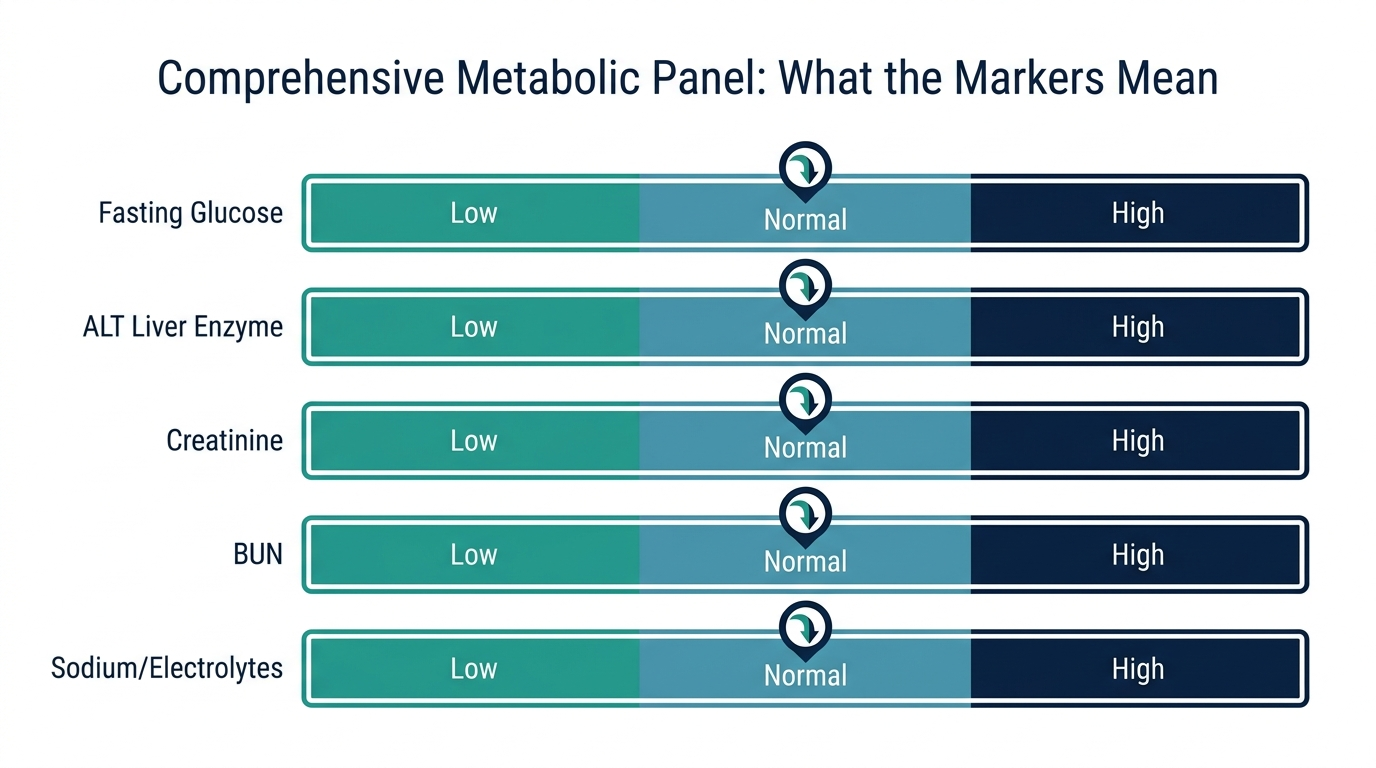
Liver enzymes are the section of a comprehensive lab test that most people do not fully understand, and that is a problem because they are among the most actionable numbers in a metabolic workup.
ALT (alanine aminotransferase) is the most specific liver marker. It rises when hepatocytes are damaged or inflamed, most commonly from non-alcoholic fatty liver disease (NAFLD), alcohol, certain medications (statins, NSAIDs, some supplements), or viral hepatitis. The standard lab range tops out around 40 U/L, but some metabolic specialists now use stricter thresholds, flagging men above 30 and women above 19 as borderline elevated, especially in the context of overweight or high triglycerides.
GGT (gamma-glutamyl transferase) is not included in the standard 14-marker CMP, but it deserves a spot in any serious metabolic workup. GGT rises earlier than ALT in alcohol-related liver damage and is a sensitive marker for metabolic-associated fatty liver. A GGT above 30 U/L combined with high triglycerides and central obesity is a reliable early warning sign of NAFLD, even before imaging would show anything.
AST/ALT ratio is a clinical tool. A ratio above 2:1 (AST more than twice ALT) points toward alcoholic liver disease or cirrhosis. A ratio below 1:1 (ALT higher than AST) is more consistent with NAFLD or medication toxicity. You can calculate this yourself once you have both numbers from your results.
ALP (alkaline phosphatase) and bilirubin are less sensitive to early damage but flag bile duct obstruction, gallbladder problems, or bone disorders when elevated. They are included in the CMP as context markers.
Kidney markers in a metabolic panel: what eGFR and creatinine mean day to day
For most healthy adults under 50 ordering a comprehensive lab test online, kidney markers will be unremarkable. But they matter in specific situations: anyone taking NSAIDs regularly, anyone on metformin or creatine supplements, anyone with diabetes or hypertension, or anyone doing extremely high-protein diets.
eGFR (estimated glomerular filtration rate) is calculated from creatinine, age, sex, and race in some formulas. Above 90 mL/min/1.73m2 is normal. Between 60 and 89 is mildly decreased and warrants a repeat in 3 months. Below 60 on two separate draws 90 days apart meets the threshold for chronic kidney disease staging.
One thing labs do not always flag: creatinine runs higher in people with more muscle mass. A competitive athlete or someone doing heavy resistance training may show creatinine of 1.3 to 1.5 mg/dL, which looks elevated on the standard range but reflects muscle turnover rather than kidney impairment. eGFR accounts for this partially, but the clinical context matters.
BUN (blood urea nitrogen) rises with dehydration or high protein intake as well as with kidney dysfunction. If you are fasting and slightly dehydrated before your draw, your BUN may run 2 to 4 points higher than your true baseline. That is worth knowing before you panic about a borderline result.

What makes a metabolic test result actionable vs. just informational?
Getting numbers back is not the same as getting answers. This is the gap that most DTC lab services do not close well, and it is worth thinking about before you choose a platform.
A truly actionable comprehensive lab test result needs three things:
- Trending context. A single glucose of 97 mg/dL is uninterpretable. A glucose that has risen from 84 to 91 to 97 over three years is a clear trend toward pre-diabetes, even though each number is technically "normal". Without year-over-year tracking, you are flying blind.
- Marker clustering. As described above, insulin, glucose, triglycerides, and HDL should be read together. A results portal that lists each marker in isolation without clustering them by system does the reader a disservice.
- A clinician to field the gray zone. Most results are not dramatically abnormal or clearly normal. They land in the range where a non-specialist does not know whether to act. A service that includes physician review resolves that ambiguity. A service that just emails a PDF does not.
For a broader comparison of which platforms deliver on all three, the best comprehensive health test 2026 breakdown compares the major options side by side, including how each handles interpretation.
Who should get a comprehensive metabolic panel online (and who probably does not need to)
A metabolic blood test online makes the most sense for:
- Adults 30 and older who have not had labs in the past two years and want a baseline before problems develop
- Anyone with a family history of type 2 diabetes, NAFLD, or cardiovascular disease who wants to establish a personal trend line early
- People managing their weight, diet, or exercise program and wanting objective metabolic feedback beyond the scale
- Adults who are uninsured or on a high-deductible plan where out-of-pocket lab costs are the same whether ordered through a physician or DTC
- Anyone who has been told their labs are "fine" by a primary care provider but suspects they are trending toward a problem and wants more detail
It is less useful for:
- People who already have an active diagnosis (diabetes, liver disease, CKD) being managed by a specialist. Their clinician should be directing the testing cadence and panel selection.
- People in states that restrict DTC labs (New York, New Jersey, Rhode Island, Maryland, Massachusetts, and a few others), where you must order through a licensed provider regardless of the platform.
- Anyone looking specifically for genetic markers, hormone panels, or advanced cardiovascular markers like ApoB or Lp(a). Those are not part of a standard CMP or lipid panel and require specific add-on tests.
For a complete walkthrough of DTC options and what to expect from the draw experience, the full blood panel online guide covers the logistics from order to results.
What gets missed in a standard metabolic panel
The CMP and even a basic lipid panel have real blind spots. Knowing them prevents false reassurance.
Standard lipid panels report LDL as a calculated estimate using the Friedewald equation. If your triglycerides are above 400 mg/dL, that calculation breaks down and direct LDL measurement is needed. More importantly, the standard LDL number tells you nothing about particle size or particle count. Small, dense LDL particles are more atherogenic than large fluffy ones at the same LDL concentration. ApoB, measured as a simple blood protein, captures LDL particle burden far better than calculated LDL and is increasingly standard in preventive cardiology, but it is not part of a routine lipid panel.
The CMP glucose is a single fasting snapshot. It misses postprandial (post-meal) glucose excursions, which are a strong predictor of cardiovascular and metabolic risk independent of fasting levels. HbA1c adds the 3-month average, but even HbA1c can be falsely low in people with certain anemias or high red blood cell turnover. Continuous glucose monitoring (CGM) is the only way to see the full glucose variability picture, and that is well outside the scope of a standard blood draw.
Finally, the CMP includes total bilirubin but not direct vs. indirect fractions. An elevated total bilirubin (above 1.2 mg/dL) is not automatically a problem, especially in people with Gilbert syndrome, a benign genetic variant where indirect bilirubin runs chronically elevated. If your bilirubin comes back flagged and you have always been told you have Gilbert syndrome, that number is almost certainly not clinically significant.
Curious what your own levels look like?
Baseline 100+ biomarkers today and retest as life changes, all in one membership with physician review.
FAQ
What is the difference between a comprehensive metabolic panel and a basic metabolic panel?
The basic metabolic panel (BMP) is eight markers: glucose, calcium, sodium, potassium, CO2, chloride, BUN, and creatinine. The comprehensive metabolic panel (CMP) adds six liver-related markers (total protein, albumin, ALT, AST, ALP, total bilirubin) to those eight. If your doctor orders a BMP, they are primarily checking kidney function and electrolytes. A CMP gives you the kidney and liver picture simultaneously.
Can I order a comprehensive lab test online without a doctor’s prescription?
Yes, in most US states. Services like Quest Health, Labcorp OnDemand, Ulta Lab Tests, and Superpower allow you to order and pay directly. A physician associated with the platform signs the requisition on the backend, satisfying the legal requirement. You never need to contact your own doctor. New York, New Jersey, Rhode Island, and Maryland are the main exceptions where a licensed provider must be directly involved in ordering.
Do I need to fast before a comprehensive metabolic panel?
For the CMP alone, fasting is not strictly required, but most labs recommend 8 to 12 hours for the most accurate glucose reading. If your panel includes lipids (which requires fasting for accurate triglycerides and calculated LDL), HbA1c (no fasting required), or fasting insulin (requires fasting), plan for an overnight fast. When in doubt, fast for 10 to 12 hours and drink only water before your draw.
How long does it take to get results from an online metabolic blood test?
Most DTC services that draw at Quest or Labcorp patient service centers return results in 1 to 5 business days. The draw itself takes under 10 minutes. Services that include physician review may add 1 to 2 days on top of lab processing time. At-home finger-prick kits (like some Everlywell panels) ship to a CLIA lab and typically return results in 5 to 7 business days after the sample is received. For an overview of how at-home options compare to in-person draws, see our everlywell review.
What is a normal range for fasting insulin on a metabolic panel?
Most labs report a fasting insulin reference range of 2.6 to 24.9 uIU/mL, but functional medicine and metabolic health clinicians typically prefer fasting insulin below 10 uIU/mL, with optimal below 8. Fasting insulin above 15 to 20 uIU/mL combined with a normal or borderline fasting glucose is a reliable sign of compensated insulin resistance. The standard lab range upper limit of about 25 is too permissive to catch early metabolic dysfunction.
Can a comprehensive metabolic panel detect fatty liver disease?
It can raise a flag, but it cannot diagnose NAFLD definitively. Elevated ALT (especially above 30 U/L in men or 19 in women), elevated GGT, or an AST/ALT ratio below 1 in the context of high triglycerides and central obesity strongly suggests NAFLD. Diagnosis is confirmed by imaging (ultrasound, FibroScan) or, in advanced cases, liver biopsy. A metabolic blood panel is the appropriate first screen before ordering imaging.
Is an eGFR result on a comprehensive metabolic panel accurate for everyone?
The eGFR calculation using the CKD-EPI equation is reasonably accurate for most adults, but it can overestimate kidney function in very muscular individuals (because they produce more creatinine) and underestimate it in elderly adults with very low muscle mass. A single eGFR result between 60 and 89 should not cause alarm; only two readings below 60 drawn at least 90 days apart meet the standard criteria for a CKD stage 3 diagnosis.
How often should a healthy adult repeat a comprehensive metabolic blood test online?
For a healthy adult under 50 with no metabolic risk factors, annual testing is the standard recommendation for establishing and tracking a personal trend line. If you have risk factors (family history of diabetes or liver disease, overweight, pre-diabetes, or are on medications that affect liver or kidney function), twice-yearly testing gives you more responsive feedback. The value of metabolic labs is almost entirely in the trend, not any single result.
What should I do if my ALT or AST comes back elevated on a home metabolic test?
A mildly elevated ALT or AST (up to two times the upper limit of normal) on a single draw is common and often transient, particularly after intense exercise, alcohol within 48 hours, or starting a new supplement. Repeat the test after two weeks of avoiding those factors. If the elevation persists or is more than twice the upper limit of normal on any single result, that is the threshold where seeing a clinician to discuss the finding is genuinely warranted.
Vital Signs Today may earn a commission if you buy through links on this page. It does not affect our editorial assessments.