Quick answer: Comprehensive lab tests are blood panels that measure 20 to 100+ biomarkers in a single draw, covering metabolic function, organ health, hormones, lipids, blood cells, and inflammation markers. A truly comprehensive blood panel goes far beyond the basic metabolic panel (BMP) or complete blood count (CBC) your primary care doctor orders at an annual physical. Most people who request a “full workup” from their doctor receive 10 to 14 markers; a genuinely comprehensive panel captures 50 to 100+ and gives you actionable data on systems that are silently deteriorating years before symptoms appear.
What Does “Comprehensive Lab Tests” Actually Mean?
The term gets used loosely, so the first thing to understand is that “comprehensive” has no regulatory definition in US laboratory medicine. Quest Diagnostics, Labcorp, and direct-to-consumer services all use the word to describe panels ranging from 14 markers (a comprehensive metabolic panel, or CMP) to 100+ biomarkers in a premium membership. The CMP is the most commonly ordered “comprehensive” test in primary care, but by modern standards it is a narrow metabolic snapshot, not a true whole-body assessment.
Most annual physicals check a fraction of what’s possible. See what a true 100+ biomarker comprehensive panel actually includes. One at-home Superpower draw checks 100+ biomarkers, physician-reviewed.
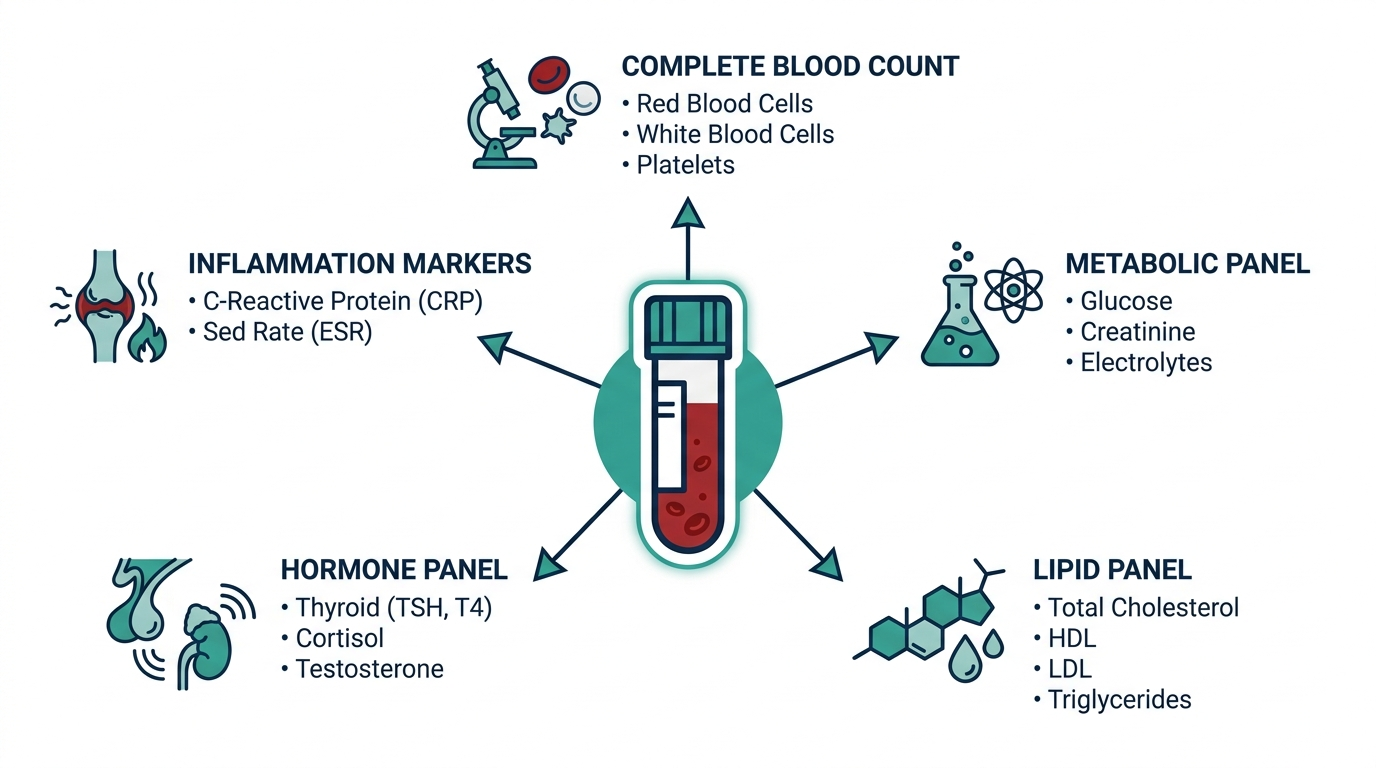
A genuinely comprehensive lab panel captures at minimum six biological domains: metabolic and organ function, lipid health, blood cell counts and morphology, hormonal axes, thyroid function, and systemic inflammation. Miss any one domain and you have a blind spot. For example, a CMP will catch liver enzyme elevations but tells you nothing about testosterone, insulin sensitivity (beyond glucose), inflammatory load, or vitamin D status, all of which frequently drive the fatigue and body composition changes patients bring to their doctor.
If you want to order your own lab tests online, understanding what the panel actually measures is the prerequisite to choosing the right one.
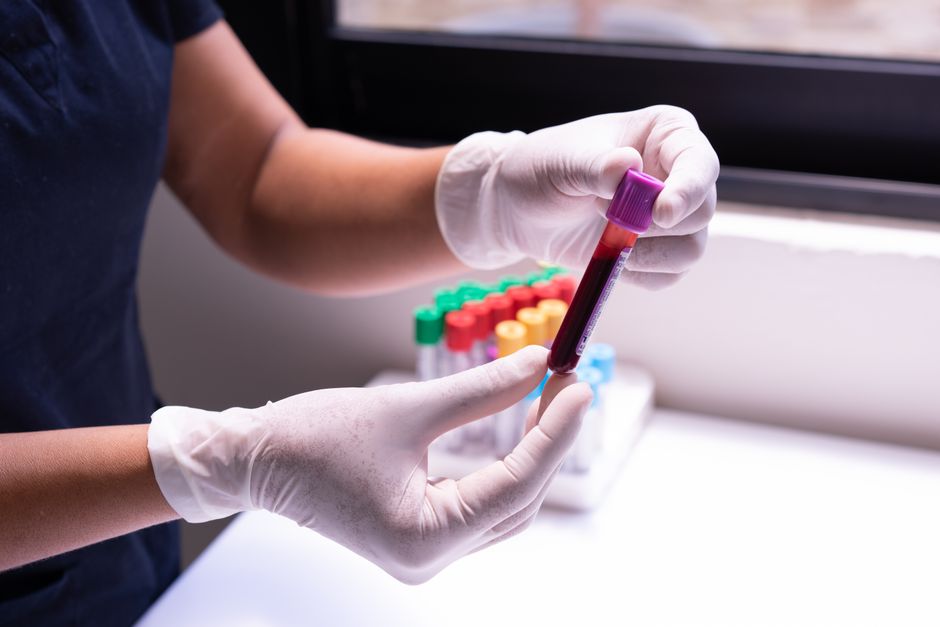
What Tests Are in a Comprehensive Panel?
A truly comprehensive blood panel should cover the following categories. The table below maps each domain to the specific markers a clinician would want to see.
| Domain | Core markers | Why it matters |
|---|---|---|
| Metabolic / organ | CMP (glucose, BUN, creatinine, eGFR, AST, ALT, ALP, bilirubin, total protein, albumin, electrolytes) | Kidney and liver function; early detection of metabolic syndrome |
| Lipids | Total cholesterol, LDL-C, HDL-C, triglycerides, non-HDL cholesterol; ideally ApoB and Lp(a) | Standard lipid panel misses atherogenic particle count; ApoB is the better cardiac risk marker |
| Blood cell counts | CBC with differential (RBC, WBC, platelets, MCV, MCH, MCHC, neutrophil/lymphocyte ratio) | Anemia, infection burden, early hematologic abnormalities |
| Hormones | Total testosterone, free testosterone, SHBG, estradiol, DHEA-S, cortisol, IGF-1 | Drives energy, libido, body composition, mood; consistently undertested in primary care |
| Thyroid | TSH, free T4, free T3, reverse T3, anti-TPO antibodies | TSH alone misses conversion problems and autoimmune thyroiditis |
| Inflammation | hs-CRP, homocysteine, ferritin, uric acid | Silent inflammation predicts cardiovascular, metabolic, and cognitive decline |
| Nutrients | Vitamin D (25-OH), B12, folate, iron with TIBC | Deficiencies are widespread and treatable, yet rarely checked at annual visits |
| Insulin axis | Fasting insulin, HbA1c | Glucose can look normal for a decade while insulin resistance is building; fasting insulin catches it early |
A 14-marker CMP covers exactly one row of that table. When patients say their doctor “ran everything,” that usually means rows 1 and 3, sometimes row 8. The hormonal, inflammatory, and nutrient rows are almost never included in a standard annual visit unless the patient specifically requests them and the insurer approves each code separately.
How a Full Comprehensive Blood Panel Differs From a Basic Checkup
The annual physical lab panel ordered by most primary care physicians in the US typically includes a CBC, CMP, lipid panel, and possibly TSH, totaling roughly 20 to 25 data points. This combination is optimized to catch acute problems (infection, kidney failure, diabetic crisis) and flag the most common cardiovascular risks. It was not designed to detect slow functional decline or hormonal drift.
Here is where the gap becomes clinically meaningful. A 45-year-old man with normal glucose, normal cholesterol, and normal CBC can simultaneously have a free testosterone level in the bottom quartile for his age, an ApoB in the atherogenic range, an hs-CRP of 3.2 mg/L (elevated), and insulin resistance detectable only by a fasting insulin test, none of which would appear on his annual bloodwork. He would leave that appointment with a clean bill of health.
Comprehensive blood tests are built to surface exactly this kind of subclinical dysfunction. The practical difference is not just the number of markers but the types: functional status markers (free hormones, not just total), predictive risk markers (ApoB, Lp(a), hs-CRP), and nutritional status markers (D, B12, ferritin) that primary care rarely orders because insurance reimbursement creates perverse incentives to keep panels short.
For a direct comparison of how ordering online differs from the walk-in experience, see our breakdown of online lab tests vs walk in lab options.

How Much Do Comprehensive Lab Tests Cost in 2026?
Cost depends heavily on the number of markers, whether you use insurance, and which provider draws the blood. Here is a realistic 2026 breakdown.
| Path | Typical cash price | What you get | Catch |
|---|---|---|---|
| Insurance via primary care (annual labs) | $0 copay if preventive; $30 to $120 after deductible for add-ons | CBC + CMP + lipids, occasionally TSH | Insurer controls what gets approved; hormones and inflammation markers often denied |
| Quest / Labcorp “health panel” cash order | $89 to $250 depending on panel size | 20 to 45 markers typically | You assemble the panel yourself; easy to miss important markers |
| DTC at-home test kit (e.g., Everlywell) | $99 to $299 per kit | Finger-stick; 10 to 40 markers | Finger-stick sample quality; see our Everlywell review for detail on accuracy tradeoffs |
| Membership lab service (e.g., Superpower) | About $199/year | 100+ markers, venous draw, doctor review, year-over-year trending | Annual subscription; requires in-person draw at Quest or Labcorp location |
| Concierge or functional medicine clinic | $400 to $1,500+ | Highly customized, specialty markers possible | Expensive; quality varies widely |
HSA and FSA dollars cover most lab testing costs, including DTC panels, as long as a legitimate clinical purpose exists. Medicare Part B covers annual wellness lab work but applies the same narrow panel restrictions as private insurance. If you are uninsured or underinsured, the cash-pay route at Quest or Labcorp is often cheaper than using insurance with a deductible, especially for hormone panels.
For a detailed breakdown of what membership labs charge and why, the how much does Superpower cost piece has the math.
The simplest way to actually get this done
Superpower is a full-body lab membership that runs 100+ biomarkers, has each result reviewed by a doctor, and tracks your numbers year over year (about $199/year). It is what we point readers to when they would rather get one clean, complete draw than chase single tests one at a time. Here is superpower blood test reviewed in full.
Where to Get Comprehensive Blood Tests Done
In the US, you have four real options for a venous blood draw, each with different tradeoffs on convenience, cost, and how much control you have over what gets tested.
Quest Diagnostics and Labcorp operate the largest US lab networks, with combined locations in virtually every metro area and most rural counties. If you order a DTC panel or a membership service, the actual draw almost always happens at a Quest or Labcorp patient service center. Walk-in appointments work but scheduling online is faster. Results typically return in 24 to 72 hours for standard markers, longer for specialty tests like Lp(a) or reverse T3.
CVS MinuteClinic and Walgreens Health offer limited lab draws on-site at select locations. The panels are narrow (think pre-diabetes screening, basic lipids), not comprehensive. These are convenient for targeted single-marker checks, not a full baseline.
Urgent care clinics vary enormously. Some offer phlebotomy and ship to a reference lab; others do not. For a comprehensive panel, call ahead to confirm they can collect and that their reference lab can run the full marker set you need.
Mobile phlebotomy services (Getlabs, ExamOne, and regional services) send a trained phlebotomist to your home or office, which pairs well with DTC lab memberships. Costs typically run $30 to $75 for the draw itself, on top of panel costs. Worth it for people with mobility issues, demanding schedules, or needle anxiety that makes clinic visits unreliable.
If you are still unsure whether ordering labs outside a doctor’s office is legitimate, our piece on are online lab tests legit covers the regulatory framework in detail.
How to Read Your Comprehensive Lab Results
Lab reports give you a reference range printed next to each value, but that range is not a target. It is the statistical range containing 95% of a reference population, which typically includes people of all ages, body compositions, and health statuses. Being inside the reference range does not mean your level is optimal for your age, sex, and health goals. It means you are not in the bottom or top 2.5% of a mixed population.
A few concrete examples of where this matters:
- Vitamin D: The Labcorp reference range for 25-OH vitamin D starts at 30 ng/mL as “sufficient.” Most longevity-focused clinicians target 50 to 70 ng/mL. A result of 32 ng/mL prints as normal but is functionally low.
- Free testosterone: The reference range for men spans roughly 35 to 155 pg/mL. A 48-year-old man at 38 pg/mL is technically in range but in the bottom 10th percentile for a healthy 30-year-old. That distinction matters clinically.
- Fasting insulin: Reference range upper limit is often listed as 24 or even 30 uIU/mL. Most metabolic specialists treat anything above 8 to 10 uIU/mL as indicating insulin resistance. A result of 18 uIU/mL looks fine on paper but signals a problem a decade before glucose shifts.
- Ferritin: Low end of the reference range is 12 ng/mL for women. Symptoms of iron deficiency fatigue often appear below 30 to 50 ng/mL. Women commonly feel terrible at levels that print as normal.
This is why doctor interpretation matters for a truly comprehensive panel. Raw numbers without context are noise. A clinician familiar with functional ranges, not just population reference ranges, gives results meaning. Talk to a clinician about anything that surprises you or falls at an edge of a range, even if the printout says normal.
What People Get Wrong About Comprehensive Blood Tests
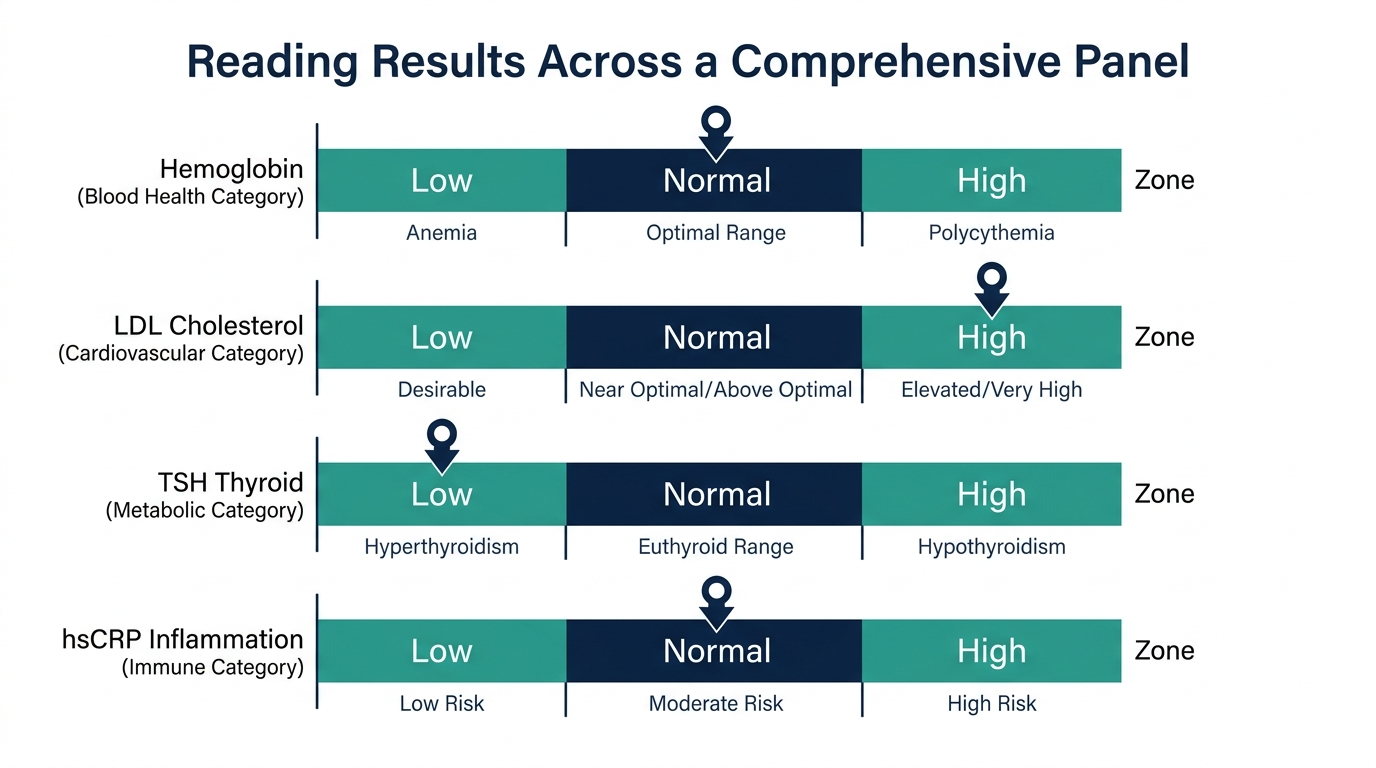
The biggest misconception is that a normal annual physical panel means everything is fine. It means your kidneys are not failing, your blood cells are not alarmingly abnormal, and your glucose is not diabetic. That is a low bar.
The second most common mistake is ordering a comprehensive panel and then not repeating it. A single snapshot has limited value. Trend data, seeing that your ferritin dropped from 68 to 31 ng/mL over 18 months, or that your testosterone fell 22% in two years, is where the real clinical signal lives. One-time testing tells you where you are. Serial testing tells you where you are going.
Third: conflating test volume with comprehensiveness. Some services advertise 250+ biomarkers. Many of those extra markers are redundant (multiple measurements of the same hormone in different units, for example) or have such low clinical utility that adding them increases noise without improving decisions. A well-chosen 80 to 100 marker panel covering all six biological domains above is more useful than a 300-marker panel padded with obscure metabolites that have no established intervention.
Fourth: ignoring the pre-test protocol. Fasting status matters significantly for lipids, glucose, insulin, and some hormone panels. Most comprehensive blood tests require 8 to 12 hours of fasting. Drawing after a heavy meal will artificially elevate triglycerides and glucose and can shift insulin readings substantially. Biotin supplements (vitamin B7, present in many hair/nail products) at doses above 5 mg/day interfere with immunoassay-based tests including thyroid hormones and troponin. Stop biotin at least 48 hours before your draw.
Comprehensive Lab Tests for Special Populations
The standard comprehensive panel is built around the average adult. Several populations need adjustments.
Women and hormonal health: Estradiol, progesterone, FSH, and LH are not in most standard panels but are essential for women experiencing perimenopausal symptoms, irregular cycles, or fatigue that does not respond to sleep or nutrition interventions. Draw timing matters: estradiol and progesterone should ideally be drawn on day 3 of the menstrual cycle (follicular baseline) and again around day 21 (luteal phase) for the most interpretable picture.
Adults over 65: Medicare covers an Annual Wellness Visit with some labs, but the covered set is the same narrow panel. Medicare Advantage plans vary; some cover expanded cardiovascular panels. Vitamin B12 deficiency is disproportionately common in older adults on metformin or proton pump inhibitors, and the standard reference range lower limit (200 pg/mL) is too low: symptoms appear below 400 pg/mL in many patients. Ask specifically about B12 if you are on either medication.
People on chronic medications: Statins elevate liver enzymes and can deplete CoQ10 (not a standard lab marker but worth noting). Thyroid medications affect TSH interpretation. ACE inhibitors and ARBs can elevate potassium and creatinine, making the CMP especially important to monitor. If you are on any chronic medication, a comprehensive panel twice a year rather than once is reasonable.
Athletes and active adults: Exercise acutely raises creatine kinase (CK), AST, and ALT. Drawing within 24 to 48 hours of a hard workout will produce falsely elevated liver enzymes and make the lab report look like early liver damage. Schedule your draw after at least two rest days if you train intensively.
How the Domains Cross-Validate Each Other
The real power of a comprehensive panel is not the marker count. It is that the domains check each other, turning ambiguous single results into confident conclusions. Learning a few of these cross-checks changes how you read a report.
Thyroid confirmed by lipids and CBC. An elevated TSH is more convincing as true hypothyroidism when it travels with rising LDL cholesterol and a mildly elevated MCV on the CBC, since low thyroid function slows lipid clearance and can enlarge red cells. If TSH is high but lipids and CBC are pristine, the case for subclinical or transient elevation is stronger.
Iron status confirmed across three markers. Ferritin alone can mislead because it rises with inflammation. Read it against serum iron, transferrin saturation, and hs-CRP. A low ferritin with low saturation and normal hs-CRP is clean iron deficiency. A normal-looking ferritin with high hs-CRP may be masking deficiency, because inflammation propped the ferritin up.
Insulin resistance triangulated. Fasting insulin, HbA1c, and the triglyceride-to-HDL ratio should agree. When fasting insulin is high, triglycerides are up, HDL is down, and HbA1c is creeping toward the upper 5s, the metabolic story is coherent and early. A single high insulin with everything else pristine warrants a repeat before you act.
Liver enzymes read in context. An isolated ALT bump means little after a hard workout or a night of drinking. The same ALT elevation paired with high triglycerides, high fasting insulin, and elevated GGT points toward metabolic fatty liver, a completely different conclusion from the same number.
A Worked Example: Reading a Full Panel End to End
Abstract advice only goes so far. Consider a composite example of a 47-year-old whose annual physical said everything was normal, then look at what a comprehensive panel surfaced and how the pieces connect.
- Glucose 92 mg/dL, HbA1c 5.6 percent: both inside standard ranges, so a basic checkup stops here and calls it normal.
- Fasting insulin 17 uIU/mL: this is the tell. Glucose stays normal for years while insulin quietly climbs to keep it there. This value reframes the glucose and HbA1c as early insulin resistance, not health.
- Triglycerides 165 mg/dL, HDL 38 mg/dL: a high triglyceride-to-HDL ratio, which corroborates the insulin finding rather than standing alone.
- ApoB elevated with a normal LDL-C: the standard lipid panel looked reassuring, but the particle count says cardiovascular risk is higher than the cholesterol number implied.
- hs-CRP 3.1 mg/L: low-grade inflammation, consistent with the metabolic picture and an independent risk multiplier.
- Vitamin D 29 ng/mL: prints as barely sufficient, functionally low, and an easy, cheap correction.
No single value here is dramatic. Read together, they tell a consistent story of early metabolic dysfunction with elevated cardiovascular risk, none of which appeared on the basic annual panel. That is the entire argument for comprehensiveness: the diagnosis lives in the pattern, not in any one flagged number. Any decision from a picture like this belongs in a conversation with a clinician who can weigh your history alongside the labs.
Building Your Testing Schedule Around the Results
A comprehensive panel is not a one-and-done event. The smart move is to let the first results set the cadence for what you recheck and how often.
- Stable and optimal markers: recheck annually. If your metabolic, lipid, and hormone panels are clean, once a year is enough to catch slow drift.
- Borderline or flagged markers: recheck in three to six months. If fasting insulin, hs-CRP, or vitamin D came back suboptimal and you are actively changing diet, exercise, or supplementation, a shorter interval shows whether the intervention is working.
- Markers you are treating: follow your clinician’s schedule. Thyroid medication adjustments, for example, are typically rechecked several weeks after a dose change, because the axis needs time to re-equilibrate.
- Stable genetic markers: test once. Lp(a) is largely genetic and stable across life, so a single lifetime measurement usually suffices unless a clinician advises otherwise.
The principle is to spend your testing budget where the information changes decisions. Rechecking a rock-solid marker every quarter wastes money; ignoring a borderline one for a year wastes the early-warning advantage that made you order a comprehensive panel in the first place.
Values That Warrant Prompt Medical Attention
Most out-of-range flags on a large panel are mild and non-urgent. A few, however, are genuine reasons to contact a clinician quickly rather than wait for a routine follow-up. This is orientation, not a substitute for medical judgment, and any lab that returns a critical value will typically flag it for you.
- Markedly abnormal potassium, high or low, because it affects heart rhythm. Note that a hemolyzed sample can falsely raise potassium, so a repeat draw is often the first step.
- Severe anemia on the CBC, a hemoglobin far below the reference range, especially with symptoms like breathlessness or a racing heart.
- Very high fasting glucose or HbA1c in the diabetic range, which points to diabetes that needs management rather than observation.
- Sharply elevated liver enzymes, many times the upper limit, particularly if you are not post-exercise and have symptoms like jaundice or right-upper-abdominal pain.
- A rising or markedly elevated PSA in men, which warrants a urology conversation rather than a repeat add-on ordered on your own.
- Any critical-flagged value, which labs are required to communicate; treat that flag as a prompt to call, not to panic.
For everything else, the comprehensive panel is best used as a calm, longitudinal tool. The point is early awareness and trend tracking, not alarm at every marker sitting a hair outside a population range.
Don’t just read about your health, track it.
A single result is a snapshot. Superpower re-tests 100+ markers over time so you can watch them move as you change sleep, food, and training.
FAQ
What is the difference between a comprehensive metabolic panel and a full comprehensive blood panel?
The comprehensive metabolic panel (CMP) is a 14-marker test measuring kidney function, liver enzymes, electrolytes, glucose, and protein. A full comprehensive blood panel adds a CBC, lipid panel with advanced markers (ApoB, Lp(a)), hormones, thyroid (including free T3 and reverse T3), inflammation (hs-CRP, homocysteine), and nutrients (vitamin D, B12, ferritin), typically reaching 60 to 100+ biomarkers. The CMP is a subset, not a substitute.
Can I order comprehensive lab tests without a doctor?
Yes, in most US states. Direct-to-consumer lab services let you order your own tests through Quest, Labcorp, or DTC platforms without a physician’s order. A few states (New York, New Jersey, Maryland, and a handful of others) restrict certain DTC labs. Membership services like Superpower include a physician who authorizes the draw, which sidesteps state restrictions and also means you get a medically supervised result, not just raw numbers.
How often should I get comprehensive blood tests?
For most adults under 50 with no chronic conditions, once per year is the right cadence. Over 50, or if you are managing a condition like cardiovascular disease, diabetes, hypothyroidism, or hormonal imbalance, twice per year gives you the trend data to make timely adjustments. The most important thing is consistency: same lab, same draw time, same fasting protocol, year over year.
Are comprehensive blood tests covered by insurance?
Partially. Insurance covers a preventive lab panel at an annual wellness visit, but that set is narrow (CBC, CMP, lipids, TSH in some plans). Hormone panels, inflammation markers, and nutrient levels often require a separate diagnosis code and may be denied as not medically necessary unless you have a documented symptom. Many people pay out of pocket for the full panel and use their HSA or FSA to cover it, which is straightforward and IRS-compliant for diagnostic testing.
What is the best time of day to draw comprehensive lab tests?
Morning, after an overnight fast of 10 to 12 hours, is optimal for nearly every marker. Cortisol peaks at 8 to 10 AM (which is when you want to capture it), insulin and glucose are at baseline, and triglycerides are unaffected by recent meals. Drawing in the afternoon after eating will inflate triglycerides by 20 to 50%, shift glucose upward, and blunt cortisol, making the results less reliable.
What is hs-CRP and why should it be in a comprehensive panel?
High-sensitivity C-reactive protein (hs-CRP) is an inflammation marker produced by the liver in response to systemic inflammation. At levels above 3 mg/L, cardiovascular risk doubles compared to below 1 mg/L, independent of cholesterol levels. The standard CRP test used in hospitals is designed to detect major infections and reports in the 10s of mg/L; the hs-CRP assay is a different, more sensitive test that captures low-grade chronic inflammation. They are not interchangeable. Make sure your panel specifically includes hs-CRP.
Should comprehensive lab tests include a urinalysis?
A urinalysis is not standard in most blood-panel-based comprehensive tests, but it adds useful information: early kidney dysfunction (protein in urine before creatinine rises), signs of urinary tract infection, and metabolic markers like ketones and glucose. If you have any kidney concerns, hypertension, or diabetes risk, ask your clinician or ordering service to add a urinalysis to your panel. The cost is minimal, usually $15 to $40 at a commercial lab.
How long does it take to get comprehensive lab test results?
Standard panels (CBC, CMP, lipids, TSH) return within 24 to 48 hours at Quest and Labcorp. Specialty markers add time: ApoB and Lp(a) typically take 2 to 4 business days; reverse T3 and some hormone assays can take 3 to 5 days. If you order through a membership service, the platform consolidates results and notifies you when everything is complete, so you are not piecing together partial reports. Full turnaround for a 100+ marker panel is usually 3 to 7 calendar days.
Vital Signs Today may earn a commission if you buy through links on this page. It does not affect our editorial assessments.