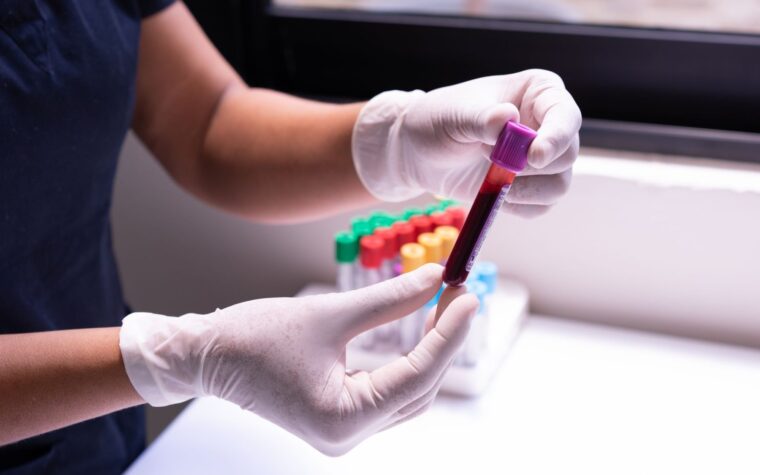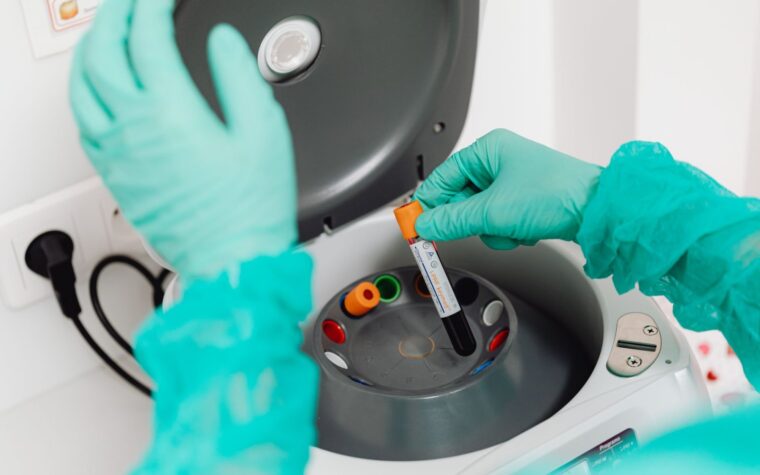
Quick answer: Yes, you can buy blood tests online in most US states without a doctor’s prescription. Companies like Ulta Lab Tests, Walk-In Lab, and full-panel services like Superpower let you order online, walk into a Quest or Labcorp draw site, and get results in one to three business days. Prices run from about $15 for a single CBC to $300 or more for a comprehensive metabolic and hormone panel, and most tests are HSA/FSA eligible. The main catch: a handful of states (New York, New Jersey, Rhode Island, Maryland, Massachusetts) still require a physician order, so location matters.
How buying blood tests online actually works, step by step
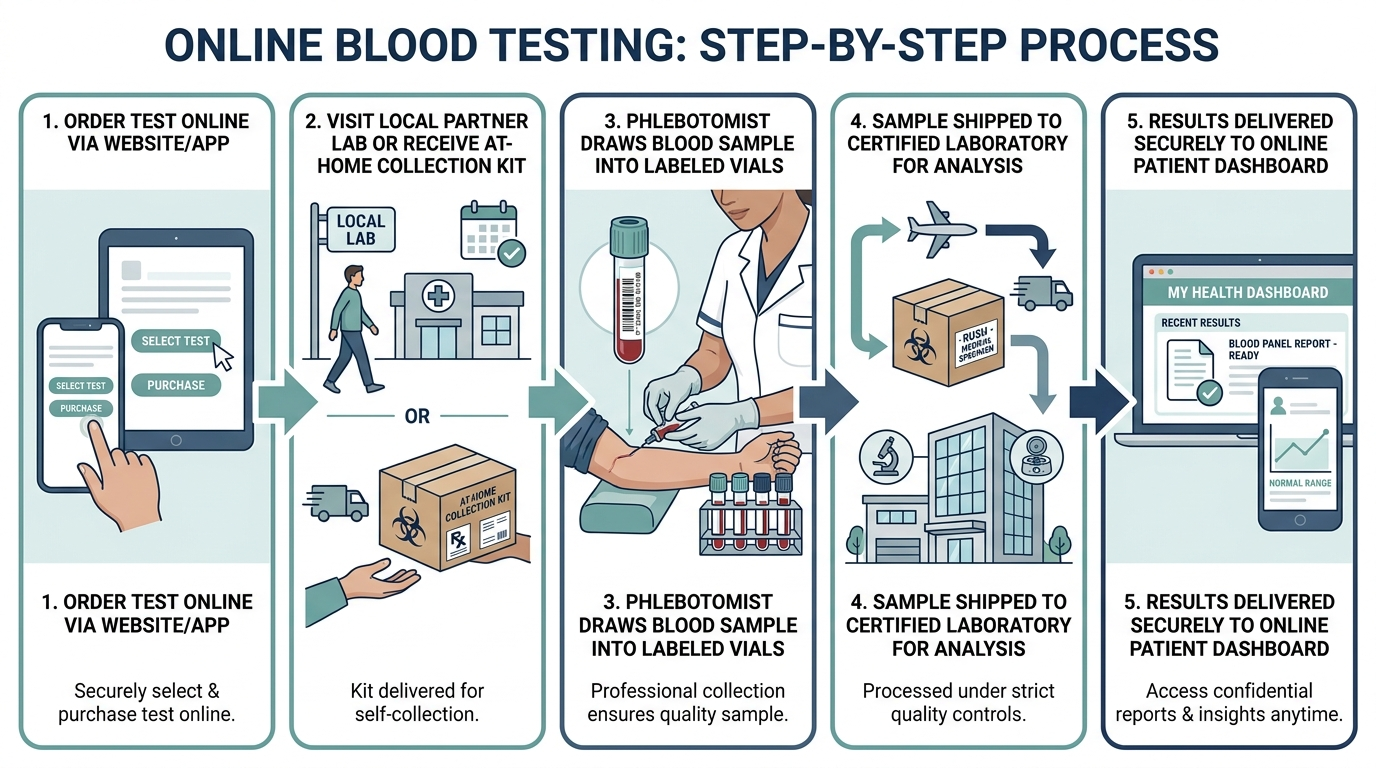
The process is simpler than most people expect. You visit a direct-to-consumer (DTC) lab ordering site, pick your tests, pay at checkout, and receive a lab requisition via email, usually within minutes. You then walk into any participating draw site, hand over your ID, and the phlebotomist draws your blood against that requisition with no appointment needed at most locations. Results upload to a secure portal and, depending on the company, may be reviewed by a physician before release or delivered raw with reference ranges attached.
You can buy a blood test online with no doctor’s note. So why settle for a single CBC when you could see 100+ biomarkers? One at-home Superpower draw checks 100+ biomarkers, physician-reviewed.
The key infrastructure underneath all of this is the existing Quest Diagnostics and Labcorp networks. Both chains have thousands of patient service centers across the US. Most DTC lab companies are simply licensed brokers that issue physician-signed standing orders on your behalf, which is how they satisfy state requirements without you needing your own doctor. When you see “no doctor’s order needed,” that is what it means: the order exists, you just did not generate it yourself.
If you want a real primer on what a full panel looks like before you order, the full blood panel online guide breaks down which tests belong together and why ordering them as a bundle almost always beats piecing them together one at a time.
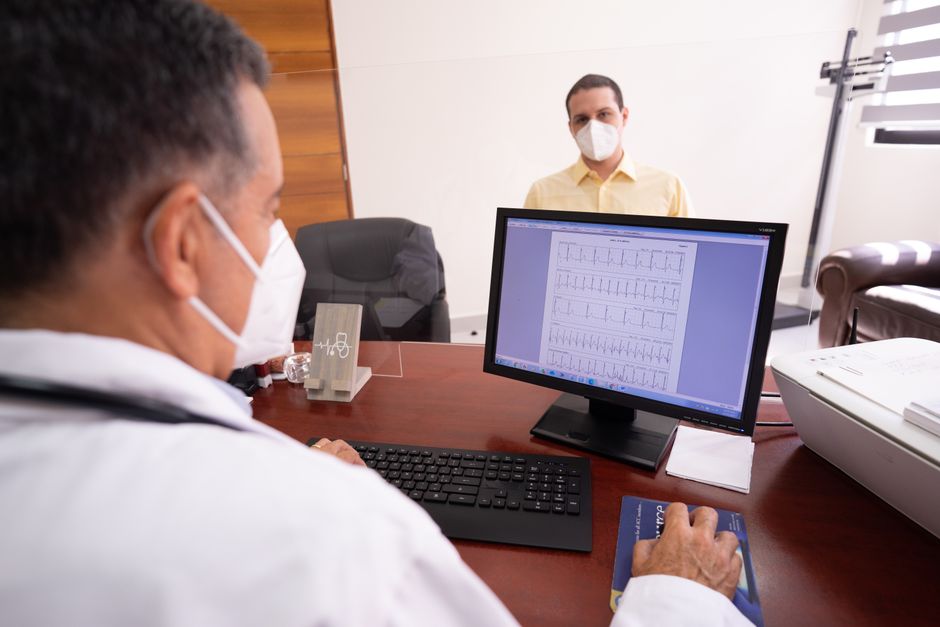
Where to buy blood tests online: the main options compared
Not every DTC lab service works the same way. Here is how the most-used options compare on the things that actually matter at checkout.
| Service | Lab network | Model | Price range (single draw) | Physician review |
|---|---|---|---|---|
| Ulta Lab Tests | Quest | A la carte or bundle | $15 to $300+ | No (raw results) |
| Walk-In Lab | Quest and Labcorp | A la carte or bundle | $25 to $400+ | No (raw results) |
| Any Lab Test Now | Proprietary franchise | Walk-in retail stores | $29 to $500+ | Optional add-on |
| Everlywell | Proprietary CLIA labs | At-home finger-prick kits | $49 to $349 | Physician-reviewed order |
| Superpower | Quest | Annual membership, 100+ biomarkers | About $199/year | Yes, every result |
| LabCorp OnDemand | Labcorp | Direct via Labcorp app/site | $25 to $300+ | No (raw results) |
The Everlywell model is worth a separate note. Their at-home kits use a finger-prick blood spot rather than a venous draw, which works for some markers (thyroid, sex hormones, food sensitivity) but produces less reliable results for a CBC or lipid panel than a proper venipuncture. Read the Everlywell review for a detailed look at which tests hold up under that method and which do not.
Which states let you purchase lab tests online without a doctor
Roughly 45 US states currently allow patients to order their own lab work without a physician requisition. The states that still require a doctor’s order as of 2026 are New York, New Jersey, Rhode Island, Maryland, and Massachusetts. Some services work around this by partnering with a telehealth physician in those states who issues the order on your behalf for a small fee, so the test is still accessible, just with one extra step.
A few states have partial restrictions: some permit DTC ordering for wellness panels but not for diagnostic tests (anything that could be used to diagnose a specific disease). If you are ordering a general health panel for baseline tracking, you will rarely run into this distinction. If you want a test specifically because you suspect a condition, a clinician’s order protects you legally and opens up insurance billing.
For a full state-by-state breakdown, the order your own lab tests online guide covers the legal landscape in detail and flags which services have telehealth workarounds for restricted states.
How much does blood work online cost versus going through insurance
Cash prices for DTC labs are often lower than you would expect, and sometimes lower than your insurance copay, especially if you have a high-deductible plan. A basic metabolic panel (BMP) costs roughly $20 to $45 cash through Ulta Lab Tests or Walk-In Lab. A complete blood count (CBC) with differential runs about $15 to $35. A comprehensive thyroid panel (TSH, Free T3, Free T4, reverse T3) can run $80 to $150 depending on the service.
| Test | Typical DTC cash price | Typical insurance out-of-pocket (HDHP) |
|---|---|---|
| CBC with differential | $15 to $35 | $20 to $80 |
| Basic metabolic panel | $20 to $45 | $25 to $90 |
| Lipid panel | $25 to $60 | $30 to $100 |
| HbA1c | $20 to $50 | $25 to $80 |
| Comprehensive thyroid (TSH+T3+T4) | $80 to $150 | $60 to $250 |
| Testosterone (total and free) | $45 to $120 | $50 to $200 |
| Full panel (50+ markers) | $150 to $400 | $100 to $600+ |
The critical thing most people miss: DTC lab companies negotiate bulk rates with Quest and Labcorp that are often close to the rates commercial insurers get. You may pay less cash through Ulta Lab Tests than you would pay in cost-sharing after insurance, especially if your deductible has not been met. For details on how this math plays out with a popular full-body service, see the breakdown on how much does Superpower cost.
Nearly all DTC lab tests are HSA and FSA eligible, meaning you can pay with pre-tax dollars. At a 22% federal tax bracket, a $200 panel effectively costs you about $156 out of pocket. That is worth factoring in before you decide whether to go through insurance.
What tests you can actually order online (and what requires a doctor)
The vast majority of blood tests available at Quest and Labcorp can be ordered directly. This includes every routine wellness marker: CBC, comprehensive metabolic panel, lipids, HbA1c, thyroid, iron studies, vitamin D, B12, inflammatory markers like CRP and homocysteine, hormone panels including testosterone, estradiol, DHEA-S, cortisol, and dozens more.
A few categories are restricted even in permissive states. Genetic tests, some sexually transmitted infection panels with mandatory counseling requirements, and certain controlled-substance testing panels (like forensic drug screens) typically cannot be self-ordered. HIV testing is available DTC in most states but comes with specific reporting requirements the lab handles automatically.
What you genuinely cannot order online: imaging orders (MRI, CT, ultrasound), biopsies, tests that legally require a physician interpretation before the patient can receive results, and most specialty reference lab tests that are not part of the standard Quest/Labcorp menu. If you are trying to track a specific disease process, talk to a clinician about which tests genuinely require a clinical order and which you can monitor yourself between appointments.
The simplest way to actually get this done
Superpower is a full-body lab membership that runs 100+ biomarkers, has each result reviewed by a doctor, and tracks your numbers year over year (about $199/year). It is what we point readers to when they would rather get one clean, complete draw than chase single tests one at a time. Here is superpower blood test reviewed in full.

Are online blood tests legitimate and accurate
Yes, when purchased through reputable DTC services that route through CLIA-certified labs, the results are clinically equivalent to what you would get from a physician’s order. Quest Diagnostics and Labcorp are the same labs processing your blood whether your doctor ordered it or you ordered it yourself. The phlebotomist at the draw site does not know or care how the requisition was generated.
CLIA certification (Clinical Laboratory Improvement Amendments) is the federal standard that governs lab quality. Any lab that reports results to patients must meet CLIA requirements. When you order through a DTC service, confirm the lab it uses is CLIA certified. Both Quest and Labcorp are. Some boutique at-home test companies use smaller labs, which may also be CLIA certified but have less public track record. The question worth asking is not “is this legit” but “which lab is processing my sample and what are their QC standards.”
The legitimacy question is addressed in full at are online lab tests legit, including what CAP accreditation adds on top of CLIA and when that extra step matters.
At-home finger-prick tests are a different story. Blood spot testing is genuinely less reliable for some analytes, particularly lipids and complete blood counts where cell morphology matters. For a casual hormonal check-in, finger-prick may be fine. For clinical decision-making, venipuncture at a certified draw site is always the more defensible choice.
What to do with your results after you get them
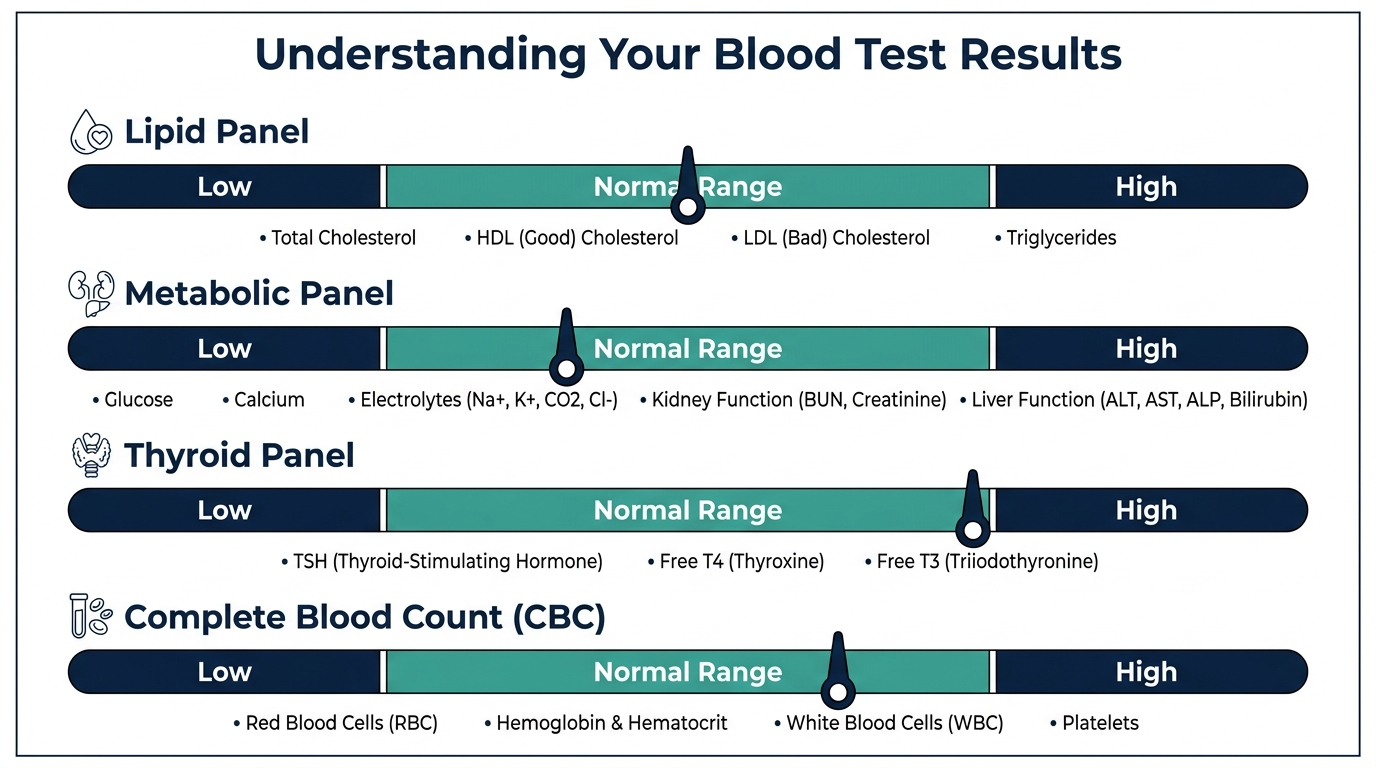
This is where a lot of people stall. Raw lab results come with reference ranges, but reference ranges describe the middle 95% of a population, not optimal health. A TSH of 4.4 is technically “within range” at most labs (upper limit is usually 4.5) but many endocrinologists treat anything above 2.5 in symptomatic patients. Ferritin flagged as “normal” at 12 ng/mL is functionally deficient for most people with fatigue or hair loss symptoms. Reference ranges are a floor, not a target.
If you ordered a panel through a service that includes physician review (Superpower, Marek Health, some function-health-adjacent services), a clinician will flag values that are in-range but trending poorly, which is genuinely useful. If you ordered raw results, you can upload them to your primary care physician or use a service like Levels or Inside Tracker that interprets results against functional ranges rather than population norms.
Practically speaking: abnormal results on a DTC test carry the same clinical weight as results from your doctor’s office. If your DTC potassium comes back at 2.8, that is a real finding that warrants a phone call to a clinician the same day. Do not let the consumer context create a false sense that the numbers are somehow less serious.
Medicare, Medicaid, and insurance coverage for DTC lab tests
DTC lab tests are almost never covered by Medicare or Medicaid. Medicare has strict rules: labs must be ordered by a treating physician and must be medically necessary for Medicare to pay. If you order your own blood work through Ulta Lab Tests, Medicare will not reimburse it, full stop.
Private insurance is trickier. Most DTC services charge you directly and do not bill insurance at all. A few (LabCorp OnDemand being one example) give you a superbill you can submit to insurance yourself, but coverage depends entirely on your plan and whether the test is considered preventive versus diagnostic. Do not assume reimbursement; verify before you order if the amount matters.
For uninsured patients, DTC ordering is often the smartest path. The cash price at Quest through a DTC broker is almost always lower than the hospital outpatient lab rate (which uses chargemaster pricing that can be 3 to 10 times higher). If you are uninsured and your doctor hands you a lab slip, you can sometimes take that requisition to a DTC site like Ulta Lab Tests, reorder the same tests at the negotiated cash rate, and save significantly.
How to Decide Which Tests to Actually Order
The freedom to order any test online is also a trap: it is easy to buy a random assortment that produces confusing results and no clear action. A better approach is to order with a purpose. Match your panel to a specific question you want answered.
- General baseline. A comprehensive metabolic panel, complete blood count, lipid panel with ApoB, HbA1c, TSH, vitamin D, and ferritin cover the highest-yield ground for a healthy adult. This combination catches the majority of common, actionable findings.
- Cardiovascular focus. Add Lp(a) once (it is genetic and stable for life), plus hsCRP and homocysteine, if heart disease runs in your family or you want a fuller risk picture than standard cholesterol gives.
- Fatigue workup. Ferritin, iron studies, TSH with Free T3 and Free T4, vitamin D, B12, and folate address the most common lab-detectable causes of persistent tiredness.
- Metabolic concern. Fasting glucose, fasting insulin, and HbA1c read together reveal insulin resistance earlier than any one of them alone.
Ordering to answer a question keeps you from paying for markers you will not act on, and it makes the results far easier to interpret because you already know what you were looking for.
Privacy and Data Considerations for DTC Testing
When you order labs yourself, your results live outside the traditional medical record, which has both an upside and a downside worth understanding. On the upside, the raw values are processed by a major lab, so you can request a copy directly and carry them to any clinician you choose. On the downside, the DTC service that sells and displays your results is handling protected health information under its own privacy policy, not necessarily under the same expectations as your doctor’s office.
Before ordering, it is worth checking a few things: whether the service shares de-identified data with partners, whether you can export your complete results in a standard format, and how to delete your account and data if you stop using it. The ability to download your own results is the single feature that keeps you from being locked into one platform, and it is what makes DTC testing genuinely portable rather than another walled garden.
Common Ordering Mistakes to Avoid
A handful of avoidable errors account for most of the frustration people have with self-ordered labs. Knowing them in advance saves money and redraws.
- Skipping the fast. Glucose, insulin, and triglycerides need a 9 to 12 hour fast. Ordering these and then eating beforehand invalidates them.
- Not pausing biotin. High-dose biotin supplements distort thyroid and some hormone assays. Pause them for about 72 hours before the draw.
- Testing during illness. An active infection elevates inflammatory markers and skews others. Wait until you are well for a clean baseline.
- Choosing finger-prick for the wrong tests. At-home blood spot kits are convenient but less reliable for lipids and complete blood counts. For anything you will make a decision on, a venipuncture draw at a certified site is the stronger choice.
- Buying a giant panel with no plan. A 100-marker order on a healthy person will, by statistics alone, flag a few values, generating anxiety and follow-up costs. Order to answer a question, not to collect numbers.
Reading Your Own Results Without Overreacting
The hardest part of self-ordered testing is not getting the numbers, it is keeping your reaction proportionate. A disciplined reading protocol helps.
- Sort flags by severity. A critical value in a serious marker (very high or low potassium, a strongly elevated liver enzyme) warrants prompt clinician contact. A mildly suboptimal wellness marker usually warrants a lifestyle tweak and a recheck.
- Confirm before acting. Single borderline abnormalities are frequently noise or the effect of prep conditions. Reasonable practice for non-urgent markers is to retest under controlled conditions before making big changes.
- Read in groups, not in isolation. Markers make sense together. A high glucose alongside a high insulin tells a different story than the same glucose with a low insulin. Interpret related markers as a set.
- Bring the report to a clinician. Self-ordered results carry the same clinical weight as physician-ordered ones. An organized report handed to your doctor turns data into a plan efficiently.
Handled this way, ordering your own blood work becomes a genuine tool for staying ahead of problems rather than a source of unnecessary alarm.
Turn what you just learned into action.
Superpower lets you test 100+ biomarkers from home, then re-check them over time so you can actually see progress, physician-reviewed at every step.
FAQ
Can I buy blood tests online without a doctor’s order?
In about 45 US states, yes. Direct-to-consumer lab services issue a standing physician order on your behalf, which is what makes the “no prescription needed” model legally possible. You still have a physician order; you just did not generate it yourself. In states that restrict DTC ordering (New York, New Jersey, Rhode Island, Maryland, Massachusetts), some services offer a telehealth consultation that generates the order for a small fee.
Which is the best place to buy blood tests online?
For a la carte single tests, Ulta Lab Tests and Walk-In Lab offer the widest Quest-based menu at competitive cash prices. For a comprehensive annual baseline with physician review, Superpower runs 100+ biomarkers for about $199/year and is hard to beat on value. For at-home convenience, Everlywell is legitimate for hormones and thyroid but less accurate for CBC-type markers than a venous draw.
How do I get my blood drawn after ordering online?
After you complete checkout, you receive a lab requisition by email, usually within 30 minutes. Bring that requisition (printed or on your phone) and a government-issued ID to any participating draw site. Quest and Labcorp both allow walk-ins at most locations, though booking a slot via their apps eliminates wait time. The draw itself takes about five minutes.
How long does it take to get results from online blood tests?
Routine tests (CBC, BMP, lipids, HbA1c, TSH) typically result within one to two business days of the draw. Specialty panels like reverse T3, sex hormone binding globulin, or advanced lipid fractionation can take three to five business days because they run on less frequent batch schedules. Results upload to the company’s patient portal and are often emailed when ready.
Are online blood test results as accurate as those ordered by a doctor?
When processed at a CLIA-certified lab like Quest or Labcorp, yes. The same instruments, the same QC protocols, and the same reference ranges apply regardless of how the order was generated. The accuracy difference, if any, comes from the collection method (venipuncture vs. finger-prick) and how the sample was handled before reaching the lab, not from who ordered it.
Can I use HSA or FSA money to buy blood tests online?
In most cases, yes. Blood tests ordered for disease prevention or diagnosis are qualified medical expenses under IRS rules, making them HSA and FSA eligible. A few DTC services also sell “wellness” products that may not qualify under stricter FSA interpretations. When in doubt, check whether the service provides a letter of medical necessity or itemized receipt, which strengthens the case for reimbursement if your FSA administrator ever questions it.
What is the cheapest way to get blood work done without insurance?
Ordering directly through a DTC service like Ulta Lab Tests or LabCorp OnDemand at negotiated cash rates is usually the most cost-effective option for uninsured patients. Community health centers and federally qualified health centers (FQHCs) offer sliding-scale lab fees for low-income patients. Some chain pharmacies like CVS MinuteClinic run basic wellness panels at fixed cash prices that are competitive for common tests. Avoid hospital outpatient labs if you are paying cash; chargemaster pricing is usually far higher than DTC cash rates for the exact same test.
Can I order blood tests online for someone else?
Most DTC services require the person whose blood is being drawn to be the account holder and to present their own ID at the draw site. Ordering for a minor child is possible at some services when a parent or guardian creates the account and accompanies the child. You generally cannot order for another adult, as lab results are protected health information and labs require consent from the person being tested.
Do online lab companies sell my health data?
This varies by company. Most reputable services (Quest, Labcorp, Superpower) are HIPAA-covered entities and cannot sell your individually identifiable health information. Some DTC wellness companies operate in a regulatory gray zone because they are not traditional healthcare providers. Read the privacy policy before you order, specifically for language about selling de-identified or aggregate data to third parties, which is legal even under HIPAA and is how some lower-cost services subsidize their pricing.
Vital Signs Today may earn a commission if you buy through links on this page. It does not affect our editorial assessments.