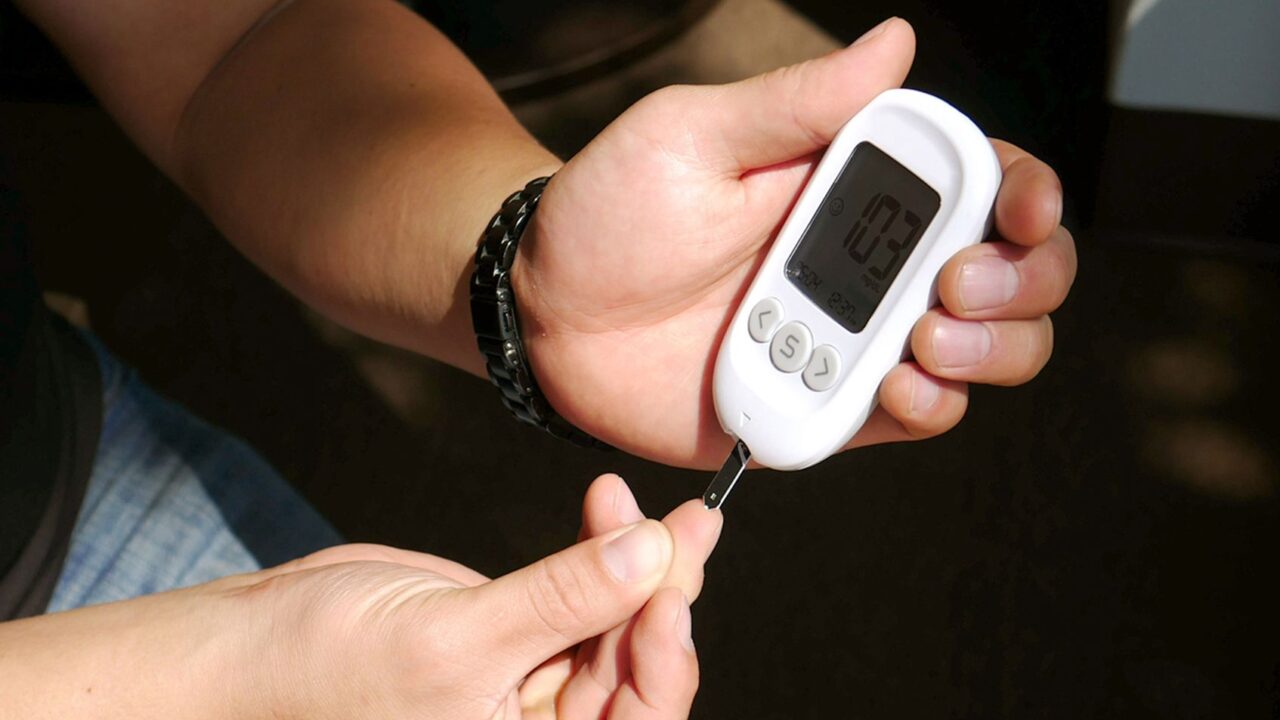
Quick answer: The best injection for weight loss you can give yourself at home is tirzepatide (Zepbound), which produced about 20 percent average body weight loss in the SURMOUNT trials, followed by semaglutide (Wegovy), which delivered about 15 percent in the STEP trials. Both are FDA-approved once-weekly self-injections you administer at home with a prefilled pen. They only work safely when prescribed and monitored by a clinician, and they only stay best if your underlying metabolic numbers (thyroid, insulin, A1c) are checked first, because a hidden hormone problem can blunt any drug.
People type “what is the best injection for weight loss at home” expecting a single product name. The honest answer has two layers. There is the molecule with the strongest evidence (tirzepatide, then semaglutide), and there is the question of whether an injection is even your problem to solve, or whether your scale is stuck for a reason a lab could flag in an afternoon. This article covers both, with the real trial numbers, doses, 2026 cash prices, and the mistakes that quietly waste people’s money.
Before starting a self-injected weight loss drug, bloodwork can flag what your body looks like going in. Want a baseline first? One at-home Superpower draw checks 100+ biomarkers, physician-reviewed.
What is the best injection for weight loss at home right now?
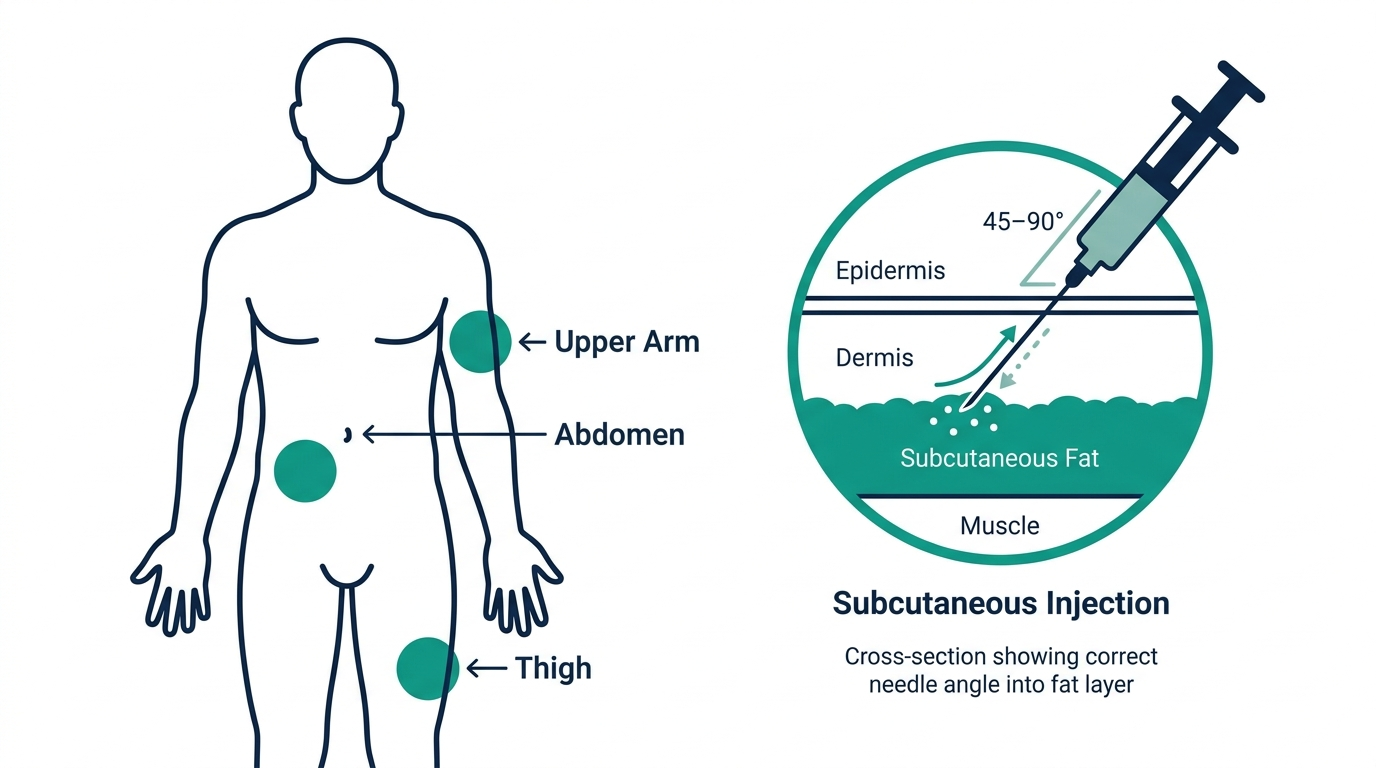
Tirzepatide, sold as Zepbound, is the most effective home injection for weight loss available in 2026, with semaglutide (Wegovy) close behind. Both are GLP-1 based medications you inject under the skin once a week using a single-use prefilled pen, usually in the abdomen, thigh, or upper arm. You do it at home; you do not need a clinic visit for each dose.
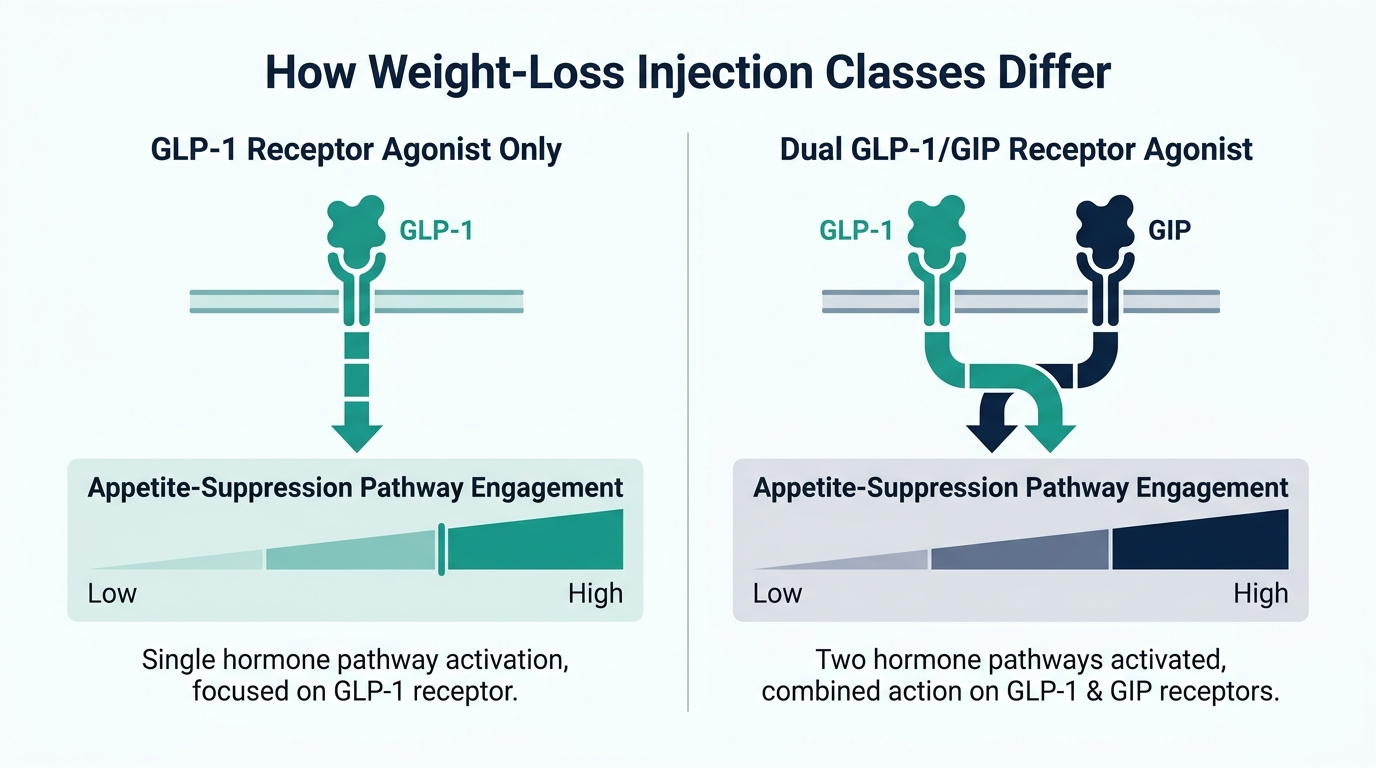
The difference between them is mechanism. Semaglutide mimics one gut hormone, GLP-1, which slows stomach emptying and tells your brain you are full sooner. Tirzepatide is a dual agonist: it hits GLP-1 and a second receptor, GIP, and that combination is why it tends to outperform semaglutide head to head. In the SURMOUNT-1 trial, people on the highest tirzepatide dose lost roughly 20 to 22 percent of their body weight over about 72 weeks. In the STEP trials, semaglutide averaged around 15 percent. For context, that is the difference between losing about 30 pounds and about 45 pounds on a 220-pound starting weight.
Two important honesty points. First, these are FDA-approved drugs for chronic weight management when you meet the criteria (a BMI of 30 or higher, or 27 or higher with a weight-related condition like high blood pressure or prediabetes). Ozempic and Mounjaro are the same molecules approved for type 2 diabetes and are used off-label for weight. Second, “at home” describes where you inject, not how you get the drug. You still need a prescription from a real clinician, and the dose is titrated up slowly over months to limit nausea.
How do home weight-loss injections actually work in the body?
The simplest way to actually get this done
Superpower is a full-body lab membership that runs 100+ biomarkers, has each result reviewed by a doctor, and tracks your numbers year over year (about $199/year). It is what we point readers to when they would rather get one clean, complete draw than chase single tests one at a time. Here is superpower reviewed in full.
GLP-1 injections work by changing your appetite signaling, not by “burning” fat directly. When you eat, your gut releases GLP-1 naturally; these drugs flood the same receptors and keep them switched on for a week at a time. Three things happen.
- Slower gastric emptying. Food sits in your stomach longer, so you feel full faster and stay full. This is also why the first weeks bring nausea if you eat the way you used to.
- Reduced “food noise.” Most people describe a sharp drop in cravings and intrusive thoughts about food. You simply want less, which lowers daily calories without willpower battles.
- Better insulin and blood sugar response. GLP-1 improves how your pancreas releases insulin after meals, which is part of why these drugs started as diabetes treatments.
The result is a calorie deficit you can actually sustain, often 300 to 700 calories a day, maintained for months. That steady deficit, not any metabolic magic, is what drives the fat loss. Tirzepatide’s edge comes from adding GIP signaling, which appears to improve how the body handles fat and may explain the larger average loss.
FDA-approved versus compounded injections: which is safe?
FDA-approved injections (Wegovy, Zepbound, Saxenda) are the safer, better-tested choice; compounded semaglutide and tirzepatide are not FDA-approved, though they can be legally prescribed through licensed clinicians and pharmacies. This distinction matters more than most ads admit.
Branded drugs go through manufacturing oversight, consistent dosing, and the actual clinical trials. Compounded versions exist mainly because of cost and past shortages; a licensed compounding pharmacy makes them to a prescription. They are legal when done properly, but the FDA does not verify their purity, dose accuracy, or labeling, and the agency has warned about products sold through unregulated “gray market” websites that may contain the wrong salt form or an unknown concentration. If you go compounded, it should still run through a real telehealth clinician who reviews your history, not a checkout page that ships vials with no oversight. Never assume compounded equals FDA-approved; it does not.
| Injection | Molecule | Average weight loss (trial) | FDA-approved for weight | Typical 2026 cash cost |
|---|---|---|---|---|
| Zepbound | Tirzepatide | ~20% (SURMOUNT-1) | Yes | $500 to $1,100/mo (often lower via maker’s pharmacy) |
| Wegovy | Semaglutide | ~15% (STEP) | Yes | $500 to $1,000/mo (lower with savings programs) |
| Saxenda | Liraglutide (daily) | ~5 to 8% | Yes | $350 to $1,300/mo |
| Compounded semaglutide | Semaglutide | Mirrors semaglutide if dosed correctly | No | $150 to $300/mo cash |
| Compounded tirzepatide | Tirzepatide | Mirrors tirzepatide if dosed correctly | No | $200 to $400/mo cash |
Prices swing widely based on insurance, coupons, and the maker’s direct-to-patient pharmacy options, which have pushed branded cash prices down in 2026. Talk to a clinician before starting or stopping any of these.

What about the home weight-loss methods people try first?
Before reaching for an injection, most people try cheaper home methods, and it is worth being honest about what each one actually delivers. None of them rivals a GLP-1, but two of them have real, underrated value.
How to make detox tea for weight loss at home (and why it barely helps)
Homemade “detox tea” does not cause meaningful fat loss; at best it reduces water weight temporarily. A typical recipe steeps ginger, lemon, and green tea, sometimes with a splash of apple cider vinegar. Green tea contains a small amount of caffeine and catechins that nudge metabolism slightly, and warm fluid before a meal can blunt appetite a little. But the “detox” framing is marketing. Your liver and kidneys handle detoxification; a tea does not. Many commercial versions also contain senna, a laxative, and the scale drop you see the next morning is lost water and stool, not fat. Drink it because you enjoy it, not because you expect results.
How to make protein powder at home for weight loss
A homemade protein blend is genuinely useful for weight loss because protein protects muscle and curbs hunger, the two things that decide whether a diet sticks. You cannot manufacture isolated whey at home, but you can build a high-protein powder mix that works. Combine a base of unsweetened whey or pea protein with milk powder for casein, then add ground flaxseed for fiber and a spoon of unsweetened cocoa or cinnamon for flavor without sugar. Aim for a shake delivering 25 to 35 grams of protein. The mechanism is real: protein has the highest thermic effect of any macronutrient (your body burns about 20 to 30 percent of its calories just digesting it) and it is the most filling, which lowers your total daily intake. This is one of the few home tricks that earns its place.
Is home Pilates good for weight loss, and does at home Pilates work?
Home Pilates works for weight loss only as a supporting player; it builds core strength, posture, and lean muscle, but it burns relatively few calories per session, so it will not create a deficit on its own. A 30-minute mat Pilates session burns roughly 120 to 180 calories, far less than running or swimming. Its real contribution is muscle: more lean tissue raises your resting metabolic rate slightly and protects you from the muscle loss that comes with aggressive dieting or even with GLP-1 use. If you want to see how it stacks up against other low-impact options, compare whether Pilates is good for weight loss with whether yoga is good for weight loss. For pure calorie burn, swimming and running beat both, and the elliptical sits in between with less joint stress. The smart move is to pair Pilates for muscle with one cardio mode for the deficit.
What stalls people on home weight-loss injections (the mistakes nobody warns you about)
Most people who fail or plateau on a home injection are not failing the drug; they are running into one of a handful of predictable problems. Here are the ones that actually matter.
- Quitting before the dose is therapeutic. The starting dose of Wegovy or Zepbound is intentionally low to limit nausea. People judge the drug at week three on a starter dose and quit, never reaching the dose that produced the trial results. Loss accelerates as you titrate up over four to five months.
- Losing muscle instead of fat. On a big appetite suppressant, it is easy to eat too little protein and lose lean mass along with fat, which slows your metabolism and leaves you skinny-soft. Resistance training and 1 gram of protein per pound of goal weight prevent this.
- Ignoring an untested thyroid or insulin problem. A stalled scale is often a thyroid or insulin issue, not a calorie issue. An underactive thyroid (hypothyroidism) or strong insulin resistance can flatten progress even on a GLP-1. People with PCOS, perimenopausal women, and anyone with prediabetes are especially prone to this, and none of it is visible without labs.
- Stopping cold and regaining fast. When you stop a GLP-1, appetite signaling returns to baseline and most people regain a large share of the lost weight within a year unless they have built new habits and muscle. The drug is a tool for a metabolic condition, not a 12-week cleanse.
- Buying gray-market vials with no clinician. Self-dosing from an unregulated website means no titration plan, no monitoring for pancreatitis or gallbladder issues, and no idea what is actually in the vial.
Notice the through-line: the two biggest stalls are invisible without measurement. You can do everything right with the needle and still get nowhere because your thyroid is slow or your insulin is high. That is the case for testing before, not after, you spend months guessing.
Why testing your numbers beats guessing with injections
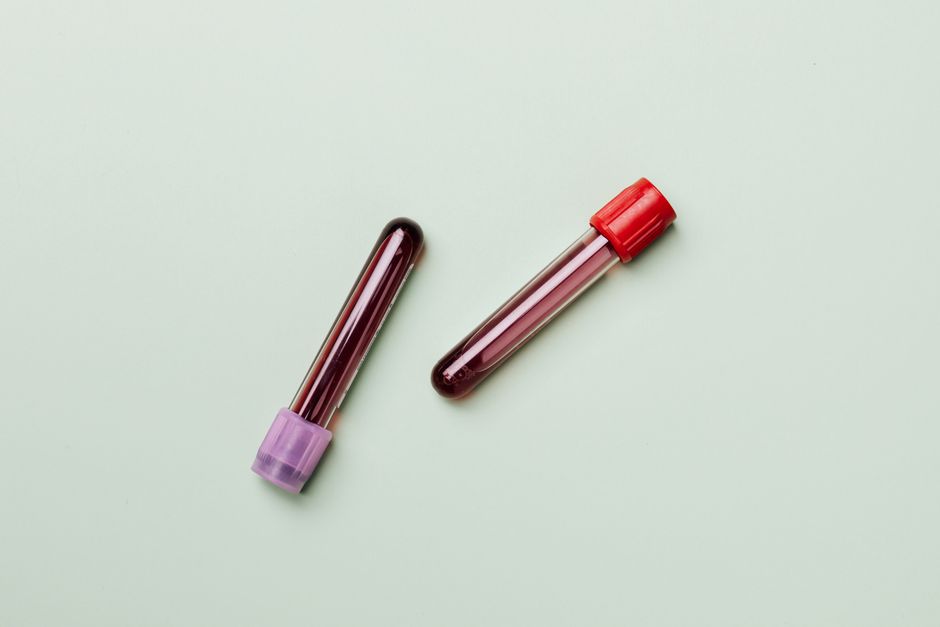
The real lever in stubborn weight loss is your metabolic data, not the brand of injection, and that is the part almost everyone skips. Before you spend $500 to $1,000 a month on a drug, it is worth knowing whether a thyroid hormone, fasting insulin, A1c, or sex-hormone imbalance is the thing actually holding the scale. A simple panel can show whether you have insulin resistance driving your hunger, a slow thyroid suppressing your burn, or a vitamin and hormone picture that explains why diets keep failing. With those numbers, a clinician can tell you whether an injection is the right move, whether you need to fix the thyroid first, or whether a targeted nutrition and supplement plan would get you most of the way without a weekly needle.
Want to know if an injection is even your problem before you pay for one?
Hundred is an annual membership that runs 100+ advanced labs, builds a clinician-reviewed 100-day action plan covering nutrition, supplements and lifestyle, and gives member pricing on the supplements it recommends (about $199/year). It checks the exact thyroid, insulin and A1c markers that quietly stall people on home weight-loss injections, so you spend on the right fix. Here is Hundred reviewed in full.
If you would rather start with a broad blood panel and decide from there, a comprehensive metabolic panel covers the same markers and gives you a baseline to track against as you lose. Either way, the order matters: measure, then medicate.
Who should consider a home injection, and who should wait?
A home GLP-1 injection makes sense if you meet the medical criteria and have ruled out a treatable cause. Good candidates: a BMI of 30 or higher, or 27 or higher with a condition like high blood pressure, prediabetes, or sleep apnea, plus a history of diets that failed despite real effort. For these people, tirzepatide or semaglutide is often genuinely life-changing.
Hold off, or test first, if: your stall has no clear cause and you have never checked your thyroid or insulin; you have a personal or family history of medullary thyroid cancer or pancreatitis (these are contraindications); you are pregnant or planning pregnancy; or you only have 5 to 10 pounds to lose, in which case the cost and side effects rarely justify the drug. For the uninsured, compounded options through a legitimate telehealth clinician can lower cost, but the safety rules do not change.
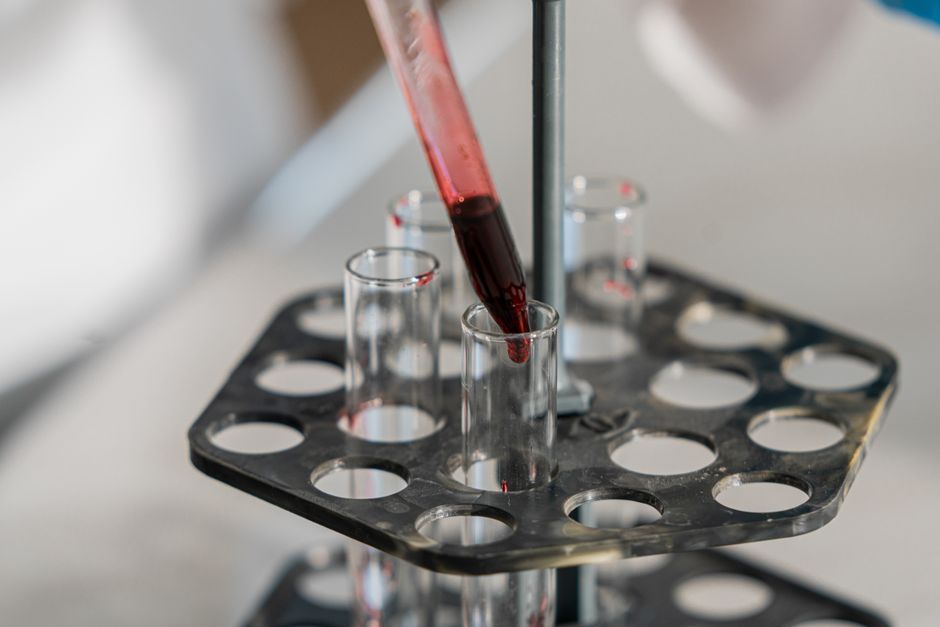
The exact labs to check before you start a weight-loss injection
If the biggest stalls are invisible without measurement, the logical next step is knowing which numbers to look at. These are the markers that most often explain a stubborn scale, and the thresholds that make a result meaningful rather than just “in range.”
Thyroid: TSH plus free T4
An underactive thyroid slows resting metabolism and can flatten weight loss even on a GLP-1. TSH is the screening test, but a normal TSH with a low free T4 can still leave someone sluggish, so both are worth having. If TSH is elevated and free T4 is low, that is classic hypothyroidism and treating it can restore the metabolic headroom a diet needs.
HbA1c and fasting insulin
HbA1c reflects your average blood sugar over roughly three months. Using the American Diabetes Association cutoffs, below 5.7 percent is normal, 5.7 to 6.4 percent is prediabetes, and 6.5 percent or higher meets the threshold for diabetes. A1c alone can miss early trouble, which is why fasting insulin matters: insulin can run high for years to keep glucose normal, so a normal A1c with elevated fasting insulin still signals insulin resistance, a state that drives hunger and makes fat loss harder. GLP-1 drugs help here, but knowing your starting point tells you how much of your struggle is insulin driven.
Sex hormones and the PCOS and perimenopause picture
In women, polycystic ovary syndrome and the perimenopausal transition shift hormones in ways that promote central weight gain and insulin resistance. Markers like testosterone, SHBG, and in the right context LH and FSH help a clinician see whether a hormonal driver is part of the story. In men, low testosterone can worsen body composition. None of this is visible on a bathroom scale.
A complete metabolic and lipid baseline
A CMP checks liver and kidney function, which matters because significant weight loss and some medications stress both, and a lipid panel with ApoB gives a cardiovascular baseline you can watch improve as you lose. Establishing these before you start means you can attribute later changes to the intervention rather than guessing.
The point is not to run every test in existence. It is to check the handful that most commonly explain a stall, so you spend on the right fix instead of paying for months of injection while a slow thyroid quietly cancels your effort.
How to inject correctly at home and manage the side effects
The mechanics of a weekly self-injection are simple, but a few details separate a smooth experience from a miserable one. These pens deliver the medication into subcutaneous fat, not muscle, and the technique is designed to be forgiving.
- Rotate the site. The abdomen (a couple of inches from the navel), the front of the thigh, and the back of the upper arm are the standard spots. Rotating each week reduces irritation and lumps at any one site.
- Same day each week, any time of day. These are once-weekly medications, so pick a consistent day. If you miss a dose, there is usually a window to take it late; follow the specific product instructions or ask the prescriber rather than doubling up.
- Let it reach room temperature and inject slowly. A cold pen straight from the fridge can sting more. Hold the pen until it signals the dose is complete.
- Store it properly. These medications are refrigerated, with limited room-temperature windows. Storing them wrong can degrade the drug.
On side effects, the pattern is predictable. Nausea, constipation or diarrhea, and reflux are common in the first weeks and during each dose increase, then usually ease as the body adapts. The practical levers that reduce them are eating smaller portions, stopping at the first sign of fullness (the drug makes that signal arrive earlier and stronger), staying hydrated, and limiting greasy or very large meals. This is why titration exists: starting low and stepping up slowly gives your gut time to adjust. The warning signs that warrant a call to a clinician rather than waiting it out include severe or persistent abdominal pain (a possible signal of pancreatitis or gallbladder trouble), signs of dehydration from ongoing vomiting, and any severe allergic reaction.
Protecting muscle while the fat comes off
A powerful appetite suppressant makes it dangerously easy to under-eat protein, and a meaningful share of the weight lost on any aggressive approach can come from lean tissue rather than fat. Losing muscle is counterproductive: it lowers resting metabolism, weakens you, and produces the soft, undertoned result people do not want. Preserving muscle is one of the few things fully in your control while on these medications.
- Prioritize protein even when appetite is low. A common target is roughly 0.7 to 1 gram of protein per pound of goal body weight. Because the drug reduces overall intake, protein has to be deliberate, often front-loaded earlier in the day when appetite is better.
- Do resistance training. Two to four sessions a week of lifting or bodyweight training gives the body a reason to keep muscle during a calorie deficit. Cardio helps the deficit; resistance work protects the tissue.
- Do not cut calories harder than the drug already does. Stacking severe self-imposed restriction on top of strong appetite suppression accelerates muscle loss and stalls progress.
The same logic applies whether you are on a branded or compounded product: the drug creates the deficit, but protein and lifting decide how much of what you lose is fat versus muscle.
What a realistic timeline looks like month by month
Expectations cause more quitting than side effects do. People compare week three on a starter dose to a headline trial number and conclude the drug is not working. The trials that produced roughly 15 to 20 percent average loss ran for well over a year, with the dose stepped up gradually. Here is a more realistic mental model.
- Weeks 1 to 4 (starter dose): the dose is intentionally low to limit nausea. Weight change is often modest. This phase is about tolerance, not results.
- Months 2 to 5 (titration): as the dose steps up toward a therapeutic level, appetite suppression deepens and the rate of loss usually accelerates. This is where most of the visible progress begins.
- Months 6 to 12 and beyond: loss continues but typically slows as you approach a new set point, and maintaining habits and muscle becomes the main job.
Understanding this curve is what keeps people from abandoning an effective tool at exactly the point it was about to start working. If you have genuinely titrated to a therapeutic dose for several months and still see nothing, that is a real cue to revisit your labs and look for an untreated thyroid, insulin, or hormone driver rather than simply pushing the dose higher.
Curious what your own levels look like?
Baseline 100+ biomarkers today and retest as life changes, all in one membership with physician review.
Want a real clinician to run the numbers, not a guess?
Joi + Blokes is a telehealth clinic that prescribes GLP-1 medication (Zepbound, compounded semaglutide and tirzepatide), hormone therapy (TRT, HRT), thyroid care, and peptides after a real lab panel and clinician review, with no membership or consult fee (prescriptions from about $59/month, lab panels from $149). If the scale will not budge, this is where you find out whether insulin, thyroid, or hormones are the real reason. Here is Joi + Blokes reviewed in full.
FAQ
What is the strongest injection for weight loss you can use at home?
Tirzepatide (Zepbound) is currently the strongest, with about 20 percent average body weight loss in the SURMOUNT-1 trial versus about 15 percent for semaglutide (Wegovy) in the STEP trials. Both are self-injected once weekly at home with a prefilled pen.
Can I buy weight-loss injections and use them at home without a doctor?
No. Wegovy, Zepbound, and Saxenda are prescription-only, and even compounded versions should be prescribed and monitored by a licensed clinician. Buying vials from an unregulated website skips the dose titration and safety monitoring that prevent serious side effects, and you cannot verify what is in the product.
How much do home weight-loss injections cost in 2026?
Branded options like Zepbound and Wegovy generally run $500 to $1,100 a month cash, though the makers’ direct-to-patient pharmacies and savings programs have pushed real prices lower. Compounded semaglutide often runs $150 to $300 a month and compounded tirzepatide about $200 to $400, but those are not FDA-approved.
How to make detox tea for weight loss at home that actually does something?
You cannot make a tea that burns fat, but a cup of green tea or ginger and lemon tea before a meal can slightly blunt appetite and add caffeine for a minor metabolic nudge. Skip recipes with senna or laxatives; the overnight weight drop is water and stool, not fat, and laxative abuse is harmful.
How to make protein powder at home for weight loss?
Blend an unsweetened whey or pea protein base with milk powder for casein, ground flaxseed for fiber, and cocoa or cinnamon for flavor, aiming for 25 to 35 grams of protein per shake. Protein is the most filling macronutrient and has the highest thermic effect, so it curbs hunger and protects muscle while you lose.
Is home Pilates good for weight loss?
Home Pilates is good for building core strength and lean muscle but burns only about 120 to 180 calories per 30-minute session, so it will not create a calorie deficit by itself. Use it to protect muscle and improve posture, and pair it with cardio or a calorie deficit for actual fat loss.
Does at home Pilates work for weight loss without other exercise?
On its own, at-home Pilates rarely moves the scale much because the calorie burn is modest. It works for weight loss when combined with a nutrition plan that creates a deficit and at least one higher-burn activity like brisk walking, the elliptical, or swimming.
Why do people regain weight after stopping a GLP-1 injection?
When you stop, GLP-1 signaling returns to baseline, appetite and food cravings come back, and studies show most people regain a large portion of the lost weight within a year. The fix is using the time on the drug to build muscle and durable eating habits, and treating the condition as chronic rather than as a short course.
Should I test my hormones before starting a weight-loss injection?
Ideally yes. A slow thyroid, high fasting insulin, or a sex-hormone imbalance (common in PCOS and perimenopause) can stall progress even on a strong injection, and none of it is visible without labs. Checking thyroid, insulin, and A1c first tells you whether an injection is the right tool or whether another fix comes first.
Are home injections safe for people with PCOS or insulin resistance?
GLP-1 injections are often especially helpful for PCOS and insulin resistance because they improve insulin sensitivity, but they should be started with a clinician who has reviewed your labs. These conditions also explain many “the diet won’t work” stalls, which is why testing your numbers first is worth it.
Vital Signs Today may earn a commission if you buy through links on this page. It does not affect our editorial assessments.