Disclosure: Vital Signs Today may earn a commission if you buy through links on this page, at no extra cost to you. This does not influence our evidence-based assessments. We are not a medical provider; talk to a clinician before acting on test results.
Quick answer: An at home iron test lets you check your iron from home using either a finger-prick collection or a mail-in sample that goes to a lab, with results delivered online in a few days. A single-marker kit (usually ferritin) is the fastest way to spot low iron stores, and Everlywell is a solid pick for that. But iron is best understood as a panel, not one number, so if you want serum iron, TIBC, transferrin saturation, and ferritin read together (plus 100+ other biomarkers tracked year over year), a full membership like Superpower gives you far more signal for the money.
Disclosure: Vital Signs Today may earn a commission if you buy through links on this page, at no extra cost to you. This does not influence our evidence-based assessments. We are not a medical provider; talk to a clinician before acting on test results.
| Service | Best for | Pricing | Visit |
|---|---|---|---|
| Superpower | Whole-body optimization | ~$179/yr membership | View › |
What an at home iron test actually measures
What your iron numbers actually mean
The simplest way to actually get this done
Superpower is a full-body lab membership that runs 100+ biomarkers, has each result reviewed by a doctor, and tracks your numbers year over year (about $199/year). It is what we point readers to when they would rather get one clean, complete draw than chase single tests one at a time. Here is superpower reviewed in full.
The reason a single reading misleads so often is that each marker has its own reference range, and the ranges move depending on the lab, your sex, and even the assay. Treat the figures below as orientation, not a verdict. Your report will print its own reference interval next to each result, and that is the range you compare against.
- Serum iron usually runs around 60 to 170 mcg/dL. This is the twitchiest number on the panel. It rises after an iron-rich meal or a supplement and drifts down later in the day, so a single serum iron in isolation tells you almost nothing.
- Ferritin commonly reads 30 to 400 ng/mL in men and 15 to 150 ng/mL in women. Many clinicians treat ferritin under 30 as depleted stores. A frequent frustration is that ferritin also climbs with inflammation, so a “normal” 60 during an active infection can be hiding real deficiency.
- TIBC (total iron-binding capacity) sits near 240 to 450 mcg/dL. It tends to go up when iron is low, because the body makes more transport protein to scavenge what little iron is around.
- Transferrin saturation normally lands between 20 and 50 percent. Under 20 percent leans toward iron deficiency, and consistently above 45 to 50 percent is a flag to rule out iron overload. The full walkthrough is in our iron saturation test explainer.
Here is the interpretive move that matters: the panel is read as a pattern, not four separate scores. Low serum iron with a high TIBC and low saturation is the classic fingerprint of iron deficiency. Low serum iron with a low TIBC and a normal or high ferritin points instead toward anemia of chronic disease, where inflammation, not a shortage, is locking iron away. A single ferritin kit cannot tell those two stories apart, and they call for opposite responses.
One more nuance the marketing never mentions: “normal” and “optimal” are not the same word. A ferritin of 18 clears many lab reference ranges, yet plenty of people at that level still feel the fatigue, hair shedding, and cold hands of low iron. That gap between passing the reference range and actually feeling well is exactly why reading the whole panel, and tracking it over time, beats chasing a single pass or fail.
“Iron” on a lab report is not one value. When you order an iron test at home, you are usually getting one of a handful of markers, and they answer different questions. Knowing which one you bought matters more than the kit’s branding.
Ferritin is the storage marker. It reflects how much iron your body has banked, and it is the single most useful first test for catching iron deficiency before it becomes anemia. Serum iron measures the iron circulating in your blood right now, which swings with what you ate and the time of day. TIBC (total iron-binding capacity) and transferrin measure how much carrying capacity your blood has, and transferrin saturation is the ratio that ties serum iron and capacity together into a percentage.
A good rule of thumb: ferritin tells you the size of the savings account, serum iron tells you what is in your wallet today, and saturation tells you how full the delivery trucks are. One reading in isolation can mislead. Ferritin, for example, rises with inflammation and can look falsely normal even when stores are low, which is exactly why clinicians read it alongside the others.
How at-home iron testing works, step by step
Most at-home iron test kits follow one of two collection routes, and the route shapes both the convenience and the accuracy.
Finger-prick (capillary) kits
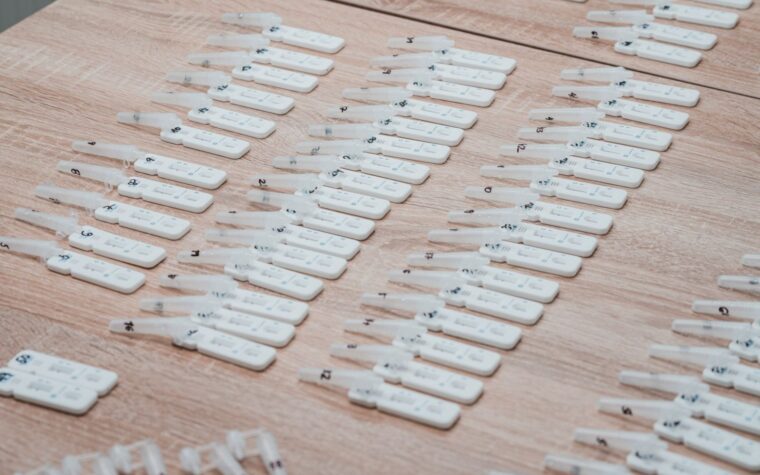
You order online, the kit arrives in the mail, you lance a fingertip, squeeze a few drops onto a card or into a small tube, and ship it back in a prepaid mailer. A CLIA-certified lab processes the sample and posts your results to a secure dashboard, usually within a few days of arrival. This is the most common form of an iron test at home kit because nobody has to draw your blood. SiPhox Health is one provider built around this finger-prick model with longevity-focused panels, if convenience is your top priority.
Mail-in and at-home phlebotomy
Some services skip the finger-prick and either mail you a kit for a small venous sample or send a phlebotomist to your home for a full draw. A venous draw is the gold standard for an accurate iron panel because finger-prick volumes can be too small for a complete set of markers, and squeezing the fingertip can dilute or hemolyze the sample. If you want to test iron levels at home and trust the numbers for a real decision, a venous draw is worth the slightly higher friction.
Either way, the pattern is the same: collect, ship, wait, read online. The difference is whether you are getting one marker or a true panel, and how clean the sample is.
How to prep so your iron test is not garbage in, garbage out
An at-home kit is only as good as the sample you feed it, and iron is unusually sensitive to timing. A few small habits keep a home draw from producing a number you cannot trust.
- Test in the morning. Serum iron peaks in the morning and can fall by a third or more by evening. If you are tracking iron over time, always collect at roughly the same time of day so you are comparing like with like.
- Hold iron supplements for at least 24 hours, ideally longer. A dose of ferrous sulfate the night before can spike serum iron and transferrin saturation into a falsely reassuring range. Many labs suggest pausing supplements for one to several days before an iron panel.
- Fast if the kit asks you to. A big steak dinner or a fortified breakfast nudges serum iron up. Not every provider requires fasting, so read the kit instructions, but a morning sample before food is the cleanest default.
- Skip the test during an infection or flare. Ferritin is an acute-phase reactant, which means it rises whenever the body is inflamed. Testing during a cold, a flare of an autoimmune condition, or right after intense illness can mask a genuine deficiency. Wait until you are back to baseline.
- Mind your cycle and hard training. Heavy menstruation is one of the most common drivers of low iron in menstruating people, and a draw right after a heavy period may read lower. Endurance athletes can also see iron shifts around big training blocks. Neither is a reason to skip testing, just context for reading the result.
For finger-prick kits specifically, warm your hands, let your arm hang down for a moment to pool blood, and let drops fall freely rather than squeezing hard. Aggressive squeezing dilutes the sample with tissue fluid and can rupture cells, which throws off the reading. If the kit gives you a fill line, hit it. An underfilled tube is a common reason a home lab flags a sample as unusable.
Single-marker kit vs a full iron panel: when each wins
This is the decision that actually matters, and most listicles skip it. A single at-home iron test kit and a full panel are not the same product, and buying the wrong one wastes either money or clarity.
A single ferritin kit is the right call when you have one specific, low-stakes question: “Are my iron stores low?” It is cheap, fast, and good enough to confirm a hunch about fatigue or to recheck after a few months of supplementing. For that narrow job, a targeted kit is the smart, frugal choice.
A full iron panel wins the moment your question gets more interesting. If your ferritin comes back borderline, or you have inflammation, heavy periods, GI symptoms, or you are an endurance athlete, a single number leaves you guessing. Reading serum iron, TIBC, transferrin saturation, and ferritin together is what separates plain iron deficiency from anemia of chronic disease or even iron overload. Buying four separate single-marker kits to assemble that picture usually costs more than one bundled panel and arrives on four different days.
Here is the editorial take from a desk that compares these services: if you are going to draw blood anyway, draw once and measure broadly. The marginal cost of more markers on a single sample is small, and the marginal insight is large.
The case for bundling iron into a full-body baseline
Iron rarely travels alone. The same fatigue that sends you looking for an at-home iron test can come from thyroid, B12, folate, blood sugar, or inflammation, and a standalone iron kit cannot see any of those. This is where a full-body membership changes the math.
Superpower is a screening and tracking service built around one comprehensive annual blood draw covering 100+ biomarkers (about 150 counting calculated ratios), with iron status sitting inside a much larger picture. For $199 per year, you get 17 plain-language health scores, a personalized action plan, and an AI concierge you can chat with about your results, so a borderline ferritin reading lands in context instead of in isolation. (Pricing is $399 in New York and New Jersey due to state lab rules.) It is a screening and tracking service, not a diagnostic clinic, which is the right framing for a YMYL reader: it surfaces signals to act on, it does not diagnose you.
The other quiet advantage is tracking. Iron is something you often want to recheck after a diet change or supplementation, and a membership that trends your markers over time turns a one-off snapshot into a trend line. That is the difference between “my ferritin was 30 once” and “my ferritin climbed from 30 to 65 over six months.”
Full-body lab membership: 100+ biomarkers, doctor-reviewed, tracked over time.
What drives iron too low, or too high
A number only becomes useful once you know what might be pushing it. Iron problems fall into two directions, and both are worth taking seriously.
Why iron runs low
Low iron almost always comes down to one of three routes: you are losing blood, you are not absorbing iron, or you are not taking enough in. Menstrual blood loss is the single most common cause in menstruating adults. Slow gastrointestinal bleeding from ulcers, heavy NSAID use, or, in older adults, something that needs ruling out, is a quieter but important cause. Absorption problems show up with celiac disease, low stomach acid, or after certain bariatric surgeries. And plain dietary shortfall matters most for people eating little heme iron, including many vegetarians and vegans. The everyday signs of running low are fatigue that sleep does not fix, breathlessness on stairs, cold hands and feet, brittle nails, hair shedding, and sometimes odd cravings for ice.
Why iron runs high
Too much iron is the failure mode people forget. Hereditary hemochromatosis, a common genetic condition, causes the gut to absorb more iron than the body can safely store, and it can quietly damage the liver, heart, and pancreas over years. Repeated blood transfusions and heavy, unmonitored supplementation can also push iron up. This is the real reason no one should start iron pills off the back of a single home reading. A high transferrin saturation, especially over 45 to 50 percent, is the marker that should prompt a conversation with a clinician rather than a shrug.
Picture a common case. A 34-year-old with heavy periods orders a finger-prick ferritin kit because she is exhausted. It reads 22, technically inside the lab range, so she assumes iron is fine and moves on. Three months later, still tired, she runs a full panel: ferritin 22, serum iron low, TIBC high, saturation 14 percent. That pattern is textbook iron deficiency, and the single “normal-ish” ferritin nearly sent her looking in the wrong place. The panel, not the one number, is what pointed her and her doctor at the real problem.
How at-home iron testing compares to your doctor’s lab order
You can absolutely get iron tested the traditional way: your physician orders an iron panel, you visit a lab for a venous draw, and results come back through the clinic. For many people, especially with insurance and active symptoms, that route is appropriate and may be partially covered.
Where at-home and direct-to-consumer testing earns its place is access and routine monitoring. If you simply want to test iron levels at home without a referral, on your own schedule, or you want to keep tabs on stores between annual visits, a DTC option removes the friction. Function Health, for context, is a more clinically thorough membership at $365 per year with 160+ biomarkers, two draws per year, a urinalysis, and a 6-month retest, which suits people who want the deepest panel and a built-in recheck. The honest tradeoff is breadth and clinical depth versus price and simplicity.
Whichever route you choose, one safety note: any iron result outside the normal range, high or low, should be reviewed with a clinician before you start supplementing or change anything. Too much iron is a real problem, not just too little, and an at-home test is a screening tool, not a diagnosis.
Choosing the right at-home iron test for your situation
Match the test to the question, not to the marketing.
If you want a quick, budget answer to “are my stores low,” a single-marker at-home ferritin kit from a CLIA-certified provider like Everlywell does the job, and the result is delivered online in a few days.
If you have ongoing symptoms, borderline past results, or you simply prefer to see the whole iron picture alongside the rest of your health, skip the single kit and get a full panel. The cost-per-insight is better, and you are not back online ordering a second test next month.
Related reading on Vital Signs Today
- Iron Test Cost: At-Home vs Lab vs Full Panel
- Iron Test Near Me: At-Home and Local Options (2026)
- Iron Saturation Test (Transferrin Saturation): The Math and What It Means
- Superpower Blood Test Review (2026): Is It Worth the Membership?
Frequently asked questions
Can you really check iron levels at home?
Yes. An at-home iron test uses a finger-prick or mail-in sample processed by a CLIA-certified lab, and results post online in a few days. For the most reliable full iron panel, a venous draw (at-home phlebotomy or a lab visit) beats a finger-prick because the sample volume is larger and cleaner.
What is the best at-home iron test kit?
It depends on your question. To test iron levels at home for a single, fast answer, a ferritin-focused kit from a provider like Everlywell is enough. If you want serum iron, TIBC, saturation, and ferritin read together (and tracked over time), a full panel such as Superpower’s gives you far more for the money than buying markers one at a time.
Is a finger-prick iron test accurate?
Finger-prick testing is convenient and broadly reliable for screening, but it can fall short for a complete iron panel because small volumes and squeezing the fingertip can affect the sample. For decisions, a venous draw is the more dependable iron test at home option.
Should I test ferritin or a full iron panel?
Ferritin is the best single first marker for catching low iron stores. But ferritin can read falsely normal during inflammation, so if your result is borderline or your symptoms persist, a full panel that includes serum iron, TIBC, and transferrin saturation gives the accurate picture.
What should I do if my at-home iron test is abnormal?
Treat any out-of-range result, high or low, as a prompt to talk to a clinician rather than a diagnosis. At-home and DTC tests are screening tools. A doctor can confirm with follow-up testing and rule out causes like blood loss, malabsorption, or iron overload before you change your diet or start supplements.
How often should I retest my iron?
If you are correcting a deficiency, most clinicians recheck ferritin and the iron panel after about three months of supplementation, since stores refill slowly. If your iron is normal and you just want to monitor, once a year alongside a broader baseline is plenty for most people. Retest sooner if new symptoms appear or your situation changes, such as a new plant-based diet or heavier periods.
Do I need to fast for an at-home iron test?
Not every kit requires it, but a morning sample taken before food and before any iron supplement gives the most consistent serum iron reading. Ferritin is far less meal-sensitive than serum iron, so a single ferritin kit is more forgiving on timing than a full panel. When in doubt, follow the instructions in the kit and keep your collection time consistent between tests.
Can a home iron test tell me if I have hemochromatosis?
It can raise the flag, not confirm it. A high transferrin saturation and high ferritin together are the screening pattern that should send you to a clinician, who can order genetic testing and confirm iron overload. A home panel is a smoke detector here, not the diagnosis.