Quick answer: The gelatin weight loss recipe is a viral “trick” where you dissolve a tablespoon of unflavored gelatin (often plain Knox or a beef/marine collagen) in warm water or fruit juice, sometimes with lemon or a splash of cranberry for the “pink” version, and drink it before meals or at night. There is no proven recipe that burns fat. Gelatin is mostly protein, so it can blunt appetite a little and curb late-night snacking, but on its own it does not cause meaningful fat loss. The honest verdict: it is a mild, harmless appetite tweak, not a fat burner.
If the gelatin trick is on your radar, you have probably already tried the pink salt drink, ginger tea, and cinnamon in your coffee. They all share the same DNA: a cheap kitchen ingredient, a before-meal ritual, and a promise that the scale will finally move. Some of these rituals do something small. Most of the “weight” they shift is water and appetite, not fat. Let me walk you through exactly what the gelatin recipe is, what it actually does in your body, how much to use if you want to try it, and the one reason a lot of people stall no matter which trick they pick.
No recipe, gelatin included, burns fat on its own. Want to know what’s actually driving your weight instead of guessing? One at-home Superpower draw checks 100+ biomarkers, physician-reviewed.
What is the gelatin trick for weight loss?
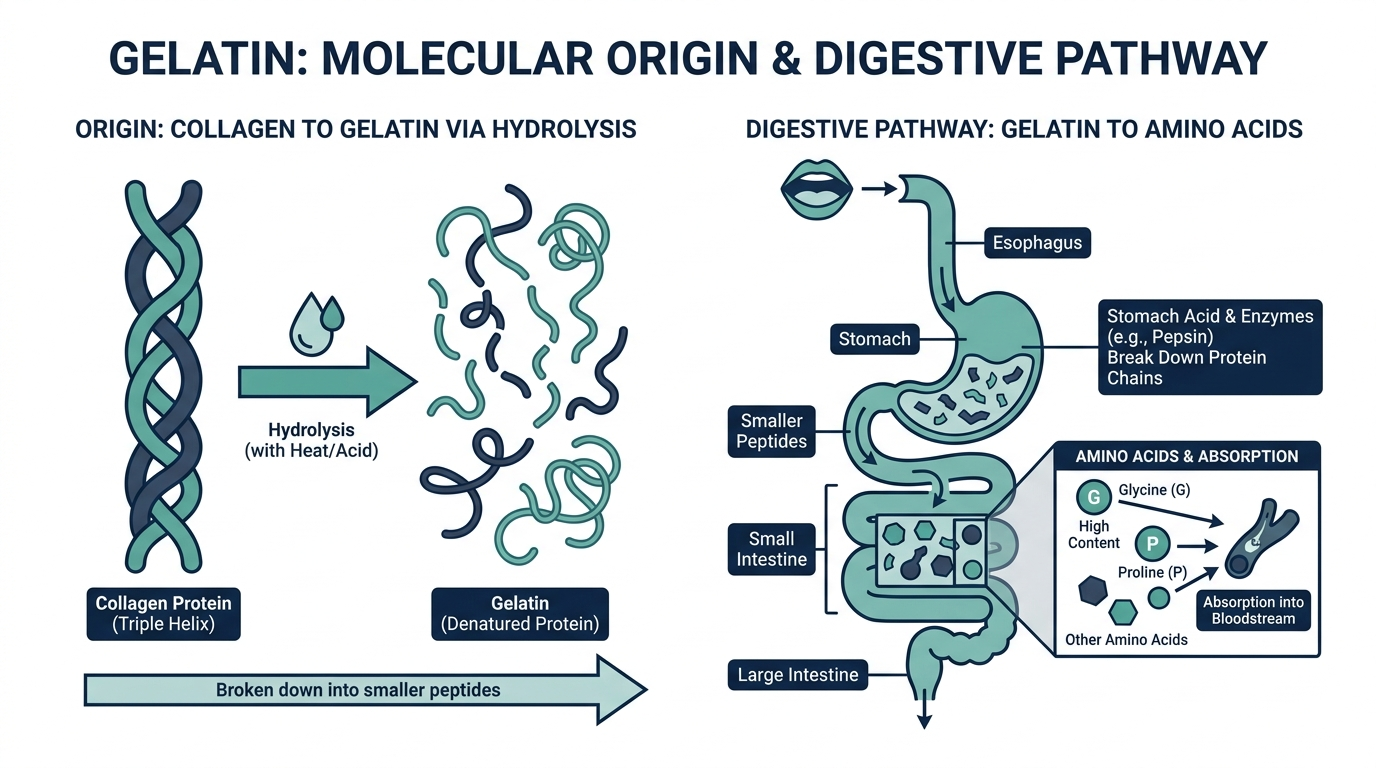
The gelatin trick for weight loss is a viral habit of drinking dissolved gelatin before meals or at bedtime to feel fuller and eat less. That is the whole mechanism. Gelatin is a cooked form of collagen, which is the structural protein in animal skin, bone, and connective tissue. When you eat protein, your gut releases satiety hormones (GLP-1, peptide YY, cholecystokinin) that tell your brain you are full. A scoop of gelatin nudges those signals slightly, which is why some people report eating a smaller dinner.
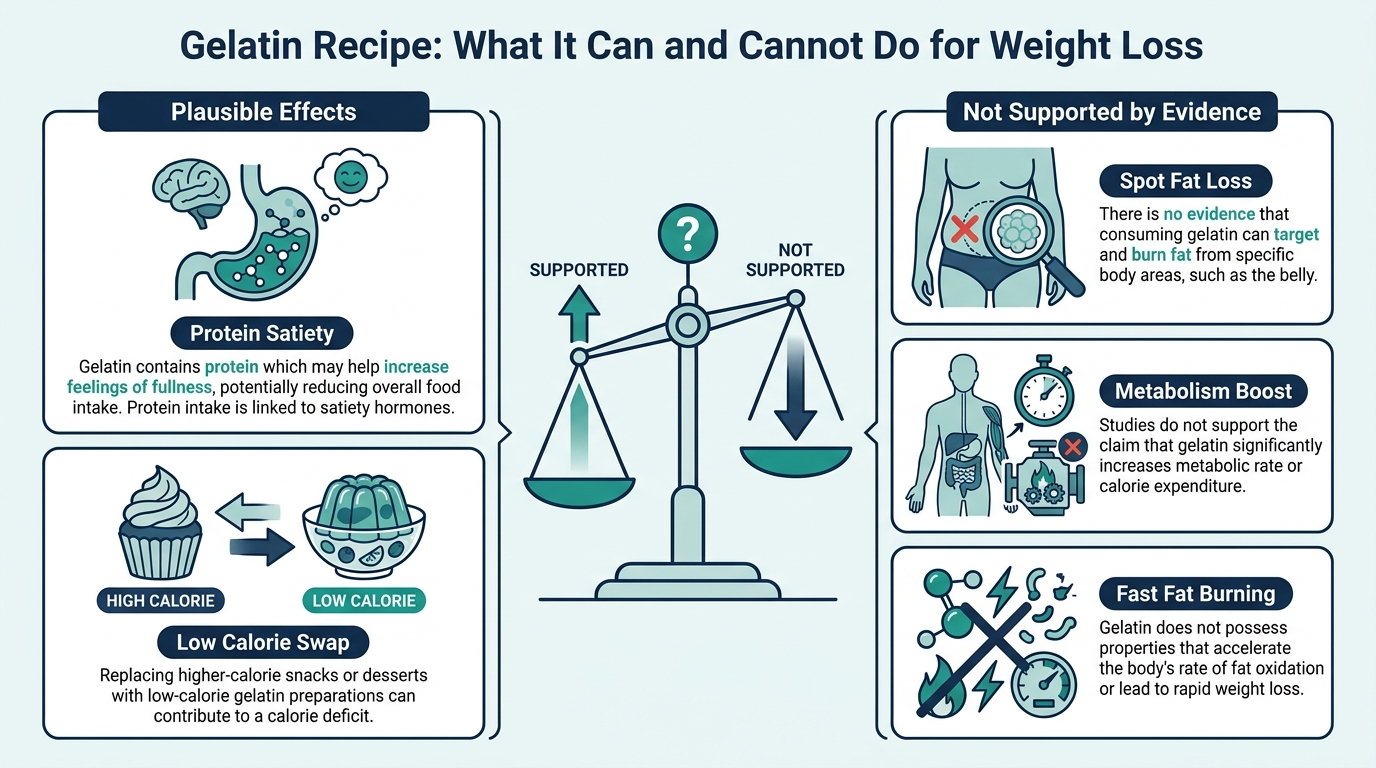
What the trick is not: it is not a thermogenic, it does not block carbs or fat, and it does not “melt belly fat” while you sleep. Those claims show up in the ads, but no clinical trial supports them. Gelatin has about 6 to 7 grams of protein per tablespoon and roughly 25 to 30 calories, a real but small dose, on the level of half an egg. The viral framing oversells what half an egg’s worth of protein can do.
The “trick” also leans hard on a ritual effect. Anything you drink before a meal that involves a glass of water, a pause, and an intention to eat less tends to help, at least for a few weeks. That is partly the water filling your stomach and partly your own attention. It is the same reason the Pink Salt Trick for Weight Loss and pre-meal apple cider vinegar both “work” for some people and do nothing for others.
What is the gelatin weight loss recipe, step by step?
The simplest way to actually get this done
Superpower is a full-body lab membership that runs 100+ biomarkers, has each result reviewed by a doctor, and tracks your numbers year over year (about $199/year). It is what we point readers to when they would rather get one clean, complete draw than chase single tests one at a time. Here is superpower reviewed in full.
The standard gelatin weight loss recipe is one tablespoon of unflavored gelatin dissolved fully in warm liquid, taken once or twice a day before meals. There is no secret ingredient list, despite how the viral videos frame it. The most common versions of the gelatin recipe for weight loss look like this:
- Basic gelatin water: 1 tablespoon (about 7 to 10 grams) unflavored powdered gelatin, stirred into 1 cup of hot water until clear, then topped with cold water and the juice of half a lemon. Drink 20 to 30 minutes before a meal.
- Bedtime gelatin: the same mix taken at night, sold as a “burns fat while you sleep” routine. The real-world effect is that it crowds out a late snack.
- Gelatin in coffee or tea: a scoop stirred into a warm drink for people who dislike the texture of plain gelatin water.
Always dissolve gelatin in hot liquid first or it clumps into rubbery beads. Stir it into a little boiling water, let it bloom for a minute, then add the rest. The recipe is harmless for most people. The problem is not the recipe. It is expecting a tablespoon of protein to do the work of a calorie deficit.
What is the pink gelatin recipe for weight loss?
The pink gelatin recipe is the same gelatin water tinted with cranberry juice, beet, hibiscus, or pink Himalayan salt, marketed as a prettier and supposedly more “detoxifying” version. The pink color is cosmetic. It piggybacks on the popularity of the pink salt drink, so creators add a pinch of pink salt or a splash of unsweetened cranberry to make the glass photogenic for short video.
A typical pink version: 1 tablespoon unflavored gelatin bloomed in hot water, 2 to 3 ounces of unsweetened cranberry juice, a squeeze of lemon, and a tiny pinch of pink salt, served over ice. None of the pink ingredients add a fat-burning property. Cranberry juice has a little vitamin C and polyphenols, beet has nitrates that support blood pressure, and pink salt is sodium with trace minerals. If you want the deeper breakdown of why the salt part does almost nothing, see how to Drink Pink Salt for Weight Loss Reviews. The pink gelatin recipe is a styling choice, not an upgrade in results.
How much gelatin a day for weight loss?
Most people use 1 to 2 tablespoons of gelatin a day, which is roughly 10 to 20 grams, split before meals. There is no special weight loss dose, because gelatin is just protein. For context, dietitians often suggest 25 to 30 grams of protein per meal to meaningfully blunt appetite, so a single tablespoon of gelatin (6 to 7 grams) is a light starter, not a full protein serving.
| Daily gelatin amount | Protein delivered | Realistic effect |
|---|---|---|
| 1 tablespoon (about 7 g powder) | ~6 g protein | Mild appetite nudge, mostly the water and ritual |
| 2 tablespoons (about 14 g powder) | ~12 g protein | Noticeable pre-meal fullness for some people |
| 3+ tablespoons | ~18 g protein | Diminishing returns, risk of GI bloating, no fat-burning bonus |
Going above 2 to 3 tablespoons does not speed fat loss and can cause bloating, fullness, or mild constipation in some people. If you are on a true protein-forward plan, you would get far more from a 20 to 30 gram protein meal or a whey or collagen shake than from chasing higher gelatin doses. A reasonable approach: 1 tablespoon before lunch and dinner, with a full glass of water, and treat it as a small habit, not a treatment.
Does the gelatin trick work for weight loss?
The gelatin trick works only in the narrow sense that any pre-meal protein and water can slightly reduce how much you eat. It does not work as a fat burner, and there is no quality clinical trial showing gelatin causes weight loss on its own. The early scale drop people celebrate is mostly less food and a bit less water retention in the first week, not fat.
Here is the insider detail most ads skip: protein at the start of a meal genuinely lowers the glucose and insulin spike from that meal and increases satiety hormones. That is real physiology. But the dose matters, and a tablespoon of gelatin is a small dose. Studies on the “preload” effect generally use 15 to 30 grams of protein, not 6. So the trick captures a faint version of a real mechanism and then markets it as if it were a drug.
Compare it honestly to the things that have hard evidence:
| Approach | Average fat loss | Evidence quality | Cost per month (2026, US) |
|---|---|---|---|
| Gelatin trick alone | Negligible (appetite nudge) | No direct trials | $5 to $15 (gelatin powder) |
| Higher-protein diet + deficit | Steady, sustainable | Strong | $0 (food choices) |
| Wegovy (semaglutide), STEP trials | ~15% of body weight over ~68 weeks | Strong, FDA approved | ~$500 to $1,300 cash, often less with coverage |
| Zepbound (tirzepatide), SURMOUNT trials | ~20%+ at the higher dose | Strong, FDA approved | ~$500 to $1,000+ cash, varies with coverage |
So does gelatin help with weight loss? A little, indirectly, by being protein you drink before you eat. Is it the reason anyone loses 20 or 30 pounds? No. The people who succeed with it almost always tightened their eating at the same time and credited the gelatin.
How to use gelatin for weight loss (if you want to try it)
To use gelatin for weight loss sensibly, treat it as a small protein preload, not a cure, and stack it on top of habits that actually create a calorie deficit. Here is the realistic protocol:
- Dose it before your two biggest meals. One tablespoon bloomed in hot water, topped with cold water, 20 to 30 minutes before lunch and dinner.
- Pair it with fiber, not just water. Fiber timing matters more than most tricks. A piece of fruit or a handful of vegetables before a meal slows digestion and blunts the glucose rise far more than gelatin alone.
- Count it as protein. If you are tracking, log the 6 grams. Do not let it replace a real protein source at the meal.
- Drop the bedtime fat-burning story. Use it at night only if it stops you raiding the pantry, which is a behavior win, not a metabolic one.
- Give it three to four weeks, then judge honestly. If the scale and your measurements have not moved with your eating tightened up, the trick is not the lever you need.
Gelatin and collagen also have legitimate uses for joints, skin, and hair, and they are a fine low-calorie protein source. Just keep the weight loss claim in proportion. The same goes for warm-drink rituals like how Much Cinnamon in Coffee for Weight Loss and ginger tea: small, real, easily oversold.
What stalls people, and why the gelatin trick rarely fixes it
Most people who stall on weight loss are not failing at willpower, they are working against a metabolic problem they cannot see, and no kitchen trick touches it. This is the part the viral recipes never mention. When the scale will not move despite a clean diet, the usual hidden culprits are:
- An underactive thyroid. Even subclinical hypothyroidism slows metabolism and makes fat loss grindingly slow. A TSH and free T4 reveal it in one blood draw.
- Insulin resistance. High fasting insulin can keep fat storage switched on even in a modest deficit. Fasting insulin and A1C tell the story long before fasting glucose looks abnormal.
- PCOS. Common, underdiagnosed, and strongly tied to insulin resistance and stubborn weight, especially around the middle.
- Perimenopause. Shifting estrogen changes where fat is stored and how easily it comes off, and it often arrives years before periods stop.
- Chronically high cortisol. Poor sleep and stress drive cortisol, which encourages central fat and appetite.
- Low testosterone (in men and women), which reduces the lean muscle that keeps metabolism up.
Here is the common mistake: people cycle through gelatin, then pink salt, then ginger, then cinnamon, losing months, when a single panel of labs would have told them their thyroid was sluggish or their fasting insulin was high. They are guessing at the lever instead of measuring it. That is the real reason the trick “did not work.”
Tired of guessing which trick will finally work?
Superpower is a full-body lab membership that runs 100+ biomarkers including fasting insulin, A1C, thyroid, testosterone and cortisol, has each result reviewed by a doctor, and tracks your numbers year over year so you can see what is actually stalling your weight (about $199/year). Instead of testing one more gelatin recipe, you see whether a thyroid or insulin problem is the thing holding the scale still. Here is Superpower reviewed in full.
Is gelatin good for weight loss compared with other viral tricks?
Gelatin is roughly on par with the other viral drink tricks: mildly helpful through protein and water, with no fat-burning magic. If you line them up, none of them is the lever, and they all rely on the same pre-meal ritual and water-fill effect. The honest ranking is about what they add nutritionally, not what the ads claim.
| Viral trick | Active idea | Real effect | Verdict |
|---|---|---|---|
| Gelatin recipe | Protein preload + water | Mild appetite nudge | Harmless, oversold |
| Pink salt drink | Electrolytes + water | Hydration, water shifts | Mostly water weight |
| Ginger tea | Digestion, mild thermic | Slight, comfort effect | Tiny, see does Ginger help with Weight Loss |
| Cinnamon in coffee | Blood-sugar support | Small glucose effect | Modest at best |
If you want the deeper comparison on the salt version specifically, the recipe breakdown is here: what is the Pink Salt Recipe for Weight Loss. The pattern across all of them is the same as the gelatin weight loss recipe. They are cheap and low-risk, but they are not where real fat loss comes from.
What actually moves the needle
What moves the needle is a sustained calorie deficit with enough protein, plus fixing any hidden hormonal or metabolic problem, and for some people a clinician-supervised medication. That is the unglamorous truth behind every before-and-after. The order that works:
- Measure first. Get thyroid (TSH, free T4), fasting insulin, A1C, and, where relevant, sex hormones and cortisol. You cannot fix what you have not measured.
- Build the basics. Protein at every meal (the real 25 to 30 grams), fiber, strength training to protect muscle, and sleep, which controls cortisol and hunger hormones.
- Consider real medication through a real clinician if you qualify. FDA-approved drugs like Wegovy (semaglutide) average about 15% of body weight in the STEP trials, and Zepbound (tirzepatide) reaches 20% or more in SURMOUNT. These are prescription medicines with side effects and require monitoring.
One caution worth saying plainly: do not buy gray-market peptides or “research” semaglutide off the internet. Compounded semaglutide and tirzepatide are not FDA approved, though they can be legally prescribed through licensed clinicians and pharmacies in specific situations. The safe route is a supervised telehealth clinician with labs, not a self-experiment. Talk to a clinician before starting or stopping any medication.
Curious what your own levels look like?
Baseline 100+ biomarkers today and retest as life changes, all in one membership with physician review.
Want a real clinician to run the numbers, not a guess?
Joi + Blokes is a telehealth clinic that prescribes GLP-1 medication (Zepbound, compounded semaglutide and tirzepatide), hormone therapy (TRT, HRT), thyroid care, and peptides after a real lab panel and clinician review, with no membership or consult fee (prescriptions from about $59/month, lab panels from $149). If the scale will not budge, this is where you find out whether insulin, thyroid, or hormones are the real reason. Here is Joi + Blokes reviewed in full.
FAQ
What’s in the gelatin trick for weight loss?
The gelatin trick is unflavored gelatin powder (cooked collagen) dissolved in warm water, usually with lemon and sometimes cranberry juice or a pinch of pink salt for the “pink” version. The only active ingredient is the gelatin itself, which is protein. Everything else is for taste and color.
Does the gelatin trick for weight loss work?
It works only as a mild appetite tool, not a fat burner. A tablespoon of gelatin delivers about 6 grams of protein, which can take a little edge off your hunger before a meal. There is no clinical trial showing the gelatin trick causes weight loss by itself.
How much gelatin should I take a day for weight loss?
One to two tablespoons a day (about 10 to 20 grams of powder) is the common amount, split before meals. More than that does not speed fat loss and can cause bloating or mild constipation. Treat it as a small protein habit, not a dose of medicine.
What is the pink gelatin recipe for weight loss?
It is the basic gelatin water tinted with cranberry juice, beet, hibiscus, or a pinch of pink salt for a photogenic pink color. The pink ingredients do not add any fat-burning property. It is the same protein preload with a cosmetic twist.
Does gelatin help with weight loss at all?
Indirectly and modestly. As a protein you drink before eating, gelatin can slightly increase fullness and lower the glucose spike from that meal. The benefit is small because the protein dose is small, and it only helps if your overall eating creates a calorie deficit.
Is gelatin good for weight loss long term?
It is harmless and a fine low-calorie protein, but it is not a long-term weight loss strategy on its own. Long-term results come from a consistent calorie deficit, adequate protein, strength training, sleep, and addressing any hormonal issues. Gelatin can be a minor supporting habit at most.
What are the gelatin trick for weight loss reviews like?
Reviews split exactly as you would expect. People who also cut calories report success and credit the gelatin, while those who only added the drink see little change. The pattern suggests the real driver is the diet change, not the gelatin.
Can the gelatin trick replace a GLP-1 medication?
No. Gelatin’s appetite effect is faint compared with FDA-approved drugs like Wegovy and Zepbound, which average roughly 15% and 20%+ body-weight loss in their trials. If you are considering medication, do it through a supervised clinician with labs, not a kitchen trick or a gray-market peptide.
Why isn’t the gelatin trick working for me?
Usually because the trick was never the lever. If your eating is reasonable and the scale still will not move, the common hidden causes are an underactive thyroid, insulin resistance, PCOS, perimenopause, or high cortisol. A single blood panel can flag these, which is why measuring beats guessing.
Vital Signs Today may earn a commission if you buy through links on this page. It does not affect our editorial assessments.