
Disclosure: Vital Signs Today may earn a commission if you buy through links on this page, at no extra cost to you. This does not influence our evidence-based assessments. We are not a medical provider; talk to a clinician before acting on test results.
Quick take: In 2026 you can buy a continuous glucose monitor without a prescription and without diabetes. The honest question is whether you should. The sensors are accurate enough and cheap enough (roughly $49 to $99 a month), but the evidence that glucose data improves health in people who are already metabolically healthy is thin. If you want the raw data, Stelo by Dexcom is the cleanest no-prescription buy. If you want an app to interpret it, Levels rides on top of Stelo. If you want a human dietitian in the loop, Nutrisense is the richest (and priciest) program. But for most healthy adults, a one-time blood panel measuring fasting insulin, HbA1c, and lipids answers the metabolic-health question more cheaply and more definitively than two weeks of glucose squiggles. This guide gives you both sides.
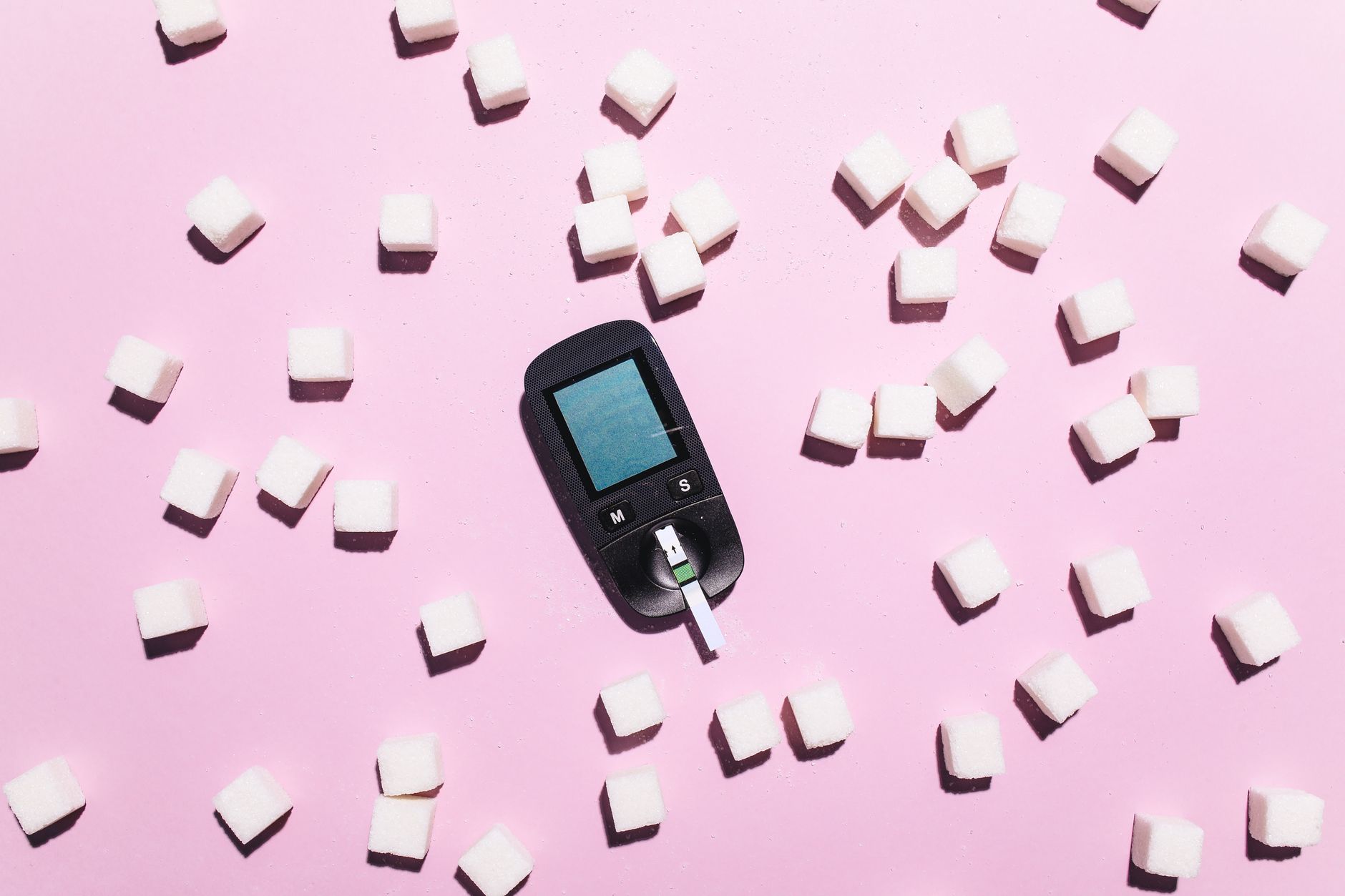
Disclosure: Vital Signs Today may earn a commission if you buy through links on this page, at no extra cost to you. This does not influence our evidence-based assessments. We are not a medical provider; talk to a clinician before acting on test results.
| Service | Best for | Pricing | Visit |
|---|---|---|---|
| Stelo by Dexcom | No-prescription CGM | Per-sensor | View › |
| Levels | Food + glucose insights | Membership + sensors | View › |
| Nutrisense | Dietitian guidance | Membership + sensors | View › |
Should a non-diabetic even use a CGM? The honest debate
This is the section most CGM “best of” lists skip, because it complicates the sale. We are putting it first on purpose.
A continuous glucose monitor was designed for one job: keeping people with diabetes out of dangerous highs and lows. Wearing one when your pancreas already works is a different proposition entirely, and the marketing has run far ahead of the science.
Start with what actually happens to glucose in a healthy body. A multicenter study of 153 healthy, nondiabetic people wearing a Dexcom G6 found that participants spent a median of 96% of the day inside the 70 to 140 mg/dL range, with a mean 24-hour glucose around 99 mg/dL and time above 140 mg/dL of roughly 2% of the day, about half an hour total (Shah et al., Journal of Clinical Endocrinology and Metabolism, 2019). In plain terms: a healthy body keeps glucose in a tight band almost all the time, and brief rises after meals are the system working, not failing.
That single finding undercuts the central promise of consumer CGM marketing. When an app flags your post-oatmeal “spike” to 145 mg/dL in red, it is flagging something that the reference data on healthy people calls normal. A spike is not a symptom. It is what blood sugar does when you eat carbohydrate, and a healthy person clears it within an hour or two.
The experts are blunt about the evidence gap. A 2025 piece from the American Council on Science and Health called the consumer fixation on glucose spikes a “wellness fad” and noted there is no research proving that blunting glucose spikes improves health in people without diabetes (ACSH, 2025). Johns Hopkins public-health researchers reached a similar conclusion: the evidence is scant, and it is unclear what CGM data can actually tell a person without diabetes about their long-term health (Johns Hopkins Bloomberg School of Public Health). A 2024 narrative review in Diabetic Medicine framed the trend as “innovative solution or cause for concern” and flagged the same hole: no outcome data linking CGM metrics in healthy people to anything that matters years down the line.
There is also a real downside that the brochures do not mention: anxiety. When you turn an invisible, self-regulating process into a number that updates every five minutes, some people start chasing a “perfect” flat line, cutting out fruit, oats, and rice that they tolerate fine, and sliding toward disordered eating. The line on the screen becomes a verdict on every bite. For a subset of users, a CGM manufactures a problem rather than revealing one.
So why does this guide exist at all? Because “no proven benefit for the average healthy person” is not the same as “useless for everyone.” There are specific situations, prediabetes, PCOS, athletes dialing in fueling, where the n-of-1 experiment a CGM enables can genuinely change behavior. We cover those honestly in a later section. The point of this opening is simple: go in knowing the science has not caught up with the hype, and treat a CGM as a short experiment to learn your own patterns, not as a daily report card on a body that is probably working fine.
How we compared them
The VST Editorial Board evaluated each option on the things that actually change your experience and your bill, not marketing copy. Five criteria:
- Prescription status. Is it truly over the counter in 2026, or does a service quietly coordinate a prescription behind the scenes? This is the single biggest change in the category since 2024.
- What you physically get. The sensor hardware, its wear time, and the warm-up period. Most current consumer sensors run about 14 to 15 days per sensor.
- The software layer. A bare sensor gives you numbers. A coaching app scores meals, surfaces patterns, and tells you what to do with the data. That layer is where most of the price difference lives.
- Human support. Whether a registered dietitian or coach is included, which matters most for people who would otherwise misread their own data.
- Honest cost. The real monthly out-of-pocket, including any membership fee stacked on top of the sensor.
One thing we did not weight heavily: claims of clinical-grade precision for wellness use. All of these sensors measure interstitial fluid, not blood, so they lag finger-stick readings by several minutes and are least accurate in exactly the low range a healthy person rarely visits. For learning food patterns that is fine. For diagnosing anything, it is not, and none of these devices are cleared to diagnose disease.
Stelo by Dexcom — the no-prescription benchmark
Stelo earned its place at the top of the table by being first and being simplest. In March 2024 it became the first glucose biosensor the FDA cleared for sale over the counter in the United States, with no prescription required, aimed squarely at adults who do not use insulin (HCPLive). That clearance is what opened this entire consumer category.
What you get: a two-sensor pack, each sensor worn on the back of the upper arm for up to 15 days, for a combined month of wear. Pricing is $99 for a one-time two-sensor pack, or $89 a month on subscription (Stelo by Dexcom). The companion Stelo app is free and shows your glucose curve, trends, and meal annotations, but it is deliberately lighter on coaching than Levels or Nutrisense. You read the data; you interpret it.
One accuracy caveat worth knowing before you buy: in Dexcom’s own labeling study, about 78% of sensors lasted the full 15 days, meaning roughly one in five fell short, and around 10% of sensors lasted under 12 days. Budget for the occasional early failure. Dexcom’s support replaces sensors that die early, but it is friction.
Best for: the self-directed person who wants accurate data without a subscription app or a coach, and is comfortable interpreting their own curves against the “spikes are normal” framing above.
OTC glucose biosensor for non-diabetics, no prescription required.
Abbott Lingo and Libre Rio — the OTC challengers
Abbott, the company behind the FreeStyle Libre that dominates diabetes care, brought two over-the-counter sensors to the US consumer market: Lingo and Libre Rio. Both cleared the FDA in June 2024 (diaTribe).
Lingo is the wellness-facing product, built for people without diabetes who want to understand how food, exercise, sleep, and stress move their glucose. The biosensor is worn up to 14 days. Pricing starts around $49 for a single 14-day sensor, or about $89 a month on an ongoing plan (Lingo). Lingo leans on a coaching concept it calls “Lingo Counts,” nudging you toward steadier glucose. That entry price makes it the cheapest way to try a CGM for two weeks.
Libre Rio is the more clinical sibling: an over-the-counter sensor worn up to 15 days, but designed for adults with type 2 diabetes who do not use insulin and manage with lifestyle. As of early 2026 it had FDA clearance but not a full national consumer rollout, and Abbott had not published consumer pricing. If you are a healthy non-diabetic, Lingo is the Abbott product aimed at you; Libre Rio is not.
We did not give Abbott its own row in the comparison table because, for the specific non-diabetic-wellness use case this article covers, the trio of Stelo, Levels, and Nutrisense represents the three distinct models: bare sensor, sensor plus app, sensor plus app plus human. Lingo slots in as a cheaper, more closed alternative to Stelo for a short trial.
Levels — the software layer on top of a sensor
Levels is not a sensor company. It is an app and a membership that now sits on top of Stelo hardware. After Stelo’s OTC clearance, Levels switched to offering Stelo, which dropped its cost and removed the old prescription barrier (Levels).
What the membership buys you is interpretation. The Levels app scores individual meals, with AI-assisted meal logging, and surfaces how sleep, stress, and workouts move your numbers, turning a raw curve into “this breakfast spiked you, that one did not.” For people who would otherwise stare at a squiggle and guess, that layer is the value.
The honest cost: Levels charges a membership of about $199 a year (or $40 a month) on top of the sensor, and Stelo sensors through Levels run roughly $100 a month (Levels Support). Stack those and the first month lands well north of $300, then settles into sensor cost plus the prorated membership. You are paying for software, not better hardware. The sensor underneath is the same Stelo you can buy directly for $89 to $99.
Best for: data-curious people who want guided insight and meal scoring and will actually use the app daily, not people who just want the underlying numbers.
CGM-based metabolic program with an app that scores how foods affect your glucose.
Nutrisense — the dietitian in the loop
Nutrisense is the most hands-on and the most expensive of the three. It bundles a CGM sensor, its app, and one-on-one access to a registered dietitian into a single subscription (Nutrisense). The pitch is that a credentialed human helps you interpret your data and adjust, which directly addresses the “people misread their own curves” risk.
Pricing is the steepest here. Program plans range from roughly $179 a month up toward the high $300s for a single month, with longer commitments lowering the per-month rate. Nutrisense also offers a “bring your own sensor” app-and-coaching plan around $39 a month for people who already have a CGM. Some plans advertise insurance-covered dietitian video calls, so real out-of-pocket can vary; verify your coverage before assuming.
Best for: people who specifically want a registered dietitian guiding the experiment, for example someone managing PCOS, prediabetes, or a complicated relationship with food who benefits from professional framing rather than an app’s red-and-green judgments.
CGM program with dietitian support and glucose analytics.
What your glucose data actually means (and what is just noise)
If you do wear a sensor, here is how to read it without scaring yourself. Three reference points from the healthy-population data:
- Fasting and average. In healthy adults, mean 24-hour glucose sits around 99 mg/dL, and non-diabetic fasting glucose generally falls in the 70 to 99 mg/dL band. A morning reading in that range is unremarkable.
- Post-meal rises. Healthy people spend a median of 96% of the day between 70 and 140 mg/dL. Brief excursions above 140 after a carb-heavy meal happen even in people with perfect metabolisms, the reference group spent about 2% of the day above 140. The meaningful question is not “did I spike” but “how high, how long, and did it come back down within a couple of hours.”
- Variability. Healthy adults show a within-person coefficient of variation around 17% during the day and lower overnight. A jagged daytime line is normal. A flat line is not the goal and is not what healthy metabolisms produce.
What is noise: the sensor’s own error. These devices measure interstitial fluid, not blood, and lag real blood glucose by several minutes; consumer-grade accuracy is reported as a mean absolute relative difference in the single digits for newer sensors, but accuracy degrades at the low end of the range. A reading of 62 mg/dL on a screen while you feel completely fine is more likely sensor wobble than a real low. Single readings lie. Patterns over days are what carry signal.
The practical rule: treat a CGM as a two-to-four-week experiment to learn your personal responses, then take the sensor off. Wearing one indefinitely to police a body that keeps glucose in range 96% of the time on its own is the pattern most likely to cause anxiety and least likely to change an outcome.
CGM vs a blood panel: which is the better spend
Here is the comparison the CGM brands will not make for you. If your real goal is to know whether your metabolism is healthy, a one-time blood panel usually tells you more than a month of glucose squiggles, for less money and with less ambiguity.
A CGM shows you short-term glucose movement. It does not measure insulin, the hormone doing the work behind the scenes. Two people can have nearly identical glucose curves while one is metabolically healthy and the other is quietly insulin resistant, pumping out far more insulin to hold the same line. The CGM cannot see that difference. A blood panel can.
For most people, a fasting insulin test, an HbA1c (your average glucose over about three months), and a lipid panel together answer the metabolic-health question more directly than two weeks of CGM data. Fasting insulin catches insulin resistance years before glucose drifts. HbA1c is the standard marker clinicians use to flag prediabetes and diabetes. Lipids round out cardiometabolic risk. That is a one-time draw you can repeat annually, versus a recurring $89-to-$300 monthly sensor habit.
This is where a comprehensive at-home panel earns its keep. A service like Superpower runs a broad biomarker panel, including the fasting insulin, HbA1c, and lipid markers that actually map to long-term risk, so you get a definitive snapshot rather than an inconclusive stream of normal “spikes.”
If you want help choosing a panel, start with our guide to the best at-home biomarker tests, and if you are weighing the two leading comprehensive services, our Superpower vs Function Health comparison breaks down what each panel includes and what it costs.
The honest bottom line on spend: if you are a healthy adult curious about your metabolism, do the blood panel first. It is more informative per dollar. Reach for a CGM second, and only if a specific question survives the blood work, such as “which of my regular meals spikes me hardest” or “does my afternoon crash track my lunch.”
Who genuinely benefits (prediabetes, PCOS, athletes)
The skeptical case above is about the average healthy person. These three groups are the exceptions where a CGM, used as a short experiment, can earn its cost.
Prediabetes. This is the strongest case. People with prediabetes have glucose that genuinely behaves differently, and seeing it move in real time can drive the behavior change that reverses the trajectory. The evidence is still about behavior, not the device itself: in one study a CGM group and an education-only group both saw about a third of participants reverse prediabetes, and a small 2020 study of 15 prediabetic adults who wore CGMs for three weeks with diet-coach review lost weight and lowered blood sugar (GoodRx). No trial has yet shown that a CGM alone prevents progression to type 2 diabetes. The value is in motivating action you then sustain without the sensor.
PCOS. Polycystic ovary syndrome is tightly linked to insulin resistance, so glucose patterns can be genuinely informative here. The caveat is honesty about the evidence: little is formally known about CGM utility specifically in PCOS, and a UCSF clinical trial is actively investigating it. If you have PCOS, a CGM paired with a dietitian (the Nutrisense model) is more defensible than a bare sensor, and it should complement, not replace, the insulin and HbA1c blood work that actually characterizes the condition.
Athletes. Endurance and strength athletes use CGMs to time carbohydrate intake around training and avoid bonking, an n-of-1 fueling experiment rather than a health diagnostic. The accuracy caveats still apply, and CGM readings during and right after intense exercise can be erratic, so treat them as directional. For this group the question is performance, not disease, which sidesteps most of the “is this medically useful” debate.
If you fall into one of these groups, a CGM is a reasonable, time-limited tool. If you do not, the blood panel above is almost certainly the better first move.
Frequently asked questions
Do non-diabetics need a CGM?
No. Healthy bodies keep glucose in range about 96% of the day on their own, and there is no evidence that blunting normal post-meal spikes improves health in people without diabetes. A CGM can be a useful short experiment to learn your personal food responses, but it is a curiosity tool, not a medical necessity, for the average healthy adult.
Which CGM is truly over the counter with no prescription in 2026?
Stelo by Dexcom (FDA cleared OTC in March 2024) and Abbott’s Lingo and Libre Rio (cleared June 2024) are all available without a prescription. Levels uses Stelo hardware, so it is also prescription-free. Older program sensors sometimes required a prescription that the service coordinated; the current consumer lineup does not.
How long does a sensor last and how much does it cost?
Most current consumer sensors run about 14 to 15 days each. Stelo is $89 to $99 a month for two sensors; Abbott Lingo starts around $49 for a single 14-day sensor or about $89 a month; Levels adds a roughly $199-a-year membership on top of the sensor; Nutrisense ranges from about $179 a month upward and bundles a dietitian.
Are these sensors accurate enough for a healthy person?
For learning food patterns, yes. Newer sensors report a mean absolute relative difference in the single digits. But they measure interstitial fluid, not blood, lag real glucose by several minutes, and are least accurate at the low end of the range, exactly where a healthy person rarely sits. Trust patterns over days, not single readings.
What is a normal glucose range without diabetes?
Non-diabetic fasting glucose is generally 70 to 99 mg/dL, with mean 24-hour glucose around 99 mg/dL in healthy adults. Brief post-meal rises above 140 mg/dL are normal and happen even in metabolically healthy people, who spend only about 2% of the day above 140. Discuss any persistent pattern with a clinician.
Is a glucose spike after eating bad for me?
Not by itself. A rise after eating carbohydrate is your metabolism working normally; healthy people clear it within an hour or two. The wellness framing of every spike as harmful is not supported by evidence, and fixating on a flat line can push some people toward unnecessary food restriction and anxiety.
Should I get a CGM or a blood test first?
For most healthy adults, a blood test first. A panel measuring fasting insulin, HbA1c, and lipids tells you more about long-term metabolic risk than a CGM, which cannot measure insulin and can miss early insulin resistance. Reach for a CGM second, if a specific question survives the blood work. See our at-home biomarker test guide.
Can a CGM diagnose diabetes or prediabetes?
No. None of these consumer sensors are cleared to diagnose disease. Diagnosis relies on standardized blood tests such as fasting plasma glucose, HbA1c, or an oral glucose tolerance test, interpreted by a clinician. A CGM can raise a flag worth investigating, but it cannot make the call.
Who actually benefits from wearing one?
People with prediabetes (where seeing glucose move can motivate sustained behavior change), people with PCOS (ideally paired with a dietitian and proper blood work), and athletes dialing in fueling around training. For the average metabolically healthy person, the documented benefit is minimal.
Will a CGM make me anxious about food?
It can. Turning a normal, self-regulating process into a number that updates every five minutes leads some users to chase a “perfect” flat line and over-restrict foods they tolerate fine. If you have any history of disordered eating, approach a CGM cautiously or skip it in favor of a periodic blood panel.
Reviewed by the VST Editorial Board. This article is for general education and is not medical advice. Talk to a qualified clinician about your individual situation and any abnormal readings.