
Last updated 18 June 2026. Educational content, not medical advice. Collagen peptides are a dietary supplement, not an FDA-approved drug. Consult a licensed clinician before adding any supplement to treat a health condition.
Short answer: Yes, with conditions. Hydrolyzed collagen peptides at 10 to 20 grams daily have demonstrated statistically significant improvements in skin elasticity, nail growth rate, and joint pain scores across multiple randomized controlled trials. A 2024 randomized crossover study published in Frontiers in Nutrition confirmed that Pro-Hyp dipeptides from collagen hydrolysate reach the bloodstream intact within 100 to 130 minutes. Vital Proteins’ flagship product delivers 20 grams of grass-fed bovine hydrolyzed collagen per serving, which matches or exceeds the effective doses used in the strongest human trials. But “works” is not a single answer: skin results require at least 12 continuous weeks, joint benefits emerge around 8 weeks, and you will not see anything if you stop after three days because your smoothie tasted chalky.
Wondering if your Vital Proteins routine is actually moving the needle? Check your skin and joint markers directly. One at-home Superpower draw checks 100+ biomarkers, physician-reviewed.
Why does everyone have a different opinion about this product?
Vital Proteins Collagen Peptides is one of the most reviewed supplements on the internet, and the reviews read like two different products. One group reports glowing skin and stronger nails within a month. Another calls it expensive flavored powder with nothing to show after eight months. Both groups are probably telling the truth, and the explanation is almost entirely about dosage consistency and outcome timeline.
The product itself is straightforward. Each 20-gram scoop contains a single ingredient: hydrolyzed bovine collagen sourced from pasture-raised, grass-fed cattle, providing around 18 amino acids including glycine, proline, and hydroxyproline. Since Nestle Health Science completed its full acquisition of Vital Proteins in February 2022, the brand has expanded to 150+ SKUs across 35,000 retail locations including Costco, Whole Foods, and Target. The Advanced formulation adds hyaluronic acid and vitamin C alongside the collagen.
The product is not mysterious. The debate is about whether oral collagen supplementation as a category works, and there, the science is now much cleaner than it was five years ago.
Full-body lab membership: 100+ biomarkers, doctor-reviewed, tracked over time.
Is there real evidence that oral collagen peptides work, or is it just marketing?
The honest position in 2026 is that the evidence is stronger than most skeptics admit and weaker than most marketing implies.
The most comprehensive review of the evidence to date, led by researchers at Anglia Ruskin University, synthesized data from 16 systematic reviews, 113 randomized controlled trials, and 7,983 participants worldwide. The meta-analysis confirmed clinically meaningful improvements in skin hydration, elasticity, and wrinkle depth from oral collagen supplementation. The earlier dismissal, “it just breaks down into amino acids,” does not hold up to the 2024 mechanistic research.
A randomized, double-blind crossover study by Virgilio et al. published in Frontiers in Nutrition in 2024 gave six healthy volunteers a single 10-gram dose of collagen hydrolysate from bovine hide, fish skin, or porcine skin (PMC11325589). Within 100 to 130 minutes, free hydroxyproline plasma concentrations increased 6 to 10 times above baseline. Critically, 36 to 47 percent of absorbed hydroxyproline circulated as peptide-bound forms rather than free amino acids, meaning the bioactive Pro-Hyp dipeptide arrives in the bloodstream partially intact and does not fully dissolve into generic amino acid soup. That is the mechanism the old objection said could not happen.
The implication is significant: collagen peptides are not just a protein powder wearing a premium label. They deliver a specific molecular signal that generic whey or pea protein does not.
A separate 2025 study in Food & Function from the Royal Society of Chemistry showed an additional mechanism: the protease-resistant fraction of collagen peptides acts as a prebiotic in the gut, increasing short-chain fatty acid-producing bacteria like Lachnoclostridium and Roseburia, which then activate the TGF-beta pathway and drive collagen synthesis in skin fibroblasts (RSC d5fo01649e). This gut-to-skin axis was not part of the original mechanism hypothesis, and it partly explains why full results take weeks rather than days.
What do Vital Proteins collagen peptides actually do to your skin?
Skin is where the clinical evidence is densest. A 2024 trial published in Dermatology Research and Practice was the first to measure skin, scalp, and hair outcomes in the same cohort over 12 weeks using high-resolution ultrasound. The results showed increased collagen content in the upper dermis, improved skin hydration and elasticity, reduced wrinkle depth, and improved scalp condition, all from oral hydrolyzed collagen at standard doses (Wiley 8752787).
A 2024 double-blind, randomized, placebo-controlled trial in the Journal of Cosmetic Dermatology tested collagen peptide supplementation in an East Asian population and confirmed improvements in visible signs of skin aging and nail health over 12 weeks (Wiley jocd.16458).
The timeline in practice:
– Weeks 1 to 3: No visible change. This is expected. The peptides are being absorbed; fibroblast signaling is starting.
– Weeks 3 to 6: Nails typically show the first signal. Nail growth rate improvement and reduced brittleness are detectable early because the nail matrix turns over faster than skin.
– Weeks 6 to 12: Skin hydration and elasticity improvements typically become measurable and, in good responders, visible.
– Week 12 and beyond: Wrinkle depth reduction, the outcome most people want, requires a minimum of 12 continuous weeks in most trials.
Personally, I think this timeline mismatch is the single biggest driver of the “doesn’t work” camp. Someone quits at week eight, right before the skin payoff window. If you buy a 10-ounce jar and consider it a completed experiment, you are working with the wrong time horizon.
What does the research say about joints and bones?
This is where the 2026 data gets interesting for anyone who exercises or has early joint discomfort.
A 2025 randomized, double-blind, placebo-controlled study published in Joint Diseases and Related Surgery found that combined type I, type III, and type II collagen peptides significantly reduced WOMAC pain scores and visual analog scale pain ratings compared to placebo in adults with early osteoarthritis, at 4 grams per day over 12 weeks (jointdrs.org/1642). Vital Proteins’ 20-gram serving exceeds this dose substantially, though more is not always more, and you would want to discuss any dosing for therapeutic purposes with a clinician.
The most directly relevant published study used Vital Proteins’ exact product. A May 2026 randomized pilot study in Frontiers in Nutrition gave 22 active women (ages 18 to 35, running more than 35 miles per week) 20 grams of Vital Proteins collagen peptides or placebo daily for four weeks (Frontiers doi: 10.3389/fnut.2026.1825906). The collagen group showed increased P1NP, a marker of bone formation, while CTX-1 (bone breakdown marker) remained stable. The sRANKL/OPG ratio stabilized, and circulating IL-6, an inflammatory cytokine, decreased. The researchers concluded the findings “support the biological plausibility that collagen peptides may influence osteoblast activity.”
The caveat the paper’s own authors gave: small sample, no imaging-based bone outcomes. This is a signal, not a verdict. Still, it is the first study using Vital Proteins’ exact product in a population representative of the brand’s core audience.
| Outcome | Effective dose in trials | Typical timeline | Quality of evidence |
|---|---|---|---|
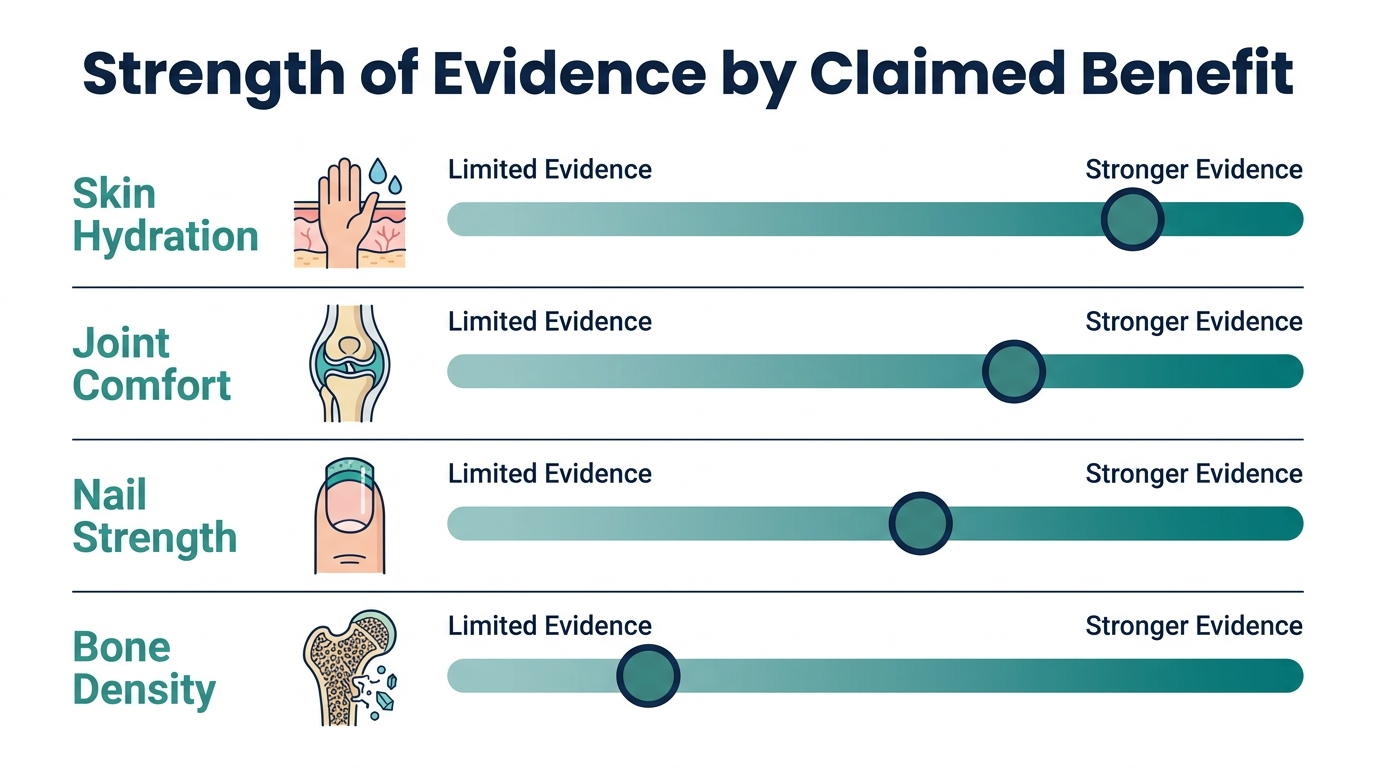
| Skin hydration and elasticity | 2.5 to 10 g/day | 8 to 12 weeks | Strong (multiple RCTs) |
| Wrinkle depth reduction | 10 g/day | 12 to 16 weeks | Moderate to strong |
| Nail growth rate | 2.5 g/day | 24 weeks for full effect | Moderate |
| Joint pain reduction | 3 to 4 g/day | 8 to 12 weeks | Moderate (improving) |
| Bone formation marker (P1NP) | 20 g/day | 4 weeks (biomarker, not imaging) | Preliminary |
| Muscle soreness recovery | 10 g/day | Acute (post-exercise) | Moderate |
Does Vital Proteins contain the right type of collagen?
This is a question the marketing glosses over, so here is the plain answer.
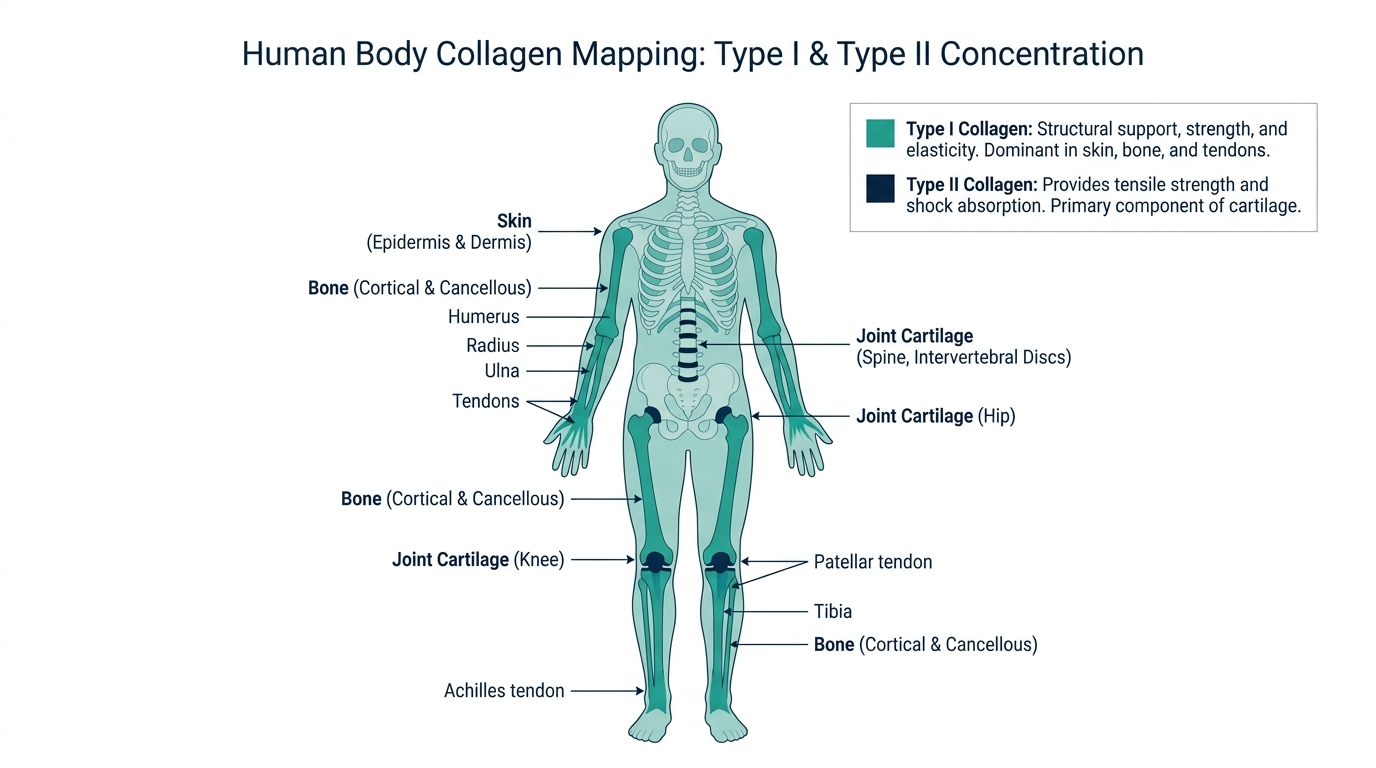
Bovine hide collagen is predominantly type I and type III, which are the dominant structural collagens in human skin, tendons, ligaments, and bone. The clinical studies showing skin and nail benefits almost all use type I and III hydrolysate, so the source alignment for skin and joint outcomes is good.
The collagen type that dominates in cartilage is type II. Vital Proteins’ standard Collagen Peptides product does not specifically concentrate type II. For early osteoarthritis specifically, some clinical trials favor undenatured type II collagen or formulations that explicitly include it. Vital Proteins markets a separate joint support product, but the flagship unflavored peptides are best understood as a type I and III supplement.
Do not believe the marketing copy that treats all collagen types as equivalent for all outcomes. Type I for skin and tendons, type II for cartilage, type III works alongside type I. The distinction matters if you are buying for a specific joint condition versus general skin and connective tissue support.
What is in the Advanced version, and does the addition of hyaluronic acid and vitamin C matter?
The Vital Proteins Collagen Peptides Advanced adds hyaluronic acid and vitamin C to the standard collagen formula.
Vitamin C is not optional cosmetic branding: it is a required cofactor for prolyl hydroxylase and lysyl hydroxylase, the enzymes that hydroxylate proline and lysine residues to form stable collagen triple helices. Without sufficient vitamin C, your body cannot properly assemble the collagen chains that the peptides are signaling fibroblasts to produce. Most people in developed countries are not clinically deficient, but sub-optimal levels are common, especially in people who do not eat adequate fresh produce. Pairing vitamin C with collagen in the same serving solves the timing question without any additional effort.
Hyaluronic acid is a glycosaminoglycan found in high concentrations in skin and synovial fluid. Oral hyaluronic acid at doses around 80 to 200 mg has been shown in some trials to improve skin hydration, though the evidence base is smaller than for collagen. The Advanced formulation combines both supporting ingredients in a single scoop, which is convenient if you would otherwise need to source them separately.
Personally, I would default to the Advanced formulation over the plain version for any skin or joint goal. The ingredient additions are mechanistically justified, not decoration.
How and when should you take it?
Vital Proteins Collagen Peptides dissolves fully in hot or cold liquid, which is the practical advantage of the hydrolyzed form over gelatin-type products. Stirring one scoop into morning coffee, a smoothie, or plain water is the standard approach.
The May 2026 bone turnover study specified that participants took their 20-gram dose within one hour of waking, which is consistent with the general advice to take collagen away from a protein-heavy meal to reduce competitive absorption from other dietary proteins.
The most important variable is not timing, it is daily consistency over at least 12 weeks. A scoop taken every day at an imperfect time beats a scoop taken twice a week at the optimal window.
Vitamin C already present in the Advanced formula means you do not need to add anything. If using the plain unflavored version, taking it with a glass of orange juice or any other vitamin C source closes the cofactor gap.
Hydrolyzed type I & III collagen peptides, third-party tested, unflavored.
Does it help with hair?
The 2024 Dermatology Research and Practice trial reported hair growth rate increases of 45 percent (2.5 g dose), 38.5 percent (5 g), and 50.4 percent (10 g) from baseline, with the 10-gram group also showing a 19.6 percent increase in hair density and a 20.5 percent increase in hair thickness over 12 weeks.
The mechanism is similar to skin: Pro-Hyp peptides accumulate in scalp tissue and signal dermal papilla cells, the growth-regulating cells at each follicle’s base, to upregulate collagen and growth factors. Hair follicles are embedded in a collagen-rich extracellular matrix, and that matrix degrades with age, UV exposure, and chronic inflammation.
The realistic expectation is not dramatic regrowth from early-stage androgenic alopecia. Collagen peptides are not a pharmaceutical intervention for hair loss. But for age-related thinning and reduced hair diameter that comes from matrix degradation rather than hormonal follicle miniaturization, the 12-week evidence is genuinely encouraging.
What are the legitimate criticisms and limitations?
The skeptical position on collagen peptides has shifted from “the mechanism is impossible” to “the effect sizes are modest.” That is a more honest debate.
Several limitations are real:
Most industry-funded studies: A notable fraction of trials have been funded by ingredient suppliers like GELITA or Rousselot. The findings tend to be positive. Independent replications exist but are fewer. This is a reason to look at the dose-response data critically rather than dismiss the field, but it is a real bias concern.
Effect size matters: A 12 percent increase in nail growth rate and a statistically significant improvement in skin elasticity score sound good in a press release. They are smaller effects in daily life. Collagen supplementation is not a dramatic cosmetic intervention; it is a maintenance and support tool.
Not a replacement for dietary protein: Collagen is an incomplete protein, lacking tryptophan. It should not substitute for a full dietary protein source. Taking 20 grams of collagen peptides per day alongside an otherwise low-protein diet does not cover your amino acid needs.
Eight months with no results is possible: Some users genuinely do not respond. Genetic variation in collagen synthesis rates, baseline vitamin C status, lifestyle factors like UV exposure and smoking (both of which accelerate collagen degradation), and hormonal status after menopause all affect outcomes. “No result” is a real outcome, not just impatience.
Vital Proteins vs. competitors: is the brand worth it?
| Brand | Source | Serving | Price per serving (approx.) | Key addition |
|---|---|---|---|---|
| Vital Proteins Original | Grass-fed bovine | 20 g | $1.80 (Costco) | None |
| Vital Proteins Advanced | Grass-fed bovine | 20 g | $1.85 | Hyaluronic acid + Vitamin C |
| Vital Proteins Marine | Wild-caught marine | 12 g | $2.40 | Marine-sourced (smaller peptides) |
| Garden of Life Grass Fed | Grass-fed bovine | 20 g | $1.90 | NSF certified for sport |
| Sports Research | Wild-caught marine | 11 g | $1.10 | Budget-friendly, third-party tested |
Vital Proteins sits at a mid-range price point for the category. The Costco 1.5-pound unflavored container at approximately $29 works out to roughly $1.80 per serving at the 20-gram dose, which is competitive. The brand’s advantage is ubiquity (easy to find), readable labeling, and a well-established production chain following the Nestle Health Science acquisition.
The meaningful distinction within the product line is bovine versus marine. Marine collagen peptides are slightly smaller in molecular weight (typically 1,000 to 2,000 Da versus 2,000 to 5,000 Da for bovine), which some researchers theorize improves absorption speed, though head-to-head human bioavailability comparisons at equivalent doses show similar results in practice. Marine is typically more expensive and has a mild fish odor that some users find unpleasant in hot drinks.
Curious what your own levels look like?
Baseline 100+ biomarkers today and retest as life changes, all in one membership with physician review.
Frequently asked questions
How long does it take for Vital Proteins collagen peptides to work?
Nail improvements are often detectable by week 3 to 4. Joint discomfort improvements tend to appear by weeks 6 to 8. Meaningful skin changes, including improved hydration, elasticity, and reduced fine line depth, require a minimum of 12 consecutive weeks in the strongest published trials. Do not evaluate results before 12 weeks.
Do collagen peptides actually reach the bloodstream, or do they just break down into amino acids?
Both happen. A 2024 randomized crossover study (Virgilio et al., Frontiers in Nutrition) confirmed that 36 to 47 percent of absorbed hydroxyproline from bovine collagen hydrolysate circulates as peptide-bound forms (Pro-Hyp and related dipeptides) rather than free amino acids. These bioactive peptides are detectable in blood within about two hours and preferentially accumulate in skin tissue. The “it all breaks down” objection is outdated.
Is the grass-fed sourcing relevant to the product’s effectiveness?
Grass-fed pasture-raised sourcing is a quality and ethics marker, not a direct determinant of clinical efficacy. The amino acid profile of bovine collagen does not meaningfully differ between grass-fed and grain-fed sources. The sourcing claim addresses consumer concerns about feed quality and animal welfare; it does not change the peptide’s bioactivity.
Can I take Vital Proteins collagen peptides if I have a dairy allergy?
Yes. The product contains no dairy, gluten, or common allergens. It is bovine-derived, so it is not suitable for vegans or people avoiding beef for religious dietary reasons.
Is there any reason not to take collagen peptides?
The main cautions: collagen is an animal-derived protein, so it is incompatible with a vegan diet. A small number of people report mild gastrointestinal discomfort, including constipation, particularly at high doses. The product should not replace a balanced protein intake. Anyone with a specific health condition, particularly kidney disease (where high protein intake requires monitoring), should consult a clinician before starting.
Can men take Vital Proteins collagen peptides?
Yes. Most published RCTs include male participants, and the mechanisms (fibroblast stimulation, joint matrix support, bone formation) are not sex-specific. The marketing of collagen supplements skews toward women, but the underlying biology does not.
Does the hyaluronic acid in the Advanced version actually do anything?
Oral hyaluronic acid at doses around 80 to 200 mg has shown modest skin hydration improvements in some clinical trials, separate from the collagen mechanism. The evidence base is smaller than for collagen, but it is mechanistically plausible. If you are paying a minimal premium for the Advanced version over the plain, it is reasonable supporting evidence, not marketing filler.
Author: Vital Signs Today Editorial Team, [credential]”]. Educational content, not medical advice. Sources linked inline.
Hydrolyzed type I & III collagen peptides, third-party tested, unflavored.
Primary sources:
- Virgilio N, et al. Absorption of bioactive peptides following collagen hydrolysate intake: a randomized, double-blind crossover study. Front Nutr. 2024;11:1416643. https://pmc.ncbi.nlm.nih.gov/articles/PMC11325589/
- Reilly DM, et al. A clinical trial shows improvement in skin collagen, hydration, elasticity, wrinkles, scalp, and hair condition following 12-week oral intake of a supplement containing hydrolysed collagen. Dermatol Res Pract. 2024;2024:8752787. https://onlinelibrary.wiley.com/doi/10.1155/2024/8752787
- Vleminckx L, et al. Influence of collagen peptide supplementation on visible signs of skin and nail health and aging in an East Asian population: a double-blind, randomized, placebo-controlled trial. J Cosmet Dermatol. 2024. https://onlinelibrary.wiley.com/doi/10.1111/jocd.16458
- Collagen peptides promote skin collagen synthesis by modulating the gut microbiota and activating the TGF-beta pathway. Food Funct. 2025. https://pubs.rsc.org/en/content/articlelanding/2025/fo/d5fo01649e
- Study: Vital Proteins collagen modulates bone turnover in female endurance athletes. Frontiers in Nutrition, doi: 10.3389/fnut.2026.1825906. https://www.nutraingredients.com/Article/2026/05/20/study-vital-proteins-collagen-intake-may-modulate-bone-turnover-in-female-endurance-athletes/
- Effect of supplementation with type 1 and type 3 collagen peptide on osteoarthritis-related pain. Joint Dis Relat Surg. 2025;36(1). https://www.jointdrs.org/full-text/1642
- Nestle Health Science completes Vital Proteins acquisition. PR Newswire 2022. https://www.prnewswire.com/news-releases/nestle-health-science-completes-acquisition-of-vital-proteins-301485811.html
- Vital Proteins product page (collagen peptides, pricing). https://www.vitalproteins.com/products/collagen-peptides
- Vital Proteins Collagen Peptides at Costco pricing. https://www.costco.com/p/-/vital-proteins-collagen-peptides-unflavored-15-lbs/100736527
Related reading
Vital Signs Today may earn a commission if you buy through links on this page. It does not affect our editorial assessments.