Quick answer: At home blood work now comes in three distinct forms: finger-prick dried blood spot kits you mail to a lab (convenient but limited to a narrow test menu), mobile phlebotomy services where a certified phlebotomist drives to your home or office (full venous draw, closest to a clinical lab visit), and lab-draw membership programs that bundle an annual panel with physician review and a recurring trend chart. For most healthy adults who want a genuine metabolic baseline, mobile phlebotomy or a membership program produces more reliable, more comprehensive results than a finger-prick card.
What kinds of at-home blood tests actually exist?
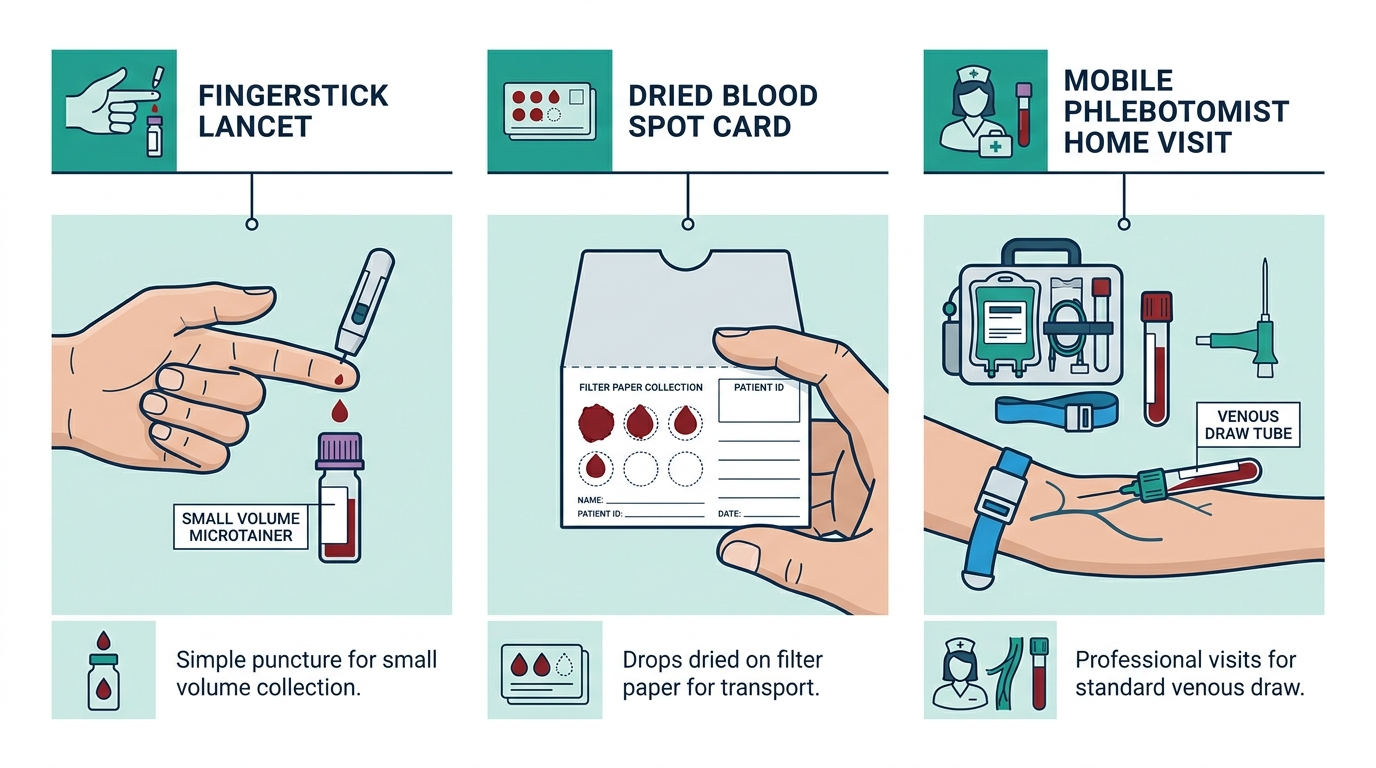
The phrase "at home blood test" covers three genuinely different product categories, and confusing them is how people end up disappointed. The category you choose determines which biomarkers you can measure, how accurate the numbers are, and what happens after the results come back.
Finger-prick, mobile draw, or membership panel? See what a 100+ biomarker membership with physician review adds to the comparison. One at-home Superpower draw checks 100+ biomarkers, physician-reviewed.
- Finger-prick dried blood spot (DBS) kits: You lance a fingertip, drip blood onto a card, let it dry, and mail it. Companies like Everlywell, LetsGetChecked, and Thorne use this model. The test menu is narrower than a venous draw because many assays require a larger serum volume. Good for: thyroid (TSH, free T4), vitamin D, HbA1c, basic lipids, testosterone, and a handful of hormones. Poor for: a complete metabolic panel, CBC with differential, or anything requiring serum chemistry in volume.
- Mobile phlebotomy: A certified phlebotomist (or a nurse dispatched by a service like Getlabs, PhlebFind, or hospital-affiliated concierge programs) comes to a location you pick and draws blood the same way a lab would. The sample ships to a CLIA-certified lab (Quest, Labcorp, or a regional partner). The test menu is identical to walking into a patient service center yourself. Cost ranges from $35 to $100 for the draw fee on top of the lab test costs.
- Lab-draw memberships and DTC annual panels: These are annual subscription programs (Superpower, Function Health, and similar) that pre-bundle a curated panel, handle the lab order, and have a clinician review every result. You still visit a Quest or Labcorp draw site in most cases, but the ordering, interpretation, and year-over-year tracking are managed for you. This is not truly "at home" for the blood draw, but the experience feels like it because there are no doctor visits, no insurance friction, and results arrive in an app.
The distinction matters practically: if you genuinely cannot leave home (post-surgery, mobility limitations, elderly parent), mobile phlebotomy is your only route to a complete panel. If you just want to skip the hassle of scheduling a separate doctor visit, a DTC membership works well. If you want a rough single-marker screen with zero planning, a finger-prick kit handles that.
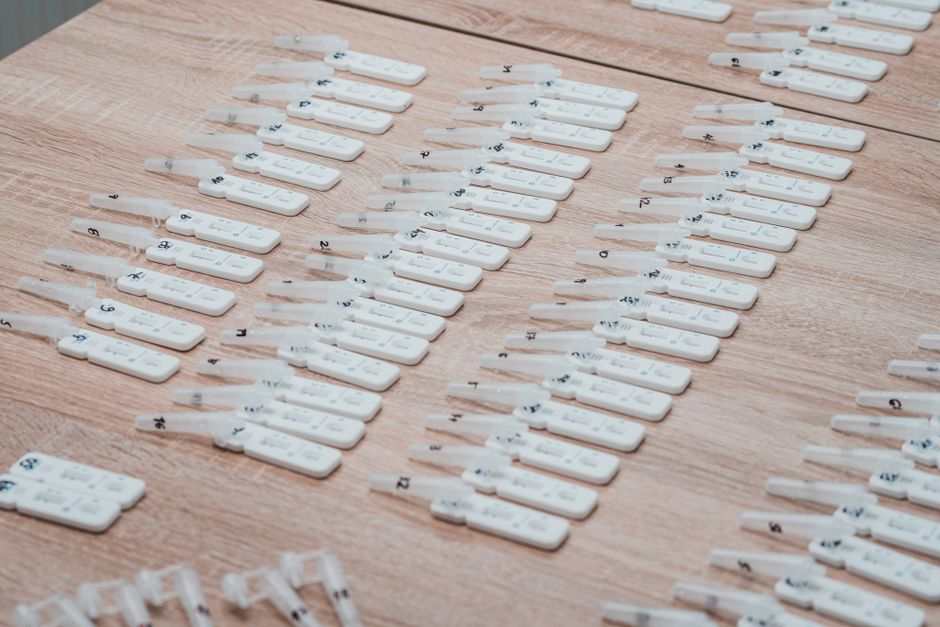
Finger-prick vs blood draw at home: accuracy difference is real
Finger-prick blood has measurably different properties from venous blood, and that gap affects results in ways most consumers do not realize. A finger-prick sample mixes capillary blood (from tiny vessels) with interstitial fluid that leaks from surrounding tissue when you press too hard or milk the finger. The ratio shifts depending on technique, skin temperature, and how quickly the drops fall, which introduces pre-analytical variability that a trained phlebotomist eliminates by drawing directly from a vein.
For markers where the reference range is broad (vitamin D, TSH, HbA1c), this variability rarely tips a result from normal to abnormal. For tighter markers like potassium, sodium, or creatinine, a capillary sample is not appropriate and reputable finger-prick companies simply do not offer those tests for that reason. Lipids are the most debated: a 2021 validation study published in the Journal of Clinical Lipidology found strong correlation between DBS and venous LDL-C (r > 0.93), but the interquartile spread was wide enough that borderline results warranted confirmation by venous draw.
If you are curious about how accurate at-home blood tests are across specific marker categories, that deep-dive covers the lab science in detail. The short version: for binary screening (is my vitamin D catastrophically low?), finger-prick is fine. For clinical decision-making on medication titration or metabolic optimization, get a venous draw.
What does at-home blood work actually cost in 2026?
Prices vary enormously by route, and "cheap" finger-prick kits are often worse value than they appear once you count what you are not getting.
| Option | Typical cost range | Biomarkers included | Physician review |
|---|---|---|---|
| Finger-prick single test (Everlywell, LetsGetChecked) | $49 to $149 per test | 1 to 15 markers per kit | Automated flags only |
| Finger-prick comprehensive panel kit | $149 to $299 per kit | 30 to 60 markers | Sometimes included at higher tier |
| Mobile phlebotomy draw fee (Getlabs, etc.) | $35 to $100 draw fee + lab costs | Unlimited (whatever you order) | Not included |
| Quest or Labcorp cash-pay panel ordered online | $29 to $250 per panel | Varies by panel chosen | Not included |
| Annual lab membership (Superpower, Function Health) | $99 to $499 per year | 50 to 100+ markers twice yearly | Included |
A worked example: if you want to check cholesterol, blood sugar, thyroid, CBC, and vitamin D independently through Everlywell single kits, you might spend $250 to $350 and still miss markers like homocysteine, ferritin, or CRP that an annual membership bundles in automatically. The math flips quickly once you want more than three markers.
HSA and FSA dollars cover most legitimate blood testing services. Mobile phlebotomy draw fees and CLIA-certified lab panels qualify; the DTC membership services vary (Superpower and Function Health both accept HSA/FSA). Confirm before purchase. Medicare covers specific lab panels when ordered by a physician but does not reimburse direct-to-consumer memberships directly.
You can also buy blood tests online and walk into Quest or Labcorp yourself, which cuts the mobile phlebotomy fee entirely. For people within 20 minutes of a patient service center, that route is often the best value.
Which at-home blood work option is best for a full metabolic baseline?
For a genuine metabolic baseline, covering lipids, glucose metabolism, kidney and liver function, thyroid, CBC, iron, key vitamins, and inflammation markers, a venous draw is the only appropriate method. That leaves mobile phlebotomy and a lab-draw membership as the realistic choices, and the deciding factor is usually whether you want physician interpretation included.
Mobile phlebotomy without a bundled panel order requires you to either have a doctor order the tests (so they get reviewed in normal clinical workflow) or order a la carte through a DTC lab ordering service like Ulta Lab Tests, Any Lab Test Now, or Walk-In Lab. You pay per test, results land in a portal, and you interpret them yourself or pay separately for clinician review. This is flexible but requires more legwork.
A lab membership bundles the panel design, the draw order, and physician review into a single annual fee. The trade-off is less flexibility on which markers you get (you take the curated panel, not a fully custom order) in exchange for continuity and trend tracking over multiple years. For most people who want to stop thinking about logistics and start actually seeing their numbers, the membership model wins.
The full blood panel online guide walks through which specific markers belong in a genuine baseline and why labs like Quest structure their wellness panels the way they do.
The simplest way to actually get this done
Superpower is a full-body lab membership that runs 100+ biomarkers, has each result reviewed by a doctor, and tracks your numbers year over year (about $199/year). It is what we point readers to when they would rather get one clean, complete draw than chase single tests one at a time. Here is superpower blood test review reviewed in full.
Mobile phlebotomy: what to expect and where to find it
Mobile phlebotomy has expanded significantly since 2022. Getlabs operates in most major US metro areas and can schedule same-day or next-morning appointments. Hospital systems in larger cities have added concierge draw services. Some urgent care chains and CVS MinuteClinic locations now offer scheduled draws for patients who pre-order panels online.
What to know before booking:
- Fasting requirements still apply. A mobile phlebotomist cannot change the pre-analytical conditions your tests require. If you are getting a fasting lipid panel or fasting glucose, you need to fast 10 to 12 hours exactly as you would for a lab visit.
- The draw fee is separate from test costs. Getlabs charges a draw fee (typically $55 to $85 depending on location) on top of whatever the lab charges for the tests. Some services waive the fee for certain panel sizes or subscription customers.
- Results go to the same place. Because the sample runs through Quest or Labcorp, your results appear in the same MyQuest or LabCorp Patient portal as any other test. There is no special app or proprietary system.
- Insurance may or may not cover mobile draw fees. Standard lab test costs are reimbursed as normal if you have an order from a physician. The mobile draw service fee is usually out-of-pocket. Check your plan before assuming.
- Pediatric draws are available. A skilled pediatric phlebotomist who comes to your home is often less traumatic for children under 10 than a clinical setting. Some mobile services specialize in this. Confirm the phlebotomist has pediatric experience when booking.
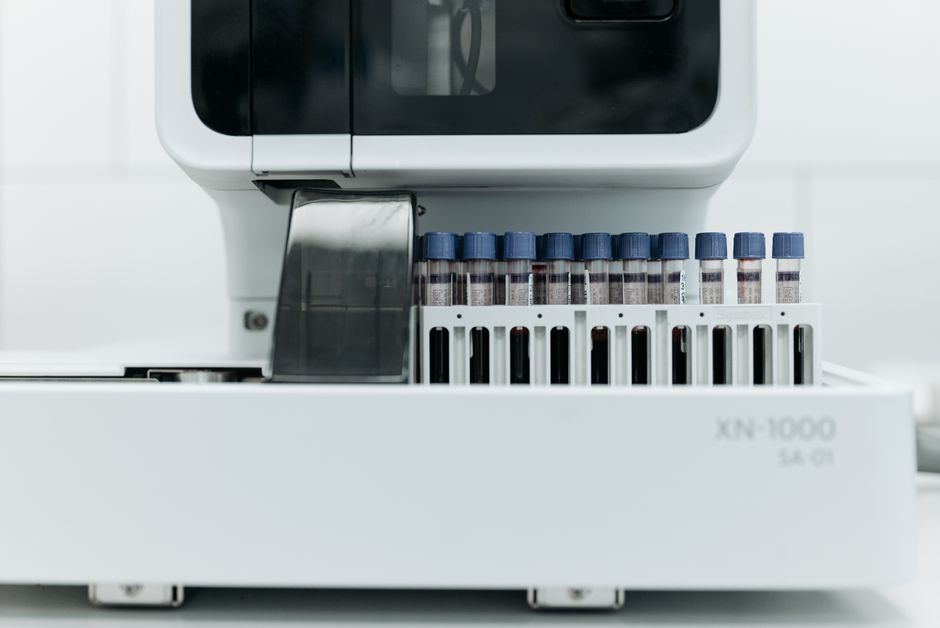
Finger-prick kits: where they genuinely fit and where they do not
Finger-prick kits are not bad products. They are the right tool for specific situations, and they are frequently the wrong tool for what people actually want.
Where they fit well: Monitoring a single known deficiency (vitamin D3 if you are supplementing and want to trend it without a lab visit), checking thyroid function between annual physicals if your endocrinologist approves, HbA1c between clinic visits for someone managing type 2 diabetes, or testosterone screening before booking a urology consult. The Everlywell review covers that company’s specific kit accuracy data and panel options in detail.
Where they fall short: Getting a complete metabolic panel, CBC, or liver function workup. Diagnosing anything. Making medication decisions. Assessing kidney function (creatinine and BUN require adequate serum volume and are unreliable on a DBS card). Evaluating iron stores accurately (ferritin on DBS has acceptable but not high precision). Any situation where a borderline result would change what you do next, because you need a confirming venous draw anyway.
One thing people get wrong: buying a "comprehensive" finger-prick kit expecting it to replace a physical. A 30-marker DBS panel still omits the CBC, the metabolic panel, and usually the inflammatory markers that a physician uses to evaluate systemic health. It looks comprehensive on the box. It is not a substitute for a full venous panel.
How to pick the right at-home blood work route for your situation
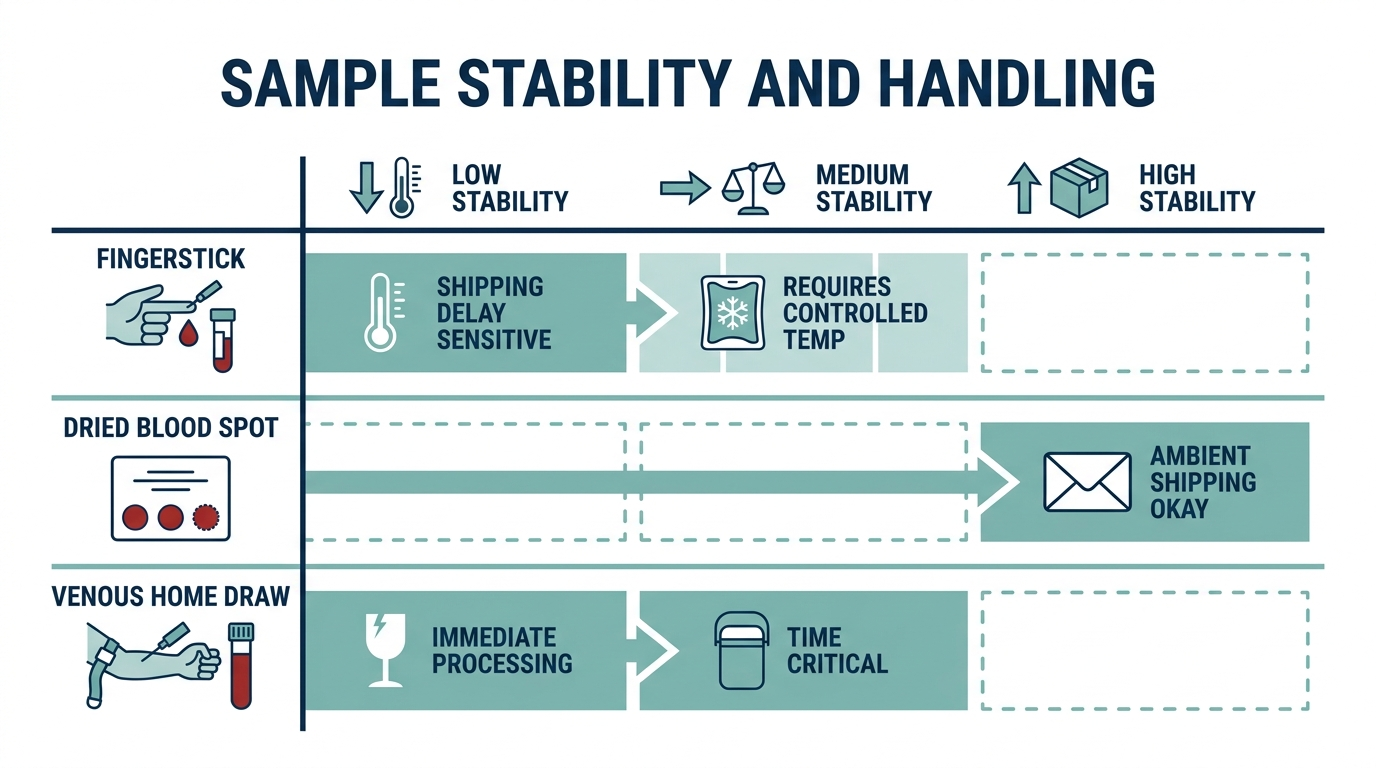
The decision tree is simpler than the market makes it appear. Three questions determine the answer.
Question 1: Do you need a single marker or a full picture? Single marker or narrow category (one hormone, vitamin D, HbA1c): a finger-prick kit works and costs $49 to $99. Full metabolic baseline across all organ systems: you need a venous draw, either via mobile phlebotomy or a lab membership.
Question 2: Do you want physician review included? If you are comfortable reading a lab report yourself and you know which values warrant a follow-up call to your doctor, mobile phlebotomy plus self-ordering gives you maximum flexibility at lowest cost. If you want a clinician to flag the result that is technically in range but trending in the wrong direction, a membership with physician review adds meaningful value.
Question 3: Is this a one-time check or ongoing tracking? One-time: mobile phlebotomy or a single DTC panel order makes sense. Annual tracking of 50 to 100+ markers with year-over-year comparison: a membership program pays for itself in convenience and data continuity. For context on annual program costs, the breakdown at how much does Superpower cost shows what the per-biomarker math looks like at that volume.
Insurance, Medicare, and uninsured: how to navigate the real cost
For people with traditional insurance, the friction is physician orders and prior authorizations, not cost. Most routine labs are covered at low or no cost-share when ordered by your PCP as part of an annual wellness visit. The problem is scheduling: many patients wait three to six months for a wellness visit slot. At-home blood work services sidestep that wait entirely.
For uninsured patients, cash-pay pricing at Quest and Labcorp has dropped substantially. A comprehensive metabolic panel runs $15 to $40 cash-pay if you order through their online portals or a third-party service. A CBC is under $20. The entire set of basic annual markers (CMP, CBC, lipid panel, TSH, vitamin D, HbA1c) can be ordered for $80 to $150 cash-pay at a patient service center, which is often cheaper than the draw fee plus kit cost of finger-prick alternatives that cover fewer markers.
Medicare Part B covers annual wellness visit labs when ordered by a physician. It does not cover DTC memberships or mobile draw fees directly, though it may reimburse the underlying Quest or Labcorp test costs if a physician orders them. Medicaid coverage varies by state for any at-home or DTC testing.
How to collect a finger-prick sample correctly (most errors happen here)
If you do choose a dried blood spot kit, the single biggest driver of a bad result is collection technique, not the lab. The good news is that a clean sample is entirely within your control, and a few habits eliminate most of the variability described earlier.
- Warm the hand first. Run warm water over the hand, shake it below your heart for a minute, or use a heating pad. Cold fingers barely bleed, which tempts you to squeeze, and squeezing is the main source of error.
- Do not milk the finger. Forcing blood out mixes in interstitial fluid and dilutes the sample. Let gravity do the work and let full drops fall onto the card rather than smearing.
- Lance the side of the fingertip, not the pad. The sides bleed more freely and hurt less. Use the third or fourth finger.
- Fill every circle completely and let it soak through. Partial spots are the most common reason a lab rejects a card and asks you to recollect. One good drop per circle beats several dabs.
- Let it dry fully before sealing, and mail promptly. A damp card sealed in a bag can degrade. This is also where transit conditions matter.
That last point is underappreciated: a dried blood spot card sits in the mail for one to three days, and extreme heat or humidity in transit can degrade sensitive analytes before the lab ever receives them. A venous sample handled by a phlebotomist and processed within hours does not face this exposure. It is one more structural reason a venous draw is more reliable for anything where a borderline number would change your decision.
Which markers each method can and cannot handle
Instead of thinking in brands, think in what the sample physically allows. This table maps common goals to the method that actually delivers a trustworthy result.
| What you want to measure | Finger-prick DBS | Venous draw (mobile or site) |
|---|---|---|
| Vitamin D, HbA1c, TSH | Generally reliable | Reliable |
| Basic lipids (total, HDL, triglycerides) | Usable, confirm borderline results | Reliable |
| Comprehensive metabolic panel (electrolytes, kidney, liver) | Not appropriate | Reliable |
| CBC with differential | Not appropriate | Reliable |
| ApoB and Lp(a) for cardiovascular risk | Limited or unavailable | Reliable |
| Full hormone and thyroid panel (free T3, free T4, SHBG) | Partial menu only | Reliable |
The pattern is consistent: anything requiring electrolyte precision, cell counts, or a broad serum chemistry panel needs a vein. Single, broad-range markers tolerate a finger-prick. Match the method to the marker and you avoid paying for a result you cannot trust.
Preparing for any at-home draw so the numbers are valid
Convenience does not exempt you from the prep rules that govern lab accuracy. Whether a phlebotomist comes to your kitchen or you prick your own finger, the same pre-analytical factors apply that would apply at a clinic.
- Fast when the panel requires it. Glucose, fasting insulin, and triglycerides are the markers most distorted by a recent meal, so a 9 to 12 hour water-only fast keeps them comparable to reference ranges. Eating first can push triglycerides up and throw off calculated LDL.
- Time hormone draws for the morning. Testosterone peaks earlier in the day, so an afternoon home draw can read low relative to standard ranges. Cortisol is even more time sensitive.
- Hold biotin supplements for a few days. High-dose biotin can distort some immunoassay-based thyroid and hormone tests, producing results that look abnormal but are an artifact.
- Skip unusually hard exercise the day before. Intense training can transiently raise several markers and muddy a clean baseline.
- Be well hydrated. Good hydration makes a venous draw easier and prevents falsely concentrated values.
These are the same rules a good phlebotomist would remind you of, but self-directed home testing puts the responsibility on you. Getting the prep right is often the difference between a result you can act on and one you have to repeat.
Making sense of the results after they land
Collecting the sample is the easy part. The harder and more valuable part is turning a screen of numbers into a decision, especially with the self-serve routes that include no physician review.
- Confirm a single abnormal value before acting. One out-of-range result, particularly from a finger-prick card, deserves a confirming venous draw rather than an immediate change to medication or lifestyle. Labs and collection both introduce occasional error.
- Watch the reference range versus your personal target. A value can sit inside the population reference interval and still be worse than optimal for prevention. This gap is exactly what a clinician review layer is designed to flag.
- Read markers in groups, not alone. Fasting glucose reads differently next to a high fasting insulin, and LDL reads differently next to a high ApoB. The story lives in the combination.
- Escalate the results that carry weight. Kidney function, liver enzymes, blood counts, and thyroid markers moving outside range warrant a conversation with a clinician rather than a wait-and-see.
This is the honest reason the membership model exists alongside cheaper routes. Anyone can obtain numbers at home now. Interpreting them correctly, in context and over time, is where the value concentrates, and it is worth deciding up front whether you want that interpretation bundled in or handled by your own physician.
Don’t just read about your health, track it.
A single result is a snapshot. Superpower re-tests 100+ markers over time so you can watch them move as you change sleep, food, and training.
FAQ
Is at-home blood work as accurate as going to a lab?
For mobile phlebotomy and lab-draw membership programs, yes, because the sample processing is identical to an in-person lab visit. For finger-prick DBS kits, accuracy is marker-dependent: thyroid, HbA1c, and vitamin D perform well; markers requiring larger serum volumes or tighter precision do not. If accuracy matters for the decision you are making, choose a venous draw method.
What is the best home blood test for a full metabolic panel?
A venous draw ordered through a DTC lab service (Ulta Lab Tests, Walk-In Lab, Quest DirectCheck) combined with mobile phlebotomy gives you the most complete and accurate metabolic panel at home. An annual membership like Superpower bundles this with physician interpretation. There is no finger-prick equivalent for a true full metabolic panel.
Can I get a CBC at home?
A complete blood count requires a venous sample. Mobile phlebotomy services that process through Quest or Labcorp can run a CBC from a home draw. Finger-prick kits cannot reliably perform a CBC with differential because the sample volume and stability requirements are not met by a dried blood spot card.
How do I order at-home blood work without a doctor?
Direct-to-consumer lab services allow you to order most standard panels without a physician order in most US states. Quest DirectCheck, Labcorp OnDemand, Ulta Lab Tests, and annual membership services like Superpower all operate this way. Arizona, New York, New Jersey, and a handful of other states restrict certain DTC lab orders by statute; check your state laws. Talk to a clinician about any results that fall outside the reference range.
Does insurance cover at-home blood work?
Insurance typically does not cover DTC membership fees or mobile phlebotomy draw fees. If a physician orders the labs and they run through Quest or Labcorp, the underlying test costs can be submitted to insurance as normal. HSA and FSA funds cover most CLIA-certified lab tests and many membership programs.
What is the difference between Everlywell and mobile phlebotomy?
Everlywell uses finger-prick dried blood spot kits mailed to your home; you collect the sample yourself and mail it back. Mobile phlebotomy sends a certified phlebotomist to your location to perform a venous blood draw. Mobile phlebotomy supports any test a clinical lab runs; Everlywell’s test menu is limited to markers that work on a DBS card. The two services serve different use cases rather than being direct substitutes.
How long does it take to get at-home blood work results?
Finger-prick kits typically take three to five business days from the day you mail the card, plus transit time (one to three days each way). Mobile phlebotomy results follow standard lab turnaround: 24 to 48 hours for most routine panels, up to five days for specialty markers. Annual membership programs usually report results within three to seven days of your draw appointment.
Are at-home blood tests HSA eligible?
Most CLIA-certified lab tests, including those from finger-prick kit companies that use certified labs, qualify for HSA and FSA reimbursement as diagnostic services. Membership fees for programs like Superpower are generally HSA/FSA eligible; confirm with the specific company before purchase because IRS rules require the primary purpose to be medical diagnosis. Draw fees for mobile phlebotomy typically qualify as a medical expense.
What should I do if my at-home blood work results look abnormal?
Do not panic, but do not ignore it either. A single out-of-range value on a DTC panel is almost always worth confirming with a repeat venous draw rather than acting on immediately. Contact a clinician about any result that falls outside the normal range or that represents a significant change from a prior baseline, particularly for kidney function, liver enzymes, blood counts, or thyroid markers.