Quick answer: Function Health and Marek Health serve fundamentally different customers. Function Health is a broad, preventive lab membership (100+ biomarkers, $499/year) aimed at anyone who wants a complete health baseline. Marek Health is a hormone-optimization clinic that runs testosterone and related panels, then pairs results with coaching or prescriptions. If your primary goal is dialing in testosterone, thyroid, or peptide protocols, Marek targets that niche directly. If you do not yet know what is off in your body, starting with a comprehensive panel first saves you from chasing a hormone problem that may not exist.
What Is Marek Health and Who Is It For?
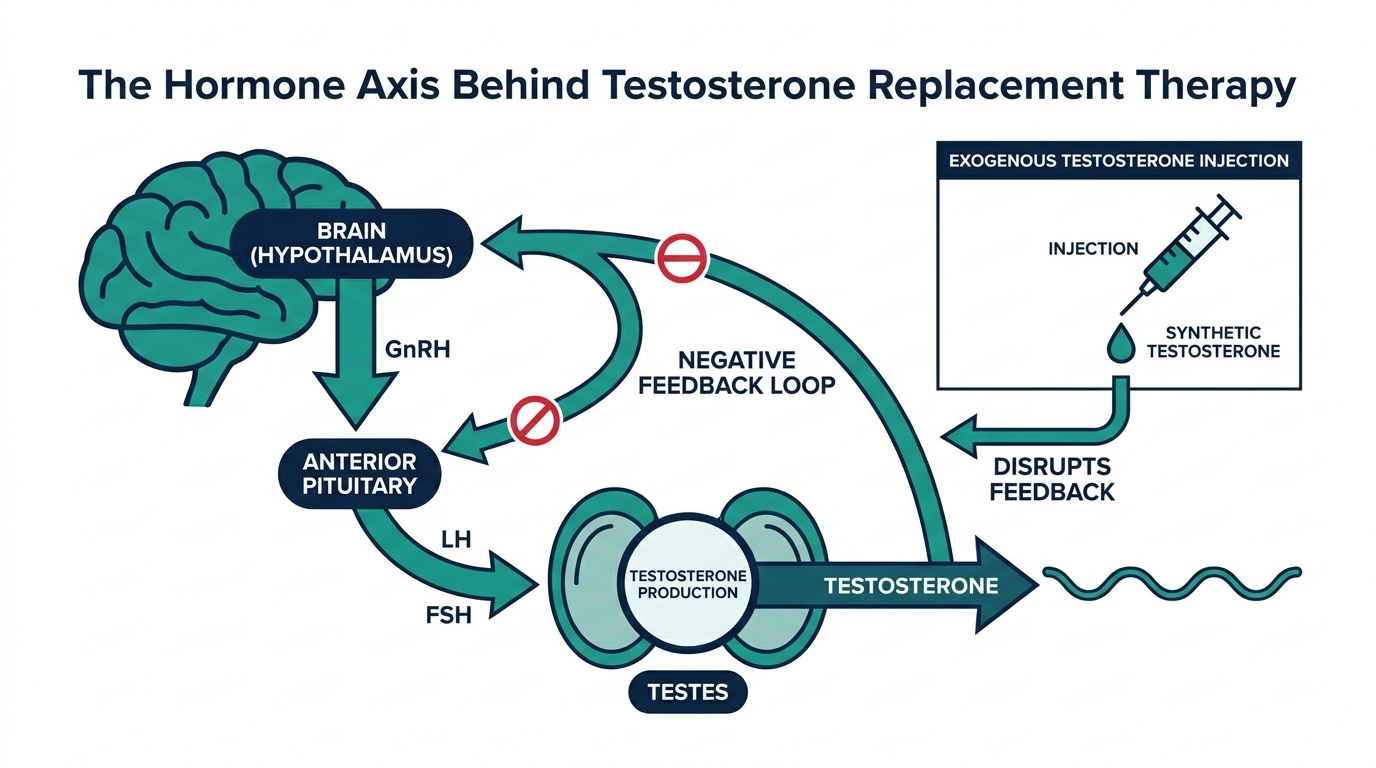
Marek Health is a telehealth platform built around hormone optimization, primarily for men pursuing testosterone replacement therapy (TRT) or men who want to optimize testosterone levels without clinical deficiency. The company was founded by Derek from More Plates More Dates, a YouTube channel known for frank, evidence-adjacent discussion of TRT, peptides, and performance optimization. That origin story matters because Marek’s clinical approach, provider culture, and patient base all skew toward health-conscious men who have already decided they want to engage with hormones, not casual patients asking a GP whether their numbers are normal.
Trying to decide between broad lab screening and a hormone-optimization clinic? See what a 100+ biomarker baseline covers. One at-home Superpower draw checks 100+ biomarkers, physician-reviewed.
Services include blood panels, telehealth consultations, and optional coaching plans. Marek providers can prescribe testosterone, estrogen management medications (aromatase inhibitors), thyroid medications, peptides like BPC-157, and other compounds depending on state law. They do not replace a primary care physician and do not cover preventive oncology screening, cardiac imaging, or the wide metabolic sweep you get from comprehensive labs.
This specialization is Marek’s strength and its limitation. If you are already 35, already training hard, and already suspect low T, Marek will move faster than your average endocrinologist. If you are a 42-year-old with vague fatigue and no idea whether the issue is testosterone, thyroid, sleep apnea, insulin resistance, or early anemia, Marek is the wrong starting point.

What Does Function Health Actually Measure?
Function Health runs roughly 100 to 160 biomarkers depending on which panel version is active, covering lipids (including advanced particle testing), thyroid (TSH, Free T3, Free T4, antibodies), complete metabolic panel, CBC, hormones (testosterone total and free, DHEA-S, cortisol, estradiol), inflammatory markers (hs-CRP, homocysteine), nutrient levels (B12, D3, ferritin, magnesium), and organ function across liver, kidney, and pancreas. You pay a membership fee, get bloodwork drawn twice per year, and receive results through an app where each result has a short explanation. A physician reviews the panel and flags anything outside optimal range.
For a full breakdown of what is included and what it costs, see the function health review and function health cost breakdown. The short version: it is designed as a comprehensive annual health baseline, not a disease-treatment service.
Function does include testosterone and related hormones, which means a man with low-normal T will see that flagged. But Function does not prescribe anything. It is diagnostics only. If your Function results show testosterone at 280 ng/dL and you want treatment, you still need a separate provider, whether that is your internist, a urologist, or a TRT clinic like Marek.
Marek Health Cost Compared to Function Health
Pricing structures differ enough that direct comparison requires unpacking what you are actually buying.
| Service | Entry cost | What you get | Rx included? |
|---|---|---|---|
| Function Health | $499/year membership | 2 comprehensive draws per year, 100+ biomarkers, app with physician review | No |
| Marek Health (lab-only) | $100 to $300 per panel | Targeted hormone panels ordered a la carte or via provider | No (separate consult fee) |
| Marek Health (coaching plan) | $200 to $600/month | Labs, provider consults, protocol guidance, Rx management | Yes, via telehealth Rx |
| Superpower | About $199/year | 100+ biomarkers, doctor review of every result, year-over-year tracking | No |
Marek Health’s lab pricing is not standardized publicly. Panel costs depend on which tests are ordered and can run from under $100 for a basic hormone check to $300 or more for a comprehensive male hormone panel with add-ons. The coaching plans, which bundle labs with provider access and prescription management, typically run $200 to $600 per month. That is a recurring cost most patients do not expect when they see Marek marketed as a lab service. A full year of Marek coaching is $2,400 to $7,200 before pharmacy costs, which can add another $50 to $200 per month depending on the medication and compounding pharmacy used.
Function Health is flat $499 per year. There are no per-panel fees and no consult charges. It is purely diagnostic.
For the pure lab cost question, a third option sits between them. Superpower runs a doctor-reviewed panel of 100+ biomarkers for about $199 per year, which is less than Function and far less than Marek’s all-in cost. For more on that price point, see how much does superpower cost.

Is Marek Health Legit?
Yes, Marek Health is a legitimate telehealth company staffed by licensed providers. It operates in a federally legal gray zone that is standard for TRT telehealth: providers are licensed physicians and nurse practitioners; prescriptions are written within state-law frameworks; labs are drawn at Quest, Labcorp, or local phlebotomy centers with real CLIA-certified processing.
What makes people skeptical is the origin in bodybuilding media and the frank discussion of protocols that mainstream medicine rarely touches. A Marek provider will discuss optimizing testosterone to the upper quartile of normal range, something most endocrinologists resist unless a patient is clearly deficient. That directness is the product, not a red flag. The clinical question is whether aggressive optimization is appropriate for a given patient, and Marek’s model trusts the patient to make that call with guidance.
The more practical concern for new patients is that Marek is not a primary care replacement. It will not catch a slow-growing thyroid nodule or flag an abnormal PSA pattern over years. Patients who use Marek well also have a PCP and treat Marek as a specialist layer. Patients who use it as their only medical contact are not using it correctly.
How Marek Health Differs From a Standard TRT Clinic
Traditional TRT clinics (think Defy Medical, Gameday Men’s Health, or similar) typically offer in-person or telehealth consultations with a formulaic protocol: test levels, inject testosterone cypionate or enanthate, manage estrogen, repeat. Marek distinguishes itself in a few ways that matter to analytically inclined patients.
- More granular labs: Marek will run SHBG, free testosterone, LH, FSH, prolactin, and hematocrit alongside total T, rather than just ordering total testosterone and calling it done. That granularity matters because a man with total T of 450 ng/dL and low SHBG can have high free T; a man with total T of 600 and high SHBG may have low free T and genuinely benefit from intervention.
- Peptides and ancillaries: Marek providers are more likely to discuss and prescribe peptides like BPC-157, sermorelin, or enclomiphene (for men who want to preserve fertility while improving T levels) than a standard TRT mill.
- Coaching culture: The Derek connection means the provider community engages with the peer-reviewed literature and also with gray literature from sports medicine and bodybuilding research. Patients who have done their homework find this refreshing.
- Less hand-holding: If you want a provider to explain what testosterone does and why you might want to treat it, a standard clinic’s slower pace may serve you better. Marek assumes you already know.
Compared to a direct-primary-care practice or a traditional endocrinologist, Marek is faster and more action-oriented. Compared to trying to get TRT from a GP or urologist who is reluctant to treat anything above 300 ng/dL, Marek is dramatically less frustrating.
Hormone Optimization vs Full-Body Labs: Which Should You Do First?
This is the question that resolves the Function Health vs Marek Health comparison for most people. The answer depends on what you already know about your body.
If you have had a recent comprehensive blood panel and you know that testosterone is the specific variable you want to optimize, going directly to Marek is efficient and appropriate. You are not missing context. You are acting on data you already have.
If your last blood test was a routine annual physical that covered CBC, CMP, and maybe TSH, you do not have enough information. Low energy, poor recovery, brain fog, and reduced libido are the presenting complaints for low testosterone, but they are also the presenting complaints for hypothyroidism, B12 deficiency, iron deficiency anemia, insulin resistance, vitamin D insufficiency, elevated cortisol, and sleep-disordered breathing. Treating testosterone when the root cause is ferritin at 14 ng/mL is a waste of money and misses the actual problem.
Running a broad baseline first costs about the same as one month of Marek coaching. If the baseline shows that testosterone is genuinely the issue, proceed to Marek or a similar clinic with clear data. If the baseline reveals something else, you have avoided months of optimizing the wrong variable.
The simplest way to actually get this done
Superpower is a full-body lab membership that runs 100+ biomarkers, has each result reviewed by a doctor, and tracks your numbers year over year (about $199/year). It is what we point readers to when they would rather get one clean, complete draw than chase single tests one at a time. Here is superpower blood test review.
What People Get Wrong When Comparing These Services
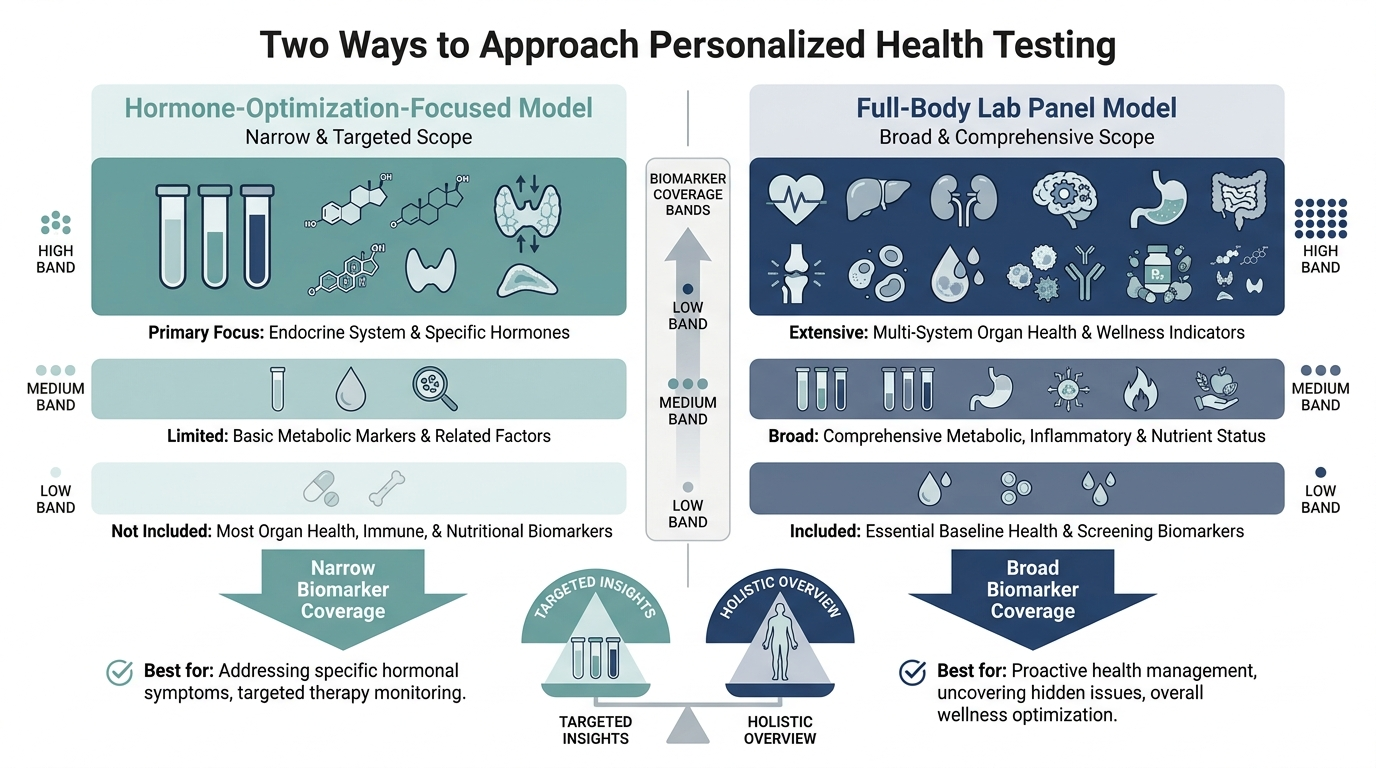
The biggest mistake is treating this as an either-or choice between two competing lab services. Function Health and Marek Health are not in the same category. Function is a diagnostic tool. Marek is a treatment platform with diagnostics bundled in. Comparing them directly is like comparing a scale to a personal trainer: one measures, one acts on the measurement.
The second mistake is assuming that a higher total testosterone always fixes the symptoms that prompted the search. Men who pursue TRT through any clinic, including Marek, and who do not see the expected improvement often have a coexisting issue that was never identified. That issue shows up in a comprehensive metabolic and nutrient panel. It does not show up in a targeted hormone draw.
The third mistake, specific to Function Health, is treating the membership as a medical relationship. Function’s physician review of results is a brief flag, not a consultation. If something comes back abnormal, the follow-up is on you. That is fine for screening purposes. It is not a substitute for having a provider who knows your history and will order the next test.
For a different angle on Function, including how it compares to other broad-panel competitors, the function health vs empirical health comparison covers the preventive diagnostics space in more detail. And for those weighing Function against performance-focused lab concierge services, function health vs 10x health covers the genetic and performance optimization overlap.

Best Lab Service for Testosterone: A Decision Framework
When patients ask which service is the best lab service for testosterone specifically, the answer is tiered.
- Step one: Get a comprehensive baseline that includes total testosterone, free testosterone, SHBG, LH, FSH, estradiol, prolactin, thyroid panel, CBC, CMP, ferritin, B12, D3, and hs-CRP. Any of these can mimic or amplify low-T symptoms. Superpower, Function, or a similar broad-panel membership handles this step efficiently.
- Step two: If total testosterone is below 300 ng/dL, or if free testosterone is low even with normal total T, or if symptoms persist despite normal numbers, consult with a clinician. Talk to a clinician about your results before starting any hormone protocol.
- Step three: If treatment is appropriate, a service like Marek Health offers faster access to informed providers than most traditional medical settings. Bring your baseline labs. Marek providers can review existing results rather than starting from scratch.
Skipping step one and going directly to step three is how men end up on testosterone they do not need, suppressing their own production without solving the underlying issue. The comprehensive baseline is the highest-value $200 most men can spend in preventive health.
Reading a Male Hormone Panel: The Reference Ranges That Actually Matter
Whether you run labs through Function, Marek, or any lab-only service, the report is only useful if you can read it. The single most common error men make is fixating on total testosterone and ignoring the two numbers that determine how much of that hormone is doing anything. Here is how the core values sit relative to standard adult male reference ranges.
| Marker | Typical adult male reference range | What it tells you |
|---|---|---|
| Total testosterone | 264 to 916 ng/dL (CDC harmonized range) | Everything, bound and free. A single number that hides two-thirds of the story. |
| Free testosterone | Roughly 6 to 26 pg/mL, drops with age | The fraction actually available to tissue. Symptoms track this more closely than total. |
| SHBG | 10 to 50 nmol/L | The protein that binds testosterone and locks it away. High SHBG lowers free T even when total looks fine. |
| LH and FSH | 1.5 to 9.3 IU/L (LH), 1.5 to 12.4 IU/L (FSH) | Separates primary (testicular) from secondary (pituitary/hypothalamic) low testosterone. |
| Estradiol (sensitive assay) | Roughly 10 to 40 pg/mL in men | Too low causes joint pain and low libido; too high mimics low T. It is a window, not a ceiling. |
The CDC harmonized reference range for total testosterone in adult men is 264 to 916 ng/dL, and individual labs may set slightly different cutoffs based on their assay (per Cleveland Clinic and multiple lab handbooks). Any lab result should be interpreted against that lab’s own printed range, not a number you read online, because assay methods differ enough to shift the boundaries.
Why Total Testosterone Alone Is a Trap
Consider two men, both with total testosterone of exactly 500 ng/dL, squarely mid-range. On paper they are identical. In practice they can be nothing alike.
The first man has SHBG of 20 nmol/L. Less of his testosterone is bound, so his free testosterone lands in a healthy range and he feels fine. The second man has SHBG of 60 nmol/L, above the reference ceiling. More of his testosterone is locked to that binding protein, so his free testosterone is low despite an identical total. He has the symptoms of low T, poor recovery, low libido, flat mood, while a GP looking only at total testosterone tells him he is normal and sends him home. This is the exact scenario a granular panel catches and a basic draw misses, and it is why Marek and any competent hormone workup order SHBG and free T rather than stopping at total.
Elevated SHBG has real drivers worth investigating before anyone reaches for testosterone: aging, hyperthyroidism, liver disease, and certain medications all raise it, while insulin resistance, obesity, and hypothyroidism tend to lower it. Chasing the SHBG cause sometimes resolves symptoms without touching testosterone at all.
Sample Interpretations: Reading Between the Numbers
A hormone panel becomes actionable when you read the markers in combination. A few common patterns:
- Low total T, high LH and FSH: the pituitary is shouting at testicles that are not responding. This points to primary hypogonadism (testicular origin) and is unlikely to reverse with lifestyle alone.
- Low total T, low or normal LH and FSH: the signal from the brain is weak, which points to secondary hypogonadism. Causes worth ruling out include elevated prolactin, sleep apnea, opioid use, chronic stress, and significant caloric deficit. Some of these are fixable without lifelong testosterone.
- Normal total T, low free T, high SHBG: the binding-protein scenario above. The testosterone exists but is not bioavailable.
- High total T with high hematocrit: often seen in men already on testosterone. Hematocrit above roughly 52 percent is a flag for reducing dose or donating blood, because thickened blood raises clot risk.
None of these patterns is visible from a lone testosterone value. Each requires the surrounding markers, which is the practical argument for a comprehensive draw before any treatment decision.
How to Prepare for a Hormone Blood Draw
Hormone results swing based on timing and prep, and a poorly timed draw can send you down the wrong path. A few rules that hold across labs:
- Draw in the morning. Testosterone follows a daily rhythm and peaks in the early morning. Most reference ranges are built on samples taken before 10 a.m. An afternoon draw can read falsely low.
- Fast if a metabolic panel is bundled. Glucose, insulin, and lipids need a fasting sample. Testosterone itself does not require fasting, but a high-carbohydrate meal can transiently suppress it, so morning and fasted is the cleaner default.
- Repeat a low result before acting. A single low testosterone reading should be confirmed on a second morning draw before any diagnosis of hypogonadism, because day-to-day variation is real. Reputable guidelines call for two low morning values, not one.
- Flag your supplements and medications. Biotin can skew some hormone immunoassays, opioids and glucocorticoids suppress testosterone, and any exogenous testosterone or over-the-counter “T booster” will distort the picture. Tell whoever orders the panel.
These prep details are where an app-based comprehensive service and a coaching clinic differ in support. A clinic like Marek will guide the timing as part of the workup; a self-serve panel puts that responsibility on you, so it is worth getting right the first time.
Turn what you just learned into action.
Superpower lets you test 100+ biomarkers from home, then re-check them over time so you can actually see progress, physician-reviewed at every step.
FAQ
Is Marek Health worth it?
Marek Health is worth it for men who have already established that hormone optimization is their specific goal and who want providers who will engage with that goal seriously. It is not worth it as a first step when you do not yet know whether hormones are the issue. The monthly coaching costs add up quickly, and the value depends heavily on whether you are a good candidate for the protocols they offer.
Can you use both Function Health and Marek Health?
Yes, and some patients do. Function serves as the annual comprehensive screen, while Marek handles the prescribing and ongoing hormone management. The overlap is limited because Function does not prescribe and Marek does not cover the full metabolic sweep. Using both means you have wide diagnostic coverage and an active treatment relationship, which is a defensible approach for someone actively managing TRT.
Does Marek Health take insurance?
No. Marek Health does not accept insurance. Lab costs and consultation fees are out-of-pocket. Some patients use HSA or FSA funds to cover lab draws, though eligibility depends on your plan and what the lab codes the draw as. Prescription medications through Marek are also cash-pay, typically through compounding pharmacies that do not bill insurance.
How does Marek Health compare to a TRT clinic?
Marek is more analytically oriented than most TRT mills, which often follow a narrow protocol of testosterone cypionate plus anastrozole and little else. Marek providers are more likely to investigate root causes of suboptimal levels, consider fertility-preserving options like enclomiphene or HCG, and discuss peptides and optimization strategies beyond testosterone alone. The tradeoff is cost: a standard TRT clinic is often cheaper for straightforward maintenance.
What does Marek Health cost per month?
Marek Health does not publish a fixed monthly price. Lab panels run $100 to $300 each depending on what is ordered. Coaching plans with provider access typically run $200 to $600 per month. Medications add another $50 to $200 per month depending on the protocol. Patients should budget $300 to $800 per month all-in for an active coaching engagement, which is a significant ongoing expense to plan for.
Does Function Health test testosterone?
Yes. Function Health panels include total testosterone, free testosterone, DHEA-S, SHBG, and estradiol for both men and women, depending on the panel version. However, Function does not prescribe based on those results. If results suggest deficiency or optimization opportunity, you would need a separate provider to act on them.
Which is better for a man over 40 with no prior blood work?
Start with a comprehensive panel rather than a hormone-specific service. A man over 40 with no recent labs needs a full picture before narrowing to any single system. A service like Superpower or Function Health gives that context. Once you know where the gaps are, you can decide whether hormone optimization through Marek or a similar clinic is the appropriate next move.
Is Marek Health available in all states?
Marek Health operates in most US states but availability depends on where their licensed providers hold active licenses. Telehealth prescribing rules vary by state, and some compounds are more restricted in certain jurisdictions. The Marek website shows which services are available by state during the intake process. Lab draws are available anywhere Quest or Labcorp operates, which covers most of the country.
Vital Signs Today may earn a commission if you buy through links on this page. It does not affect our editorial assessments.