
Last updated June 2026. Educational content, not medical advice. Talk to a licensed clinician before starting any supplement program, especially if you have dietary restrictions or underlying health conditions.
Short answer: Yes. Vital Proteins Collagen Peptides is hydrolyzed collagen from upcycled bovine (cattle) hide, broken into small peptide fragments of roughly 2,000 to 5,000 Daltons via an enzymatic hydrolysis process. The words “collagen peptides” on the label are, by definition, the hydrolyzed form. Unhydrolyzed native collagen would weigh roughly 300,000 Daltons and would not dissolve cleanly in liquid the way this powder does.
Vital Proteins breaks collagen into small absorbable fragments. Want to see how your body is actually processing protein and collagen markers? One at-home Superpower draw checks 100+ biomarkers, physician-reviewed.
The single most common question about this product is a terminology question more than a product question. If you have been confused by labels that say “collagen peptides,” “hydrolyzed collagen,” or “collagen hydrolysate” and wondered whether they are the same thing or three different products, the answer is that they are the same thing. The process is called hydrolysis, the output is called peptides (or hydrolysate), and any product called “collagen peptides” is, by definition, already hydrolyzed.
Full-body lab membership: 100+ biomarkers, doctor-reviewed, tracked over time.
What does “hydrolyzed” actually mean in collagen?
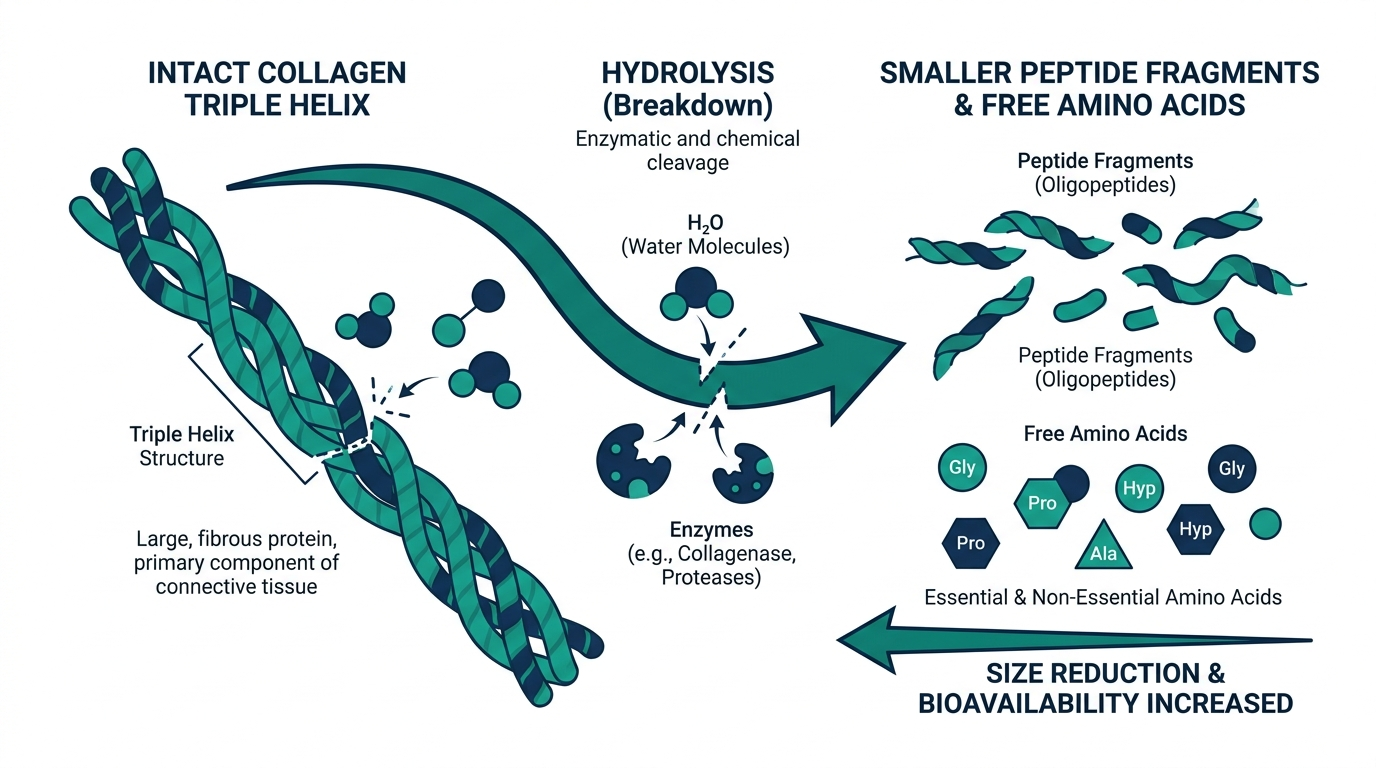
Native collagen is a triple-helix protein molecule. In your joints, skin, and tendons, that massive structure is exactly what you want: mechanically strong, tightly wound, resistant to tearing. But ingesting it in that form is a problem. At a molecular weight of around 300,000 Daltons, the native triple helix is too large to pass efficiently through the intestinal wall into systemic circulation.
Hydrolysis solves that. Manufacturers expose the raw bovine hide collagen to water and controlled enzymatic or acid treatment, which severs the peptide bonds along the triple helix into much shorter fragments. The result, typically 2,000 to 5,000 Daltons, passes through the gut mucosa far more readily. These fragments still contain the same amino acids as native collagen (primarily glycine, proline, and hydroxyproline), but now in a form your digestive system can actually do something with.
The process is roughly analogous to what digestion would do anyway, just done outside the body, in a controlled environment, before you swallow.
Vital Proteins uses bovine hide as the raw material. The phrase “upcycled bovine hide” on the product page means the collagen comes from the hide (skin) of grass-fed, pasture-raised cattle, a by-product that would otherwise be discarded, rather than from bones or cartilage.
Why does the molecular weight matter so much?
This is the detail most collagen articles skip, and it is worth understanding if you care whether the supplement actually reaches the tissues it claims to support.
A 2024 randomized, double-blind crossover study published in Frontiers in Nutrition measured what actually enters human bloodstreams after 10 grams of collagen hydrolysate intake (PMC11325589). The five peptides that showed up in detectable concentrations were Pro-Hyp (proline-hydroxyproline), Hyp-Gly (hydroxyproline-glycine), Gly-Pro-Hyp, Pro-Gly, and Gly-Pro. Free hydroxyproline rose 6 to 10 fold above baseline within 100 to 130 minutes of ingestion, and between 36% and 47% of the absorbed hydroxyproline was still in peptide-bound form rather than free amino acid form, confirming that small collagen-derived dipeptides and tripeptides enter circulation intact.
Why does that matter? Because intact dipeptides like Pro-Hyp are not simply broken down for energy. Research suggests they act as signaling molecules, potentially stimulating fibroblast activity in skin and joint tissue. The Pro-Hyp dipeptide, specifically, has been identified as the most bioactive of the absorbed fragments. A 2022 study in npj Science of Food from Japan found that 3-hydroxyproline-containing tripeptides remained stable in human blood for extended periods post-ingestion, suggesting a longer window of potential activity than free amino acids provide.
Do not believe any label that claims “unhydrolyzed collagen” provides equivalent benefits to collagen peptides when dissolved in liquid. The size difference between the two forms is not cosmetic. It is the difference between a molecule that can cross the gut barrier intact and one that must be broken down entirely first, losing any peptide-specific signaling in the process.
What collagen types are in Vital Proteins?
The standard Vital Proteins Collagen Peptides (bovine, unflavored) delivers Type I and Type III collagen peptides.
Type I collagen is the most abundant protein in the human body. It forms the structural scaffold for skin, tendons, bone matrix, and the cornea. When people report improved skin elasticity or reduced nail brittleness from collagen supplementation, Type I is primarily what they are responding to.
Type III collagen works alongside Type I in skin and blood vessels, and is particularly concentrated in organs and the gut wall. It is the form most often discussed in the context of gut lining integrity, though the direct evidence for oral supplementation improving gut symptoms specifically remains limited.
One important gap: the standard Vital Proteins Collagen Peptides does NOT contain Type II collagen. Type II is the dominant form in cartilage, and it requires a fundamentally different source material (typically chicken sternum or bovine trachea cartilage, not bovine hide) and a different processing method. Vital Proteins does sell a separate Type II Collagen product; the standard “Collagen Peptides” tub on most shelves is not it.
This distinction matters more than people realize. If someone’s primary goal is joint cartilage support under heavy load (not just general joint comfort), Type II supplementation has a separate and distinct body of evidence.
| Collagen Type | Found in Vital Proteins Standard Tub | Primary Target Tissue | Main Benefit Studied |
|---|---|---|---|
| Type I | Yes | Skin, tendons, bone matrix, nails | Skin elasticity, wound healing, nail strength |
| Type III | Yes | Blood vessels, organs, gut wall | Structural support for skin alongside Type I |
| Type II | No (separate product) | Cartilage | Cartilage preservation, joint pain reduction |
| Marine (Type I) | No (separate product) | Skin-focused | Higher bioavailability per gram, skin collagen density |
What do the clinical studies actually show?
The evidence base for hydrolyzed collagen peptides has grown considerably since 2020. A 2024 systematic review and meta-analysis in The American Journal of Medicine analyzed data from multiple randomized controlled trials and found consistent positive effects on skin hydration, elasticity, and wrinkle depth with supplementation of 2.5 to 10 grams per day for 8 to 12 weeks.
A 2024 double-blind, placebo-controlled trial in the Journal of Clinical Medicine (the CollaSel Pro study) gave 112 women either 10 grams of hydrolyzed collagen peptide or placebo daily for eight weeks. The collagen group showed statistically significant improvements in skin elasticity (p = 0.009), skin hydration, and skin roughness compared to the placebo group.
A 12-week 2024 trial published in Dermatology Research and Practice found that subjects taking hydrolyzed collagen showed measurable improvements in skin collagen density, scalp condition, and hair appearance after 12 weeks of daily supplementation.
For joints, a meta-analysis of collagen supplementation trials in connective tissue injury found statistically significant reductions in joint pain with doses of approximately 10 grams per day combined with brief exercise protocols, a design used in research from Shaw et al. at the Australian Institute of Sport.
Personally, the narrative I find most credible is this: collagen peptides are not a cure or a treatment, but they are a legitimate way to supply the body with the specific amino acids it uses most in collagen synthesis, in a form that gets absorbed. The amino acid glycine, which makes up roughly one-third of all residues in Type I collagen, is the one most people are chronically under-consuming from food, because it is concentrated in connective tissue cuts (feet, ears, tendons) that most modern diets avoid.
How much should you take, and does timing matter?
Evidence-based dosing ranges are cleaner than most supplement categories, because collagen peptide research tends to use defined doses rather than vague “as directed” windows.
For skin outcomes, studies show benefit at 2.5 to 10 grams per day, with a notable 2018 study in Nutrients (PMC6073484) demonstrating significant improvements in skin hydration and elasticity at just 1,000 mg per day over 12 weeks in a low-molecular-weight peptide formula.
For joint support with exercise, 10 to 15 grams per day is the dose range appearing in most positive trials, often consumed approximately 30 to 60 minutes before exercise, based on the hypothesis that elevated amino acid availability during collagen synthesis windows post-exercise amplifies the tissue remodeling response.
Vital Proteins recommends 20 grams (two scoops) per day, which sits comfortably within the effective range for both skin and joint goals. At that dose, you get 18 grams of protein per serving, 70 calories, and the entire serving is collagen-derived amino acids.
One thing most brands skip: vitamin C is not optional. The enzymes prolyl hydroxylase and lysyl hydroxylase, which convert proline into hydroxyproline during collagen synthesis, require ascorbic acid (vitamin C) as a non-negotiable cofactor. Without sufficient vitamin C, newly synthesized collagen chains cannot fold into stable triple helices and are degraded before secretion. This is why the Vital Proteins Advanced formula bundles vitamin C alongside the collagen peptides. If you buy the plain unflavored version, add vitamin C from your diet or a separate supplement.
Is Vital Proteins a good choice compared to alternatives?
Vital Proteins is a legitimate product with a large quality track record. Nestlé Health Science acquired a majority stake in the brand in 2020 and completed the full acquisition, which brought industrial-scale quality controls. NSF Certified for Sport versions of the product are available, meaning an independent third party has confirmed the product contains what the label claims and is free from common banned substances, relevant for athletes.
The competitive context in 2026 looks roughly like this:
| Brand | Source | Price Per 10g Serving | Type II Collagen | Third-Party Tested | Key Differentiator |
|---|---|---|---|---|---|
| Vital Proteins (standard) | Bovine hide, grass-fed | ~$0.74 (Amazon 20oz) | No | NSF for Sport available | Widest retail availability, Nestle QC |
| Great Lakes (hydrolyzed) | Bovine hide | ~$0.45 | No | Yes | Lowest cost per gram meeting quality bar |
| Momentous (FORTIGEL) | Bovine, trademarked | ~$1.49 | No | NSF for Sport | FORTIGEL: clinically shown to stimulate elastin biosynthesis by 50% |
| Vital Proteins Marine | Fish skin | ~$1.20 | No | Yes | Higher per-gram bioavailability, ideal for skin-focused users |
| Vital Proteins Type II | Bovine cartilage | ~$1.37 | Yes | Yes | Cartilage-specific, different clinical application |
Personally, I would choose Great Lakes for a budget-conscious single-goal (skin) protocol, and Momentous or a clinically specific Type II product if joint-cartilage support is the primary driver. Vital Proteins sits in the reliable middle: not the cheapest, not the most specialized, but widely available, quality-controlled, and backed by enough real-world use that you know the batch-to-batch consistency is real.
The one place I would push back against the standard Vital Proteins pitch: the “grass-fed, pasture-raised” label on the bovine source sounds important but has no meaningful confirmed effect on the amino acid composition of the resulting peptide powder. Glycine, proline, and hydroxyproline profiles are determined by the tissue source (hide) and hydrolysis method, not the cattle’s diet. The grass-fed claim may matter to you for ethical reasons; do not expect it to change the peptide bioavailability.
Hydrolyzed type I & III collagen peptides, third-party tested, unflavored.
Does being hydrolyzed make it less “natural”?
This question comes up constantly on wellness forums, and it deserves a direct answer: no.
Hydrolysis is not a chemical adulteration. The process uses water and enzymes, and the enzymes used in food-grade collagen hydrolysis are typically protease enzymes naturally present in plants and microorganisms. The output is structurally simpler than native collagen, but it is not synthetically modified. The amino acids are the same amino acids that were in the original hide, just in shorter chains.
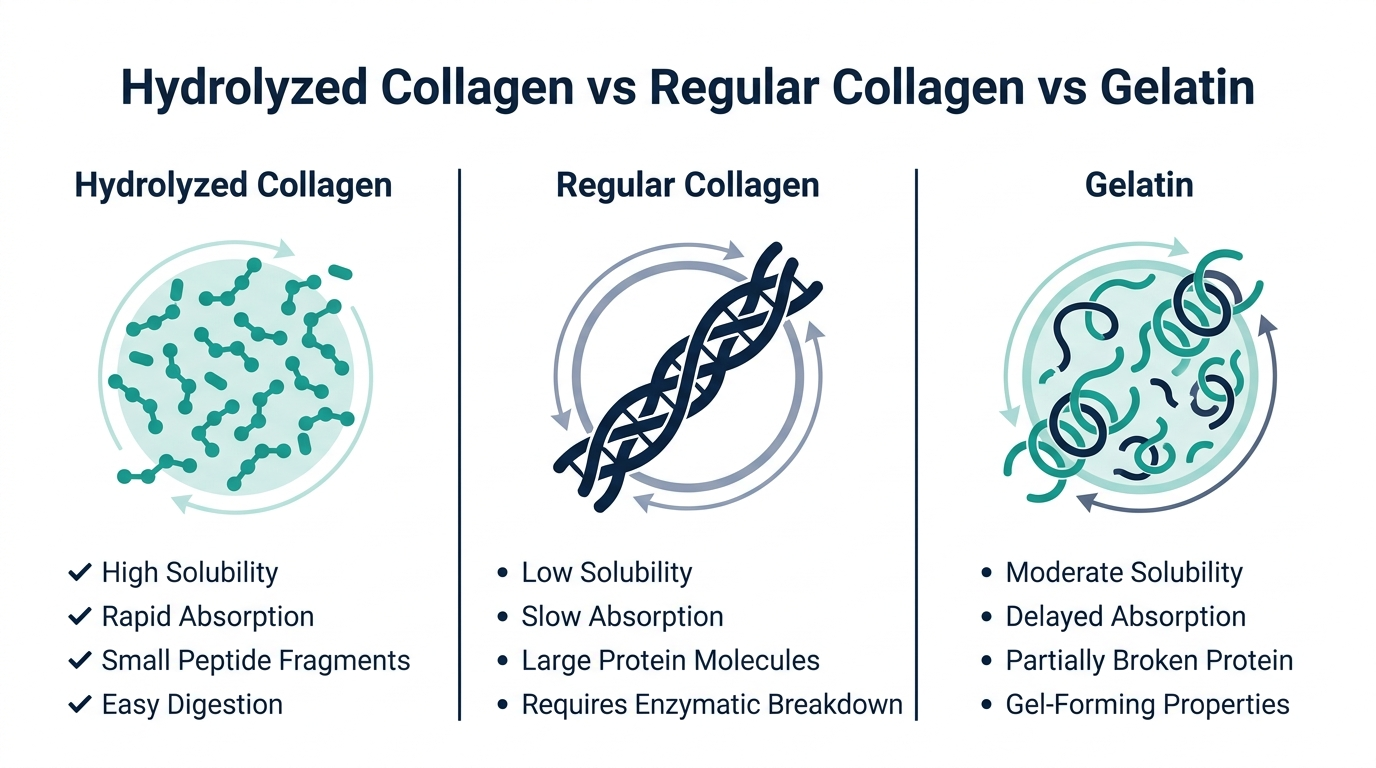
Unhydrolyzed gelatin (what you get when you slow-cook bone broth or make a traditional aspic) is collagen that has been partially denatured by heat but not fully broken into peptides. It forms a gel at room temperature precisely because the partially denatured chains can still cross-link. Hydrolyzed collagen has been taken further: broken into fragments small enough that it stays soluble in cold liquid. That solubility is an advantage, not a compromise.
The myth to bust here: “collagen supplements are destroyed by stomach acid and never actually get absorbed.” The research above refutes this directly. The 2024 Frontiers in Nutrition crossover trial measured specific collagen-derived dipeptides (Pro-Hyp, Hyp-Gly) in human blood at measurable concentrations within two hours of ingestion. The peptides survive digestion well enough to reach systemic circulation intact, which is why the clinical trials showing skin and joint outcomes are real and replicable.
Who should be cautious with hydrolyzed collagen?
Collagen peptides are among the safest supplement categories. The main practical cautions:
Allergens. Bovine collagen peptides are derived from cattle hide. People with a beef allergy should avoid them. Marine collagen is contraindicated for fish and shellfish allergies. Vital Proteins explicitly states the product is dairy-free and gluten-free, which covers the most common cross-contamination concerns.
Kidney load. Collagen peptides are high-protein. At 20 grams per serving, people with existing kidney disease or significantly impaired kidney function should check with a clinician before adding a concentrated protein load, as they would with any protein supplement.
Incomplete protein status. Collagen peptides lack tryptophan, making them nutritionally incomplete as a standalone protein source. At 20 grams per serving, you are getting 18 grams of protein but no tryptophan. Do not use it as a meal replacement or a primary protein source. It works as an addition to an otherwise complete diet, not a substitution for complete-protein foods.
Medication timing. The clinical studies on collagen for joint support generally placed dosing 30 to 60 minutes pre-exercise. For skin, the timing appears to be irrelevant to outcome. What does matter: vitamin C co-ingestion. Taking your collagen alongside vitamin C-rich food or a supplement is genuinely useful biochemistry, not marketing.
Turn what you just learned into action.
Superpower lets you test 100+ biomarkers from home, then re-check them over time so you can actually see progress, physician-reviewed at every step.
Frequently asked questions
Is Vital Proteins Collagen Peptides the same as hydrolyzed collagen?
Yes, exactly. “Collagen peptides” is the product name for hydrolyzed collagen. The hydrolysis process breaks native collagen’s large triple-helix protein (around 300,000 Daltons) into small peptide fragments (2,000 to 5,000 Daltons) that dissolve in liquid and absorb more readily in the gut. Every product called “collagen peptides” on the market is hydrolyzed by definition.
What collagen types does Vital Proteins Collagen Peptides contain?
The standard bovine unflavored product contains Types I and III collagen peptides from bovine hide. It does not contain Type II collagen, which comes from cartilage and is relevant for cartilage-specific applications. Vital Proteins sells Type II collagen as a separate product.
How many grams per day should I take?
Clinical studies showing skin benefits have used 2.5 to 10 grams per day for 8 to 12 weeks. Joint benefit trials typically use 10 to 15 grams per day paired with brief exercise. Vital Proteins recommends 20 grams (two scoops), which is within both effective ranges and provides 18 grams of protein at 70 calories.
Does Vital Proteins collagen peptides dissolve in cold water?
Yes. One of the practical advantages of hydrolyzed collagen over gelatin or unhydrolyzed collagen is cold solubility. The peptide fragments are small enough to stay dispersed in cold liquids. Stir well for 30 to 60 seconds or add to a blender drink; clumping when added to very cold liquid is normal and resolves with mixing.
Is the grass-fed bovine source meaningfully different from conventional?
For amino acid composition and peptide bioavailability: no. The glycine, proline, and hydroxyproline profile is determined by the tissue type (hide) and hydrolysis method, not the diet of the animal. Grass-fed sourcing may matter to you for environmental and ethical reasons, and there is a reasonable argument for fewer pesticide residues in the final product, but do not expect measurably different physiological outcomes from grass-fed versus conventional bovine collagen peptides.
Can I take collagen peptides without vitamin C?
You can, but you are working against yourself. Collagen synthesis requires vitamin C as a cofactor for the hydroxylation of proline and lysine residues. Supplementing collagen peptides while deficient in vitamin C is like supplying construction materials to a job site without the key tool to process them. The Vital Proteins Advanced formula includes ascorbic acid. If you use the plain unflavored version, make sure your diet includes adequate vitamin C (daily recommended intake is 65 to 90 mg, easily met by bell peppers, citrus, or kiwi).
Where can I buy Vital Proteins and what does it cost?
As of mid-2026, the 1.5 lb unflavored tub is available at Costco for $23.99 to $29.99 (34 servings, roughly $0.71 to $0.88 per serving), at Amazon and Target in multiple sizes, and directly from vitalproteins.com for $49.99 for the 20 oz Advanced formula with a 15% subscription discount.
Author: Vital Signs Today Editorial Team, [credential]”]. Educational content, not medical advice. Sources linked inline.
Primary sources:
– Vital Proteins product page: https://www.vitalproteins.com/products/collagen-peptides
– Frontiers in Nutrition 2024 crossover bioavailability study: https://pmc.ncbi.nlm.nih.gov/articles/PMC11325589/
– CollaSel Pro RCT 2024 (MDPI Journal of Clinical Medicine): https://www.mdpi.com/2077-0383/13/18/5370
– Dermatology Research and Practice 2024 12-week trial: https://onlinelibrary.wiley.com/doi/10.1155/2024/8752787
– PMC collagen supplementation systematic review: https://pmc.ncbi.nlm.nih.gov/articles/PMC8521576/
– npj Science of Food 2022 3-hydroxyproline tripeptide stability: https://www.nature.com/articles/s41538-022-00144-4
– Nutrients 2018 low-molecular-weight collagen skin RCT: https://www.ncbi.nlm.nih.gov/pmc/articles/PMC6073484/
– StatPearls collagen synthesis: https://www.ncbi.nlm.nih.gov/books/NBK507709/
– NSF certified product listings: https://info.nsf.org/Certified/Dietary/Listings.asp?Company=C0291958&Standard=173
– Costco product listing: https://www.costco.com/vital-proteins-collagen-peptides,-unflavored,-1.5-lbs.product.100736527.html
Hydrolyzed type I & III collagen peptides, third-party tested, unflavored.
Related reading
Vital Signs Today may earn a commission if you buy through links on this page. It does not affect our editorial assessments.