Quick answer: A paternity test compares DNA from a child and an alleged father to confirm or rule out a biological relationship. A standard cheek-swab test is over 99.9% accurate when it confirms paternity and 100% accurate when it excludes a man who is not the father. The split that actually matters is home versus legal: a $30 to $200 home kit answers the question for your own peace of mind, while a legal (chain-of-custody) test costing $300 to $600 is the only result a court, immigration office, or child support agency will accept. If you might ever need the answer for child support, custody, a birth certificate, or USCIS, pay for the legal version the first time, because a home result cannot be upgraded after the fact.
How a paternity test works
A paternity test reads specific markers in DNA, called short tandem repeats (STRs), and matches them between the child and the alleged father. A child inherits one copy of each marker from the mother and one from the biological father, so the lab is checking whether the father’s markers line up with the half the child did not get from mom. Most accredited labs analyze 16 to 24 markers, well beyond the minimum needed for a confident answer. The more markers a lab runs, the more decimal places of certainty it can report, which is why a serious lab will not stop at the bare legal minimum.
Collection is almost always a painless buccal swab, a soft cotton tip rubbed inside the cheek for about 15 seconds. No blood draw is needed for the standard test. Including the mother’s sample is optional but it sharpens the math, which is why many kits offer a free or low-cost spot for her swab. Here is the insider part most people do not realize: the alleged father’s sample is the one that carries the case. A test can return a valid result with just the child and the father, but skipping the father is not an option. If the alleged father is unavailable, deceased, or refuses to participate, the lab can sometimes work from a close relative such as his parents or another known child of his, but that is a harder, more expensive, and less definitive analysis.
What the lab actually does with the swabs
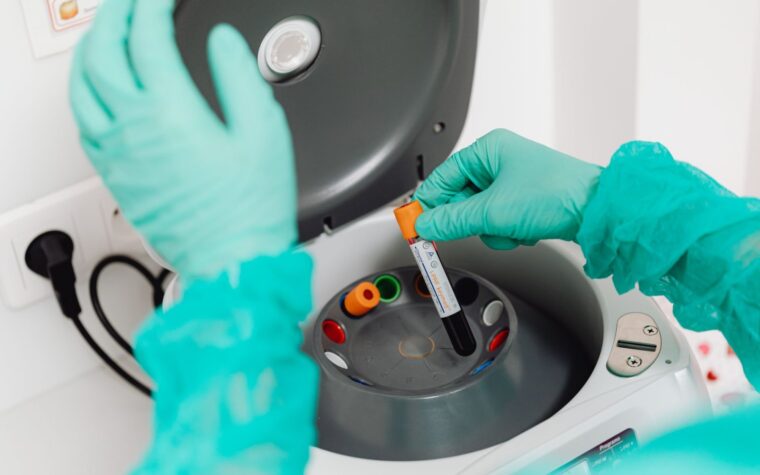
Once your samples reach the lab, the process is more mechanical than dramatic. A technician extracts DNA from the cheek cells on each swab, makes millions of copies of the target regions using a technique called PCR, then runs those copies through a genetic analyzer that measures the length of each STR marker. The output is a profile: a row of number pairs, one pair per marker. The analyst lines up the child’s profile next to the father’s and the mother’s if she was tested. At every marker, one of the child’s two numbers must trace back to the father. If even two or three markers cannot be explained by the tested man, he is excluded. If every marker is consistent, the lab calculates a combined paternity index and converts it to a probability. This is why a real result is not a yes or no scrawled on a page, it is a statistical statement backed by a marker-by-marker table you can actually see.
How to collect a clean sample at home
Most failed or delayed home tests fail at the swab, not the lab. A few habits prevent a do-over. Do not eat, drink, smoke, or chew gum for at least 30 minutes before swabbing, because food residue and bacteria can contaminate the cells. Rub the swab firmly against the inside of the cheek for the full time the instructions specify, usually 10 to 30 seconds, then air dry it rather than sealing it wet, since moisture breeds the mold that ruins a sample in transit. Label each person’s swabs immediately and never let them touch each other. For a baby or toddler, swab right before a feeding when the mouth is clean, and use a separate swab if the child has been breastfeeding recently so the mother’s cells are not picked up.
How accurate is a paternity test?
The simplest way to actually get this done
Superpower is a full-body lab membership that runs 100+ biomarkers, has each result reviewed by a doctor, and tracks your numbers year over year (about $199/year). It is what we point readers to when they would rather get one clean, complete draw than chase single tests one at a time. Here is superpower reviewed in full.
A DNA paternity test is the most definitive relationship test available. When a man is the biological father, accredited labs report a probability of paternity of 99.9% or higher. When he is not, the result is a clean 0%, an exclusion, which is effectively 100% certain. There is no realistic in-between. A correctly run paternity test does not return a maybe.
The number you see on the report is a probability rather than a flat 100% for a reason worth understanding. Labs cannot test every human on earth, so the statistic compares the tested man against the general population to express how overwhelmingly likely he is the father versus a random unrelated man. A 99.99% probability means the odds of a random man matching this well are roughly one in ten thousand. The rare situation that genuinely complicates a result is when the two possible fathers are close relatives, such as brothers or a father and son, because they share so much DNA. If that applies to you, tell the lab up front so they can test extra markers to tell the two candidates apart.
A handful of real-world things can muddy a result, and none of them are flaws in the science. Recent blood transfusions can introduce another person’s DNA into a sample, so wait a few weeks after a major transfusion or use a cheek swab rather than blood. A bone marrow transplant permanently changes the donor’s blood DNA, which is why marrow recipients should be swabbed from the cheek, not bled. Contaminated or degraded swabs, the kind that sat wet in a hot mailbox, can fail to produce a profile and force a recollection. And if the mother is not tested, an extremely rare genetic mutation in the child can occasionally look like a single mismatch, which is exactly why labs that see one or two mismatches retest rather than rush to exclude.
Home paternity test vs legal (court-admissible) test
This is the decision that trips people up, and it is worth getting right before you spend a dollar. A home paternity test and a legal one can use the exact same lab and the exact same science. The difference is not accuracy. It is documentation.
With a home kit, you swab everyone yourself and mail it in. Nobody verifies who actually provided the samples, so the result is for personal knowledge only. A court will not accept it, because there is no proof the swabs came from the people named on the form. The lab is essentially saying, these two profiles are related, but we cannot vouch for whose mouths they came from.
A legal test follows a chain of custody. A neutral third party, usually at a clinic or collection site, checks photo IDs, photographs or fingerprints the participants, takes the samples in front of witnesses, and documents every handoff so the result can be defended in court. That paper trail is the entire reason a legal test costs two to three times more. If there is any chance you will need the result for child support, custody, birth certificate changes, immigration (USCIS), Social Security survivor benefits, or inheritance, pay for the legal version the first time. Re-running it later is more expensive than starting right, and you will have lost weeks.
| Feature | Home test | Legal (chain-of-custody) test |
|---|---|---|
| Typical cost (2026) | $30 to $200 | $300 to $600 |
| Accuracy of the DNA match | 99.9%+ | 99.9%+ |
| Who collects samples | You, at home | Neutral collector, with ID check |
| Identity verified | No | Yes (photo ID, often fingerprint or photo) |
| Accepted by courts | No | Yes |
| Use for child support, custody, immigration | No | Yes |
| Turnaround | 1 to 5 business days after the lab receives it | 3 to 7 business days |
| AABB accreditation matters | Optional | Essentially required |
One practical tip: choose a lab accredited by the AABB (formerly the American Association of Blood Banks) for the legal test. AABB accreditation is the standard courts and government agencies look for, and a result from a non-accredited lab can be thrown out no matter how accurate the science was. Ask for the accreditation number before you pay, and confirm the collection site near you is part of that lab’s network, not a random clinic that mails to whoever is cheapest that month.
A worked example: the $130 mistake
Picture a father who buys a $30 kit off the pharmacy shelf, pays the $130 lab processing fee, swabs his son, and gets a clean 99.99% result. Two months later the mother files for child support and the court asks for a DNA test. His $160 home result is worthless in that room. He now pays $450 for a legal test, drives to a collection site, and waits another week. He spent $610 to answer a question that would have cost $450 if he had read the fine print once. The rule of thumb writes itself: if a lawyer, a judge, a caseworker, or a government form is anywhere in your future, skip the home kit entirely.
Can you do a paternity test before the baby is born?
Yes, and the safe option has gotten genuinely good. A non-invasive prenatal paternity test (NIPP) can be done as early as 7 to 9 weeks of pregnancy using a simple blood draw from the mother plus a cheek swab from the alleged father. The lab isolates fragments of the baby’s DNA that circulate in the mother’s bloodstream, called cell-free fetal DNA, and compares them to the father. There is no needle near the uterus and no risk to the pregnancy. This is the prenatal test almost everyone should be asking about.
The catch is price. Non-invasive prenatal paternity testing runs roughly $1,200 to $2,000 because the lab work is far more complex than a standard swab, and it is rarely covered by insurance. A legal, court-admissible version of the NIPP exists too, with a chain-of-custody blood draw, and it sits at the top of that range or just above it.
The older invasive methods, amniocentesis and chorionic villus sampling (CVS), can also establish paternity but carry a small miscarriage risk, so they are essentially never done for paternity alone anymore. They are ordered for medical reasons, usually to screen for chromosomal conditions, and paternity can be checked as a byproduct if the sample is already being taken. No reputable doctor will put a needle into a pregnancy purely to settle a paternity question when a blood-draw NIPP exists.
| Prenatal method | Earliest timing | Risk to pregnancy | Typical 2026 cost |
|---|---|---|---|
| Non-invasive prenatal (NIPP) | 7 to 9 weeks | None | $1,200 to $2,000 |
| Chorionic villus sampling (CVS) | 10 to 13 weeks | Small miscarriage risk | Done for medical reasons, not priced as a standalone paternity test |
| Amniocentesis | 15 weeks and later | Small miscarriage risk | Done for medical reasons, not priced as a standalone paternity test |
Where to get a paternity test, and who does it
You have more routes than most people assume. Here is the honest map.
- Pharmacies (CVS, Walgreens, Rite Aid): sell the collection kit for around $30, but read the fine print. The shelf price is just the kit. You mail the swabs to the lab and pay a separate processing fee, often $130 to $200, before you get a result.
- Online DNA labs: the most common route. You order online, swab at home, and mail it back. Best value for a personal-knowledge answer, and the all-in price is usually stated up front with no surprise lab fee.
- Local collection sites and clinics: where you go for a legal, chain-of-custody test. The lab schedules an appointment near you and the collector handles the ID check and paperwork.
- Quest Diagnostics and Labcorp: a frequent question is whether the big labs handle this. The answer is yes, but indirectly. Quest and Labcorp perform paternity DNA testing, almost always the legal version, and it is typically arranged through your attorney, a court order, or a child support agency rather than walking in off the street.
- Health departments: most county or central district health departments do not run paternity tests directly. What they often do is help establish legal paternity through child support enforcement programs, and that office then orders the DNA test through a contracted lab. So the health department is a doorway to a legal test, not the lab itself.
If you are weighing at-home DNA kits in general, our overview of DNA Tests Explained: Ancestry, Health, and Paternity lays out how paternity testing differs from ancestry and health kits, which use overlapping technology for very different questions.
Which route fits your situation
Match the test to the reason you are taking it, not to the lowest price tag.
- You just want to know, no legal stakes: an online home kit or a pharmacy kit is fine. Pick the online lab with the clearest all-in price.
- Child support, custody, or visitation: legal chain-of-custody test, AABB-accredited. In many cases the court or child support office will order it for you.
- Adding or correcting a name on a birth certificate: legal test, because vital records offices need verified results.
- Immigration (USCIS) petitions: a specific AABB-accredited test with results sent directly from the lab to the embassy or USCIS, never handed to you to forward. Confirm the lab does immigration testing before you book.
- Before birth: non-invasive prenatal (NIPP) for peace of mind, legal NIPP if it will be used in court.
- The alleged father is unavailable: ask about a grandparent (avuncular) or sibling test, and expect a less clear-cut result.
Does insurance cover a paternity test, and what does it cost?
In almost every case, no. Health insurance does not cover a paternity test, because insurers classify it as elective rather than medically necessary. That holds for private plans and for Medicaid in most situations. Do not count on filing it as a medical claim.
There are narrow exceptions. If a physician orders DNA testing as part of a medical workup, for example to investigate an inherited condition, the genetic component may be covered, though that is a different test from a relationship paternity test. And in child support cases, the state or court frequently pays for the legal DNA test up front, then may bill the costs to a party afterward, often to the man if paternity is confirmed. For everyone else, plan to pay out of pocket.
An HSA or FSA card will sometimes cover the cost when the test is tied to medical decision-making, so keep the receipt and check your plan rules before assuming. Here is the realistic 2026 price map.
| Test type | All-in cost (2026) | Court-admissible | Best for |
|---|---|---|---|
| Pharmacy kit + lab fee | $130 to $230 total | No | Personal knowledge, but check the hidden lab fee |
| Online home test | $30 to $200 | No | Cheapest clear answer for peace of mind |
| Legal (chain-of-custody) | $300 to $600 | Yes | Any court, agency, or government use |
| Non-invasive prenatal (NIPP) | $1,200 to $2,000 | Optional legal version available | Answering before birth with no risk |
A paternity test answers one narrow question and does not tell you anything about the child’s or father’s health. If you are already thinking about DNA, our guide to Genetic Health Testing: What It Can and Can’t Predict covers what those broader screens actually reveal, and the trends a yearly blood baseline can track are a separate matter that we cover in the Superpower blood test review.
Common mistakes people make with paternity tests
Most regret around paternity testing comes from a handful of avoidable errors, and they cost money, time, or both.
- Buying a home kit when the case will end up in court. This is the single most expensive mistake. A home result cannot be converted to a legal one. If a lawyer or agency is in the picture, start with the chain-of-custody test.
- Missing the hidden pharmacy lab fee. The $30 box on the shelf is not the price. The processing fee that follows can quadruple the cost, and an online lab is often cheaper all-in.
- Skipping AABB accreditation on a legal test. Courts and USCIS look for it. A cheaper non-accredited legal-style test can be rejected, leaving you to pay twice.
- Swabbing wrong. Eating right before, sealing a wet swab, or letting two people’s swabs touch can contaminate the sample and force a recollection. Follow the 30-minute clean-mouth rule.
- Choosing an invasive prenatal test for paternity alone. Amnio and CVS carry a real, if small, miscarriage risk. For paternity, the non-invasive blood-draw NIPP is the right call.
- Testing a brother and assuming it settles it. If two possible fathers are close relatives, a standard panel may not distinguish them. Tell the lab so they run extra markers.
- Trying to test a child without legal authority. If you do not have custody or the other parent’s consent, secretly testing a minor can create legal problems in some states. When in doubt, route it through the court.
Edge cases: minors, the uninsured, deceased fathers, and twins
Standard guidance covers the common path, but real life is messier. A few situations deserve their own answer.
Testing a minor child
For a legal test involving a minor, the parent or guardian with legal authority generally has to consent and be present at the collection. Some states have specific rules about whether one parent can test a child without the other’s knowledge, so a home kit used quietly may not hold up and can create friction later. If custody is contested, let the court order the test.
If you are uninsured or low income
Insurance status does not change much here, since paternity tests are rarely covered anyway. The real lever is the child support system: if you go through your state’s child support enforcement office, the legal DNA test is frequently arranged and paid for by the program, with costs recovered later. That is often the cheapest route to a court-valid result for someone paying out of pocket.
When the alleged father has died
Paternity can still be established after death. The clearest path is a sample the deceased left behind, such as a banked DNA sample, a medical specimen, or in some cases a stored swab. When no direct sample exists, labs run a relationship reconstruction using close relatives, his parents (a grandparentage test) or his other known children (a sibling test). For Social Security survivor benefits or inheritance, this needs to be the legal, accredited version.
Twins and the rare hard cases
Identical twins share essentially the same DNA, so a standard paternity test cannot tell which twin is the father. Distinguishing them requires specialized ultra-deep sequencing that very few labs offer and that costs far more. Fraternal twins are not a problem, since their DNA differs like any siblings. These are uncommon situations, but they are the ones where calling the lab before you order saves a wasted test.
FAQ
Does Quest Diagnostics do paternity testing?
Yes. Quest Diagnostics performs DNA paternity testing, typically the legal, court-admissible version. It is usually arranged through an attorney, a court order, or a child support agency rather than as a walk-in service. Labcorp operates the same way.
Are paternity tests covered by health insurance?
Generally no. Insurers treat paternity testing as elective, not medically necessary, so private plans and Medicaid usually will not pay. In child support cases the court or state may cover the legal test instead, and an HSA or FSA card sometimes works if the test is tied to a medical decision.
Does the health department do paternity tests?
Most health departments do not run the test themselves. They commonly help establish legal paternity through child support programs, which then order the DNA test through a contracted, accredited lab. So the health department is a referral point, not the lab.
Is a home result court-admissible?
No. A standard home or mail-in result is not court-admissible because there is no verified chain of custody. For court, you need a legal test where a neutral collector checks IDs and documents the samples, ideally from an AABB-accredited lab. A home result also cannot be upgraded later, so you would have to retest.
How long does a paternity test take?
Once the lab receives the samples, expect results in 1 to 5 business days for a home test and 3 to 7 for a legal one. Prenatal results usually take about a week to ten days. Rush processing is available at many labs for an extra fee.
Can you do a paternity test while pregnant?
Yes. The safe choice is a non-invasive prenatal paternity test (NIPP), a blood draw from the mother plus a swab from the father, available from about 7 to 9 weeks with no risk to the pregnancy. It costs roughly $1,200 to $2,000. Invasive methods like amniocentesis carry a small miscarriage risk and are not used for paternity alone.
How accurate is a home paternity test compared to a legal one?
The DNA match is equally accurate, over 99.9% for an inclusion and effectively 100% for an exclusion. The only difference is the chain of custody that verifies identity. A home test is just as scientifically reliable for your own knowledge, it simply cannot be used in court.
Can a paternity test be done without the mother?
Yes. A valid result can be produced from just the child and the alleged father. Adding the mother’s sample strengthens the statistics and helps resolve borderline cases, but it is optional. The one sample you cannot skip is the alleged father’s.
What if the alleged father will not take the test?
For a personal answer you are stuck, since the father’s DNA is required. In a legal case, a court can order him to test, and refusing can lead a judge to rule against him. If he is unavailable rather than unwilling, ask the lab about testing his parents or other children instead.
Can I test paternity with an ancestry DNA kit?
Not reliably. Ancestry kits use overlapping technology but are built to estimate ethnicity and find relatives, not to deliver a court-grade paternity probability, and their relationship estimates can be fuzzy. Use a dedicated paternity test for a definitive answer, and talk to a clinician or family law attorney before acting on any result that affects custody or support.