
Disclosure: Vital Signs Today may earn a commission if you buy through links on this page, at no extra cost to you. This does not influence our evidence-based assessments. We are not a medical provider; talk to a clinician before acting on test results.
Related: magnesium blood test: the full guide · What a high magnesium result means
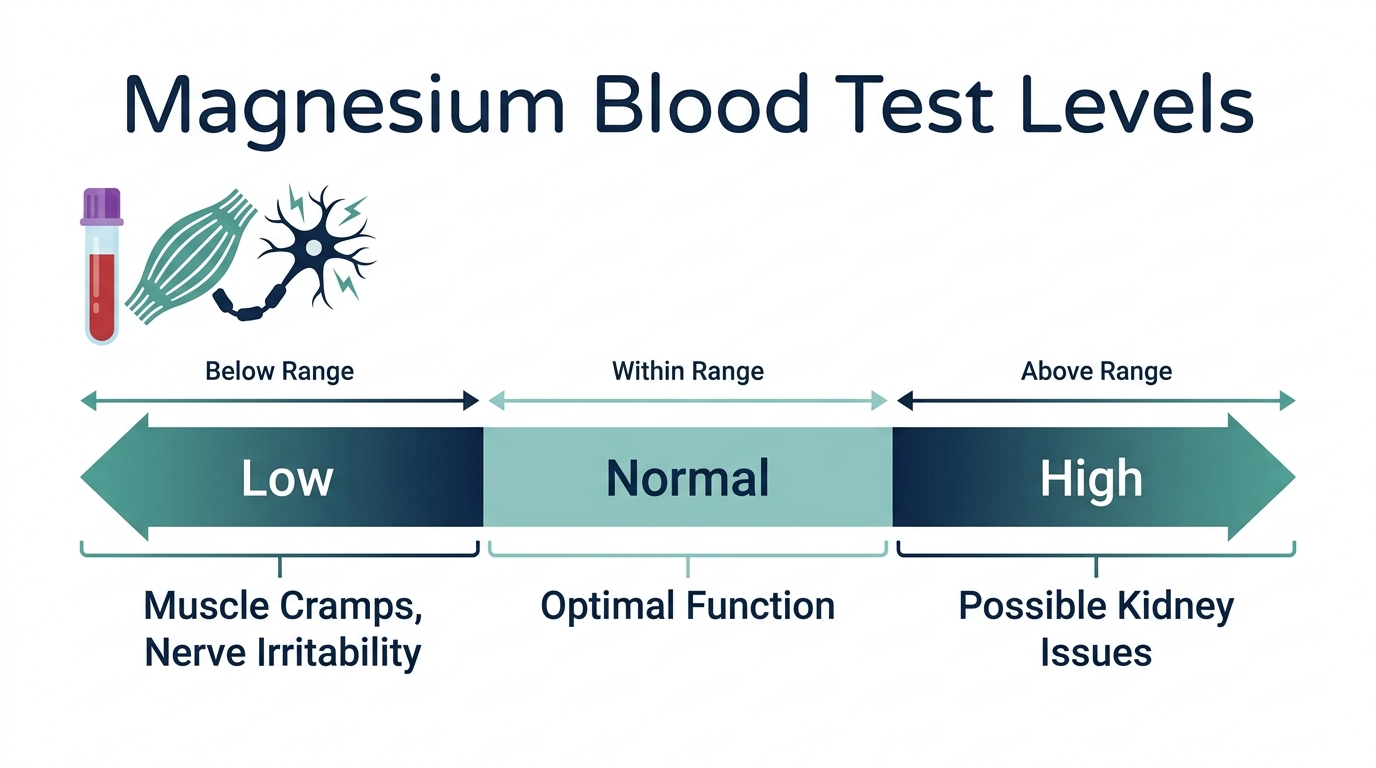
- A standard serum (blood) magnesium test is the test that shows low magnesium, and a result below about 1.7 mg/dL (0.70 mmol/L) is generally considered low, a condition called hypomagnesemia.
- Serum magnesium is the routine first-line test, but it can miss a true deficiency because only about 1 percent of the body’s magnesium is in the blood, so doctors sometimes add an RBC (red blood cell) magnesium test or a 24-hour urine magnesium test.
- Low magnesium is often silent until levels fall below roughly 1.2 mg/dL (0.5 mmol/L), when muscle cramps, tremors, and dangerous heart rhythm changes can begin.
If your lab report flags a low magnesium result, you are looking at a serum magnesium test, the most common way doctors measure this mineral. This article explains what the number means, why it dropped, when it is dangerous, and what to do next.

What does a low magnesium result mean, and what is the cutoff?
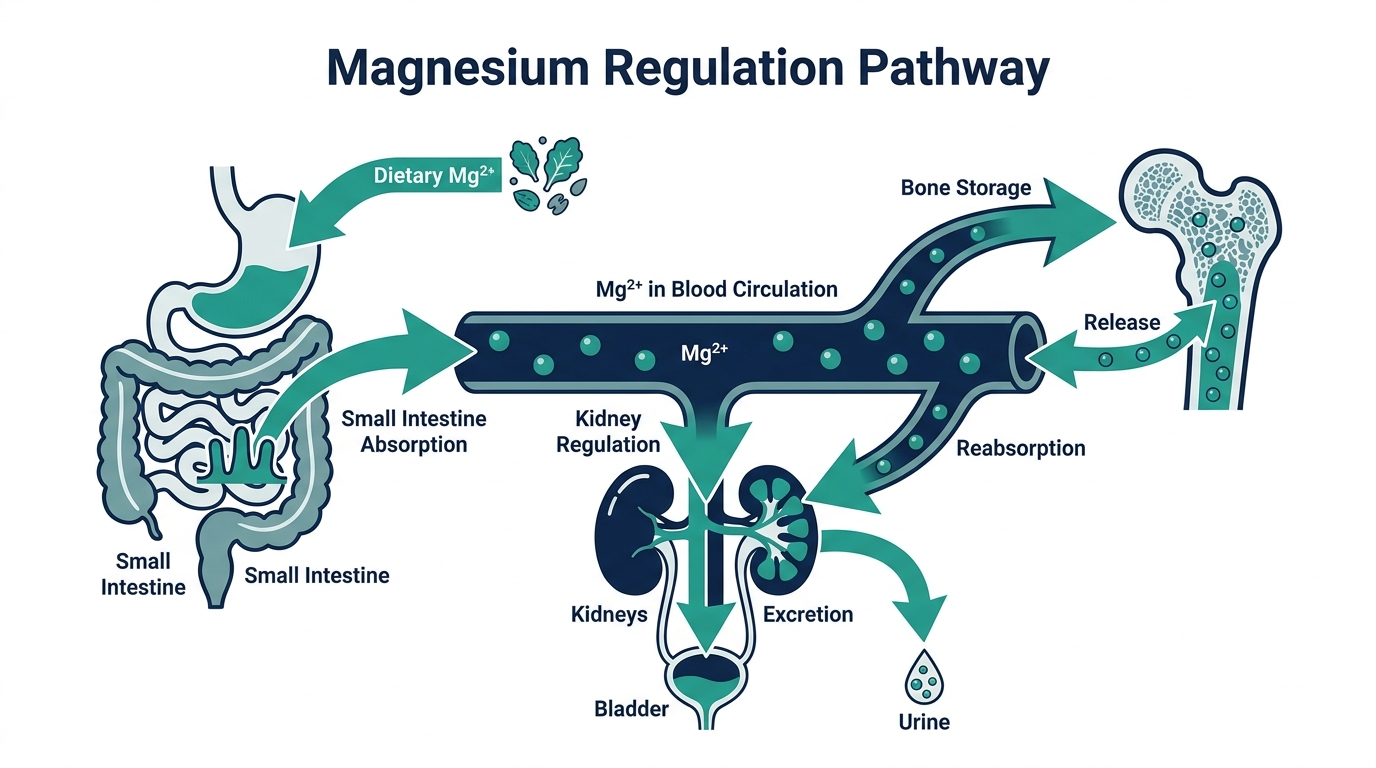
The test that shows low magnesium is the serum magnesium test, a simple blood draw. According to Cleveland Clinic, normal serum magnesium runs roughly 1.46 to 2.68 mg/dL, and most labs treat a value below about 1.7 mg/dL (0.70 mmol/L) as low, a state called hypomagnesemia. There is no single global cutoff, so some labs flag results under 1.8 mg/dL while StatPearls (NCBI) defines hypomagnesemia as less than 1.46 mg/dL.
Why the test can fool you: only about 1 percent of your body’s magnesium sits in the blood. The rest is stored in bone and inside cells. That means serum magnesium can read “normal” even when your tissues are depleted. When a doctor suspects a hidden shortfall, two backups help:
- RBC magnesium: measures magnesium inside red blood cells and reflects longer-term stores better than serum.
- 24-hour urine magnesium: shows whether your kidneys are wasting magnesium or holding onto it, which helps pinpoint the cause.

What causes low magnesium?
Most low magnesium comes from losing it faster than you take it in, usually through the gut or the kidneys. Cleveland Clinic and StatPearls list four common drivers: certain medications, alcohol use disorder, uncontrolled diabetes, and chronic digestive disease. Medication is one of the biggest culprits.
- Proton pump inhibitors (PPIs): long-term use of acid reducers such as omeprazole can lower magnesium, which is why the FDA added a warning to PPI labels.
- Diuretics: loop and thiazide water pills (furosemide, hydrochlorothiazide) flush magnesium out in urine.
- Alcohol use disorder: heavy drinking increases urinary loss and reduces intake.
- GI conditions: Crohn’s disease, celiac disease, chronic diarrhea, and bypass surgery cut absorption.
- Other: uncontrolled type 2 diabetes, some chemotherapy drugs (cisplatin), aminoglycoside antibiotics, and advanced age.
What are the symptoms, or is it silent?
Low magnesium is frequently silent. StatPearls notes the condition is typically asymptomatic until serum magnesium falls below about 1.2 mg/dL (0.5 mmol/L). That is why many people learn about it only from a routine blood panel rather than from how they feel.
When symptoms do appear, they tend to follow severity:
- Early or mild: muscle cramps, twitches, tremors, weakness, fatigue, and loss of appetite.
- Moderate: numbness or tingling, abnormal eye movements (nystagmus), irritability, and trouble sleeping.
- Severe: personality changes, tonic-clonic seizures, and abnormal heart rhythms (per Cleveland Clinic).
Low magnesium also tends to travel with low potassium and low calcium, because magnesium is needed to keep those minerals balanced. So a low magnesium result sometimes explains a stubborn low potassium that will not correct until the magnesium is fixed first.
When is low magnesium dangerous?
Low magnesium becomes dangerous mainly through the heart. Cleveland Clinic warns that dangerously low magnesium can cause fatal cardiac arrhythmias, and severe deficiency can trigger generalized tonic-clonic seizures. The risk climbs steeply once serum magnesium drops well below 1.2 mg/dL (0.5 mmol/L).
Red flags that need urgent care: a racing, fluttering, or irregular heartbeat, fainting, chest pain, confusion, severe muscle spasms (including spasms of the hands and feet), or a seizure. These can signal that magnesium has fallen low enough to disturb the heart’s electrical system. People taking heart medications such as digoxin are especially vulnerable, because low magnesium raises the chance of toxicity and arrhythmia.

What should you do next, and when should you see a doctor?
The first step is to talk with the clinician who ordered the test, because the right fix depends on how low you are and why. Mild, symptom-free low magnesium is often managed with diet and oral supplements, while severe or symptomatic cases may need intravenous (IV) magnesium given in a medical setting.
- Confirm and investigate: your doctor may repeat the serum test, add an RBC or urine magnesium test, and check potassium and calcium.
- Review your medications: ask whether a PPI, diuretic, or other drug is contributing.
- Magnesium-rich foods: leafy greens, nuts, seeds, legumes, whole grains, and dark chocolate.
- Supplements only with guidance: magnesium can interact with kidney function and other medicines, so do not self-dose high amounts.
See a doctor promptly if you have muscle cramps, weakness, or palpitations with a low result, and seek emergency care for chest pain, fainting, an irregular heartbeat, or a seizure.
The insider nuance: a normal serum result does not rule out deficiency
Here is the point clinicians wish more patients understood: a normal serum magnesium does not guarantee your body has enough. Because roughly 99 percent of magnesium lives in bone and cells, serum levels are kept stable until stores are quite depleted. So someone with persistent cramps, migraines, or a stubborn low potassium can still be magnesium deficient with a “normal” blood number.
This is why some clinicians order an RBC magnesium test or a magnesium loading (retention) test, where a measured dose is given and urine output checked, to expose a hidden shortfall. If your symptoms point to low magnesium but your serum value looks fine, it is reasonable to ask your doctor whether deeper testing makes sense.
The three magnesium tests, compared
When people ask “what blood test shows low magnesium,” the honest answer is that there is more than one, and they measure different things. Choosing the right one is the difference between confirming a deficiency and missing it. Here is how the main options compare.
| Test | What it measures | Best for | Limitation |
|---|---|---|---|
| Serum magnesium | Magnesium in the liquid part of the blood (about 1 percent of body stores) | Routine first-line screening; catching clearly low values | Can read normal while cells are depleted |
| RBC magnesium | Magnesium inside red blood cells | Suspected deficiency with a normal serum result | Less standardized; not offered by every lab |
| 24-hour urine magnesium | How much magnesium the kidneys excrete in a day | Sorting out whether the kidneys or the gut are the source of loss | Requires a full-day urine collection |
Want to check your magnesium?
Three ways to get it measured. Pick whichever fits you.
Affiliate links: we may earn a commission at no extra cost to you. A lab test does not replace a visit with your clinician.
In practice, serum magnesium is what nearly everyone gets first because it is cheap, fast, and part of most electrolyte workups when ordered. If your serum value looks fine but your symptoms strongly suggest deficiency, an RBC magnesium test is the common next step, and a 24-hour urine test helps a clinician figure out where the magnesium is being lost.

Why magnesium matters so much in the body
Magnesium is not a minor player. It acts as a cofactor in hundreds of enzyme reactions, which is why a shortfall can produce such a scattered set of symptoms. A few of its most important jobs:
- Energy production. The molecule that carries cellular energy, ATP, is biologically active bound to magnesium. Low magnesium can leave you feeling drained.
- Nerve and muscle signaling. Magnesium helps regulate the electrical gradients that let nerves fire and muscles relax. Too little, and muscles become twitchy and prone to cramp.
- Heart rhythm. Magnesium stabilizes the heart’s electrical activity, working closely with potassium. This is the pathway by which severe deficiency can trigger dangerous arrhythmias.
- Managing other minerals. Magnesium is required for the normal handling of potassium and calcium, which is why the three so often move together.
Because magnesium touches so many systems, its deficiency rarely announces itself with one clear symptom. It shows up as a vague mix of fatigue, cramps, poor sleep, or an electrolyte that stubbornly refuses to correct.
Why magnesium is often missing from your standard panel
A frequent surprise: magnesium is not included in a basic metabolic panel (BMP) and is usually not in a standard comprehensive metabolic panel (CMP) either. Those routine panels check sodium, potassium, chloride, bicarbonate, glucose, and kidney and (on a CMP) liver markers, but magnesium typically has to be ordered separately.
The practical consequence is that you can have “normal blood work” for years and never have your magnesium measured at all. If you take a PPI or a diuretic, drink heavily, have a chronic gut condition, or have symptoms that fit deficiency, it is reasonable to specifically ask your clinician to add a serum magnesium test. Broad-panel testing services that bundle magnesium into a large biomarker set are one way to make sure it is not quietly skipped.
Diet, absorption, and how much magnesium you actually need
Once a deficiency is found, the fix usually starts with intake, and it helps to know the targets. Per the National Institutes of Health Office of Dietary Supplements, the recommended dietary allowance for adults is roughly 400 to 420 mg per day for men and about 310 to 320 mg per day for women, with slightly higher needs in pregnancy.
Magnesium is abundant in whole, minimally processed foods, which is part of why modern diets heavy in refined products can run low:
- Leafy greens such as spinach and Swiss chard.
- Nuts and seeds, especially pumpkin seeds, almonds, and cashews.
- Legumes, including black beans and edamame.
- Whole grains like brown rice, oats, and whole wheat.
- Dark chocolate and avocado, in moderation.
Absorption also matters. The gut absorbs only a fraction of dietary magnesium, and that fraction falls when intake is high and rises when you are depleted. Certain conditions (chronic diarrhea, celiac disease, Crohn’s disease, or bowel surgery) blunt absorption, which is why a good diet alone sometimes is not enough and why the underlying cause has to be addressed.
A word on supplements and their forms
Supplements can help correct a mild deficiency, but they are not all interchangeable, and more is not better. A few practical points, to discuss with your clinician rather than act on alone:
- Forms differ in absorption and side effects. Magnesium oxide is cheap but poorly absorbed and more likely to cause loose stools; forms like magnesium citrate, glycinate, or malate are generally better tolerated. The best form depends on your goal and your gut.
- There is an upper limit for supplements. The tolerable upper intake level from supplements is about 350 mg per day for adults, separate from what you get in food. Excess supplemental magnesium commonly causes diarrhea and cramping.
- Kidney function is the key safety gate. Healthy kidneys excrete extra magnesium, but impaired kidneys can let it accumulate to dangerous levels. Anyone with reduced kidney function should only supplement under medical supervision.
- Watch interactions. Magnesium can affect the absorption of some antibiotics and other drugs, and timing may need to be separated. Your pharmacist can help.
Reading magnesium alongside potassium and calcium
Magnesium is rarely the whole story. Because it governs how the body handles potassium and calcium, a low magnesium is often the hidden reason another electrolyte will not correct. A classic scenario: a patient has a low potassium that keeps bouncing back down despite supplementation. Until the magnesium is replaced, the kidneys keep wasting potassium, so the potassium never stabilizes. Fix the magnesium, and the potassium finally holds.
The same triad logic applies to calcium. Severe magnesium deficiency can impair the parathyroid hormone signaling that keeps calcium normal, producing a low calcium that resists calcium supplements alone. This is why, when a clinician sees an unexplained or treatment-resistant low potassium or low calcium, checking magnesium is a standard move. If you are tracking these markers over time, reading them as a group rather than one at a time is what reveals these connections.
How to prepare for a magnesium test and what skews it
A serum magnesium test is straightforward, but a handful of factors can nudge the number or make a result harder to interpret. Knowing them helps you and your clinician avoid a false alarm or a missed problem.
- Fasting is usually not required for magnesium alone, but it may be drawn with other markers that do require fasting, so follow the instructions you are given.
- Recent supplements can transiently raise the reading. If you took a magnesium supplement or a magnesium-containing antacid or laxative shortly before the draw, the serum value can look higher than your true baseline. Tell the lab or clinician what you have taken.
- Hemolysis can distort results. If red blood cells break during collection or handling, magnesium (which is concentrated inside cells) can leak into the serum and falsely raise the value. A repeat draw fixes this.
- Kidney function shapes interpretation. Because the kidneys control magnesium excretion, reduced kidney function changes what a given value means. Magnesium is almost always read alongside creatinine for this reason.
- Timing relative to IV fluids or recent illness. Acute illness, IV fluids, or a recent GI upset can shift the number, so a single value during an acute event may not reflect your steady state.
As with most electrolytes, a surprising result is often repeated before any conclusion is drawn. If your value is borderline and you feel fine, a recheck under stable conditions is a reasonable and common next step.
Who is most at risk, and when to ask for the test
Because magnesium is skipped on routine panels, being your own advocate matters. You are at elevated risk, and worth testing, if you fall into one of these groups:
- Long-term PPI users. Chronic acid reducers such as omeprazole are linked to low magnesium, enough that the FDA added a label warning. If you have taken one for a year or more, ask.
- People on diuretics. Loop and thiazide water pills increase urinary magnesium loss, so monitoring is sensible.
- Heavy alcohol use. Alcohol raises urinary loss and often accompanies poor intake, a common cause of deficiency.
- Chronic gut conditions. Crohn’s disease, celiac disease, chronic diarrhea, and bariatric surgery all reduce absorption.
- Poorly controlled type 2 diabetes. High blood sugar increases urinary magnesium loss.
- Older adults. Intake tends to fall and medication use rises with age, a combination that favors deficiency.
If you recognize yourself here and you also have symptoms such as cramps, palpitations, or a potassium that will not stay put, that is a clear reason to request a serum magnesium test, and to ask about an RBC magnesium if the serum comes back normal but your symptoms persist.
How low magnesium is corrected, and why it takes time
Finding a low magnesium is only half the job. Refilling it is a slower process than most people expect, and understanding why prevents both impatience and overcorrection. The reason is simple: because the vast majority of magnesium sits inside cells and bone rather than in the blood, restoring true body stores means feeding those reservoirs, not just nudging the serum number.
- Oral repletion for mild cases. When a deficiency is mild and you have no symptoms, correction is usually gradual, through diet and oral supplements taken over weeks. Divided doses through the day are often better tolerated than one large dose, since a big single dose tends to cause loose stools before it is fully absorbed.
- IV magnesium for severe or symptomatic cases. When levels are dangerously low or the heart rhythm is at risk, magnesium is given intravenously in a medical setting. Even then, a striking feature is that a good chunk of an IV dose is excreted in the urine rather than retained, which is exactly why repletion is spread out and rechecked rather than done all at once.
- Fixing the cause, not just the number. If a PPI, diuretic, ongoing diarrhea, or heavy alcohol use is draining magnesium, supplements alone become a leaky bucket. Lasting correction means addressing the source of loss alongside replacement.
The practical takeaway is patience under guidance. A serum value can climb back into range faster than the tissues actually refill, so clinicians often continue replacement and monitoring for a while after the blood number looks fine. Chasing a quick fix with high-dose supplements on your own risks diarrhea, cramping, and, in anyone with reduced kidney function, a dangerous buildup.
Questions patients often ask about low magnesium
Beyond the lab number, a few real-world questions come up again and again, and they deserve honest, grounded answers rather than hype.
- Could low magnesium be behind my night cramps? Muscle cramps and twitches are among the recognized symptoms of a genuine deficiency, so it is a fair thing to check if you also fit a risk group. That said, night cramps have many causes, and a normal magnesium means the cramps are likely coming from something else, so testing beats assuming.
- Does low magnesium affect sleep and mood? Trouble sleeping and irritability are listed among the symptoms that can appear as magnesium falls. It is reasonable to have levels checked if these track with other risk factors, while remembering that sleep and mood are influenced by many things at once.
- Is a headache or migraine a sign? Some people with migraines are interested in magnesium, and headaches can accompany deficiency, but this is a discussion to have with a clinician rather than a reason to self-prescribe high doses.
- Can I just take a supplement to be safe? Not without thought. Supplements have an upper limit, interact with some medicines, and are risky for anyone with impaired kidneys, so the right move is to test when there is a real reason and then treat any true deficiency under guidance.
The thread running through all of these is the same: symptoms that fit deficiency are a reason to test, not a reason to assume, because magnesium is only one of several possible explanations and the safe path is confirmation before correction.
Frequently asked questions
What blood test shows low magnesium?
The serum magnesium test, a routine blood draw, is the standard test that shows low magnesium. A result below about 1.7 mg/dL (0.70 mmol/L) is generally considered low. An RBC magnesium test can detect longer-term deficiency that serum may miss.
Is magnesium included in a standard blood panel?
Not always. Magnesium is not part of a basic metabolic panel and is often ordered separately or as part of a comprehensive electrolyte workup. If you want it checked, ask your clinician to add a serum magnesium test specifically.
What is a dangerously low magnesium level?
Symptoms usually start below about 1.2 mg/dL (0.5 mmol/L), per StatPearls. At severely low levels, magnesium can cause seizures and fatal heart rhythm problems, so values this low are treated urgently, often with intravenous magnesium.
Why is my magnesium normal but I still have symptoms?
About 99 percent of body magnesium is stored in bone and cells, so serum can read normal while tissue stores are low. An RBC magnesium or a magnesium retention test can reveal a hidden deficiency that a standard blood test misses.
Can low magnesium cause low potassium?
Yes. Magnesium helps the kidneys retain potassium, so low magnesium often drives low potassium that will not correct until the magnesium is replaced first. This is why doctors frequently check both minerals together.
Sources
- Cleveland Clinic, Hypomagnesemia (Low Magnesium)
- StatPearls (NCBI Bookshelf), Hypomagnesemia
- Merck Manual Professional Edition, Hypomagnesemia
- MedlinePlus, Magnesium Blood Test
This article is for general educational purposes and is not medical advice. It cannot diagnose or treat you and does not replace your clinician. Always discuss your lab results and any health decisions with a qualified healthcare professional.
Related: compare the best at-home biomarker and blood tests.
Vital Signs Today may earn a commission if you buy through links on this page. It does not affect our editorial assessments.