
- To increase a low white blood cell count, eat enough protein and nutrients your marrow needs to build cells (vitamin B12, folate, copper, and zinc), treat the cause such as an infection or drug side effect, and ask your clinician whether a medicine like G-CSF (filgrastim) is needed.
- A white blood cell count below 4,000 cells per microliter is considered low (leukopenia), per Cleveland Clinic, and the most common cause is too few neutrophils.
- Diet and lifestyle help when a deficiency is the cause, but they will not quickly fix a count lowered by chemotherapy or a marrow disorder, where the prescription drug G-CSF can raise neutrophils within days to about a week.
If a lab report flagged your white blood cell (WBC) count as low, the natural next question is how to bring it back up. The honest answer is that “how to increase WBC” depends entirely on why it dropped. Fixing a vitamin deficiency looks very different from recovering after chemotherapy. This guide walks through what counts as low, the evidence-based ways to raise your count, and how long it realistically takes.
Part of our Complete Blood Count guide.
If your white blood cell count is low, do you know what’s actually behind it? One at-home Superpower draw checks 100+ biomarkers, physician-reviewed.
What counts as a low WBC?
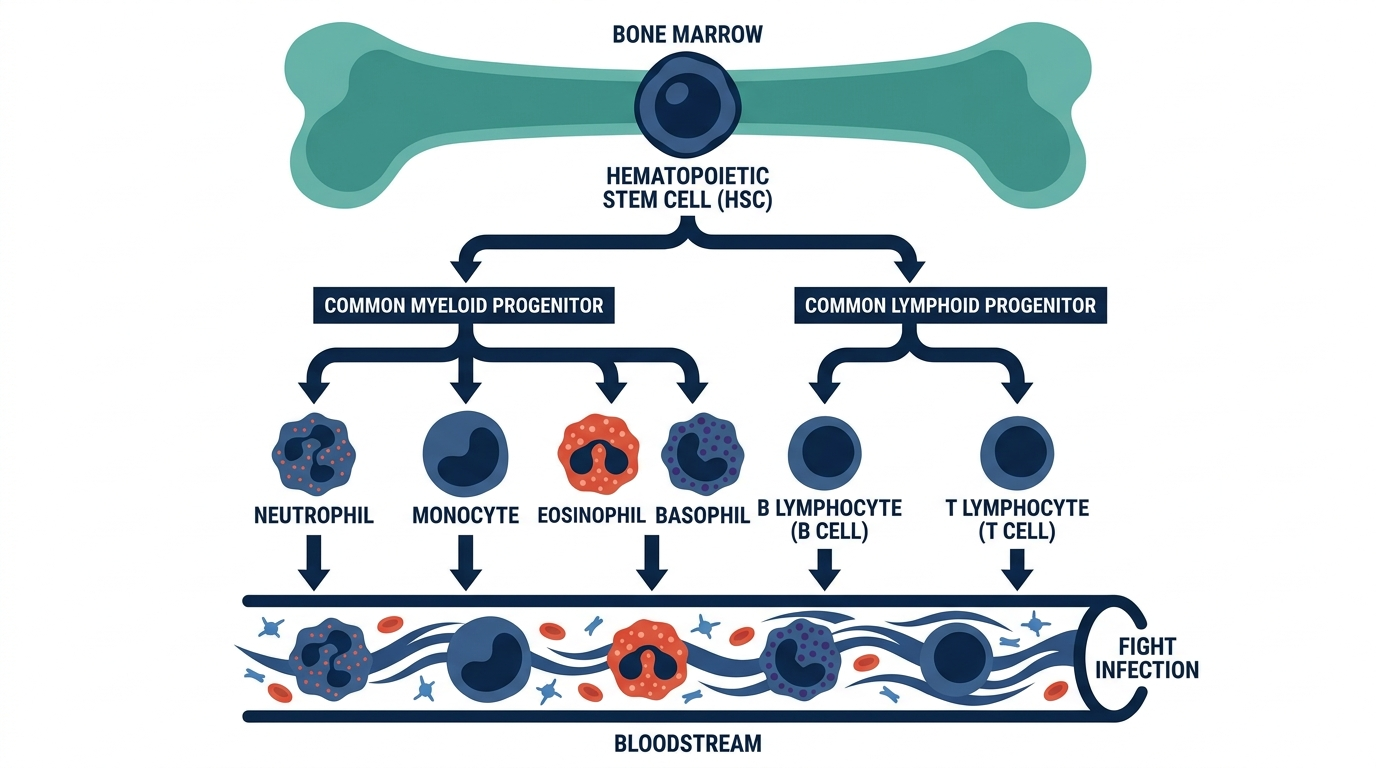
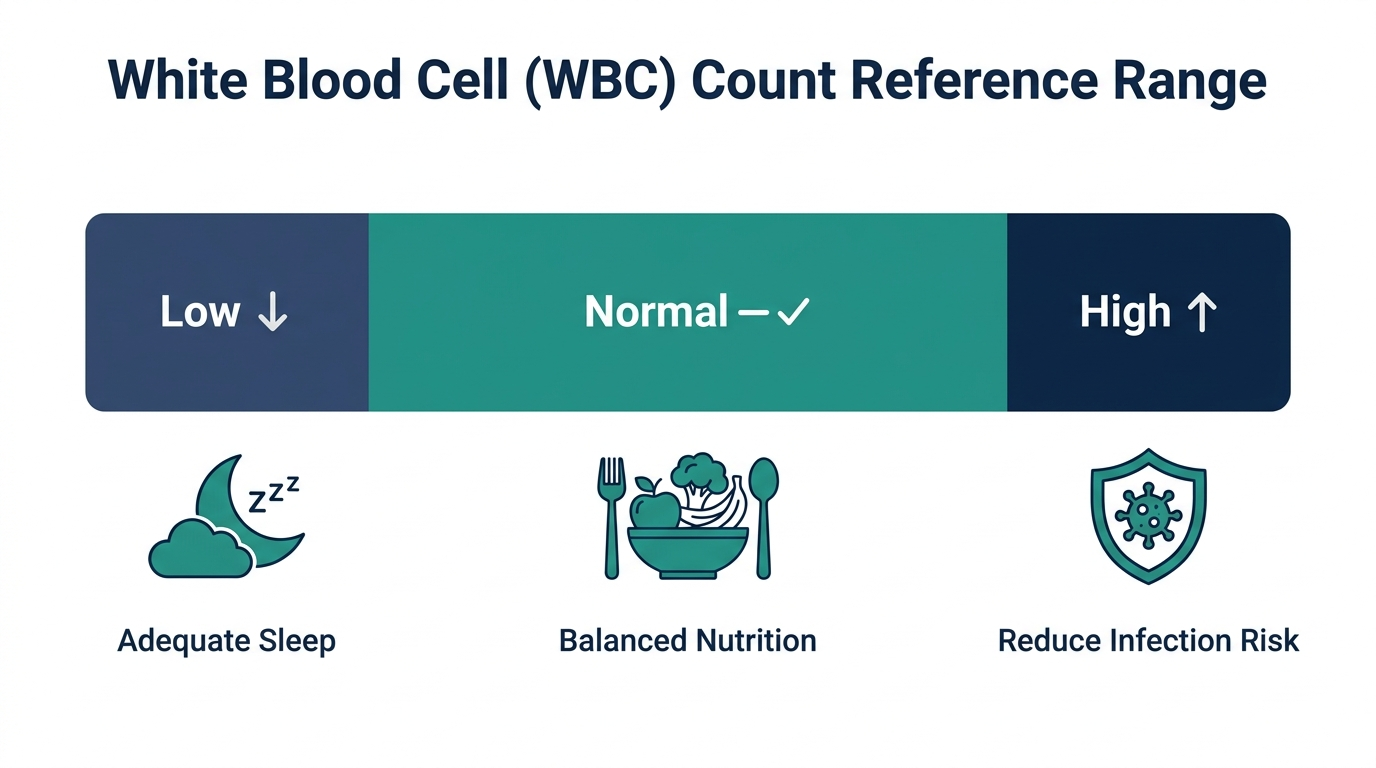
A white blood cell count below 4,000 cells per microliter (cells/mcL) of blood is considered low, a condition called leukopenia, according to Cleveland Clinic. A typical normal range runs from about 4,000 to 11,000 cells/mcL, though labs vary slightly. Most cases of leukopenia come down to too few neutrophils, the white cells that fight bacteria.
Because neutrophils matter most for infection risk, clinicians often look at the absolute neutrophil count (ANC) rather than the total WBC. Cleveland Clinic grades neutropenia by severity: mild is 1,000 to 1,500 neutrophils/mcL, moderate is 500 to 1,000/mcL, and severe is below 500/mcL. The lower the ANC, the higher the infection risk, which is why severe neutropenia is treated urgently.
The five white cell types, and why the total can mislead
The total WBC is a sum of five different cells, and which one is low changes both the meaning and the plan. This is why your report includes a differential that breaks the total into its parts.
- Neutrophils: the first responders against bacteria and the largest fraction of the total. Low neutrophils, neutropenia, is the main driver of a low WBC and the main reason infection risk rises.
- Lymphocytes: the B and T cells behind viral defense and long-term immune memory. Low lymphocytes, lymphopenia, points toward viral infection, certain medications like steroids, or immune conditions.
- Monocytes: the cleanup and signaling cells that mature into macrophages in tissue.
- Eosinophils and basophils: smaller populations tied to allergy and parasite response. They rarely drive a low total on their own.
A total WBC of 3,800 with normal neutrophils is a very different situation from 3,800 with an ANC of 700. The first is often benign, the second needs attention. Always read the differential, not just the headline number.
When a low count is normal for you
Not every low WBC is a problem to fix. Some healthy people, particularly those of African, Middle Eastern, and West Indian descent, carry a genetically lower baseline neutrophil count, a well-recognized and harmless pattern often called benign ethnic neutropenia. These individuals are not at higher infection risk and need no treatment, only recognition so they are not worked up unnecessarily. There is also a laboratory quirk called margination, where neutrophils temporarily line the walls of blood vessels rather than circulating freely, which can make a single draw read low without any true shortage. This is one reason a mildly low result is often repeated before anyone acts on it.
What causes a low WBC?
The simplest way to actually get this done
Superpower is a full-body lab membership that runs 100+ biomarkers, has each result reviewed by a doctor, and tracks your numbers year over year (about $199/year). It is what we point readers to when they would rather get one clean, complete draw than chase single tests one at a time. Here is superpower reviewed in full.
A low white cell count is a downstream signal, and the fix follows the cause. The marrow can be making too few cells, or cells can be destroyed or used up faster than they are replaced. The common categories are worth knowing because they explain why diet helps in one case and does nothing in another.
- Infections: many viral illnesses temporarily suppress the count, and overwhelming bacterial infection, sepsis, can consume neutrophils faster than the marrow replaces them. Viral causes are among the most common reasons for a transient low reading.
- Medications: a long list of drugs can lower the count, including chemotherapy, some antibiotics, antithyroid drugs, certain seizure and psychiatric medicines, and immunosuppressants. Drug-induced leukopenia is one of the most common non-cancer causes.
- Autoimmune disease: conditions such as lupus and rheumatoid arthritis can attack white cells or suppress their production.
- Bone marrow problems: leukemia, myelodysplastic syndromes, aplastic anemia, and marrow infiltration reduce the factory’s output and usually lower more than one cell line.
- Nutritional deficiency: low vitamin B12, folate, or copper starves the marrow of what it needs to build cells.
- Enlarged spleen and congenital causes: an overactive spleen traps cells, and some people are born with lower baseline counts.
The practical takeaway is that the same number can be trivial or serious depending on the reason behind it, which is why a diagnosis, not a supplement, is the correct first step.
Why raise it?
You raise a low WBC count to restore your defense against infection, because white blood cells are the core of your immune system. When neutrophils fall below 500 cells/mcL (severe neutropenia, per Cleveland Clinic), even minor exposures can turn into serious, fast-moving infections, sometimes with no obvious symptoms beyond a fever.
That said, the number itself is not the goal. A mildly low count in someone who feels well and has no infections is very different from a count dropping because of chemotherapy or a marrow disease. The aim is not simply a higher printout; it is a working immune system. That is why finding and treating the cause matters more than chasing a target figure, and why “boosting” a normal count provides no extra protection.
Evidence-based ways to raise WBC
The most effective way to raise a low WBC count is to treat the underlying cause, then support the marrow with adequate nutrition; when a count is dangerously low or caused by chemotherapy, a clinician may prescribe G-CSF (filgrastim), which can raise neutrophils within days, per Cleveland Clinic. The approaches below are listed roughly from gentle support to medical treatment.
Diet
Your bone marrow builds white blood cells from nutrients, so deficiencies can lower the count. Key building blocks are vitamin B12, folate, copper, and zinc; a copper deficiency in particular is a known cause of leukopenia, per Medical News Today. Practical sources:
- Protein: fish, eggs, poultry, beans, and Greek yogurt supply the raw material for new cells.
- Vitamin B12: meat, fish, eggs, and dairy.
- Folate: leafy greens, legumes, and fortified grains.
- Zinc and copper: shellfish, nuts, seeds, and legumes.
If you have neutropenia from cancer treatment, ask your team about food-safety steps, since raw or undercooked foods carry extra infection risk when defenses are down. A neutropenic diet in practice means avoiding raw or undercooked meat, eggs, and seafood, washing produce carefully or choosing cooked options, skipping unpasteurized dairy and juices, and being cautious with buffets and salad bars, where food sits out. These steps matter most when the ANC is very low, and your care team will tell you when they apply.
One point of realism is worth stating plainly. If your count dropped because of chemotherapy or a marrow disorder, no combination of foods will meaningfully raise it, and treating diet as the answer can delay the care that actually works. Nutrition is a genuine lever when a deficiency is the cause, and a supporting role, not the treatment, when it is not.
Supplements
Supplements help only when you are actually low in a nutrient; correcting a documented B12, folate, copper, or zinc deficiency can restore production, but extra pills do not push a normal count higher. Talk to your clinician before starting anything, because some supplements interfere with cancer treatments and high-dose zinc can itself cause copper deficiency, per Medical News Today. A blood test to confirm the deficiency comes first.
Lifestyle
Lifestyle steps protect the white cells you have and remove things that suppress them. Stop or replace medicines that lower your count only under medical guidance, since drugs are a common cause of leukopenia. Get enough sleep, manage chronic stress, limit alcohol, and avoid tobacco. These measures support immune function broadly, though they will not override a marrow problem or a strong suppressive drug.
Medical treatment
When the count is severely low or driven by chemotherapy, the proven treatment is a granulocyte colony-stimulating factor, most often G-CSF (filgrastim, Neupogen). It signals the marrow to produce and release more neutrophils and is used to prevent febrile neutropenia after chemotherapy, per StatPearls (NCBI). Treating an underlying infection, autoimmune disease, or marrow disorder is equally central, which is why a diagnosis guides everything.
How long does it take?
It depends on the cause and the method. With G-CSF, neutrophil counts often begin rising within a day or two and reach a useful level within several days to about a week, per StatPearls (NCBI). Without that boost, the marrow naturally takes longer: it requires roughly 10 to 15 days for stem cells to mature into circulating neutrophils, per PMC (Neutrophil kinetics in health and disease).
Correcting a nutritional deficiency works on a slower timeline still, often weeks to a few months, because the body has to rebuild stores and then ramp up production. After chemotherapy, counts usually recover on their own over one to several weeks as the marrow rebounds, with G-CSF used to shorten that gap when needed. The key point is that there is no overnight fix.
What can throw off the reading
Before you act on a single low number, know what can move it. A recent viral illness can suppress the count for days to a couple of weeks even after you feel fine, so a result drawn on the tail end of a cold may recover on its own. Timing and the margination effect described earlier can nudge a value low without a true shortage. New or recently changed medications are a frequent and reversible cause, which is why bringing your full medication and supplement list to the appointment often solves the puzzle faster than any test. Because of all this, a mildly low WBC in someone who feels well is usually rechecked before it is worked up, and the trend across two draws tells you more than one isolated value.
A realistic scenario
Take a 45-year-old who feels well but gets a routine physical showing a WBC of 3,600 with an ANC of 1,300. No fevers, no infections, no new medications. Rather than reaching for supplements, the clinician repeats the count a few weeks later, reviews the differential, and confirms the neutrophils are only mildly low and stable. Given a family background consistent with benign ethnic neutropenia and no symptoms, the plan is monitoring, not treatment. Contrast that with a chemotherapy patient whose ANC falls below 500 and who spikes a fever: that is a same-day emergency treated with antibiotics and, often, G-CSF. Same lab, opposite response, because the cause is what drives the plan.
When to see a doctor
See a doctor promptly if a blood test shows a low WBC count, and seek care urgently if you have neutropenia plus a fever of 100.4 degrees Fahrenheit (38 degrees Celsius) or higher, which can signal a serious infection, per Cleveland Clinic. With severe neutropenia, fever is a medical emergency even if you feel otherwise well.
Also check in if you get frequent or hard-to-shake infections, mouth or skin sores that will not heal, or unexplained fatigue. Do not try to self-treat a low count with supplements before a clinician identifies the cause, because the right treatment for a deficiency is different from the right treatment for a drug side effect or a marrow condition. A simple repeat complete blood count is usually the starting point.
Don’t just read about your health, track it.
A single result is a snapshot. Superpower re-tests 100+ markers over time so you can watch them move as you change sleep, food, and training.
Frequently asked questions
What foods increase white blood cells the fastest?
No food works fast. Foods help only by supplying nutrients the marrow needs, mainly protein, vitamin B12, folate, copper, and zinc, found in fish, eggs, leafy greens, legumes, shellfish, and seeds. Correcting a true deficiency can take weeks to raise the count.
Can low white blood cells go back to normal on their own?
Often yes. If the cause is a passing viral infection or a temporary medicine, counts usually recover once it resolves. After chemotherapy, the marrow typically rebounds over one to several weeks. A count from a marrow disorder needs specific treatment to improve.
What is the fastest way to raise white blood cells?
The fastest proven method is G-CSF (filgrastim), a prescription drug that can start raising neutrophils within a day or two, per StatPearls. It is used mainly for chemotherapy patients or severe neutropenia, not for mildly low counts that need a diagnosis first.
Does vitamin C raise white blood cell count?
Vitamin C supports immune function but is not a proven fix for leukopenia. The nutrients most directly tied to making white cells are vitamin B12, folate, copper, and zinc. Correcting a documented deficiency in those is what restores production.
Is a low white blood cell count dangerous?
It can be, depending on severity. Mildly low counts often cause no problems, but severe neutropenia (below 500 neutrophils/mcL, per Cleveland Clinic) sharply raises infection risk. A fever with severe neutropenia is a medical emergency requiring immediate care.
Can exercise or stress raise my white blood cell count?
Intense exercise and acute stress can transiently push the count up by shifting cells that were lined along vessel walls back into circulation, but this is a short-lived redistribution, not a real increase in production. It does not fix a genuinely low count caused by a deficiency, drug, or marrow problem, and it can briefly complicate the interpretation of a test drawn right after a hard workout.
Does a low WBC mean I have cancer?
Usually not. Far more low counts come from viral infections, medications, autoimmune conditions, and nutritional deficiencies than from cancer. Marrow cancers like leukemia can lower the count, which is exactly why a persistent or unexplained low result, especially with more than one cell line affected, deserves a proper workup rather than a guess in either direction.
Should I stop my medication if it is lowering my count?
Never stop a prescribed medication on your own. Many drugs that lower the WBC are still worth taking, and the decision to continue, adjust, or switch belongs to the clinician who can weigh the benefit against the drop. Bring your full list of medicines and supplements to the visit so the likely culprit can be identified safely.
Sources
- Cleveland Clinic, Low White Blood Cell Count (Leukopenia)
- Cleveland Clinic, Neutropenia
- Cleveland Clinic, G-CSF Treatment
- StatPearls (NCBI), Filgrastim
- PMC, Neutrophil kinetics in health and disease
- Medical News Today, How to boost white blood cell count
- MedlinePlus, White Blood Count (WBC) Test
This article is for general educational purposes and is not medical advice. It cannot diagnose or treat you and does not replace your clinician. Always discuss your lab results and any health decisions with a qualified healthcare professional.
Related: best GLP-1 telehealth providers for 2026.
Vital Signs Today may earn a commission if you buy through links on this page. It does not affect our editorial assessments.