
Disclosure: Vital Signs Today may earn a commission if you buy through links on this page, at no extra cost to you. This does not influence our evidence-based assessments. We are not a medical provider; talk to a clinician before acting on test results.
You scanned your complete blood count, saw most numbers sitting comfortably in range, and then your eye snagged on the monocyte line. It was low. Aren’t more immune cells supposed to be the good thing? So why is having fewer of these a problem, and is it one at all?
Here is the honest framing most explainers skip. A low monocyte count, on its own, is one of the least alarming abnormalities on a CBC most of the time. But it is also a number that, in the rare wrong context, points at something serious. Knowing which situation you are in is the whole game.
Part of our Complete Blood Count guide.

What does low monocytes in blood test mean?
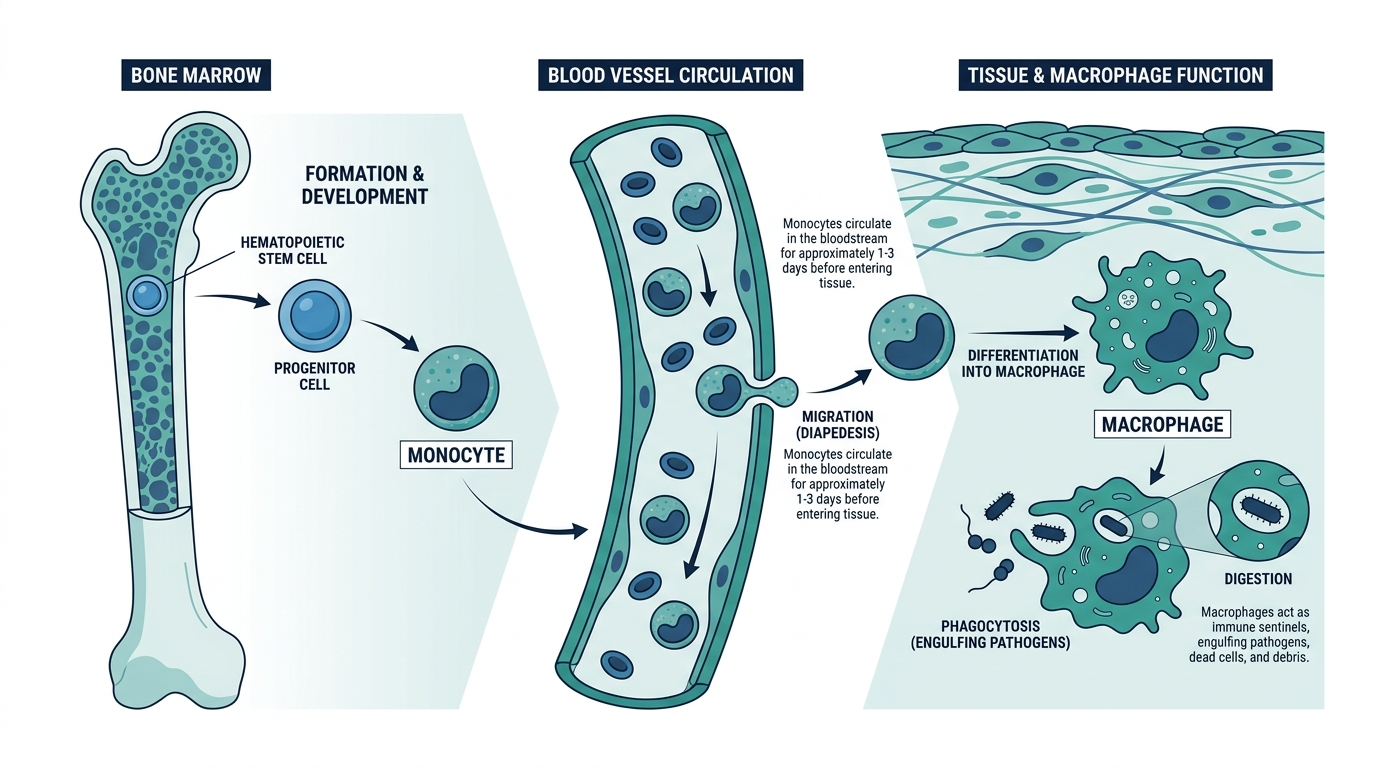
Monocytes are a type of white blood cell. They patrol your bloodstream, swallow bacteria and viruses, clear out dead and damaged cells, and help coordinate the rest of your immune response (Cleveland Clinic). A low monocyte count, called monocytopenia, simply means there are fewer of these cells circulating than expected.
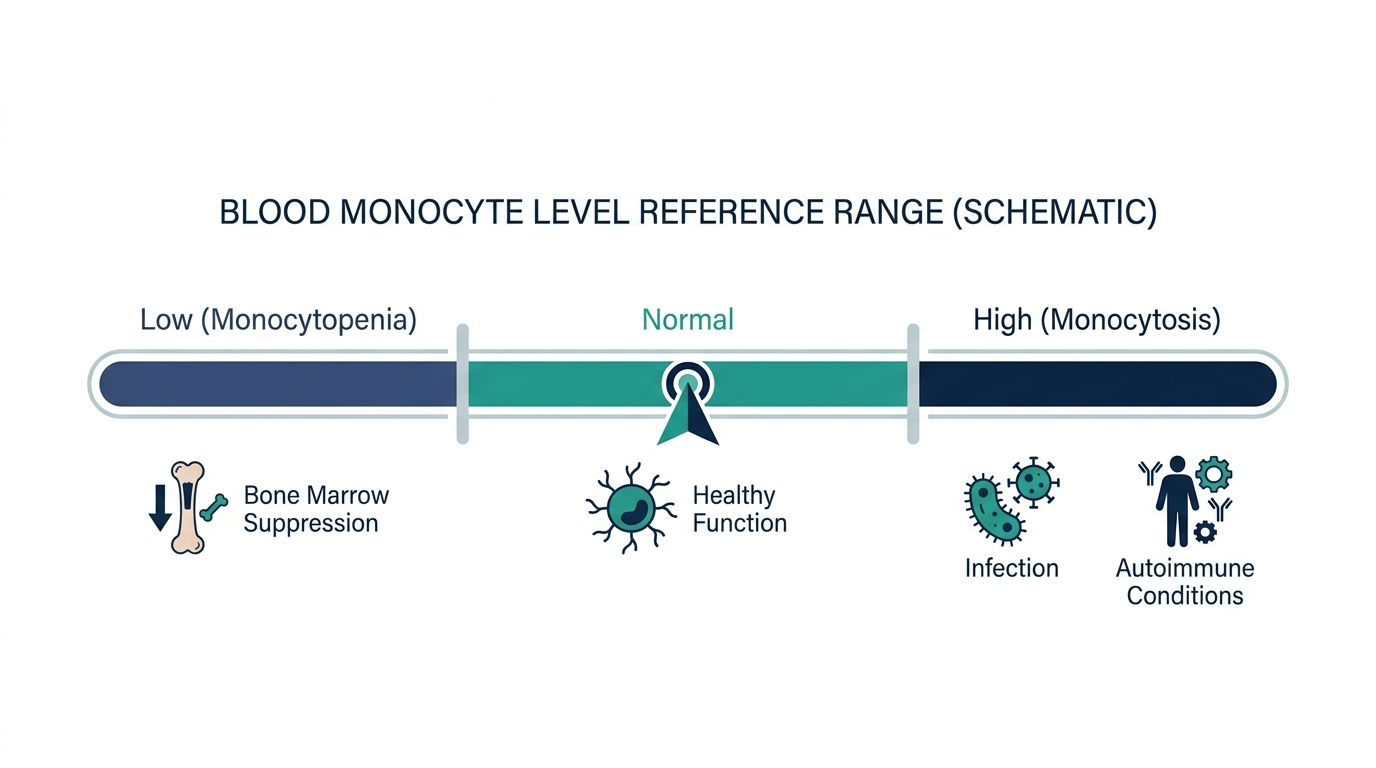
A normal monocyte count is roughly 2 to 8 percent of your total white blood cells, which works out to about 200 to 800 monocytes per microliter of blood in healthy adults (Cleveland Clinic). The number that actually matters here is the absolute monocyte count, not the percentage. Most clinicians start calling it monocytopenia when the absolute count drops below roughly 200 cells per microliter. Read your result against the reference range printed on your own report, because labs calibrate their machines slightly differently.
Here is the reassuring part up front: when the rest of your CBC looks normal and you feel well, an isolated low monocyte count is frequently nothing to chase. It can dip transiently and bounce back on its own (Merck Manual). The reason it still deserves a careful read is the small set of situations where it is a genuine flag, which is exactly what the next section is about.

What causes a low monocyte count?
Monocytopenia is rarely a disease in itself. It is almost always a side effect of something else, and that something else falls into a short, rankable list. Most common and most benign first:
- It dropped along with your whole white count. Anything that suppresses overall white blood cell production tends to pull monocytes down with everything else. Chemotherapy is the classic example, since it temporarily stuns the bone marrow (Cleveland Clinic). This is expected, monitored, and usually recovers.
- Acute infection or inflammation. An overwhelming bloodstream infection can consume and redistribute white cells faster than the marrow replaces them, dragging the monocyte count down in the short term (Merck Manual).
- Medications. Corticosteroids and several other drugs can lower circulating monocytes. The timing of the dose can even shift the result, which is why a count drawn hours after a steroid dose can read low.
- Stress, recent surgery, or burns. Major physical stress to the body, including serious burn injuries, can transiently depress monocytes (Cleveland Clinic).
- Aplastic anemia and bone marrow disorders. When the marrow itself is failing or being crowded out, it cannot manufacture enough of any blood cell line, monocytes included (Cleveland Clinic). Here the low monocyte count travels with low red cells and low platelets, not alone.
- HIV and certain chronic infections. These can suppress immune cell counts over time (Cleveland Clinic).
- Rare inherited immune deficiency. The standout is GATA2 deficiency, also called MonoMAC syndrome, where monocytes (along with B cells, NK cells, and dendritic cells) are severely and persistently depleted. It carries a high risk of unusual infections and can progress to myelodysplastic syndrome and leukemia (PMC, GATA2 deficiency). It is uncommon, but it is why a persistently absent monocyte count is never simply dismissed.
Notice the pattern. The benign causes are temporary and usually have an obvious trigger, like a recent chemo cycle or an active infection. The worrying causes are persistent and tend to come with other abnormal cell lines or a history of strange, recurrent infections.
What are the symptoms of a low monocyte count?
Here is the part that surprises people: a low monocyte count itself usually causes no symptoms at all. You cannot feel your monocyte number, and if you have an abnormal count you typically will not notice anything from the count itself (Cleveland Clinic). The specialist literature says the same: low or high monocyte numbers do not usually produce symptoms on their own (Merck Manual).
Any symptoms you do have come from the underlying cause, not the number. So the useful question is not “what does monocytopenia feel like” but “what is the body doing around the time of this result.” Things worth paying attention to include:
- Frequent, severe, or unusual infections that take a long time to clear.
- Fevers, night sweats, or unexplained weight loss.
- Fatigue, easy bruising, or bleeding, which suggest other blood cell lines are also low.
- A known cause already in play, such as ongoing chemotherapy or a recent serious illness.
If the count is low and you feel completely well, that mismatch is genuinely reassuring. It points toward the transient, harmless end of the spectrum.
When is a low monocyte count dangerous or a medical emergency?
A low monocyte count is almost never an emergency by itself. The danger lives in the context around it, and there are a few patterns that should move it up the priority list.
It is not alone. The single most important question is whether your other blood cells are also low. A low monocyte count alongside low red cells, low platelets, and a low total white count points toward a bone marrow problem like aplastic anemia or a marrow-infiltrating disease, and that needs prompt evaluation (Cleveland Clinic). One low line is a curiosity. Several low lines together is a signal.
It will not come back. A monocyte count that stays at or near zero across repeated tests, especially in someone with a history of recurrent mycobacterial, viral, or fungal infections, raises the specter of GATA2 deficiency and related marrow conditions that carry leukemia risk (PMC, GATA2 deficiency). Persistent absence is far more meaningful than a single low reading.
You are immunosuppressed and developing infection. If you are on chemotherapy or otherwise immunocompromised and you spike a fever, the emergency is the infection risk that comes with low white cells overall. Fever in that setting is treated urgently regardless of which white cell subtype is low.
Outside those scenarios, an isolated low monocyte count in a well person is a watch-and-recheck situation, not an emergency.
What should you do about a low monocyte count?
The first move is almost always the simplest one: repeat the test. A single CBC is a snapshot, and monocytes fluctuate. A second draw a few weeks later often shows the count has already normalized (Merck Manual).
If it stays low, the next steps your clinician may consider include:
- Look at the whole CBC, not just the monocyte line. Are the other cell lines normal or also low? This single comparison decides whether the workup is light or serious.
- Review your medications and recent history. Steroids, chemotherapy, a recent infection, or recent surgery can each explain a dip, and removing or accounting for the trigger often resolves it (Cleveland Clinic).
- Check for treatable deficiencies. Correcting vitamin deficiencies, where present, is part of standard management of abnormal counts (Cleveland Clinic).
- Further testing if a pattern emerges. Persistent or unexplained monocytopenia, particularly with other cytopenias or unusual infections, may lead to bone marrow evaluation or genetic testing.
There is no over-the-counter way to “raise monocytes,” and you generally should not try to. Monocytopenia is not treated directly. You treat its cause, and the count follows.

The part most people miss: percentage versus absolute, and the company it keeps
Here is the clinical nuance that trips up patients and occasionally even rushed readers of a report. Many people panic over a low monocyte percentage when their absolute monocyte count is perfectly fine. The percentage is relative. If another white cell type, such as neutrophils, rises sharply during an infection, the monocyte slice of the pie shrinks on paper even though the actual number of monocytes per microliter has not changed at all. The absolute count is the number that carries clinical weight, so check that one first.
The second commonly missed point: monocytopenia is read for the company it keeps. An isolated low monocyte count in an otherwise pristine CBC is a different animal from a low monocyte count sitting next to low neutrophils, low platelets, and a falling hemoglobin. The blood differential exists precisely so clinicians can see the full pattern, because a low white cell type can reflect anything from a passing infection to a bone marrow disease, and only the pattern tells them which (MedlinePlus). The takeaway: do not interpret the monocyte line in isolation. Its meaning changes entirely depending on what the cells around it are doing.
When should you see a doctor?
Bring a low monocyte count to a clinician promptly if any of these are true: the rest of your CBC is also abnormal, the low count persists across repeat tests, you have a history of frequent or unusual infections, or you have symptoms like persistent fever, night sweats, unexplained weight loss, easy bruising, or bleeding. If you are immunocompromised and develop a fever, that is an urgent, same-day situation.
If, on the other hand, your monocytes are mildly low, every other number is normal, and you feel well, the reasonable plan is usually a recheck rather than alarm. Either way, the right person to interpret the full picture is the clinician who can see your entire report and your history together.

What monocytes actually do, so the count makes sense
To understand why a low count is usually mild but occasionally serious, it helps to know what these cells are for. Monocytes are the largest of your white blood cells, and they are essentially the immune system’s cleanup and coordination crew. They spend only a short time in the bloodstream, often a day or so, before they migrate into your tissues and mature into two important cell types: macrophages and dendritic cells.
- As macrophages, they engulf and digest bacteria, viruses, dead cells, and cellular debris. This is why they are called the body’s “big eaters.” They clean up after infection and injury and help wounds heal.
- As dendritic cells, they act as messengers. They present pieces of invaders to your T cells and B cells, effectively telling the rest of the immune system what to attack. This coordinating role is why monocyte-derived cells sit at the crossroads of your innate and adaptive immunity.
This biology explains two things at once. First, why a brief dip in the blood count is often harmless: monocytes constantly leave the circulation for tissue, so a snapshot can catch a low moment. Second, why a persistent, near-total absence is different: if the body genuinely cannot make monocytes, it loses a whole arm of defense against certain viruses, fungi, and mycobacteria, which is exactly the pattern seen in rare inherited deficiencies.
How low monocytes are read within the full white cell differential
Your monocyte line never stands alone. It is one of five white blood cell types reported on the differential, and clinicians read them as a set because their proportions shift together. Knowing the neighbors helps you interpret your own report.
| White cell type | Main job | Why it matters next to monocytes |
|---|---|---|
| Neutrophils | First responders to bacterial infection | The largest fraction. When they surge during infection, the monocyte percentage can shrink on paper without any real drop in monocytes. |
| Lymphocytes | Viral defense and long-term immunity (T and B cells) | Low lymphocytes plus low monocytes together suggest broader immune suppression rather than an isolated finding. |
| Monocytes | Cleanup and immune coordination | The line in question. Read as absolute count, not percentage. |
| Eosinophils | Allergy and parasite response | Usually a small fraction; not directly tied to monocyte changes. |
| Basophils | Allergic and inflammatory reactions | The smallest fraction; rarely the deciding factor. |
Want to check your blood count?
Three ways to get it measured. Pick whichever fits you.
Affiliate links: we may earn a commission at no extra cost to you. A lab test does not replace a visit with your clinician.
The single most useful move when you see a low monocyte count is to glance at neutrophils, lymphocytes, hemoglobin, and platelets on the same report. If those are all normal, an isolated low monocyte count is usually benign. If two or more lines are low together, that combination is what prompts a closer look.
What can throw off a monocyte result
A blood count is a moment in time, and several ordinary factors can nudge the monocyte number without any underlying disease. Knowing these prevents overreacting to a single reading:
- Timing relative to medication. A count drawn within hours of a corticosteroid dose can read artificially low, because steroids shift immune cells out of the circulation temporarily.
- Recent or ongoing infection. During an acute infection, white cells are consumed and redistributed quickly, so a monocyte count can dip in the thick of illness and rebound as you recover.
- Recent surgery, injury, or serious burns. Major physical stress transiently reshuffles white cell counts.
- Normal daily variation. White cell counts fluctuate through the day and with stress and exertion, so two draws taken days apart can differ.
- Lab-to-lab calibration. Different analyzers and reference ranges mean a value flagged low at one lab might sit inside the range at another. Always read against the range printed on your own report.
There is no special fasting or prep required for a monocyte count itself, since it is part of a routine CBC. The most reliable interpretation comes not from one perfectly timed draw but from a repeat test and the trend over time.
Interpreting your result: a few worked scenarios
Numbers become meaningful when you place them in context. Here is how a clinician’s thinking shifts across common situations:
- Monocytes slightly low, everything else normal, you feel fine. This is the most common and most reassuring pattern. The usual plan is a simple recheck in a few weeks rather than any workup.
- Monocytes low during a bad cold or flu. Likely a temporary shift from the active infection. Retesting after you recover usually shows it has normalized.
- Monocytes low along with low neutrophils, low platelets, and falling hemoglobin. This multi-line pattern is the one that matters. It points toward the bone marrow and warrants prompt evaluation, not watchful waiting.
- Monocytes near zero on repeated tests, plus a history of unusual infections. Persistent absence, especially with recurrent viral, fungal, or mycobacterial infections, is the flag that can lead to specialized testing for inherited immune deficiency.
- Monocytes low while on chemotherapy. Expected and monitored. The concern in this setting is fever and infection risk from low white cells overall, which is treated urgently regardless of the specific subtype.
Low versus high monocytes: two different stories
It helps to see monocytopenia against its opposite, because patients often confuse the two. A low count (monocytopenia) most often reflects marrow suppression, an acute stress or infection, or medication, and in its rare serious form points at bone marrow failure or inherited deficiency. A high count (monocytosis) tends to point the other way, toward the body ramping up its cleanup crew during chronic infection, recovery from an acute illness, inflammation, autoimmune disease, or, less commonly, a blood disorder.
The practical difference: a low monocyte count is usually read for what it might be missing, while a high count is read for what the body is responding to. Neither number is interpreted alone. Both gain their meaning from the rest of the differential and from your symptoms and history. If your report has swung from one to the other between tests, that trend itself is worth mentioning to your clinician, since a moving count often reflects a changing situation like a resolving infection.
Frequently asked questions
What is monocytes low in a blood test, and is it serious?
A low monocyte count, called monocytopenia, means fewer of these infection-fighting white blood cells are circulating than expected, generally an absolute count below about 200 cells per microliter (Cleveland Clinic). On its own, with a normal rest-of-CBC, it is often temporary and not serious. It matters most when it persists or comes with other abnormal counts.
What is the normal monocyte range?
A normal monocyte count is roughly 2 to 8 percent of your white blood cells, or about 200 to 800 monocytes per microliter in healthy adults, though ranges vary slightly by lab (Cleveland Clinic). Compare your result to the reference range on your own report.
What causes monocytes to be low in a blood test result?
Common causes include chemotherapy, acute infection, certain medications like corticosteroids, major physical stress or burns, and HIV (Cleveland Clinic). Less common causes include aplastic anemia and bone marrow disorders, and rarely the inherited GATA2 deficiency, or MonoMAC syndrome (PMC, GATA2 deficiency).
Does a low monocyte count cause symptoms?
Usually not. The count itself does not produce symptoms; any symptoms come from the underlying cause (Merck Manual). Feeling well with an isolated low monocyte count is generally reassuring.
How is a low monocyte count diagnosed and followed up?
It is found on a complete blood count with differential, which reports both the percentage and the absolute monocyte count (MedlinePlus). Follow-up usually starts with repeating the test, reviewing medications and recent illness, and looking at whether other cell lines are also low.
This article is for general educational purposes and is not medical advice. It cannot diagnose or treat you and does not replace your clinician. Always discuss your lab results and any health decisions with a qualified healthcare professional.
Vital Signs Today may earn a commission if you buy through links on this page. It does not affect our editorial assessments.