Disclosure: Vital Signs Today may earn a commission if you buy through links on this page, at no extra cost to you. This does not influence our evidence-based assessments. We are not a medical provider; talk to a clinician before acting on test results.
Related: See the platelet reference chart by age and sex
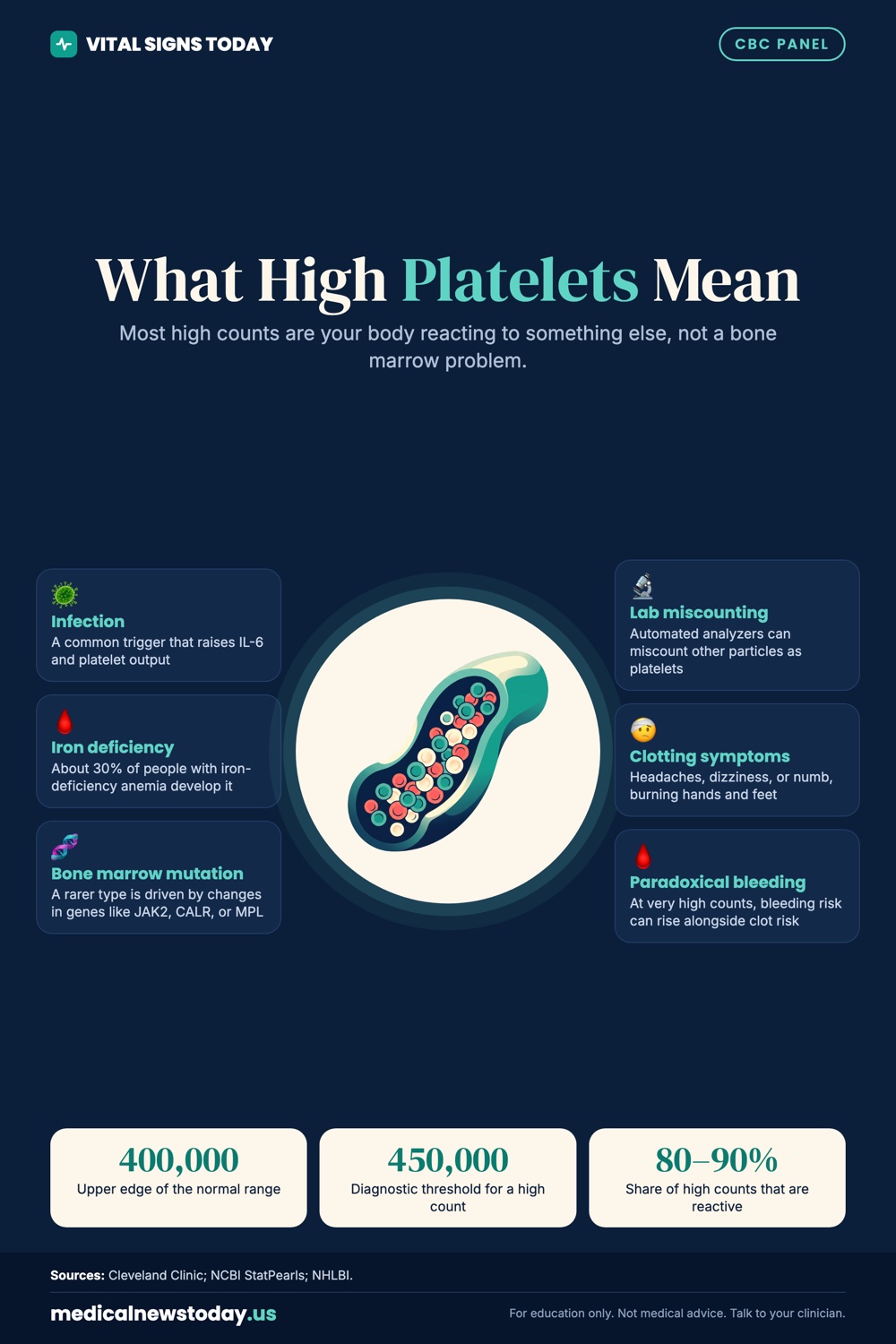
You scanned your complete blood count, and one line jumped out: platelets, flagged high. Maybe your doctor mentioned it in passing, maybe you spotted the little H in the margin yourself. Either way, your stomach dropped a little. Here is the reassuring truth most people never hear up front. The vast majority of high platelet results are not the scary thing your search history is suggesting. In fact, roughly 8 in 10 of them are your body reacting to something else entirely, and many resolve on their own.
That does not mean you ignore it. It means you read the number correctly instead of panicking. Let me walk you through exactly what a high platelet count means, what actually causes it, and the handful of situations where it genuinely deserves urgency.
Part of our Complete Blood Count guide.
What does high platelets mean in a blood test?
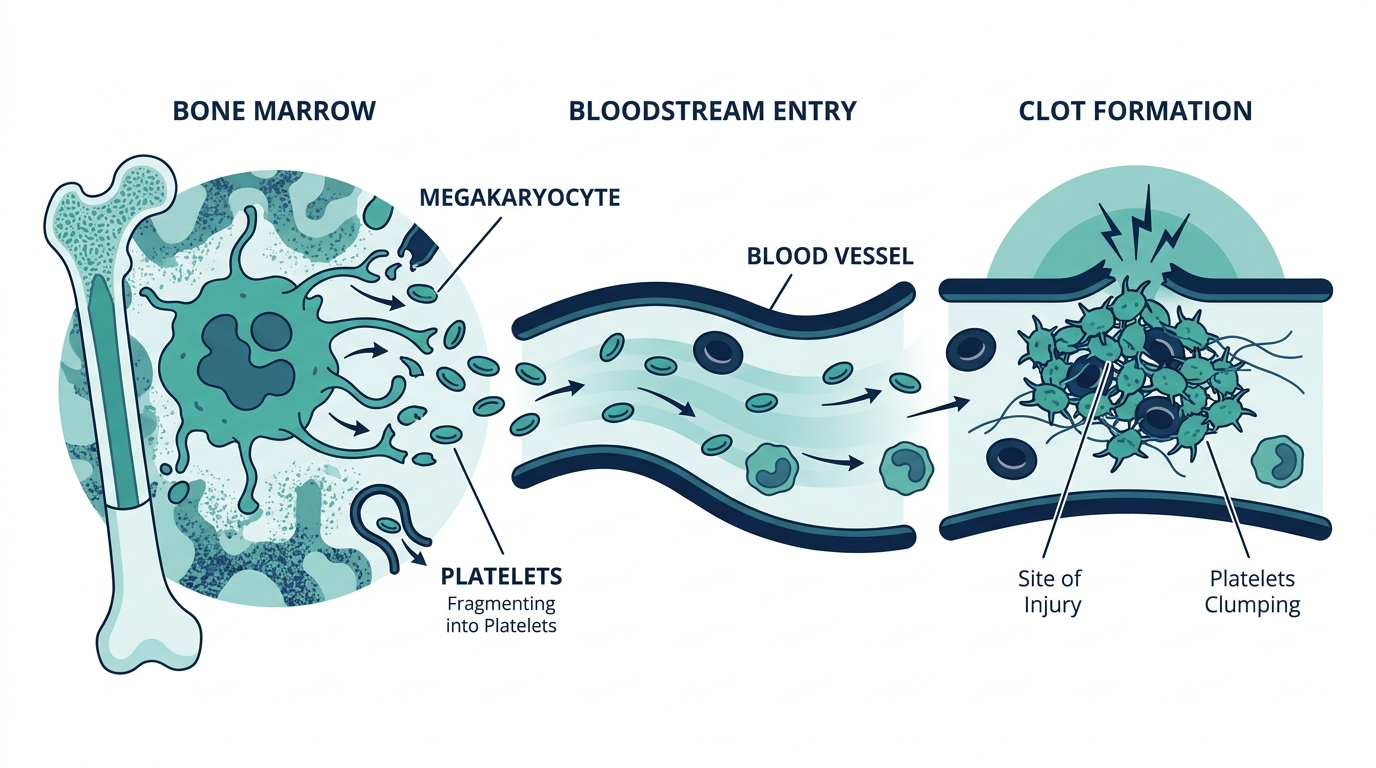
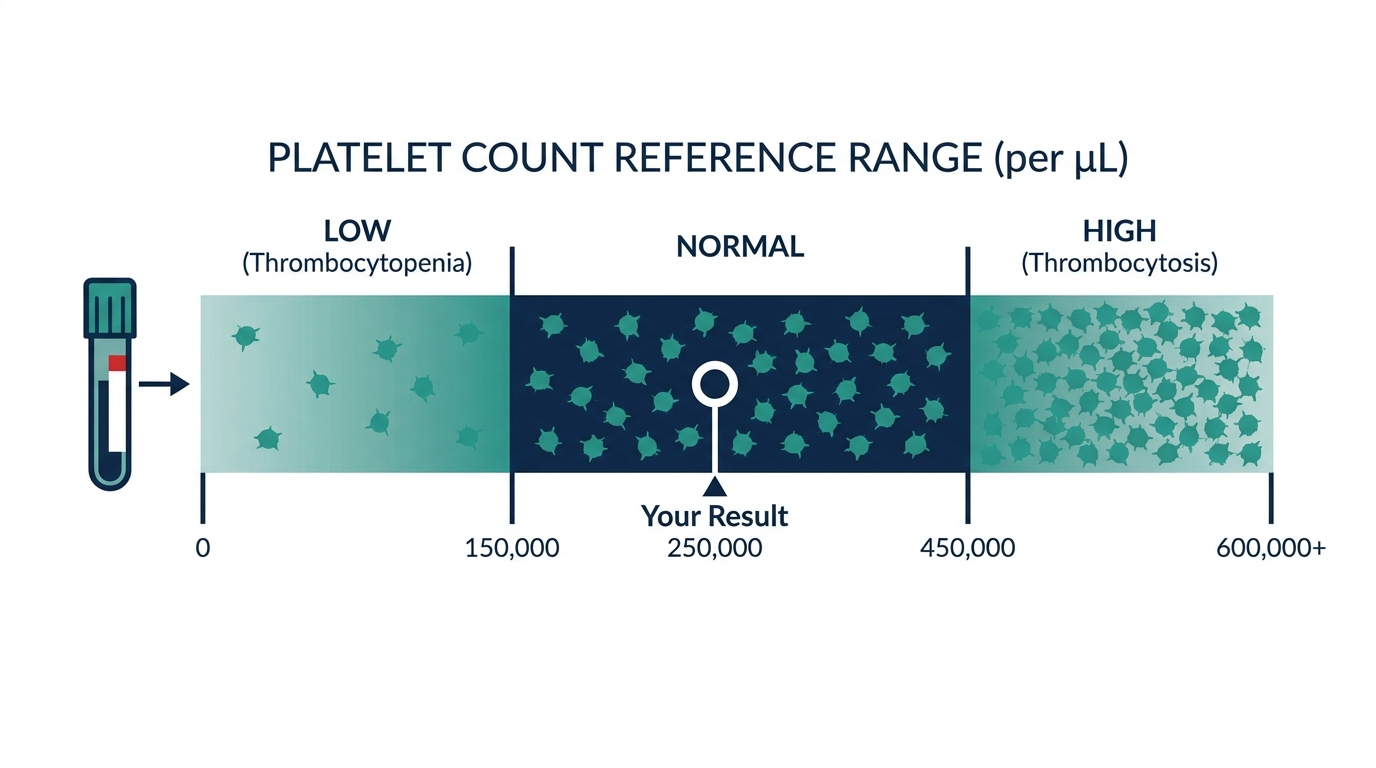
A high platelet count, called thrombocytosis, means your blood contains more platelets than normal. Platelets are the tiny cell fragments that clump together to plug a wound and stop bleeding. A normal adult count runs from about 150,000 to 450,000 platelets per microliter of blood, and the line for high is generally crossed above 450,000 per microliter (Cleveland Clinic).
So the direct answer: if your report shows a platelet count over 450,000, your lab is telling you that you currently have too many platelets in circulation. By itself that is a finding, not a diagnosis. A result of 460,000 after you fought off the flu last week is a very different story from a stable 700,000 with no obvious trigger. The number matters, but the context around it matters more.
Here is the single most useful idea to hold on to. High platelets come in two flavors. The common one is reactive (also called secondary), where the platelets are normal and simply over-produced in response to something. The rarer one is primary, where the bone marrow itself is making too many platelets on its own. Almost everything that follows hinges on telling those two apart.

What causes a high platelet count?
The differential is real and it is mostly benign. Studies estimate that 80 to 90 percent of people with thrombocytosis have the reactive type, driven by another condition rather than a bone marrow problem (NCBI StatPearls). Hematologists often teach the common reactive causes as the “five I’s”: infection, inflammation, ischemia, infarction, and iron deficiency. In order of how often they actually turn up:
- Infection. This is the single most common trigger. Your bone marrow ramps up platelet production as part of the inflammatory response, and the count drifts back down once you recover (NCBI StatPearls).
- Iron deficiency anemia. This one surprises people, because low iron and high platelets sound like opposites. Yet iron deficiency is one of the most common causes of a reactive high platelet count, which is why a clinician will often check your iron when platelets are up (Cleveland Clinic).
- Inflammation. Chronic inflammatory conditions such as rheumatoid arthritis, inflammatory bowel disease, and other autoimmune processes keep platelet counts elevated for as long as the inflammation runs (NCBI StatPearls).
- Recent surgery, blood loss, or tissue injury. Recovery from bleeding or a procedure commonly pushes platelets up temporarily as the body rebuilds.
- Removal of the spleen (or a poorly functioning spleen). The spleen normally stores and clears platelets. Without it, counts can run high for weeks, months, or even years and may exceed 800,000 per microliter (NCBI StatPearls).
- Cancer. Some malignancies, including lung, gastrointestinal, breast, and ovarian cancers and lymphoma, can raise platelet counts (NHLBI).
The less common but more serious bucket is primary thrombocythemia, also called essential thrombocythemia. Here the problem is in the bone marrow itself, usually driven by an acquired genetic mutation in genes such as JAK2, CALR, or MPL (NHLBI). The platelets produced can be abnormal in function, which is why this type carries more risk than the reactive kind even at a similar count.
What are the symptoms of a high platelet count?
This is the part that throws people off. Most people with a high platelet count have no symptoms at all. It is very often picked up by accident on a routine blood test ordered for something unrelated (Cleveland Clinic). Reactive thrombocytosis in particular tends to be silent, and the symptoms you do notice usually belong to the underlying cause, not the platelets.
When symptoms do occur, they are more typical of the primary type and tend to come from one of two opposite directions, clotting or bleeding:
- Clotting-related: headaches, dizziness, chest pain, weakness, and burning, redness, numbness, or tingling in the hands and feet (NHLBI).
- Bleeding-related: nosebleeds, easy bruising, bleeding gums, or blood in the stool. This sounds paradoxical, but at extreme platelet counts the platelets can malfunction and consume clotting proteins, which actually raises bleeding risk (NHLBI).
If you have any of these symptoms alongside a high count, that combination moves you up the priority list. A silent, mildly elevated count after an illness does not.
When is a high platelet count dangerous or a medical emergency?
Two things drive danger: how high the count is, and which type of thrombocytosis you have.
On the number side, counts above 1,000,000 per microliter are considered extreme thrombocytosis (NCBI StatPearls). Counter to intuition, extreme counts do not only raise clot risk. At that level platelets can stop working properly and tie up clotting factors, so paradoxical bleeding becomes a real concern too. This is exactly why a number like 1.2 million is not simply “twice as worrying” as 600,000. It is a different clinical situation.
On the type side, primary (essential) thrombocythemia is the higher-risk category because the platelets themselves can be abnormal, raising the odds of harmful clots regardless of count (Cleveland Clinic). The complications that make thrombocytosis genuinely serious include deep vein clots, stroke and mini-strokes, and heart attack from reduced blood flow to the heart (NHLBI).
The emergency signs are not the lab value, they are clot symptoms in real time. Call emergency services if you have sudden chest pain, shortness of breath, weakness or numbness on one side of the body, drooping of the face, trouble speaking, sudden severe headache, or a hot, swollen, painful leg. Those point to a clot in progress and cannot wait for a follow-up appointment.
What should you do about a high platelet count?
The single most important step is almost always to repeat the test. A one-off high reading taken during an infection, after surgery, or while iron-deficient often normalizes on its own once the trigger is gone (Cleveland Clinic). A persistently high count across repeated tests is what tips the investigation toward a primary cause.
From there, the workup is about finding the why. Your clinician will typically look at:
- Iron studies (ferritin and related markers), because iron deficiency is such a common and fixable reactive cause (Cleveland Clinic).
- Inflammatory markers such as CRP, to flag hidden infection or inflammation.
- The rest of your CBC, since abnormalities in your red and white cells alongside high platelets point more toward a bone marrow process.
- Genetic testing for JAK2, CALR, or MPL mutations, and sometimes a bone marrow biopsy, if a primary cause is suspected (NHLBI).
Treatment follows the cause. Reactive thrombocytosis usually needs no platelet-specific treatment at all. Treat the infection, replace the iron, control the inflammation, and the count follows (Cleveland Clinic). For essential thrombocythemia, options range from watchful waiting to low-dose aspirin to platelet-lowering medicines such as hydroxyurea, anagrelide, or interferon, chosen based on your clot risk (Cleveland Clinic). There is no lifestyle hack that reliably lowers a high platelet count, but not smoking, staying active, and staying hydrated all reduce overall clot risk, which is the thing you are actually trying to protect against.
When should you see a doctor?
Any high platelet flag deserves a conversation with the clinician who ordered the test, even if you feel fine. Make that conversation a priority rather than a someday item if your count is very high, if it stays high on a repeat test, if you also have abnormal red or white cell counts, or if you have any clotting or bleeding symptoms. And as above, the actual clot warning signs, sudden chest pain, one-sided weakness, slurred speech, a hot swollen leg, are emergencies, not appointments.
The insider read: the high platelet count that is not real
Here is the nuance that separates a careful clinician from a quick glance at the screen. Before anyone investigates a high platelet count, the count itself has to be trusted, and sometimes it should not be. Automated analyzers count platelets by size, and other small particles in the blood can be miscounted as platelets, inflating the number. This is called spurious thrombocytosis or pseudothrombocytosis, and it is a recognized cause of a falsely elevated result (NCBI StatPearls).
What gets miscounted? Fragments of red or white cells, certain bacteria, or fatty particles in the sample can all trip the machine into adding phantom platelets. The fingerprint of a false high is a number that does not fit the clinical picture, a healthy person with no symptoms and a startling count out of nowhere. The fix is simple and cheap: the lab examines a blood smear under the microscope, where a human can see whether those are genuinely platelets. It is worth knowing this exists, because the worst outcome is a patient sent down a stressful workup for a number that was never accurate in the first place.
The other commonly missed point is the opposite of alarm. Clinicians sometimes anchor on the platelet number and forget to chase the boring cause. A high platelet count in someone with vague fatigue can be the loudest visible clue to quiet iron deficiency, and treating the iron quietly fixes the platelets. The platelet line is often pointing at something simpler than it looks.
Reactive versus primary: the clues that separate them
Since almost everything about a high platelet count hinges on whether it is reactive or primary, it helps to see the features clinicians weigh when they sort the two. No single clue is definitive, but the pattern usually leans one way.
| Feature | Reactive (secondary) | Primary (essential) |
|---|---|---|
| Frequency | The large majority of cases | Uncommon |
| Trigger | Infection, inflammation, iron deficiency, surgery, spleen removal | A bone marrow mutation such as JAK2, CALR, or MPL |
| Course over time | Rises and falls with the underlying cause, often transient | Persistent and stable, or slowly rising |
| Clot and bleeding risk | Lower, because platelets function normally | Higher, because platelets can be abnormal |
| Symptoms | Usually none from the platelets themselves | More likely to cause clotting or bleeding symptoms |
| Inflammatory markers | Often elevated (CRP, ferritin as an acute-phase protein) | Typically normal |
Want to check your platelets?
Three ways to get it measured. Pick whichever fits you.
Affiliate links: we may earn a commission at no extra cost to you. A lab test does not replace a visit with your clinician.
The single most useful discriminator in practice is time. A count that spikes during an illness and drifts back down is almost always reactive. A count that stays elevated across several tests, with no infection, iron deficiency, or inflammation to explain it, is what pushes a clinician toward genetic testing and, if needed, a bone marrow evaluation (NHLBI).
Reading a high platelet count alongside the rest of your CBC
Platelets sit inside the complete blood count, and the behavior of the other lines reframes what a high count means. A high platelet number never gets interpreted alone.
| Marker | What it adds to a high platelet count |
|---|---|
| Hemoglobin and MCV | A low hemoglobin with small red cells (low MCV) points to iron deficiency, one of the most common and fixable reactive causes. |
| Mean platelet volume (MPV) | The average size of your platelets. Larger, younger platelets can accompany active production, and the value helps characterize the picture. |
| White blood cell count | High platelets together with abnormal white cells raise concern for a bone marrow process rather than a simple reactive rise. |
| Ferritin and iron studies | Confirm or rule out iron deficiency, a leading reactive cause worth checking early (Cleveland Clinic). |
| CRP | A general inflammation marker that helps flag hidden infection or inflammatory disease behind a reactive count. |
The pattern is what matters. An isolated high platelet count with everything else normal is a different situation from high platelets sitting beside anemia, abnormal white cells, or clearly elevated inflammatory markers.
Sample interpretations: reading the number in context
Because the same high count can be trivial or important, walking through realistic patterns clarifies how clinicians think. These are illustrative, not diagnoses, and none replaces the clinician who ordered your test.
- Mildly high count after a recent infection. A platelet count of 480,000 in someone recovering from the flu, feeling well now, with a normal rest-of-CBC. This is the classic reactive picture. The right move is usually a repeat test after recovery (Cleveland Clinic).
- High platelets with low hemoglobin and small red cells. A count of 520,000 alongside anemia and a low MCV. This pattern strongly suggests iron deficiency, and correcting the iron often brings the platelets down (Cleveland Clinic).
- Persistently high count with no obvious trigger. A stable 700,000 across multiple tests, no infection, normal iron, no inflammation. This is the pattern that earns genetic testing for JAK2, CALR, or MPL and possibly a bone marrow evaluation (NHLBI).
- Extreme count with symptoms. A count over 1,000,000 with headaches, tingling in the hands, or unusual bleeding. This combination is a reason for prompt evaluation, since both clotting and paradoxical bleeding become concerns at that level (NCBI StatPearls).
How the test is done, and what can skew the result
Platelets are counted as part of a complete blood count, a routine blood draw that needs no fasting or special preparation. Still, several factors can move the number or the way it is measured, and knowing them keeps you from over-reading a single value.
- Recent illness, surgery, or exertion. Infection, recovery from a procedure, and even strenuous exercise can transiently raise the count, so a value drawn around those events may not reflect your baseline.
- Analyzer miscounting. Automated machines size-count platelets, and small particles such as red or white cell fragments can be tallied as platelets, producing a falsely high result that a blood smear resolves (NCBI StatPearls).
- Iron status. Because iron deficiency itself raises platelets, an untreated deficiency can keep the count elevated until the iron is replaced.
- Timing relative to spleen surgery. After spleen removal, counts can run high for weeks to years, an expected effect rather than a new problem.
The practical rule mirrors what clinicians do: a single high value, especially one drawn around an illness or a procedure, is a reason to repeat the test rather than to panic.
Monitoring and follow-up after a high platelet count
What happens next depends on the type and the number, but a few principles hold across the board.
- Confirm before chasing. A repeat CBC is almost always the first step, since so many reactive counts normalize once the trigger passes (Cleveland Clinic).
- Fix the fixable. If iron deficiency, infection, or inflammation is driving the count, treating that is what lowers the platelets. There is no need for platelet-specific treatment in most reactive cases.
- For essential thrombocythemia, risk guides intensity. Management ranges from watchful monitoring to low-dose aspirin to platelet-lowering medicines, chosen by clot risk rather than the count alone (Cleveland Clinic).
- Reduce overall clot risk. Not smoking, staying active, and staying hydrated do not reliably lower the count, but they lower the clotting risk that the count is ultimately about.
Frequently asked questions
What platelet count is considered high?
A platelet count above 450,000 per microliter is generally considered high, since the normal adult range runs from about 150,000 to 450,000 (Cleveland Clinic). Always compare your result to the reference range printed on your own lab report, as labs vary slightly.
Should I worry about a high platelet count?
Usually not on its own. About 80 to 90 percent of high counts are reactive, meaning they are driven by something like infection, iron deficiency, or inflammation and often resolve once that cause is treated (NCBI StatPearls). A very high count, a persistently high count, or one with symptoms deserves prompt follow-up.
What is the most common cause of high platelets?
Reactive thrombocytosis from infection and inflammation is the most common scenario, and iron deficiency anemia is another frequent and easily missed cause (NCBI StatPearls). The rarer primary type comes from a bone marrow mutation (NHLBI).
Can a high platelet count cause both clots and bleeding?
Yes. High platelets raise clot risk, but at extreme counts above about 1,000,000 the platelets can malfunction and use up clotting proteins, which paradoxically increases bleeding risk (NHLBI).
Can a high platelet result be a lab error?
It can. Automated analyzers sometimes miscount other small particles as platelets, producing a falsely high result called spurious or pseudothrombocytosis (NCBI StatPearls). A blood smear examined under the microscope can confirm whether the count is genuine.
This article is for general educational purposes and is not medical advice. It cannot diagnose or treat you and does not replace your clinician. Always discuss your lab results and any health decisions with a qualified healthcare professional.
Vital Signs Today may earn a commission if you buy through links on this page. It does not affect our editorial assessments.