Disclosure: Vital Signs Today may earn a commission if you buy through links on this page, at no extra cost to you. This does not influence our evidence-based assessments. We are not a medical provider; talk to a clinician before acting on test results.
Related: hemoglobin blood test: the full guide · Hemoglobin normal range by age (full chart)
You opened your lab report, scanned down to the complete blood count, and there it was: hemoglobin, flagged low, sitting under the reference range in a slightly alarming shade of red. Your first instinct is to type the number into a search bar and brace for the worst. Take a breath. A low hemoglobin is one of the most common abnormal results on a routine blood test, and the number itself is only the start of the story.
Here is what most quick explainers skip. Hemoglobin is not a disease. It is a measurement, and a single low reading is a clue that sends your clinician looking for a cause, not a diagnosis you have already received. Let me walk you through exactly what it means and what actually matters next.
Part of our Complete Blood Count guide.
What does low hemoglobin mean in a blood test?
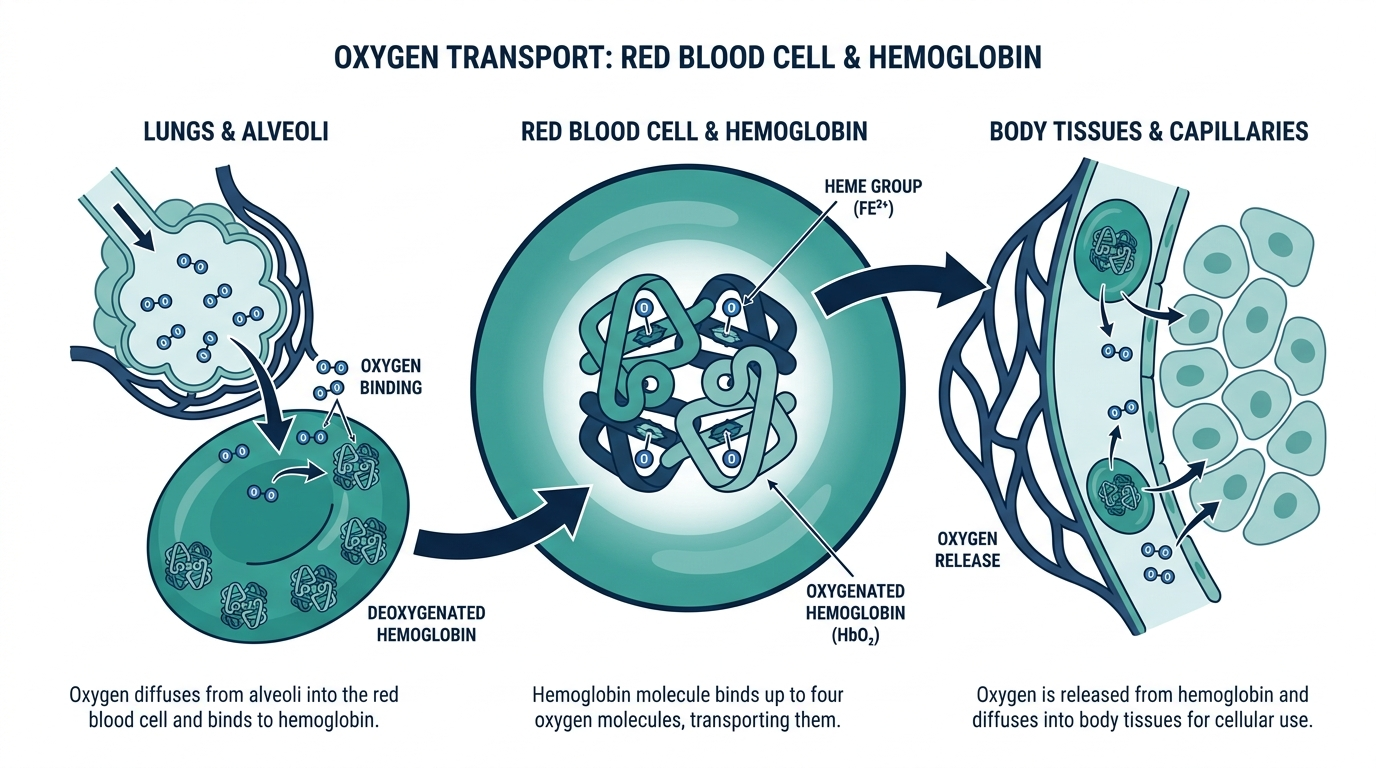
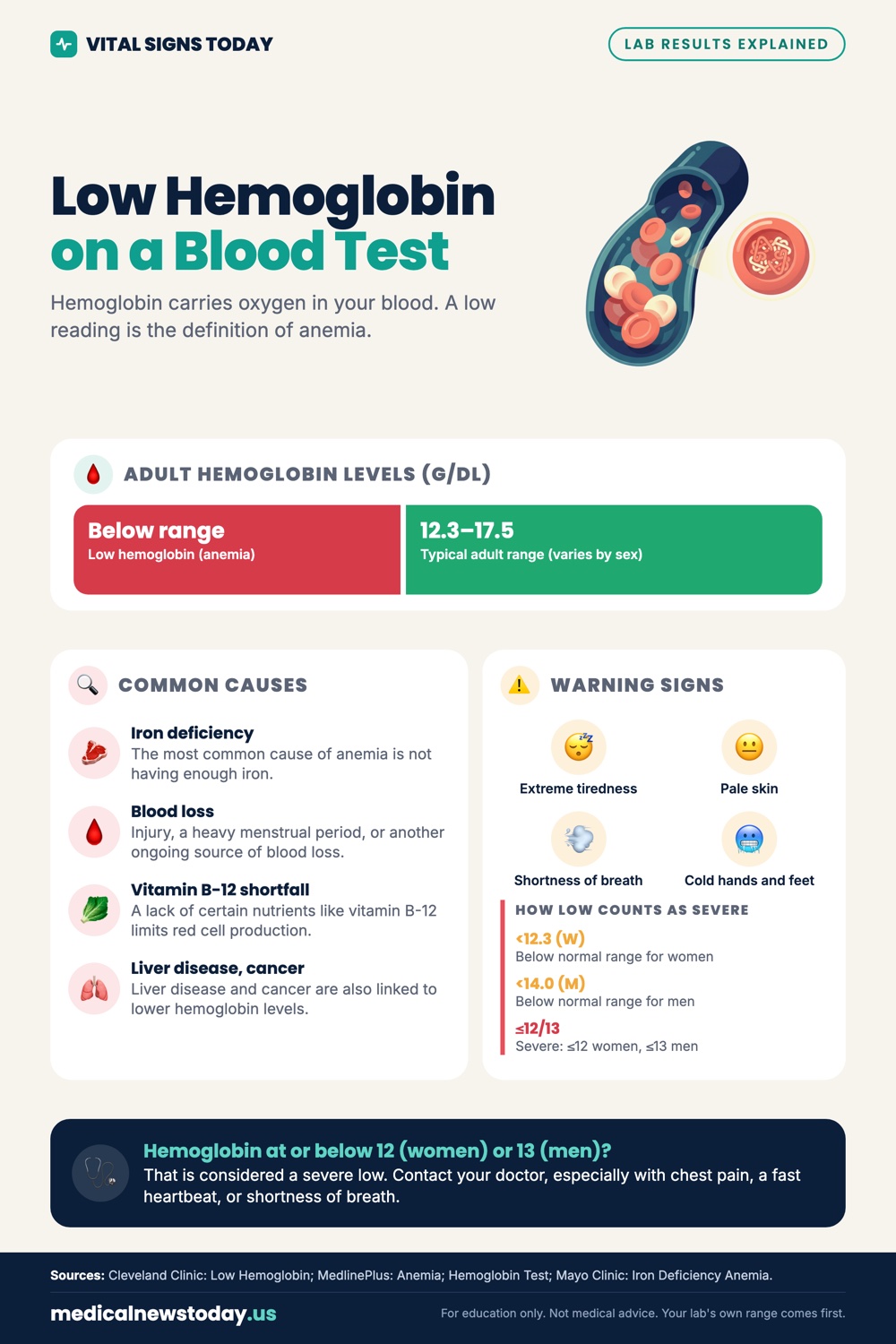
Hemoglobin is the iron-rich protein inside your red blood cells that carries oxygen from your lungs to the rest of your body. When the level is low, it means your blood is carrying less oxygen than it should, which is the medical definition of anemia (Cleveland Clinic). In plain terms: a low hemoglobin is your body telling you the oxygen delivery system is running short on either the trucks (red cells) or the cargo (the iron-based protein that holds oxygen).
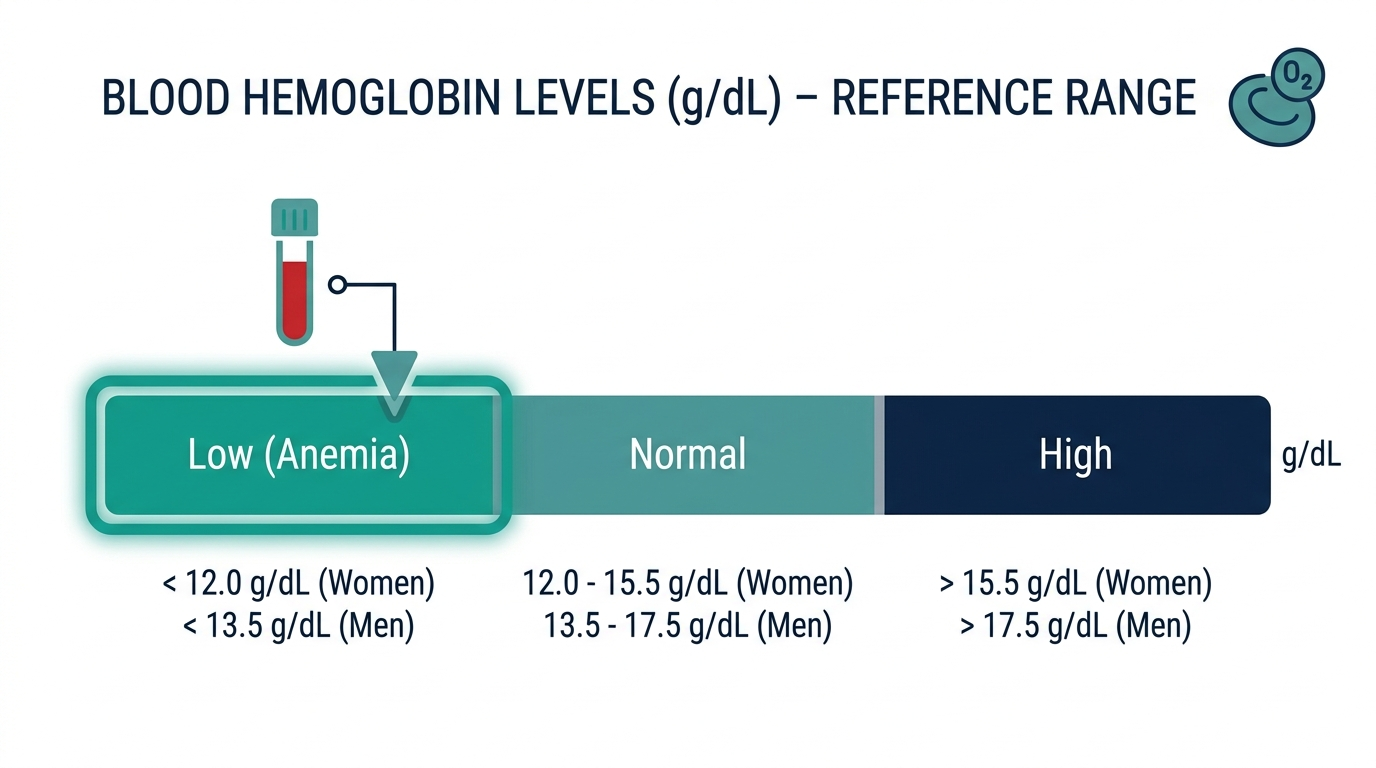
The cutoff for what counts as low depends on your sex. A typical normal range runs about 14.0 to 17.5 grams per deciliter for men and roughly 12.3 to 15.3 grams per deciliter for women (Cleveland Clinic). Anything under the bottom of that range gets flagged. A more clearly low, or severe, level is generally considered 13 grams per deciliter or below for men and 12 or below for women (Cleveland Clinic). One important caveat: ranges vary by lab, age, pregnancy status, and even altitude, so always read your result against the reference range printed on your own report.
What causes a low hemoglobin?
Anemia comes down to three basic mechanisms: you are losing blood, you are not making enough red cells, or your red cells are being destroyed faster than you replace them (MedlinePlus). Almost every cause fits into one of those buckets. Here are the common culprits, roughly most frequent first.
- Iron deficiency. This is far and away the most common cause of anemia worldwide. Without enough iron, your bone marrow cannot build hemoglobin, so the cells come out small and pale (MedlinePlus).
- Blood loss. Often slow and silent. Heavy menstrual periods are a leading cause in women, and a quietly bleeding ulcer, colon polyp, or colon cancer is a leading cause in everyone else (MedlinePlus). This is the one your clinician most wants to rule out.
- Vitamin B12 or folate deficiency. These nutrients are also required to build red cells, and running short produces large, fragile cells (MedlinePlus).
- Chronic disease. Kidney disease, long-running inflammation, and autoimmune conditions all suppress red cell production over time.
- Red cell destruction (hemolysis). Inherited conditions like sickle cell disease and thalassemia, or acquired ones, break red cells down faster than the body can rebuild them (MedlinePlus).
- Bone marrow and blood cancers. Less common, but a low hemoglobin can be an early sign of a problem with the marrow that makes your blood (Cleveland Clinic).
Notice the spread there. The same low number on the page can mean a teenager with heavy periods who needs iron, or it can mean something that needs urgent attention. That is precisely why a low hemoglobin is a question, not an answer.
What are the symptoms of a low hemoglobin?
The tricky part is that mild low hemoglobin often causes nothing at all. Anemia can be so gentle in the early stages that you simply do not notice it, and many people first learn about it from a routine blood test rather than from how they feel (Mayo Clinic). Your body is remarkably good at compensating until it cannot.
As hemoglobin drops further and less oxygen reaches your tissues, the classic symptoms emerge (Cleveland Clinic):
- Fatigue and weakness, the single most common complaint, the kind of tired that sleep does not fix
- Shortness of breath, especially with exertion like stairs
- Dizziness or lightheadedness
- Pale skin, or pale gums and inner eyelids
- Heart palpitations, a racing or pounding heart as it works harder to move oxygen
- Headaches and cold hands and feet (MedlinePlus)
The pattern is the giveaway. These symptoms tend to creep in gradually and get blamed on stress, age, or a busy schedule. If you have been quietly more exhausted and breathless for months, a low hemoglobin can be the overlooked explanation.
When is a low hemoglobin dangerous or a medical emergency?
Two things drive how dangerous a low hemoglobin is: how low the number is, and how fast it got there. A level that drifts down slowly over months is tolerated far better than the same level reached suddenly, because the body has time to adapt.
On the number itself, many adults tolerate hemoglobin surprisingly well, sometimes down to 7 to 8 grams per deciliter, before it becomes critical. In fact, modern transfusion guidelines generally hold off on giving blood to stable hospitalized adults until hemoglobin falls below roughly 7 grams per deciliter, because the evidence shows that waiting for a lower threshold does not increase the risk of death, heart attack, or stroke for most people (PMC, transfusion thresholds). That said, a number in that range is firmly in get-seen-now territory, not wait-and-watch.
What matters more than any single cutoff is your symptoms. Treat the following as red flags and seek emergency care, by calling 911, if a low hemoglobin comes with them (Cleveland Clinic):
- Chest pain or pressure
- Severe shortness of breath or trouble breathing at rest
- Fainting or near-fainting
- A racing, pounding heart that will not settle
- Confusion, severe dizziness, or a feeling of impending doom
Those signs mean your heart and brain are not getting the oxygen they need, and untreated severe anemia can lead to heart strain, heart failure, and organ damage (Cleveland Clinic). Visible signs of fast blood loss, such as vomiting blood, black tarry stools, or bright red rectal bleeding, are also emergencies regardless of what your last hemoglobin number was.

What should you do about a low hemoglobin?
The honest answer: do not try to self-diagnose from the hemoglobin value alone. The most useful next step is figuring out the why, and that almost always means a few more tests rather than jumping straight to treatment.
Here is the typical path a good clinician follows:
- Look at the rest of the CBC. The size of your red cells (MCV) and their variation (RDW) immediately narrow the field. Small cells point toward iron deficiency or thalassemia, large cells toward B12 or folate deficiency.
- Check iron studies and vitamin levels. Ferritin (your iron storage marker), along with B12 and folate, confirms or rules out the most common nutritional causes (Mayo Clinic).
- Hunt for blood loss. If iron is low, the next question is where the iron is going. In adults, that frequently means looking at the gut, since a silent slow bleed is common and treatable (MedlinePlus).
Treatment follows the cause, not the number. Iron deficiency is treated with iron, ideally alongside fixing the source of loss. B12 or folate deficiency is corrected with those nutrients. A low hemoglobin from kidney disease or marrow disease needs the underlying condition managed. On the lifestyle side, iron-rich foods like red meat, beans, lentils, and dark leafy greens help support recovery, and pairing plant iron with vitamin C improves absorption, but food alone rarely corrects an established deficiency. Do not start high-dose iron supplements on your own, because unneeded iron can accumulate and cause harm, and it can mask the real problem your clinician needs to find.
When should you see a doctor?
If your report flags hemoglobin as low, call your clinician to talk it through, even if you feel fine. A mildly low result is usually not urgent, but it should never be ignored, because the cause is what counts. Book a prompt visit if you have been unusually tired, weak, breathless, or pale, or if the fatigue has not lifted within a couple of weeks (Cleveland Clinic).
Move faster than a routine appointment if you notice signs of bleeding, such as black or bloody stools, heavy periods that have gotten worse, or blood when you cough or vomit. And as covered above, chest pain, severe breathlessness, fainting, or a racing heart with a known low hemoglobin warrant emergency care, not a wait-and-see approach.
The part most people miss: a low hemoglobin can be falsely low, or a false alarm
Here is the insider nuance that rarely makes it into patient handouts. Not every low hemoglobin reflects a true shortage of red cells, and reading the number without context is where mistakes happen.
The most common trap is dilution. If you were very well hydrated, or given a lot of intravenous fluids, your plasma volume expands and dilutes the blood, dragging the hemoglobin concentration down even though your actual red cell mass is fine. This is a routine cause of a mildly low reading in hospitalized patients. The flip side is dehydration, which concentrates the blood and can make hemoglobin look falsely normal in someone who is actually anemic. Pregnancy does something similar on purpose: blood volume rises faster than red cell production, so a modestly low hemoglobin in the second trimester is often expected physiology rather than disease.
There are also true-but-benign low readings. Endurance athletes can run a slightly low hemoglobin from the same plasma expansion, sometimes called athlete’s pseudoanemia, while being perfectly healthy. And a known thalassemia trait can produce a stable lifelong low hemoglobin that needs no treatment and should not be repeatedly chased with iron. The practical lesson: one low value on one draw is rarely the whole truth. A trend over time, read alongside the rest of your CBC and your symptoms, is what actually tells your clinician whether the number is a real problem or just noise.

Classifying anemia by red cell size: the MCV shortcut
When a hemoglobin comes back low, the single most useful next number is the MCV, the mean corpuscular volume, which measures the average size of your red blood cells. Clinicians use it to sort anemia into three categories, and each category points to a different short list of causes. This is the framework that turns a vague low hemoglobin into a focused investigation.
| Red cell size (MCV) | Category | Common causes |
|---|---|---|
| Small (low MCV) | Microcytic | Iron deficiency, thalassemia trait, sometimes anemia of chronic disease |
| Normal (normal MCV) | Normocytic | Acute blood loss, anemia of chronic disease, kidney disease, early iron deficiency, hemolysis |
| Large (high MCV) | Macrocytic | Vitamin B12 deficiency, folate deficiency, alcohol, some thyroid and liver conditions |
Want to check your hemoglobin?
Three ways to get it measured. Pick whichever fits you.
Affiliate links: we may earn a commission at no extra cost to you. A lab test does not replace a visit with your clinician.
The logic behind the categories is straightforward. Iron is the raw material for hemoglobin, so when it runs short, cells come out small and underfilled, which is why iron deficiency is microcytic. B12 and folate are needed for red cells to divide properly, so a shortage produces large, immature cells, which is why those deficiencies are macrocytic. A normocytic anemia, where the cells are a normal size but there are simply too few, often reflects a sudden loss or a chronic illness suppressing production.
This is why your clinician looks at the MCV in the same glance as the hemoglobin. A low hemoglobin with a low MCV steers straight toward iron studies. A low hemoglobin with a high MCV steers toward B12 and folate. The size of the cells is the fastest fork in the road.
The companion CBC numbers that flesh out a low hemoglobin
Hemoglobin never appears alone. It sits inside the complete blood count surrounded by related red cell measurements, and reading them together gives a far richer picture than the hemoglobin line by itself.
- Hematocrit (HCT). The percentage of your blood made up of red cells by volume. Hemoglobin and hematocrit move together, and hematocrit is usually roughly three times the hemoglobin. If the two disagree, it can hint at a lab or hydration issue.
- Red blood cell count (RBC). The actual number of red cells. In thalassemia trait, the RBC can be relatively high even as hemoglobin is low, an unusual combination that helps distinguish it from iron deficiency.
- MCH and MCHC. These describe how much hemoglobin each cell carries. Low values produce the pale, underfilled cells classic for iron deficiency, described as hypochromic.
- RDW (red cell distribution width). This measures how much the cells vary in size. A high RDW with a low MCV strongly favors iron deficiency, while a normal RDW with a low MCV leans toward thalassemia trait, where cells are uniformly small.
- Reticulocyte count. A count of young red cells fresh from the marrow. A high reticulocyte count says the marrow is responding vigorously, as after blood loss or in hemolysis. A low count says the marrow is not keeping up, pointing toward a production problem.
Read as a set, these numbers often reveal the cause before a single additional test is ordered. This is why handing your clinician the whole CBC, not just the flagged hemoglobin, matters so much.
How to take iron correctly if you are treating a deficiency
If iron deficiency turns out to be the cause and your clinician recommends iron, how you take it makes a real difference to whether it works and whether you tolerate it. A few evidence-informed practices:
- Pair it with vitamin C. Vitamin C improves the absorption of non-heme iron, so taking iron with a source of vitamin C, such as a glass of orange juice, can help.
- Avoid taking it with coffee, tea, calcium, or dairy. These reduce iron absorption, so separating iron from them by a couple of hours improves uptake.
- Consider every-other-day dosing. A growing body of research suggests that taking iron every other day, rather than multiple times daily, can improve absorption and reduce side effects, because frequent dosing triggers a hormone that temporarily blocks further absorption. Ask your clinician whether this approach suits you.
- Expect it to take time. Hemoglobin recovers over weeks, and iron stores take longer still. Treatment usually continues for months after the hemoglobin normalizes to refill the tank, which is why stopping early often leads to relapse.
- Manage the side effects. Constipation and stomach upset are common. Taking iron with a little food, adjusting the dose, or trying a different formulation under guidance can help you stick with it.
The overarching rule remains: treat iron deficiency only when it is confirmed, and always look for why the iron ran low in the first place. Iron replacement without finding the source of loss treats the number, not the problem.
Hemoglobin versus hematocrit: why your report shows both
Many people see hemoglobin and hematocrit flagged low together and assume they are the same thing measured twice. They are related but distinct. Hemoglobin measures the concentration of the oxygen-carrying protein, while hematocrit measures the proportion of your blood volume occupied by red cells. Because both track red cell mass, they usually rise and fall in step, and hematocrit typically runs about three times the hemoglobin value.
The reason both appear is that they can occasionally diverge in informative ways. Hematocrit is more sensitive to hydration and to the plasma dilution discussed earlier, so a discrepancy between the two can flag a dilution effect or a technical issue rather than a true change in red cells. For most purposes, though, they tell the same story, and a clinician reads them as confirmation of each other. If you are tracking your own results over time, watching both move together is more reassuring than watching either alone.
Who should keep an eye on hemoglobin
For most healthy adults, hemoglobin is checked as part of a routine CBC and needs no special attention when normal. Certain groups, though, benefit from closer monitoring because they are more prone to anemia:
- Menstruating people with heavy periods. Ongoing blood loss is a leading cause of iron deficiency, making periodic checks worthwhile.
- Pregnant people. Blood volume expands and iron demand rises, so hemoglobin is monitored through pregnancy, with the caveat that a modest dip can be normal physiology.
- People with chronic kidney disease. Damaged kidneys make less of the hormone that signals red cell production, so anemia is common and tracked.
- People with gastrointestinal conditions. Ulcers, inflammatory bowel disease, celiac disease, and polyps can cause slow blood loss or poor absorption.
- Endurance athletes. Worth monitoring, though a mild low reading here is often the benign plasma-expansion effect rather than true anemia.
- Older adults. Anemia becomes more common with age and can be an early clue to an underlying condition worth investigating rather than dismissing as normal aging.
Common misunderstandings about a low hemoglobin
- “Low hemoglobin always means I need iron.” Not always. Iron deficiency is the most common cause, but B12 and folate deficiency, chronic disease, hemolysis, and marrow problems all cause anemia and do not respond to iron. Taking iron blindly can mask the real cause and, if unneeded, cause harm.
- “If I feel fine, the low number does not matter.” Mild anemia often causes no symptoms because the body compensates (Mayo Clinic). Feeling well does not mean the underlying cause, which could be a slow bleed, is unimportant.
- “One low reading means I am anemic.” A single value can be thrown off by dilution, hydration, or lab variation. A trend across draws, read with the rest of the CBC, is what confirms true anemia.
- “Eating spinach will fix my anemia.” Iron-rich foods support recovery, but food alone rarely corrects an established deficiency, and plant iron is absorbed less efficiently than iron from meat. Diet helps, but it is not usually a cure for a real deficiency on its own.
- “A low hemoglobin is always a problem.” Some people, such as those with thalassemia trait or endurance athletes, run a stable low hemoglobin that is normal for them and needs no treatment. Context decides.
Frequently asked questions
What hemoglobin level is considered low?
A hemoglobin below roughly 14.0 grams per deciliter in men or 12.3 in women is generally flagged as low, with severe low often defined as 13 or under for men and 12 or under for women (Cleveland Clinic). Ranges vary by lab, so compare your result to the reference range on your own report.
What is the most common cause of low hemoglobin?
Iron deficiency is the most common cause of anemia, because iron is required to build hemoglobin. The next thing clinicians look for is blood loss, which is often slow and silent, such as heavy periods or a quietly bleeding ulcer or polyp (MedlinePlus).
Can you have low hemoglobin and feel completely fine?
Yes. Mild anemia frequently causes no symptoms and is often found on a routine blood test rather than from how you feel, because the body compensates until hemoglobin drops further (Mayo Clinic). That is why a low result should still be discussed with your clinician even if you feel well.
How low is hemoglobin dangerous?
How fast it fell matters as much as the number. Many stable adults tolerate levels down to around 7 to 8 grams per deciliter, and transfusion guidelines often wait until below about 7 in stable patients (PMC). Chest pain, severe shortness of breath, fainting, or a racing heart with low hemoglobin are emergencies regardless of the exact value (Cleveland Clinic).
What should I do if my blood test shows low hemoglobin?
Contact your clinician to find the cause rather than self-treating. The usual next steps are checking the rest of your CBC, iron studies, and B12 and folate, then looking for any source of blood loss before deciding on treatment (Mayo Clinic).
This article is for general educational purposes and is not medical advice. It cannot diagnose or treat you and does not replace your clinician. Always discuss your lab results and any health decisions with a qualified healthcare professional.
Vital Signs Today may earn a commission if you buy through links on this page. It does not affect our editorial assessments.