Hemoglobin is the iron-rich protein in your red blood cells that carries oxygen from your lungs to the rest of your body. When a complete blood count (CBC) reports your hemoglobin, the number is judged against a reference range that shifts with age and sex. A value that is perfectly normal for a newborn would signal a problem in an adult, and what counts as low for a man may be fine for a woman. This guide lays out the real reference values, why they change, and when an out-of-range result deserves attention.
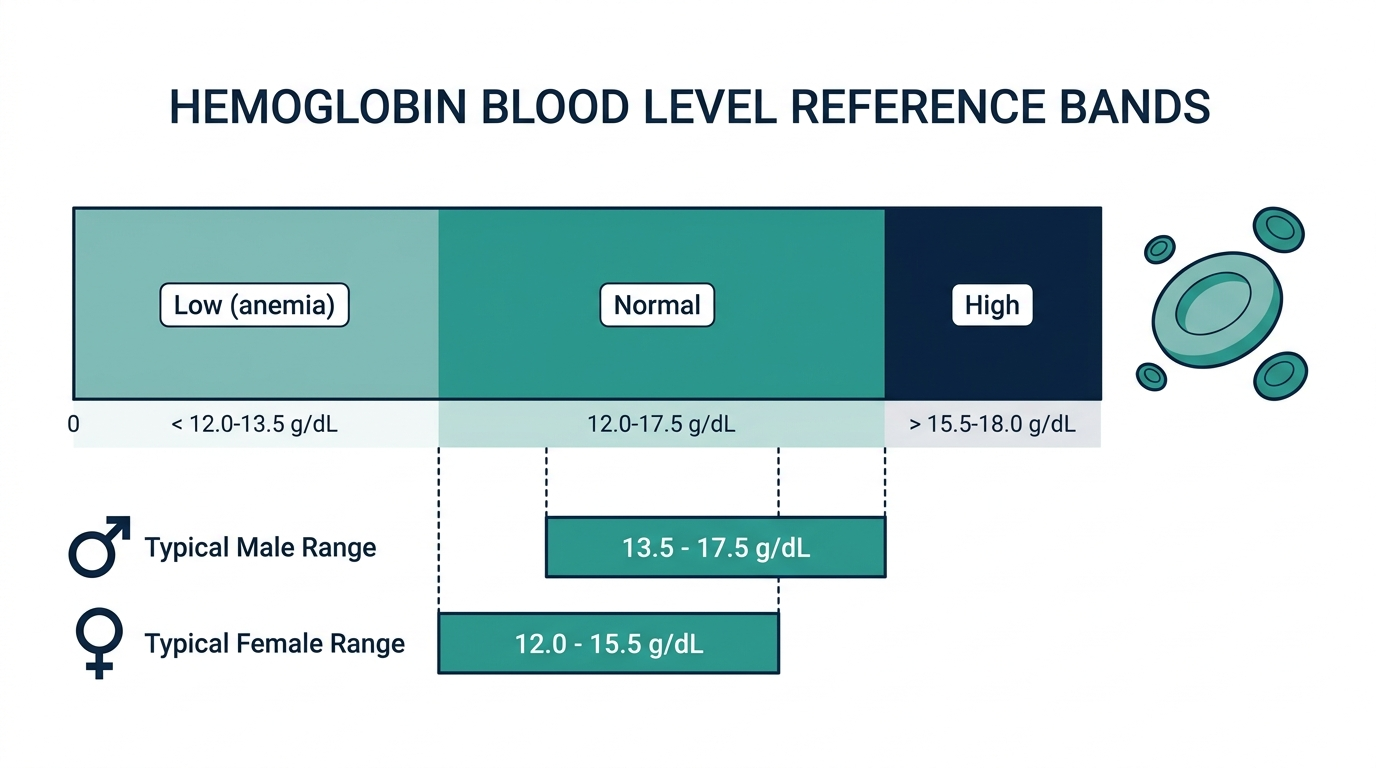
- A normal hemoglobin level for most adult men is about 13.8 to 17.2 g/dL, and for most adult women it is about 12.1 to 15.1 g/dL, according to MedlinePlus.
- Hemoglobin is highest at birth (roughly 14 to 24 g/dL), drops to its lowest point around 1 to 6 months of age (about 9.5 to 14 g/dL), then climbs through childhood toward adult values.
- The World Health Organization defines anemia as hemoglobin below 13 g/dL in men and below 12 g/dL in non-pregnant women, so the same number can be normal for one person and low for another.
Part of our Complete Blood Count guide.
Hemoglobin ranges vary by age and sex, so is your oxygen-carrying capacity actually where it should be? One at-home Superpower draw checks 100+ biomarkers, physician-reviewed.
What is a normal hemoglobin level?
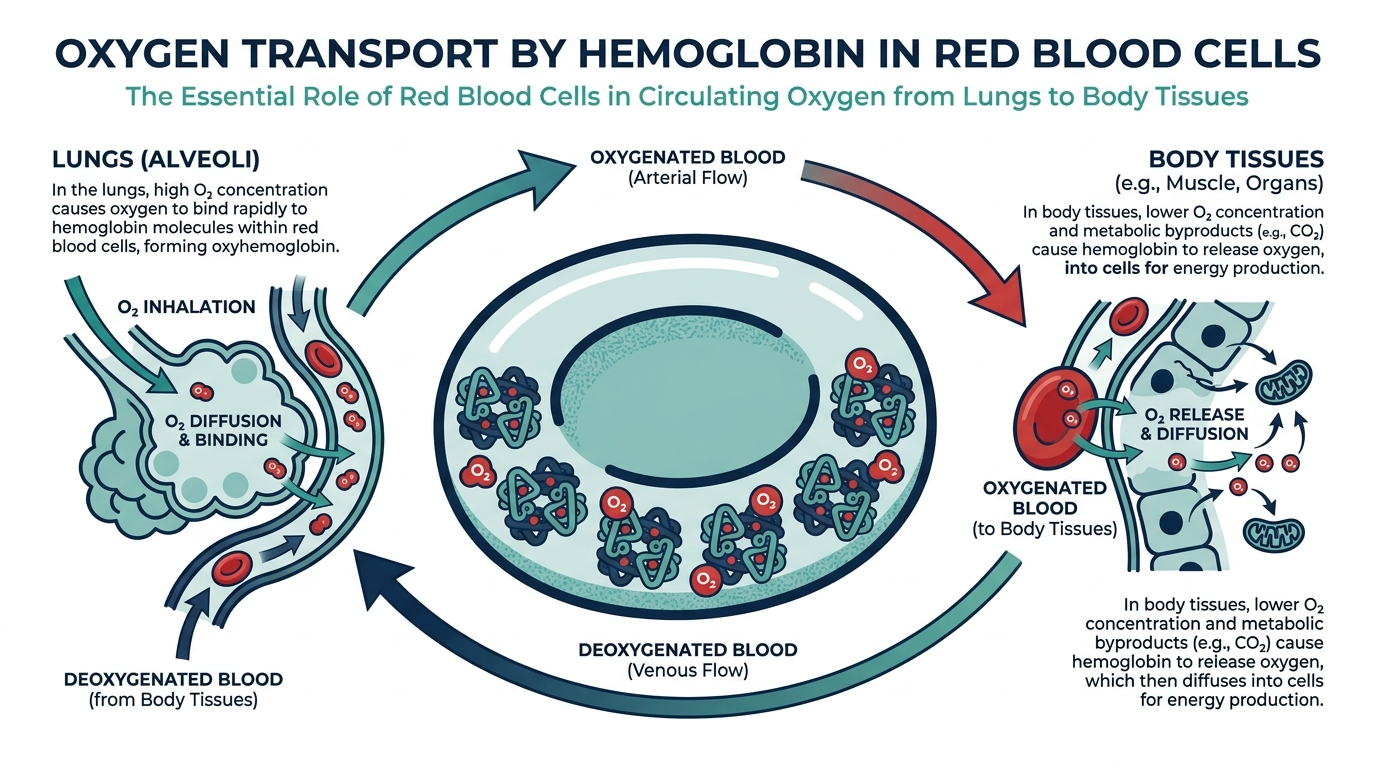
For a healthy adult, a normal hemoglobin level is roughly 13.8 to 17.2 g/dL in men and 12.1 to 15.1 g/dL in women, based on MedlinePlus reference values. Hemoglobin (often written Hgb or Hb) is measured in grams per deciliter of blood (g/dL), and it is one of the core numbers on a standard CBC.
There is no single universal cutoff. Each laboratory sets its own reference range based on the population it serves and the analyzer it uses, so your report may say 13.5 to 17.5 g/dL or 12.0 to 16.0 g/dL and still be correct. That is why MedlinePlus notes that “normal value ranges may vary slightly among different laboratories.” The practical rule is simple: read your result against the range printed on your own lab report, then talk with your clinician about anything flagged high or low.
Why the range matters: hemoglobin tracks how much oxygen your blood can move. Too little can leave you tired and short of breath, while too much can thicken the blood, so the reference range is a guardrail, not a grade.
Hemoglobin normal range by age
The simplest way to actually get this done
Superpower is a full-body lab membership that runs 100+ biomarkers, has each result reviewed by a doctor, and tracks your numbers year over year (about $199/year). It is what we point readers to when they would rather get one clean, complete draw than chase single tests one at a time. Here is superpower reviewed in full.
Hemoglobin reference ranges change dramatically across the lifespan, from a high of about 14 to 24 g/dL at birth down to roughly 9.5 to 14 g/dL in early infancy before rising again, per MedlinePlus and UCSF Benioff Children’s Hospital. The table below gathers commonly cited reference values. Treat them as typical ranges, not strict pass-or-fail lines, because labs differ.
| Age group | Typical hemoglobin range (g/dL) | Source |
|---|---|---|
| Newborn (0 to 6 days) | 14.0 to 24.0 | MedlinePlus, UCSF |
| Infant (1 to 6 months) | 9.5 to 14.0 | MedlinePlus, UCSF |
| Child (6 months to 2 years) | 10.5 to 13.5 | Labcorp pediatric ranges |
| Child (2 to 6 years) | 11.5 to 13.5 | Labcorp pediatric ranges |
| Child (6 to 12 years) | 11.5 to 15.5 | Labcorp pediatric ranges |
| Female (12 to 18 years) | 12.0 to 16.0 | Labcorp pediatric ranges |
| Male (12 to 18 years) | 13.0 to 16.0 | Labcorp pediatric ranges |
| Adult female | 12.1 to 15.1 | MedlinePlus |
| Adult male | 13.8 to 17.2 | MedlinePlus |
Notice the U-shaped pattern. Babies are born with very high hemoglobin because the womb is a low-oxygen environment, then levels fall to a natural low point called the “physiologic nadir” around 2 to 3 months of age as fetal red cells break down and production catches up. From there, hemoglobin climbs steadily through childhood. Sex differences appear during puberty and persist into adulthood.
Hemoglobin never travels alone: MCV, ferritin, and the rest of the CBC
A hemoglobin number tells you how much oxygen-carrying protein is in your blood, but not why it is high or low. That answer lives in the companions printed next to it on the CBC and in a few follow-up tests. When hemoglobin is low, the single most useful partner is the MCV (mean corpuscular volume), which measures red cell size and sorts anemia into three families:
- Microcytic (MCV under about 80): small cells, most often iron deficiency, and sometimes an inherited thalassemia trait.
- Normocytic (MCV about 80 to 100): normal-sized cells, seen in acute blood loss, anemia of chronic disease, and kidney-related anemia.
- Macrocytic (MCV over about 100): large cells, classically vitamin B12 or folate deficiency, and also alcohol use or thyroid problems.
Two more numbers sharpen the picture. RDW (red cell distribution width) flags whether your red cells are uniform or a mix of sizes, which helps separate iron deficiency from thalassemia. The reticulocyte count shows whether the bone marrow is responding by pumping out young red cells or has gone quiet. To confirm iron deficiency, clinicians add iron studies, especially ferritin, the body’s iron storage marker, since ferritin can be low well before hemoglobin drops. This is why a good workup reads hemoglobin, MCV, RDW, reticulocytes, and ferritin together rather than reacting to the hemoglobin line alone.
How does sex change the range?
Sex shifts the adult hemoglobin range by roughly 1 to 2 g/dL, with men sitting higher (about 13.8 to 17.2 g/dL) than women (about 12.1 to 15.1 g/dL), according to MedlinePlus. Before puberty, boys and girls share nearly identical ranges. The gap opens during adolescence and holds for most of adult life.
Two main drivers explain the difference. First, testosterone stimulates red blood cell production, nudging male hemoglobin upward. Second, menstruation causes regular iron and blood loss in many women, which tends to pull hemoglobin down. This is also why anemia thresholds differ by sex: the World Health Organization places the anemia line at below 13 g/dL for men and below 12 g/dL for non-pregnant women.
Pregnancy is a special case. Blood volume expands faster than red cell mass, diluting hemoglobin, so a value near 11 g/dL can be expected in pregnancy. The CDC commonly uses 11 g/dL as the lower limit in the first and third trimesters. Pregnant patients should follow trimester-specific guidance from their own clinician.
What makes hemoglobin rise or fall with age?
Hemoglobin tends to drift slightly downward in older adults, and studies cited by NIH-indexed research suggest anemia becomes more common after age 65, affecting more than 10 percent of community-dwelling seniors. Aging itself does not automatically lower hemoglobin into the anemic range, but the causes of low values become more frequent with age.
Several factors push hemoglobin up or down at any age:
- Iron, B12, and folate: shortfalls of any of these reduce red cell production and lower hemoglobin.
- Kidney function: the kidneys make erythropoietin, the hormone that signals red cell production, so chronic kidney disease often lowers hemoglobin.
- Blood loss: heavy periods, ulcers, or gastrointestinal bleeding deplete hemoglobin over time.
- Chronic disease and inflammation: long-term conditions can suppress red cell production.
- High altitude and smoking: both raise hemoglobin as the body compensates for lower oxygen, and MedlinePlus notes levels rise for several weeks at higher altitude.
- Dehydration: a falsely high reading can occur because the blood is more concentrated.
Because so many variables move the number, one out-of-range result is a prompt to investigate, not a diagnosis on its own.
How to prepare for a hemoglobin test (and what can skew it)
Hemoglobin is part of a routine CBC, which needs no fasting, but a handful of everyday factors can shift the reading enough to mislead:
- Hydration. This is the big one. Dehydration concentrates the blood and pushes hemoglobin up, while a large volume of IV fluids can dilute it down. A “high” reading in someone who arrived thirsty often settles after they rehydrate.
- Posture and tourniquet time. Standing versus lying down can change hemoglobin by several percent, and a tourniquet left on too long can nudge it up. These are lab-technique effects, which is one reason a borderline value is repeated rather than acted on.
- Altitude and smoking. Living at high altitude or smoking raises hemoglobin as the body compensates for lower available oxygen, and the rise at altitude builds over several weeks (MedlinePlus). Mention both, because they can make a normal person look high.
- Recent blood donation or heavy menstrual bleeding. Either can lower hemoglobin temporarily, so timing the test away from these gives a truer baseline.
- Time of day. Hemoglobin has a mild daily rhythm, so testing at a consistent time makes trends easier to compare.
The practical rule is the same as for the other markers in this series: test under ordinary, consistent conditions, disclose altitude, smoking, and recent donation, and trust a repeated value over a single surprising one.
When is an out-of-range result a concern?
An out-of-range hemoglobin is most concerning when it pairs with symptoms or when it falls clearly past the anemia or high-hemoglobin thresholds. The Cleveland Clinic considers hemoglobin high above roughly 16.5 g/dL in adult men and above 16 g/dL in adult women, while the WHO marks anemia below 13 g/dL in men and below 12 g/dL in non-pregnant women.
Low hemoglobin (anemia) often shows up as fatigue, weakness, pale skin, shortness of breath, dizziness, or a fast heartbeat. Mild cases may cause nothing at all and turn up only on a routine CBC. Common causes include iron deficiency, blood loss, and chronic disease.
High hemoglobin can stem from dehydration, smoking, lung or heart conditions, living at altitude, or a bone marrow disorder such as polycythemia vera. It may thicken the blood and raise clotting risk. A single borderline value usually warrants a repeat test, while a markedly abnormal result, or any abnormal value with symptoms, should be reviewed promptly by a clinician who can order follow-up testing such as iron studies, a reticulocyte count, or kidney function tests.
What to do about a low or high hemoglobin
The right response depends entirely on the cause, which is why the workup above matters before any action. That said, the common paths look like this:
If hemoglobin is low and the cause is iron deficiency, treatment usually pairs finding the source of iron loss with replacing iron. Iron-rich foods (red meat, poultry, beans, lentils, fortified cereals) help, and pairing plant iron with vitamin C improves absorption while tea and coffee with meals blunt it. Oral iron supplements are common, and are absorbed better every other day than in large daily doses for many people. When deficiency is severe, when the gut cannot absorb iron, or when hemoglobin is dangerously low, clinicians may use an iron infusion or, at very low levels with symptoms, a transfusion. B12 or folate deficiency is treated by replacing the missing vitamin. The crucial point is that iron deficiency in an adult, especially a man or a postmenopausal woman, is a reason to look for a source of bleeding, not just to swallow a supplement.
If hemoglobin is high, the first step is to rule out the simple explanations: dehydration, smoking, and living at altitude. Sleep apnea and chronic lung or heart conditions can also drive it up as the body compensates for low oxygen. When those are excluded and hemoglobin stays elevated, a clinician may test for polycythemia vera, a bone marrow disorder often linked to a JAK2 gene mutation, because thickened blood raises the risk of clots and needs proper management.
A realistic example
A 41-year-old woman with heavy periods feels increasingly tired and short of breath on the stairs. Her CBC shows hemoglobin of 10.5 g/dL with a low MCV, and her ferritin is low. The pattern points cleanly to iron-deficiency anemia from menstrual blood loss. Her clinician treats the iron, addresses the heavy bleeding, and rechecks hemoglobin in a couple of months to confirm it is climbing back. The number told them she was anemic, but it was the MCV and ferritin beside it that named the cause.
Curious what your own levels look like?
Baseline 100+ biomarkers today and retest as life changes, all in one membership with physician review.
Frequently asked questions
Is 12 g/dL a normal hemoglobin level?
For an adult woman, 12.1 g/dL sits at the low end of normal per MedlinePlus. For an adult man it is below the typical range and may indicate mild anemia, since the WHO anemia cutoff for men is 13 g/dL. Context and symptoms matter, so confirm with your clinician.
What hemoglobin level is dangerously low?
Hemoglobin below about 7 to 8 g/dL is often considered severe and may prompt a blood transfusion, depending on symptoms and the cause. Any level under your lab’s range deserves evaluation, but values this low warrant urgent medical attention, especially with chest pain or breathlessness.
Does hemoglobin naturally decrease with age?
Hemoglobin tends to dip slightly in older adults, and anemia is more common after age 65. However, aging alone should not drop you into the anemic range. A low value in a senior usually points to an underlying cause worth investigating, not simply “old age.”
Why is my hemoglobin different from my friend’s normal?
Reference ranges vary by age, sex, and laboratory. Men typically run 1 to 2 g/dL higher than women, and each lab calibrates its own range. Always compare your result to the range printed on your own report rather than someone else’s.
Can dehydration raise hemoglobin?
Yes. Dehydration concentrates the blood, which can make hemoglobin look falsely high. Rehydrating and repeating the test often returns the value to normal. This is why clinicians frequently retest a single high reading before pursuing further workup.
What does MCV tell you about anemia?
MCV measures the size of your red blood cells and helps pinpoint the cause of anemia. A low MCV points toward iron deficiency or thalassemia, a normal MCV toward blood loss or chronic disease, and a high MCV toward vitamin B12 or folate deficiency. It is one of the most useful numbers sitting next to hemoglobin on a CBC.
How can I raise a low hemoglobin?
If the cause is iron deficiency, eat iron-rich foods, pair plant iron with vitamin C, and take any iron supplement your clinician recommends. Just as important is finding and treating the reason it dropped, such as heavy periods or gastrointestinal bleeding. B12 or folate deficiency is corrected by replacing the missing vitamin. Persistent or severe anemia needs medical evaluation, not just diet changes.
Does high hemoglobin always mean polycythemia?
No. High hemoglobin is far more often explained by dehydration, smoking, or living at altitude than by a bone marrow disorder. Polycythemia vera, a condition often linked to a JAK2 mutation, is one cause clinicians check for when hemoglobin stays high after the everyday explanations are ruled out.
Do I need to fast for a hemoglobin test?
No. Hemoglobin is measured as part of a complete blood count, which does not require fasting. If your hemoglobin is drawn alongside a glucose or lipid panel, you may be asked to fast for those other tests, not for the hemoglobin itself.
Sources
- MedlinePlus, Hemoglobin Medical Encyclopedia
- UCSF Benioff Children’s Hospital, Hemoglobin
- Labcorp, Pediatric Testing Reference Ranges
- Cleveland Clinic, High Hemoglobin Count
- Cleveland Clinic, Anemia
- World Health Organization, Guideline on Haemoglobin Cutoffs for Anaemia
This article is for general educational purposes and is not medical advice. It cannot diagnose or treat you and does not replace your clinician. Always discuss your lab results and any health decisions with a qualified healthcare professional.
Vital Signs Today may earn a commission if you buy through links on this page. It does not affect our editorial assessments.