Related: Glucose levels by age: chart
Part of our Comprehensive Metabolic Panel guide.
You got your lab results back, scanned the metabolic panel, and there it was near the top: glucose, with a number beside it. Maybe it sat quietly inside the reference range, maybe it nudged just above it. Either way, glucose is one of the few numbers on the page that says something about almost every system in your body at once, and most people glance at it without realizing how much it is actually telling them.
Here is what most explainers skip. The glucose value on a standard panel is a single snapshot, and the timing of when your blood was drawn changes what that snapshot means entirely. Read it without that context and you can scare yourself, or miss an early warning, for no good reason.
What is glucose in a blood test?
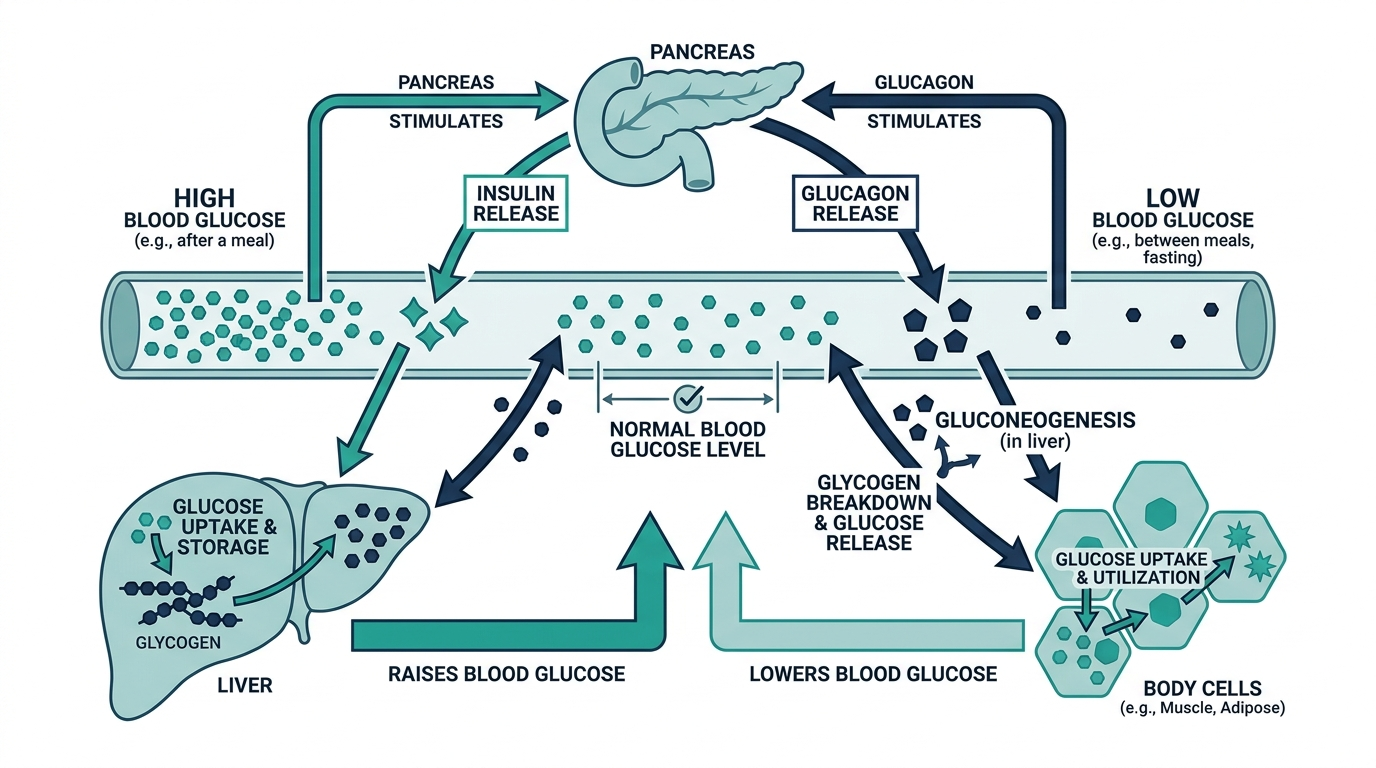
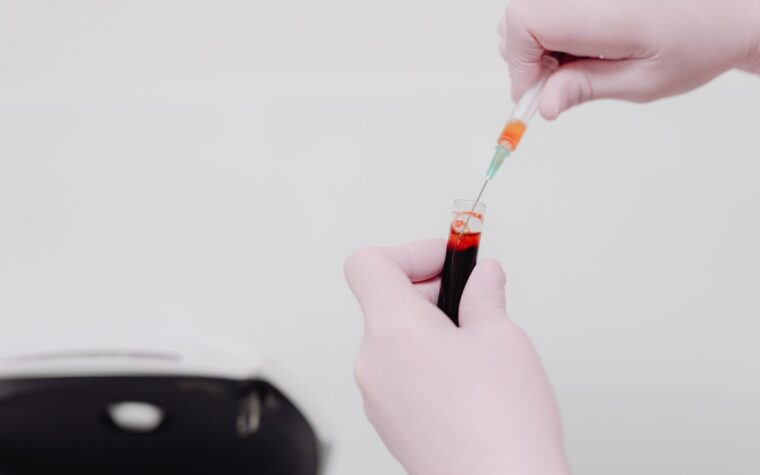
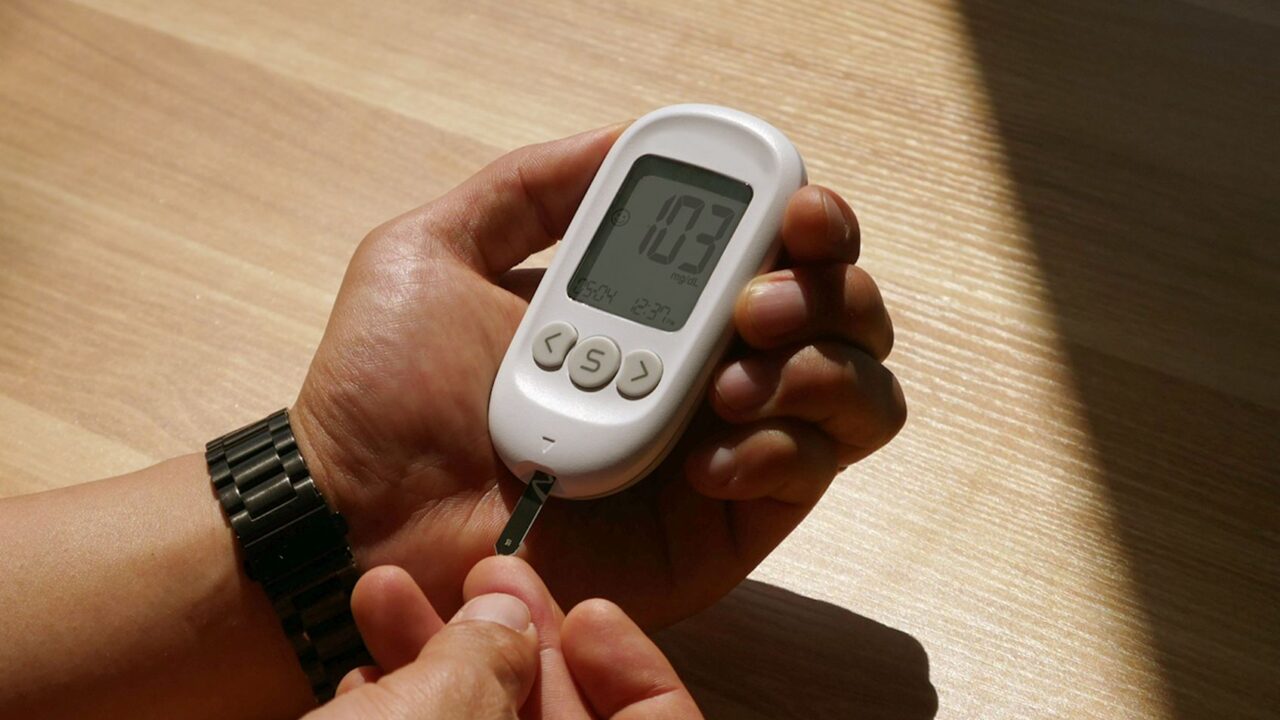
Glucose in a blood test is the amount of sugar circulating in your bloodstream at the moment your sample was taken. Glucose is a type of sugar and your body’s main source of energy, and a blood glucose test simply measures how much of it is in your blood (MedlinePlus). It shows up automatically on routine bloodwork such as a basic or comprehensive metabolic panel (Cleveland Clinic). In plain terms, when you ask what is glucose in a blood test, the answer is this: it is your blood sugar level, reported in milligrams per deciliter (mg/dL) in the United States.
That one number is the headline indicator your clinician uses to screen for and monitor diabetes. Your body works hard to keep glucose in a fairly narrow band, so when it drifts too high or too low, it is a signal worth understanding rather than skipping past.
What does glucose mean in a blood test?
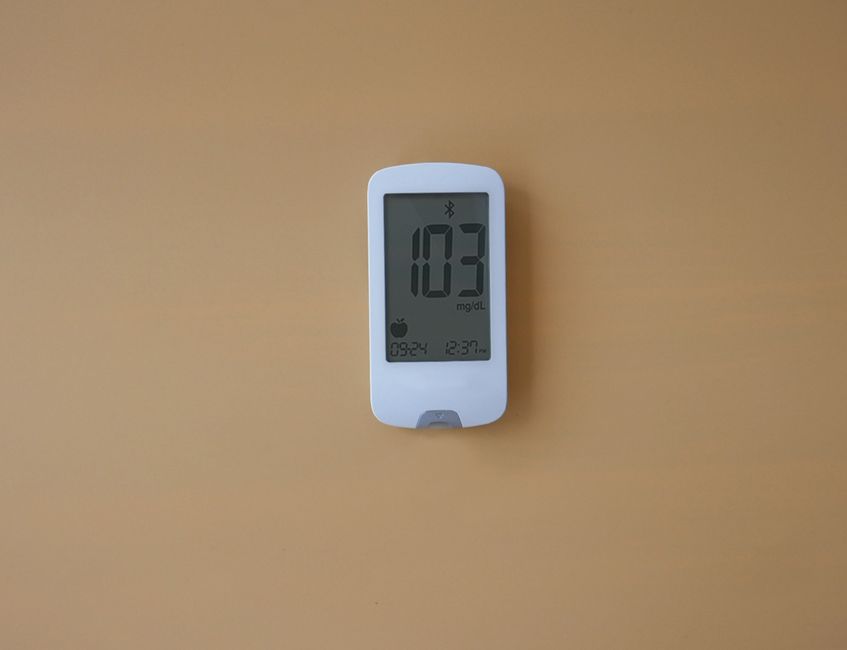
What glucose means in a blood test depends almost entirely on how the sample was collected. The same number reads very differently depending on whether you had fasted or just eaten. There are several common versions of the test, and each answers a slightly different question (MedlinePlus):
- Fasting blood glucose. Drawn after at least 8 hours with nothing to eat or drink except water. This is the cleanest baseline because it measures your sugar when it should be at its lowest (Cleveland Clinic).
- Random blood glucose. Drawn at any time, even right after a meal. Useful when symptoms of high or low sugar are present.
- Oral glucose tolerance test (OGTT). A fasting draw, then a sugary drink, then repeat samples over the next 2 to 3 hours to see how your body clears the load (MedlinePlus).
- Glucose challenge test. The one-hour sugary-drink screen used in pregnancy to check for gestational diabetes.
So before you react to a glucose value, find out which test it was. A reading of 130 mg/dL is unremarkable an hour after lunch and a clear red flag after a true overnight fast. Context is the whole game.
What is a normal glucose level in a blood test?
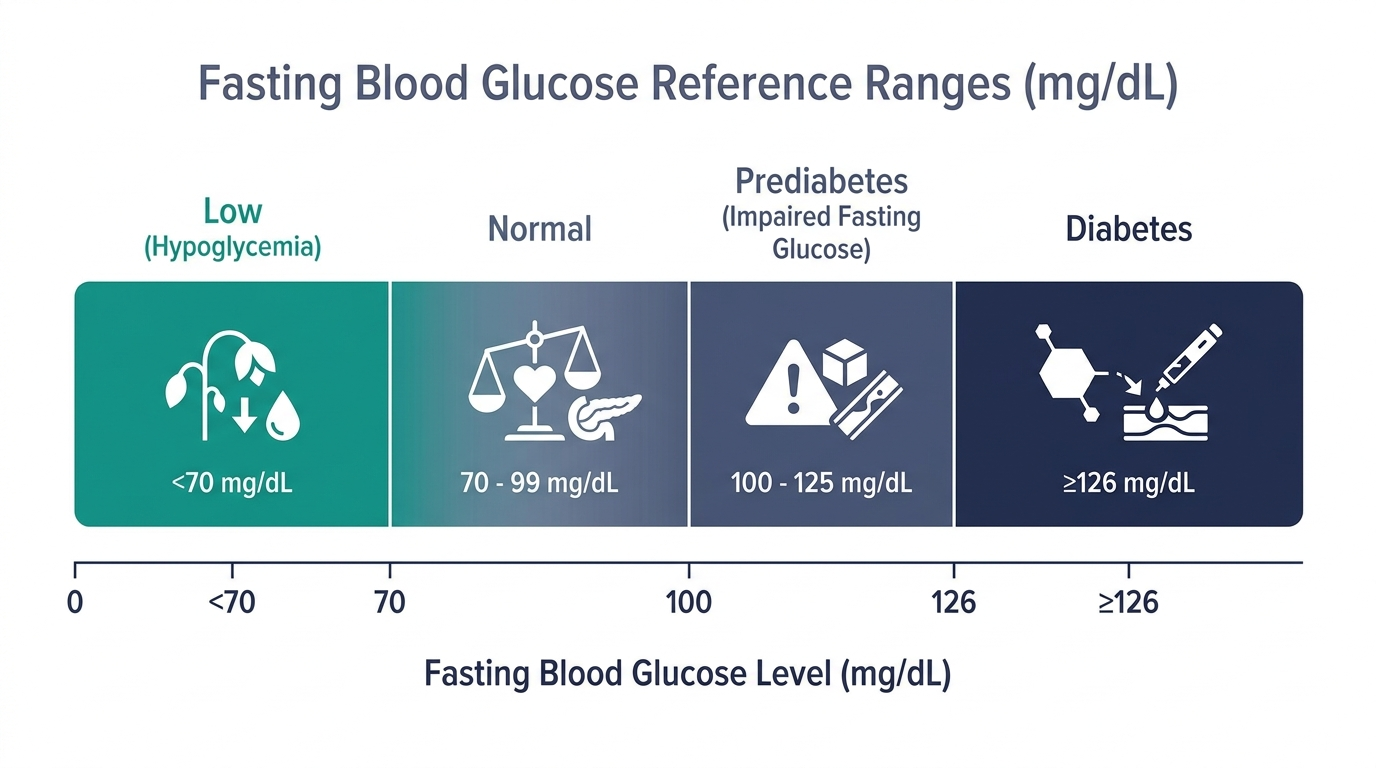
A normal fasting blood glucose is 70 to 99 mg/dL (3.9 to 5.5 mmol/L) (Cleveland Clinic). That is the band a healthy body holds glucose in after several hours without food. The numbers climb in defined steps from there, and these cutoffs are how prediabetes and diabetes are actually diagnosed (Cleveland Clinic):
- Normal: 70 to 99 mg/dL fasting.
- Prediabetes: 100 to 125 mg/dL (5.6 to 6.9 mmol/L) fasting.
- Diabetes: 126 mg/dL (7.0 mmol/L) or higher fasting, on more than one testing occasion.
The oral glucose tolerance test uses its own scale at the two-hour mark: under 140 mg/dL is normal, 140 to 199 mg/dL is prediabetes, and 200 mg/dL or higher points to diabetes (Cleveland Clinic). One detail matters here. A diabetes diagnosis from fasting glucose usually requires the high result to repeat, not a single elevated draw, because everyday factors can push a one-off reading up.
What does a high glucose level mean?
A high blood glucose level means there is more sugar in your blood than your body is clearing, which most often raises the question of prediabetes or diabetes. A fasting result of 100 to 125 mg/dL falls into the prediabetes range, and 126 mg/dL or higher on repeat testing is the diabetes threshold (Cleveland Clinic). But an elevated glucose is not automatically a diagnosis. Common reasons a reading runs high include:
- You did not actually fast. Coffee with cream, juice, or a snack in the fasting window inflates the number.
- Acute stress or illness. Infection, injury, or even the stress of the blood draw itself can temporarily raise glucose.
- Certain medications, including steroids, which is why glucose is sometimes monitored while on them (MedlinePlus).
- True prediabetes or diabetes, where the body no longer keeps glucose in range on its own.
What makes high glucose worth taking seriously is how silent it can be. Prediabetes and early type 2 diabetes often have no symptoms at first, so you can have the condition and not know it (Cleveland Clinic). The lab number is frequently the only thing waving a flag, which is exactly why a borderline glucose deserves a follow-up rather than a shrug.
What does a low glucose level mean?
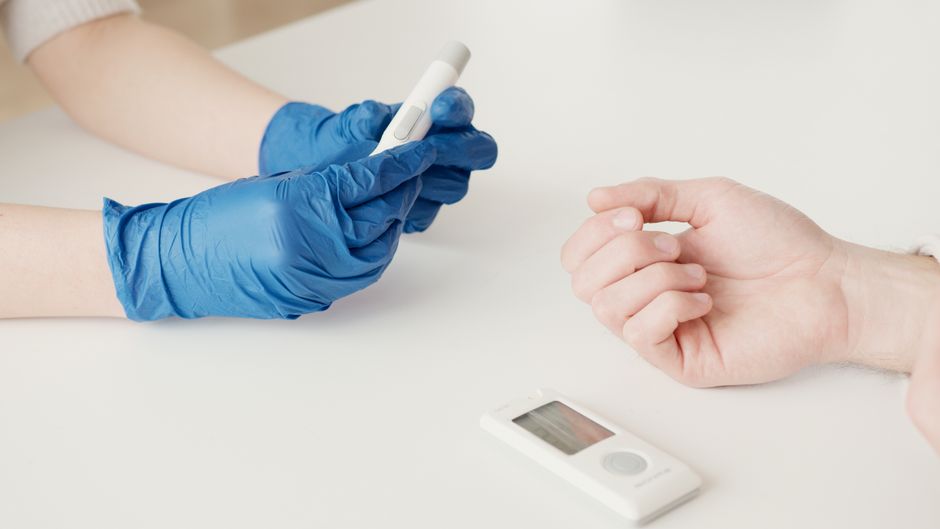
A low blood glucose level, called hypoglycemia, means your sugar has dropped below the range your brain and body need to run smoothly. For most adults who have diabetes, a result of 70 mg/dL or lower is considered too low (Cleveland Clinic). Low glucose is most often caused by diabetes medicines, particularly insulin and some oral drugs, when the dose, food intake, and activity do not line up (MedlinePlus).
The symptoms are hard to miss once you know them: shakiness, hunger, sweating, dizziness, a racing heartbeat, headache, and trouble with vision or speech. Without treatment, severe low glucose can lead to fainting, seizures, and serious harm (MedlinePlus). If you are not on glucose-lowering medication, true hypoglycemia is less common, but a low reading is still something to mention to your clinician rather than ignore.
Why is glucose read together with A1C?
Glucose and A1C are read together because they answer two different questions, and one covers for the blind spot of the other. A single glucose value captures your sugar at one exact moment, while A1C reflects your average blood glucose over roughly the past 3 months by measuring how much sugar has attached to your red blood cells (Cleveland Clinic). Think of glucose as today’s weather and A1C as the season’s climate.
The A1C scale is read in percent: under 5.7 percent is normal, 5.7 to 6.4 percent is prediabetes, and 6.5 percent or higher indicates diabetes (Cleveland Clinic). Pairing the two matters because a single glucose reading can be thrown off by a recent meal, stress, or illness, while A1C smooths all of that into a longer trend. When both point the same direction, the picture is far more convincing than either alone.
Here is the insider caveat clinicians keep in mind. A1C is an average, and averages hide swings. Two people can both land at 7 percent A1C while one rides wild highs and lows and the other stays fairly flat (Cleveland Clinic). That is precisely why your fasting glucose snapshot still earns its place on the panel. It catches the moment-to-moment reality that a three-month average can quietly paper over.
The part most people never hear: your fasting number is only as honest as your fast
This is where a lot of glucose results get misread, and it almost never makes it into the patient-facing summary. The fasting glucose threshold of 100 mg/dL for prediabetes assumes you genuinely fasted for at least 8 hours with nothing but water (Cleveland Clinic). The fasting test exists specifically to measure your sugar when it should be at its lowest (Cleveland Clinic). Break the fast in any small way and the entire interpretation shifts.
In practice, the quiet culprits are everyday habits people do not count as eating. A splash of milk in morning coffee, a piece of gum, a sip of juice on the way to the lab, a stressful commute, even a poor night of sleep can nudge a fasting glucose upward. None of that makes you diabetic, but it can drag a perfectly healthy 92 into a borderline 104 and trigger a worry, or a repeat blood draw, that was never necessary. The flip side is just as real: if you regularly graze before bloodwork, a deceptively normal fasting number can mask a problem.
The practical move is simple. Treat a single out-of-range fasting glucose as a question, not a verdict. Confirm you truly fasted, note anything unusual about that morning, and ask whether a repeat fasting test or an A1C would give a cleaner read. A diagnosis built on one snapshot taken on an off morning is a diagnosis worth double-checking.

Symptoms that can accompany high or low glucose
Glucose is unusual because at the levels that matter most for early screening it often causes nothing you can feel. Early prediabetes and early type 2 diabetes are frequently silent, which is exactly why the lab number does the warning that the body does not. When symptoms of sustained high glucose do appear, they tend to include:
- Increased thirst and a dry mouth.
- Frequent urination, especially waking to urinate at night.
- Unexplained fatigue or low energy.
- Blurred vision.
- Slow healing cuts, and more frequent infections.
- Unintended weight loss in some cases.
Very high glucose with symptoms like rapid breathing, confusion, fruity smelling breath, or vomiting is a medical emergency and needs immediate care. On the other end, low glucose announces itself faster and louder: shakiness, sweating, hunger, a racing heart, irritability, and, if it drops far enough, confusion or fainting. The contrast is worth remembering. High glucose whispers over years, while low glucose shouts in minutes.
Who should get screened, and how often
Because high glucose can hide for years, screening guidelines lean toward catching it before symptoms start. Major bodies such as the American Diabetes Association recommend routine screening for adults beginning at a set age and earlier for people with added risk. The practical prompts to get tested, or to test more often, include:
- Being overweight or having obesity, especially with extra weight around the middle.
- A family history of type 2 diabetes.
- High blood pressure, abnormal cholesterol, or a history of cardiovascular disease.
- A history of gestational diabetes or delivering a large baby.
- Physical inactivity or a diagnosis of polycystic ovary syndrome.
- Belonging to a population with higher diabetes risk.
For someone with a normal result and no risk factors, testing on the periodic schedule your clinician recommends is usually enough. For someone with prediabetes, more frequent monitoring is standard because it is the window where lifestyle change has the biggest payoff. Prediabetes is not a life sentence, and it is the stage where the trajectory is most reversible.
Markers read alongside glucose
A single glucose value gains meaning when it is read against the metabolic company it keeps. A comprehensive panel lets a clinician see the whole pattern rather than one dot.
- A1C. The three month average that smooths out the day to day swings a single glucose cannot capture. Read together, they tell you both today’s weather and the season’s climate.
- Fasting insulin. Insulin resistance often shows up as a rising insulin level while glucose still looks normal, so a high insulin with normal glucose can be an early warning that the pancreas is working harder to hold the line.
- Lipid panel. High triglycerides and low HDL cholesterol frequently travel with insulin resistance, so the cholesterol numbers add context to a borderline glucose.
- Blood pressure and waist measurement. Not lab values, but they cluster with glucose in what is called metabolic syndrome, and a clinician weighs them together.
- Kidney and liver markers. Long standing high glucose affects the kidneys, and fatty liver often coexists with insulin resistance, so those results round out the picture.
This is the core reason one comprehensive draw beats chasing glucose alone. Seeing glucose, A1C, insulin, and lipids in a single snapshot lets a clinician spot insulin resistance years before glucose alone would cross a threshold.

What to do after a high or borderline glucose
A single out of range fasting glucose is a question, not a verdict. The first step is usually to confirm it, since a diabetes diagnosis from fasting glucose typically requires the high result to repeat rather than resting on one draw. Your clinician may add an A1C to see the longer trend and check whether the fasting number was a one off.
If the result lands in the prediabetes range, this is the stage where concrete lifestyle steps move the needle most:
- Movement. Regular physical activity improves how your muscles take up glucose. Even walking after meals blunts the post meal rise.
- Weight. For people carrying extra weight, a modest loss meaningfully lowers the risk of progressing to diabetes.
- Diet. Cutting back on sugary drinks and refined carbohydrates, and building meals around fiber, protein, and whole foods, steadies glucose.
- Sleep and stress. Poor sleep and chronic stress both raise glucose through stress hormones, so they are part of the picture, not afterthoughts.
For confirmed diabetes, the plan is individualized and may include medication alongside these changes, guided by your clinician. The encouraging reality is that prediabetes responds strongly to early action, which is why catching a borderline number matters so much.
Why sustained high glucose matters over time
The reason clinicians take a borderline glucose seriously is not the number itself but what years of elevated glucose can quietly do. Chronically high blood sugar damages small and large blood vessels, and that damage accumulates in the organs most dependent on healthy circulation. Over time, poorly controlled glucose raises the risk of eye disease, kidney disease, nerve damage in the feet and hands, and cardiovascular disease.
The important point for a healthy reader is that this damage builds slowly and silently, which is precisely why the lab number is so valuable. Catching a rising glucose while it is still in the prediabetes range, and acting on it, is the difference between changing course early and managing complications later. The test is not there to frighten you. It is there to give you a head start.
Common misconceptions about blood glucose
- “One high glucose means I have diabetes.” Not on its own. A single high fasting value is usually confirmed with a repeat test or an A1C before any diagnosis, because a broken fast, stress, or illness can inflate one reading.
- “If I feel fine, my glucose is fine.” High glucose is often silent for years. Feeling well does not rule out prediabetes, which is why screening exists.
- “A normal fasting glucose means my metabolism is healthy.” Not necessarily. Insulin resistance can be present while glucose still reads normal, which is why fasting insulin and A1C add so much.
- “Only sugar raises blood glucose.” Refined carbohydrates of all kinds, stress hormones, poor sleep, and some medications like steroids can all lift it. It is more than just candy.
- “Prediabetes always becomes diabetes.” It does not have to. It is the most reversible stage, and lifestyle changes can return many people to a normal range.
Frequently asked questions
What does a glucose blood test show?
A glucose blood test shows the amount of sugar in your blood at the time of the draw, which your clinician uses mainly to screen for and monitor prediabetes and diabetes (MedlinePlus). Depending on the type of test, it can reveal your baseline fasting level or how your body handles a sugar load.
What is a normal blood glucose level?
A normal fasting blood glucose is 70 to 99 mg/dL (3.9 to 5.5 mmol/L). A fasting result of 100 to 125 mg/dL signals prediabetes, and 126 mg/dL or higher on more than one occasion indicates diabetes (Cleveland Clinic).
What does it mean if my glucose is high?
A high glucose can mean prediabetes or diabetes, but it can also reflect not fasting properly, stress, illness, or certain medications such as steroids (MedlinePlus). A single high reading is usually confirmed with a repeat test before any diagnosis is made.
What is a dangerously low blood sugar level?
For most adults with diabetes, a glucose of 70 mg/dL or lower is considered too low and is treated as hypoglycemia (Cleveland Clinic). Symptoms include shakiness, sweating, and dizziness, and severe lows can cause fainting or seizures, so they need prompt attention.
Do I have to fast for a blood glucose test?
It depends on the test. A fasting blood glucose and an oral glucose tolerance test require at least 8 hours with nothing but water, while a random glucose test and an A1C can be done without fasting (MedlinePlus).
This article is for general educational purposes and is not medical advice. It cannot diagnose or treat you and does not replace your clinician. Always discuss your lab results and any health decisions with a qualified healthcare professional.
Vital Signs Today may earn a commission if you buy through links on this page. It does not affect our editorial assessments.