Disclosure: Vital Signs Today may earn a commission if you buy through links on this page, at no extra cost to you. This does not influence our evidence-based assessments. We are not a medical provider; talk to a clinician before acting on test results.
Medically reviewed by the Vital Signs Today Medical Review Board. Last updated 18 June 2026. Every range and figure below is drawn from the peer-reviewed and clinical sources listed at the end of this article.
You opened your lab report, scanned past the cholesterol numbers, and there it was: glucose, flagged high, with a little “H” sitting next to it. Maybe your doctor mentioned it in passing. Maybe you found it yourself before anyone called. Either way, your stomach probably dropped a little, because everyone knows what high blood sugar is supposed to mean.
Here is what most people do not realize. A single high glucose number is a starting point, not a verdict. Whether it matters, and how much, depends entirely on which test it came from, what you had been doing in the hours before, and how high “high” actually was. Let me walk you through it the way a clinician reads it.
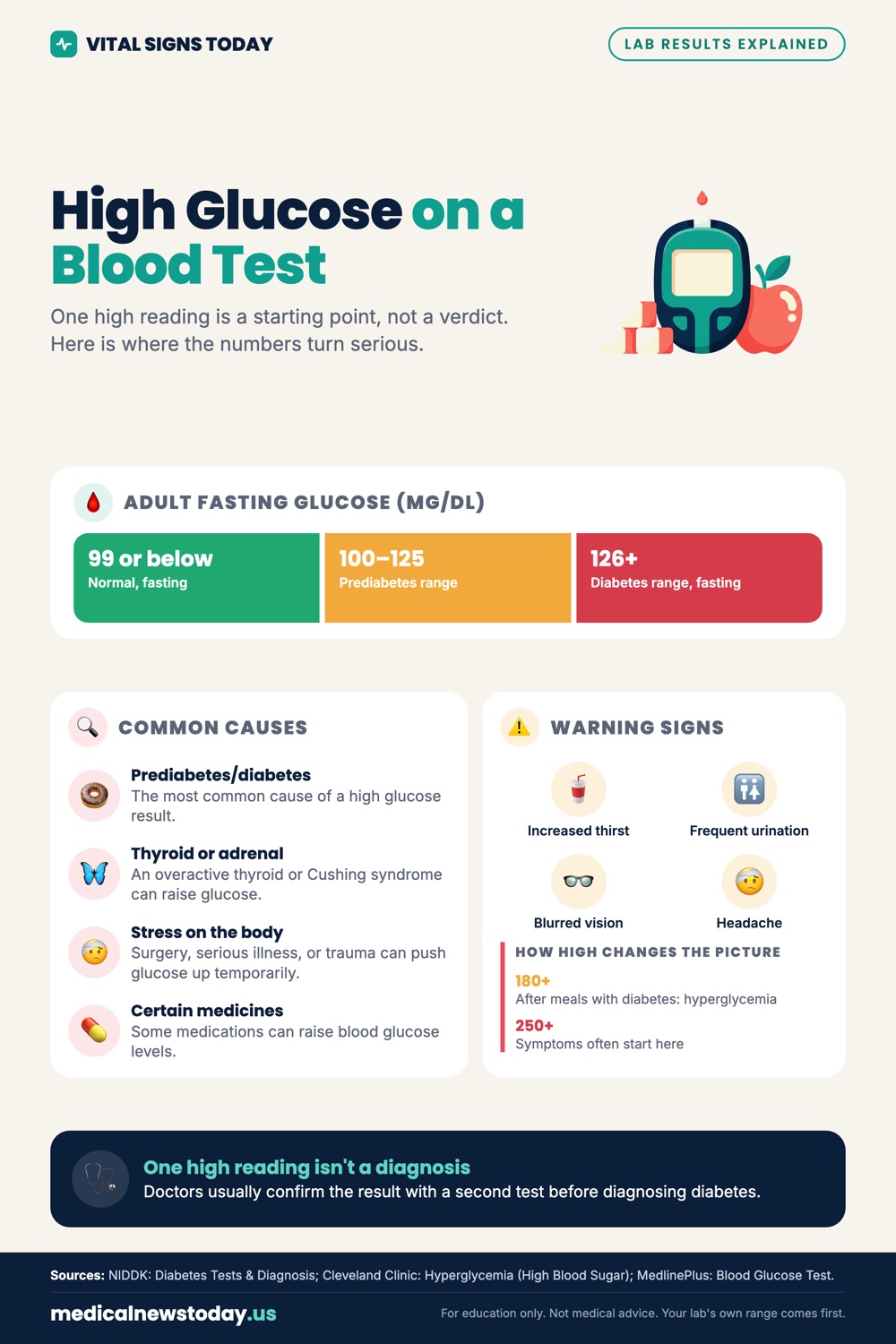
Infographic: High Glucose on a Blood Test. Save it or share it.
What does high glucose mean in a blood test?
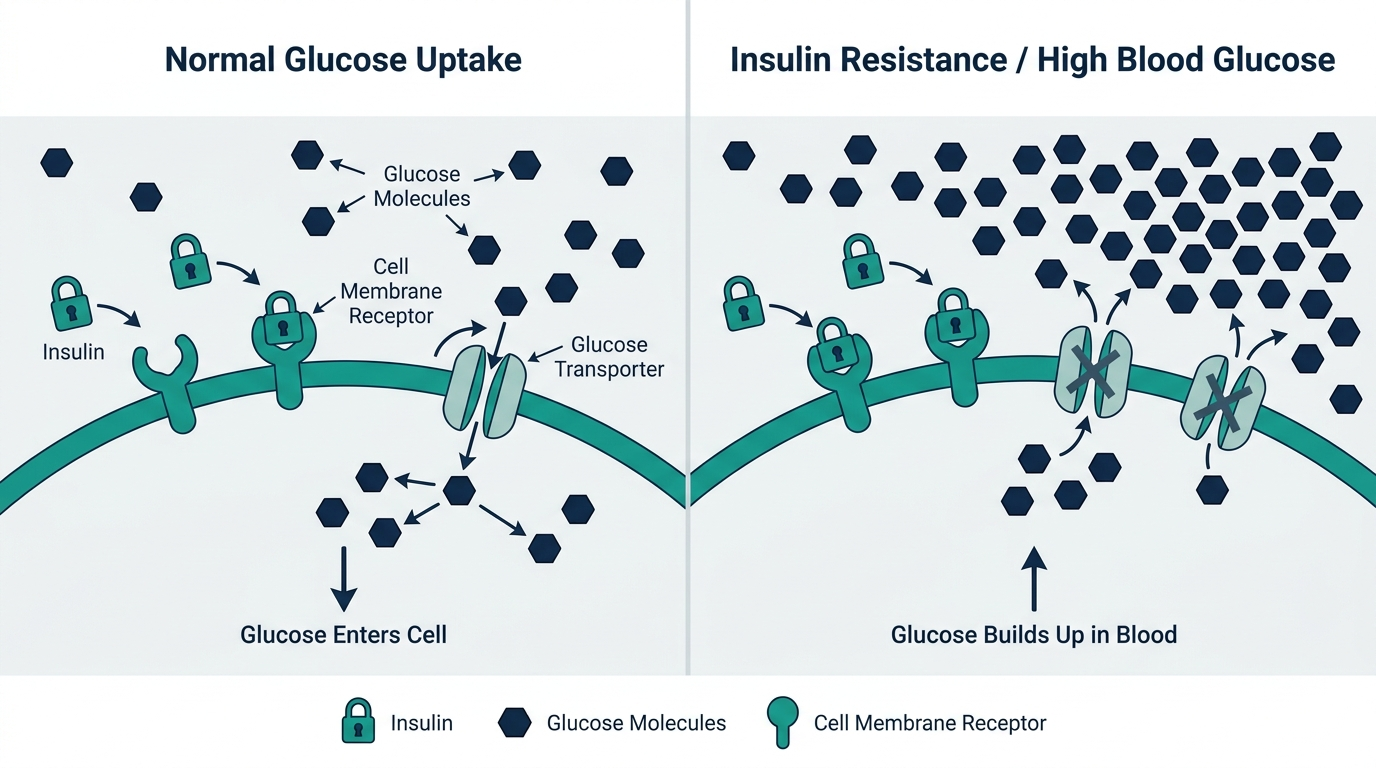
High blood glucose often traces back to insulin resistance: cells stop responding efficiently, so glucose accumulates in the bloodstream instead of entering cells. Illustration: Vital Signs Today.
A high glucose result means there is more sugar circulating in your blood than your body is keeping in its normal range, a state called hyperglycemia (Cleveland Clinic). Glucose is your body’s main fuel, and a hormone called insulin is supposed to move it out of the bloodstream and into your cells. When glucose runs high on a blood test, it usually means that system is not keeping up, either because you are not making enough insulin or because your cells have stopped responding to it well (MedlinePlus).
The number that counts as “high” depends on the test:
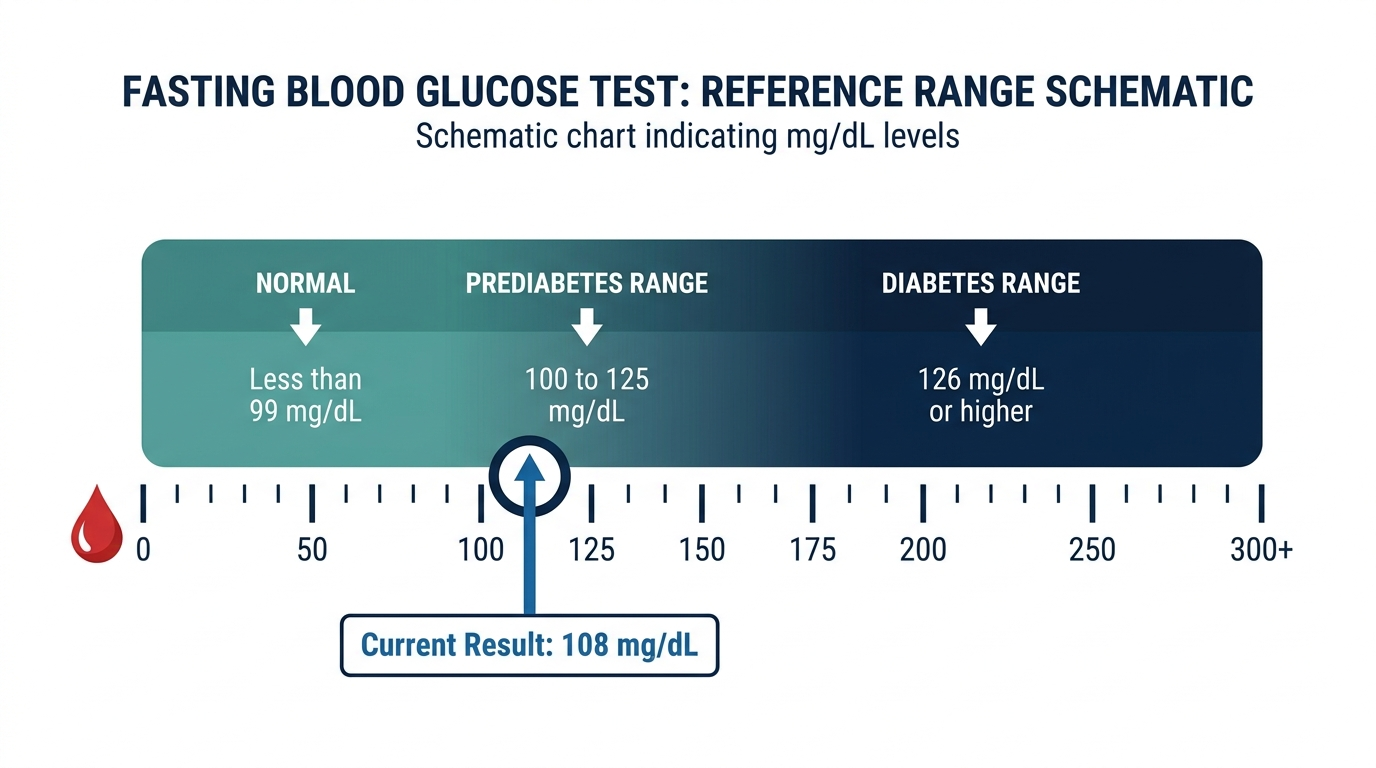
Fasting glucose (no food for at least 8 hours): anything above 125 mg/dL is in the diabetes range. A reading of 100 to 125 mg/dL is prediabetes, and below 100 mg/dL is normal (NIDDK).
Random (non-fasting) glucose: 200 mg/dL or higher, especially with symptoms, points to diabetes (NIDDK).
After a glucose tolerance test (2 hours after a sugary drink): 140 to 199 mg/dL is prediabetes, and 200 mg/dL or above is diabetes.
The single most important thing to know: one high reading does not equal a diagnosis. A diabetes diagnosis usually needs the result confirmed on a second test, on a separate day (NIDDK). So if your glucose came back high, the honest answer is that it means “look closer,” not “you have diabetes.”
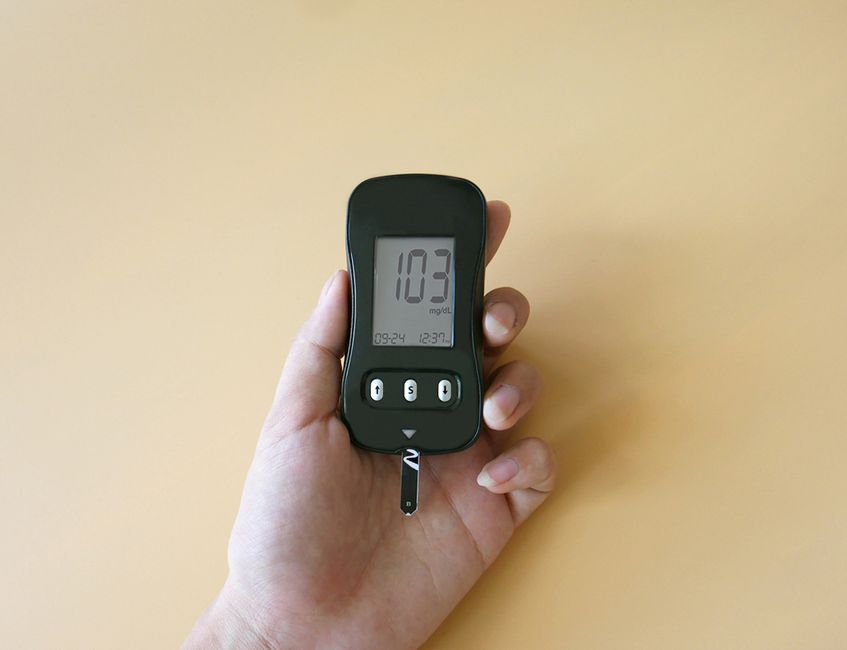
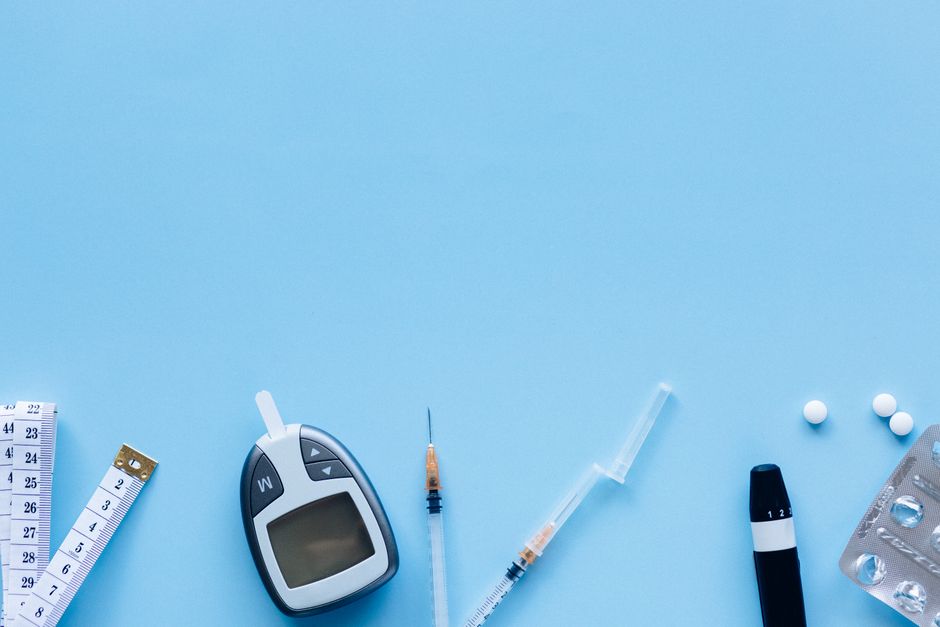
Blood sugar glucose meter.
What causes a high glucose on a blood test?
By far the most common reason glucose is high is that the test was not truly a fasting test. If you ate, drank coffee with sugar, or even had juice within eight hours before a “fasting” draw, your number climbs, and that is the boring explanation behind a lot of surprise results. After that, here is the real differential, roughly most common first:
Type 2 diabetes and prediabetes. The leading true cause of chronic high glucose is insulin resistance, where the body still makes insulin but the cells respond poorly to it. It is strongly linked to excess weight and physical inactivity (Cleveland Clinic).
Type 1 diabetes, where the pancreas makes little or no insulin. This tends to come on faster and at a younger age.
Stress hyperglycemia. Serious physical or emotional stress, surgery, infection, or acute illness can push glucose up temporarily, even in people without diabetes (MedlinePlus).
Medications. Steroids such as prednisone are notorious for raising blood sugar, along with some diuretics and other drugs.
Hormonal conditions. An overactive thyroid, problems with the adrenal glands, or pancreatic disease can all raise glucose (MedlinePlus).
This is why context matters so much. A glucose of 145 mg/dL in someone recovering from pneumonia in a hospital bed means something very different from the same number in a healthy person who fasted properly.
What are the symptoms of high glucose?
Here is the part that catches people off guard: mild to moderate high glucose often has no symptoms at all. Plenty of people with prediabetes and early type 2 diabetes feel completely fine, which is exactly why it gets caught on routine blood work rather than because someone felt sick. The absence of symptoms does not mean the number is harmless.
When glucose is high enough or has been high long enough, the classic warning signs appear (Cleveland Clinic):
Increased thirst and a dry mouth
Frequent urination, including getting up at night to go
Blurred vision
Headaches and fatigue
Unexplained weight loss
Slow-healing cuts and frequent infections
The thirst and frequent urination travel together for a reason. Once blood glucose climbs past roughly 180 mg/dL, the kidneys can no longer reabsorb all of it, so sugar spills into the urine and drags water out with it. That fluid loss is what drives the thirst. If you notice that pairing, it is worth taking seriously.
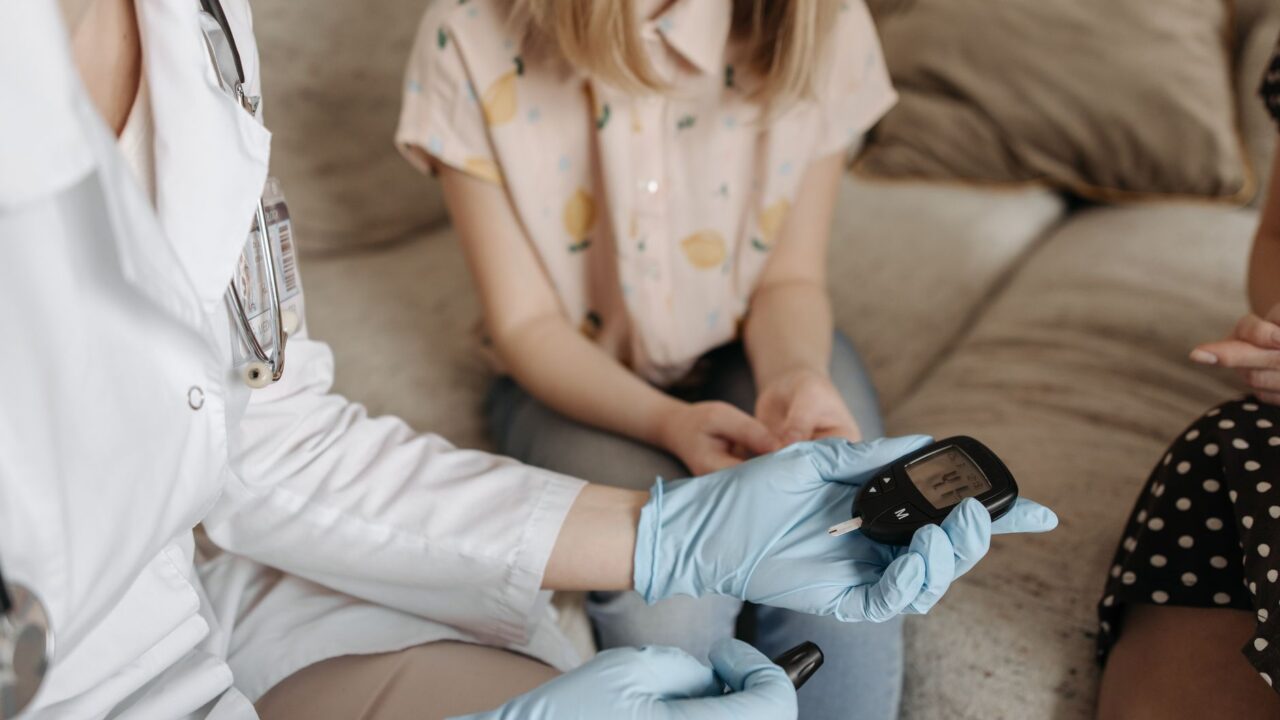
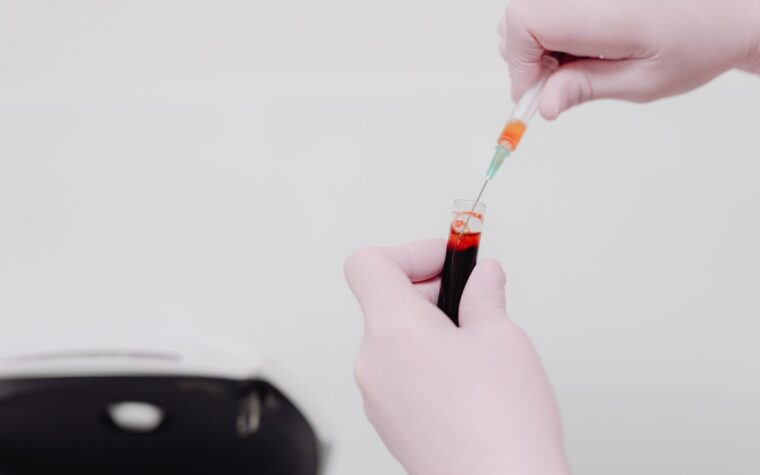
Diabetes testing.
When is high glucose dangerous or a medical emergency?
Most high glucose results are not emergencies. They are signals to get evaluated over the coming days and weeks. But there are two specific situations where high blood sugar becomes a genuine, call-for-help emergency, and knowing the red flags can save a life.
Diabetic ketoacidosis (DKA). This happens mostly in type 1 diabetes when the body runs out of insulin and starts burning fat for fuel, producing acids called ketones. Blood glucose is often above 250 mg/dL, though it can occur lower (Cleveland Clinic). The warning signs are distinctive: nausea and vomiting, abdominal pain, fruity-smelling breath, fast or labored breathing, and confusion. Any of these means go to the emergency room or call for help immediately (Cleveland Clinic).
Hyperosmolar hyperglycemic state (HHS). This is the type 2 counterpart, more common in older adults. Glucose climbs extremely high, often above 600 mg/dL, causing severe dehydration and confusion (StatPearls, NCBI). HHS develops more slowly than DKA but is just as dangerous, and it is a medical emergency requiring immediate treatment (Cleveland Clinic).
A practical rule of thumb: a fasting glucose of 130 or 150 mg/dL on a routine panel is a reason to follow up, not to panic. A glucose in the hundreds with vomiting, fruity breath, deep breathing, drowsiness, or confusion is a reason to seek emergency care right now.
What should you do about a high glucose?
First, do not over-read a single number, and do not ignore it either. Here is a sensible sequence:
Confirm the test conditions. Was it truly fasting? If you are not sure, that alone can explain a borderline-high fasting result, and your clinician may simply repeat it.
Get the confirmation tests. Diabetes is diagnosed with repeat testing, and an A1C blood test, which reflects your average glucose over the past two to three months, helps separate a one-off spike from a true pattern. An A1C of 5.7 to 6.4 percent is prediabetes, and 6.5 percent or higher is diabetes (NIDDK).
Lifestyle first for prediabetes. If you land in the prediabetes range, this is the window where it counts most. Losing modest weight, moving your body regularly, and cutting back on refined carbohydrates and sugary drinks can pull glucose back down and, in many people, delay or prevent type 2 diabetes (Cleveland Clinic).
Medication when needed. If you are diagnosed with diabetes, treatment ranges from oral medications to insulin depending on the type and severity. People with type 1 diabetes need insulin (Cleveland Clinic).
The encouraging truth is that high glucose, caught early, is one of the most modifiable findings on a blood test. Prediabetes is not a one-way street.
Healthy breakfast bowl.
When should you see a doctor?
Book an appointment, without rushing, if your routine blood test shows a fasting glucose above 100 mg/dL, or if you have noticed creeping thirst, frequent urination, blurred vision, or unexplained fatigue or weight loss. These warrant proper evaluation and confirmation testing.
Seek care urgently, the same day or via the emergency room, if your glucose is very high and you feel sick: vomiting, abdominal pain, fruity-smelling breath, rapid breathing, drowsiness, or confusion. Those are the red flags for DKA and HHS, and both are emergencies (Cleveland Clinic).
The insider point: why your “high” glucose might not be high at all
Fasting glucose results are grouped into normal, prediabetes, and diabetes ranges by mg/dL threshold. Illustration: Vital Signs Today.
Here is the clinical nuance that gets missed constantly. The single biggest cause of a falsely high fasting glucose is a non-fasting sample. People are told to fast, then have a splash of milk in their coffee, chew gum, or sip a sports drink on the drive over, and their number lands in the prediabetes range. The lab cannot tell the difference. It just reports what was in the tube.
There is a second, more technical trap. Glucose in a blood sample keeps getting consumed by the red and white cells in the tube after the draw, a process called glycolysis. If the sample sits too long before processing, the measured glucose can drift downward, which means a result that looks borderline-normal could actually have been higher. Good labs use special collection tubes to slow this down, but it is a real source of variability, and it is one reason a single glucose value is never the whole story.
This is also why the A1C test is so useful as a tiebreaker. It does not care whether you ate breakfast that morning, because it reflects the past two to three months of average glucose rather than a single snapshot (NIDDK). When a fasting glucose and an A1C disagree, that gap is information, not noise, and it is exactly the kind of detail a thoughtful clinician chases down rather than scrolling past.
People often treat glucose and A1C as if they measure the same thing. They do not, and understanding the difference resolves most of the confusion around a high reading.
A fasting or random glucose is a snapshot. It tells you the sugar concentration in your blood at one exact moment, and it swings with meals, stress, sleep, and illness. The A1C, by contrast, is a time-lapse. It measures the percentage of your hemoglobin that has sugar permanently stuck to it, and because red blood cells live for about three months, it reflects your average glucose over roughly the past 8 to 12 weeks (NIDDK).
Here is how the two map onto each other in broad terms. An A1C of 5.7 to 6.4 percent corresponds to prediabetes, and 6.5 percent or higher meets the threshold for diabetes. Roughly, each one-percent rise in A1C corresponds to a meaningful jump in average glucose. But the key insight is that they can disagree, and the disagreement is informative:
High glucose, normal A1C: often a one-off spike from a non-fasting sample, recent stress, or illness, rather than a chronic problem.
Normal glucose, high A1C: can happen when glucose runs high between meals or overnight but happened to be normal at the moment of the draw. This pattern argues for a fuller look.
Both high: the most consistent picture, and the one that most strongly supports a diagnosis after confirmation.
A1C also has its own blind spots. Conditions that shorten red blood cell lifespan, such as certain anemias, recent blood loss, or hemoglobin variants, can make A1C read falsely low or high. That is precisely why clinicians look at glucose and A1C together rather than trusting either one alone.
Why timing changes the number: the dawn phenomenon and post-meal spikes
Two people with identical average glucose can get very different fasting numbers depending on when they drew blood, and this trips up a lot of self-testers.
The dawn phenomenon is a natural early-morning rise in blood sugar. In the hours before waking, the body releases hormones like cortisol and growth hormone that prompt the liver to pour out stored glucose to prepare you for the day. In people with normal insulin function this is invisible, but in prediabetes and diabetes it can push the fasting morning reading up, sometimes making 7 a.m. look worse than mid-morning would.
Post-meal (postprandial) glucose is the mirror image. After you eat, glucose climbs, peaks around one to two hours later, then settles. A random reading taken shortly after lunch is expected to be higher than a fasting one, which is why the threshold for a random result (200 mg/dL) is set so much higher than the fasting cutoff (above 125 mg/dL). Comparing a post-meal number to a fasting range is one of the most common self-interpretation mistakes, and it manufactures a lot of needless worry.
Want to check your blood sugar?
Three ways to get it measured. Pick whichever fits you.
Ask your own clinicianAsk them to add an HbA1c test to your next blood work. Often covered by insurance. We earn nothing from this option.
HbA1c test$9 lab test, plus a $10 blood-draw fee at a partner lab. Not available in NY, NJ or RI. Price checked 17 Sep 2026.See the $9 test
Everlywell HbA1c TestAt-home finger-prick kit, results online.See current price
Affiliate links: we may earn a commission at no extra cost to you. A lab test does not replace a visit with your clinician.
Which other panel markers to read alongside glucose
Glucose rarely travels alone on a metabolic panel, and the surrounding markers add crucial context:
A1C is the primary companion, as covered above, separating a spike from a pattern.
Triglycerides and HDL cholesterol often move with insulin resistance. High triglycerides with low HDL alongside a high glucose strengthens the metabolic-syndrome picture.
Sodium and the anion gap. In severe hyperglycemia, high glucose pulls water out of cells and can dilute sodium, and rising ketones can widen the anion gap. These shifts are part of how DKA and HHS are recognized on the panel.
Potassium. Blood sugar and potassium handling are linked through insulin, which is why potassium is watched closely during treatment of very high glucose.
Reading glucose in the company of these markers is how a clinician tells apart a benign borderline result, early metabolic syndrome, and an acute emergency, even when the glucose value itself looks similar.
A worked example: a borderline fasting glucose
Suppose your fasting glucose comes back at 110 mg/dL. Taken alone, that lands in the prediabetes band, which feels alarming. Here is how to think it through.
First, was it a true fast? Coffee with milk, gum, or a sip of juice on the way in can lift a fasting draw. If the fast was clean, the result is more trustworthy. Second, what does the A1C say? A normal A1C alongside a 110 mg/dL fasting glucose suggests a single higher-than-usual morning, possibly the dawn phenomenon, rather than a chronic problem. An A1C in the prediabetes range would corroborate the glucose and make the finding more meaningful. Third, what is the trend? A repeat fasting test in a few weeks, under clean conditions, tells you whether 110 was a blip or a baseline.
Now change the surroundings. If that same 110 mg/dL sits next to high triglycerides, low HDL, a rising A1C, and a growing waistline, the story is early metabolic syndrome, and the prediabetes window is exactly where lifestyle change pays the biggest dividends. The number on the glucose line did not change. Everything about what to do next did.
Common myths about high glucose
“One sweet meal gave me diabetes.” A single sugary meal raises glucose briefly, but diabetes is a chronic state of impaired glucose handling, diagnosed on repeat testing and A1C, not on one dessert.
“If I feel fine, my sugar is fine.” Mild to moderate hyperglycemia frequently causes no symptoms at all, which is why routine screening exists. Feeling well does not rule out prediabetes or early diabetes.
“Only overweight people get high glucose.” Excess weight is a major risk factor, but stress, steroids, illness, thyroid and adrenal conditions, and type 1 diabetes can all raise glucose regardless of body size.
“Prediabetes is basically nothing.” Prediabetes is the single most actionable window on the whole panel. Modest weight loss and regular activity can push glucose back toward normal and delay or prevent progression to type 2 diabetes.
Frequently asked questions
Does one high glucose reading mean I have diabetes?
No. A single high result is a signal to look closer, not a diagnosis. Diabetes is usually confirmed by repeating an abnormal test on a separate day, or by combining it with an A1C test (NIDDK). A non-fasting sample or recent illness can also push glucose up temporarily.
What glucose level is considered high on a blood test?
For a fasting test, above 125 mg/dL is in the diabetes range, and 100 to 125 mg/dL is prediabetes. On a random (non-fasting) test, 200 mg/dL or higher suggests diabetes, especially with symptoms (NIDDK).
Can stress or illness make my glucose high?
Yes. Serious physical or emotional stress, surgery, infection, and certain medications such as steroids can all raise blood glucose temporarily, even in people without diabetes (MedlinePlus). This is sometimes called stress hyperglycemia.
When is high blood sugar a medical emergency?
When it comes with warning signs of diabetic ketoacidosis or hyperosmolar hyperglycemic state: vomiting, abdominal pain, fruity-smelling breath, rapid breathing, drowsiness, or confusion. These need immediate emergency care (Cleveland Clinic). HHS often involves glucose above 600 mg/dL (StatPearls, NCBI).
Can I lower high glucose without medication?
If you are in the prediabetes range, often yes. Losing modest weight, exercising regularly, and reducing refined carbohydrates and sugary drinks can bring glucose down and delay or prevent type 2 diabetes (Cleveland Clinic). People with established diabetes, especially type 1, may still need medication. Always decide treatment with your clinician.
This article is for general educational purposes and is not medical advice. It cannot diagnose or treat you and does not replace your clinician. Always discuss your lab results and any health decisions with a qualified healthcare professional.
Vital Signs Today may earn a commission if you buy through links on this page. It does not affect our editorial assessments.
Share
VST
VST Editorial Board
The Vital Signs Today Editorial Board is our team of health journalists, science writers, and editors covering metabolic health, biomarkers, GLP-1 medications, and longevity. Every article is reviewed against peer-reviewed research and authoritative sources such as the NIH, FDA, and CDC. We are reporters, not your physician; our content is for information only and is not medical advice.