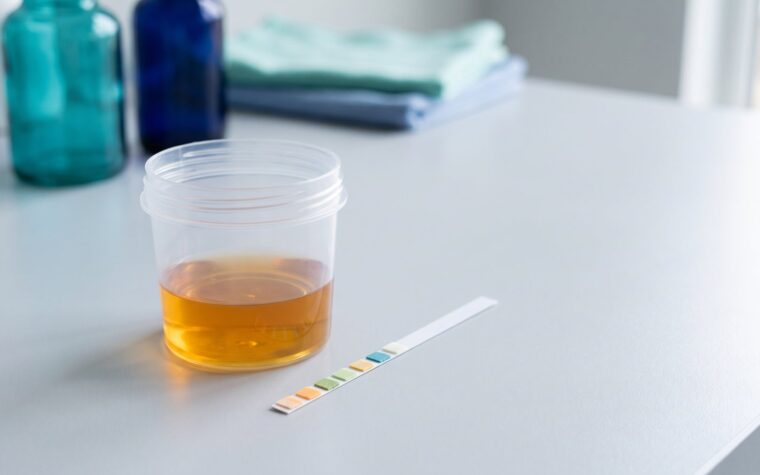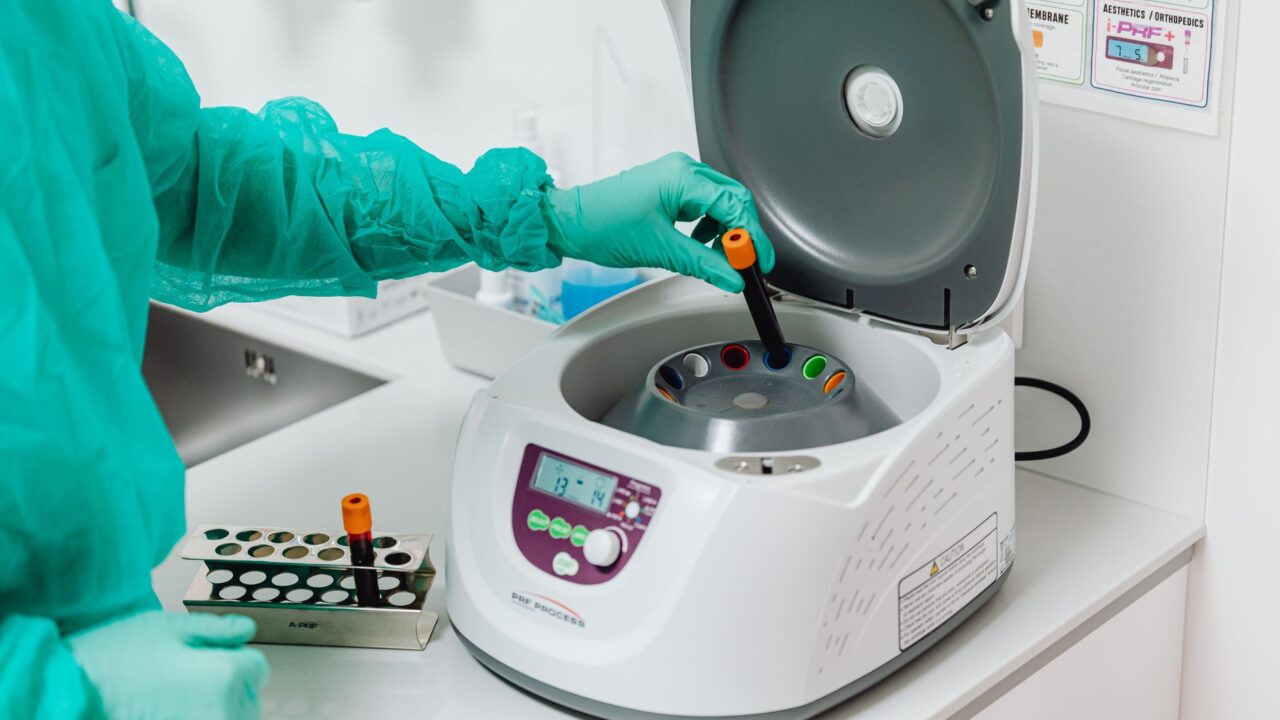
Your blood was drawn this morning, the cotton ball is still taped to your arm, and now you are doing the thing everyone does. Refreshing the patient portal. Wondering when the numbers will land. The honest answer is that “blood test” is not one thing, and the wait depends almost entirely on which test you actually had.
Some results post the same afternoon. Others sit for days, not because anyone forgot about you, but because of how that specific test is run. Here is the real timeline, test by test, and why the slow ones are slow.
How long do blood test results take?
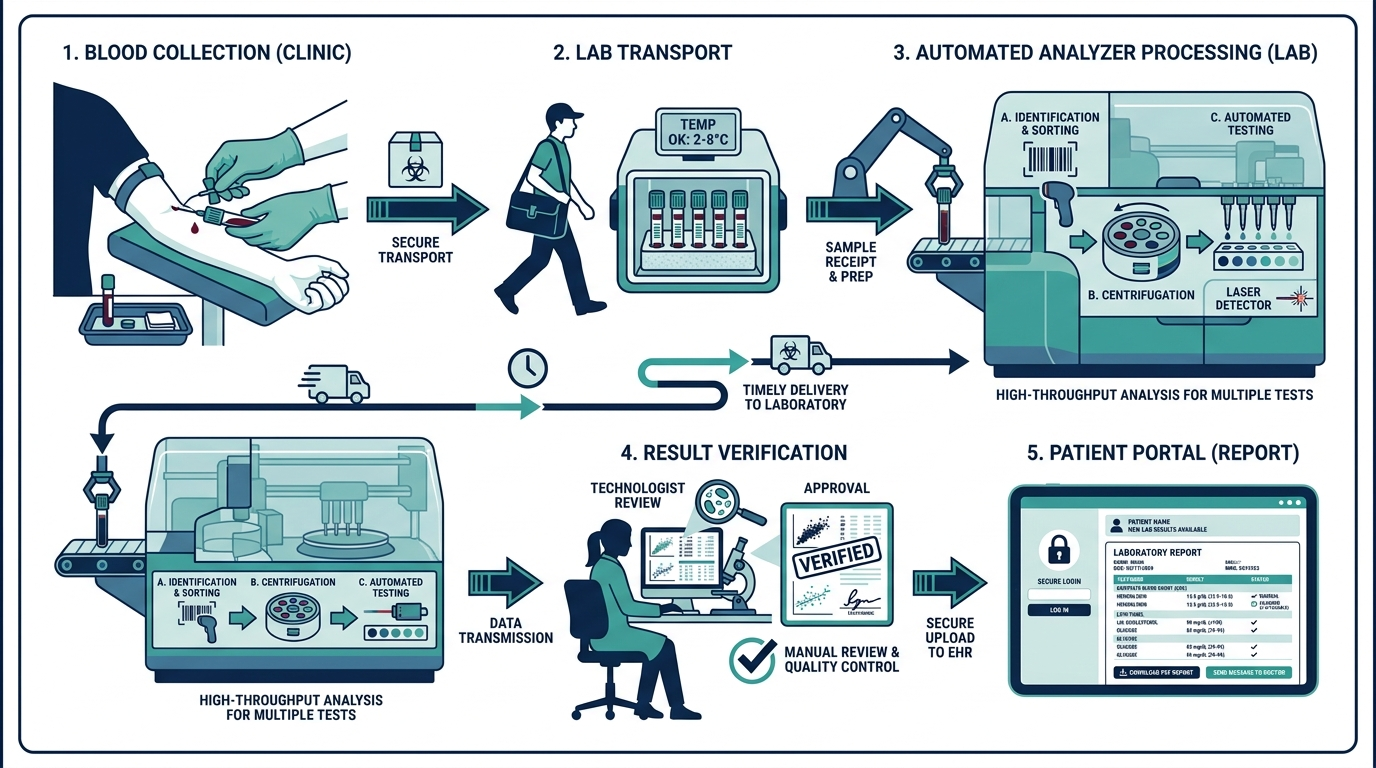
Most routine blood test results take anywhere from a few hours to a few days, with common panels often finalized the same day and posted to your portal within one to two business days. For standard lab work, results are usually ready a few days after your sample is taken, while rapid tests can return an answer in about 30 minutes (MedlinePlus). Cleveland Clinic puts it plainly: some blood test results are available within a few hours, while others, such as genetic tests, take considerably longer (Cleveland Clinic).
So the spread is enormous, from half an hour to a couple of weeks. The single biggest factor is not your clinic or your luck. It is the chemistry and biology of the test itself. A machine that counts cells works in minutes. A culture that has to grow living bacteria cannot be rushed by anyone.
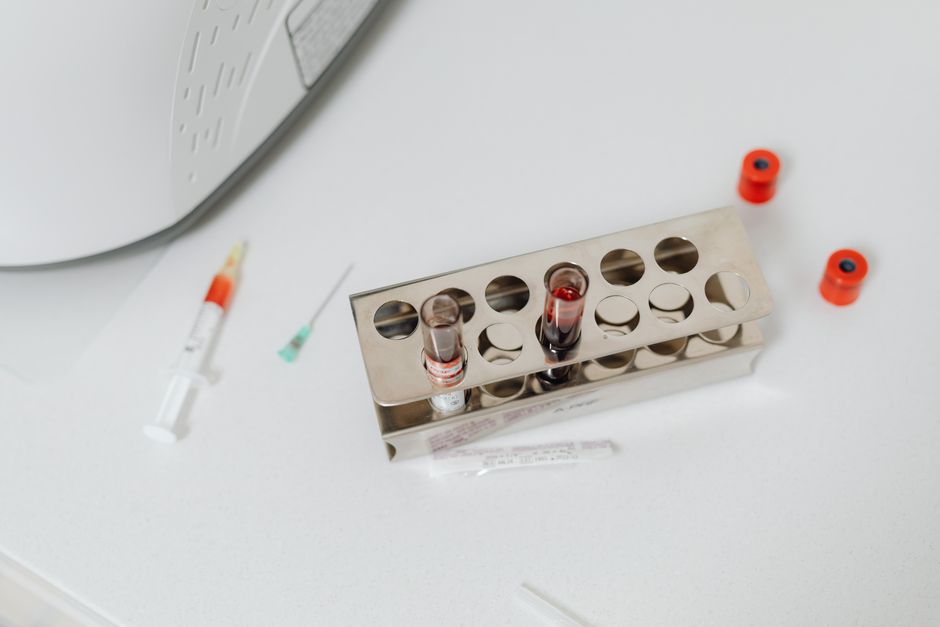
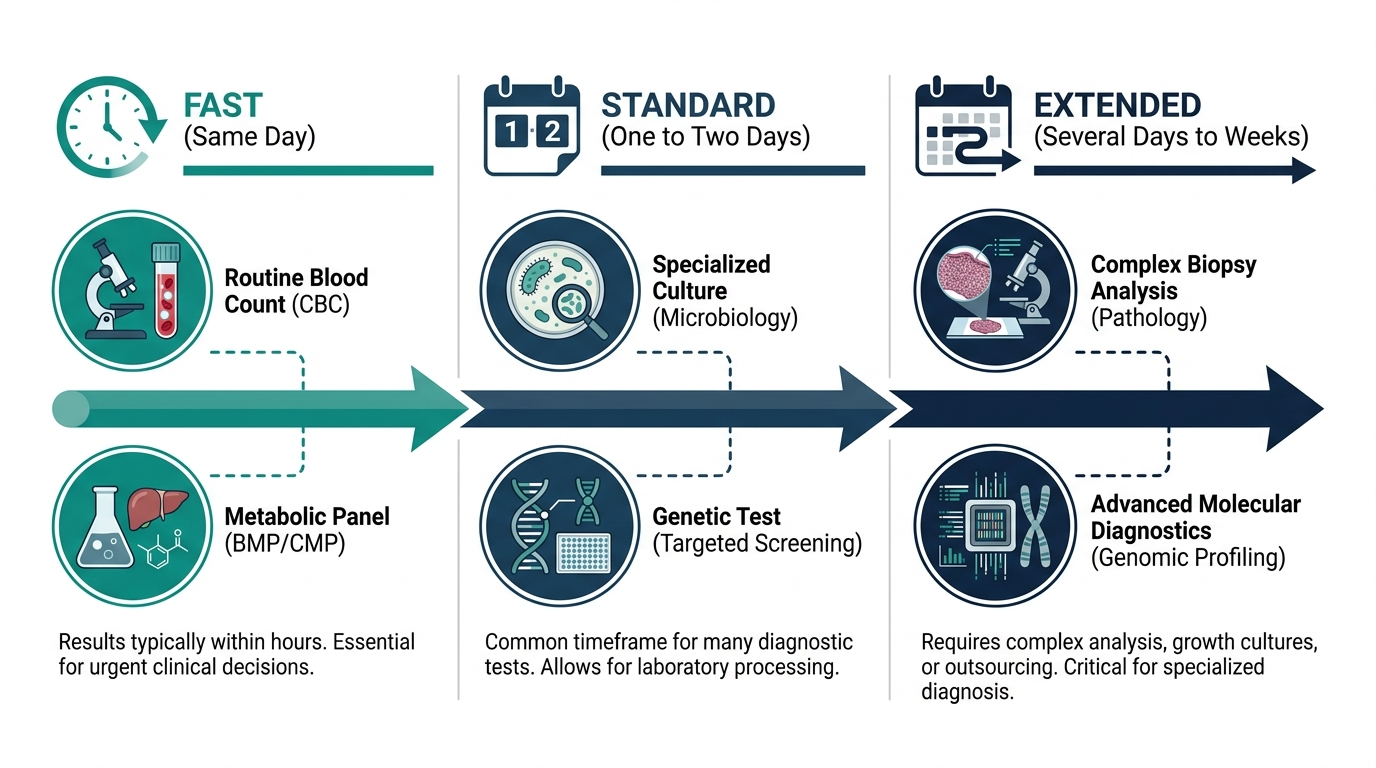
How long does it take to get blood test results for common tests?
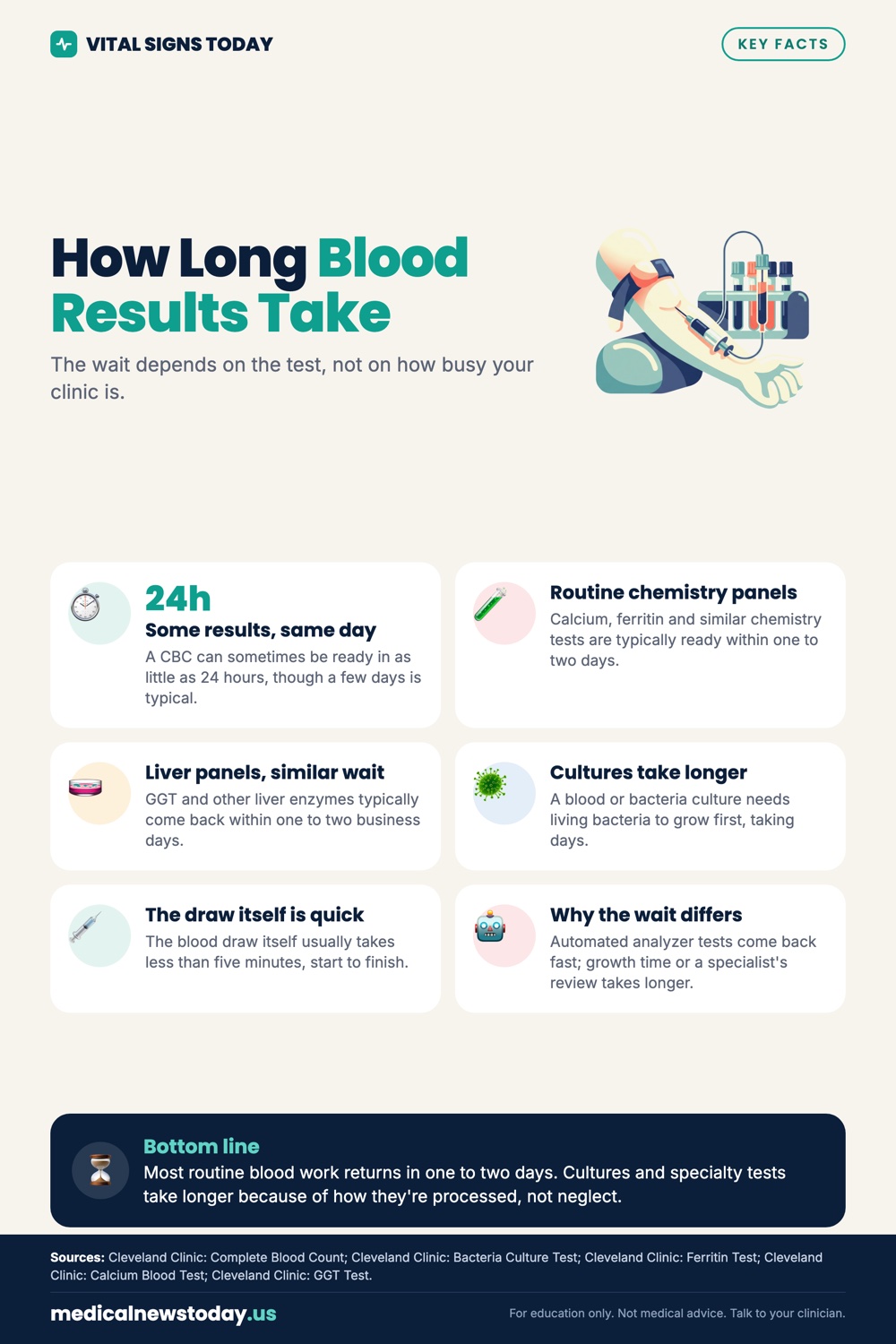
Routine bloodwork like a complete blood count or a basic metabolic panel is typically available the same day it is finalized, then released to your patient portal shortly after. At Cleveland Clinic, routine lab tests such as bloodwork and urinalysis are usually available the same day once finalized, and a complete blood count with differential appears in the MyChart portal two business days after results are finalized (Cleveland Clinic).
Here is a rough map of the everyday tests and how long each tends to take:
- Complete blood count (CBC): The analyzer produces the numbers within minutes of receiving the sample. The lag you experience is mostly review and portal release, often same day to two business days (Cleveland Clinic).
- Basic or comprehensive metabolic panel: Same machine-fast category as the CBC. Glucose, electrolytes, kidney and liver markers are usually finalized the same day.
- Rapid point-of-care tests (some glucose, strep, certain infection screens): often 20 minutes or less, and around 30 minutes for rapid tests like COVID-19 (MedlinePlus).
- Cholesterol or lipid panel, thyroid (TSH), HbA1c: commonly same day to a few days, depending on whether your sample is run on site or shipped to a central lab.
The pattern is clear. If a test runs on an automated analyzer at the lab where your blood arrives, it is fast. The clock you are watching is mostly administrative, the gap between the machine spitting out a value and a human releasing it to you.
How long does a blood test take to actually draw?
The blood draw itself takes only a few minutes, far less time than waiting for the results. A health care professional inserts a small needle into a vein in your arm, collects the sample into one or more tubes, and the whole process usually takes less than five minutes (MedlinePlus). You might feel a brief sting going in and out, and a little bruising afterward that fades quickly.
People often conflate “how long does a blood test take” with “how long do the results take,” and the two are wildly different. The draw is minutes. The waiting is where all the variation lives, and it has nothing to do with how long the needle was in your arm.
How long do blood tests take when they are sent to a specialized lab?
Specialized and send-out tests take the longest, often several days to two weeks or more, because they involve growing cultures, examining cells under a microscope, or shipping samples to a reference laboratory. These are the results that make people anxious, because they are slow by design, not by neglect.
The biggest single reason for a long wait is biology that cannot be sped up. A blood culture, used to find an infection in the bloodstream, has to let any bacteria present actually multiply before they can be detected and identified. From collection, that typically means roughly one day for a preliminary Gram stain, about two days to identify the organism, and around three days to report which antibiotics will work (PMC). No amount of staffing fixes that, because you are waiting on living cells to grow.
Other slow categories:
- Pathology and cytology: these require a specialist to examine tissue or cells under a microscope. At Cleveland Clinic, such results release automatically only after a five-day period, including weekends and holidays (Cleveland Clinic).
- Genetic testing: often the slowest of all, taking weeks, because the analysis is complex and frequently runs at an outside reference lab (Cleveland Clinic).
- Send-out and uncommon assays: if your local lab does not run a test, your sample is batched and shipped, adding transit and queue time.

Why does the lab finish so fast but I still wait days?
Because the time the machine takes and the time you wait are two very different clocks. Inside the lab, common tests are remarkably quick. Research on laboratory turnaround time suggests that a reasonable target is for 90 percent of common tests to go from sample registration to result reporting in under 60 minutes (PMC). For an inpatient with a potassium drawn at 2 a.m., that is roughly the experience. So why does an outpatient sometimes wait two days for a number the analyzer produced before lunch?
Here is the insider reality most patients never hear. The lab’s “turnaround time” and your “I have not heard anything” time are measured differently and serve different masters. The lab clock often stops the instant a verified result posts to the medical record. Your clock keeps running through everything that happens next: a provider reviewing it, a portal release rule that intentionally holds certain results for a set window, weekends, and the simple fact that an outpatient result is not an emergency the way a critical inpatient value is.
That gap is also partly by design. Under federal information-blocking rules, most results now release to patients as soon as they are completed, normal or abnormal, which sometimes means you see a number before your provider has looked at it (Cleveland Clinic). Some sensitive categories are deliberately held so a clinician can deliver them in context. So the days you spend waiting are rarely the lab being slow. They are the difference between a result being technically ready and a result being released, reviewed, and explained.
What should I do while waiting for blood test results?
Use the wait to set expectations and prepare questions, not to refresh the portal every hour. Ask the ordering clinician one simple question at the draw: which tests are these, and when should I realistically expect each one. That single sentence collapses most of the anxiety, because you stop expecting a culture to behave like a CBC.
A few practical moves:
- Know your portal’s release rules. If results post automatically, you may see raw numbers before your provider does. That is normal, not a sign something is wrong.
- Read results against the reference range on your own report, which is the range your specific lab calibrated, but do not self-diagnose from a single flagged value (MedlinePlus).
- Always talk to your clinician about what the numbers mean for you, even when you can see them in the portal, because context changes everything (MedlinePlus).
- If a result is genuinely urgent, the lab flags it as a critical value and calls your provider directly, often within an hour, so you will not be left waiting on a portal for an emergency.
The hidden step that adds 30 minutes before your test even runs
Here is something almost no patient knows. For a large share of blood chemistry tests, the sample cannot go on the analyzer straight from your arm. It has to clot first. When blood is drawn into a serum tube, the gold or red top one, it needs a standing time so the clot forms and the liquid serum separates from the cells. The widely used recommendation for tubes with a clot activator and gel separator is roughly a 30 minute standing period before the tube is spun in a centrifuge (PMC).
So before the machine has read a single number, your sample may have already spent half an hour just sitting on a rack clotting, plus another several minutes in the centrifuge. This is invisible to you, and it is the same for a walk-in outpatient as for an inpatient. It is also why emergency departments sometimes use special thrombin tubes, the orange or rust colored ones, that clot the blood in a couple of minutes instead of thirty, specifically to shave that dead time off critical results (PMC). If you have ever wondered why the same test felt faster in an ER than in a clinic, this is often part of the answer.
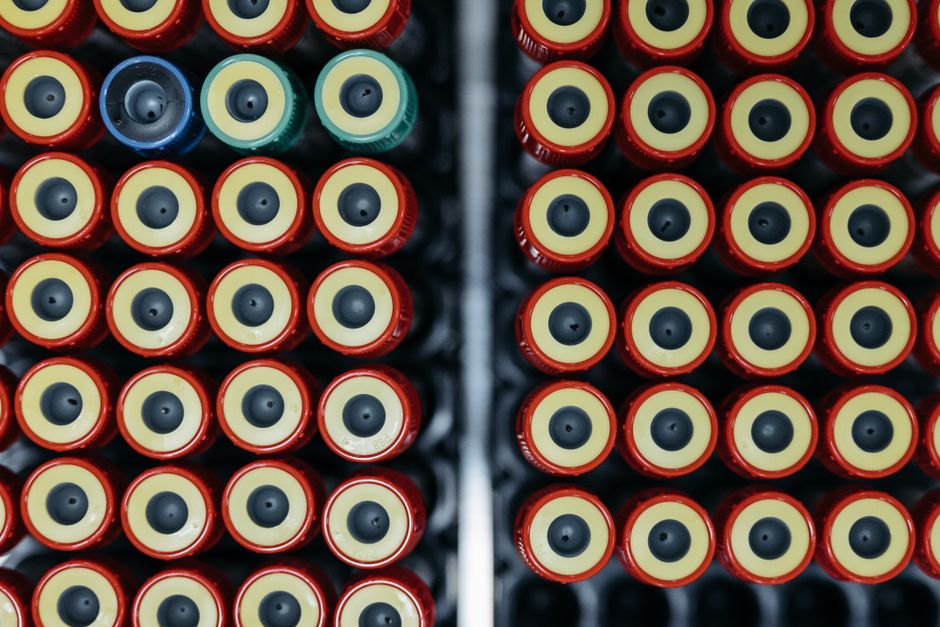
Why the color of your tube predicts how fast you get an answer
The little colored caps on collection tubes are not decoration. Each color signals a different additive, and that additive largely dictates whether a sample needs to clot, and therefore how quickly it can be processed.
- Lavender or purple top (EDTA): This anticoagulant preserves whole blood cells, so a complete blood count can be run almost immediately without waiting for clotting. That is one reason a CBC number is available so fast (Ampath).
- Gold or red top (serum separator): Used for most chemistry, immunology, and serology panels. These require the clotting and standing step described above, so there is built in lead time before analysis (PMC).
- Green top (heparin): Heparin blocks clotting so plasma can be tested quickly, which is why it is favored for stat chemistry when speed matters (Ampath).
- Light blue top (sodium citrate): Reserved for clotting studies like PT and aPTT, which measure how long your own blood takes to clot. These are time sensitive and often batched, which can add to their turnaround.
The practical takeaway: tests that use anticoagulant tubes tend to be fast because nothing has to clot, while tests that use serum tubes carry an unavoidable processing tax before the analyzer ever sees them.
How ordering STAT versus routine changes your wait
Inside a hospital or busy lab, every test is flagged as either STAT (urgent) or routine, and that single flag can change your wait by hours. A STAT order jumps the queue and is worked immediately, which is why an inpatient potassium can come back inside an hour. A routine outpatient order joins the general workflow and is processed in turn, then held for provider review and portal release rules on top of that.
This is why comparing your friend’s ER experience to your annual physical is misleading. They may have had the identical test on the identical analyzer, but a STAT flag, a faster clotting tube, and an in house lab can turn a two day wait into a two hour one. None of that reflects the difficulty of the test. It reflects how urgently the system was told to treat it.
Common reasons a result gets delayed or has to be redrawn
Sometimes the wait is longer than expected because of a problem with the sample itself, and knowing these can save you a repeat needle stick.
- Hemolysis: If red cells rupture during or after the draw, often from a difficult stick or rough handling, certain results like potassium become unreliable and the lab may reject the sample and request a redraw.
- Clotted anticoagulant tubes: A lavender CBC tube that was not mixed properly can develop small clots, which jam analyzers and invalidate the count.
- Insufficient volume: Citrate clotting tubes in particular must be filled to a specific line, because the ratio of blood to additive matters. An underfilled tube gets rejected.
- Send out and batching: Uncommon tests are often held until the lab has enough samples to run a batch, or shipped to a reference lab, both of which add days that have nothing to do with the test’s complexity.
If a result seems stuck far longer than the timelines above suggest, it is reasonable to ask your clinic whether the sample was accepted or whether a redraw is needed. A rejected specimen sitting unnoticed is a common and fixable cause of a mysterious delay.

A simple way to read your own turnaround expectations
You can predict most of your wait with two questions. First, does this test run on an automated analyzer at the lab where my blood arrives, or does something living have to grow or a specialist have to look through a microscope? Automated equals fast, biological or manual equals slow. Second, is this test performed on site or shipped out? On site equals hours to a day, shipped out equals days to weeks.
Run any test through those two filters and you will rarely be surprised. A metabolic panel: automated and usually on site, so same day. A blood culture: biological growth required, so several days. A rare genetic panel: complex and shipped out, so weeks. The anxiety of waiting mostly comes from not knowing which bucket your test falls into. Once you can place it, the timeline stops feeling like a black box and starts feeling like a schedule.
Typical turnaround for the tests people ask about most
Averages are less useful than knowing where a specific test tends to land. Here is a practical reference for the panels patients most often watch the portal for. Treat these as general expectations, since your exact lab, whether it runs on site, and portal release rules all shift the real number.
| Test | Why it takes that long | Typical wait |
|---|---|---|
| Complete blood count (CBC) | Automated cell counter, anticoagulant tube, no clotting step | Same day to two business days |
| Basic or comprehensive metabolic panel | Automated chemistry, but serum tube needs clotting time | Same day to a couple of days |
| Lipid panel | Automated chemistry, may require fasting draw | Same day to a few days |
| Thyroid (TSH) | Automated immunoassay, sometimes batched | One to a few days |
| HbA1c | Automated, whole blood, stable sample | Same day to a few days |
| PT / INR clotting study | Time sensitive, citrate tube, often batched | Same day to next day |
| Blood culture | Living bacteria must grow before detection | One to three days or more |
| Genetic testing | Complex analysis, usually a reference lab | Weeks |
Notice the split. Everything driven by an automated analyzer clusters in the same day to few days range, and the outliers, cultures and genetics, are slow for reasons that no clinic can shortcut. When your own test is not on this list, ask which of these it most resembles, and you will have a fair estimate.
What to actually say when results are late
If your result has clearly passed the expected window, a short, specific message to your clinic works far better than a vague one. Instead of asking whether your results are in, ask three targeted things: was my sample accepted or was there a problem requiring a redraw, is this test run in house or sent out, and is there a portal hold on this category that delays my seeing it. Those three questions map exactly onto the real causes of delay covered above, so the answer usually resolves the mystery in one reply.
And remember the reassuring default: anything genuinely dangerous does not wait in a queue. Critical values are phoned directly to your provider, often within an hour of being flagged. So a quiet portal is much more likely to mean a normal, unhurried result than a hidden emergency. The silence you are anxiously interpreting is, in almost every case, simply the ordinary rhythm of a test doing exactly what it is supposed to do.
Frequently asked questions
How long do blood test results take on average?
It depends heavily on the test. Routine panels like a CBC or metabolic panel are often finalized the same day and posted within one to two business days, while standard lab work generally returns within a few days (MedlinePlus). Specialized tests like cultures, pathology, or genetics can take a week or more (Cleveland Clinic).
Why are some blood test results so much slower than others?
Because the underlying method differs. Automated analyzers count cells and measure chemistry in minutes, but cultures must grow living bacteria, pathology requires a specialist to read cells under a microscope, and genetic tests often ship to outside labs, all of which take days (PMC).
How long does a blood test take to draw?
The draw itself usually takes less than five minutes. A small needle collects blood from a vein in your arm into one or more tubes, with only a brief sting and sometimes minor bruising afterward (MedlinePlus).
Can I see my blood test results before my doctor does?
Often yes. Federal rules mean most results release to patients as soon as they are completed, whether normal or abnormal, so you may view raw numbers before your provider has reviewed them (Cleveland Clinic). Always confirm what they mean with your clinician (MedlinePlus).
How fast are urgent or critical blood test results?
Very fast. For common tests, labs aim for 90 percent of results to be reported within 60 minutes of sample registration, and truly critical values are phoned directly to the provider rather than left in a portal (PMC).
This article is for general educational purposes and is not medical advice. It cannot diagnose or treat you and does not replace your clinician. Always discuss your lab results and any health decisions with a qualified healthcare professional.
Related reading
Vital Signs Today may earn a commission if you buy through links on this page. It does not affect our editorial assessments.