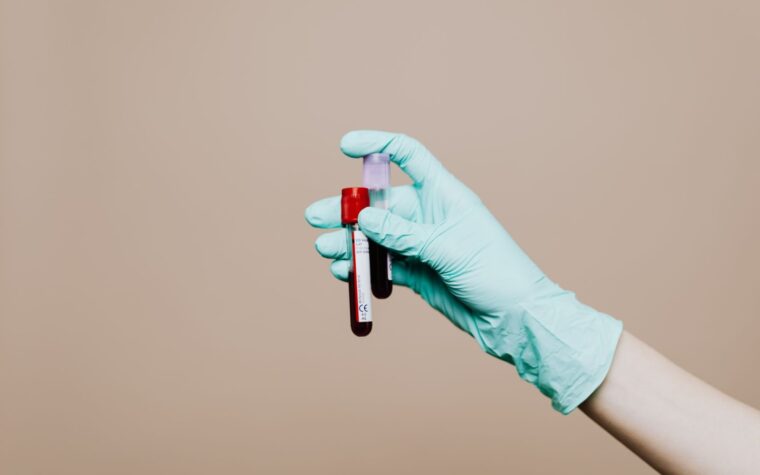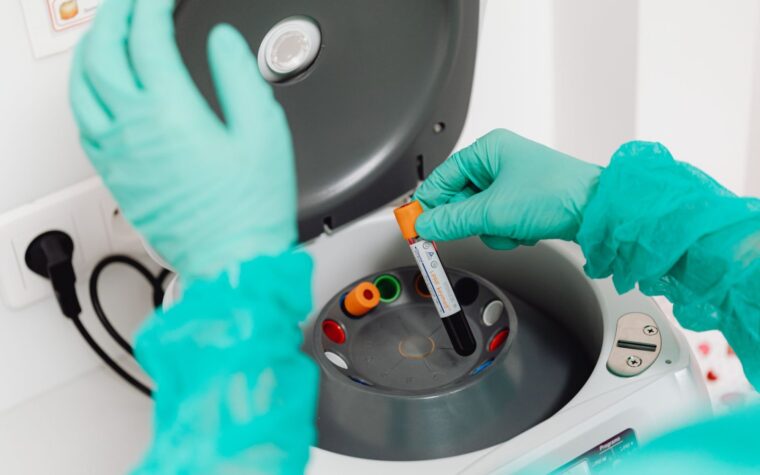
You have a blood test booked, the lab slip says fasting, and last night someone poured you a glass of wine. Now you are wondering if one drink just quietly skewed your results. It is a more reasonable worry than most people realize. Alcohol does not just sit in your stomach and wait to be digested. It actively changes several of the exact numbers a routine blood panel is built to measure.
Timing alcohol around a blood draw is tricky enough. Once your results are clean, see the complete picture they reveal. One at-home Superpower draw checks 100+ biomarkers, physician-reviewed.
The short, honest answer is that the right amount of time depends entirely on which test you are having. A general checkup and a liver panel live on completely different timelines. Here is how to get it right.
How long to avoid alcohol before a blood test?
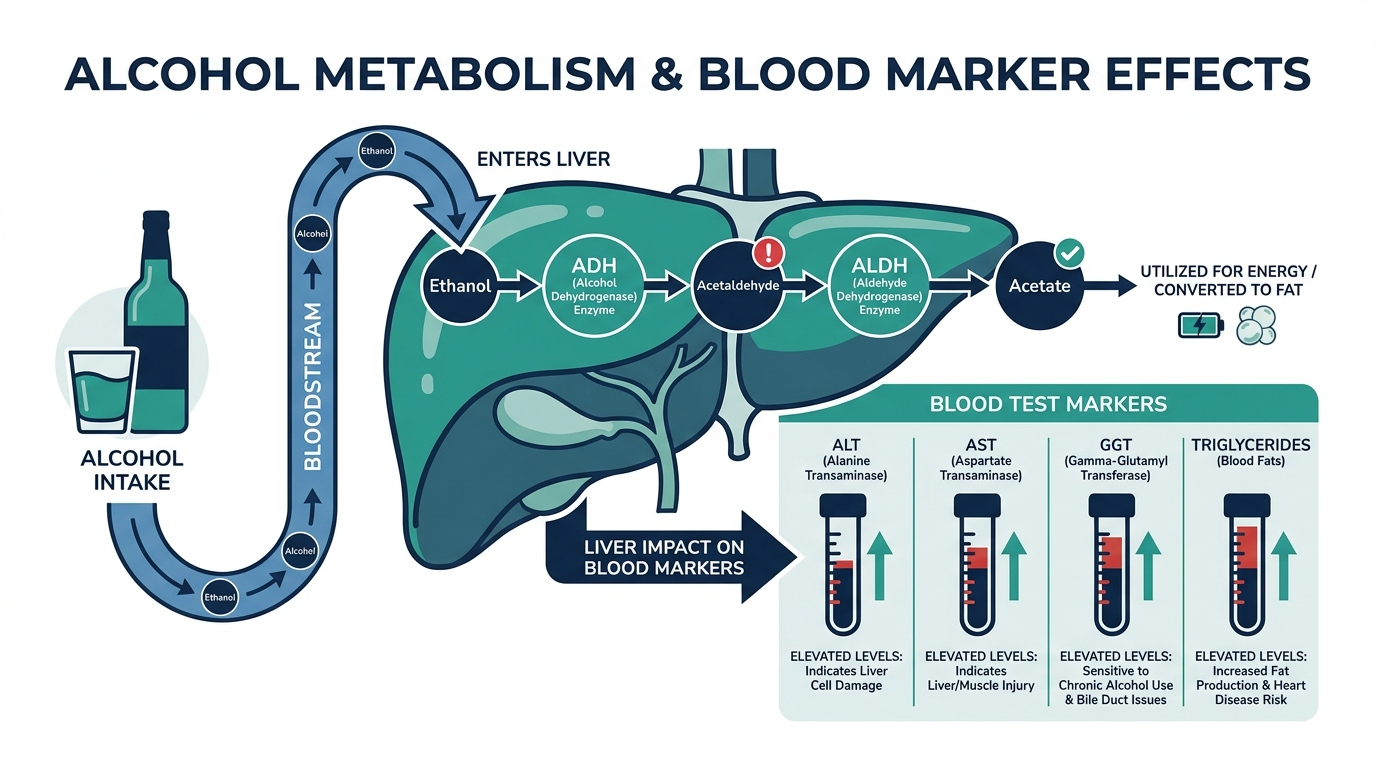
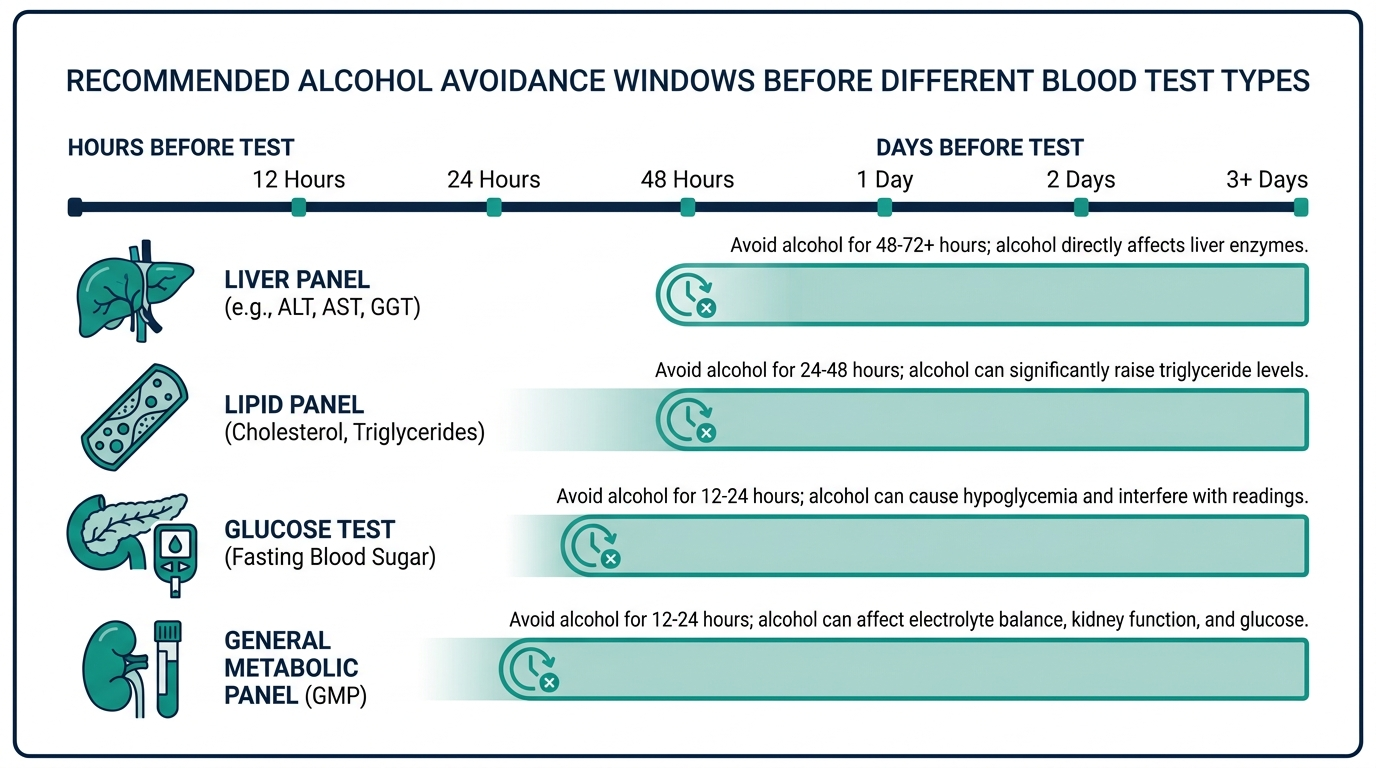
For most routine fasting blood tests, avoid alcohol for at least 24 hours before your draw. That window covers the common panels people get at a yearly physical, including glucose and a basic metabolic panel. The reason is simple: fasting means no food or drink except water for the hours before the test, and alcohol is emphatically not water (MedlinePlus). MedlinePlus lists avoiding alcohol as one of the standard preparation steps some tests require, right alongside fasting itself.
But 24 hours is the floor, not a universal rule. If your test touches your liver or your blood fats, the honest answer to how long you should avoid alcohol before a blood test stretches into days or even weeks. The rest of this article breaks down the timeline by test type, because that distinction is where almost everyone gets tripped up.
Why does alcohol affect blood test results at all?
Alcohol affects blood tests because your liver metabolizes it, and that process leaves measurable fingerprints in your blood. When you drink, your liver shifts into clearing the alcohol, which temporarily changes how it handles sugar and fat. That is why a drink the night before can nudge your glucose and triglyceride readings even when you feel completely sober by morning.
There are two layers here, and keeping them separate is the key to understanding your own timeline. The first layer is the short-term metabolic effect: a single drinking session can move glucose and blood fats for a day or so. The second layer is the slower, structural effect on your liver enzymes, which can stay elevated for weeks after heavy or sustained drinking (PMC). One clears overnight. The other lingers. Most generic advice collapses these into a single number, and that is exactly why people get confused.
How long before a liver function test should you avoid alcohol?
For a liver function test, avoid alcohol for several days at minimum, and understand that recent heavy drinking can affect the result for weeks. Liver enzymes are the slow-burning part of the picture. The most alcohol-sensitive of them, gamma-glutamyl transferase (GGT), is a known marker of alcohol use, and drinking alcohol directly raises it (MedlinePlus).
Here is the number that reframes everything. GGT has a half-life of roughly 14 to 26 days, and after a person stops drinking it returns to a normal level over about 4 to 5 weeks (PMC). Read that again. If you have been a regular drinker, abstaining for one night before a liver panel does almost nothing to a marker that is built to detect drinking over a 2 to 4 week span. The enzyme is designed to be a memory, not a snapshot.
On the broader liver panel, alcohol also leaves a characteristic pattern. In alcohol-related liver injury, the AST to ALT ratio is generally at least 2 to 1, and elevated GGT alongside AST supports the picture (StatPearls, Liver Function Tests). So if the point of your test is to honestly assess your liver, the goal is not to game the result with a single dry night. The goal is to give your clinician an accurate read. Tell them how much you actually drink and when you last drank, because that context is what makes the numbers interpretable in the first place.
How long to avoid alcohol before a cholesterol or lipid test?
Before a cholesterol or lipid panel, avoid alcohol for at least 24 hours, and ideally 48 to 72 hours if you want a clean triglyceride number. Triglycerides are the lipid most sensitive to a recent drink. Alcohol pushes your liver to make more triglycerides, so an evening of drinking can leave them falsely high the next morning, even after a proper food fast.
This matters because lipid panels are usually fasting tests for exactly that reason, requiring 8 to 12 hours without food or drink other than water (Cleveland Clinic). The food fast handles the meal you ate. It does not undo the metabolic wave a few drinks set in motion, which can outlast the standard overnight window. If your cholesterol numbers feed into a real decision, like whether to start a statin, an inflated triglyceride reading from last night’s drinks can genuinely tilt that conversation. Giving alcohol an extra day or two of clearance is cheap insurance for a number you want to be true.
How long before a blood test should you avoid alcohol if it is a glucose or diabetes test?
For a fasting glucose test, avoid alcohol for at least 24 hours, because alcohol can move your blood sugar in either direction. A fasting glucose test or oral glucose tolerance test already requires you to fast, meaning no eating or drinking except water for at least 8 hours beforehand (MedlinePlus). Alcohol breaks that fast outright.
Beyond just breaking the fast, alcohol genuinely interferes with glucose control. As your liver prioritizes clearing alcohol, it can stop releasing stored sugar, which can drop blood glucose lower than your true baseline. The carbohydrates in many drinks can also raise it. Either way, you end up measuring the aftermath of your drink rather than your real metabolic state. For an A1C test, which reflects roughly three months of average blood sugar, a single night out will not meaningfully change the result, but the fasting glucose drawn at the same visit absolutely can be thrown off.
The part most people get wrong: matching the abstinence window to what the test actually measures
Here is the insight that separates someone who understands their own bloodwork from someone just following a fasting slip. The right alcohol-free window is not a fixed number you memorize. It is a function of how long the thing being measured stays disturbed.
Think of it in two speeds. Fast-moving markers, like glucose and triglycerides, respond to a single drinking episode and largely settle within a day, so 24 hours of abstinence usually does the job. Slow-moving markers, like GGT and the other liver enzymes, are built to capture a pattern of drinking over weeks, with GGT taking 4 to 5 weeks to normalize after drinking stops (PMC). For those, there is no overnight trick. The test is doing its job precisely by ignoring your last-minute behavior.
This reframe also exposes a quiet temptation worth naming. People sometimes abstain right before a liver test hoping for a cleaner result. It rarely works on GGT, and more importantly, it defeats the purpose. If the test is meant to gauge your relationship with alcohol or the state of your liver, an artificially polished number robs you and your clinician of the truth you both need. The most useful thing you can do is not to manipulate the window but to report it. When you tell your provider exactly when you last drank and how much you typically drink, even a borderline result becomes meaningful instead of misleading. When in doubt about timing for your specific panel, ask your provider, because preparation requirements genuinely vary by test (MedlinePlus).
The other markers alcohol quietly moves
Glucose, triglycerides, and liver enzymes get all the attention, but a routine panel measures several other values that a recent drink or a drinking pattern can shift. Knowing them helps you understand why a result looks off and whether timing was the culprit.
| Marker | How alcohol moves it | Roughly how fast it resets |
|---|---|---|
| Uric acid | Alcohol raises production and slows kidney excretion, pushing levels up. Relevant if you are being worked up for gout. | Days after stopping |
| Triglycerides | The liver makes more triglycerides after drinking, so they can read falsely high. | 1 to 3 days |
| MCV (red cell size) | Sustained drinking enlarges red blood cells, raising mean corpuscular volume, a change called macrocytosis (PMC). | Weeks to months, because red cells live around 120 days |
| GGT and other liver enzymes | Rise with heavier or sustained drinking. | Around 4 to 5 weeks for GGT (PMC) |
The pattern is consistent with everything above: the marker with the longest biological memory takes the longest to normalize. MCV reflects red cells that were made while you were drinking, so it cannot reset overnight any more than GGT can.
Markers designed to detect drinking, not to be fooled by abstinence
Some blood markers exist specifically to reveal a pattern of alcohol use, and abstaining for a day or two before the draw does not meaningfully change them. If your test includes any of these, understand that they are built to look backward.
- GGT reflects drinking over the preceding two to four weeks and normalizes over roughly four to five weeks after stopping (PMC).
- CDT (carbohydrate-deficient transferrin) is a more specific marker of chronic heavy drinking, with normal values generally falling around 0 to 1.6 percent of total transferrin. It rises with sustained heavy intake and takes weeks of abstinence to fall (PMC).
- MCV is the slowest of all, reflecting months of red cell production, so it barely moves with short-term abstinence.
Clinicians often read these together because each alone is imperfect, but combined they paint a reliable picture of sustained use. The takeaway for anyone tempted to dry out for a few days before such a test: it does not work, and it hides information your clinician needs.
Alcohol is not the only prep variable: what else can skew your draw
If you are being careful about alcohol, it is worth zooming out to the other things that quietly distort a blood panel, because getting the alcohol timing right while ignoring these still leaves you with an inaccurate result.
- The food fast itself. Most fasting panels want 8 to 12 hours with only water beforehand (Cleveland Clinic). Coffee, gum, and even a splash of juice can break a strict fast.
- Recent hard exercise. A strenuous workout the day before can transiently raise certain enzymes and other values, so a rest day before a test is often wise.
- Hydration. Being dehydrated concentrates the blood and can nudge several values, while water is allowed and encouraged before most draws.
- Medications and supplements. Some drugs and supplements alter specific results. Do not stop a prescribed medication to prepare for a test, but do tell your provider what you take (MedlinePlus).
Alcohol and medications deserve a special mention together. Because both are cleared largely by the liver, heavy drinking around the time of a test can also affect how your body handles certain medications, which is one more reason your clinician wants an honest account of your recent intake.
A simple pre-test checklist
Pulling the timelines into one plan makes them easy to follow. Match your abstinence to the most alcohol-sensitive test on your slip, since the longest window governs.
- Routine physical or general metabolic panel: skip alcohol for at least 24 hours and follow the standard food fast if one is ordered.
- Lipid or cholesterol panel: avoid alcohol for 24 hours at minimum, ideally 48 to 72 hours, to keep triglycerides honest, plus the 8 to 12 hour food fast (Cleveland Clinic).
- Fasting glucose or glucose tolerance test: no alcohol for at least 24 hours, and observe the required fast (MedlinePlus).
- Liver function test or dedicated alcohol markers: understand that recent drinking affects results for days to weeks, so do not rely on a single dry night. Report your true intake instead of trying to normalize the number.
- When your slip is silent on alcohol: ask, because preparation genuinely varies by test (MedlinePlus).
Special situations that change the calculus
The general timelines fit most people, but a few circumstances deserve their own thinking, because the stakes or the biology are different.
- You are being evaluated for a liver condition. Here the honest number is the whole point. If you are working up fatigue, abdominal discomfort, or an incidental enzyme abnormality, artificially suppressing your drinking beforehand can send the investigation down the wrong path. Give your clinician a truthful drinking history so an elevated GGT or AST to ALT pattern can be interpreted correctly (StatPearls, Liver Function Tests).
- You take medication cleared by the liver. Because alcohol and many drugs compete for the same liver pathways, heavy drinking near a test can affect both your enzyme readings and drug levels. This is another reason not to hide recent intake from whoever orders the test.
- You are pregnant or planning to be. Guidance here is straightforward: there is no established safe amount of alcohol in pregnancy, so the question shifts from timing a test to avoiding alcohol entirely. Raise any concerns with your obstetric provider.
- You are monitoring recovery from heavy drinking. If you have recently cut back or stopped, remember that GGT takes about four to five weeks and CDT takes weeks to fall (PMC). Testing too soon after quitting can still show elevated markers, which is expected and does not mean your effort is failing.
In every one of these cases the smart move is the same. Do not manipulate the window. Report it, and let the test do what it was designed to do.
Common myths about alcohol and blood tests
A few persistent beliefs cause people to prepare the wrong way. Clearing them up prevents both false worry and false confidence.
- Myth: a strong coffee or a big glass of water will flush the alcohol out before the test. Your liver clears alcohol at a fairly fixed rate that hydration and caffeine do not speed up. Time is the only real solvent.
- Myth: if I feel sober, my blood is back to baseline. Feeling fine and being metabolically settled are different. Triglycerides and glucose can still be shifted the morning after even when you feel completely clear-headed.
- Myth: abstaining for three days will clean up my liver enzymes. GGT and CDT are built to reflect weeks of drinking, so a short dry spell barely moves them (PMC).
- Myth: one drink cannot possibly matter. For a fasting glucose or triglyceride draw, a single drink the night before genuinely can nudge the number, which is exactly why the standard advice is to skip it entirely the day before (MedlinePlus).
The unifying idea across all of them is honest timing. You cannot outrun your liver, and the tests that matter most are designed to reflect reality, not your last-minute preparation.
What to tell the lab, and what to do if you slipped up
Honesty at the draw is worth more than a perfect abstinence record, because a clinician who knows the real context can interpret a result correctly even when the prep was not ideal. If you drank the night before a test you meant to arrive at sober, say so to the phlebotomist or note it for your doctor. It costs you nothing and it changes how a borderline liver enzyme or triglyceride value gets read. A slightly high result that came after a night of drinking is a very different thing from the same number in someone who has been dry for a week, and only the person interpreting the panel can make that distinction if they know.
What actually happens if you slipped up depends on the test. For a lipid panel or a glucose measure, alcohol the evening before can nudge triglycerides and blood sugar upward, so the sensible move is often to reschedule the draw by a day or two rather than accept a skewed snapshot. For liver enzymes, a recent drink can lift the numbers, and repeating the test after a genuine alcohol free stretch usually clarifies whether the elevation reflects the drink or the liver. The mistake to avoid is treating one alcohol influenced result as a diagnosis and either panicking over it or, worse, hiding it and letting a false reassurance stand.
There is also a practical order of operations if you realize the morning of that you did not follow the plan. Call the ordering office before you drive in and ask whether they want you to come anyway or shift the appointment. Some tests are time sensitive and worth doing on schedule with a noted caveat, while others are better delayed. Either way, drink water, skip any further alcohol, and bring an accurate account of the last drink and its timing. The single most useful sentence you can offer is when you last drank and how much, because that one detail lets the lab result be read as evidence rather than mystery.
Turn what you just learned into action.
Superpower lets you test 100+ biomarkers from home, then re-check them over time so you can actually see progress, physician-reviewed at every step.
Frequently asked questions
How long should you avoid alcohol before a blood test?
For most routine fasting blood tests, avoid alcohol for at least 24 hours. Liver function tests and lipid panels are more sensitive, so plan for several days, and understand that the liver enzyme GGT can stay elevated for 4 to 5 weeks after heavy drinking stops (PMC). When unsure, ask your provider about your specific test (MedlinePlus).
Will one drink the night before affect my blood test?
It can. A single drink the evening before can nudge fasting glucose and triglyceride results and technically breaks the no food or drink except water rule for a fasting test (MedlinePlus). For a general checkup it is best to skip alcohol the day before entirely.
How long does alcohol affect liver function test results?
Longer than most people expect. GGT, a key alcohol-sensitive liver marker, has a half-life of about 14 to 26 days and returns to normal over roughly 4 to 5 weeks after drinking stops (PMC). Drinking alcohol directly raises GGT (MedlinePlus).
Can I drink alcohol before a cholesterol test?
It is best not to. Alcohol prompts the liver to make more triglycerides, which can falsely raise your lipid result even after the standard 8 to 12 hour food fast (Cleveland Clinic). Avoid alcohol for at least 24 hours, and ideally longer, before a lipid panel.
Should I abstain from alcohol to get a better liver test result?
No. Abstaining for a night rarely changes GGT, and gaming the result defeats the test’s purpose (StatPearls, Liver Function Tests). The more useful move is to tell your clinician honestly when you last drank and how much you usually drink, so the numbers can be interpreted correctly.
This article is for general educational purposes and is not medical advice. It cannot diagnose or treat you and does not replace your clinician. Always discuss your lab results and any health decisions with a qualified healthcare professional.
Related reading
Vital Signs Today may earn a commission if you buy through links on this page. It does not affect our editorial assessments.