It is 7 a.m., you have a lab appointment, and the question hits you before you are even awake enough to think it through: does the coffee count? You have been fasting since last night, you feel fine, and that one black cup seems harmless. So you stand at the kitchen counter, hand on the kettle, genuinely unsure whether you are about to wreck a test you waited weeks to get.
Wondering if that coffee ruined your fast? Once your draw is clean, see the full panel it can reveal. One at-home Superpower draw checks 100+ biomarkers, physician-reviewed.
Here is the part that trips people up. The short answer and the honest answer are not quite the same, and knowing the difference is what keeps you from either ruining a result or panicking over nothing.
Can you drink coffee before a blood test?
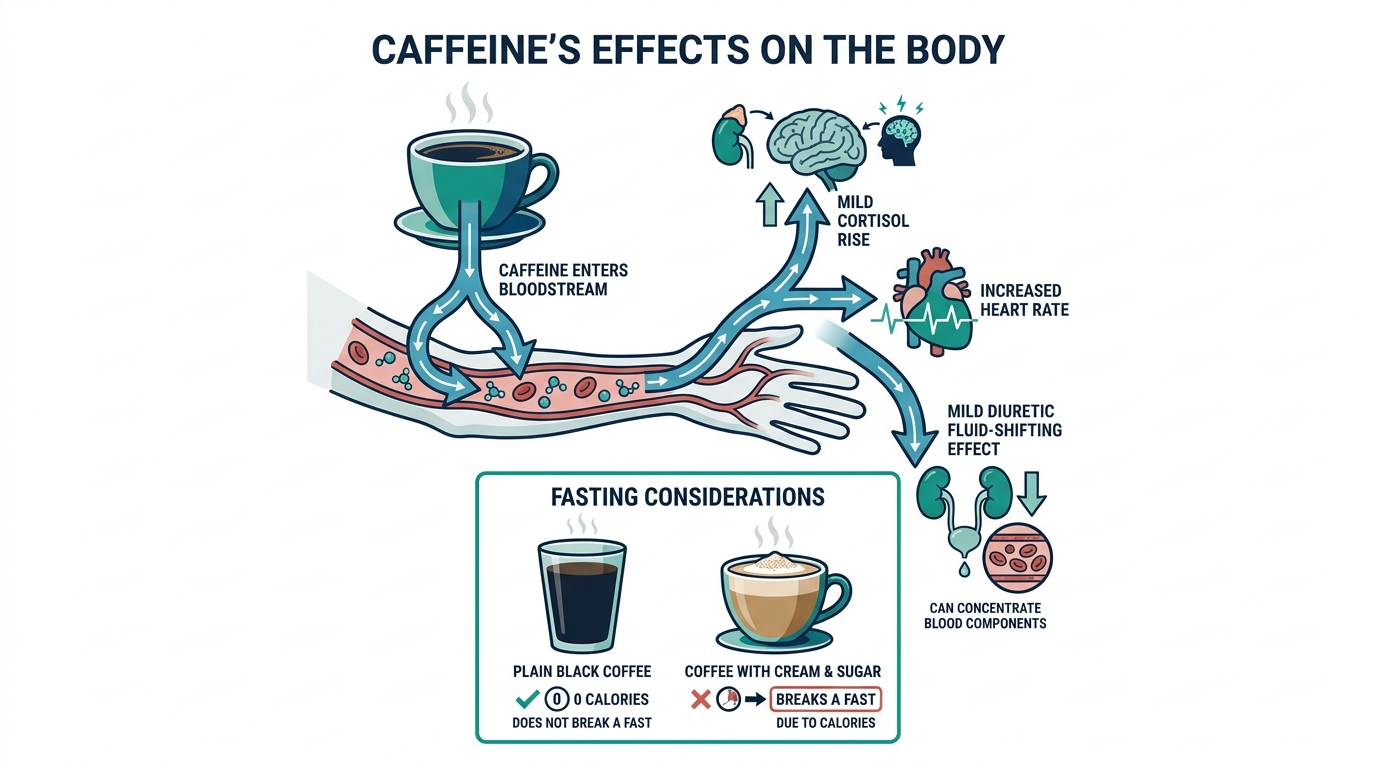
For a fasting blood test, no, you should not drink coffee, not even black. The standard guidance is plain water only during the fasting window (MedlinePlus). Coffee, juice, soda, and other beverages can get into your bloodstream and shift your numbers, so they break the fast. If your test does not require fasting, coffee is usually fine. The whole answer depends on one thing: were you told to fast?
So the real question is not “can you drink coffee before a blood test” in the abstract. It is “was this particular test ordered as a fasting test.” Nail that down first and everything else falls into place.
Why is coffee a problem when you are fasting?
Coffee is a problem during a fast because caffeine is biologically active, and a fast is supposed to give your clinician a clean baseline. Cleveland Clinic is blunt about it: “You shouldn’t drink any coffee, even black coffee, while fasting for blood work,” because “caffeine itself has the potential to skew results” (Cleveland Clinic). Black coffee with no cream and no sugar still is not nothing. It contains compounds beyond caffeine that can nudge metabolism, especially anything tied to blood sugar.
There is a second, sneakier reason. Coffee is a mild diuretic, meaning it makes you urinate more, which can leave you slightly dehydrated. Dehydration does two unhelpful things at once: it can make your veins harder to draw from, and it can concentrate substances in your blood so certain values read higher than they truly are (Cleveland Clinic). That is the opposite of the clean snapshot a fasting test is meant to capture.
Add cream, milk, or sugar and the case closes completely. Now you have introduced fat, protein, and carbohydrate directly into the exact measurements, lipids and glucose, that fasting tests are designed to read.
Which blood tests actually require fasting?
Only some blood tests require fasting, and that is the crux of whether your coffee matters at all. The usual fasting tests are the ones measuring things food and drink directly move (MedlinePlus):
- Fasting blood glucose, used to screen for and monitor diabetes. Note that not all glucose tests require fasting (Cleveland Clinic).
- Lipid panel, your cholesterol and triglycerides. Triglycerides in particular rise sharply after eating.
- Basic metabolic panel, which includes glucose and electrolytes.
- Certain liver and kidney tests, such as a gamma-glutamyl transferase (GGT) test, in some situations (Cleveland Clinic).
Plenty of common tests need no fasting at all, including a complete blood count, many thyroid tests, and most vitamin levels. For those, your morning coffee is irrelevant to the result. The trap is assuming, so confirm rather than guess. You usually need to fast for 8 to 12 hours, and your provider will tell you the exact window for the test they ordered (MedlinePlus).
What can you drink before a fasting blood test?
Plain water, and you should actually drink it. Water is allowed during a fast and helps the draw go smoothly, because hydrated veins are fuller and easier for the phlebotomist to hit (Cleveland Clinic). Showing up parched is one of the most common reasons a blood draw turns into multiple needle attempts.
What does not count as plain water is the catch. Skip anything added to it: lemon, lime, cucumber, flavor drops, sparkling flavored water, and sweeteners can all carry sugars, acids, or artificial compounds that may affect results (MedlinePlus). The rule is genuinely literal. Water means water. While you are at it, the same fasting window usually means no gum, no smoking, and no hard exercise right before the draw (MedlinePlus).
What if your test does not require fasting?
Then coffee is generally fine, including for a lot of routine bloodwork. If your clinician did not tell you to fast, a normal cup before a complete blood count or a thyroid panel is not going to derail anything meaningful. Should you drink coffee before a blood test like that? If it keeps your morning normal and your headache away, sure, just keep it reasonable.
Two sensible caveats. First, if your test involves anything where caffeine itself is the point, certain cardiac stress tests or specialized adrenal and catecholamine studies, you may be told to skip caffeine specifically, so follow those instructions. Second, even on a non-fasting test, loading up on a sugary latte right before the draw can muddy glucose-adjacent readings, so black or lightly dressed is the cleaner call.
The insider truth: one cup probably does not ruin your results
Here is what most patient handouts will never tell you, because it sits awkwardly next to the rule. If you slipped and drank a black coffee before a fasting test, the actual measured damage is usually small. A controlled study had healthy volunteers drink an espresso one hour before their blood draw and then compared dozens of routine markers. The conclusion: “Drinking a cup of coffee 1 hour prior to phlebotomy produces no clinically significant changes in routine biochemical and haematological test results” (PMC, coffee before phlebotomy).
Some values did move. Cholesterol ticked up about 1.6 percent, potassium about 3.5 percent, creatinine dropped roughly 4.8 percent, and total bilirubin fell about 6.7 percent. But every one of those shifts stayed under the threshold the researchers use to call a change clinically meaningful (PMC, coffee before phlebotomy). Separate preliminary work on black coffee found it did not significantly alter fasting glucose or triglycerides either (PMC, black coffee and fasting markers).
So why keep the rule? Because the lab and your clinician need a standardized baseline they can trust without knowing your exact cup, your exact timing, or your personal sensitivity to caffeine. “Probably fine on average” is not the same as “fine for your specific result,” and a borderline glucose or lipid number is exactly where a small nudge changes a decision. The honest position is this: follow the fasting instruction to keep your result clean, and if you accidentally broke it, do not spiral. Just tell whoever draws your blood. That single sentence lets them interpret the number correctly or reschedule, which is far better than a result everyone silently assumes is clean when it is not (Cleveland Clinic).
How long caffeine actually lingers, and why timing beats willpower
If you want to understand why the fasting rule exists, it helps to know how long coffee stays biologically active. Caffeine has a half-life of roughly 2.5 to 4.5 hours in a typical adult, meaning that many hours after your cup, half the dose is still circulating. That window varies widely from person to person, from about 2 hours in fast metabolizers to as long as 10 hours in slow ones. Pregnancy, certain medications, and liver differences all stretch it out.
This is the practical takeaway that most handouts skip. The problem with a pre-test coffee is not only the moment you drink it, it is that the effects trail behind you into the draw. A cup at 6 a.m. is still working at your 9 a.m. appointment. If you are a slow metabolizer, even a cup the evening before may leave measurable caffeine on board. When a test is genuinely sensitive to caffeine, the safest move is not to cut it close but to stop well ahead of the window your clinician gives you.
What coffee does to specific tests, marker by marker
Coffee does not affect every result equally. Knowing which markers are most reactive tells you when to be strict and when to relax.
- Glucose and insulin sensitivity: caffeine can transiently reduce insulin sensitivity, which is why a fasting glucose or an oral glucose tolerance test is best done without it. Add sugar or cream and you directly feed the very number the test measures.
- Cortisol: caffeine stimulates the pituitary and adrenal glands, raising cortisol. A morning coffee can push cortisol meaningfully above baseline, so it can distort a cortisol test taken to assess adrenal function.
- Catecholamines and adrenal studies: tests for metanephrines or catecholamines, used to investigate conditions like pheochromocytoma, are notably sensitive to caffeine, which activates the same stress pathways. Patients are often told to avoid caffeine specifically before these.
- Blood pressure and cardiac stress tests: caffeine raises blood pressure and heart rate and can blunt the response a cardiac stress test relies on, so caffeine is typically restricted beforehand.
- Lipids: plain black coffee has a smaller effect here, but anything added introduces fat and sugar that can lift triglycerides, which rise readily after intake.
The pattern is consistent. The tests most affected are the ones tied to metabolism, blood sugar, and the stress hormone system, precisely the panels most often ordered as fasting tests.
Decaf, additives, and the fine print people miss
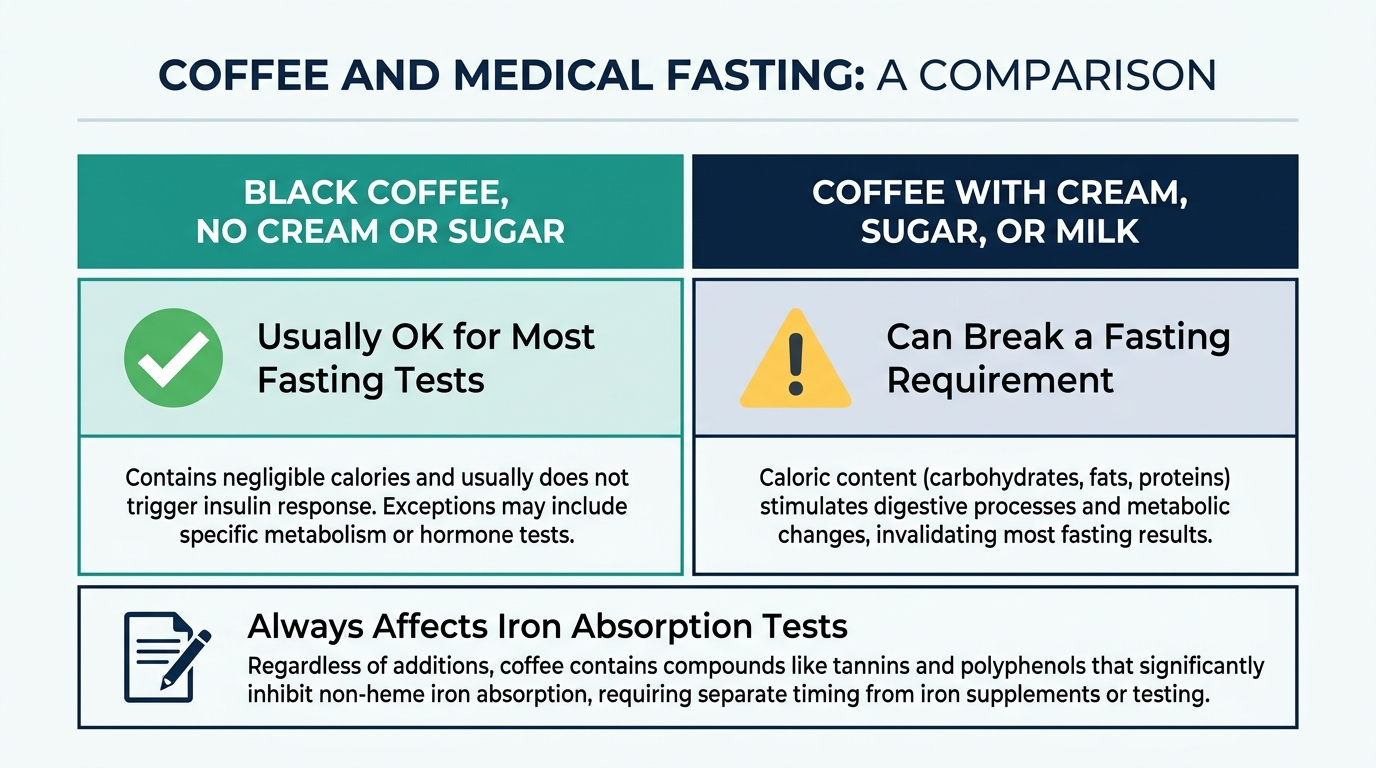
Two common assumptions cause avoidable mistakes. The first is that decaf is a safe loophole during a fast. It is not. Decaffeinated coffee still contains small amounts of caffeine plus the same non-caffeine compounds found in regular coffee, and it is still not plain water. During a true fast, decaf breaks the fast just as regular coffee does.
The second is underestimating what a splash of something adds. Once you introduce cream, milk, plant milk, sugar, syrups, or a protein additive, you are no longer drinking a neutral liquid, you are consuming fat, protein, and carbohydrate that land directly in a lipid or glucose measurement. Even sugar-free flavorings and artificial sweeteners are best avoided during a fast, because they are not water and can carry compounds of their own. The rule during a fast is deliberately literal: plain water only, nothing added.
How coffee compares to other morning drinks before a test
Coffee is not the only beverage people reach for, so here is how the common ones stack up during a fasting window.
| Drink | Allowed during a fast? | Why |
|---|---|---|
| Plain water | Yes | Does not enter the measurements and keeps veins full for an easier draw |
| Black coffee | No | Caffeine is biologically active and coffee is a mild diuretic |
| Decaf coffee | No | Still contains trace caffeine and other compounds, not plain water |
| Tea (black or green) | No | Contains caffeine and other actives; herbal teas are still not plain water |
| Juice or soda | No | Sugar directly raises glucose and other values |
| Flavored or sparkling water | No | Added acids, sugars, or sweeteners can affect results |
| Alcohol | No | Affects glucose, triglycerides, and liver markers and is off-limits before testing |
The short version is that water is the only true fasting-safe drink. Everything else, caffeinated or not, adds something the lab did not account for.
A simple morning-of checklist
To take the guesswork out of test morning, run through this quick sequence the night before and the morning of your draw.
- Confirm the instruction: check your order or ask the clinic whether this specific test is fasting, and for how many hours, usually 8 to 12.
- Start the clock the night before: stop eating and drinking anything but water once the fasting window begins, and skip that last evening coffee if you are a slow metabolizer.
- Drink water: stay hydrated with plain water, which is allowed and makes the draw easier and less likely to need a second stick.
- Take medications as advised: do not stop prescribed medication on your own; ask your clinician which to take with water and which to hold.
- Skip gum, smoking, and hard exercise: all can nudge results and are best avoided right before the draw.
- If you slipped, say so: tell the person drawing your blood exactly what you had and when, so they can interpret or reschedule rather than assume a clean sample.
Following this removes almost every common reason a result gets flagged as unreliable, and it spares you a repeat trip.
Special situations worth flagging
A few circumstances change the calculus, and each is worth a specific mention.
- People with diabetes: a long fast plus skipped coffee can feel harder, and fasting itself can affect blood sugar. Ask your clinician how to handle medication and food timing on the morning of a fasting test, and never omit insulin or oral diabetes drugs without guidance.
- Oral glucose tolerance test: this test measures how your body handles a sugar load over hours, and caffeine can blunt insulin sensitivity, so avoid coffee entirely before and during it.
- Caffeine headaches: regular coffee drinkers who skip their cup may get a withdrawal headache on test morning. This is uncomfortable but harmless, and a strong reason to schedule fasting draws early so you can have your coffee soon after. Bringing a thermos to enjoy right after the draw is a small trick that makes the fast far easier to keep.
- Adrenal and blood pressure workups: for catecholamine, metanephrine, or renin and aldosterone testing, the instructions may go beyond the usual fast and restrict caffeine for a set period. Follow the specific list you are given rather than the general fasting rule.
Bottom line: confirm, hydrate, and be honest
The whole question comes down to one fact you can settle in seconds: was this test ordered as a fasting test. If yes, drink only plain water and skip coffee, decaf, tea, and anything with additives, since caffeine is biologically active and coffee’s mild diuretic effect can subtly concentrate your blood. If no, a normal cup is generally fine, though black or lightly dressed is the cleaner choice, and certain cardiac and adrenal tests still call for skipping caffeine specifically.
And if you slipped and drank a coffee before a fasting draw, the honest, evidence-based reassurance is that one cup rarely changes routine results in a clinically meaningful way. That is not permission to ignore the rule, because your clinician needs a standardized baseline they can trust for your specific numbers. The right response is simple: tell the person drawing your blood what you had and when. That single sentence lets them interpret the result correctly or reschedule, which beats a sample everyone wrongly assumes is clean. A moment of honesty at the counter protects the accuracy of your whole result.
Supplements and medications: the part people forget during a fast
Coffee gets all the attention, but pills and powders taken on test morning can matter just as much, and they are easy to overlook. The safe habit is to treat anything that is not plain water as a question for your clinician rather than a personal call.
- Prescription medications: do not stop them on your own. Most are taken as usual with a sip of water, but some, such as certain diabetes drugs before a fasting glucose test, may be timed differently. Ask which to take and which to hold.
- Vitamins and supplements: biotin, in particular, can interfere with several lab assays and is often paused before testing, so mention any supplement routine when you book. Fish oil, iron, and others are also worth flagging.
- Chewable, gummy, or effervescent forms: these frequently contain sugar or other additives, so a gummy vitamin is closer to a snack than a pill during a strict fast.
- Herbal teas and tonics: often assumed harmless, but they are not plain water and can carry active compounds, so they break a fast like anything else.
The unifying rule is simple. During a true fast, plain water is the only free pass, and everything else, from a morning multivitamin to a spoon of a supplement powder, belongs on the list you clear with your provider first.
Why early morning is the smartest time to book a fasting draw
Scheduling is an underrated tool for surviving a fast without breaking it. Booking the earliest available appointment means most of your fasting window happens while you are asleep, which is the easiest time to go without food, coffee, or a snack.
An early slot pays off in three practical ways. You skip fewer waking hours of hunger and caffeine craving, so willpower is barely tested. You can have your coffee and breakfast soon after the draw, which blunts any caffeine-withdrawal headache. And morning is when many fasting panels are conventionally collected, so your result sits comfortably alongside the reference ranges built around that timing. If your only option is a later appointment, plan the day around it: keep sipping water, carry your coffee to enjoy the moment the needle is out, and avoid scheduling anything demanding before the draw. A little logistics up front removes most of the temptation that makes people slip in the first place.
Don’t just read about your health, track it.
A single result is a snapshot. Superpower re-tests 100+ markers over time so you can watch them move as you change sleep, food, and training.
Frequently asked questions
Can you drink black coffee before a blood test?
Not if the test requires fasting. Cleveland Clinic advises against any coffee, including black, during a fast because caffeine can skew results and coffee acts as a mild diuretic (Cleveland Clinic). If your test does not require fasting, black coffee is generally fine.
How long do I have to fast before a blood test?
Usually 8 to 12 hours, though the exact window depends on the test. Your provider will tell you how long to fast for the specific test they ordered (MedlinePlus).
Can I drink water before a fasting blood test?
Yes, and you should. Plain water is allowed during a fast and keeps your veins fuller, which makes the blood draw easier (Cleveland Clinic). Avoid water with lemon, flavoring, or sweeteners.
I accidentally drank coffee before my blood test, what should I do?
Tell the person drawing your blood before the test. Research suggests one cup likely causes no clinically significant change to routine results, but your clinician should know so they can interpret the numbers correctly or reschedule if needed (PMC, coffee before phlebotomy).
Which blood tests do not require fasting?
Many common ones, including a complete blood count, most thyroid tests, and many vitamin levels. Fasting is typically reserved for glucose, lipid panels, and certain metabolic and liver tests, so always confirm with your provider (MedlinePlus).
This article is for general educational purposes and is not medical advice. It cannot diagnose or treat you and does not replace your clinician. Always discuss your lab results and any health decisions with a qualified healthcare professional.
Related reading
Vital Signs Today may earn a commission if you buy through links on this page. It does not affect our editorial assessments.