- Uric acid in a blood test measures the waste product your body makes when it breaks down purines, and a normal serum level is roughly 3.0 to 7.1 mg/dL in women and 4.0 to 8.6 mg/dL in men (MedlinePlus).
- A high uric acid level (hyperuricemia) is generally defined as above 6.8 mg/dL, the point at which urate can crystallize and trigger gout (StatPearls).
- A low uric acid level (under about 2 mg/dL) is uncommon and usually points to an underlying cause such as certain medications, kidney handling problems, or rare inherited conditions rather than a disease by itself.
If your lab report lists “uric acid” or “urate” and you are not sure what the number means, this guide explains it in plain language. Uric acid is one of the most common metabolic markers ordered, often alongside kidney and liver panels, and it carries real clinical weight when it climbs.
What is uric acid in a blood test?
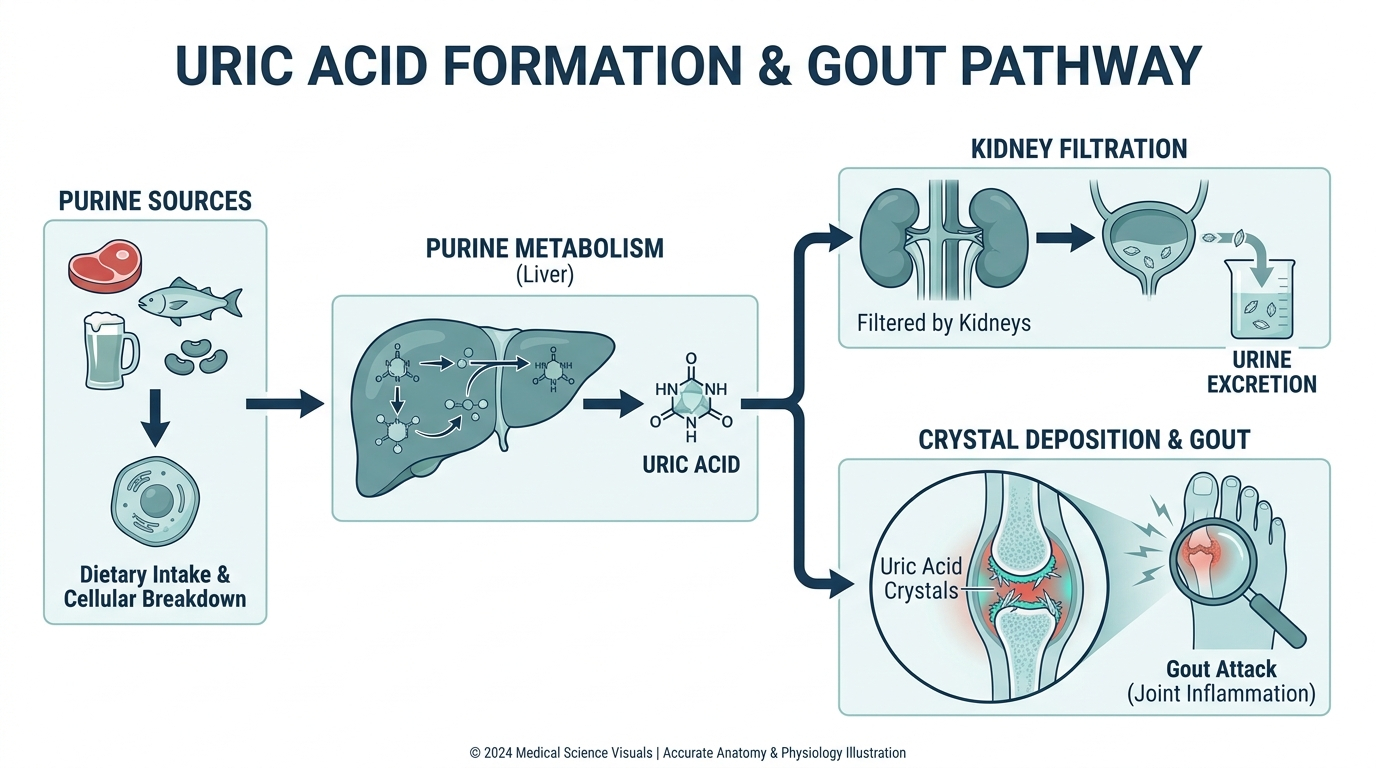
Uric acid in a blood test is the measured concentration of urate, the final waste product your body creates when it breaks down purines, which are compounds found in your own cells and in foods like red meat, organ meat, seafood, and beer. According to MedlinePlus, a typical normal serum uric acid range is about 3.0 to 7.1 mg/dL for women and 4.0 to 8.6 mg/dL for men, though every laboratory sets its own reference interval.
Uric acid ranges differ for women and men, so where does your number actually fall? One at-home Superpower draw checks 100+ biomarkers, physician-reviewed.
Most uric acid dissolves in your blood, travels to your kidneys, and leaves in your urine. The test, sometimes called a serum urate or SUA test, simply checks whether that balance between production and excretion is holding steady. The reference range is wider in men because of hormonal and body composition differences, which is why the same number can be “normal” for one person and elevated for another.
Why is uric acid measured?
Uric acid is measured mainly to diagnose and monitor gout, to assess kidney stone risk, and to watch patients undergoing cancer treatment. Hyperuricemia, defined as a level above 6.8 mg/dL, is the single biggest risk factor for gout because urate begins forming sharp crystals at that saturation point (StatPearls).
Your clinician may order this test for several reasons:
- Suspected gout: sudden, severe joint pain, often in the big toe, prompts a urate check.
- Kidney stones: recurrent stones can be made of uric acid, so the level helps guide prevention.
- Cancer therapy monitoring: chemotherapy and radiation kill cells rapidly, dumping purines into the blood and raising the risk of tumor lysis syndrome.
- General metabolic screening: high urate often travels with high blood pressure, insulin resistance, and metabolic syndrome.
A single reading is a snapshot. Trends over time tell a far richer story, which is why clinicians frequently repeat the test rather than act on one value.
What does a high uric acid mean?
A high uric acid level, called hyperuricemia, means your blood holds more urate than it can keep dissolved, and the threshold is generally a level above 6.8 mg/dL, the saturation point for monosodium urate in body fluids (StatPearls). Above this, crystals can deposit in joints and tissues.
High urate has two basic mechanisms: your body makes too much, or your kidneys clear too little. Common drivers include a purine-rich diet, alcohol (especially beer), obesity, dehydration, certain diuretics and low-dose aspirin, psoriasis, and chronic kidney disease. Rapid cell turnover from chemotherapy can spike levels sharply.
Importantly, many people with hyperuricemia never develop symptoms. This is called asymptomatic hyperuricemia, and most guidelines do not recommend treating the number alone without gout, stones, or another clear indication. When gout is being managed, the long-term treatment target is usually a serum urate below 6.0 mg/dL, deliberately set under the saturation point so existing crystals can dissolve (PubMed, Pillinger et al.).
What does a low uric acid mean?
A low uric acid level, known as hypouricemia, usually means your kidneys are excreting too much urate or your body is making very little, and it is far less common and generally less worrisome than a high level. There is no universal cutoff, but values under roughly 2 mg/dL are typically flagged as low.
Causes include certain medications (such as the gout drug allopurinol or the SGLT2 inhibitors used for diabetes), liver disease, syndrome of inappropriate antidiuretic hormone secretion (SIADH), a low-purine diet, and rare inherited conditions like Fanconi syndrome or hereditary renal hypouricemia. In most cases, a low value is not a disease in itself but a clue pointing to one of these underlying causes. Your clinician will interpret it in context rather than treat the number directly.

How is uric acid interpreted with other markers?
Uric acid is rarely read in isolation; clinicians interpret it alongside kidney function tests, joint findings, and metabolic markers because the same urate value can mean very different things depending on the company it keeps. For example, a uric acid of 8 mg/dL with a normal creatinine and no symptoms is managed very differently from the same number with rising creatinine and swollen joints.
Useful pairings include:
- Creatinine and eGFR: show whether the kidneys are clearing urate properly.
- Joint fluid analysis: the gold standard for gout is finding urate crystals under a microscope, not the blood level alone.
- Fasting glucose, lipids, blood pressure: high urate clusters with metabolic syndrome.
- 24-hour urine uric acid: separates overproducers from underexcretors, which guides drug choice.
Hydration, fasting status, and recent alcohol can all nudge a result, so context matters before anyone reaches a conclusion.
The insider nuance: a “normal” level can still cause gout
Here is what surprises many patients. During an acute gout flare, the blood uric acid can read normal or even low, so a reassuring number does not rule gout out. In a flare, urate shifts out of the blood and into the inflamed joint, and the body’s stress response can temporarily lower the serum value.
This is why experienced clinicians do not diagnose or exclude gout on a single blood test taken mid-attack. The smarter move is to recheck uric acid a few weeks after the flare settles, when the level reflects your true baseline. It also explains why the treatment target of under 6.0 mg/dL is set below the laboratory’s “normal” upper limit. Sitting inside the reference range is not the same as sitting below the crystal saturation point, and that gap is where a lot of preventable gout lives.
Uric acid reference ranges by sex, age, and life stage
The single biggest reason two people read the same uric acid number differently is that “normal” is not one number. It shifts with sex, age, and physiology, and knowing which band applies to you prevents both false alarms and false reassurance.
| Group | Typical serum uric acid range | Why it differs |
|---|---|---|
| Adult men | About 4.0 to 8.6 mg/dL | Higher muscle mass and lower urate excretion set a higher baseline. |
| Adult women (premenopausal) | About 3.0 to 7.1 mg/dL | Estrogen increases urate excretion, keeping levels lower. |
| Women after menopause | Drifts upward toward the male range | Falling estrogen reduces the kidney’s urate clearance. |
| Children and teens | Generally lower, often 2.0 to 5.5 mg/dL | Levels rise through puberty, especially in boys. |
Two practical points follow. First, a premenopausal woman with a level of 7.0 mg/dL is closer to her upper limit than a man reading the same 7.0, so the same value carries more weight for her. Second, because menopause lifts urate, many women see gout appear for the first time in their late fifties or sixties, a pattern that catches people off guard because gout is often assumed to be a male condition. Always compare your result against the reference interval printed on your own lab report, since the exact cutoffs vary by the assay each laboratory runs.

What actually raises your uric acid: diet, drink, and body weight
Diet contributes to urate, but its role is often overstated and misunderstood. Research consistently shows that dietary purines account for a smaller share of your blood urate than your genetics and kidney function do, which is why some people eat carefully and still run high. That said, several inputs move the needle enough to matter.
- Purine-dense animal foods: organ meats (liver, kidney, sweetbreads), game meat, and certain seafood such as anchovies, sardines, mussels, and scallops deliver the most purine per serving.
- Alcohol, especially beer: beer is a double hit because it is both purine-rich (from brewer’s yeast) and it makes the kidneys hold onto urate. Spirits raise urate less; moderate wine has the weakest effect of the three.
- Fructose: this is the input most people miss. High-fructose corn syrup in sodas and sweetened drinks drives urate production through a metabolic pathway that burns cellular energy and releases purines. Sugary soda can raise urate as much as some purine-heavy foods.
- Excess body weight and insulin resistance: higher insulin reduces how much urate the kidneys excrete, so weight gain often lifts levels independently of what you eat.
On the other side, some foods lower or blunt urate: low-fat dairy, cherries and cherry juice (linked in studies to fewer gout flares), coffee, and vitamin C in modest amounts. The realistic takeaway is that diet is a lever, not a light switch. For someone with established gout, food changes alone typically drop serum urate by roughly 1 mg/dL, useful but usually not enough to reach the sub-6.0 target without medication.
How to prepare for the test and what can skew your result
A uric acid result is only as reliable as the conditions under which the blood was drawn. Several everyday factors can push a value up or down by enough to change how it is read, so knowing them helps you avoid a misleading number.
- Recent alcohol: a heavy drinking session in the day or two before the draw can transiently elevate urate. Many clinicians ask you to avoid alcohol beforehand.
- Fasting versus fed: some labs request a short fast (often around 4 hours); a large purine-rich meal right before the test can nudge the value higher.
- Hydration: dehydration concentrates the blood and raises the reading, while heavy fluid loading can dilute it. Being in a normal, steady hydration state gives the truest number.
- Medications: thiazide and loop diuretics, low-dose aspirin, niacin, and some immunosuppressants raise urate, while allopurinol, febuxostat, losartan, and SGLT2 inhibitors lower it. Do not stop any prescribed drug for a test without asking your clinician, but do tell the lab and your doctor what you take.
- Acute illness or a recent gout flare: as noted earlier, urate can read deceptively low during an active attack, so timing matters.
If a single result surprises you, the right response is rarely panic or celebration. It is to ask whether any of the above applied on the day of the draw, and to repeat the test under clean conditions before making decisions.
Symptoms, red flags, and when to seek care
Uric acid itself causes no sensation; you cannot feel a high level. Symptoms appear only when urate crystals form and irritate tissue, so the clues to watch for are downstream of the number.
- Classic gout: sudden, intense joint pain that peaks within hours, most often in the big toe, with redness, warmth, and swelling. The joint may be so tender that a bedsheet feels unbearable.
- Kidney stones: severe flank pain radiating to the groin, blood in the urine, or painful urination can signal uric acid stones.
- Tophi: in long-standing untreated cases, firm lumps of crystal deposit under the skin around joints, ears, or the Achilles tendon.
Seek urgent care if a hot, swollen joint is accompanied by fever, because septic arthritis (a joint infection) can look like gout and is a medical emergency. Also seek prompt evaluation for stone symptoms with fever or inability to pass urine. For anyone on chemotherapy, a rapid rise in uric acid with reduced urination or muscle cramps can signal tumor lysis syndrome and needs immediate attention.

After an abnormal result: your next steps
An out-of-range uric acid is a starting point for a conversation, not a diagnosis. What happens next depends heavily on whether you have symptoms.
- High but no symptoms (asymptomatic hyperuricemia): most guidelines advise against drug treatment for the number alone. The focus is on addressing drivers such as weight, alcohol, sugary drinks, and any urate-raising medications, then monitoring over time.
- High with gout: the goal shifts to lowering serum urate below 6.0 mg/dL (or under 5.0 mg/dL with tophi) so existing crystals dissolve. This usually involves a urate-lowering drug such as allopurinol, started low and titrated up with repeat testing.
- High with kidney stones: a 24-hour urine collection helps determine whether you overproduce or under-excrete urate, which guides both diet and medication.
- Low uric acid: the aim is to identify the cause, whether a medication, a kidney handling issue, or a rare inherited condition, rather than to raise the number.
The through-line is that uric acid is a marker best interpreted in context and tracked over time. A trend line built from several readings tells your clinician far more than any single snapshot, which is why repeat testing is standard rather than a sign that something went wrong.
Common misconceptions about uric acid
Few lab values attract as much folklore as uric acid. Clearing up the most common myths helps you read your result more calmly.
- “A normal level means I cannot have gout.” False. Levels can read normal during a flare, and diagnosis rests on symptoms and crystal findings, not the blood number alone.
- “High uric acid always needs medication.” Not true. Asymptomatic hyperuricemia is usually monitored, not medicated.
- “It is purely a diet problem.” Genetics and kidney function usually matter more than food. Blaming diet alone leaves the biggest drivers unaddressed.
- “Gout is only a rich man’s disease of the big toe.” Gout affects many women after menopause and can strike ankles, knees, wrists, and fingers, not just the toe.
- “Once my level is normal, I can stop treatment.” Stopping urate-lowering therapy typically lets levels climb again and flares return, so treatment is usually long-term.
How often should you retest uric acid?
There is no one-size answer, but the sensible cadence depends on your situation. If you have no symptoms and a borderline reading, rechecking once a year alongside routine bloods is reasonable, especially if you are also watching weight, blood pressure, or blood sugar. If you are actively lowering urate with medication after a gout diagnosis, testing is far more frequent at first, often every few weeks while the dose is being adjusted, then every six to twelve months once you are stable below target. People starting or stopping urate-affecting drugs, or making major diet and weight changes, benefit from a repeat check after the change has had time to settle, usually a month or more. The value of retesting is not the single number but the direction of travel: a level drifting up over successive years is a signal worth acting on well before it ever produces a flare, while a stable level below the saturation point is reassurance you can bank.
Curious where your uric acid really sits?
Baseline uric acid and 100+ biomarkers today and retest as life changes, all in one membership with physician review.
Frequently asked questions
Is uric acid of 7 high?
A uric acid of 7 mg/dL sits near the top of the typical range and may be flagged as high for women, whose normal usually tops out around 7.1 mg/dL. Since urate saturates at about 6.8 mg/dL, a 7 warrants attention, especially with gout symptoms.
What foods raise uric acid the most?
Organ meats, red meat, certain seafood (anchovies, sardines, shellfish), beer, and drinks sweetened with high-fructose corn syrup raise uric acid the most. These are high in purines or fructose, which the body converts into urate. Limiting them is a standard first step in lowering levels.
Can drinking water lower uric acid?
Staying well hydrated can modestly help your kidneys flush out uric acid and may reduce the risk of crystal formation and kidney stones. Water is not a treatment for gout on its own, but dehydration clearly raises urate, so adequate fluid intake supports normal levels.
Do I need to fast before a uric acid test?
Many labs ask you to fast for about 4 hours before a uric acid blood test, and to avoid alcohol beforehand, since both food and drink can shift the result. Follow your specific lab’s instructions, because requirements vary and some panels do not require fasting at all.
Does high uric acid always mean gout?
No. Many people have high uric acid, called asymptomatic hyperuricemia, and never develop gout. The number raises risk but does not equal disease. Conversely, gout can flare even when blood uric acid reads normal, so symptoms and joint findings matter as much as the lab value.
Sources
- MedlinePlus, Uric acid – blood
- MedlinePlus, Uric Acid Test
- StatPearls (NCBI Bookshelf), Hyperuricemia
- PubMed, Overview of Serum Uric Acid Treatment Targets in Gout: Why Less Than 6 mg/dL?
This article is for general educational purposes and is not medical advice. It cannot diagnose or treat you and does not replace your clinician. Always discuss your lab results and any health decisions with a qualified healthcare professional.
Vital Signs Today may earn a commission if you buy through links on this page. It does not affect our editorial assessments.