Disclosure: Vital Signs Today may earn a commission if you buy through links on this page, at no extra cost to you. This does not influence our evidence-based assessments. We are not a medical provider; talk to a clinician before acting on test results.
Related: See the TSH reference chart by age and sex
You opened your lab report, scanned past the cholesterol and the blood sugar, and landed on three letters with a number flagged high: TSH. Maybe it was 6. Maybe it was 12. Either way, your stomach dropped a little, because the panel did not explain what it means, only that something is off. Here is the part that surprises most people. A high TSH does not mean your thyroid is overactive. It usually means the opposite, and counterintuitively, the higher the number climbs, the more sluggish your thyroid most likely is.
That single backwards relationship trips up almost everyone reading their own results for the first time. Let me walk you through exactly what a high TSH is telling you, what counts as high, and when the number is worth losing sleep over.
Part of our Thyroid Panel guide.
What does high TSH mean in a blood test?
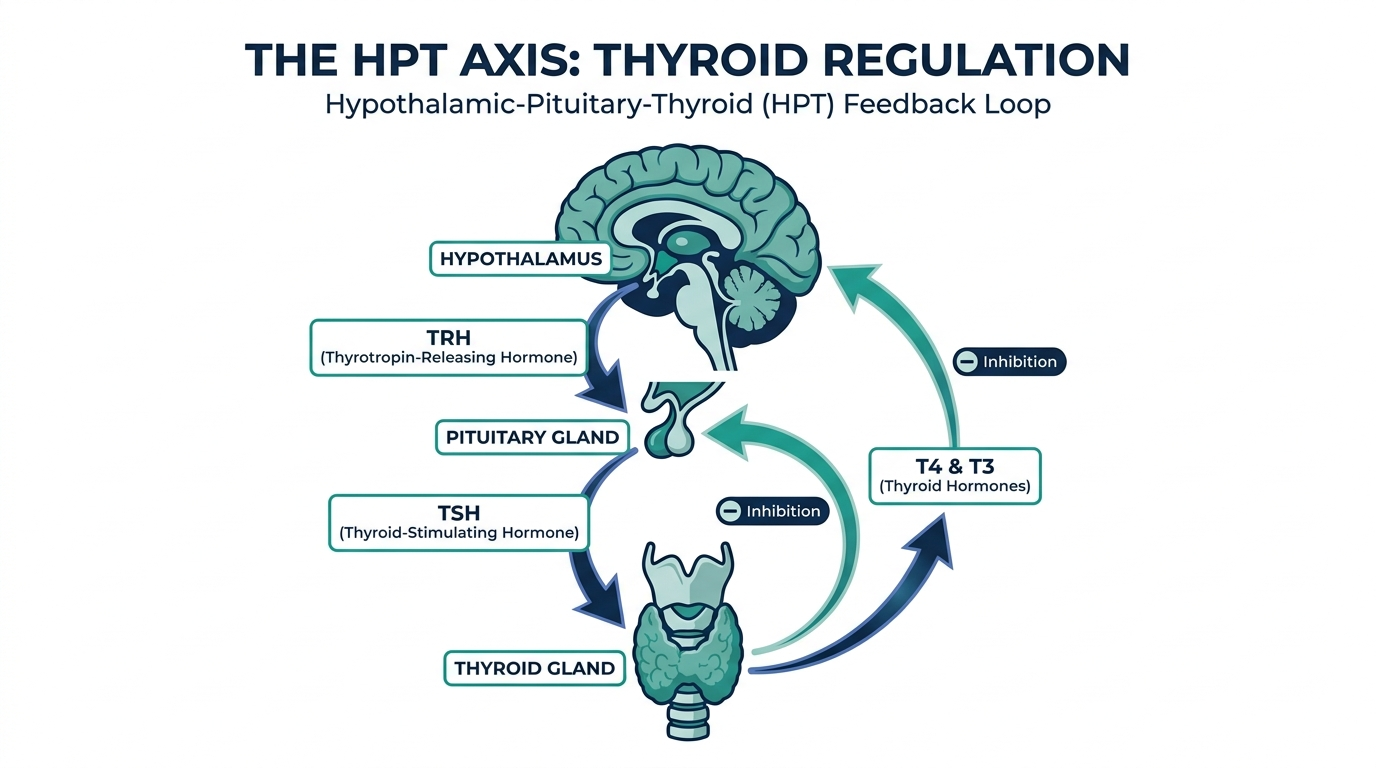
A high TSH in a blood test usually means your thyroid gland is underactive and not making enough thyroid hormone, a condition called hypothyroidism (Cleveland Clinic). TSH stands for thyroid-stimulating hormone, and it is made by your pituitary gland, not your thyroid. Think of the pituitary as a thermostat. When it senses too little thyroid hormone in your blood, it pumps out more TSH to nag the thyroid into working harder. So a high TSH is the sound of your body shouting at a thyroid that is falling behind.
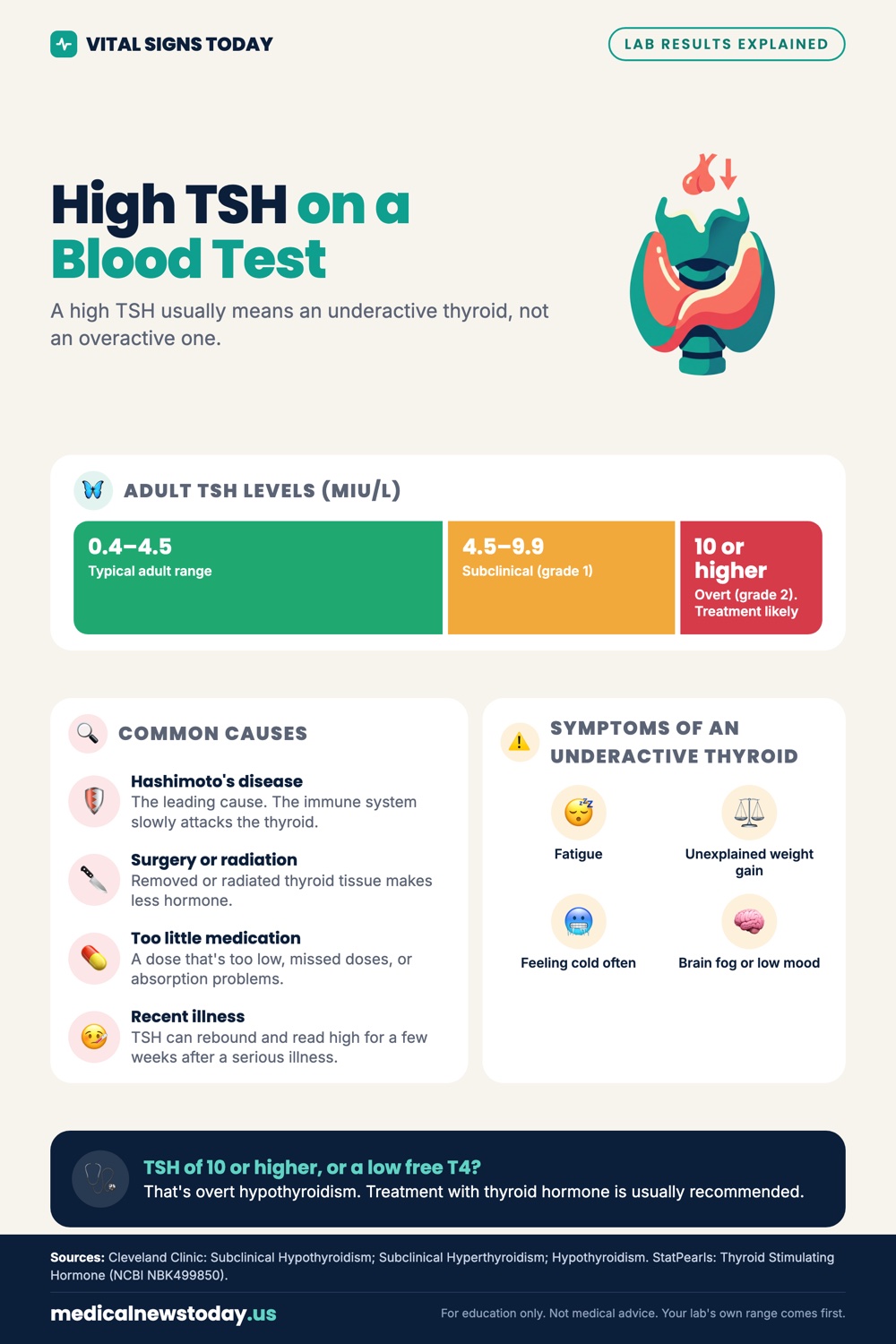
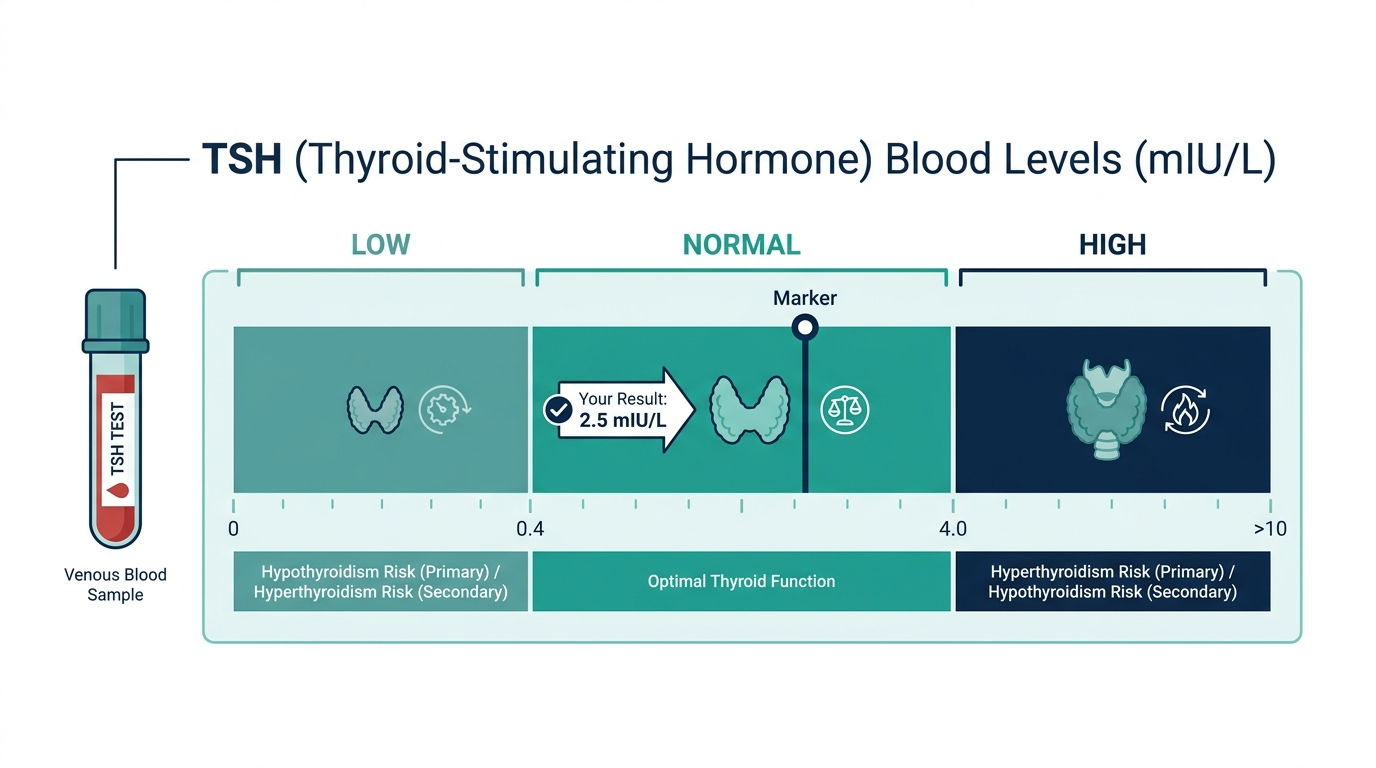
For most non-pregnant adults, a normal TSH runs roughly 0.27 to 4.2 micro-international units per milliliter, though the exact reference range varies by lab and instrument (Cleveland Clinic). A result above the top of your lab’s range counts as high. The practical cutoffs clinicians watch are around 4.5 and 10. Between roughly 4.5 and 10 with a normal T4, you are in subclinical territory. At 10 or above, the picture is more serious (Cleveland Clinic). One important caveat: TSH naturally drifts higher with age, and a level up to about 7 can be normal in people over 80 (MedlinePlus).
How high is high? The tiers, and the “optimal” debate
Not all high TSH results are equal, and the tier your number lands in drives what happens next. A TSH between roughly 4.5 and 10 with a normal free T4 is subclinical hypothyroidism, the mild, often-watched category. At 10 or above, or with a low free T4, you are in overt territory, where treatment is far more likely.
Then there is the debate you will run into online. One camp argues the upper limit of “normal” should sit closer to 2.5 than 4.5, and that people with a TSH in the high-3s or 4s and clear symptoms are undertreated. Mainstream guidelines still anchor the cutoff near the top of the lab range rather than 2.5, and treating a symptom-free person with a TSH of 4 remains controversial. The honest takeaway: a TSH of 4 is not a crisis, but if you feel unwell and sit near the top of the range, it is a reason to test antibodies and free T4 rather than to accept “normal” and move on.
Two caveats keep this from turning into a self-diagnosis. Age lifts the ceiling, so a TSH that reads high in a 30-year-old can be normal past 80. And pregnancy tightens it, with many clinicians aiming for a TSH under about 2.5 in the first trimester because the developing baby depends on the mother’s thyroid.
What causes a high TSH?
A high TSH is a signal, not a diagnosis, and the same number can come from several different sources. Here is the real differential, most common first.
- Hashimoto’s disease (autoimmune thyroiditis). This is the leading cause of high TSH in the United States. Your immune system slowly attacks the thyroid, so it produces less hormone and TSH rises to compensate (Cleveland Clinic).
- Thyroid surgery or radiation. If part or all of the thyroid has been removed, or treated with radioactive iodine, the remaining gland may not keep up, and TSH climbs (Cleveland Clinic).
- Not enough thyroid medication. People already on levothyroxine often show a high TSH simply because their dose is too low, they missed doses, or absorption is off.
- Recovery from a recent illness. TSH can rebound and read high in the weeks after a serious illness, which is one reason a single odd result gets repeated rather than acted on.
- Rare pituitary causes. Occasionally a TSH-secreting pituitary tumor pushes TSH up even when thyroid hormone is normal or high, which flips the usual logic and needs specialist workup (Cleveland Clinic).
This is why your clinician cannot stop at the TSH alone. The number tells you the thyroid is struggling, but not why. A high TSH from Hashimoto’s, from a missed pill, and from a recovering infection all look identical on the printout.
What are the symptoms of a high TSH?
A high TSH itself causes no symptoms. What you feel comes from the low thyroid hormone behind it, and the catch is that mildly elevated TSH frequently produces no symptoms at all. That is exactly why so many people discover theirs by accident on a routine panel.
When symptoms do appear, they reflect a body running in low gear. Hypothyroidism commonly shows up as fatigue, unexplained weight gain, constipation, feeling cold when others are comfortable, depression or low mood, dry skin, numbness and tingling in the hands, and in women, heavier or more frequent menstrual periods (Cleveland Clinic). These symptoms are frustratingly nonspecific. Plenty of people chalk them up to stress, aging, or a busy season of life, which is part of why an underactive thyroid can simmer for years before anyone checks the TSH.
The general rule: the higher your TSH and the lower your actual thyroid hormone, the more likely you are to feel it. A TSH of 5.5 with normal T4 often comes with nothing noticeable. A TSH of 40 with a low T4 is a different story.
How does a high TSH connect to your other blood markers?
An underactive thyroid slows the whole body down, and that shows up on parts of your panel that have nothing to do with the thyroid heading. Reading TSH next to these markers is how a clinician gauges how much the low hormone is actually affecting you.
- Free T4 and free T3 measure the hormone the gland is actually producing. Free T4 is the key partner to TSH, because it sorts subclinical from overt hypothyroidism and decides whether treatment is on the table.
- TPO and thyroglobulin antibodies reveal Hashimoto’s disease, the autoimmune attack behind most high-TSH results in the United States. Positive antibodies also raise the odds that a subclinical case will progress to overt over time.
- Cholesterol. Low thyroid hormone slows the clearance of LDL, so an underactive thyroid can quietly push total and LDL cholesterol up. A stubborn rise in cholesterol next to an unexplained high TSH is a classic pairing, and treating the thyroid sometimes improves the lipids on its own.
- Complete blood count and others. Hypothyroidism can come with a mild anemia, and in more severe cases with a raised creatine kinase or a low sodium, which is why a very high TSH prompts a wider look, not a narrower one.
The pattern to hold onto: TSH tells you the pituitary is pushing hard, free T4 tells you whether the gland is keeping up, and antibodies tell you why. The rest of the panel tells you how far the effects have spread.
When is a high TSH dangerous or a medical emergency?
Let me set expectations honestly. The vast majority of high TSH results are not emergencies. A TSH of 6 or 8 is a reason to investigate and likely to follow up, not to head to the ER. Most elevated readings sit in the mildly high range and get sorted out calmly over weeks (Cleveland Clinic).
The danger lives at the far end of the spectrum, in severe, long-untreated hypothyroidism. When thyroid hormone drops drastically low for a long time and something tips the body over, like an infection, cold exposure, surgery, or sedating drugs, it can spiral into myxedema coma, the most severe and life-threatening form of hypothyroidism (StatPearls, NCBI). Despite the name, true coma is uncommon. The hallmarks are progressive confusion or altered mental status and a dangerously low body temperature, often below about 95.9 degrees Fahrenheit, along with a slow heart rate, low blood pressure, and slowed breathing (StatPearls, NCBI). This is a true emergency with a reported mortality near 30 to 40 percent, and it requires immediate hospital treatment (StatPearls, NCBI).
The red flags that demand urgent care are not the lab number itself but the clinical picture: someone known or suspected to be very hypothyroid who becomes drowsy, confused, abnormally cold, or hard to rouse. That warrants calling 911, not waiting for a recheck.
Want to check your TSH?
Three ways to get it measured. Pick whichever fits you.
Affiliate links: we may earn a commission at no extra cost to you. A lab test does not replace a visit with your clinician.
How should you prepare for a TSH test?
TSH does not require fasting, but a few habits make your result cleaner and more comparable over time, and if you already take thyroid medication, how you take it matters more than most people realize.
- Draw at a consistent time, ideally morning. TSH runs higher overnight and early in the day and dips in the afternoon, so testing at a steady time keeps repeat results honest, especially when you are tracking a borderline number.
- If you take levothyroxine, take it after the draw that day. The test reflects your steady state, so a missed or late dose in the days before can nudge TSH up. Keeping your routine identical before each test is what makes two results comparable.
- Separate the pill from coffee, calcium, and iron. Levothyroxine is absorbed best on an empty stomach, and coffee, calcium supplements, iron, and some antacids can blunt how much gets in. A TSH that drifts up without a dose change is often an absorption problem, not a failing thyroid.
- Flag a recent illness. TSH can rebound above range in the weeks after a significant illness, then settle on its own, which is one more reason a single high value is usually repeated.
What should you do about a high TSH?
First, do not panic and do not self-diagnose off a single number. TSH fluctuates through the day, bounces after illness, and can be thrown off by lab timing, so the first move is almost always to confirm it (MedlinePlus). Here is the sensible path.
- Repeat the test, usually with free T4 and thyroid antibodies. Your TSH cannot say why it is high, so providers order a free T4 to see how the gland is actually performing and thyroid antibodies to check for Hashimoto’s (MedlinePlus).
- Let the T4 decide the category. High TSH with normal free T4 is subclinical hypothyroidism. High TSH with low free T4 is overt hypothyroidism, which is more likely to need treatment (Cleveland Clinic).
- Treatment is not automatic. Mild subclinical cases are often monitored rather than medicated. Clinicians more commonly treat when TSH is 10 or higher, or when a younger person has clear symptoms, antibodies, or other risk factors (Cleveland Clinic).
- If you already take levothyroxine, a high TSH usually means a dose adjustment or a conversation about how and when you take it, since coffee, calcium, and iron can blunt absorption.
Lifestyle tweaks like adequate iodine and selenium intake matter for general thyroid health, but a genuinely high TSH from an underactive thyroid is not something diet alone reliably fixes. The fix, when needed, is the right hormone replacement at the right dose.
The insider nuance: why your high TSH might be a false alarm
Here is the detail that gets missed in nearly every patient explainer. TSH is one of the most situational numbers on your panel, and a single high reading is genuinely unreliable on its own. It follows a daily rhythm, peaking in the early morning hours and dipping in the afternoon, so the exact same person can produce a flagged-high TSH at 8 a.m. and a normal one at 2 p.m. Layer on the rebound that happens after any significant illness, and you have a recipe for false alarms (MedlinePlus).
This is why a careful clinician rarely diagnoses hypothyroidism off one elevated TSH. They repeat it a few weeks later and pair it with free T4. A mildly high TSH that quietly normalizes on the recheck was never a thyroid problem. The flip side matters too: in older adults, a TSH that would be flagged in a 30-year-old can be perfectly normal, since the upper limit drifts up with age and may reach about 7 in people over 80 (MedlinePlus). And in the rare reverse pattern, a high TSH sitting next to a high T4 is not ordinary hypothyroidism, it points toward a pituitary problem and needs an endocrinologist rather than a standard levothyroxine prescription (Cleveland Clinic).
Two high-TSH situations that play out differently
Consider a 32-year-old woman planning a pregnancy whose TSH comes back at 5.5 with a normal free T4. In a non-pregnant adult with no symptoms, that mild elevation might simply be watched. But because she is trying to conceive, the calculus changes: early pregnancy leans on the mother’s thyroid, and many clinicians would treat toward a TSH under about 2.5 rather than wait. Same number, but the life stage moves it from “monitor” to “act.”
Now consider a man who has taken the same levothyroxine dose for years, whose TSH suddenly reads 9. Nothing about his thyroid has changed. He recently started a calcium supplement and began taking his pill with breakfast coffee, both of which cut his absorption. The fix is not a reflexively bigger dose, it is separating the pill from the coffee and calcium and rechecking. A high TSH on treatment is frequently a how-you-take-it story, not a your-thyroid-got-worse story.
When should you see a doctor?
If your blood test flags a high TSH, book a visit to discuss it, even if you feel fine. The whole point of catching it on a panel is to confirm it and decide whether it needs anything (MedlinePlus). Make it a priority rather than a someday item if your TSH is 10 or higher, if you have nagging hypothyroid symptoms like deep fatigue, weight gain, or cold intolerance, if you are pregnant or trying to conceive since thyroid targets are stricter then, or if you already take thyroid medication and your number has drifted up.
Seek emergency care, not a routine appointment, if someone with known or suspected severe hypothyroidism becomes confused, extremely drowsy, unusually cold to the touch, or difficult to wake. Those are the warning signs of myxedema crisis, and it is time-sensitive (StatPearls, NCBI).
Frequently asked questions
What TSH level is considered high?
For most non-pregnant adults, a TSH above about 4.2 micro-international units per milliliter is above the typical reference range, though exact cutoffs vary by lab (Cleveland Clinic). A level between roughly 4.5 and 10 with normal T4 is subclinical, while 10 or higher is more significant. In people over 80, levels up to about 7 can still be normal (MedlinePlus).
Is a high TSH always hypothyroidism?
Usually but not always. A high TSH most often means an underactive thyroid (Cleveland Clinic). But it can also reflect a missed thyroid medication dose, recovery from a recent illness, or, rarely, a pituitary tumor that raises TSH alongside normal or high T4. That is why providers confirm the result and check free T4.
Should I worry about a high TSH if I feel fine?
Mildly high TSH often causes no symptoms, so feeling fine does not rule out an issue worth confirming (Cleveland Clinic). It is not an emergency, but it is a reason to repeat the test and discuss it with your clinician, especially if you are pregnant or your number is 10 or higher.
What tests come after a high TSH?
The standard next steps are a repeat TSH along with a free T4 to gauge actual thyroid output, and thyroid antibodies to check for Hashimoto’s disease (MedlinePlus). The combination tells your provider whether you have subclinical or overt hypothyroidism and what is driving it.
Can a high TSH be a false reading?
Yes. TSH follows a daily rhythm and can rebound after illness, so a single high value can normalize on a recheck (MedlinePlus). This is why clinicians rarely diagnose hypothyroidism from one elevated result and typically repeat the test before treating.
Can a high TSH raise your cholesterol?
It can. An underactive thyroid slows the clearance of LDL cholesterol, so a high TSH can come with higher total and LDL cholesterol. When the thyroid is treated, the lipid numbers sometimes improve on their own, which is why an unexplained rise in cholesterol alongside a high TSH is worth connecting rather than treating separately.
Does a high TSH cause weight gain?
An underactive thyroid can, but usually less than people hope to blame on it. The weight gain from hypothyroidism is typically modest and partly fluid, not tens of pounds, so treating the thyroid corrects the sluggish metabolism without being a weight-loss shortcut (Cleveland Clinic).
What is a normal TSH in pregnancy?
Pregnancy tightens the target. Many clinicians aim for a TSH under about 2.5 in the first trimester, because the developing baby depends on the mother’s thyroid before its own is working. If you are pregnant or trying to conceive, a TSH that would be shrugged off otherwise is worth acting on (MedlinePlus).
How long until levothyroxine brings TSH down?
Give it about six to eight weeks. TSH is slow to re-equilibrate after a dose starts or changes, so clinicians typically recheck around that mark rather than sooner. Feeling a bit better can come first, but the number needs those weeks to reflect the new dose.
This article is for general educational purposes and is not medical advice. It cannot diagnose or treat you and does not replace your clinician. Always discuss your lab results and any health decisions with a qualified healthcare professional.
Related: test your thyroid and hormones from home.
Vital Signs Today may earn a commission if you buy through links on this page. It does not affect our editorial assessments.