
Last updated June 2026. Educational content, not medical advice. Talk to a licensed clinician before starting any supplement regimen.
Short answer: Yes, but not in the way most collagen marketing suggests. The 2025 British Journal of Nutrition randomized controlled trial found that women taking collagen peptides before exercise showed significantly elevated GLP-1 levels at nearly every post-supplement time point, with ghrelin lower throughout. Separately, GELITA’s BODYBALANCE trials showed 15 g/day paired with resistance training cut fat mass by 0.8 to 1.9 kg more than placebo in 12 weeks. Collagen is not a fat burner. It is a structural protein that happens to trigger satiety hormones and preserve lean mass during a calorie deficit, and that combination matters more for lasting weight loss than any of the flashy mechanisms on the supplement label.
Collagen’s effect on GLP-1 levels is a new finding. Curious what your own GLP-1 and metabolic markers look like? One at-home Superpower draw checks 100+ biomarkers, physician-reviewed.
Why do people even think collagen has anything to do with weight loss?
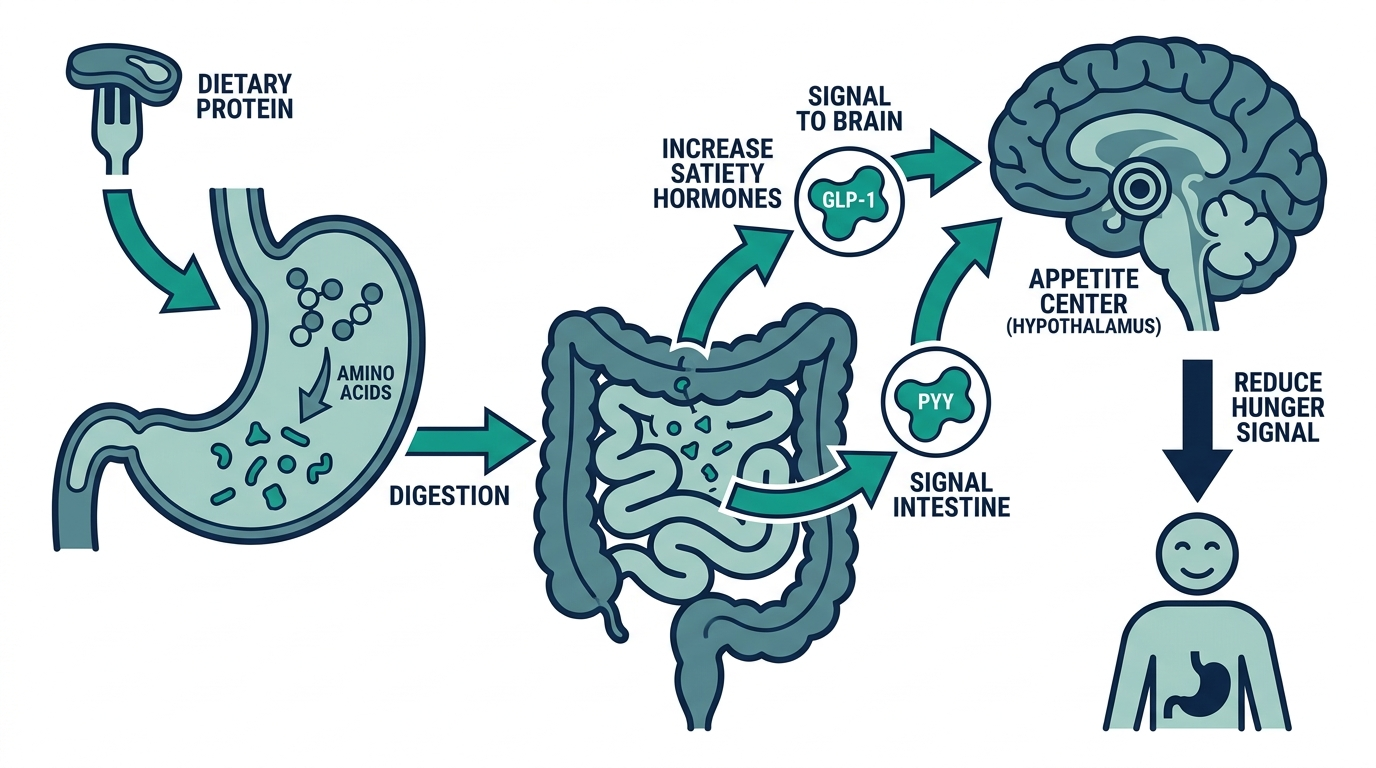
The short version: protein suppresses appetite, and collagen is protein. The longer version is more interesting.
Collagen is the most abundant protein in the human body, making up connective tissue, skin, bone, and muscle fascia. When you hydrolyze it into short-chain peptides, typically 3,000 to 5,000 daltons, those fragments are digested differently from whole proteins. They survive the stomach longer, interact with enteroendocrine cells in the small intestine, and appear to stimulate gut hormones like glucagon-like peptide-1 (GLP-1) and cholecystokinin (CCK), both of which signal fullness to the brain.
That is not marketing language. It is the finding behind a 2025 randomized controlled trial, a decade of GELITA and Rousselot-funded clinical work, and a May 2025 Food Navigator headline that flatly asked: “Collagen for weight loss: the next GLP-1?”
The answer to that question is no, it will not replace semaglutide. But the question itself tells you something important has shifted in the clinical evidence.
Full-body lab membership: 100+ biomarkers, doctor-reviewed, tracked over time.
What does the clinical evidence actually show?
The simplest way to actually get this done
Superpower is a full-body lab membership that runs 100+ biomarkers, has each result reviewed by a doctor, and tracks your numbers year over year (about $199/year). It is what we point readers to when they would rather get one clean, complete draw than chase single tests one at a time. Here is superpower reviewed in full.
Let us go study by study, because the picture is more nuanced than any headline.
The 2025 appetite and GLP-1 trial (British Journal of Nutrition). This was a randomized, placebo-controlled crossover trial in healthy females. Participants took collagen peptides or a placebo 30 minutes before exercise. The collagen group showed total GLP-1 concentrations significantly higher at nearly every post-supplement and post-meal time point, with the elevation persisting two hours after the meal, a sign this is not simply a caloric response. Ghrelin (the hunger hormone) and leptin were both lower in the collagen condition. Post-exercise energy intake was not statistically different between groups in this trial, but the hormone profile is the relevant signal.
GELITA’s BODYBALANCE body composition trials. Over a series of randomized, double-blind, placebo-controlled studies, GELITA tested 15 g/day of BODYBALANCE-specific collagen peptides against placebo in groups doing matched resistance training. Depending on age and sex, muscle mass increased by 0.6 to 1.8 kg more than placebo, and fat mass decreased by 0.8 to 1.9 kg more than placebo over 12 weeks. In one three-arm trial comparing 15 g collagen, 15 g whey, and placebo in middle-aged men, the collagen group had the most pronounced improvements in fat-free body mass, fat mass, and leg strength, beating whey on fat mass reduction.
The low-molecular-weight collagen peptide trial in adults 50+. A 2023 randomized, double-blind, placebo-controlled study published in PMC found that 15 g/day for 12 weeks had a beneficial effect on body fat reduction, including abdominal fat, in people over 50 at normal physical activity levels. No exceptional exercise protocol required.
Rousselot’s Nextida GC. Rousselot’s R&D team spent years testing 17 collagen peptide candidates before selecting one they called Nextida GC, based on GLP-1 stimulation superiority in vitro and in animal models. A clinical trial showed that 5 to 10 g taken 30 minutes before a meal slightly increased insulin at the meal point and then lowered post-meal insulin versus placebo, which is consistent with a natural GLP-1 stimulation pattern. Nextida GC is now showing up in functional food formulations aimed at GLP-1 drug users who want nutritional support.
What the animal data tells us (and its limits). A 2025 systematic review and meta-analysis in the International Journal of Obesity looked at collagen peptide administration in high-caloric-diet rodent models and found consistent anti-obesity effects. Animal data should be read as mechanistic plausibility, not clinical confirmation. But the consistency across multiple labs adds weight to the human studies rather than being their only basis.
Does collagen work better than whey protein for fat loss?
This is the question the BODYBALANCE three-arm trial addressed directly, and the answer is counterintuitive.
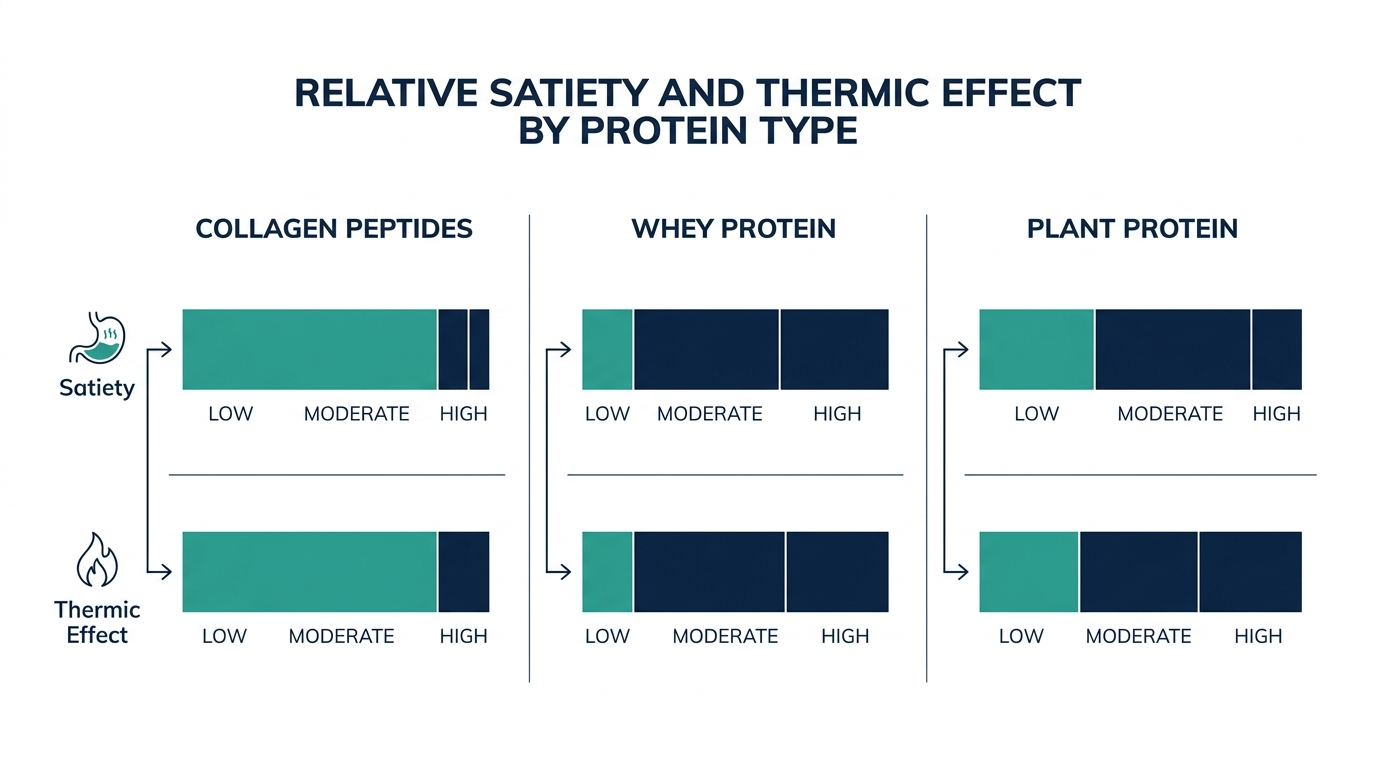
Whey protein has a stronger reputation for weight management because it is a complete protein (all nine essential amino acids), has a higher thermic effect, and is more rigorously studied for satiety. An earlier randomized study found that acute collagen supplementation did not alter appetite compared to whey in healthy women, suggesting the effects are not universal or consistent across all populations and protocols.
So here is the honest read: in short-term acute comparisons, the data leans toward whey for immediate hunger suppression. In 12-week body composition trials with resistance training, the BODYBALANCE data shows collagen matching or beating whey on fat mass reduction. The mechanisms are probably different. Whey drives satiety through leucine-triggered mTOR and fast amino acid absorption. Collagen drives satiety through gut hormone stimulation (GLP-1, CCK) and a slower digestion profile. They are complementary, not interchangeable.
The practical read: if you are choosing one protein for a cutting phase, whey is still better studied. If you are already getting adequate complete protein and want an add-on that specifically targets the GLP-1 pathway without the side effects of a pharmaceutical, collagen is the most evidence-backed natural option in that lane.
| Feature | Collagen Peptides | Whey Protein |
|---|---|---|
| Complete protein | No (lacks tryptophan) | Yes |
| GLP-1 stimulation | Demonstrated in multiple RCTs | Minimal |
| Fat mass reduction (12-week RCT) | 0.8 to 1.9 kg more than placebo | Significant vs placebo, less than collagen in 3-arm trial |
| Muscle mass preservation | Demonstrated, especially with resistance training | Strong evidence |
| Thermic effect | Lower | Higher |
| Digestibility | Fast (hydrolyzed) | Fast |
| Best use case | GLP-1 support, joint + fat loss combined goal | Primary protein source, acute satiety |
| Typical dose in studies | 15 g/day | 15 to 30 g/day |
| Price per gram (rough range) | $0.07 to $0.14 (Sports Research to Vital Proteins) | $0.03 to $0.08 |
The complete protein objection: does it actually matter for weight loss?
Collagen is missing tryptophan. Every mainstream health site leads with this as a dealbreaker, and it deserves a direct answer.
Tryptophan deficiency matters if collagen is your only protein source, which it should never be. If you are eating any animal protein, legumes, dairy, or eggs in your daily diet, tryptophan is not a limiting factor. The “incomplete protein” label is technically accurate and practically irrelevant for someone using 15 g of collagen as a supplement alongside a normal diet.
Do not believe the argument that “incomplete protein means useless for weight loss.” The BODYBALANCE fat mass trials showed fat reduction exceeding whey protein even though whey is the complete protein. The weight loss mechanism is not about protein completeness. It is about gut hormone stimulation, amino acid composition (collagen is roughly 26% glycine, 13% proline, 9% hydroxyproline), and probably the slower gastric transit of the hydrolysate.
Glycine in particular is worth noting. Research shows that circulating glycine is strongly associated with reduced hunger and energy intake, and collagen is the highest-glycine food source available as a supplement. At 15 g of collagen, you are getting roughly 3.9 g of glycine, compared to less than 0.5 g in a typical serving of whey.
How do collagen peptides fit into a GLP-1 medication protocol?
This is an emerging use case that is growing fast, and it is one most collagen brands are not yet marketing clearly. GLP-1 receptor agonists like semaglutide and tirzepatide cause weight loss through appetite suppression and slowed gastric emptying, but roughly 20 to 30 percent of the weight lost on GLP-1 therapy is lean mass, which is metabolically expensive to lose. Muscle burns calories at rest. Lose muscle during a deficit and your metabolic rate drops.
GELITA has published directly on this pairing: collagen peptides alongside GLP-1 medication helps preserve lean mass, supports connective tissue that loosens during rapid weight loss, and provides gut-supportive glycine that may reduce GLP-1-associated nausea and bloating. Meanwhile, NutraIngredients’ December 2025 piece identified a specific Rousselot consumer persona: people on GLP-1 drugs who want nutritional support for the muscle and skin changes that come with fast weight loss.
Personally, I think this is the most practically important angle of the whole collagen-and-weight-loss story. Not because collagen is a fat burner, but because the people who most need to preserve lean mass during a deficit are now losing weight very rapidly on GLP-1 drugs, and collagen fills a specific gap no other single supplement addresses as efficiently.
What does 15 grams a day actually look like in practice?
The clinical benchmark across the BODYBALANCE studies and the PMC 50+ trial is 15 g/day. Here is what that means concretely.
Vital Proteins Collagen Peptides delivers 20 g of collagen per 4-tablespoon serving at roughly $47 for a 20 oz container, which works out to about $0.11 per gram. One serving cleared a bit over the 15 g mark. Sports Research delivers 11 g per scoop at a lower price per gram. For the specific clinical outcomes studied in the BODYBALANCE trials, the branded BODYBALANCE ingredient is the one with the actual trial data, though it appears in several consumer supplements under different label names.
Timing matters in the GLP-1 stimulation studies. The Nextida GC and the 2025 appetite trial both used collagen taken 30 minutes before a meal, which aligns with when you want GLP-1 elevated for the satiety effect. Taking it post-workout or before bed (which works for skin and joint research) may not capture the appetite-suppression window.
The satiety mechanism is not instantaneous. The dose needs to reach the small intestine and interact with L-cells before GLP-1 is released. That 30-minute window before eating is not arbitrary.
Hydrolyzed type I & III collagen peptides, third-party tested, unflavored.
What collagen will NOT do for weight loss (the myth-busting part)
It will not melt fat on its own. Every positive trial used resistance training or at minimum a controlled diet alongside collagen. Supplementing collagen while sedentary and in a caloric surplus will not reverse the surplus.
It will not replace a calorie deficit. The GLP-1 effect in the 2025 trial was real, but the post-exercise energy intake difference was not statistically significant. Satiety signals reduce how much you want to eat; they do not override conscious overconsumption.
It is not the same mechanism as pharmaceutical GLP-1 agonists. Semaglutide produced a mean body weight loss of 14.9% in the STEP 1 trial and tirzepatide reached 22.5% in SURMOUNT-1. Collagen produces modest GLP-1 elevation in the range that shifts a meal’s satiety curve, not the pharmacological override that makes people forget to eat entirely. These are different classes of intervention.
More collagen is not better beyond 15 to 20 g. There is no published evidence that 30 g or 40 g produces better outcomes than 15 g. The clinical work is consistent at the 15 g/day mark.
One thing worth knowing: the “type” of collagen (Type I, II, III) matters for different applications. For weight management and body composition, the Type I and III from bovine hide, which is what Vital Proteins and most powder products contain, is the form used in the human fat loss trials. Type II collagen, usually from chicken sternum, is studied for joint health. Do not assume a cartilage-support collagen is the same thing.
How much of a difference should you realistically expect?
The honest calibration, from the best human data:
If you take 15 g/day of hydrolyzed collagen peptides alongside a structured resistance training program for 12 weeks, you can reasonably expect approximately 0.8 to 1.9 kg more fat loss than you would get from the training alone, with a comparable gain in lean mass. That is a real and meaningful difference, not a transformational one.
If you add collagen to a GLP-1 medication protocol, the most meaningful benefit is likely in lean mass preservation rather than accelerating fat loss further.
If you take collagen without exercise or diet changes, the evidence base essentially does not support weight loss. The appetite and GLP-1 data is promising, but every body composition trial used exercise.
This is not a cynical read. It is what the studies actually show, and it is worth calibrating expectations correctly before you spend $47 on a container.
Curious what your own levels look like?
Baseline 100+ biomarkers today and retest as life changes, all in one membership with physician review.
Frequently asked questions
Do collagen peptides help with weight loss?
The clinical evidence supports a modest but real effect, specifically 0.8 to 1.9 kg more fat mass reduction than placebo over 12 weeks when combined with resistance training (GELITA BODYBALANCE trials). Collagen also stimulates GLP-1 and reduces ghrelin, hormones linked to satiety. It is not a standalone fat burner and requires exercise and dietary context to show the measured effects.
How much collagen should I take for weight loss?
The dose used in the clinical trials showing body composition benefits is consistently 15 g per day. Most commercial products recommend 10 to 20 g. Taking more than 20 g is not supported by evidence for additional benefit.
When should I take collagen peptides for weight loss?
The GLP-1 stimulation studies used collagen 30 minutes before a meal, which is the timing most relevant for appetite suppression. If you are also targeting joint or skin benefits, taking collagen post-workout or in the morning also works for those goals, though the appetite window may not be as well-captured.
Is collagen better than whey protein for losing weight?
The data is mixed. In the three-arm BODYBALANCE trial, collagen outperformed whey on fat mass reduction over 12 weeks. In acute satiety studies, whey shows stronger immediate hunger suppression. Whey is the better primary protein source because it is a complete protein. Collagen is a useful addition if GLP-1 support and joint health are also goals.
Can collagen peptides help with belly fat specifically?
A randomized, double-blind trial in adults over 50 found that 15 g/day for 12 weeks had a beneficial effect on body fat including abdominal fat. The mechanism is not region-specific targeting; it is overall fat mass reduction and lean mass preservation, which tends to show up proportionally including viscerally.
Do collagen peptides work without exercise?
The body composition studies all incorporated resistance training. The GLP-1 and appetite trials provide plausible mechanisms independent of exercise, but there are no published trials showing significant fat loss from collagen alone without exercise in humans. Treat exercise as a required co-intervention, not an optional add-on.
Are collagen peptides safe to take long-term?
Collagen peptides are food proteins, not drugs, and have an extensive safety record across cosmetic and dietary supplement use. No serious adverse effects have been documented in trials running 12 to 24 weeks at 15 to 20 g/day. If you have a history of kidney disease or are advised to limit protein intake, discuss any protein supplement with your clinician.
Hydrolyzed type I & III collagen peptides, third-party tested, unflavored.
Author: Vital Signs Today Editorial Team, [credential]”]. Educational content, not medical advice. Sources linked inline.
Primary sources:
– British Journal of Nutrition 2025 RCT: collagen peptides, appetite, GLP-1 in females (PMC12530961)
– GELITA BODYBALANCE: using collagen peptides to support weight loss and manage GLP-1 side effects
– BODYBALANCE middle-aged men body composition RCT (PMC8125453)
– Low-molecular collagen peptides and body fat mass in adults 50+, RCT (PMC10641330)
– Rousselot Nextida GC: collagen peptides and GLP-1 stimulation (Nutritional Outlook)
– Food Navigator: “Collagen for weight loss: the next GLP-1?” (May 2025)
– NutraIngredients: GLP-1 consumers look to collagen peptides for support (December 2025)
– Nutrition Insight: Rousselot Nextida GC boosts GLP-1 response
– International Journal of Obesity 2025: systematic review and meta-analysis of collagen in rodent models
– Cambridge Core: acute collagen vs whey protein satiety comparison (PubMed 34407895)
Want a real clinician to run the numbers, not a guess?
Joi + Blokes is a telehealth clinic that prescribes GLP-1 medication (Zepbound, compounded semaglutide and tirzepatide), hormone therapy (TRT, HRT), thyroid care, and peptides after a real lab panel and clinician review, with no membership or consult fee (prescriptions from about $59/month, lab panels from $149). If the scale will not budge, this is where you find out whether insulin, thyroid, or hormones are the real reason. Here is Joi + Blokes reviewed in full.
Related reading
Vital Signs Today may earn a commission if you buy through links on this page. It does not affect our editorial assessments.