
Last updated 18 June 2026. Educational content, not medical advice. Retatrutide is not FDA-approved and remains investigational. Talk to a licensed clinician before starting any weight-loss medication.
Short answer: In Lilly’s TRIUMPH-1 Phase 3 trial (May 2026, 2,339 participants), retatrutide produced 28.3% average body weight loss over 80 weeks with a serious adverse event rate under 1% for pancreatitis and no treatment-related deaths. It is not FDA-approved and the earliest realistic market launch is Q1-Q2 2028. The grey-market vials sold online as “GLP-3 research peptides” are a different matter entirely, with independent lab testing by Finnrick cataloguing purity and quantity failures across more than 2,980 tested samples from 185 vendors.
Retatrutide’s trial data looks impressive, but it’s not approved yet, so what can you actually check about your own metabolism today? One at-home Superpower draw checks 100+ biomarkers, physician-reviewed.
What exactly is a “GLP-3 peptide” and why does the name confuse people?
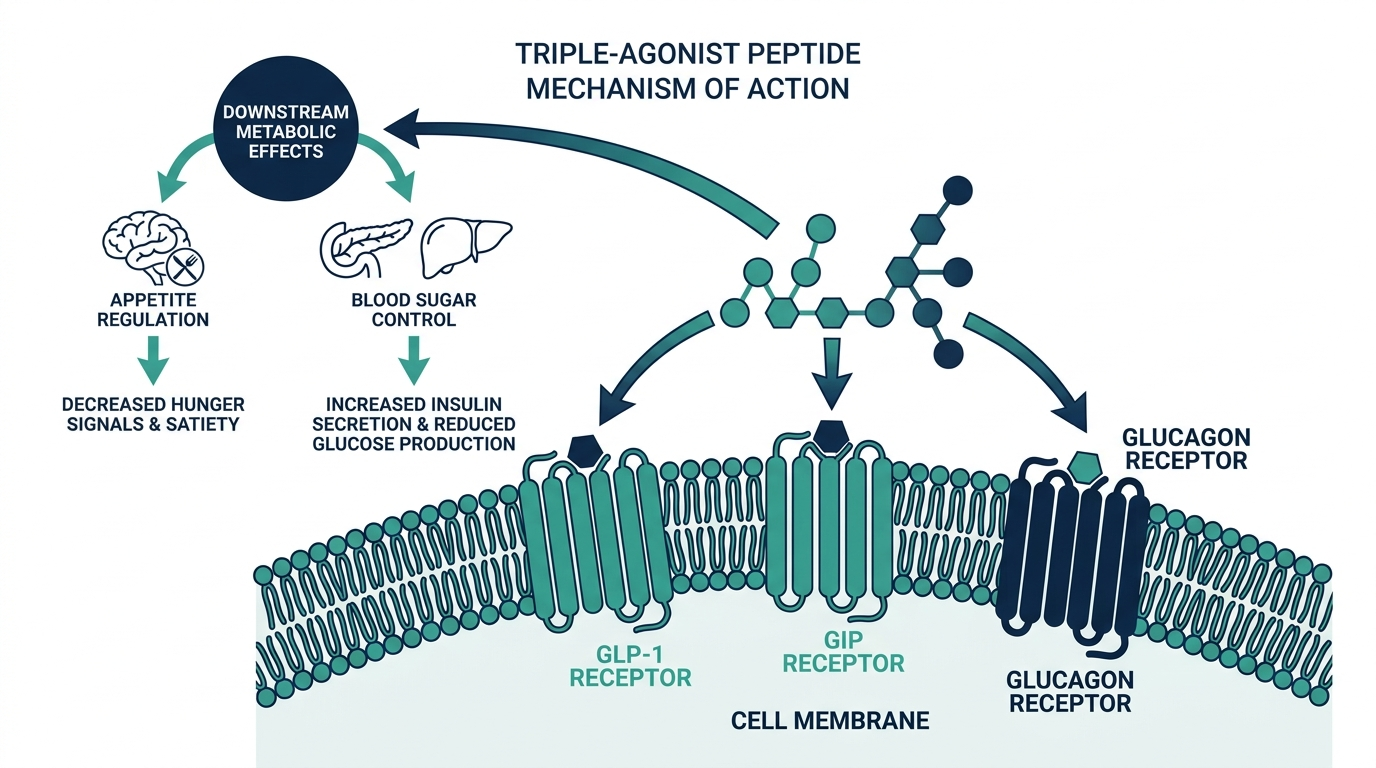
There is no hormone called GLP-3. The term is media shorthand, not a clinical designation, and if you use it with an endocrinologist they will pause before answering. What the phrase actually points to is retatrutide, Eli Lilly’s investigational once-weekly injection that simultaneously activates three hormone receptors: GLP-1, GIP (glucose-dependent insulinotropic polypeptide), and glucagon.
That triple mechanism is the whole story. GLP-1 slows gastric emptying and suppresses appetite. GIP amplifies the insulin response and adds a second appetite-suppression layer. The glucagon receptor does something the earlier generation of drugs cannot: it drives the body to burn more calories and oxidize fat more efficiently, addressing energy expenditure rather than only energy intake. No single hormone in the human body is called “GLP-3,” which is why researchers and Lilly both consistently call retatrutide a “triple agonist.”
This naming gap matters practically. When people search for GLP-3 peptides to buy, they find a mix of legitimate clinical information about retatrutide and grey-market research-chemical vendors selling vials of unknown content under the same label. The search term is doing two entirely different jobs at once.
Full-body lab membership: 100+ biomarkers, doctor-reviewed, tracked over time.
What does the actual trial safety data say?
The simplest way to actually get this done
Superpower is a full-body lab membership that runs 100+ biomarkers, has each result reviewed by a doctor, and tracks your numbers year over year (about $199/year). It is what we point readers to when they would rather get one clean, complete draw than chase single tests one at a time. Here is superpower reviewed in full.
This is where the answer gets specific. Retatrutide has been studied in two completed Phase 3 trials as of June 2026, and the safety picture is real and detailed, not theoretical.
TRIUMPH-4 enrolled 751 adults with obesity and knee osteoarthritis, ran for 68 weeks, and reported an 18.2% discontinuation rate due to adverse events. That is higher than the earlier GLP-1 drugs and worth understanding.
TRIUMPH-1 enrolled 2,339 participants across a broader obesity population, ran for 80 weeks, and showed a lower 11.3% discontinuation rate. Most analysts read that gap as a dosing-titration improvement between the two protocols.
The common adverse events across both trials break down as follows:
| Side Effect | Retatrutide (highest dose) | Placebo |
|---|---|---|
| Nausea | 43.2% | 10.7% |
| Diarrhea | 33.1% | 13.4% |
| Constipation | 25.0% | 8.7% |
| Vomiting | 20.9% | placebo ~5% |
| Dysesthesia (tingling/altered sensation) | 20.9% | not reported |
| Resting heart rate increase (~5-10 bpm) | dose-dependent | baseline |
| Pancreatitis (serious) | under 1% | rare |
| Treatment-related deaths | 0 | 0 |
The dysesthesia finding is one that does not appear in semaglutide or tirzepatide data and is specific to the glucagon-receptor component. It is usually mild and transient but it is a genuine signal, not a footnote.
The resting heart rate increase of 5 to 10 bpm is also higher than what tirzepatide (3 to 5 bpm) or semaglutide (3 to 4 bpm) produces. Phase 2 data published in the New England Journal of Medicine documented this across every dose group, attributed to glucagon-receptor agonism. No dose-dependent increase in serious cardiac events was found in Phase 2 or Phase 3 data to date, but the long-term cardiovascular outcome trial, TRIUMPH-Outcomes, will not report until 2027 to 2028.
Personally, the heart rate signal is the one I would want a clinician to track before and during any future prescription, not as a reason to avoid the drug but because 5 to 10 bpm on top of a pre-existing tachycardia is a different story than 5 to 10 bpm starting from a normal 65 bpm resting rate.
How does GLP-3 safety compare to the approved options?
The three generations of GLP-1 drugs each add a receptor and, with it, more efficacy and a somewhat different side-effect profile.
| Drug | Mechanism | Mean Weight Loss (trial) | Key Safety Distinction | FDA Status |
|---|---|---|---|---|
| Semaglutide (Wegovy) | GLP-1 single agonist | ~15% over 68 weeks | Most real-world data, thyroid C-cell warning | Approved |
| Tirzepatide (Zepbound) | GLP-1 + GIP dual agonist | 22.5% over 72 weeks (SURMOUNT-1) | Well-established profile, lower heart rate signal | Approved |
| Retatrutide (investigational) | GLP-1 + GIP + glucagon triple agonist | 28.3% over 80 weeks (TRIUMPH-1) | Dysesthesia, higher heart rate increase, no long-term CV data yet | Not approved, NDA expected Q4 2026 |
The weight-loss efficacy numbers are real and substantial. Retatrutide delivers roughly 6 percentage points more than tirzepatide and 13 points more than semaglutide in head-to-head trial comparisons. That is not noise, it is a meaningful clinical difference. For a person starting at 250 lbs, the gap between 15% and 28% is the difference between losing 37 lbs and losing 70 lbs.
What that table cannot yet show is the long-term durability, the rebound profile on discontinuation, or the cardiovascular event rate over five to ten years. The approved drugs have that data; retatrutide does not yet.
Do not believe any source, including social-media physicians and wellness influencers, that presents retatrutide’s Phase 3 safety data as equivalent to the decade-long post-marketing surveillance that exists for semaglutide. The mechanisms may be similar, but the evidence base is not.
Who should not use GLP-3 / retatrutide?
The trial exclusion criteria are the most direct guide here, because they reflect what clinical investigators decided was too risky to test. The groups excluded from TRIUMPH trials, and the groups any prescribing physician should screen carefully, include:
Absolute exclusions based on trial data:
– Personal or family history of medullary thyroid carcinoma (MTC) or Multiple Endocrine Neoplasia syndrome type 2 (MEN 2). All GLP-1 receptor agonists carry a black-box warning for thyroid C-cell tumors based on rodent studies. The absolute risk in humans appears very low, but for anyone with a genetic predisposition the calculus changes entirely.
– Personal history of pancreatitis. Retatrutide was not tested in this population, and pancreatitis risk from GLP-based therapies is real even if rare.
– Existing gallbladder disease or a history of gallstones. Rapid weight loss accelerates cholesterol secretion into bile, and the gallbladder empties less frequently during caloric restriction, a combination that sharply raises the risk of new gallstone formation.
Populations requiring careful evaluation rather than exclusion:
– Significant pre-existing cardiac disease, given the heart rate signal and pending cardiovascular outcomes data.
– Severe renal impairment.
– Anyone currently on insulin or sulfonylureas, due to increased hypoglycemia risk.
– Pregnancy or plans to become pregnant.
The grey-market version of this drug bypasses all of those screens. Nobody checks a buyer’s medical history before shipping a research vial.
The grey-market reality: what you are actually buying
This is the section the peptide vendor pages will not write for you.
Retatrutide is a complex 4,200 dalton synthetic peptide. Manufacturing it at clinical purity requires sophisticated solid-phase peptide synthesis equipment, rigorous quality control, and third-party testing infrastructure that most grey-market suppliers do not have. The gap between the label and the content in the vial is not a minor concern with this molecule.
Finnrick, the independent testing platform, has now analyzed 2,980 retatrutide samples from 185 vendors between December 2024 and June 2026. The quantity in those vials diverged from advertised values by up to plus or minus 47%. Several vendors received the platform’s lowest “E” rating: Nexaph (95 samples tested), HK Peptides (128 samples), and Reta-Peptide (57 samples). Peptide Sciences, once the community’s default recommendation, received the same failing grade across 40 tested batches and had a counterfeit sample identified in late 2025 before the company shut down entirely in March 2026.
Quantity divergence of 47% is not a purity issue in the pharmaceutical sense. It means you ordered 5 mg and may have received anywhere from 2.6 mg to 7.35 mg. With a compound where dose titration is carefully managed in clinical trials to minimize GI side effects and heart rate increases, an undisclosed 1.5x dose is a genuine safety problem, not a bargain.
The FDA has sent warning letters to at least 14 companies advertising retatrutide since 2024, and federal enforcement against grey-market peptide vendors has included raids, criminal pleas, and forced closures of at least eight major sellers. The “for research use only” label does not exempt a product from FDA oversight when it is sold for human therapeutic intent, a point the agency made explicit in its September 2025 enforcement wave.
Telehealth GLP-1 program with provider visits and pharmacy coordination.
What is the expected GLP-3 approval timeline, and can you get it legally now?
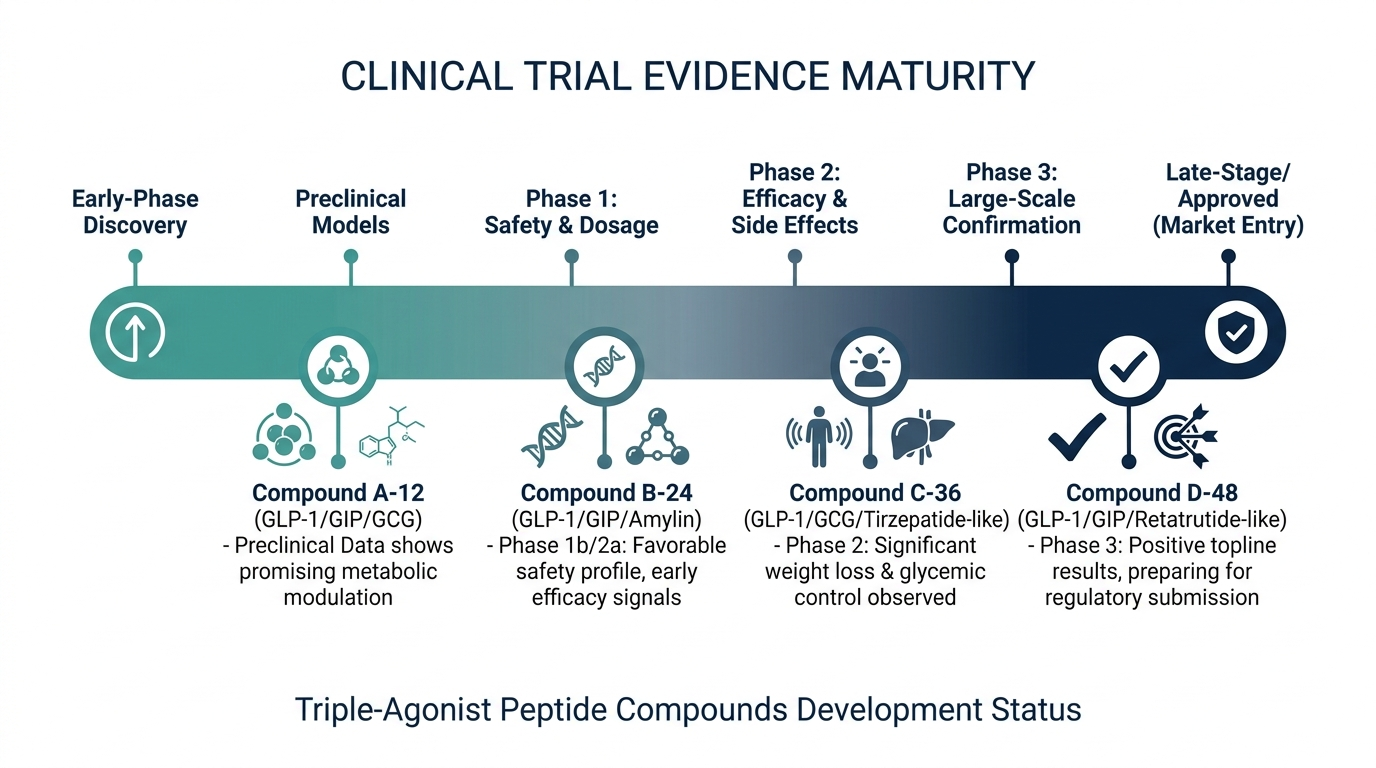
Retatrutide is not available outside of Lilly’s clinical trials as of June 2026. The timeline from here:
- Q3 to Q4 2026: Additional TRIUMPH readouts expected for type 2 diabetes and cardiovascular disease indications.
- Q4 2026: Lilly’s anticipated NDA filing window, once the multi-indication data set is assembled.
- Late 2027: Earliest realistic FDA decision, assuming a standard 10-month review. A priority review designation could compress that to 8 months.
- Q1 to Q2 2028: Most analysts’ best estimate for commercial market launch.
- Projected price: $1,200 to $1,500 monthly based on tirzepatide pricing benchmarks, though this will depend heavily on whether insurance coverage follows the GLP-1 pattern.
For people who want the highest-efficacy weight-loss option available today through a legal, supervised route, tirzepatide (Zepbound) at 22.5% mean body-weight loss is the current ceiling. Multiple telehealth platforms prescribe it after an intake evaluation, with pharmacy-dispensed medication and a clinician managing the dose titration. That is not a consolation prize; the SURMOUNT-1 trial produced results that would have been described as surgical-level outcomes just five years ago.
Anyone who has been following retatrutide in the forums long enough has watched the same pattern: the Phase 2 data comes out, the community gets excited, grey-market vials appear within weeks, vendors start failing quality tests within months, and then enforcement moves and shutdowns follow. The excitement about the Phase 3 results is legitimate. The grey-market shortcut to accessing the drug is repeating a cycle that has already ended badly for both vendors and buyers.
What the trial data still cannot tell us
Four things the 80-week TRIUMPH-1 data does not answer, and that any honest clinician should flag before a future prescription:
Long-term cardiovascular outcomes. TRIUMPH-Outcomes is tracking heart attacks, stroke, and cardiovascular death in a dedicated outcome trial. Results are expected 2027 to 2028. Every GLP-1 drug that eventually won a cardiovascular indication (semaglutide’s SELECT trial, for example) had to prove this separately. Retatrutide has not done so yet.
Muscle and bone density over multiple years. In TRIUMPH trials, retatrutide preserved lean mass well, with roughly 75 to 85% of lost weight coming from fat rather than muscle. Animal studies showed no change in mineral bone density. But the bone density concern in rapid weight-loss therapy is real for any GLP drug: lighter load on the skeleton means less mechanical stimulus for bone maintenance. Over five to ten years, this requires monitoring.
Rebound weight gain on discontinuation. GLP-1 class drugs show substantial weight regain when stopped, a finding replicated across semaglutide studies. There is no reason to expect retatrutide to behave differently, and the higher absolute weight loss may mean higher absolute regain if the drug is stopped without a tapering plan and long-term lifestyle support.
Interaction data with the most common co-prescriptions. Phase 3 trials systematically exclude the most complex patients. Real-world populations take statins, antihypertensives, and antidepressants that were not represented in those trial arms. Drug-drug interaction data for retatrutide will only accumulate post-approval.
A myth worth correcting
The popular take in some fitness and biohacking communities is that the grey-market vials are “the same molecule” as what Lilly is testing, and that the only difference is the packaging. This conflates chemical identity with pharmaceutical equivalence.
Even if a grey-market vial contains authentic retatrutide at the stated purity (and the Finnrick data show many do not), pharmaceutical equivalence requires consistent potency batch to batch, sterility, the right excipients, the right storage conditions from manufacture through shipping, and correct reconstitution handling. A 99% pure retatrutide sample stored improperly from a Chinese manufacturer is not the same product as a clinical trial vial. Temperature excursions during shipping, improper lyophilization, and incorrect storage can degrade peptide activity significantly without changing what a mass-spec test reads as present.
How to think about GLP-3 safety as an informed patient
Three practical framings, for three different situations:
If you are currently on semaglutide or tirzepatide and are curious about retatrutide: the efficacy jump is real. The safety profile has meaningful overlap with the drugs you are already familiar with, plus two additional signals (dysesthesia, higher heart rate) to monitor. The right move is to wait for FDA approval, establish care with a telehealth or in-person clinician who follows the TRIUMPH data, and be among the first-wave prescription patients when the drug launches. That is a realistic 18-month wait from today.
If you are considering grey-market retatrutide: the math does not work once you account for quality risk, no clinical oversight, no dosing calibration, and the legal exposure. The drug you want will be prescription-available within 18 to 24 months, and the version available today through grey-market channels has a documented failure rate across nearly 3,000 independent tests.
If you are not yet on any GLP-1 drug: the approved options (semaglutide, tirzepatide) have 5 to 10 years of post-marketing safety data, Medicare coverage starting July 2026 for eligible patients, and a well-established telehealth access pathway. Starting there is not settling. It is picking the option where the safety evidence is actually complete.
Curious what your own levels look like?
Baseline 100+ biomarkers today and retest as life changes, all in one membership with physician review.
Frequently asked questions
Are GLP-3 peptides FDA-approved?
No. “GLP-3” informally refers to retatrutide, Eli Lilly’s investigational triple agonist. It remains in Phase 3 clinical trials as of June 2026. An NDA filing is expected in Q4 2026, with a potential FDA decision in late 2027 and commercial launch targeted for Q1 to Q2 2028.
What are the main side effects of GLP-3 / retatrutide?
In the TRIUMPH-1 Phase 3 trial, the most common adverse events were nausea (43.2%), diarrhea (33.1%), constipation (25.0%), vomiting (20.9%), and dysesthesia (tingling or altered sensation, 20.9%). A resting heart rate increase of approximately 5 to 10 bpm was also documented. Serious adverse events including pancreatitis occurred in under 1% of participants, and no treatment-related deaths were reported.
Who should not take GLP-3 peptides?
Anyone with a personal or family history of medullary thyroid carcinoma or MEN 2 syndrome should not use any GLP-1 receptor agonist, including retatrutide. Prior history of pancreatitis, active gallbladder disease, and pregnancy are also strong contraindications. People with pre-existing significant cardiac disease or severe renal impairment require careful clinical evaluation.
Is it safe to buy GLP-3 peptides online?
Grey-market retatrutide vials sold online as “research peptides” carry substantial risks. Independent testing by Finnrick across 2,980 samples from 185 vendors found quantity deviations of up to plus or minus 47% from advertised content, and multiple vendors received failing quality ratings. The FDA has issued warning letters to at least 14 companies advertising retatrutide and has conducted enforcement actions against grey-market peptide sellers. There is no legitimate over-the-counter route for retatrutide.
How does GLP-3 safety compare to semaglutide?
Both share a GLP-1 receptor mechanism and its associated safety class (thyroid C-cell warning, GI side effects). Retatrutide adds two receptor targets that introduce additional signals: a higher resting heart rate increase and the dysesthesia finding not seen with semaglutide. Semaglutide has a decade of post-marketing safety data; retatrutide has 80 weeks of Phase 3 trial data and no long-term cardiovascular outcome results yet.
When will GLP-3 / retatrutide be available by prescription?
The earliest realistic timeline is late 2027 for FDA approval and Q1 to Q2 2028 for commercial launch, assuming Lilly’s anticipated Q4 2026 NDA filing and a standard 10-month review. Priority review designation could shorten that timeline.
What is the grey-market risk with retatrutide specifically?
Retatrutide is a complex 4,200 dalton synthetic peptide that is technically difficult to manufacture at clinical grade. Finnrick’s testing database documents quantity divergences of up to 47% from stated amounts and multiple counterfeit detections. A quantity error of that magnitude in a dose-titration drug means a buyer may be injecting far more or far less than intended, with no clinical oversight to catch the resulting adverse effects.
Author: Vital Signs Today Editorial Team, [credential]”]. Educational content, not medical advice. Sources linked inline.
Primary sources:
– Eli Lilly: What to know about retatrutide
– Eli Lilly: TRIUMPH-4 Phase 3 results press release
– NEJM: Phase 2 Triple-Hormone-Receptor Agonist Retatrutide for Obesity trial
– Finnrick: Retatrutide independent testing database
– CMS: Medicare GLP-1 Bridge program (July 2026)
– FDA: Bulk drug substances under 503A compounding list
– PeptideDeck: TRIUMPH-1 Phase 3 results summary
– retaweightloss.com: Complete retatrutide 2026 guide
– GoodRx: Retatrutide side effects
– Scientific American: Retatrutide results and rapid weight loss questions
Telehealth GLP-1 program with provider visits and pharmacy coordination.
Want a real clinician to run the numbers, not a guess?
Joi + Blokes is a telehealth clinic that prescribes GLP-1 medication (Zepbound, compounded semaglutide and tirzepatide), hormone therapy (TRT, HRT), thyroid care, and peptides after a real lab panel and clinician review, with no membership or consult fee (prescriptions from about $59/month, lab panels from $149). If the scale will not budge, this is where you find out whether insulin, thyroid, or hormones are the real reason. Here is Joi + Blokes reviewed in full.
Related reading
Related: which GLP-1 telehealth service fits you.
Vital Signs Today may earn a commission if you buy through links on this page. It does not affect our editorial assessments.