
Last updated 18 June 2026. Educational content, not medical advice. Many peptides sold online are labeled “for research use only” and are not approved for human use by the FDA. Speak with a licensed clinician before starting any peptide regimen.
Short answer: The fastest legitimate way to get therapeutic peptides in 2026 is through a telehealth clinic: complete an online intake form, get required baseline labs (IGF-1, CMP, CBC, hormone panel), attend a 20 to 45-minute video visit with a licensed clinician, and receive your prescription from a named 503A compounding pharmacy within 3 to 7 business days. Total first-month cost: $350 to $900. Collagen and topical copper peptides require no prescription and are sold at any health food store.
Getting peptides in 2026 usually starts with a telehealth intake and baseline labs. See what a full 100+ biomarker baseline actually covers. One at-home Superpower draw checks 100+ biomarkers, physician-reviewed.
Why does “how to get peptides” mean five completely different things?
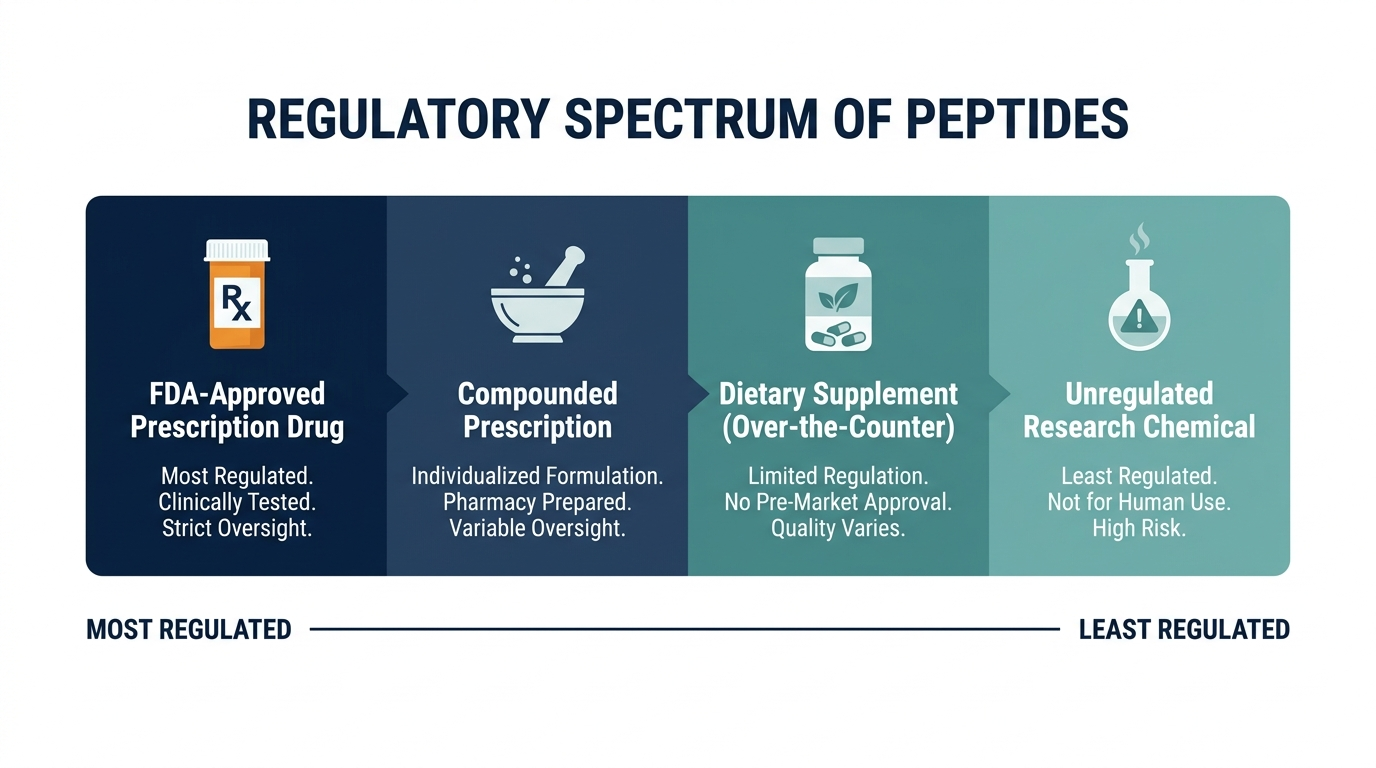
The word “peptide” covers everything from a $25 collagen powder at Whole Foods to a vial of compounded sermorelin dispensed by a licensed pharmacy to an injectable research chemical that ships from a grey-market vendor with a “for laboratory use” disclaimer. The route that applies to you depends entirely on which category of peptide you are after.
Before anything else, know the four lanes:
- Over the counter (collagen, skincare copper peptides) — no prescription, no doctor, buy from any retailer.
- Prescription, FDA-approved (semaglutide, tirzepatide, sermorelin, tesamorelin) — needs a licensed prescriber and a registered pharmacy.
- Compounding pharmacy, transitional (BPC-157, TB-500, CJC-1295, Ipamorelin) — needs a prescription; legal status is actively shifting as of mid-2026.
- Research vendor, grey market (same peptides plus investigational ones) — legal to sell as “research use only,” not legal to administer to yourself.
Mixing these lanes is how people end up with either a counterfeit vial or an unnecessarily expensive route to something they could have gotten at Costco.
Full-body lab membership: 100+ biomarkers, doctor-reviewed, tracked over time.
What does the regulatory landscape look like right now?
This is the most important piece of context for 2026, and it is moving fast enough that most forum posts from a year ago are already wrong.
From November 2023 through early 2025, the FDA placed a large group of popular therapy peptides, including BPC-157, TB-500, CJC-1295, Ipamorelin, GHK-Cu, Semax, Epitalon, Selank, KPV, and MOTS-c, on its 503A Category 2 list. Category 2 means the FDA found that these substances “may present significant safety risks,” effectively barring licensed compounding pharmacies from making them. That designation drove an enormous amount of demand underground, into the grey-market research-vendor ecosystem that then collapsed spectacularly when the FDA enforcement wave hit in 2025.
On February 27, 2026, HHS Secretary Robert F. Kennedy Jr. announced that approximately 14 of the 19 Category 2 peptides would be considered for reclassification back to Category 1, reopening the licensed compounding pathway. On April 22, 2026, the FDA formally removed 12 peptides from Category 2, including BPC-157, TB-500, Semax, Epitalon, MOTS-c, GHK-Cu, KPV, and Ipamorelin (Newtropin).
The next formal step is a Pharmacy Compounding Advisory Committee (PCAC) meeting scheduled for July 23 to 24, 2026, at the FDA’s White Oak Campus in Silver Spring, Maryland. The committee will vote on whether BPC-157, TB-500, KPV, MOTS-c, Semax, Epitalon, and DSIP should be added to the 503A Bulk Drug Substances List — the formal green light for compounding pharmacies to prepare them under prescription (HealingMaps). GHK-Cu and Melanotan II are in the queue for the February 2027 review cycle.
The practical upshot: the legal route for the most popular therapy peptides is being restored, and the gap between “buy a grey vial” and “get it through a doctor” is narrowing fast.
How do you get peptides prescribed through a telehealth clinic?
This is the route most people reading this article should take, and it is genuinely accessible now in a way that it was not three years ago. Here is what the process actually looks like, step by step.
Step 1: Complete the intake form. Every legitimate telehealth peptide platform starts with a detailed health history form covering current medications, allergies, chronic conditions, and treatment goals. This is not optional paperwork; it is how the clinician decides whether peptide therapy is appropriate for you before the video call.
Step 2: Get your baseline labs. A legitimate provider will require bloodwork before prescribing. The standard baseline panel covers a complete metabolic panel (CMP), complete blood count (CBC), a hormone panel including testosterone, estradiol, and TSH, IGF-1, and inflammatory markers like hs-CRP. Many platforms now partner directly with LabCorp or Quest so you can order and complete these without a separate doctor’s visit. One thing to know: IGF-1 is the marker most peptide patients get wrong, because reference ranges are population-flat and drop sharply with age. Your prescriber needs your personal baseline, not just a range.
Step 3: Attend your video consultation. The video visit typically runs 20 to 45 minutes. A licensed physician, nurse practitioner, or physician assistant reviews your labs and goals, walks through realistic expectations, and proposes a protocol. Providers who rush this to 10 minutes or skip labs entirely are a red flag.
Step 4: Receive your prescription. The prescription is sent electronically to a named 503A compounding pharmacy. Standard compounding takes 3 to 7 business days; shipping adds 1 to 3 more. The vial you receive comes with a COA, a specific dosage label, and a pharmacist’s contact if you have questions.
Step 5: Follow-up labs. Responsible platforms build in a check-in at 6 to 8 weeks and repeat labs every 3 to 6 months. This is not upselling; it is the only way to know if the protocol is working or creating unwanted hormone or metabolic shifts.
Named platforms that operate with real clinicians include Defy Medical (initial consultation around $250, monthly peptide cost $150 to $400), Marek Health ($225 to $350 per month with 65 to 100+ biomarker panels), Hone Health (initial around $75, monthly $100 to $350), and OneTwenty, which launched in June 2026 with a comprehensive formulary built around quarterly biomarker testing (PeptideTok).
Total first-month cost, including consultation, labs, and initial supply, typically lands between $350 and $900 depending on the provider and peptide.
Which peptides are available right now without a prescription?
Two categories are genuinely OTC, and it is worth understanding exactly why, because it tells you something about the quality difference.
Collagen peptides are hydrolyzed collagen fragments (primarily types I, II, and III) sold as oral powders and capsules. The global collagen peptides market is worth roughly $2 to $3.3 billion in 2026 depending on the analyst, with dietary supplements accounting for about 40% of use (Fortune Business Insights). Major retail brands include Vital Proteins, Ancient Nutrition, Great Lakes Wellness, and Momentous. These are digested in the gut into amino acids and absorbed systemically. The mechanism of action at the tissue level is indirect and modest compared to injectable therapeutic peptides, which is precisely why they do not need a prescription.
Topical copper peptides (GHK-Cu) in serum and cream form are sold as cosmetics. The peptide does not penetrate below the dermis when applied topically, so it functions as a skincare ingredient rather than a systemic drug. Brands including The Ordinary (Multi-Peptide Serum), NIOD, and SkinMedica sell these openly. When the same GHK-Cu compound is injected subcutaneously, it crosses into a completely different risk and regulatory category — a distinction most skincare content ignores.
Do not believe the claim that “oral BPC-157 is just like the injectable.” It is not. Oral peptide fragments are largely broken down in digestion before reaching target tissues. Some oral formulations use enteric coating to improve survival, but no oral BPC-157 product has the clinical data of the injectable form. If someone is selling you oral BPC-157 as equivalent to the clinical-grade injectable, they are either misinformed or not being honest about what you are buying.
Full-body lab membership: 100+ biomarkers, doctor-reviewed, tracked over time.
How do you get peptides from your regular doctor?
Personally, I think the “ask your GP” route is underused and often easier than people expect, especially after the regulatory shift in early 2026. A general practitioner or internist can prescribe any compoundable peptide once it is on the Category 1 list. The challenge is finding one who is conversant in peptide therapy, and that is where functional medicine physicians, sports medicine doctors, and anti-aging specialists have an edge.
If you want to go this route, here is what works:
Bring your own labs. Show up with a recent comprehensive panel already in hand. Clinicians are significantly more willing to engage when you have done the homework and are not asking them to order exploratory bloodwork on speculation.
Reference the regulatory context. The February and April 2026 FDA announcements are public record. A doctor who is hesitant because they remember the 2023 Category 2 restrictions deserves the update that those restrictions are being rolled back.
Ask for a referral to a compounding pharmacy. Your doctor does not need to know the compounding mechanics; they only need to write the prescription. The pharmacy’s pharmacist handles the formulation.
The International Academy of Compounding Pharmacists (IACP) maintains a directory of member pharmacies that specialize in compounded therapeutics. A USP-795/797 compliant sterile compounding pharmacy, not just any retail pharmacy with a mortar and pestle, is what you need for injectable peptides.
How to compare telehealth peptide providers
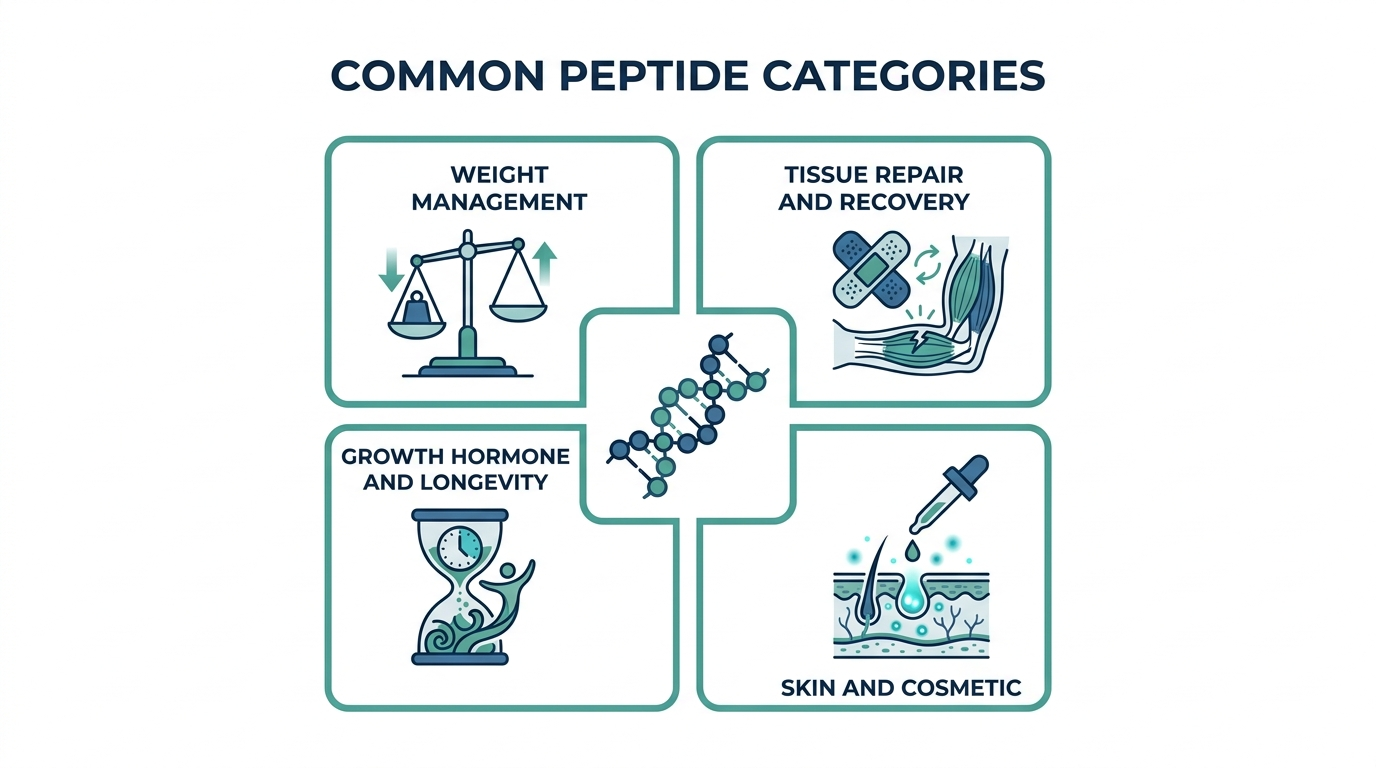
Not all telehealth platforms are equivalent, and the differences matter more than the price per vial.
| Provider | Model | Peptides available | Monthly cost | Lab requirement |
|---|---|---|---|---|
| Defy Medical | Clinic + telehealth | Sermorelin, BPC-157, TB-500, NAD+, GLP-1 | $150 to $400 | Required, full panel |
| Marek Health | Physician-led clinic | Broad peptide formulary, TRT, GLP-1 | $225 to $350 | Required, 65 to 100+ markers |
| Hone Health | Telehealth | Testosterone, sermorelin, some peptides | $100 to $350 | Required |
| OneTwenty | New (June 2026) | Full legal formulary + HRT | Not yet published | Quarterly panels built in |
| Aspire Health | Telehealth | Sermorelin, GHK-Cu, BPC-157 pending | $150 to $400 | Required |
| Transcend | Telehealth | Sermorelin, NAD+, weight loss peptides | $199/month flat | Required |
The most important column is the lab requirement. If a platform says labs are optional, the clinical oversight you are paying for is effectively theater. Prescribing peptides that modulate growth hormone, inflammation, or metabolic function without seeing a baseline IGF-1 or CMP is not medical practice; it is form-processing.
What makes the grey-market research route different from the prescription route?
The honest version: price and convenience versus accountability.
A research peptide vial costs roughly $30 to $120 depending on the compound and the vendor (PeakedLabs). It arrives as a lyophilized (freeze-dried) powder that you reconstitute yourself using bacteriostatic water. You do the concentration math, you manage sterility, you set your own dose. No pharmacist checked the final product. No clinician will monitor your IGF-1 or hs-CRP three months in.
If you are going to use this route for research purposes, three things separate a defensible decision from a reckless one:
Certificate of Analysis, batch-specific. Demand an HPLC purity reading of 96% or higher and a Mass Spectrometry identity confirmation from an independent third-party lab — Janoshik Analytical, MZ Biolabs, or Colmaric Analyticals. The COA’s batch number must match the vial you receive. A generic COA reused across an entire catalog is not a COA; it is a marketing document.
Vendor verification. Cross-check any vendor on Finnrick, which as of mid-2026 has run more than 8,000 independent tests across 225 vendors. This is the real trust currency in this space, not reviews on a vendor’s own website.
The legal fiction. “Research use only” is not a loophole you can wave off. It is the legal fiction that makes the entire market possible while transferring 100% of the liability onto the buyer. The regulatory shift of 2026 is important precisely because it is creating a legal alternative for the most popular research peptides, removing the reason to accept those risks.
How much do peptides cost across routes?
Here is a side-by-side view across all access routes, so the comparison is honest:
| Route | Peptide type | Cost range | What is included |
|---|---|---|---|
| OTC supplement | Collagen, topical GHK-Cu | $20 to $60 | Product only |
| Grey-market research | BPC-157, TB-500, CJC+Ipam | $30 to $120/vial | Peptide only, no oversight |
| Telehealth prescription | Sermorelin, GH secretagogues | $175 to $225/month | Clinician + pharmacy + monitoring |
| Telehealth prescription | BPC-157, TB-500 (where available) | $150 to $400/month | Clinician + compounding pharmacy + labs |
| Branded GLP-1 (Wegovy) | Semaglutide 2.4mg | $499/month via Hims, Ro | Brand name, full FDA approval |
| Compounded GLP-1 | Semaglutide (compliant) | $149 to $299/month | Compounded, clinician required |
One number the clinics will not volunteer: none of this is covered by insurance. Peptide therapy for longevity, optimization, or recovery is classified as elective or experimental, and you pay out of pocket regardless of the medical rationale. Budget for it before the first invoice, not after.
Turn what you just learned into action.
Superpower lets you test 100+ biomarkers from home, then re-check them over time so you can actually see progress, physician-reviewed at every step.
Frequently asked questions
How do I get peptides legally in the US?
Choose the route that matches your peptide. Collagen and topical skincare peptides are OTC. FDA-approved peptides like semaglutide and sermorelin require a prescription from a licensed clinician or telehealth platform. BPC-157, TB-500, CJC-1295, and Ipamorelin are currently in regulatory transition following the April 2026 FDA Category 2 removal; access is moving toward licensed compounding pharmacies, with a formal PCAC committee vote scheduled for July 23 to 24, 2026.
Can I get peptides without a prescription?
Only collagen supplements and cosmetic copper-peptide serums. Injectable therapeutic and research peptides are not legitimate OTC products. Any site selling injectable peptides for human use without requiring a prescription is telling you, in writing, that it is not following the rules.
What labs do I need before peptide therapy?
At minimum: a complete metabolic panel (CMP), complete blood count (CBC), hormone panel (testosterone, estradiol, TSH), IGF-1, and an inflammatory marker like hs-CRP. Most telehealth providers require these before writing any prescription. IGF-1 is particularly important because population reference ranges do not account for age-related decline; you need your personal baseline.
How long does it take to get peptides through a telehealth clinic?
From intake to delivery: 1 to 3 days for intake and labs, 20 to 45 minutes for the video consultation, 3 to 7 business days for compounding, 1 to 3 days for shipping. Realistically, expect your first vial 2 to 3 weeks after you start the process.
Is it safe to buy peptides from research vendors?
It carries risks that the prescription route does not. Research-vendor peptides are unregulated, with no pharmacist sign-off, no clinician monitoring, and quality that ranges from excellent to dangerously substandard. Independent testing by Finnrick, which has run more than 8,000 tests, found purity as low as 75% in samples from some vendors before they shut down. If you use this route, verify every batch against an independently published, batch-specific COA from Janoshik, MZ Biolabs, or Colmaric.
What is the PCAC meeting in July 2026, and why does it matter?
The FDA’s Pharmacy Compounding Advisory Committee will vote July 23 to 24, 2026, on whether BPC-157, TB-500, KPV, MOTS-c, Semax, Epitalon, and DSIP should be added to the 503A Bulk Drug Substances List. If the vote passes, licensed compounding pharmacies can legally prepare these peptides under physician prescription nationwide — for the first time since the 2023 restrictions. This is the single most consequential regulatory event for the peptide space this year.
Do I need to go to a clinic in person to get peptides?
No. Telehealth has made peptide prescriptions accessible from anywhere in the US. Providers like Defy Medical, Marek Health, Hone Health, and OneTwenty conduct full intake, consultation, and follow-up virtually. Bloodwork is ordered through LabCorp or Quest and completed at a local draw site.
Full-body lab membership: 100+ biomarkers, doctor-reviewed, tracked over time.
Author: [CAN XAC NHAN: ten + credential]. Educational content, not medical advice. Sources linked inline.
Primary sources:
– FDA PCAC Meeting Calendar — July 23-24, 2026
– FDA April 2026 Category 2 removal — Newtropin analysis
– HealingMaps — FDA reviews 7 peptides July 2026
– Finnrick independent peptide testing database
– PeptideTok — telehealth peptide provider comparison
– PeakedLabs — BPC-157 cost guide 2026
– IvyRx — sermorelin cost guide 2026
– Peptide Dossier — compounding pharmacy guide
– Fortune Business Insights — collagen peptides market 2026
– Frier Levitt — FDA removes peptides from “Do Not Compound” list
Related reading
Vital Signs Today may earn a commission if you buy through links on this page. It does not affect our editorial assessments.