Quick answer: Function Health membership fees are not directly HSA or FSA eligible because the IRS classifies general wellness memberships as non-medical expenses. However, the individual lab tests ordered through Function Health very likely qualify, and many members successfully reimburse those costs through their HSA or FSA using an itemized receipt showing specific diagnostic tests. The practical path is to pay for the membership out of pocket, then submit the lab-work line items for reimbursement with a letter of medical necessity from a physician when your plan requires one.
Why the Membership Fee Itself Is a Gray Area
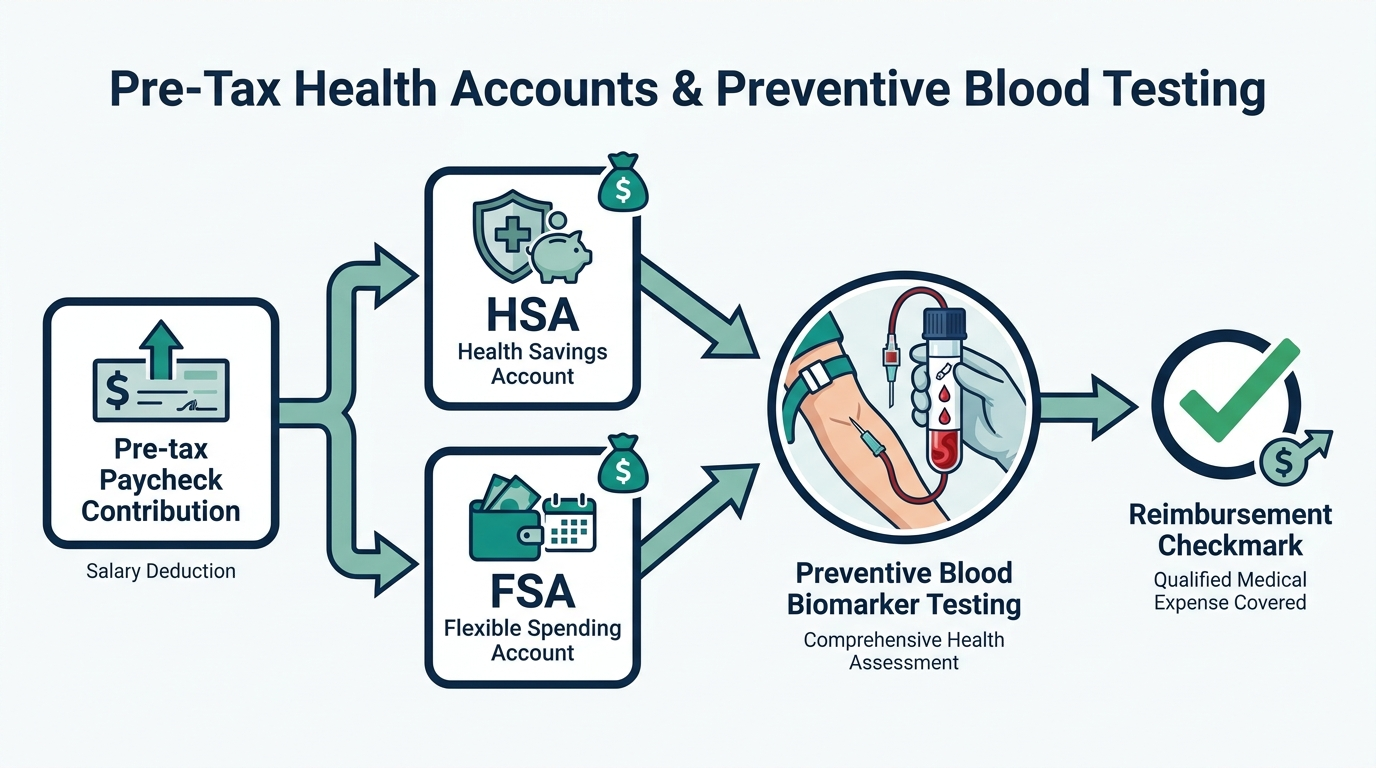
The IRS draws a firm line between diagnostic testing (eligible) and general health maintenance or wellness programs (not eligible under IRC Section 213(d)). A membership to a lab-testing service sits in the middle of that line, and Function Health has not obtained a formal ruling that their membership fee qualifies. That matters because your HSA administrator, not Function Health, makes the final call. Fidelity, HSA Bank, HealthEquity, and similar custodians follow IRS guidance strictly, and they will deny a reimbursement labeled simply “Function Health membership” if it gets flagged in an audit.
Function Health memberships aren’t HSA or FSA eligible, but individual tests often are. See how a $199 physician-reviewed panel fits your pre-tax budget. One at-home Superpower draw checks 100+ biomarkers, physician-reviewed.
The annual fee for Function Health is around $499 to $499 per year (see our function health cost breakdown for current pricing). That is real money, and the temptation to run it through a tax-advantaged account is understandable. The safer approach is to split the question: the membership access fee versus the actual lab panels.

Which Parts of Function Health Are Likely HSA/FSA Eligible
Diagnostic lab tests ordered by a licensed clinician for the purpose of detecting or monitoring a disease or condition are explicitly listed as eligible medical expenses by the IRS. Function Health orders panels through Quest Diagnostics, one of the two dominant national reference labs (the other being Labcorp), and each draw includes tests like a complete metabolic panel, lipid panel, thyroid function, CBC, and dozens more. Those are the same CPT-coded tests your primary care doctor orders.
What makes a test reimbursable is that it is diagnostic, not that it comes from a particular platform. So if you can document that the HbA1c, testosterone, or cortisol test in your Function Health panel was ordered as part of monitoring a known health concern, your HSA or FSA can reimburse the fair market value of that test. The problem is that Function Health bundles everything into a membership rather than billing line-by-line, so you have to do a little extra documentation work.
Eligible test categories typically covered by HSA/FSA
- Blood glucose and HbA1c (diabetes screening and monitoring)
- Lipid panel with LDL, HDL, triglycerides (cardiovascular risk)
- TSH, free T3, free T4 (thyroid function)
- CBC with differential (anemia, infection, immune screening)
- Comprehensive metabolic panel (kidney, liver, electrolytes)
- PSA (prostate cancer screening, men over 50 or at-risk)
- Hormone panels including testosterone and DHEA-S
- Inflammatory markers: hsCRP, homocysteine, ferritin
- Vitamin D 25-OH (deficiency is a diagnosable condition)
What probably does not qualify
- The membership or subscription fee itself (wellness, not diagnostic)
- Concierge-style access to clinician messaging if billed separately
- Any add-on tests ordered purely for curiosity with no clinical rationale
How to Use Your HSA or FSA for Function Health: Step by Step
The process requires more paperwork than swiping your HSA card at CVS, but it is straightforward once you know what your plan administrator expects.
- Pay the membership fee out of your regular checking account. Do not charge it to your HSA debit card. This avoids a large, ambiguously labeled charge that could trigger an audit flag.
- Complete your blood draw through a Quest patient service center as Function Health instructs.
- Request an itemized receipt from Function Health that lists each test by name and CPT code, or at minimum shows that the payment covered diagnostic laboratory services. Email their support team and ask specifically for this. Some members report getting a receipt that lists the test panel names; others get a generic membership invoice. Keep whatever they send you.
- Get a letter of medical necessity if your administrator requires one. This is a short note from a licensed clinician (your PCP, an internist, or in some cases Function Health’s own medical team) stating that the listed tests were ordered for the purpose of diagnosing, monitoring, or treating a specific medical condition or risk factor. It does not need to be elaborate. One paragraph stating your name, the tests ordered, and the clinical rationale is enough.
- Submit a reimbursement claim to your HSA or FSA administrator through their portal. Attach the itemized receipt and letter of medical necessity. Label the expense “diagnostic laboratory testing.”
- Keep all documentation for at least three years in case of an IRS audit. The burden of proof for HSA distributions falls on you, not your administrator.

Does Insurance Cover Function Health? The Related Question
Traditional health insurance almost never covers direct-to-consumer lab memberships like Function Health, for the same reason HSA eligibility is murky: insurers require a billing provider relationship, a clinical diagnosis code, and a referral or ordering physician using standard claims processing. Function Health bypasses that infrastructure by design. If you want a deeper look at the insurance angle, our guide on does insurance cover function health covers the specific situations where partial coverage is possible, including when your in-network PCP orders the same tests separately.
Superpower: A Competing Service With Similar Eligibility Rules
Superpower is the other major full-body lab membership on the market right now, and the HSA/FSA question works identically. The membership fee (about $199 per year) is not directly reimbursable, but the underlying diagnostic tests ordered through Quest carry the same IRS eligibility logic. Superpower has one structural advantage for documentation purposes: every draw includes physician review, which means a licensed MD or DO has already evaluated your results in a clinical context. That physician touchpoint strengthens the case that the tests were medically motivated, not purely elective wellness.
At roughly $199 per year versus Function Health’s higher price point, the out-of-pocket cost before any HSA reimbursement is significantly lower. You can read the full superpower blood test review and our breakdown of how much does superpower cost to see whether the value equation makes sense for your situation.
The simplest way to actually get this done
Superpower is a full-body lab membership that runs 100+ biomarkers, has each result reviewed by a doctor, and tracks your numbers year over year (about $199/year). It is what we point readers to when they would rather get one clean, complete draw than chase single tests one at a time. Here is superpower reviewed in full.

HSA vs FSA: Which One Handles This Better
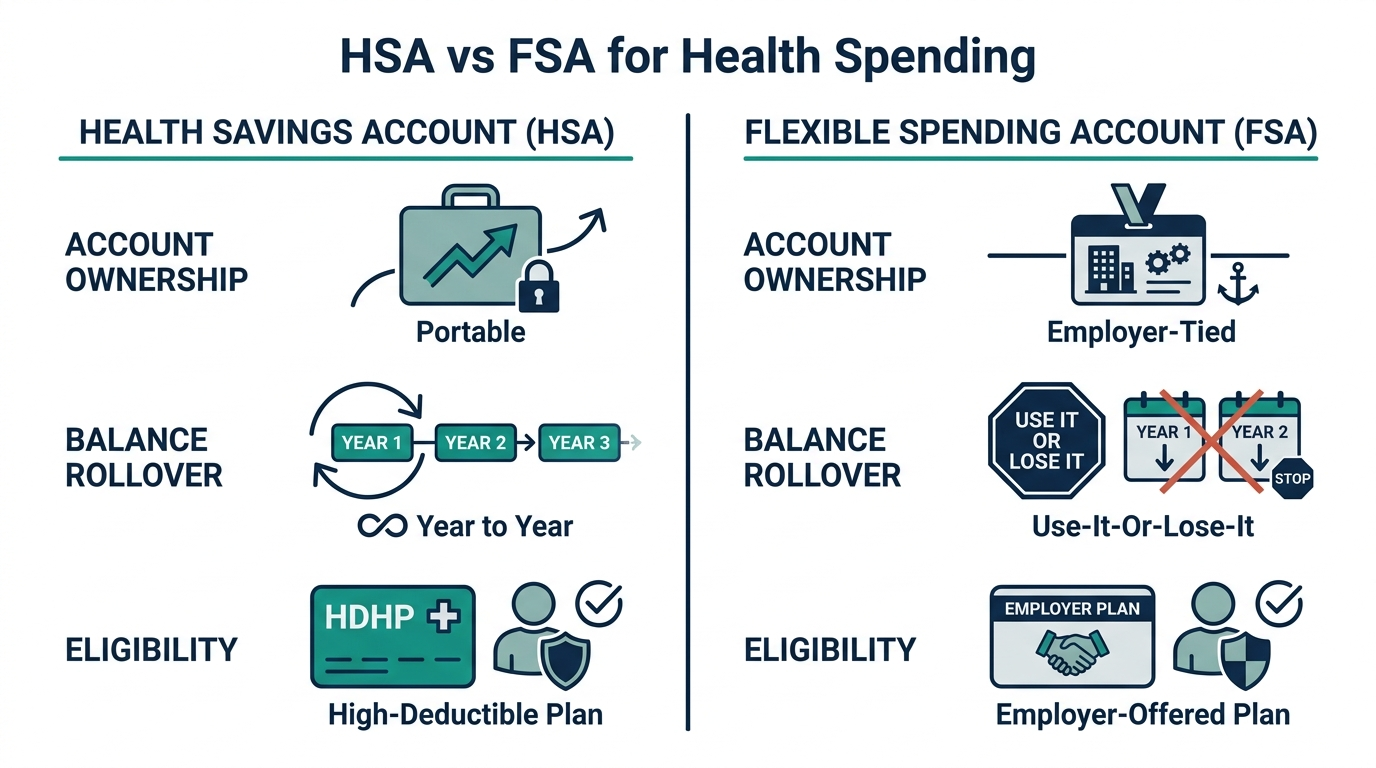
For most people, an HSA is more forgiving for this type of reimbursement than an FSA. The differences that matter here are rollover and audit risk timing.
| Feature | HSA | FSA |
|---|---|---|
| Funds roll over year to year | Yes, indefinitely | No (grace period or $640 carryover limit in 2026) |
| You can reimburse yourself months or years later | Yes, as long as the expense occurred after you opened the account | No, must claim within the plan year (or grace period) |
| Requires a high-deductible health plan | Yes | No |
| 2026 contribution limit (individual) | $4,300 | $3,300 |
| Documentation for disputed claims | You retain and self-certify | FSA administrator may require upfront substantiation |
The rollover flexibility of an HSA means you can pay for a Function Health membership in January, gather your documentation slowly, and submit the reimbursement claim in November without losing the money. With an FSA, the use-it-or-lose-it pressure means you need to move faster. If your FSA plan year ends December 31 and your membership auto-renews in October, make sure you have your itemized receipt and claim submitted before the deadline.
What to Do If Your HSA Administrator Denies the Claim
Denials happen, especially for unfamiliar expense types. Here is how to push back effectively.
First, ask the administrator to provide the specific IRS guidance or plan document language behind the denial. Many front-line customer service reps default to “we don’t cover wellness memberships” without actually reviewing what you submitted. If you submitted the expense labeled as a wellness membership, resubmit it labeled as “diagnostic laboratory testing” with the itemized test list attached.
Second, escalate to the plan’s written appeals process. Every HSA and FSA administrator is required to have one. In your appeal, cite IRS Publication 502, which lists “laboratory fees” and “diagnostic testing” as qualifying medical expenses. If your tests include ones your doctor has previously ordered for the same condition, note that.
Third, consider a letter of medical necessity from your own physician rather than relying on Function Health’s documentation. A note from your PCP on their letterhead carries more weight with a skeptical administrator than anything generated by the lab service itself.
If the claim is for an amount under $200 or $300, weigh the time cost of an appeal against just moving on. For the full annual membership fee, an appeal is worth pursuing.

Function Health Add-On Tests: Separate HSA/FSA Logic
Function Health sells add-on tests beyond the core panel. Some of these, like heavy metals panels, advanced thyroid antibodies, or genetic carrier screens, may have stronger HSA/FSA eligibility than the base membership because they are more clearly diagnostic rather than general wellness. See the full function health add on test prices breakdown for what’s available and at what cost. The same documentation rules apply: you want CPT codes, a clinical rationale, and an itemized receipt. Talk to a clinician about your results and whether specific add-ons are medically warranted for your situation, since that clinical basis is exactly what makes a test reimbursable.
Realistic Dollar Impact: What Pre-Tax Savings Actually Looks Like
Here is the math that makes this worth thinking through. If you are in the 22% federal tax bracket and your state has a 5% income tax, every dollar you spend from an HSA saves you roughly 27 cents in taxes. So:
- Superpower at $199: potential tax savings of about $54 if the full amount is reimbursed.
- Function Health at $499: potential tax savings of about $135 if the full amount is reimbursed.
- A $150 add-on test like a full hormone panel: potential savings of about $40.
Those are not massive numbers on their own, but they compound if you are doing annual draws, stacking multiple family members’ labs, or using HSA dollars that have been invested and growing tax-free for years. The real value of an HSA is as a long-term medical savings vehicle, not just a payment method. If you have an HSA with significant balances, reimbursing years of documented lab expenses in one lump sum (a legal strategy) can move substantial money out tax-free.
What a Reimbursement-Ready Receipt Actually Contains
The difference between a claim that clears and one that gets denied usually comes down to what is printed on the receipt. A generic invoice that reads only “annual membership” is the weakest possible documentation, because it names a subscription, not a medical service. A strong substantiation document contains a specific set of fields, and knowing them lets you ask support for exactly the right thing.
- Provider name and the fact that a laboratory service was rendered. The document should make clear the payment covered diagnostic testing, not a wellness perk.
- Date of service. This is the draw date, and it must fall after your HSA was opened for the expense to qualify.
- Itemized list of tests or panels. Names like comprehensive metabolic panel, lipid panel, or HbA1c tie each line to a recognized diagnostic category.
- CPT codes where available. These are the single strongest signal because each code maps to a defined clinical test that appears on the IRS list of qualified expenses.
- Amount paid and patient name. The name on the receipt should match the account holder or an eligible dependent.
When you email support, ask specifically for a superbill or itemized diagnostic receipt rather than a payment confirmation. Those two documents look similar but substantiate very differently. Keep the file with your tax records, not just in your email inbox, so it is retrievable years later if an audit asks for it.
Red Flags That Attract IRS Scrutiny
HSA distributions are self-reported, which means the account holder carries the burden of proof if the IRS ever questions a distribution. A few patterns raise the odds of a challenge, and all are avoidable.
- Large round-number distributions labeled with a brand name. A distribution described as a wellness membership invites the exact objection that the membership fee is not a qualified expense. Describe the expense as diagnostic laboratory testing and back it with the itemized receipt.
- Reimbursing an expense that predates the account. You can reimburse yourself years later, but only for expenses incurred after the HSA was established. A draw dated before your account opening is not eligible.
- Double-dipping. If part of a charge was already covered by a card wellness credit, insurance, or another tax-advantaged account, you cannot also reimburse that same portion from the HSA. Reimburse only the amount you actually paid out of pocket.
- No documentation at all. The most common failure is not keeping the receipt. The distribution may go through unchallenged for years, then become a problem in an audit when the paper trail is gone.
None of this makes legitimate lab testing risky. It simply means the label and the paperwork should match the medical reality of what you bought.
Coordinating an HSA With a Card Wellness Credit
Some premium credit cards reimburse a portion of wellness or health spending, and it is tempting to run a lab membership through both a card credit and an HSA. The two can work together, but only if you keep the dollars from overlapping. A card statement credit rebates money back to your regular card. HSA reimbursement pulls tax-advantaged dollars for money you paid out of pocket. If a card already credited part of the charge, that credited portion is no longer an out-of-pocket expense, so it is not eligible for HSA reimbursement.
The clean sequence is to let the card credit apply first, confirm the net amount you actually paid after that rebate, and then reimburse only that net amount from the HSA. Save both the card statement showing the credit and the itemized lab receipt. That way, if anyone ever asks, you can show the exact math: total charge, card rebate, and the remaining out-of-pocket sum that the HSA covered. Handled this way, you capture both benefits without creating the double-dip that draws scrutiny.
Curious what your own levels look like?
Baseline 100+ biomarkers today and retest as life changes, all in one membership with physician review.
FAQ
Is Function Health HSA eligible in 2026?
The membership fee itself is not directly HSA eligible under current IRS guidance, because it is classified as a general wellness subscription rather than a discrete medical expense. The diagnostic lab tests covered by the membership are eligible when properly documented. You can pay out of pocket and then submit an itemized reimbursement claim for the lab-test portion with your HSA administrator.
Can I use my FSA card to pay for Function Health directly?
Swiping your FSA card at the point of purchase will likely be declined or flagged, because Function Health’s merchant category code is not on most FSA approved-vendor lists. The practical path is to pay by personal card, then submit for reimbursement through your FSA portal with documentation showing the expense was for diagnostic laboratory services.
What documentation does Function Health provide for HSA/FSA reimbursement?
Function Health can provide an invoice or receipt showing payment for their service. To strengthen a reimbursement claim, request an itemized document listing the specific tests or test panels ordered. If your HSA administrator requires a letter of medical necessity, you will need to obtain that from your own physician or from the clinician who reviewed your Function Health results.
Is Superpower HSA eligible?
Superpower follows the same IRS logic as Function Health: the membership fee is not directly eligible as a wellness subscription, but the underlying diagnostic lab tests are eligible medical expenses. Superpower’s built-in physician review adds useful documentation since a licensed doctor has engaged clinically with your results. Reimbursement requires an itemized receipt and, if your administrator requires it, a letter of medical necessity.
Do I need a letter of medical necessity for lab tests?
It depends on your HSA or FSA administrator. Many do not require one for standard diagnostic tests like a CBC or lipid panel, since these appear on IRS Publication 502’s list of qualified expenses. Administrators are more likely to ask for one if your plan has stricter documentation requirements or if the test is less common. Having a brief note from your clinician in your records is good insurance against a future audit, even if you never need to submit it.
Can I use an HSA for a family member’s Function Health membership?
Yes. HSA funds can be used for qualified medical expenses for yourself, your spouse, and any dependent you claim on your federal tax return. The same eligibility rules apply: the diagnostic test costs can be reimbursed; the membership fee itself sits in the gray zone. Each family member’s documentation and receipts should be kept separately.
What if my employer’s FSA plan has a stricter definition of eligible expenses?
Employer FSA plans can be more restrictive than the IRS minimum, though they cannot be more permissive. Some plans exclude direct-to-consumer lab services explicitly. Review your Summary Plan Description (SPD), or call the FSA administrator directly and ask whether “direct-to-consumer diagnostic laboratory testing ordered without a physician referral” is covered under your specific plan. Get the answer in writing if you can.
How do I find out what CPT codes my Function Health tests used?
Contact Function Health support and ask for the CPT codes associated with your panel. Since Function Health orders through Quest Diagnostics, Quest’s own patient portal may also show the test codes from your draw. CPT codes are the strongest documentation you can provide to an HSA administrator, because they tie each test directly to a clinical category that appears on the IRS eligible list.
Is there a difference between using an HSA versus paying out of pocket for Function Health?
Yes, the difference is your marginal tax rate. At a 22% federal bracket plus state taxes, you effectively get a 25 to 30 percent discount on any HSA-eligible portion of the cost. Over multiple years of annual draws, that adds up to several hundred dollars in savings. The administrative burden of keeping receipts and filing reimbursement claims is real but modest, usually 15 to 20 minutes per year.
Where can I read more about Function Health’s pricing and what is included?
Our function health review covers what the membership includes, how the draw process works, and how results are delivered. For a direct price comparison between Function Health and Superpower, both of which offer comprehensive annual panels, those two articles read well together.
Vital Signs Today may earn a commission if you buy through links on this page. It does not affect our editorial assessments.