
Last updated 18 June 2026. Educational content, not medical advice. GHK-Cu is not FDA-approved as a drug for any indication. Talk to a licensed clinician before considering any injectable peptide.
Short answer: The clinician-supervised injectable route for GHK-Cu typically involves subcutaneous doses of 0.5 to 2.5 mg administered 5 days a week in 30- to 60-day cycles, reconstituted from a lyophilized powder using bacteriostatic water, and obtained through a licensed compounding pharmacy on prescription. As of April 22, 2026, GHK-Cu was removed from the FDA’s Category 2 “do not compound” list, but formal authorization for 503A compounding pharmacies is still pending a PCAC review scheduled for July 23 to 24, 2026. The safest path right now is through a licensed telehealth clinic that sources from a named, PCAB-accredited compounding pharmacy.
Injectable GHK-Cu protocols require clinician supervision, so shouldn’t you also know your baseline bloodwork first? One at-home Superpower draw checks 100+ biomarkers, physician-reviewed.
What is GHK-Cu, and why does injecting it interest researchers?
GHK-Cu is a naturally occurring copper-tripeptide complex, glycyl-histidyl-lysine bound to a copper(2+) ion, first isolated from human albumin by Dr. Loren Pickart in 1973. It circulates in human plasma, saliva, and urine, but not at a static level. Blood concentrations run at approximately 200 ng/mL at age 20 and fall to roughly 80 ng/mL by age 60, a decline that closely tracks the aging skin’s reduced capacity to rebuild collagen and heal injuries.
The reason researchers became interested in an injectable form, rather than simply rubbing a serum on, has to do with what this molecule appears to do at the genetic level. A 2018 analysis published in PMC found that GHK-Cu influences the expression of more than 4,000 human genes, upregulating antioxidant defense pathways (including superoxide dismutase), suppressing pro-inflammatory cytokines via NF-kB inhibition, and simultaneously upregulating p53 tumor-suppressor activity while downregulating cancer-promotion genes. That is a remarkably broad genomic footprint for a molecule with only three amino acids.
Topical serums deliver GHK-Cu to the dermis effectively, and the clinical evidence for topical use is solid. But topical delivery stays mostly local. The injectable route enters systemic circulation, which is why practitioners interested in whole-body tissue regeneration, anti-inflammatory effects, or hair follicle health consider it a different tool, not just a more intense version of the same thing.
Full-body lab membership: 100+ biomarkers, doctor-reviewed, tracked over time.
Does the research actually support GHK-Cu injection, or is that just forum speculation?
This is worth being direct about. The evidence base for GHK-Cu is split cleanly between two worlds, and most content conflates them.
What is well-established: Topical GHK-Cu has multiple randomized controlled trials in humans. A double-blind study involving 71 women with mild to advanced photoaging applied a GHK-Cu facial cream daily for three months and found significant increases in skin density, reduced sagging, and visible improvement in fine lines compared to placebo (PMC review). A separate nano-lipid carrier trial delivered the peptide topically twice daily for 8 weeks and produced a 31.6% reduction in wrinkle volume versus Matrixyl 3000, and a 55.8% reduction versus control serum. In animal wound-healing models, collagen dressings containing GHK increased total collagen synthesis ninefold compared to controls.
What is extrapolated: There are no human randomized controlled trials on subcutaneous or intravenous GHK-Cu specifically for anti-aging or skin indications. The injectable protocols that circulate online are extrapolated from topical-use data, animal studies, and clinical observation by practitioners in regenerative and longevity medicine. This does not mean the injectable route is ineffective; it means the evidence is a step behind the enthusiasm.
Personally, I find this distinction matters a lot when evaluating claims. A practitioner who explains the gap between topical evidence and injectable extrapolation is one you can trust. One who skips it is trying to sell you something.
What does the 2026 regulatory landscape actually mean for injectable GHK-Cu?
This is the insider detail that most GHK-Cu content gets wrong in 2026, because the situation shifted in April.
On April 22, 2026, the FDA removed GHK-Cu from the 503A Category 2 list, the “do not compound” list that had been blocking licensed pharmacies from compounding it for patients since it was added in 2023. Twelve peptides total were removed in that batch. Law firm Orrick’s analysis of the Federal Register notice is worth reading carefully, because it explains a nuance that most forums miss: removal from Category 2 is not the same as placement on the 503A bulks list. The peptides removed from Category 2 now sit in a regulatory gray zone. Compounding pharmacies are not yet formally authorized to compound and dispense them.
The next gate is the Pharmacy Compounding Advisory Committee meeting scheduled for July 23 to 24, 2026, where GHK-Cu will be reviewed for potential addition to the official Category 1 (permitted) bulks list, with a final FDA decision possible by early 2027. Frier Levitt’s analysis notes that pharmacies that move ahead before that formal authorization carry regulatory risk, even with Category 2 out of the way.
The practical implication for anyone seeking GHK-Cu right now: the legal compounding route is closer than it was in 2023, but it is not fully open. A compliant telehealth clinic sourcing from a PCAB-accredited 503A pharmacy is the most defensible access point in the middle of 2026.
Do not believe any telehealth platform that tells you GHK-Cu is “fully legal to compound” in mid-2026 with no caveats. That claim skips the still-pending PCAC authorization step, and a clinic stating it either does not understand the current regulations or is hoping you do not check.
How does injectable GHK-Cu actually work differently from topical?
Understanding the delivery difference helps set realistic expectations.
Topical GHK-Cu serum at 1 to 3% concentration penetrates to the dermis, where it stimulates fibroblasts to produce collagen, activates lysyl oxidase (the enzyme that cross-links collagen fibers into a stable matrix), and modulates matrix metalloproteinases that break down existing collagen. This is well-proven, and the results are measurable in clinical trials: skin density, wrinkle depth, and elasticity all show statistically significant improvement in the studies mentioned above.
The injectable route bypasses the skin barrier entirely and delivers GHK-Cu into systemic circulation. At that point, the molecule interacts with fibroblasts, immune cells, and gene-regulatory pathways throughout the body, not just in the skin. Practitioners using it for systemic anti-aging or injury repair argue that this whole-body access is what the topical route cannot provide. Reported applications include accelerated soft-tissue healing, systemic anti-inflammatory effects, and scalp-injection protocols for hair follicle stimulation.
The honest caveat: because no human trials have compared injectable versus topical GHK-Cu head-to-head, the clinical edge of the injectable route over aggressive topical use remains an open question.
One mechanism distinction that does matter, regardless of delivery route: the copper(2+) ion is not optional. A 2019 analysis confirmed that standalone GHK tripeptide has minimal regenerative effect without the copper complex. This has a direct quality implication: a poorly manufactured injectable where the copper has dissociated is less effective, which is why sourcing from a pharmacy with documented quality control actually affects outcomes, not just safety.
What does the reconstitution and administration process look like in a clinical context?
This section is educational. A licensed clinician sets the actual protocol. The steps below describe what the process involves so you can have an informed conversation with a provider, not so you can replicate them alone.
Reconstitution: Injectable GHK-Cu arrives from a compounding pharmacy as a lyophilized (freeze-dried) powder in a sterile vial. It must be reconstituted with bacteriostatic water, which contains 0.9% benzyl alcohol to inhibit bacterial growth. A common pharmacy preparation is a 50 mg vial reconstituted with 2 mL of bacteriostatic water, producing a 25 mg/mL concentration. The reconstitution technique matters: bacteriostatic water is directed slowly down the interior glass wall of the vial, not onto the powder directly, then the vial is gently rolled between the palms until fully dissolved. Shaking introduces air bubbles and can degrade peptide structure.
Concentration math: Dosing math is where errors happen. On a U-100 insulin syringe, each unit represents 0.01 mL. If a 50 mg vial is reconstituted with 2 mL of water (25 mg/mL), a 1 mg dose equals 0.04 mL, which is 4 units on the syringe. Get the decimal wrong and you are not slightly off, you are off by a factor of ten. This is the calculation a compounding pharmacist and prescribing clinician handle for you in the licensed route.
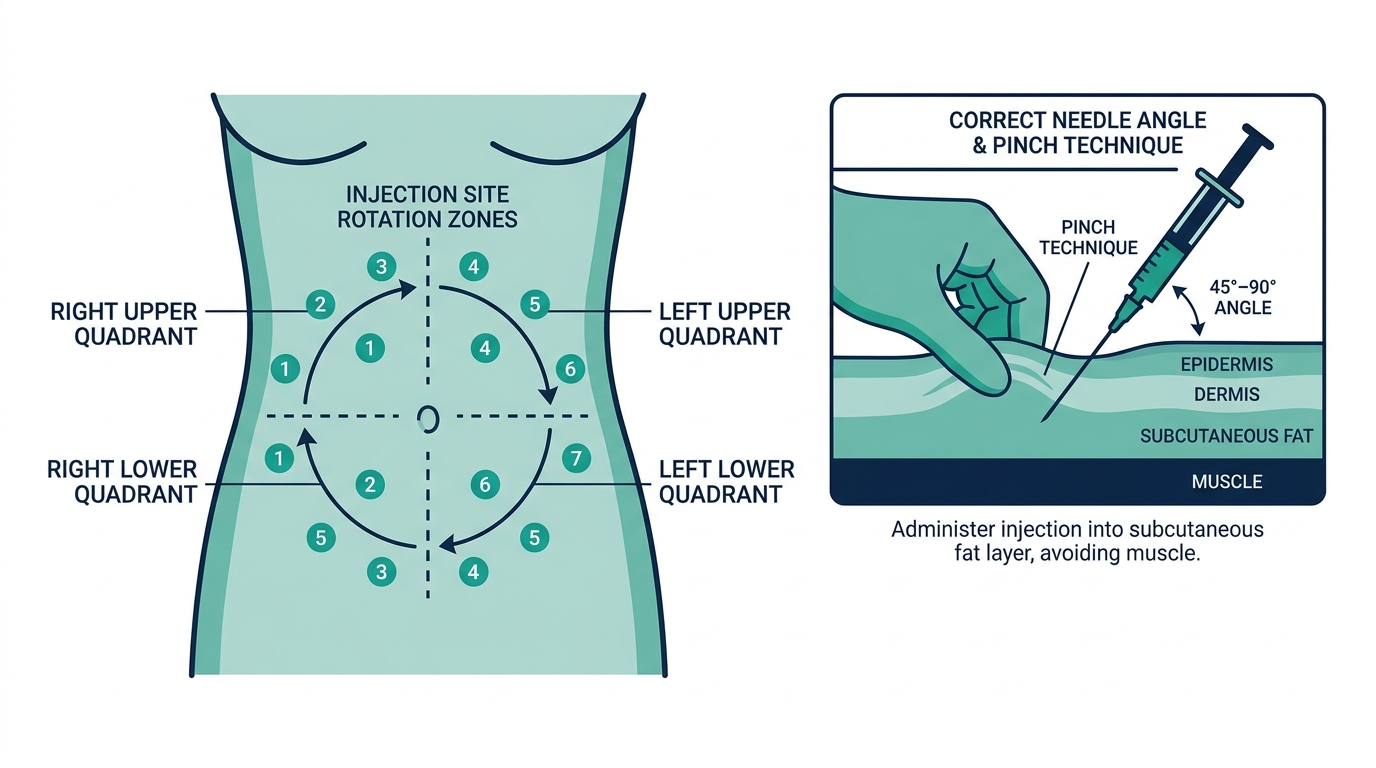
Injection site and technique: Clinical protocols most commonly use subcutaneous injection into the soft tissue of the lower abdomen, lateral to the navel, rotating sites with each dose to avoid lipodystrophy. For hair regrowth applications, some practitioners use scalp injections via mesotherapy technique. Needle gauge is typically 29 to 31 gauge, 0.5 inch length.
Storage: Reconstituted GHK-Cu is stable refrigerated at 2 to 8 degrees Celsius for up to 28 days, per standard USP 797 sterile compounding guidelines. Unreconstituted lyophilized powder has a longer shelf life when stored frozen and protected from light.
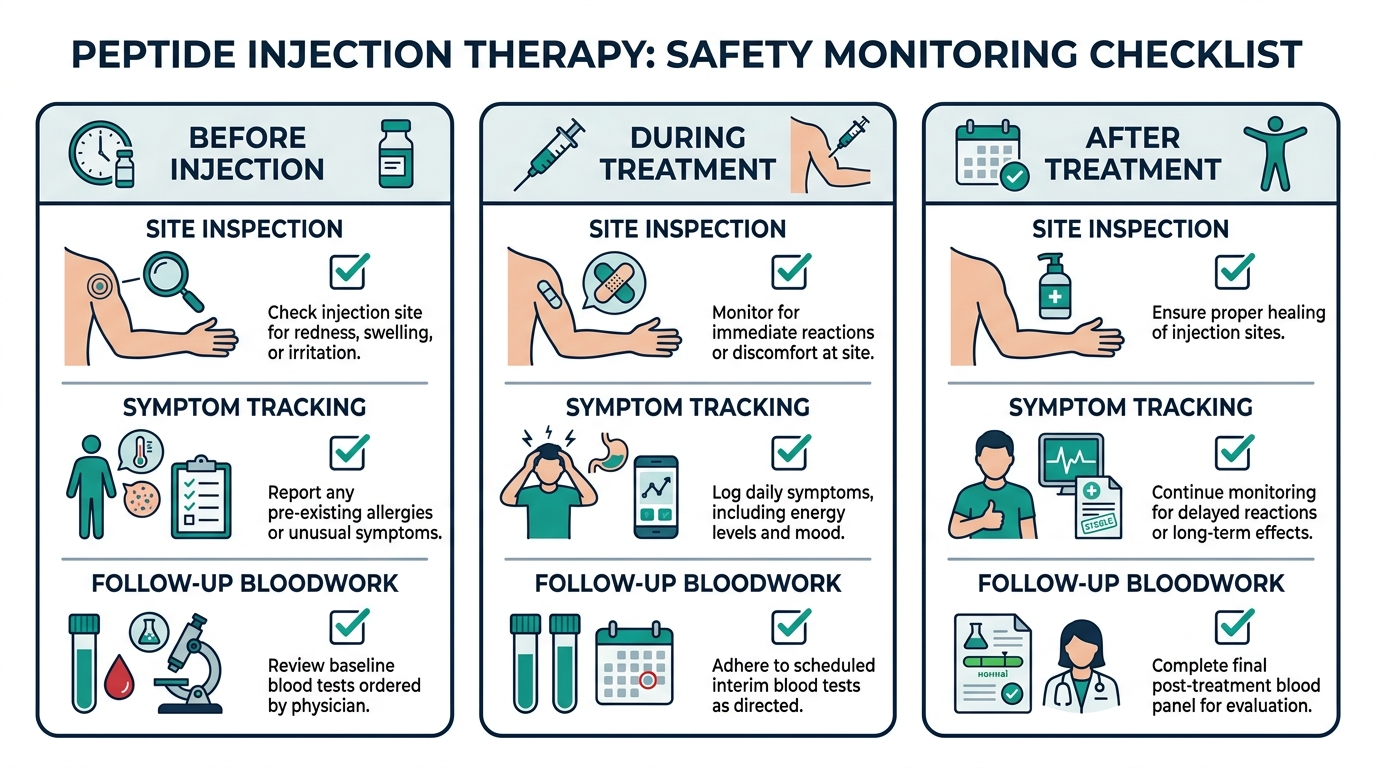
Cycling: Most clinical protocols run 30 to 60-day on-periods with equivalent off-periods. The cycling requirement is a detail that even experienced practitioners sometimes skip over: sustained continuous use risks receptor desensitization and, at higher doses, copper accumulation. Monitoring serum copper levels is part of a responsible protocol; a clinician who does not mention it should be asked directly.
What are the specific clinical applications and what does the evidence say about each?
| Application | Delivery route | Key evidence | Quality of evidence |
|---|---|---|---|
| Collagen and wrinkle reduction | Topical 1-3% | 71-woman RCT (3 months), 31.6% wrinkle volume reduction vs. Matrixyl 3000 | Strong (multiple RCTs) |
| Wound and soft-tissue healing | Topical / injectable | Ninefold increase in collagen synthesis in rat wound model | Moderate (animal studies) |
| Hair follicle stimulation | Topical / scalp injection | 14 of 18 finasteride/minoxidil non-responders gained mean 22 hairs/cm² in 2023 case series | Low to moderate (case series) |
| Systemic anti-aging / gene modulation | Injectable (subcutaneous) | 4,000+ gene expression changes in vitro; extrapolated from topical RCTs | Preliminary (in vitro + extrapolation) |
| Anti-inflammatory systemic effects | Injectable | NF-kB and p38 MAPK pathway inhibition in in vitro studies | Preliminary |
The hair story deserves its own paragraph because it is where the most interesting recent evidence lives. A 2023 case series from the University of Rome, working with 18 patients who had failed to respond to combination finasteride and minoxidil, found that adding topical GHK-Cu at 2% concentration for 20 weeks produced measurable follicle density increases in 14 of 18 subjects, with a mean gain of 22 hairs per square centimeter. A 2025 study using microneedling-assisted copper peptide delivery found a median 26.5% increase in scalp coverage. These are not large trials, but they represent a pattern consistent with GHK-Cu’s known mechanism of extending the anagen (growth) phase and enlarging follicle size.
Hydrolyzed type I & III collagen peptides, third-party tested, unflavored.
How does GHK-Cu interact with other skincare actives?
This is an area where the injectable and topical routes diverge in practical terms, and where a lot of skincare content hands out bad advice.
For the injectable route, the interaction concern is systemic: because GHK-Cu carries a copper ion, it should not be stacked with other copper-containing supplements or chelating agents without monitoring. A baseline metabolic panel and serum copper measurement before starting is standard clinical practice.
For the topical route, the relevant incompatibilities are formulation-based. GHK-Cu is destabilized by low-pH environments. Vitamin C serums (ascorbic acid) typically have a pH of 2.5 to 3.5, which is acidic enough to disrupt the copper-chelate bond and reduce the peptide’s bioactivity. The practical recommendation from formulation chemists is to apply them at separate times of day: copper peptide in the evening, vitamin C in the morning. Applying them simultaneously in the same session degrades both ingredients’ effectiveness.
The retinol pairing is better-tolerated, but still benefits from staggering. GHK-Cu first, wait 10 to 20 minutes for absorption, then retinol. Both are unstable compounds, and layering them without a gap increases irritation risk with no added benefit.
A practical upside that is rarely mentioned: in several comparative studies, GHK-Cu delivered comparable or superior collagen stimulation to retinoic acid with significantly less irritation, making it a useful option for skin that does not tolerate retinoids well.
What are the real side effects and contraindications?
Most GHK-Cu side effect discussions stop at “mild injection site redness,” which is accurate but incomplete for an injectable protocol.
Injection site reactions are the most common: redness, mild swelling, bruising, and temporary itching at the subcutaneous injection site. These are typically transient.
Copper accumulation is the systemic risk that is seriously underemphasized. At typical doses and with proper cycling, the risk is low. With continuous high-dose use and no monitoring, it becomes clinically relevant. Symptoms of copper excess include nausea, metallic taste, and, in severe cases, hepatotoxicity. This is why serum copper monitoring is part of a responsible protocol, and why the cycling requirement is not optional.
Absolute contraindications include Wilson’s disease (inability to metabolize copper), known copper allergy or hypersensitivity, and pregnancy or breastfeeding (no safety data). Active malignancy is a relative contraindication given GHK-Cu’s effects on cell proliferation, though the upregulation of p53 tumor suppressor activity is actually a theoretical protective signal in this context.
Drug interactions: No well-documented interactions exist in the published literature for GHK-Cu at compounded doses. However, theoretical caution applies with any medication that affects copper metabolism or with anticoagulants, given the tissue-remodeling activity.
What does the legitimate clinical access route look like in 2026?
The telehealth clinic model is the most practical path for most people. Legitimate providers with actual prescribing clinicians, like Defy Medical, Marek Health, Team Wellcore, and newer entrants that launched in 2026, typically structure a GHK-Cu protocol as part of a broader peptide or regenerative medicine program.
What a compliant provider includes:
- A licensed physician, nurse practitioner, or physician assistant actually reviewing your intake and labs before issuing a prescription.
- Medication sourced from a named, verifiable 503A or 503B compounding pharmacy with PCAB accreditation.
- Baseline labs required before the first dose, not listed as optional, including a comprehensive metabolic panel, inflammatory markers, and serum copper.
- Structured follow-up with protocol adjustments based on labs and reported response.
Pricing for a GHK-Cu program through telehealth runs roughly $150 to $400 per month when prescription, compounding, and shipping are bundled together. That is meaningfully more than a research-grade vial, but the price difference represents the clinician review, the pharmacy QC, the correct dosing calculation, and an accountable provider if something goes wrong.
One tell that distinguishes a compliant clinic from one cutting corners in 2026: a compliant pharmacy is not openly marketing injectable GHK-Cu as freely available while the PCAC authorization is still pending. A clinic that advertises “fully legal, in stock now, no restrictions” on injectable GHK-Cu mid-2026 is likely sourcing from a non-compliant channel or misrepresenting the regulatory timeline. The July 2026 PCAC meeting matters.
Turn what you just learned into action.
Superpower lets you test 100+ biomarkers from home, then re-check them over time so you can actually see progress, physician-reviewed at every step.
Frequently asked questions
Is GHK-Cu injection FDA-approved?
No. GHK-Cu is not FDA-approved as a drug for any indication. It has been removed from the 503A Category 2 “do not compound” list as of April 22, 2026, which eliminates the previous “significant safety risk” designation, but it has not yet been formally added to the 503A Category 1 bulks list. The PCAC review that determines formal compounding authorization is scheduled for July 23 to 24, 2026, with a final FDA decision possible by early 2027.
What is the difference between GHK and GHK-Cu?
GHK is the tripeptide glycyl-histidyl-lysine alone. GHK-Cu is the same tripeptide complexed with a copper(2+) ion. The copper binding is what confers bioactivity: standalone GHK has minimal regenerative effect on its own. When sourcing any product, the “Cu” designation confirms the active copper complex is present.
Can I use topical GHK-Cu and get the same results as injecting it?
For skin and wrinkle-reduction goals, topical GHK-Cu at 1 to 3% concentration has the strongest clinical evidence of any delivery route, including multiple human RCTs. For systemic effects, like whole-body anti-inflammatory or tissue-repair indications, practitioners argue that the injectable route’s systemic circulation access is necessary. No head-to-head human trial exists to directly compare the two routes.
Can I use GHK-Cu with vitamin C serum?
Not in the same application session. Vitamin C serums with ascorbic acid have a pH of 2.5 to 3.5, acidic enough to disrupt the copper-chelate bond in GHK-Cu and reduce bioactivity. Apply them at different times: copper peptide in the evening, vitamin C in the morning.
What labs should I get before starting injectable GHK-Cu?
A responsible clinical protocol requires at minimum: a comprehensive metabolic panel, inflammatory markers (hs-CRP, IL-6), a complete blood count, and serum copper levels. These give you a real baseline to measure against and flag any contraindications before the first dose.
How long does it take to see results from GHK-Cu?
For topical use, hydration improvements and redness reduction begin within 2 weeks. Fine line and texture improvement emerges over 1 to 2 months. Scar and hyperpigmentation changes take 3 to 6 months. For hair follicle applications, the 2023 case series cited above saw measurable density gains at 20 weeks. Injectable protocols for systemic effects have no standardized timeline from human trials.
What is the risk of copper toxicity from GHK-Cu injections?
At typical compounded doses (0.5 to 2.5 mg per day) with mandatory cycling (30 to 60 days on, equivalent off), copper accumulation risk is low. The risk increases with prolonged continuous high-dose use and no lab monitoring. Serum copper monitoring every 30 to 60 days during an injectable protocol is standard in responsible clinical practice. Wilson’s disease is an absolute contraindication.
Hydrolyzed type I & III collagen peptides, third-party tested, unflavored.
Author: Vital Signs Today Editorial Team, [credential]”]. Educational content, not medical advice. GHK-Cu is not FDA-approved as a drug. Sources linked inline.
Primary sources
- Regenerative and Protective Actions of the GHK-Cu Peptide (PMC, 2018)
- FDA Announces Removal of 12 Peptides from Category 2, Orrick (April 2026)
- FDA Peptides: Do Not Compound List Update 2026, Frier Levitt
- Copper Tripeptide GHK-Cu and Regenerative Aesthetics, PRIME Journal
- GHK-Cu Peptide Clinical Evidence Guide 2026, InnerbodyResearch
- GHK-Cu Peptide Therapy: Gene Modulation, Protocols, Efficacy, iPharma Pharmacy
- GHK-Cu and Evidence-Based Anti-Aging: The Copper Peptide in Longevity Medicine, Meto
- Copper Peptides for Hair Growth, SeekPeptides (2025)
- GHK-Cu for Hair Growth: Does Copper Peptide Actually Work?, FormBlends
- GHK-Cu Injection, Salhab Pharmacy (Tampa)
- GHK-Cu Reconstitution Guide 2026, The Peptide Catalog
- The Do’s and Don’ts: Combining GHK-Cu with Vitamin C, Drip Hydration
Related reading
Vital Signs Today may earn a commission if you buy through links on this page. It does not affect our editorial assessments.