
Last updated June 2026. Educational content, not medical advice. Always consult a licensed clinician before starting any supplement, especially if you have a medical condition or take prescription medications.
Short answer: For most healthy adults, hydrolyzed collagen peptides are safe at doses of 2.5 to 15 grams per day, backed by GRAS status from the FDA and multiple randomized controlled trials running up to 12 months with no serious adverse events. The real risk is not the molecule itself. It is the brand, because independent testing in May 2026 found 58% of collagen products tested positive for lead or arsenic, and that number has nothing to do with how effective the collagen is.
Collagen peptides are GRAS-approved and generally safe, but is your body actually responding the way the research suggests? One at-home Superpower draw checks 100+ biomarkers, physician-reviewed.
Why is “are collagen peptides safe” even a question worth asking carefully?
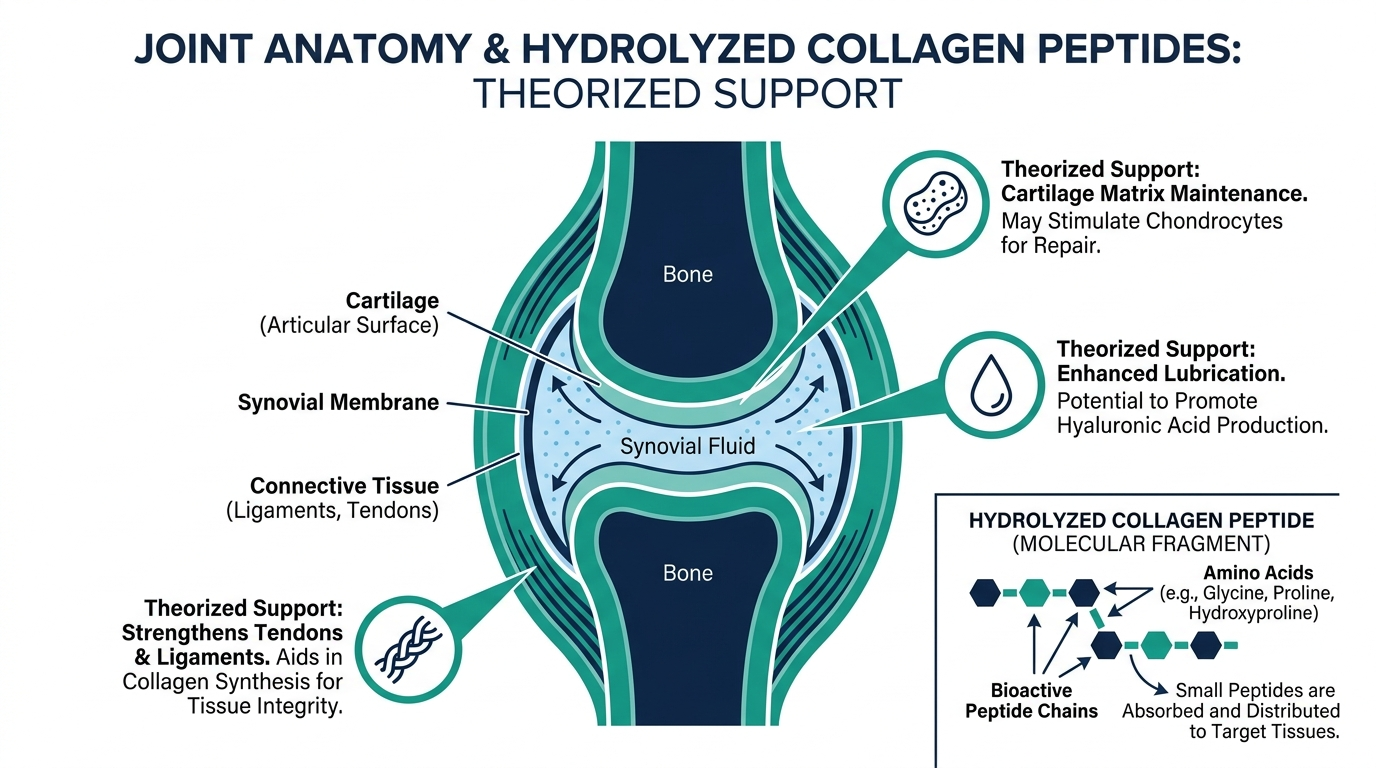
Collagen peptides sit in a strange position in the supplement world. They are not a pharmaceutical, not a research chemical, and not a hormone. They are derived from the connective tissue of animals, processed into small peptides, and sold as powders you stir into coffee. That ordinariness makes them feel risk-free, which is exactly when people stop reading labels.
The safety question splits into two completely different concerns, and conflating them is where most articles go wrong. The first is the molecule: is hydrolyzed collagen, as a biochemical entity, harmful to consume? The answer is no, with clear evidence. The second is the product: is the collagen powder you just ordered from Amazon safe? That depends entirely on the manufacturer, the sourcing, and whether any independent lab has verified what is actually in the container. Those two questions have different answers, and this article covers both.
Full-body lab membership: 100+ biomarkers, doctor-reviewed, tracked over time.
What exactly are collagen peptides and how does the body absorb them?
Collagen is the most abundant protein in the human body, making up roughly 30% of total protein mass. It forms the structural scaffold of skin, cartilage, tendons, ligaments, and bone. The body manufactures it from amino acids, primarily glycine, proline, and hydroxyproline, assembled by fibroblast cells using vitamin C as a cofactor.
Collagen peptides (also called hydrolyzed collagen or collagen hydrolysate) are collagen that has been broken down by enzymes into shorter amino acid chains, typically 2,000 to 5,000 Daltons in molecular weight. That smaller size is what makes them functional as supplements. Full-length collagen molecules are too large to survive intact digestion and too large to cross the intestinal wall. Short peptides, particularly the dipeptide Pro-Hyp (proline-hydroxyproline) and tripeptide Gly-Pro-Hyp, pass through the gut wall via the H+-coupled PEPT1 transporter and appear in blood plasma within 1 to 2 hours of ingestion (Frontiers in Nutrition, 2024).
This is not true of “collagen boosters” that claim to do the same thing via vitamin C and amino acids alone. Those stimulate collagen synthesis, but the direct signaling effect on fibroblasts observed in studies uses the ingested peptide fragments themselves, not just their amino acid building blocks.
Once in circulation, these peptides reach the dermis and connective tissue, where they stimulate fibroblasts to increase production of both collagen and hyaluronic acid. A 2025 study in Frontiers in Nutrition confirmed that the Gly-Pro-Hyp peptide specifically elevates markers of fibroblast activity and new collagen synthesis in human subjects, not just in cell culture (Frontiers in Nutrition, 2025).
What does the safety evidence actually show?
The FDA classifies hydrolyzed collagen as GRAS, meaning “generally recognized as safe.” That designation covers its use as a food ingredient, which is the legal category most collagen powders fall under. A recent GRAS notice (GRN 001171), filed by Geltor for fermentation-derived collagen polypeptide and processed with amendments through October 2024, shows that even novel production methods are moving through the standard safety pathway (FDA).
The clinical record is consistent. Multiple randomized controlled trials running 8 to 12 weeks, and observational studies up to 12 months, have not produced serious adverse events in healthy adults. The European Food Safety Authority (EFSA) has evaluated hydrolyzed collagen repeatedly and found no safety concerns at the doses studied.
Side effects that do show up in trials are minor and digestive: mild bloating, a sense of heaviness, occasional nausea or flatulence, particularly at doses above 10 grams. These resolve on their own and were not reported at rates meaningfully different from placebo in controlled conditions.
Do not believe claims that collagen is uniformly safe for everyone, though. The molecule is benign for most people, but three specific populations need to pause before supplementing.
Who should be cautious with collagen peptides?
People with chronic kidney disease (CKD). Collagen is uniquely high in hydroxyproline. When the body metabolizes hydroxyproline, it produces oxalate as a metabolic byproduct. Oxalate is cleared by the kidneys, and elevated oxalate is a primary driver of calcium oxalate kidney stones. For someone with healthy kidneys, a daily 10-gram collagen dose produces manageable oxalate load. For someone with CKD or a history of nephrolithiasis (kidney stones), that same dose can accelerate stone formation or worsen kidney function (Bubs Naturals clinical summary). This is not a theoretical concern. Multiple nephrology-focused reviews flag hydroxyproline metabolism as a reason CKD patients should use collagen supplements only under clinical supervision.
People with hypercalcemia. Some collagen supplements, especially bone broth-based formulas, are paired with calcium. Hypercalcemia, an abnormally high serum calcium level, can cause cardiac arrhythmia and is worsened by excess calcium intake from supplements. If you have elevated blood calcium, check ingredient labels beyond just “collagen” on the front panel.
People with animal protein allergies. Bovine collagen comes from cattle hides and bones. Marine collagen comes from fish skin and scales. Each carries the allergen profile of its source. A person with a fish or shellfish allergy can react to marine collagen even in powdered form. The same applies to beef sensitivities and bovine collagen. Marine collagen is not universally “cleaner” or “safer,” it simply has a different allergen and contaminant profile.
A note on pregnancy and breastfeeding. The research base is thin. Collagen breaks down into standard amino acids during digestion, and no specific teratogenic mechanism has been identified. Multiple sources describe it as “likely safe,” and a study involving supplementation through the third trimester and lactation found it was well tolerated (SeekPeptides, 2025). Personally, I would still recommend running any supplement by an OB or midwife during pregnancy, not because collagen is suspicious but because the heavy metal contamination problem (covered below) makes brand selection especially high-stakes when you are eating for two.
Does collagen interact with medications?
Collagen peptides do not have well-documented direct interactions with common medications. A 2019 review in the Journal of Cosmetic Dermatology found no clinical reports of collagen peptides interfering directly with anticoagulants.
However, two indirect concerns exist. First, high-protein diets in general can affect the metabolism and half-life of certain drugs, including warfarin (Coumadin) and propranolol. Collagen at high doses adds a significant protein load. If you take warfarin, your INR should be monitored when starting any high-protein supplement. Second, many collagen products are formulated with additional ingredients. Vitamin C is often included because it is a cofactor for collagen synthesis. Calcium and magnesium are sometimes added. Herbal additives like turmeric and ginseng appear in premium formulas. Any of those co-ingredients can have its own interaction profile with blood thinners, blood pressure medications, and diuretics. The collagen is not the problem; the label you did not read past the front panel is (Kollo Health).
The real safety problem: what is actually in the container?
This is the section that matters most, and most safety articles skip it entirely.
The Organic Consumers Association tested 28 top-selling collagen brands and found 64% positive for measurable arsenic, 37% for lead, 34% for mercury traces, and 17% for cadmium, tested via ICP-MS at ISO-accredited laboratories. A May 2026 community laboratory initiative found that 58.33% of tested collagen products were positive for lead, and 58.33% for arsenic.
The contamination mechanism is straightforward. Collagen is extracted from animal bones and hides. Bones accumulate heavy metals from the environment over an animal’s lifetime, and industrial farming increases that accumulation. Without rigorous sourcing controls and batch-level testing, the processing step cannot remove what the animal tissue already contains.
This is not a problem with collagen as a molecule. It is a supply chain and quality-control problem, and it is brand-specific.
Vital Proteins, the most widely sold collagen brand in the US, carries a California Proposition 65 warning disclosing lead exposure risk on some products. Independent testing found their unflavored powder positive for arsenic at levels at or above 10 ppb in a September 2024 batch (Tamara Rubin Lab Reports). A separate third-party test commissioned by Garage Gym Reviews rated the same unflavored product in the top 10% for purity. Results vary by batch and by testing methodology, which is exactly the problem: there is no consistent, publicly verifiable batch-level testing program.
Compare that to brands that publish NSF Certified for Sport batch-level Certificates of Analysis. Momentous Collagen Peptides publishes COAs for every batch and carries NSF Certified for Sport designation, which requires independent verification of contents for each production run (Momentous). Gnarly Collagen Pro holds dual NSF certification (content + NSF Certified Sport). Naked Collagen Peptides provides NSF content certification with testing for heavy metals, pesticides, and contaminants per batch.
Bovine vs. marine collagen: does the source change the safety picture?
| Factor | Bovine (grass-fed) | Marine (wild-caught) |
|---|---|---|
| Primary collagen type | Type I and III | Type I |
| Molecular weight | 2,000 to 5,000 Da (hydrolyzed) | Typically smaller (~2,000 Da) |
| Absorption speed | High; 90% absorbed within hours | Marginally faster due to smaller peptides |
| Allergen risk | Beef protein; not shellfish | Fish and shellfish; not beef |
| Heavy metal concern | Lead, cadmium from bone/hide | Mercury, arsenic from ocean accumulation |
| Religious/dietary fit | Not halal/kosher (bovine varies); not vegan | Not vegan; halal/kosher fish possible |
| Research base | Larger (most RCTs use bovine) | Growing; skin-focused studies |
The honest summary: once both sources are fully hydrolyzed to similar molecular weights, the absorption difference between bovine and marine collagen is smaller than the marketing suggests. The meaningful differences are allergen profile, contaminant type, and the evidence base. If you eat fish and have a beef sensitivity, marine is the practical choice. If you have a shellfish allergy, bovine is the automatic choice.
Marine collagen carries a specific risk that bovine does not: mercury accumulation from ocean-dwelling fish. The contaminant is different, not absent. A 2025 PMC study on marine collagen found measurable toxic metal concentrations varying significantly by species and sourcing location, with stricter testing required for ocean-source products (PMC, 2025).
What does the clinical evidence show for effectiveness?
Safety without efficacy is not a compelling case for supplementing. Here is what the trial evidence actually supports, with specific numbers.
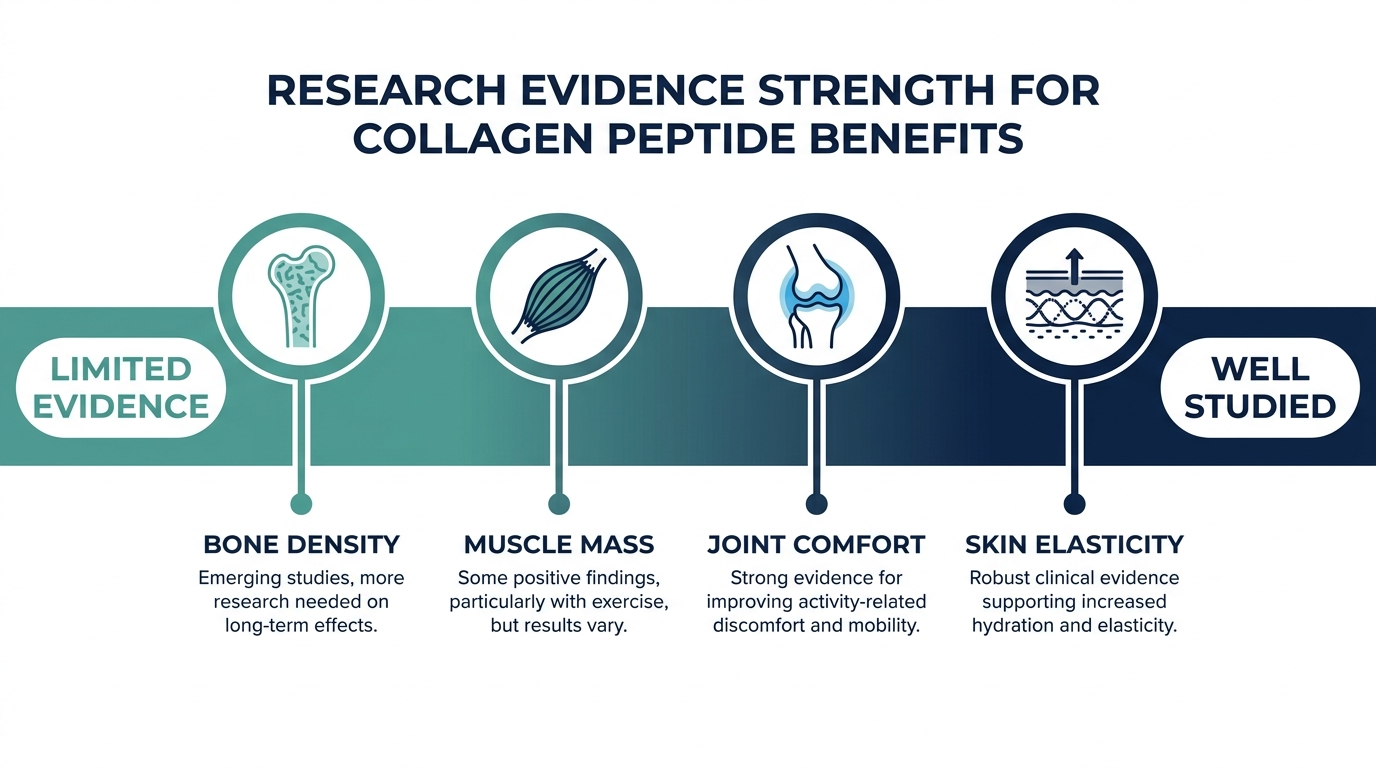
Skin hydration and elasticity. A 2026 systematic review and meta-analysis in Frontiers in Medicine, covering randomized controlled trials of oral and topical peptides, confirmed that oral collagen supplementation significantly improves skin hydration and elasticity across multiple study populations (Frontiers in Medicine, 2026). A randomized, placebo-controlled, double-blind trial in 72 women found that 8 weeks of tuna collagen peptides produced significant increases in skin hydration, elasticity, and density versus baseline, with reduced transepidermal water loss (PMC, 2024). The dose range that shows results: 2.5 to 5 grams daily for skin.
Joint pain. A meta-analysis of randomized controlled trials on collagen peptides in knee osteoarthritis found significant analgesic benefit versus placebo, with doses of 5 to 10 grams daily most commonly studied (PMC, 2023).
Muscle soreness and recovery. A randomized, double-blind crossover trial in healthy middle-aged males found that collagen peptide supplementation significantly reduced exercise-induced muscle soreness compared to placebo (PMC, 2023).
The caveat most review papers include but most supplement sites omit: heterogeneity in peptide source, molecular weight, and outcome measures across studies makes direct comparison difficult. The body of evidence is promising, not definitive, and long-term standardized trials are still needed.
How to pick a collagen supplement that is actually safe
The molecule is not the problem. The supply chain is. Applying this principle gives you a practical buying framework:
- Look for NSF Certified for Sport or Informed Sport. These certifications require batch-level third-party testing, not just one-time ingredient approval. They test for contaminants including heavy metals and banned substances per production batch. This is the single highest-signal quality indicator available for supplements sold in the US.
- Verify the sourcing claim. “Grass-fed” is a meaningful signal for bovine collagen because pasture-raised animals accumulate fewer environmental toxins than confined, industrial-farmed animals. “Wild-caught” from specific, clean-water fisheries is the equivalent for marine. Vague sourcing language is a yellow flag.
- Check for a published COA. Brands that are confident in their product publish Certificates of Analysis that show actual test results. Not a generic quality statement, an actual lab result with analyte values.
- Read the full ingredient list. A clean collagen label has collagen (and possibly vitamin C). The interaction risk rises with every added herbal extract, calcium compound, and flavoring agent.
- Start with the minimum effective dose. The research supports 2.5 grams daily for skin benefits. There is no established benefit to exceeding 15 grams daily, and higher doses increase the oxalate load relevant to kidney-stone-prone individuals.
Hydrolyzed type I & III collagen peptides, third-party tested, unflavored.
Does collagen supplementation build collagen in the body, or is it just protein?
This is the most common skeptical objection, and it deserves a direct answer. The argument against collagen: after digestion, peptides break down into amino acids, and those amino acids are no different from the glycine and proline you get from any protein source. Why pay a premium for collagen peptides when chicken breast provides the same building blocks?
The response from recent research is that collagen peptides are not just delivering amino acids. The specific dipeptides and tripeptides, particularly Pro-Hyp, survive intact in blood plasma and have been detected in dermal tissue, where they directly stimulate fibroblast proliferation and migration. This is a signaling effect, not just a substrate-delivery effect. A 2024 study in Frontiers in Nutrition, a randomized double-blind crossover in healthy subjects, detected multiple Hyp-containing di- and tripeptides in plasma after collagen hydrolysate ingestion, and the low-molecular-weight hydrolysate produced significantly higher plasma hydroxyproline concentrations (169.1 nmol/mL) than higher-molecular-weight gelatin (94.4 nmol/mL) (Frontiers in Nutrition, 2024).
The myth to bust directly: “collagen you eat just becomes random amino acids and does nothing specific.” The evidence says this is not accurate for hydrolyzed collagen, particularly at low molecular weights. The intact peptides reach circulation and tissue and have demonstrably different effects from equivalent amino acid mixtures.
That said, collagen peptides are genuinely low in some essential amino acids, particularly tryptophan. They are not a complete protein and should not replace protein from whole-food sources. They are a supplement to a diet that already contains adequate protein, not a substitute.
Don’t just read about your health, track it.
A single result is a snapshot. Superpower re-tests 100+ markers over time so you can watch them move as you change sleep, food, and training.
Frequently asked questions
Are collagen peptides safe for daily use?
Yes, for most healthy adults. Clinical trials up to 12 months with daily supplementation at 2.5 to 15 grams have not produced serious adverse events. The primary safety variable is the brand, not the molecule.
Can collagen peptides cause kidney damage?
Not in people with healthy kidneys at standard doses. The concern is for people with chronic kidney disease or a history of kidney stones: hydroxyproline metabolism produces oxalate, a primary driver of calcium oxalate kidney stones. If you have CKD or a kidney stone history, speak to a nephrologist before supplementing.
Are collagen peptides safe during pregnancy?
The evidence base is limited but not alarming. Collagen breaks down into standard amino acids in digestion and no specific fetal risk has been identified. The practical concern is heavy metal contamination in low-quality products, which matters more during pregnancy. Use only NSF-certified or COA-verified products, and confirm with your OB before starting.
Do collagen peptides interact with blood thinners?
No confirmed direct interaction exists between pure collagen peptides and anticoagulants like warfarin. However, high-protein supplementation can affect drug metabolism for some medications, and many collagen products contain additional ingredients that do have interaction potential. Show your full supplement label to your prescribing clinician.
Why do some collagen products contain lead?
Bones and hides from animals accumulate heavy metals from their diet and environment over their lifetime. Without rigorous sourcing controls (grass-fed, tested pasture origin) and batch-level third-party testing, those metals transfer to the extracted collagen. This is a brand and supply chain issue, not a fundamental property of collagen.
What is the best dose of collagen peptides for skin?
The research consistently supports 2.5 to 5 grams daily for measurable skin hydration and elasticity improvements over 8 to 12 weeks. Higher doses do not appear to produce proportionally greater skin benefits. Joint and connective tissue studies use 5 to 10 grams daily.
Is marine collagen safer than bovine collagen?
Neither source is inherently safer than the other. Marine collagen carries ocean-source contaminants (mercury, arsenic from certain fish). Bovine collagen carries land-source contaminants (lead, cadmium from bone accumulation). Third-party batch testing is the equalizer, not the source animal.
Author: [CAN XAC NHAN: ten + credential tac gia/reviewer health cua Vital Signs Today, vd “Medically reviewed by [name], [credential]”]. Educational content, not medical advice. Sources linked inline.
Hydrolyzed type I & III collagen peptides, third-party tested, unflavored.
Primary sources:
- FDA GRAS Notice GRN 001171 (Geltor collagen polypeptide)
- Frontiers in Nutrition 2024: Absorption of bioactive peptides following collagen hydrolysate intake (PMC11325589)
- Frontiers in Nutrition 2025: Collagen supplementation and regenerative health (PMC12739960)
- Frontiers in Medicine 2026: Oral and topical peptides for skin aging, systematic review and meta-analysis
- PMC 2023: Analgesic efficacy of collagen peptide in knee osteoarthritis meta-analysis (PMC10505327)
- PMC 2023: Collagen peptides alleviate exercise-induced muscle soreness RCT (PMC10158542)
- PMC 2024: Tuna collagen peptides skin RCT (PMC11626298)
- PMC 2025: Toxic metals in marine collagen supplements risk assessment (PMC12032979)
- Tamara Rubin Lab Reports May 2026: Comparative collagen heavy metals chart
- Tamara Rubin Lab Reports September 2024: Vital Proteins unflavored arsenic test
- Organic Consumers Association: Heavy metals in 28 collagen brands
- Vital Proteins Prop 65 Product Disclosure
- Momentous NSF Certified Collagen Peptides
- Kollo Health: Collagen supplement medication interactions
- Bubs Naturals: Collagen peptides and kidney concerns
Related reading
Vital Signs Today may earn a commission if you buy through links on this page. It does not affect our editorial assessments.