
Disclosure: Vital Signs Today may earn a commission if you buy through links on this page, at no extra cost to you. This does not influence our evidence-based assessments. We are not a medical provider; talk to a clinician before acting on test results.
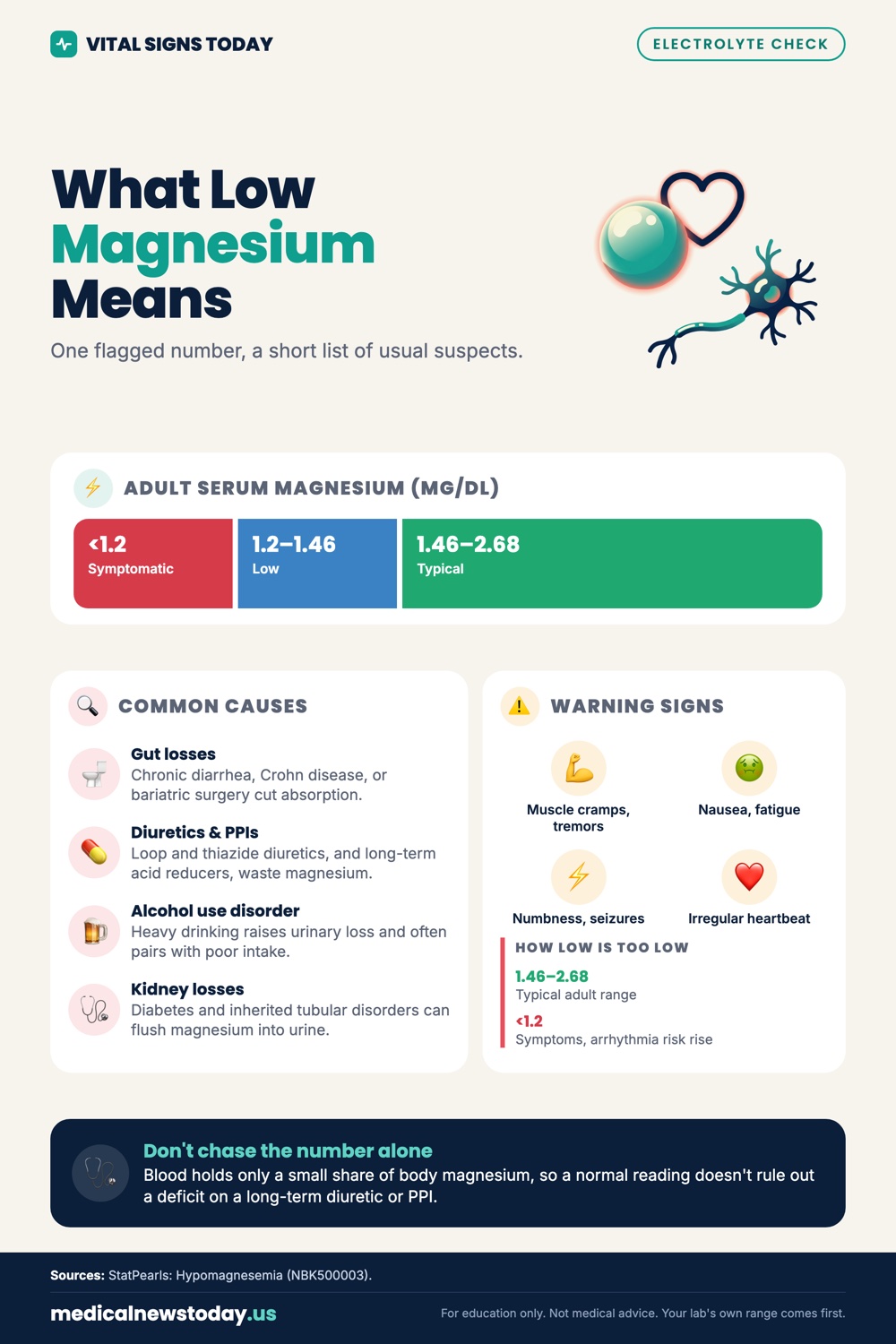
- Low magnesium on a blood test, called hypomagnesemia, means your serum magnesium falls below the normal range of about 1.7 to 2.2 mg/dL, with most labs flagging anything under roughly 1.46 mg/dL as low (Cleveland Clinic; StatPearls).
- The most common causes are gut losses (chronic diarrhea, Crohn disease), kidney losses, alcohol use disorder, poor diet, and medications such as proton pump inhibitors and diuretics (StatPearls; MedlinePlus).
- Mild low magnesium often causes no symptoms, but levels under about 1.2 mg/dL can trigger muscle cramps, tremors, abnormal heart rhythms, and seizures, which makes it a result worth acting on (StatPearls; Cleveland Clinic).
What does low magnesium mean on a blood test, and what is the cutoff?
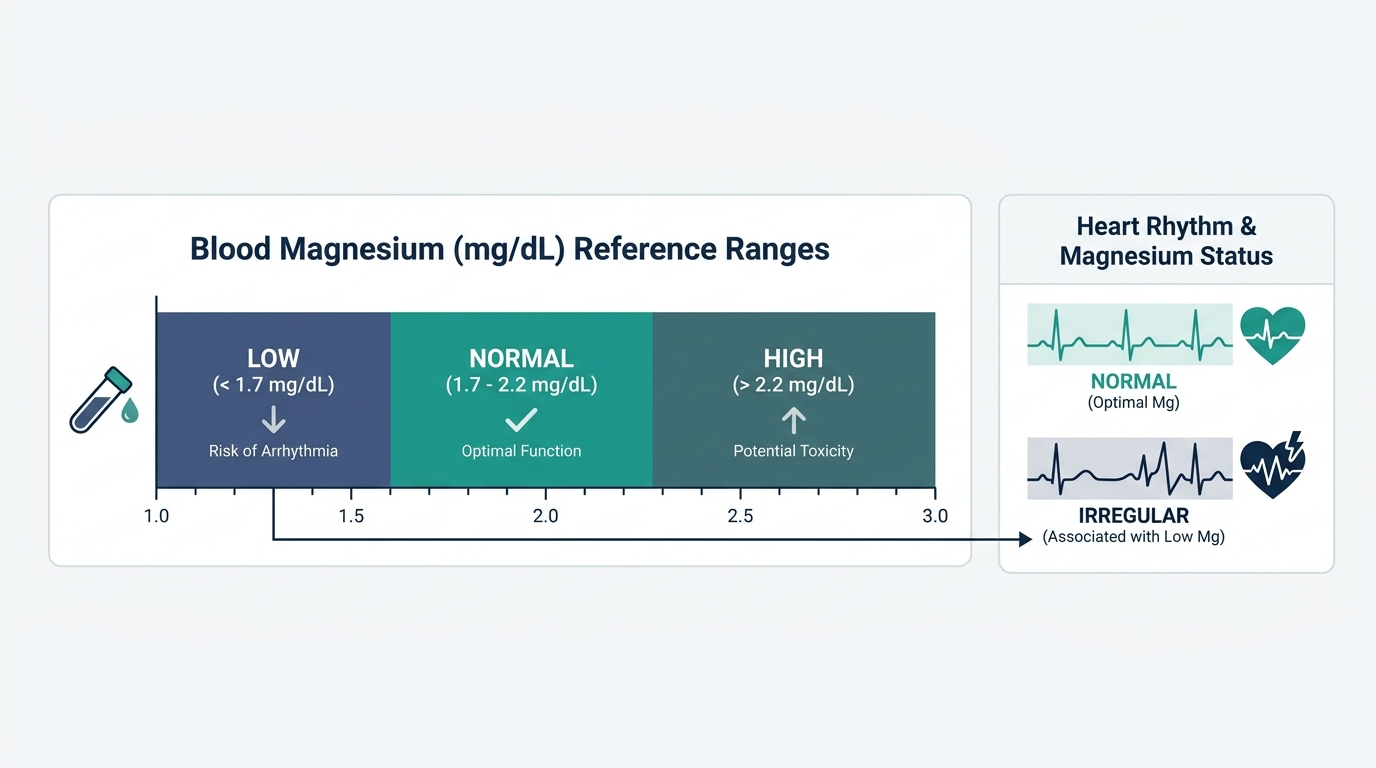
Low magnesium on a blood test means your serum magnesium level is below normal, a condition doctors call hypomagnesemia. Cleveland Clinic gives a normal range of roughly 1.46 to 2.68 mg/dL, while many labs and StatPearls use a tighter normal band of about 1.7 to 2.2 mg/dL. StatPearls defines hypomagnesemia as a serum level under 1.46 mg/dL (0.6 mmol/L).
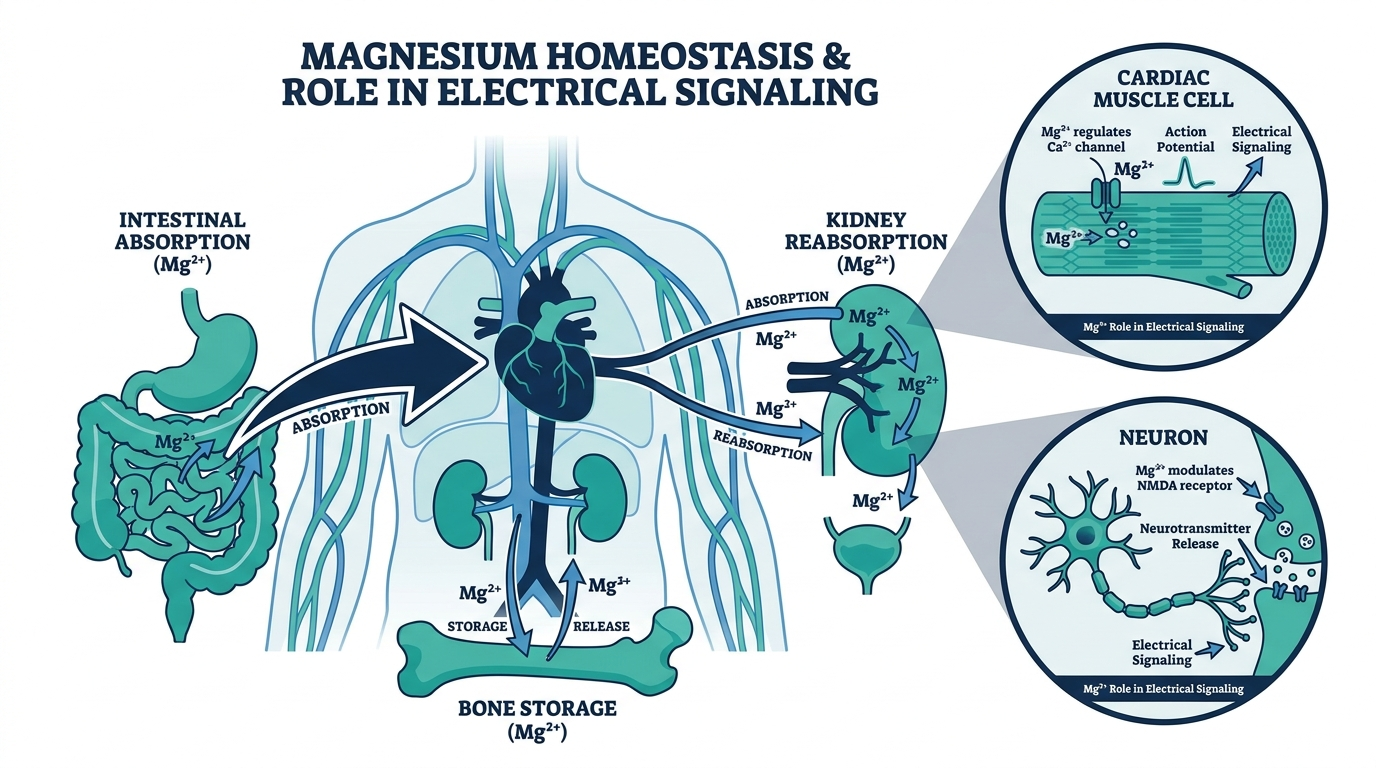
The standard test measures magnesium in the liquid part of your blood (serum). That number can be slightly misleading, because less than 1 percent of your body’s magnesium sits in the blood. Most is stored in bone and inside cells, so a “normal” blood level does not always rule out a whole-body deficit. Still, a flagged-low result is a clear signal that your stores are likely depleted and worth investigating. Always read your own value against the reference range printed on your specific lab report, since cutoffs vary by lab.

What causes low magnesium?
Low magnesium is usually caused by losing more than you take in, through the gut, the kidneys, or both. StatPearls and MedlinePlus group the causes into three buckets: too little intake, poor absorption, and excess loss. Alcohol use disorder is one of the single most common drivers in clinical practice.
- Gut losses: chronic diarrhea, vomiting, Crohn disease, celiac disease, or recovery after bariatric surgery reduce how much magnesium you absorb (MedlinePlus).
- Kidney losses: uncontrolled diabetes, certain genetic tubular disorders, and high urine output can flush magnesium out (StatPearls).
- Medications: long-term proton pump inhibitors (such as omeprazole), loop and thiazide diuretics, some antibiotics, and chemotherapy agents lower magnesium. The US FDA has warned that PPIs used for a year or longer can cause low magnesium.
- Diet and alcohol: low dietary intake, malnutrition, and heavy alcohol use are frequent contributors, especially in older adults (MedlinePlus).
Low magnesium also tends to travel with low potassium and low calcium, because magnesium is needed to keep those electrolytes balanced.
What are the symptoms, or is it silent?
Mild low magnesium is often completely silent. StatPearls notes that hypomagnesemia is typically asymptomatic until the serum level drops below about 1.2 mg/dL (0.5 mmol/L), which is why many people only learn about it from routine bloodwork. When symptoms do appear, they reflect overexcitable nerves and muscles.
Common signs include:
- Muscle symptoms: cramps, twitches, tremors, and in severe cases tetany (sustained spasms).
- General symptoms: loss of appetite, nausea, fatigue, and weakness (MedlinePlus).
- Nervous system: numbness, tingling, personality changes, and seizures in severe cases.
- Heart: palpitations or an irregular heartbeat, which can become dangerous (Cleveland Clinic).
Because the symptoms overlap with so many other conditions, the blood test is what usually confirms magnesium as the cause.
When is low magnesium dangerous?
Low magnesium becomes dangerous mainly when it disrupts your heart rhythm or triggers seizures, and the risk climbs sharply once serum levels fall below about 1.2 mg/dL (StatPearls). At that point the heart’s electrical system can misfire, producing arrhythmias such as torsades de pointes, a potentially fatal rhythm. Cleveland Clinic lists seizures and cardiac complications among the serious outcomes of untreated severe hypomagnesemia.
Severity also depends on how fast the level dropped and what else is going on. A long, slow decline may be tolerated better than a sudden fall. Low magnesium that coexists with low potassium is particularly stubborn, because potassium will not correct until magnesium is replaced first. People in the hospital, those on multiple diuretics, and people with significant alcohol use are at higher risk of reaching dangerous territory. Severe or symptomatic hypomagnesemia is usually treated with intravenous magnesium under monitoring rather than pills.

What should you do next, and when should you see a doctor?
If your result is flagged low, the first step is to talk with the clinician who ordered the test, because the right action depends on how low the number is and whether you have symptoms. For a mildly low value with no symptoms, doctors often recommend dietary changes and an oral magnesium supplement, then a repeat test.
- Mild and silent: increase magnesium-rich foods (leafy greens, nuts, seeds, legumes, whole grains) and discuss supplements with your clinician.
- Review medications: ask whether a PPI, diuretic, or other drug could be the cause before stopping anything on your own.
- Recheck the level: a follow-up blood test confirms whether replacement is working.
Seek urgent care if you have an irregular or racing heartbeat, severe muscle spasms, confusion, or a seizure. These can signal severe hypomagnesemia that needs intravenous treatment (Cleveland Clinic; StatPearls).
The insider nuance: a normal blood level can still hide a deficiency
Here is what many people miss: a normal serum magnesium does not guarantee you have enough magnesium overall. Because under 1 percent of body magnesium circulates in blood (StatPearls), the body can pull magnesium out of bone and tissue to keep the serum number looking normal even while total stores run low. This is why some clinicians order additional tests, such as a 24-hour urine magnesium or an RBC magnesium level, when symptoms strongly suggest deficiency but the standard serum test reads normal.
The practical takeaway is to interpret a borderline-normal result in context. If you take a long-term PPI, use diuretics, drink heavily, or have ongoing gut losses and also have unexplained cramps or palpitations, a “normal” magnesium is worth a second look with your doctor rather than an automatic all-clear.
How the magnesium test is run and what can throw it off
The standard test is a serum magnesium, measured from a routine venous blood sample, often as part of a broader metabolic or electrolyte order. No special fasting is usually required, but a few practical factors can distort the number, so it helps to know them before you read too much into a single result.
- Hemolysis (a damaged sample). Red blood cells hold far more magnesium than serum does. If cells rupture during a difficult draw or rough handling, magnesium leaks out and can falsely raise the reading. A low result is rarely a lab artifact, but a surprising normal or high value after a hard stick is worth repeating.
- Recent supplements or antacids. Magnesium-containing supplements, laxatives, or antacids taken shortly before the draw can transiently lift the level and mask a true deficit. Note anything you took in the days before testing.
- Timing relative to IV fluids or transfusions. In a hospital setting, fluids and blood products shift electrolytes, so the timing of the draw matters for interpretation.
- Albumin does not correct magnesium. Unlike calcium, where a low albumin prompts a correction calculation, serum magnesium is read directly. Do not apply a calcium-style albumin correction to it.
Because roughly 30 percent of circulating magnesium is bound to protein, the serum value reflects total magnesium in blood, not the free, active fraction. That distinction rarely changes management, but it is part of why the serum test is a screen rather than a perfect measure of your working magnesium.

Want to check your magnesium?
Three ways to get it measured. Pick whichever fits you.
Affiliate links: we may earn a commission at no extra cost to you. A lab test does not replace a visit with your clinician.
Reading magnesium alongside its panel companions
Magnesium almost never travels alone. It sits at the center of an electrolyte network, and its value gains meaning when read next to potassium, calcium, and kidney markers. A few interpretation scenarios show how the companions change the story.
- Low magnesium plus low potassium that will not budge. This is the classic pairing. Potassium repletion often fails until magnesium is corrected first, because low magnesium makes the kidneys waste potassium. If your potassium keeps drifting low despite supplements, magnesium is a prime suspect.
- Low magnesium plus low calcium. Severe magnesium deficiency blunts parathyroid hormone release and action, which drops calcium. A stubborn low calcium that ignores calcium supplementation can be a magnesium problem in disguise.
- Low magnesium with normal kidney function. This points toward gut losses, poor intake, alcohol, or a medication effect rather than the kidney dumping magnesium.
- Low magnesium with high urine magnesium. If a clinician measures a 24-hour urine or a fractional excretion and finds the kidney is spilling magnesium despite a low blood level, that reframes the cause toward renal wasting, sometimes from diuretics or a tubular disorder.
The lesson is not to read the magnesium box in isolation. On a comprehensive metabolic panel, scan potassium and calcium at the same time, because a single low electrolyte rarely tells the full story.
How much magnesium you actually need, and where to get it
For most adults, the recommended dietary allowance sits around 400 to 420 mg per day for men and 310 to 320 mg per day for women, per the National Institutes of Health Office of Dietary Supplements. Needs rise slightly in pregnancy. Many people fall short of these targets through diet alone, which is one reason mildly low readings are common.
Food-first sources are dense and practical:
- Seeds and nuts: pumpkin seeds and chia seeds are among the richest sources, followed by almonds and cashews.
- Legumes and whole grains: black beans, edamame, and cooked whole grains contribute steadily.
- Leafy greens: spinach and Swiss chard deliver magnesium along with potassium.
- Other sources: dark chocolate, avocado, and yogurt round out an easy daily intake.
Diet raises magnesium slowly because absorption is gradual and the body stores most of it in bone and muscle. That is why food alone maintains a level well but corrects a flagged-low result slowly. When a supplement is warranted, forms differ: magnesium citrate and glycinate are generally better absorbed, while magnesium oxide is cheap but poorly absorbed and more likely to cause loose stools. The right form and dose is a conversation for your clinician, not a guess.
Who is most at risk, and how often to recheck
Certain groups deserve a lower threshold for testing and rechecking magnesium, because their risk of quiet deficiency is elevated:
- Long-term PPI users. Acid-suppressing drugs used for a year or more reduce magnesium absorption. If you cannot stop the PPI, periodic monitoring is reasonable.
- People on diuretics. Loop and thiazide diuretics increase magnesium loss in urine, a common cause in people managing blood pressure or heart failure.
- People with type 2 diabetes. Higher urine output and the disease process itself promote magnesium wasting, and low magnesium may in turn worsen insulin resistance.
- Heavy alcohol use and malnutrition. Alcohol increases urinary magnesium loss and often coincides with poor intake, making this one of the most common clinical settings for deficiency.
- People with chronic gut conditions. Crohn disease, celiac disease, chronic diarrhea, and recovery from bariatric surgery all impair absorption.
If you fall into one of these groups and your level is corrected, a repeat test in a few weeks confirms the fix held, and periodic checks catch a slow return of the deficit. There is no universal screening interval for the general healthy population; testing is driven by risk factors and symptoms.

How doctors correct a low magnesium, step by step
The approach to fixing hypomagnesemia depends on how low the number is, whether you have symptoms, and how well your gut and kidneys work. Understanding the general logic helps you follow the conversation with your clinician, though the specifics are always individualized.
- Mild, no symptoms. Oral magnesium plus a diet richer in magnesium is the usual first move, followed by a recheck. Divided doses through the day are gentler on the stomach and absorb better than one large dose, which tends to cause diarrhea and passes through before it can be absorbed.
- Moderate or with mild symptoms. Higher-dose oral repletion over a longer stretch is common, because refilling stores takes time even when the blood number recovers quickly.
- Severe or symptomatic. Intravenous magnesium under monitoring is standard, especially when there are heart rhythm changes or seizures. This is a hospital-level intervention, not something managed with pills.
- Fix the driver, not just the number. Replacing magnesium without addressing the cause, an ongoing diuretic, a chronic gut condition, heavy alcohol use, leads to the deficit returning. Durable correction means treating the underlying reason.
A key detail: because low magnesium makes the kidney waste magnesium and potassium, correction can be slower than you expect. Clinicians often replace magnesium and potassium together and recheck both, rather than chasing one number at a time.
Special situations worth flagging
- Reduced kidney function. If your kidneys do not clear magnesium well, supplement doses are handled more cautiously, because the same dose that safely corrects a level in one person can push it too high in another. This is a case where self-supplementing without guidance can backfire.
- Refeeding after malnutrition. When someone who has been undernourished starts eating again, magnesium, phosphate, and potassium can drop sharply as the body shifts them into cells. Magnesium is monitored closely in this setting.
- Pregnancy. Magnesium needs rise modestly in pregnancy, and low levels are interpreted in that context. Any supplementation in pregnancy should be guided by a clinician.
- Athletes and heavy sweaters. Sustained heavy sweating causes some magnesium loss, though diet usually keeps pace. Cramps in this group are more often about hydration and sodium than magnesium, so testing beats assuming, and a single reading during a hard training block should be interpreted with that context in mind.
Common misunderstandings about low magnesium
- “My level is normal, so my magnesium is fine.” Not necessarily. Because blood holds under 1 percent of body magnesium, a low-normal serum value in someone with strong risk factors and symptoms can still reflect depleted stores.
- “I can fix a low result overnight with a supplement.” Repletion of true deficiency takes days to weeks because the body has to refill intracellular and bone stores, not just the blood. A single high dose does not undo a chronic deficit.
- “More magnesium is always better.” Overdoing supplements, especially in people with reduced kidney function, can push magnesium too high, which carries its own risks. The goal is a normal level, not the highest possible number.
- “Cramps always mean low magnesium.” Muscle cramps have many causes, including dehydration and overuse. Low magnesium is one possibility, which is exactly why the blood test matters rather than self-diagnosing from symptoms.
How common medications can pull magnesium down
Medication is one of the most overlooked reasons a magnesium level drifts low, and it is worth knowing which drug classes matter because the fix is often straightforward once the cause is spotted. Diuretics, especially the loop and thiazide types used for blood pressure and fluid retention, increase how much magnesium the kidneys excrete, so people on long-term diuretic therapy are a classic group to watch. The effect builds over time rather than appearing overnight.
Proton pump inhibitors, the widely used acid-reducing drugs taken for reflux, are another well-recognized cause when used for long periods, because they can reduce how much magnesium the gut absorbs. Regulators have flagged this specific risk, which is why prolonged use is a reasonable prompt to check the level. Beyond these, certain other medicines can lower magnesium through effects on the kidney or gut. The practical takeaway is that if your magnesium comes back low, your medication list deserves a direct look before anyone assumes the cause is diet alone. In many cases the answer is not to stop a needed drug but to monitor the level, replace magnesium when required, and address any additional losses such as ongoing diarrhea or heavy alcohol use that compound the effect.
Questions patients often ask about low magnesium
A frequent question is whether a normal blood magnesium means everything is fine. Not always, because most of the body’s magnesium sits inside cells and bone rather than in the bloodstream, so a blood level can read normal while cellular stores are running low. This is why doctors weigh symptoms and risk factors alongside the number rather than trusting the number alone.
People also ask whether they can simply fix a low level with supplements. Often yes for mild cases, but the details matter. Some magnesium forms are gentler on the stomach than others, taking too much at once tends to cause diarrhea which then worsens losses, and severe deficiency sometimes needs medically supervised replacement rather than over-the-counter pills. Another common question is whether low magnesium explains muscle cramps, fatigue, or palpitations. It can contribute to all of these, but those symptoms have many causes, so a low magnesium level is one piece to correct rather than an automatic full explanation. Patients also ask how low magnesium relates to other minerals, and the honest answer is that it rarely travels alone, since it commonly appears together with low potassium and low calcium, and stubborn low potassium sometimes will not correct until the magnesium is fixed first. Finally, many ask how often to recheck, and the reasonable approach is to retest after correcting a deficiency and then periodically if an ongoing cause, such as a medication or a gut condition, is still in play.
Frequently asked questions
What is a dangerously low magnesium level?
Symptoms typically begin below about 1.2 mg/dL, and that range is where serious risks like seizures and abnormal heart rhythms rise (StatPearls). Levels this low, especially with symptoms, often need intravenous magnesium and monitoring. Use the reference range on your own lab report.
Can low magnesium correct itself?
Mild low magnesium from a short-term cause, such as a bout of diarrhea, can improve once the cause resolves and you eat enough magnesium-rich foods. Persistent or symptomatic low magnesium usually needs supplements or treatment, plus fixing the underlying cause.
What foods raise magnesium fastest?
Leafy greens (spinach), nuts and seeds (almonds, pumpkin seeds), legumes, whole grains, and dark chocolate are rich sources. Diet helps maintain levels, but it works slowly. For a flagged-low result, ask your clinician whether a supplement is also needed.
Does low magnesium affect potassium and calcium?
Yes. Low magnesium often causes or worsens low potassium and low calcium because magnesium helps regulate both. Potassium in particular often will not correct until magnesium is replaced first, which is why doctors check these electrolytes together.
Can acid reflux medication cause low magnesium?
Yes. Proton pump inhibitors such as omeprazole can lower magnesium, and the US FDA has warned about this risk with use lasting a year or longer. Do not stop a prescribed PPI on your own; ask your clinician about checking and managing your level.
Sources
- Cleveland Clinic, Hypomagnesemia: causes, symptoms and treatment
- StatPearls (NCBI Bookshelf), Hypomagnesemia
- MedlinePlus, Magnesium blood test
- Merck Manual Professional Edition, Hypomagnesemia
This article is for general educational purposes and is not medical advice. It cannot diagnose or treat you and does not replace your clinician. Always discuss your lab results and any health decisions with a qualified healthcare professional.
Vital Signs Today may earn a commission if you buy through links on this page. It does not affect our editorial assessments.