Disclosure: Vital Signs Today may earn a commission if you buy through links on this page, at no extra cost to you. This does not influence our evidence-based assessments. We are not a medical provider; talk to a clinician before acting on test results.
Related: potassium blood test: the full guide · How to bring potassium back into range
Your blood test came back, and somewhere in the metabolic panel sits a single letter K with a number next to it, flagged low. Potassium. It is one of those results that sounds minor until you learn what potassium actually does, which is keep your heartbeat steady and your muscles firing. A low reading is worth understanding, not panicking over, and the difference between those two reactions is almost entirely about the exact number on your page.
Most explainers lump all low potassium together. That is a mistake. A potassium of 3.3 and a potassium of 2.6 are two very different conversations, and knowing which one you are having changes everything about what comes next.
Part of our Comprehensive Metabolic Panel guide.
What does low potassium mean in a blood test?
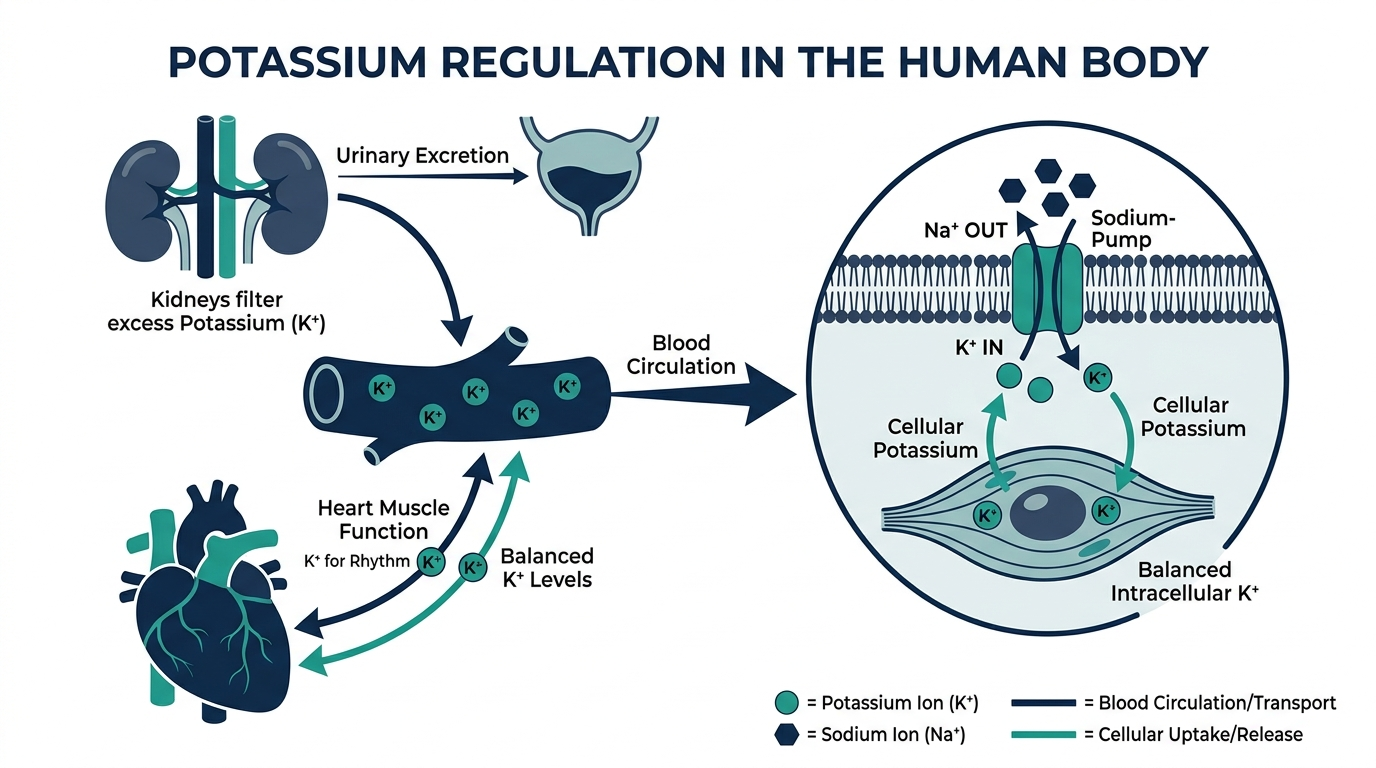
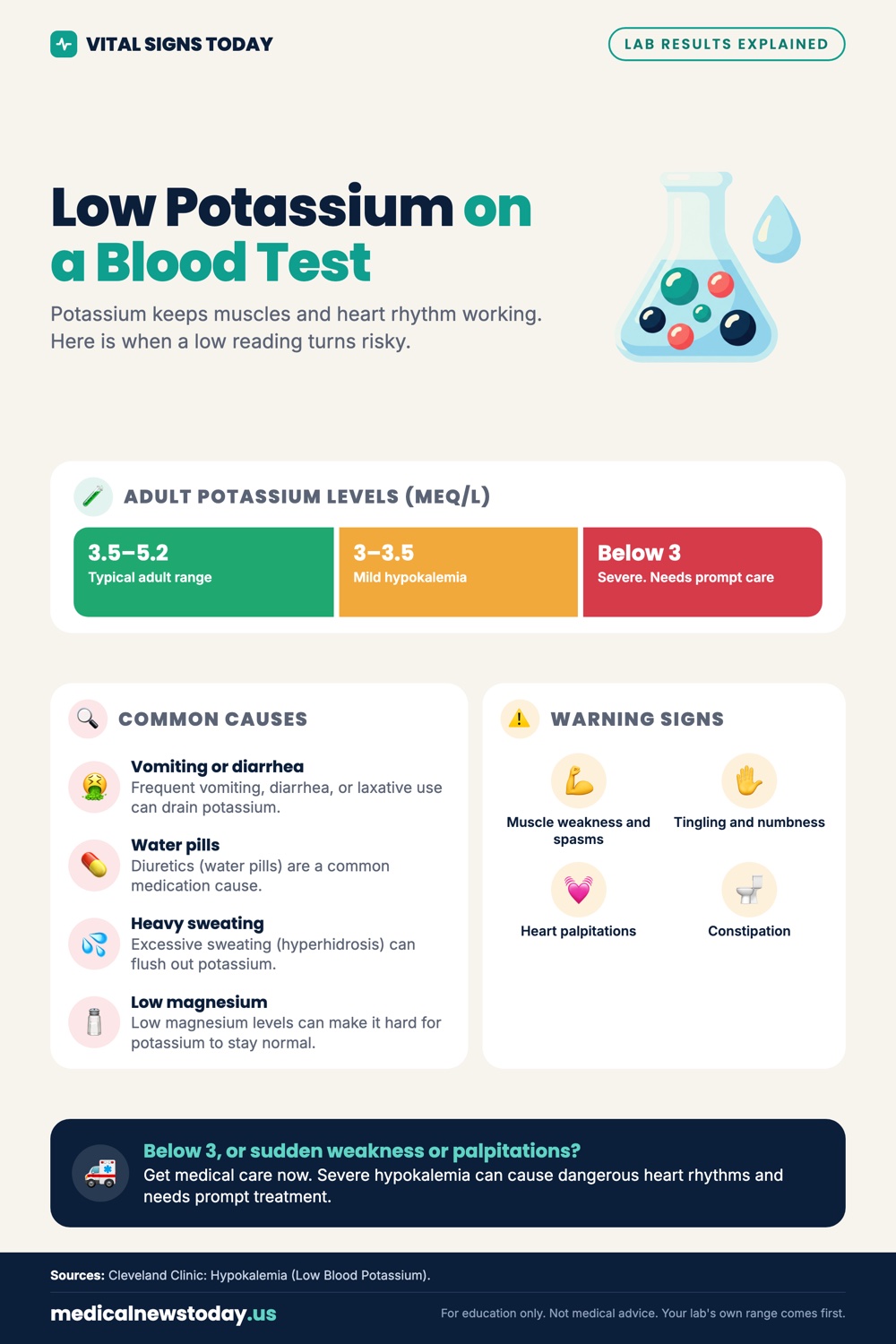
A low potassium result means there is not enough potassium circulating in your blood, a condition doctors call hypokalemia. Potassium is an electrolyte, a charged mineral your nerves, muscles, and especially your heart depend on to work properly (MedlinePlus). The normal range runs roughly 3.5 to 5.2 millimoles per liter (mmol/L), and you are diagnosed with hypokalemia when your serum potassium drops below 3.5 mmol/L (Cleveland Clinic).
Here is the practical way clinicians grade it. A result of 3.0 to 3.4 mmol/L is mild hypokalemia. Below 3.0 mmol/L is severe, and the closer you get to 2.5 and under, the more urgent the situation becomes (MedlinePlus). So the first thing to do with a low potassium flag is not to read the symptom list, it is to find the actual number and see which band it falls into.
To answer the related question directly: the blood test that shows low potassium is usually a basic metabolic panel (BMP) or comprehensive metabolic panel (CMP), the routine electrolyte and kidney panels most people get at a checkup. Potassium is a standard line on both, which is why hypokalemia is so often found by accident rather than because anyone went looking for it (MedlinePlus).

What causes a low potassium?
Almost all hypokalemia comes down to one of three things: you are losing potassium, you are not taking enough in, or potassium is shifting out of your blood and into your cells. Loss is by far the most common, and here is the real differential, most frequent first (Cleveland Clinic):
- Gut losses. Vomiting, diarrhea, and laxative overuse flush potassium out fast. A bad stomach bug lasting more than a day or two is a classic trigger.
- Diuretics. Water pills like furosemide and hydrochlorothiazide make your kidneys dump potassium along with fluid. This is one of the single most common drug causes seen in clinic (MedlinePlus).
- Other medications. Insulin, certain antibiotics, corticosteroids, and high-dose albuterol-type inhalers can lower potassium (Cleveland Clinic).
- Low magnesium. Hypomagnesemia quietly drives the kidneys to waste potassium, and it is one of the most overlooked causes (more on this below).
- Eating disorders and alcohol use disorder, both of which combine poor intake with fluid and electrolyte loss (MedlinePlus).
- Adrenal and genetic conditions, such as primary aldosteronism, which is less common but important because it is treatable and frequently missed.
Dietary shortfall alone is a surprisingly rare cause in otherwise healthy people, because the kidneys are good at hanging on to potassium when intake drops. When potassium is genuinely low, something is usually actively pushing it down, and finding that something is the whole point of the workup.
What are the symptoms of a low potassium?
Mild hypokalemia is often silent. Many people feel completely normal and only learn about it from a routine panel, which is exactly why the lab number matters more than how you feel (Cleveland Clinic).
When symptoms do show up, they tend to track how low and how fast potassium fell. The common ones include muscle weakness, cramps, twitches, fatigue, constipation, heart palpitations, and tingling or numbness (MedlinePlus). As levels drop further, the picture gets more serious: pronounced muscle weakness that can progress toward paralysis, low blood pressure, excessive urination and thirst, and abnormal heart rhythms (Cleveland Clinic).
The pattern to notice is that potassium symptoms are mostly muscle and heart symptoms, because those tissues rely on potassium to contract and relax on rhythm. When the supply runs low, the wiring gets glitchy.

When is a low potassium dangerous or a medical emergency?
This is the section that matters most, so read the number first. The danger of hypokalemia is overwhelmingly about the heart. Very low potassium can trigger dangerous arrhythmias, and a severely low level can cause the heart to stop (MedlinePlus).
As a rough guide to urgency:
- 3.0 to 3.4 mmol/L (mild): usually not an emergency, often managed with oral replacement and finding the cause.
- Below 3.0 mmol/L (severe): the zone where clinicians get serious, often checking an ECG and considering more aggressive replacement (MedlinePlus).
- Below about 2.5 mmol/L, or any level with symptoms, such as fainting, palpitations, severe weakness, or chest discomfort, is a call-now situation.
Two things raise the stakes regardless of the exact number. The first is taking digoxin, a heart medication, because low potassium dramatically increases its toxicity. The second is having an existing heart condition, where even modest hypokalemia can tip you into an arrhythmia. If you are on either of these and your potassium is flagged low, do not wait, contact your clinician promptly.
Red flags that warrant urgent care: a fast, fluttering, or irregular heartbeat, fainting or near-fainting, muscle weakness severe enough to affect breathing or walking, and ongoing vomiting or diarrhea that has lasted beyond a day or two (Cleveland Clinic).
What should you do about a low potassium?
Treatment splits cleanly by severity. Mild hypokalemia is typically corrected with oral potassium supplements and by addressing whatever is causing the loss, while severe or symptomatic cases may need intravenous potassium given under monitoring in a medical setting (Cleveland Clinic). Do not start high-dose potassium supplements on your own, because pushing potassium too hard or too fast carries its own cardiac risk.
The smarter move is to fix the source, not just the number. Practical next steps your clinician may take:
- Repeat or confirm the test, especially if the result is borderline or surprising in a person with no symptoms.
- Check magnesium. Low magnesium makes potassium nearly impossible to correct until the magnesium is fixed first (PubMed).
- Review medications, particularly diuretics, where switching to a potassium-sparing option or adding supplementation may be the answer (Cleveland Clinic).
- Look for hidden losses, such as undisclosed laxative or diuretic use, or an undiagnosed adrenal disorder if the cause is not obvious.
On the dietary side, potassium-rich foods like bananas, potatoes, beans, leafy greens, and citrus help maintain levels, but food alone rarely corrects a true deficiency quickly. Diet is for prevention and maintenance, not for rescuing a genuinely low result.

When should you see a doctor?
If your panel flags low potassium, you should always discuss it with the clinician who ordered it, even when you feel fine, because the number deserves an explanation. Book a prompt appointment for any mild result so the cause can be identified and tracked.
Seek care urgently, the same day or via emergency services, if your potassium is severely low or you have symptoms like an irregular or racing heartbeat, fainting, marked muscle weakness, or you take digoxin or have a known heart rhythm problem (MedlinePlus). When in doubt about heart symptoms, treat it as an emergency rather than waiting it out.
The part most people never hear: the false low and the magnesium trap
Here are two clinical nuances that rarely make it into the patient handout but quietly explain a lot of confusing results.
First, the false reading. How your blood is drawn can move the potassium number. Repeatedly clenching and unclenching your fist during the draw, a habit some people fall into to make a vein pop, can release potassium from muscle and push your result the wrong way (MedlinePlus). In the lab, the opposite artifact exists too: when blood sits too long before processing, especially in people with very high white cell counts, cells can soak potassium out of the serum and produce a spuriously low value (NCBI Bookshelf). The lesson is that one odd potassium result, particularly in someone with no symptoms, sometimes deserves a clean repeat before anyone treats it.
Second, the magnesium trap, and this is the one that frustrates patients and clinicians alike. If your magnesium is also low, your potassium will keep falling no matter how much potassium you take, because magnesium depletion makes the kidneys waste potassium relentlessly. Refractory hypokalemia, potassium that simply will not come up, is a textbook signal to check and replace magnesium first (PubMed). In some patients, years of struggling with stubborn low potassium have been resolved once the underlying magnesium deficiency was finally corrected (PMC). If you have been chasing your potassium for months without success, the missing piece may be a mineral nobody measured.
Want to check your potassium?
Three ways to get it measured. Pick whichever fits you.
Affiliate links: we may earn a commission at no extra cost to you. A lab test does not replace a visit with your clinician.
The markers read alongside potassium
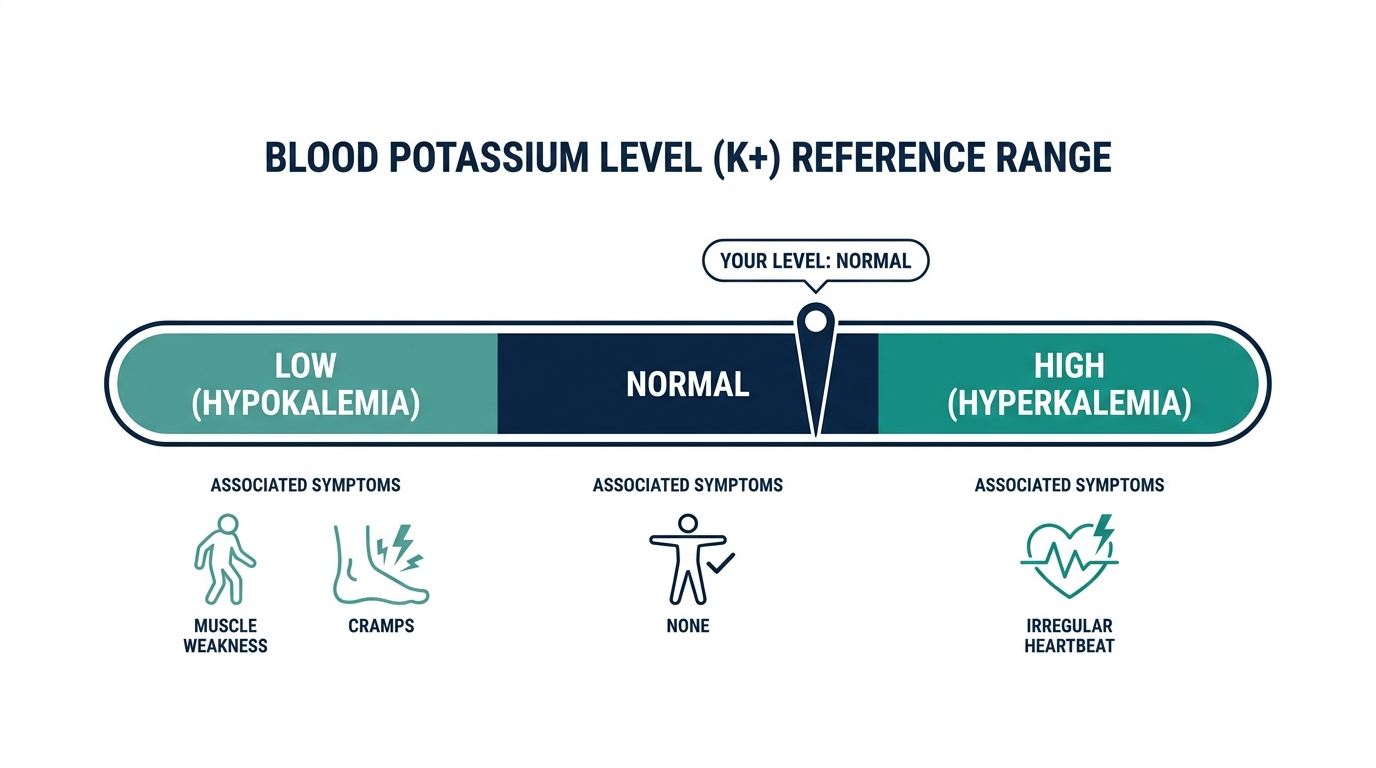
Potassium is never interpreted in isolation. It sits inside the electrolyte cluster on your metabolic panel, and the values around it help your clinician find the cause of a low reading far faster than the potassium number alone.
- Magnesium. As covered above, low magnesium drives ongoing potassium loss, so it is the first companion value to check when potassium will not correct. The two minerals are treated almost as a pair.
- Sodium and chloride. The pattern of the other electrolytes helps distinguish gut losses from kidney losses. Vomiting, for example, tends to produce a recognizable combination of low potassium, low chloride, and a raised bicarbonate.
- Bicarbonate (CO2). Acid-base status and potassium move together. Metabolic alkalosis, where bicarbonate is high, frequently accompanies hypokalemia, which is why a low potassium with a high CO2 points toward a specific set of causes such as vomiting or diuretic use.
- Kidney markers (BUN and creatinine). Because the kidneys regulate potassium, their function is part of the picture whenever potassium is abnormal.
The practical reading habit is to look at the whole electrolyte block together. A low potassium with a low chloride and a high bicarbonate tells a different story than a low potassium with a normal acid-base picture, and that difference guides where your clinician looks next.
Why potassium and your heart’s electrical system are linked
The reason a low potassium can be dangerous comes down to electricity. Potassium is central to the electrical signal that makes your heart muscle contract and then reset between beats. When potassium falls, that reset becomes unstable, which is why the heart is the organ clinicians worry about most in hypokalemia.
This is why an electrocardiogram (ECG) is often part of evaluating a significantly low potassium. Hypokalemia produces recognizable changes on the ECG tracing, and those changes can appear as the level drops, signaling that the heart’s rhythm is becoming vulnerable. It is also why two situations raise the stakes so sharply:
- Taking digoxin, a heart medication whose toxicity rises steeply when potassium is low, making an otherwise moderate hypokalemia genuinely risky.
- An existing heart rhythm problem or heart disease, where the heart is already primed for irregular beats and even modest hypokalemia can tip it over.
The takeaway for reading your own result is that the same potassium number carries different urgency depending on your heart history and medications. A 3.2 in a healthy person with no symptoms is a routine follow-up, while a 3.2 in someone on digoxin with palpitations is a prompt-care situation. Context, not just the number, sets the priority.
Worked examples: reading a low potassium in context
Seeing how the number behaves inside real patterns makes it far less confusing. These show the reasoning, not a self-diagnosis.
- Potassium 3.3, recent two-day stomach bug with vomiting, otherwise well: a classic gut-loss picture, usually mild, often corrected with the illness resolving plus oral replacement.
- Potassium 3.1, on a thiazide or loop diuretic: one of the most common scenarios in clinic, where the fix is often adjusting the medication or adding potassium, not just supplementing blindly.
- Potassium stubbornly low despite supplements, magnesium never checked: the textbook magnesium trap, where the potassium will not rise until magnesium is replaced.
- Potassium 3.4 in a symptom-free person, surprising given no risk factors: a candidate for a clean repeat draw, since fist-clenching during collection or delayed processing can produce a spurious value.
- Persistent low potassium with high blood pressure and no obvious cause: the pattern that prompts a look for an adrenal condition such as primary aldosteronism, which is treatable and often missed.
Across all of these, the constant is that the potassium value earns its meaning from the surrounding context: your medications, your recent illnesses, your other electrolytes, and your symptoms.
Preventing recurrent low potassium
Once the immediate cause is addressed, the goal shifts to keeping it from happening again, and much of that is practical.
- Address the source, not just the level. If a diuretic is the driver, your clinician may switch to a potassium-sparing option or pair it with supplementation. If recurrent vomiting or diarrhea is the pattern, treating that condition is what prevents the next dip.
- Eat potassium-rich foods for maintenance. Bananas, potatoes with skin, beans and lentils, leafy greens, avocado, tomatoes, and citrus all contribute. Diet is excellent for prevention, even though it rarely rescues a genuinely low result quickly.
- Do not fix low potassium with salt substitutes on your own. Many salt substitutes are potassium chloride, and using them without guidance, especially alongside certain medications or kidney problems, can swing you too far the other way.
- Keep magnesium in mind. If low magnesium was part of the story, maintaining it helps keep potassium stable.
- Take supplements exactly as prescribed. Potassium supplements are effective but have a narrow safety margin, so the dose and timing matter and are not something to improvise.
The through line is that prevention targets the cause. Chasing the number with food or pills while ignoring the underlying diuretic, gut loss, or magnesium deficiency is how people end up cycling through the same low result.
Who is most at risk and how it is monitored
Some people are far more likely to develop low potassium and are watched more closely because of it.
- People on diuretics, the single most common outpatient cause, who often have periodic electrolyte checks.
- People with ongoing vomiting or diarrhea, including from chronic gut conditions.
- People with eating disorders or alcohol use disorder, who combine poor intake with fluid and electrolyte loss.
- People with certain adrenal or kidney conditions, where potassium regulation itself is disrupted.
- People on digoxin or with heart disease, for whom even mild hypokalemia carries added risk and warrants tighter monitoring.
For someone on a diuretic or with a known risk factor, potassium is typically rechecked at intervals so a downward drift is caught early. For a healthy person, the potassium that appears on routine metabolic panels is usually enough. As with any single marker, watching the trend across repeated tests, rather than reacting to one dot, is what tells you and your clinician whether the situation is stable or moving.
How low potassium is replaced and why the route matters
Treating a low potassium is not simply a matter of taking more potassium. How it is replaced depends on how low the level is, whether you have symptoms or ECG changes, and how quickly it needs to come up, because potassium has a narrow safe window at both ends.
- Mild, no symptoms: this is usually corrected with oral potassium and by addressing the cause, such as adjusting a diuretic or treating ongoing gut losses. Oral replacement is preferred when it is safe because it is gentler and harder to overshoot.
- Moderate to severe, or with symptoms: larger oral doses or intravenous potassium may be used, and IV potassium is always diluted and given slowly under monitoring, because a fast infusion can be dangerous to the heart.
- With ECG changes or muscle paralysis: this is treated as urgent, typically in a monitored setting with continuous heart tracing while potassium is brought up carefully.
Two details separate a good correction from a risky one. First, magnesium is checked and repleted alongside potassium, because a low magnesium makes the kidneys leak potassium and blocks the level from rising no matter how much you give. Second, kidney function shapes dosing, since impaired kidneys clear potassium slowly and raise the risk of overshooting into a dangerous high. This is why replacement, especially anything beyond mild oral dosing, is guided by repeat testing rather than a fixed dose. The number is nudged toward normal and then rechecked, so the correction lands in the safe middle rather than swinging past it.
Frequently asked questions
What potassium level is considered low?
A serum potassium below 3.5 mmol/L is hypokalemia. A result of 3.0 to 3.4 mmol/L is mild, while below 3.0 mmol/L is severe and needs closer attention (MedlinePlus). Always compare against the reference range printed on your own report.
What blood test shows low potassium?
Low potassium usually turns up on a basic metabolic panel (BMP) or comprehensive metabolic panel (CMP), the routine electrolyte and kidney panels, since potassium is a standard line on both (MedlinePlus).
Can low potassium be a mistake or false result?
Yes. Clenching your fist during the blood draw can skew potassium, and blood that sits too long before processing can read falsely low, especially with high white cell counts (NCBI Bookshelf). A surprising result in someone with no symptoms is often repeated to confirm.
Why won’t my potassium come up even with supplements?
Low magnesium is the usual reason. Magnesium depletion makes the kidneys waste potassium, so hypokalemia stays refractory until magnesium is replaced first (PubMed).
Is low potassium an emergency?
It can be. Very low potassium can cause dangerous heart rhythms and, at extreme levels, can stop the heart, so a severe result or any heart symptoms warrant urgent care (MedlinePlus). Mild results are usually managed without emergency treatment.
This article is for general educational purposes and is not medical advice. It cannot diagnose or treat you and does not replace your clinician. Always discuss your lab results and any health decisions with a qualified healthcare professional.
Vital Signs Today may earn a commission if you buy through links on this page. It does not affect our editorial assessments.