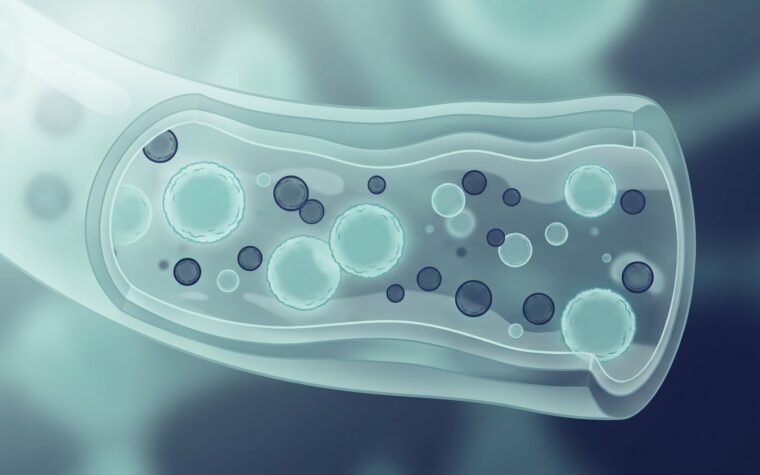
You opened your complete blood count, scanned the column of numbers, and there it was: HGB, with a little H next to it or a value that landed above the printed range. Hemoglobin, high. Most people feel a flicker of worry, search the three letters, and get a wall of jargon about red cell mass and oxygen transport. Here is what actually matters, and it is more reassuring and more interesting than the search results suggest.
A high hemoglobin is almost never a disease on its own. It is a signal, and the single most common reason for that signal is the least dramatic one on the list. Let me walk you through it the way a hematologist reads it.
Part of our Complete Blood Count guide.
What is high HGB in blood test, and what counts as high?
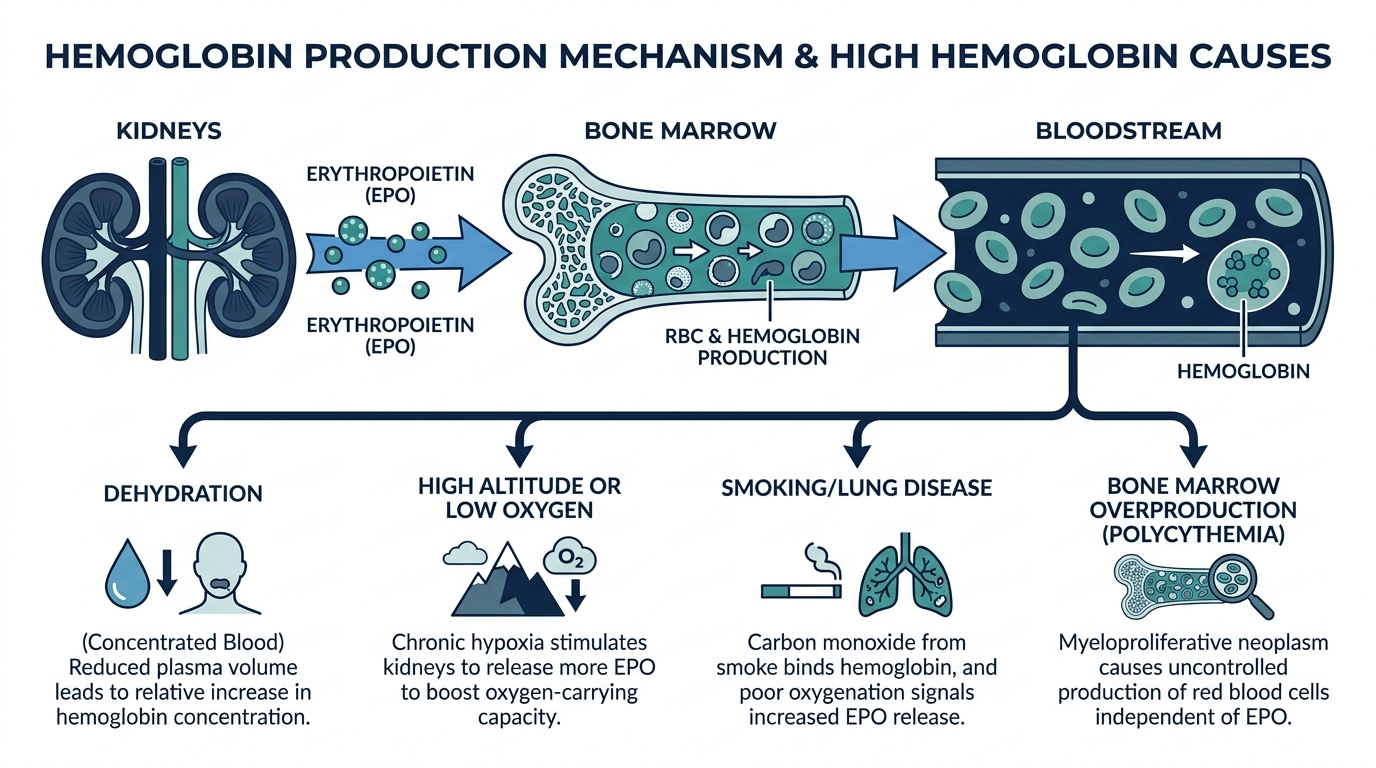
HGB stands for hemoglobin, the iron-rich protein inside your red blood cells that carries oxygen from your lungs to the rest of your body and ferries carbon dioxide back (MedlinePlus). When your blood test flags HGB as high, it means each deciliter of your blood is carrying more hemoglobin than expected, usually because you have more red blood cells than usual, or because your blood is more concentrated than usual.
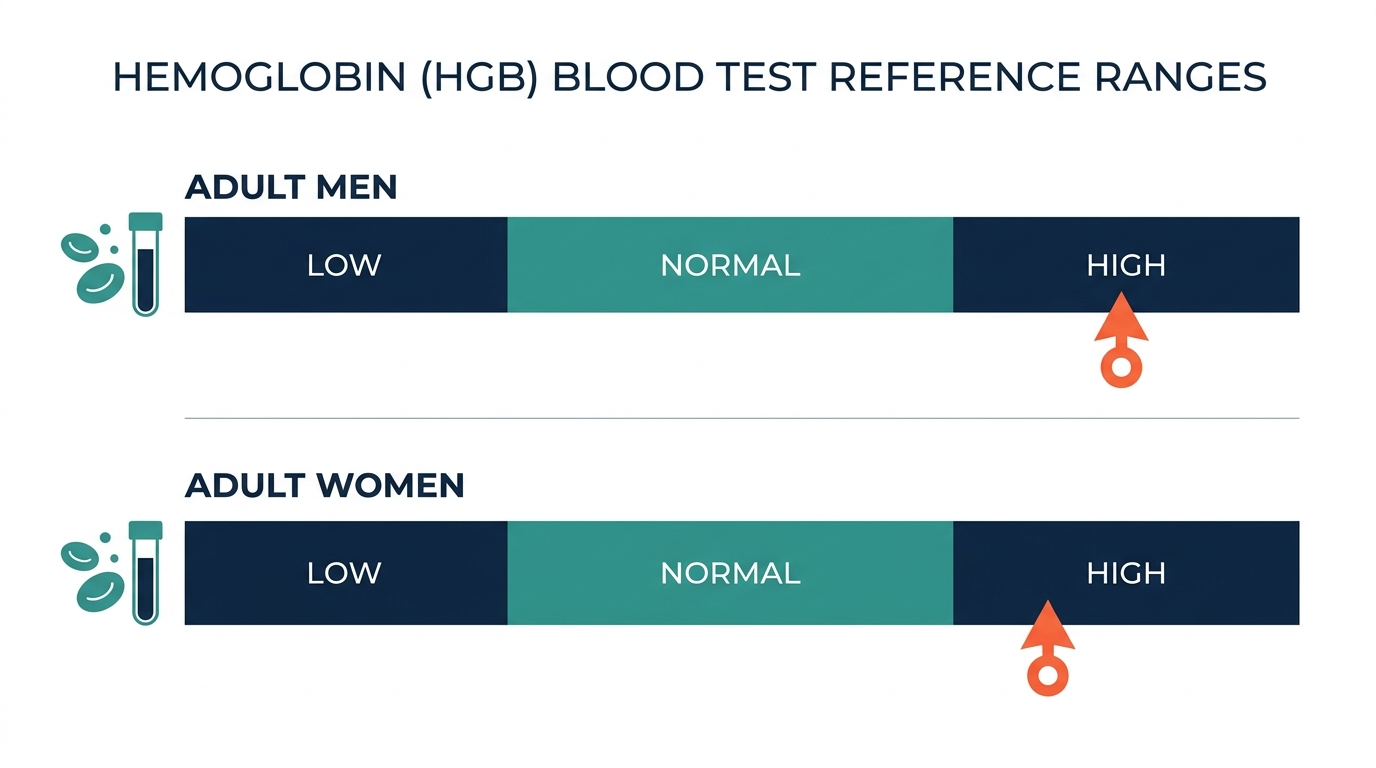
The thresholds are concrete. Hemoglobin is generally considered high above 16.5 grams per deciliter in an adult man and above 16 grams per deciliter in an adult woman (Cleveland Clinic). In children the cutoff is around 16.6 and in infants around 18. Always read your own result against the reference range printed on your report, because labs calibrate their instruments slightly differently.
The clinical name for a high hemoglobin or red cell count is erythrocytosis, often used interchangeably with polycythemia (StatPearls, NCBI). Those long words sound alarming. In practice they are just umbrella terms that tell your clinician to ask one question: why.
What causes a high HGB?
Here is the differential, most common and most benign first. The order matters, because the internet loves to jump straight to the rare blood cancer, and that is almost never where the answer lies.
- Dehydration. This is the quiet number-one cause and it is not even a true rise in red cells. When you are low on fluids, the liquid plasma part of your blood shrinks, so everything left behind, including hemoglobin, looks more concentrated. Clinicians call this relative or spurious polycythemia (StatPearls, NCBI). A morning blood draw after coffee and no water can nudge HGB up by itself.
- Smoking. Cigarette smoke loads your blood with carbon monoxide, which steals oxygen-carrying capacity. Your body compensates by making more red cells, pushing hemoglobin up (Cleveland Clinic).
- Living at high altitude. Thinner air means less oxygen, so your bone marrow ramps up red cell production to keep your tissues supplied (MedlinePlus).
- Chronic low oxygen from lung or heart conditions. COPD, emphysema, pulmonary fibrosis, and congenital heart disease all leave the blood chronically short on oxygen, and the marrow answers by building more red cells (Cleveland Clinic).
- Sleep apnea. Repeated pauses in breathing overnight drop your oxygen levels for hours, triggering the same compensatory rise (MedlinePlus).
- Drugs and hormones. Anabolic steroids and erythropoietin-stimulating agents, the EPO doping athletes are caught using, directly drive red cell production (Cleveland Clinic).
- Polycythemia vera and EPO-secreting tumors. The rare-but-serious end of the list. Polycythemia vera is a bone marrow disorder, a type of blood cancer, where the marrow makes too many red cells on its own, and roughly 95 percent of cases carry a JAK2 gene mutation (StatPearls, NCBI). Certain kidney and liver tumors can also pump out erythropoietin and raise hemoglobin (Cleveland Clinic).
The useful mental model your doctor uses: is this relative polycythemia, where plasma is just low (dehydration), or absolute polycythemia, where true red cell mass is up? And if it is absolute, is it primary (the marrow misbehaving, as in polycythemia vera, where EPO is low) or secondary (the marrow responding correctly to low oxygen or excess EPO) (StatPearls, NCBI). That one fork explains the entire workup that follows.
What are the symptoms of a high HGB?
Most people with a mildly high hemoglobin feel nothing at all. It is found by accident on routine blood work, which is exactly why it surprises people. When symptoms do appear, they come from thicker, more sluggish blood, and the list includes headaches, dizziness, fatigue, excessive sweating, easy bruising or bleeding, joint swelling, unexplained weight loss, and a yellowish tint to the skin or eyes (Cleveland Clinic).
Polycythemia vera has a few signature tells worth knowing. The classic one is itchy skin after a warm bath or shower, called aquagenic pruritus, along with a ruddy, flushed complexion, blurred vision, ringing in the ears, and burning or redness in the hands and feet (Cleveland Clinic). If your high hemoglobin comes packaged with the after-shower itch, mention it specifically. It is the kind of detail that points a clinician straight at the diagnosis.

When is a high HGB dangerous or a medical emergency?
The real danger of a high hemoglobin is not the number itself, it is what thick blood does. When red cell mass climbs, blood viscosity rises, flow slows, and the risk of clots goes up. That means stroke, heart attack, and deep vein thrombosis sit at the serious end of this picture (StatPearls, NCBI). Persistently high hemoglobin raises the risk of these clotting complications, which is what makes the workup worth doing.
On the hematocrit scale, which moves with hemoglobin, the World Health Organization treats above 49 percent in men and above 48 percent in women as a level that raises suspicion for polycythemia vera (StatPearls, NCBI). In polycythemia vera, the treatment target is to keep hematocrit below 45 percent precisely because crossing it sharply increases clot risk (Cleveland Clinic).
Treat these as call-now-or-go-in signs rather than wait-for-your-next-appointment signs: sudden chest pain or shortness of breath, weakness or numbness on one side of the body, trouble speaking, a sudden severe headache, vision loss, or a hot, swollen, painful leg. Those are the symptoms of a clot, and a high hemoglobin is a setup for exactly that.
What should you do about a high HGB?
First, do not panic and do not self-diagnose polycythemia vera from a single value. The first move is almost always to repeat the test, ideally well hydrated, because a one-off mildly high reading is so often just concentration from dehydration (StatPearls, NCBI).
If the elevation is real and persistent, your clinician works the fork described above. Expect questions about smoking, sleep, altitude, and medications, and a look at the rest of your CBC. The two tests that crack most cases open are an erythropoietin level and JAK2 mutation testing. A low EPO with a JAK2 mutation points to polycythemia vera, while a high EPO points to a secondary cause like low oxygen or a tumor (Cleveland Clinic).
On the lifestyle side, the levers that match the common causes are the obvious ones: stay well hydrated, stop smoking, and get evaluated for sleep apnea if you snore heavily or wake unrefreshed. When treatment is genuinely needed, the workhorse is phlebotomy, where a provider draws off a unit of blood to remove the excess red cells and thin things out (Cleveland Clinic). In polycythemia vera, that is often paired with low-dose aspirin to cut clot risk and sometimes hydroxyurea to slow red cell production (Cleveland Clinic).

When should you see a doctor?
See a healthcare provider if your blood test shows a high hemoglobin, even if you feel fine, so the cause can be sorted out (Cleveland Clinic). It is not an emergency by itself, but it is not a number to scroll past either. Bring context: your hydration that morning, whether you smoke, recent travel to altitude, snoring or witnessed breathing pauses at night, and any supplements or hormones you take. Those details often shorten the path to an answer.
Seek care urgently, not at your leisure, if a high hemoglobin comes with the after-shower itch, persistent headaches and dizziness, or any of the clot warning signs in the section above.
The insider angle: the trap of the falsely high HGB
Here is the nuance that gets missed constantly, even by careful patients. A large share of high hemoglobin results are not high at all. They are concentrated. This is relative polycythemia, and it is driven by a shrunken plasma volume rather than any real increase in red cells (StatPearls, NCBI).
The everyday version is dehydration, but there is a named pattern worth knowing called Gaisböck syndrome, a stress-related hemoconcentration often seen in middle-aged people who smoke and have higher blood pressure (StatPearls, NCBI). The hemoglobin reads high, the red cell mass is actually normal, and the fix is not phlebotomy, it is addressing fluids, smoking, and blood pressure.
This is why a single elevated HGB drawn after a diuretic, a hard workout, a salty restaurant meal, or a long travel day deserves a calm repeat rather than an immediate hunt for blood cancer. The smartest first response to a lone high hemoglobin is a glass of water and a second test. If it normalizes, the mystery is solved. If it stays up, then you do the proper workup. Sequencing it that way spares a lot of people a lot of needless fear.
Which CBC markers to read alongside a high HGB
Hemoglobin never stands alone on a complete blood count. It sits in a tight family of red-cell measurements, and reading them together is how a clinician tells a concentrated sample from a genuine rise in red cell mass. These are the neighbors worth checking.
- Hematocrit. This is the percentage of your blood made up of red cells, and it tracks hemoglobin closely. When both are high in proportion to each other, the story is consistent. Hematocrit is also the number used in the specific thresholds that raise suspicion for polycythemia vera.
- Red blood cell count. A high RBC count alongside high hemoglobin supports a true increase in red cells rather than mere concentration. If the RBC count is normal but hemoglobin looks high, dehydration becomes more likely.
- Red cell indices, especially MCV. The mean corpuscular volume describes the size of your red cells. A high red cell count with unusually small cells can hint at a specific inherited pattern, while normal-sized cells fit the more common secondary causes.
- White cells and platelets. This is a key fork. When hemoglobin is high and the white cell and platelet counts are also elevated, all three lines rising together raises concern for polycythemia vera, because that marrow disorder tends to overproduce more than one cell type. High hemoglobin with normal white cells and platelets fits a secondary or relative cause better.
- Erythropoietin and JAK2. These are the two add-on tests that crack most true cases. A low erythropoietin with a JAK2 mutation points toward polycythemia vera, while a high erythropoietin points toward a secondary cause such as low oxygen or an EPO-producing tumor.
Read as a set, these markers answer the central question behind a high hemoglobin, which is whether your blood is simply concentrated, your marrow is responding correctly to low oxygen, or your marrow is overproducing on its own.
How to prepare for the test and what can skew your HGB
Hemoglobin is measured from a routine complete blood count and needs no fasting, but several ordinary factors can shift the value enough to change how a borderline result reads.
- Hydration. This is the biggest swing factor by far. A draw taken when you are dehydrated, after coffee with no water, or following a diuretic can concentrate the blood and inflate hemoglobin. Being well hydrated the day before gives a truer number.
- Time of day and recent meals. A salty restaurant meal or a long travel day can transiently concentrate the blood. Morning draws after an overnight fast without fluids tend to read slightly higher.
- Smoking. Recent smoking raises carbon monoxide levels and the compensatory red cell response, so a heavy smoker will run a higher baseline hemoglobin than a nonsmoker.
- Altitude and recent travel. Spending time at high elevation, even a ski trip, can lift hemoglobin for a while as the body adapts, and it takes time to normalize after returning to sea level.
- Body position and tourniquet time. Prolonged tourniquet application during the draw can slightly concentrate the sample, a small technical factor that can nudge a borderline result.
Because so many everyday conditions concentrate the blood, the cleanest interpretation of a lone high hemoglobin comes from a well-hydrated repeat draw rather than the first surprising value.
Reading your own HGB: worked scenarios
The same high hemoglobin can mean very different things depending on context. These illustrative patterns show how a clinician moves from a flagged number toward a likely explanation. They are not a diagnosis, and your provider always reads your full panel and history.
- HGB just above the cutoff, drawn after a morning of coffee and no water. This is the classic concentrated sample. A well-hydrated repeat that lands back in range solves it, and no further workup is usually needed.
- HGB high in a long-term smoker with normal white cells and platelets. A secondary rise driven by carbon monoxide fits here, and the lever is smoking cessation rather than a hunt for blood cancer.
- HGB high, heavy snoring, daytime fatigue, waking unrefreshed. This pattern points toward sleep apnea driving nighttime low oxygen, and a sleep evaluation becomes the logical next step.
- HGB high alongside high white cells and platelets, plus itching after a warm shower. All three cell lines up together with the signature after-shower itch is the combination that prompts erythropoietin and JAK2 testing for polycythemia vera.
The unifying lesson is that hemoglobin gains its meaning from the company it keeps. The value opens the question, and the surrounding markers and symptoms decide the answer.
Common misconceptions about a high HGB
A few myths make a high hemoglobin more alarming than it usually deserves. Clearing them up changes how you react to the flag on your report.
- “High hemoglobin means blood cancer.” This is the fear that drives late-night searches, and it is backwards for most results. The common causes are dehydration, smoking, altitude, and low oxygen from lung or sleep conditions. Polycythemia vera is real but uncommon, and it usually disturbs more than one cell line.
- “A high result means I need my blood drawn off right away.” Phlebotomy is a treatment for a confirmed, persistent true elevation, not a first response to a single high value. Many elevations resolve once dehydration or smoking is addressed.
- “Higher hemoglobin means better oxygen delivery, so it is good.” Beyond the normal range, more hemoglobin thickens the blood and slows flow, which raises clot risk rather than improving health. This is not a case where more is better.
- “One reading is enough to know.” A single value drawn on a dehydrated, post-exercise, or recently traveled morning is a weak data point. A well-prepared repeat is what separates a concentrated blip from a genuine, persistent rise.
Framed correctly, a high hemoglobin is a prompt to ask why, not a verdict to fear. The smartest first step for most people is a glass of water and a second test, with the deeper workup reserved for the results that stay high.
Frequently asked questions
What does a high HGB mean in a blood test?
It means your blood is carrying more hemoglobin than expected, generally above 16.5 grams per deciliter in men or 16 in women, usually from more red blood cells or more concentrated blood (Cleveland Clinic). It is a signal to find the cause, not a diagnosis by itself.
What is the most common cause of high HGB?
Dehydration is the most common and most benign cause, because low fluid concentrates the blood and makes hemoglobin look high without any true rise in red cells (StatPearls, NCBI). Smoking, high altitude, and chronic low oxygen from lung or heart conditions are next.
Is a high HGB dangerous?
It can be, because thicker blood raises the risk of clots, including stroke, heart attack, and deep vein thrombosis (StatPearls, NCBI). The number itself is not an emergency, but clot symptoms like chest pain, one-sided weakness, or a swollen leg are.
Can dehydration cause a falsely high HGB?
Yes. Dehydration shrinks the plasma volume so the remaining blood is concentrated, producing relative polycythemia where hemoglobin reads high but red cell mass is normal (StatPearls, NCBI). A repeat test while well hydrated often clears it up.
How is a high HGB treated?
It depends on the cause. Mild elevations from dehydration or smoking are addressed by fixing those, while a persistent true elevation may be treated with phlebotomy to remove excess red cells, and polycythemia vera adds low-dose aspirin and sometimes hydroxyurea (Cleveland Clinic).
This article is for general educational purposes and is not medical advice. It cannot diagnose or treat you and does not replace your clinician. Always discuss your lab results and any health decisions with a qualified healthcare professional.
Vital Signs Today may earn a commission if you buy through links on this page. It does not affect our editorial assessments.