Disclosure: Vital Signs Today may earn a commission if you buy through links on this page, at no extra cost to you. This does not influence our evidence-based assessments. We are not a medical provider; talk to a clinician before acting on test results.
Related: See the creatinine reference chart by age and sex
You opened your blood work expecting to worry about a number being too high, and instead you found one sitting below the reference range: creatinine. Most of the internet, and frankly most patient leaflets, are written for the opposite problem. High creatinine gets all the attention because it can signal kidney trouble. A low creatinine confuses people precisely because nobody warned them it could happen.
Here is the short version before we go deep. A low creatinine is usually not a kidney problem at all. In most people it is a story about muscle, not kidneys. Understanding that one distinction changes how you should read your result.
Part of our Comprehensive Metabolic Panel guide.
What is low creatinine in blood test results?
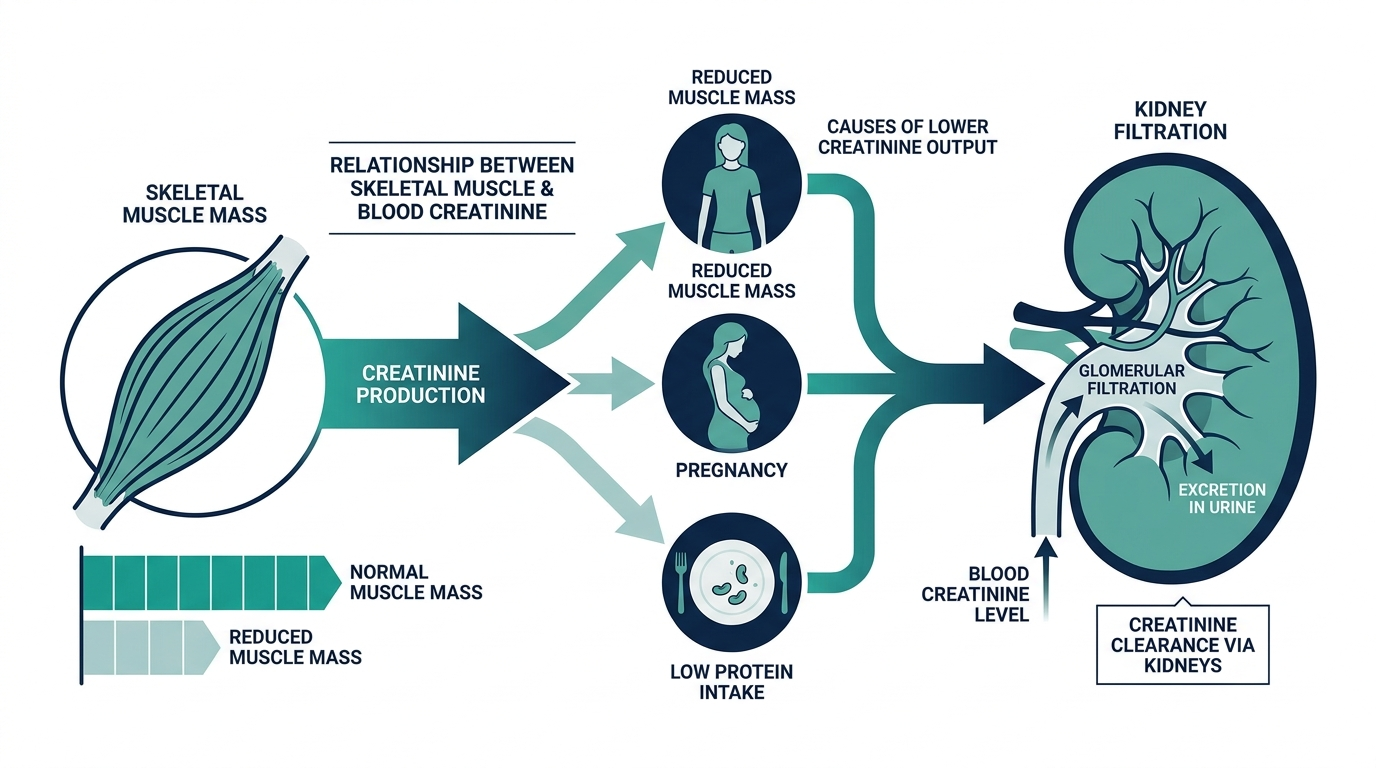
Creatinine is a waste product your body makes when muscle tissue breaks down during normal use. Your kidneys filter it out of your blood and send it into your urine, which is why it is used to check kidney function (MedlinePlus). The key fact almost everyone misses: the more muscle you carry, the more creatinine you generate. So your creatinine level is really a product of two things at once, how much muscle is producing it and how well your kidneys are clearing it.
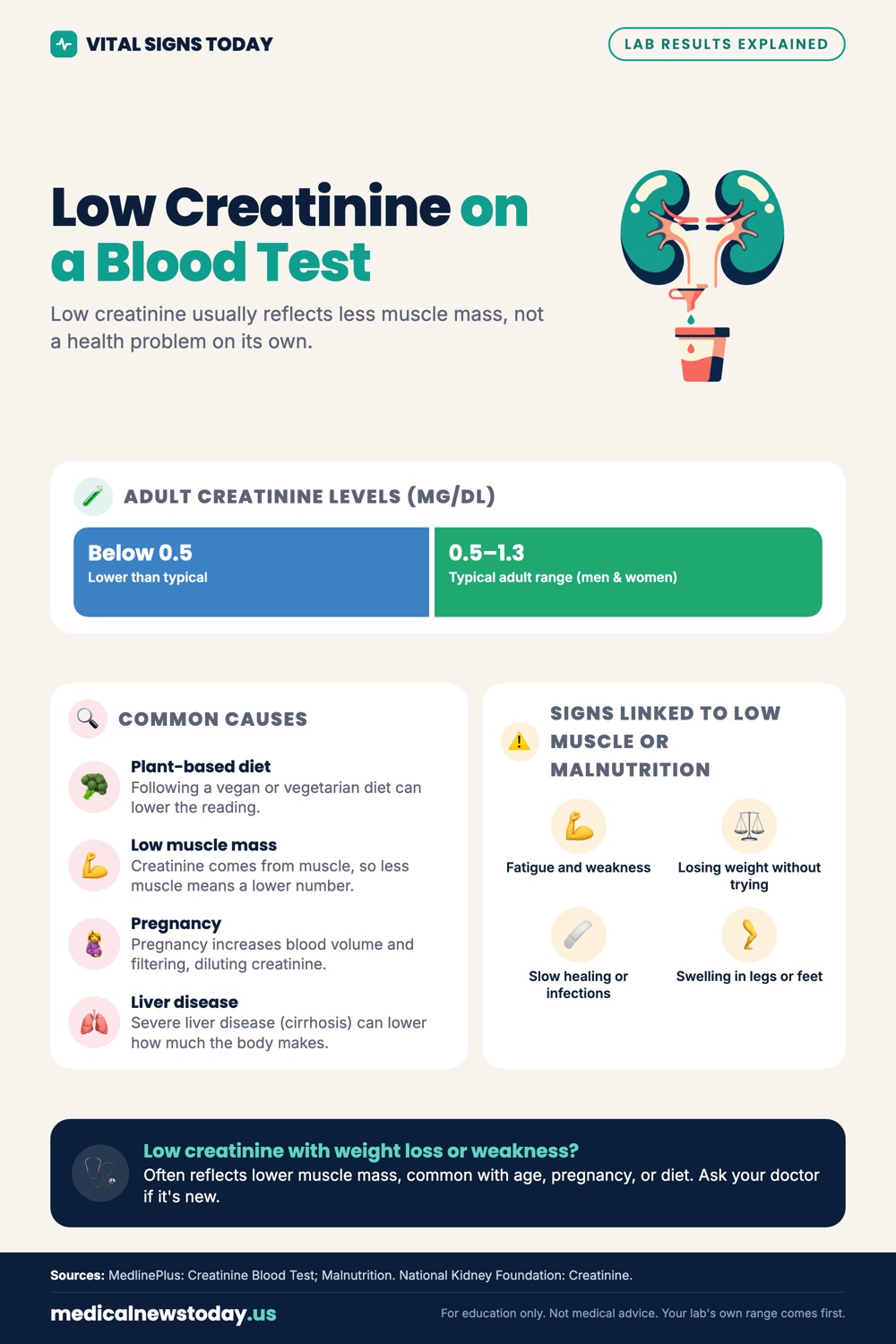
A typical adult range runs roughly 0.7 to 1.3 mg/dL for men and 0.5 to 0.95 mg/dL for women, with women normally lower because they tend to carry less muscle mass (MedlinePlus). A result that falls under the bottom of your lab’s printed range counts as low. There is no single universal cutoff, because the number that is normal for you depends on your muscle, your diet, your age, and your activity level (MedlinePlus). Read your result against the reference range on your own report, not against someone else’s.
So when high creatinine usually means the kidneys are struggling to clear waste, low creatinine usually means there is less waste being made in the first place. That is the mental model to hold onto.

What does a low creatinine mean on a blood test?
A low creatinine most often means you are simply producing less of it, and the leading reason is lower muscle mass. The National Kidney Foundation lists the common things that pull creatinine down: low muscle mass, a vegetarian or vegan diet, pregnancy, a history of amputation, and liver disease (National Kidney Foundation). Notice that the first three are not diseases at all. They are normal life circumstances.
This is why a low creatinine is reassuring far more often than a high one. It is not a number that says your kidneys are failing. If anything, a low creatinine on its own tells you nothing bad about your filtration. The follow up question a good clinician asks is not “are your kidneys okay” but “why is your muscle, diet, or metabolism producing so little creatinine right now.”
What causes a low creatinine?
Here is the real differential, most common first.
- Low muscle mass. This is the headline cause. Older adults naturally lose muscle with age, and anyone who is deconditioned, bedbound, or recovering from a long illness will show a lower creatinine for the same reason (MedlinePlus).
- A low protein or plant based diet. Vegetarian and vegan eating patterns produce less creatinine because dietary meat is a meaningful contributor to the pool (National Kidney Foundation).
- Pregnancy. Blood volume expands and the kidneys filter faster during pregnancy, so creatinine commonly drops. This is expected, not alarming (National Kidney Foundation).
- Muscle and nerve conditions that shrink muscle. Conditions involving the muscles and nerves that lead to decreased muscle mass, such as muscular dystrophy, reduce creatinine production (MedlinePlus).
- Malnutrition. When the body is undernourished, muscle is broken down for fuel and over time there is less of it to make creatinine (MedlinePlus).
- Serious liver disease. The liver plays a role in producing creatine, the precursor to creatinine, so advanced liver disease can lower the level (MedlinePlus).
- Overhydration. Drinking very large volumes of fluid can dilute the blood and nudge creatinine down.
One honest caveat from the source material: truly low blood creatinine is not common, so when it shows up it is worth a moment of thought rather than a shrug (MedlinePlus).
What are the symptoms of a low creatinine?
A low creatinine itself produces no symptoms. There is no sensation, no pain, no warning sign attached to the number. It is a lab value, not a feeling. You will only ever know about it because it printed on a report.
What can carry symptoms is the underlying cause. If the low creatinine reflects significant muscle loss, you might notice weakness, a weaker grip, slower walking, or clothes fitting loosely over the arms and legs. If it reflects malnutrition, fatigue and unintended weight loss may be present. If it accompanies advanced liver disease, signs like jaundice, swelling, or easy bruising would come from the liver, not from the creatinine. The number is the messenger. Pay attention to what it is pointing at.

When is a low creatinine dangerous or a medical emergency?
A low creatinine is essentially never a medical emergency by itself. There is no red flag creatinine threshold below which the number alone becomes dangerous, the way a very high creatinine can flag acute kidney injury. The number going down is not the threat.
The danger, when there is one, lives in the cause. The situations that warrant prompt attention are not about the digits on the page but about what is happening in the body: rapid unexplained weight loss, progressive muscle weakness, signs of malnutrition, or the symptoms of advanced liver disease such as confusion, marked abdominal swelling, or yellowing of the skin and eyes. Those deserve a same week call to your clinician. A low creatinine in an otherwise well person, with a normal eGFR and an unremarkable rest of the panel, does not.
What should you do about a low creatinine?
Start by widening the lens. A single number out of context tells you very little. The most useful next steps are about interpretation, not panic.
- Look at your eGFR. Creatinine is mainly used to estimate kidney filtration, and the better measure of kidney health is the eGFR your lab calculates from creatinine, age, and sex (National Kidney Foundation). A low creatinine with a normal or high eGFR is the opposite of a kidney concern.
- Account for the obvious explanations. Are you pregnant, eating mostly plant based, older, or recovering from illness or surgery? Any of these readily explains a low result without further testing.
- Build or protect muscle if that is the issue. If low muscle mass is the driver, resistance training and adequate protein intake address the root, not just the lab value. This is worth a real conversation with your clinician or a dietitian.
- Repeat and trend. One reading is a snapshot. A repeat test, and comparison to past results, tells you whether this is your stable baseline or a genuine change.
In most cases, no treatment is needed for the creatinine itself. You treat the cause when there is one worth treating, and you leave a benign low number alone.
The insider angle: a low creatinine can be a quiet flag for frailty
Here is the nuance that rarely reaches the patient version. Because creatinine is a stand in for muscle mass, a persistently low creatinine in an older adult is not always the harmless footnote it looks like. Researchers have used low serum creatinine as a surrogate for low muscle mass, and they have found that it tracks with worse outcomes.
A sarcopenia index, calculated from serum creatinine divided by cystatin C, has been studied as a simple muscle marker. In hospitalized older patients, those in the lowest index group had a markedly higher three year death rate, 32.2 percent versus 15.3 percent in the highest group, and a higher index independently predicted lower all cause mortality (PMC, sarcopenia index and mortality in older patients). A separate large cohort drawn from the China Health and Retirement Longitudinal Study reached a similar conclusion in middle aged and older adults (PMC, sarcopenia index and mortality, CHARLS).
The honest caveat the researchers themselves raise is that it is not certain this index truly measures muscle loss rather than malnutrition or other background stress. But the practical takeaway is sound. In a frail or older person, do not file a low creatinine as automatically reassuring. It can be a quiet reminder that muscle is slipping, and muscle is one of the few things you can actively rebuild. That is exactly the kind of context a one line “everything normal” summary erases.

When should you see a doctor?
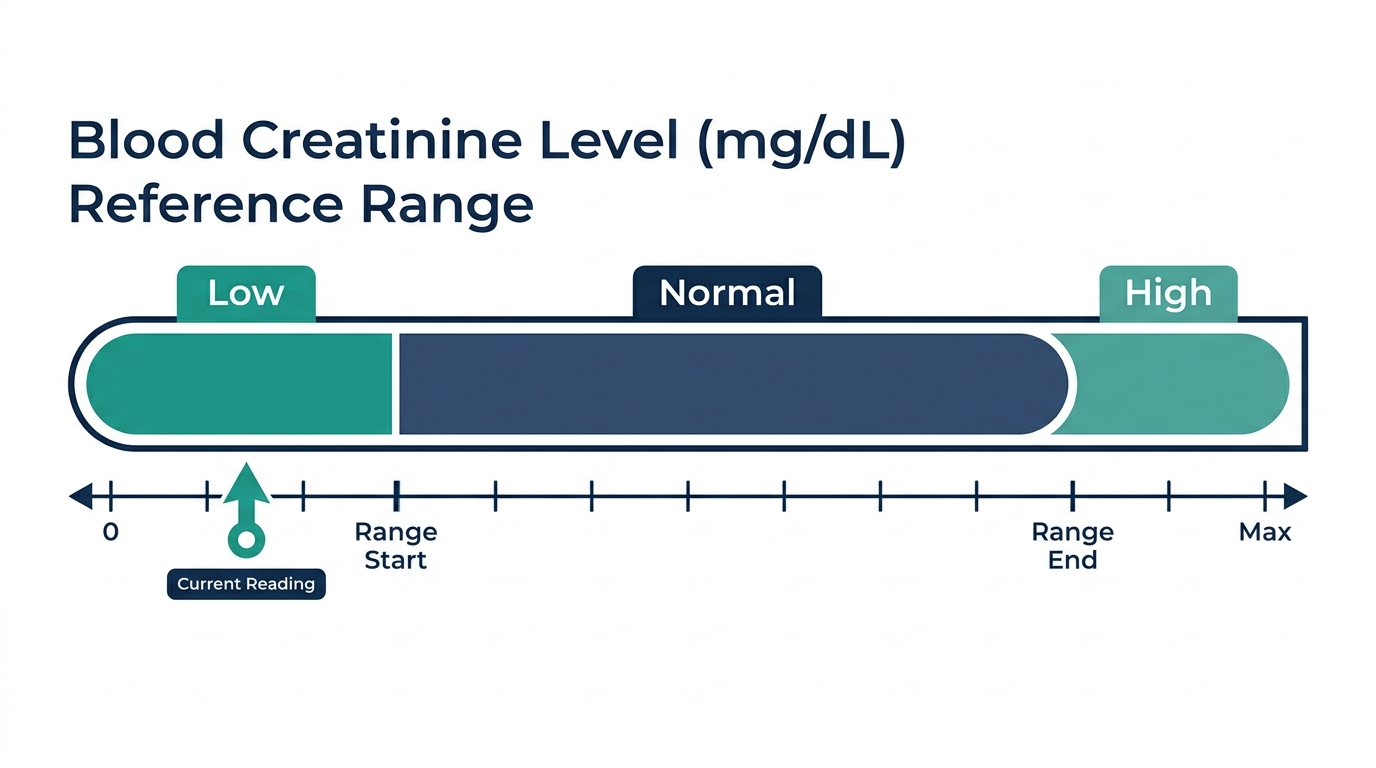
See your clinician if a low creatinine comes alongside unexplained weight loss, growing muscle weakness, fatigue you cannot account for, or any symptoms suggesting liver disease. See them too if you are an older adult and your creatinine has been trending down over time, because that pattern is worth a conversation about muscle and nutrition. And if you are simply puzzled by the number, that is reason enough to ask. Your clinician can read it against your eGFR and the rest of your panel in seconds and tell you whether it means anything at all.
The biochemistry: where creatinine actually comes from
To read a low creatinine well, it helps to know the pathway that generates it. Your liver and kidneys make a compound called creatine, which travels to muscle and is stored there, partly as phosphocreatine, a rapid energy reserve for short bursts of contraction. Each day a fairly fixed fraction of your total creatine pool, on the order of 1 to 2 percent, is converted spontaneously and irreversibly into creatinine. That creatinine has no further use, so it diffuses into the blood and is filtered out by the kidneys (StatPearls, Renal Function Tests).
Two features of this pathway explain almost everything about a low result. First, the daily amount of creatinine produced is roughly proportional to total muscle mass, because muscle is where the creatine is stored and converted. A person with more muscle runs a steady creatinine factory at a higher output. A person with less muscle runs it at a lower one. Second, the conversion happens at a nearly constant rate, so the level is stable from hour to hour, which is exactly why clinicians trust it as a filtration marker. When you see a low number, you are usually watching a smaller factory, not a broken kidney.
Diet feeds into this too. Cooked meat contains preformed creatine and creatinine, so a meal of meat can transiently raise the blood level, while a plant based pattern removes that input entirely. This is one reason a vegetarian eating well can still sit at the low end of the range while carrying perfectly healthy kidneys.
The companion numbers a low creatinine should be read with
Creatinine is never meant to be read alone. On a comprehensive metabolic panel it sits inside a small cluster of kidney measures, and each one corrects a blind spot in the others.
| Marker | What it adds | Typical adult reference |
|---|---|---|
| eGFR | Estimates actual filtration rate from creatinine, age and sex; the headline kidney number | 90 or above is generally normal |
| BUN (blood urea nitrogen) | Reflects protein metabolism and hydration; rises with dehydration and high protein intake | Roughly 7 to 20 mg/dL |
| BUN to creatinine ratio | Separates a low creatinine driven by low muscle or low protein from a filtration problem | Roughly 10 to 20 to 1 (StatPearls) |
| Cystatin C | A filtration marker made by all nucleated cells, largely independent of muscle mass and diet | About 0.6 to 1.1 mg/L (NIH PMC) |
Want to check your creatinine?
Three ways to get it measured. Pick whichever fits you.
Affiliate links: we may earn a commission at no extra cost to you. A lab test does not replace a visit with your clinician.
Cystatin C is the quiet hero when creatinine is confusing. Because it does not depend on muscle mass or meat intake, it can confirm whether a low creatinine truly reflects fast filtration or just a small muscle base. A low creatinine paired with a normal cystatin C strongly suggests the number is about muscle, not kidneys (NIH PMC, cystatin C).
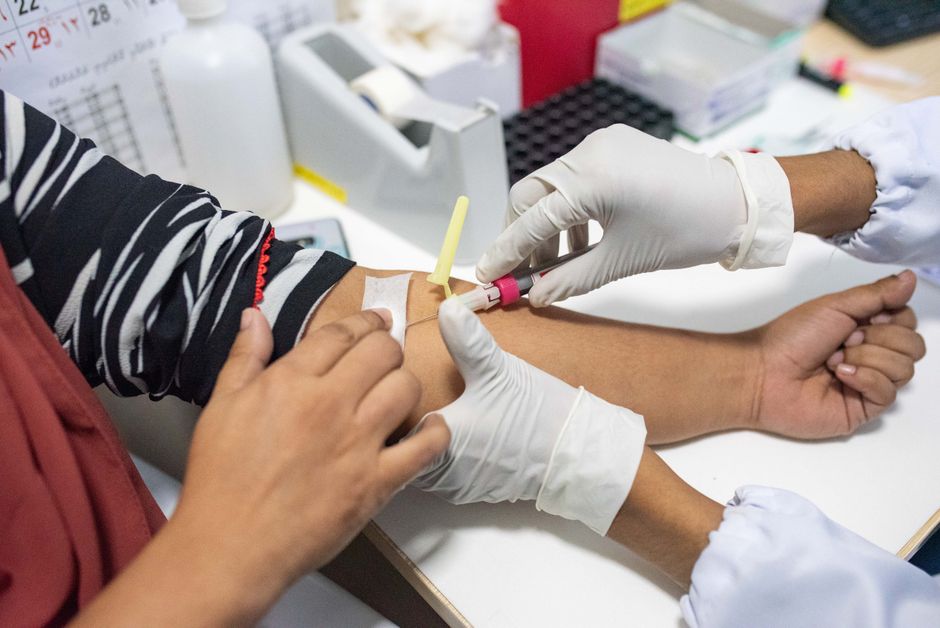
How to read your result: three common scenarios
Interpretation gets easier when you pattern match against the rest of the panel. Here are three combinations that show up often.
- Low creatinine, high or normal eGFR, normal everything else. This is the reassuring pattern. It usually means low production from lower muscle mass, a plant based diet, or normal pregnancy. No filtration concern, no treatment for the number itself.
- Low creatinine with a low BUN to creatinine ratio and a low albumin. This combination leans toward low protein intake or malnutrition, because both the creatinine and the protein markers are being pulled down together. The action here is nutrition, not nephrology.
- Low creatinine in an older adult with falling weight and grip strength. This is the pattern worth respecting. The number may be quietly flagging muscle loss, and the right move is a conversation about protein and resistance training, plus a look at whether the trend is new.
Notice that in none of these does the low creatinine, by itself, drive the decision. The rest of the panel and the person in front of it do.
Test preparation and what can skew the result
A creatinine measurement is generally reliable, but several everyday factors nudge it, and knowing them prevents needless worry over a one off reading.
- Recent meals. A large serving of cooked meat before the draw can transiently raise creatinine, which means a plant based day can leave it looking lower. Standard fasting for a metabolic panel smooths this out.
- Hydration. Heavy fluid intake dilutes the blood and can lower the reading, while dehydration concentrates it. This is a real effect on the number even when the kidneys are unchanged.
- Intense exercise. A hard workout in the day or two before testing can shift creatinine, so timing a draw away from a heavy training session gives a cleaner baseline.
- Supplements. Creatine supplements raise creatinine because they enlarge the precursor pool, so someone supplementing will not show a low result from that pathway.
- Lab method and calibration. Different assays and reference ranges vary, which is why comparing your value to the range on your own report matters more than an internet number.
The single best defense against being misled by any one of these is trending. One reading is a snapshot taken on one particular morning. A series of readings under similar conditions tells you what your real baseline is.
Common misconceptions about a low creatinine
Because most health writing is built around high creatinine, several myths cling to the low result.
- “Low creatinine means my kidneys are extra healthy.” Not exactly. Low creatinine reflects low production far more often than superb filtration. Kidney health is better judged by eGFR and, when needed, cystatin C, not by how low the creatinine is (National Kidney Foundation).
- “A low number needs to be fixed.” In most cases the number needs nothing. You address the cause only when there is a cause worth addressing, such as malnutrition or significant muscle loss.
- “It must be a lab error.” Sometimes a low value is just your stable baseline, especially if you are small, plant based, or older. A repeat test settles the question without assuming a mistake.
- “Creatinine and creatine are the same thing.” They are related but distinct. Creatine is the useful energy compound stored in muscle. Creatinine is its spent waste product. Supplementing the first raises the second.
Who should test, and how often to recheck
Creatinine is part of the standard comprehensive metabolic panel, so most adults will see it during routine care whether or not they went looking for it. It becomes worth watching more deliberately in a few situations: if you are an older adult tracking muscle and frailty, if you follow a plant based diet and want a personal baseline, if you are pregnant and your team is monitoring kidney adaptation, or if you take medications that are cleared by the kidneys and dosed against filtration.
For rechecking, the sensible cadence depends on why the number is low. A benign, well explained low creatinine in a healthy adult usually needs nothing more than the normal yearly panel. A low creatinine tied to a change you are actively working on, such as rebuilding muscle after illness or correcting undernutrition, is worth rechecking on a shorter loop, often every few months, so you can see the trend respond. The value of repeated measurement is not the single figure but the direction it moves as you change sleep, protein, and training.
Frequently asked questions
Is low creatinine dangerous?
On its own, no. A low creatinine usually means your body is making less of it, most often because of lower muscle mass, a plant based diet, or pregnancy, none of which are dangerous (National Kidney Foundation). It matters only when it points to an underlying issue like significant muscle loss, malnutrition, or liver disease.
What is a normal creatinine level?
A typical adult range is roughly 0.7 to 1.3 mg/dL for men and 0.5 to 0.95 mg/dL for women, with women usually lower because of less muscle mass (MedlinePlus). Always compare your result to the reference range printed on your own lab report.
Does low creatinine mean my kidneys are healthy?
Often it suggests your kidneys are not the problem, since low creatinine reflects low production rather than poor filtration. But creatinine alone is not the best measure of kidney health. The eGFR calculated from it gives a clearer picture (National Kidney Foundation).
Can low muscle mass cause low creatinine?
Yes, this is the most common cause. Creatinine is produced by muscle, so less muscle means less creatinine. Aging, deconditioning, and muscle or nerve disorders that cause wasting all lower the level (MedlinePlus).
Should I worry about low creatinine during pregnancy?
Generally no. Pregnancy expands blood volume and speeds up kidney filtration, so a lower creatinine is expected and normal during this time (National Kidney Foundation). Discuss any specific concerns with your prenatal care provider.
This article is for general educational purposes and is not medical advice. It cannot diagnose or treat you and does not replace your clinician. Always discuss your lab results and any health decisions with a qualified healthcare professional.
Vital Signs Today may earn a commission if you buy through links on this page. It does not affect our editorial assessments.