Disclosure: Vital Signs Today may earn a commission if you buy through links on this page, at no extra cost to you. This does not influence our evidence-based assessments. We are not a medical provider; talk to a clinician before acting on test results.
Related: How to bring BUN back into range
Your lab report comes back, and there it is: BUN, with a little H next to it, or a number that sits just above the printed range. Maybe your doctor said “your kidney number is a touch high” and left it at that. Now you are home, staring at three letters, wondering if your kidneys are failing.
Take a breath. A high BUN is one of the most over-interpreted results on a blood panel. It can absolutely signal a kidney problem, but far more often it is telling you something much more boring and fixable, like the fact that you were thirsty when they drew your blood. Here is how to read it the way a clinician actually does.
Part of our Comprehensive Metabolic Panel guide.
What does a high bun mean in a blood test?
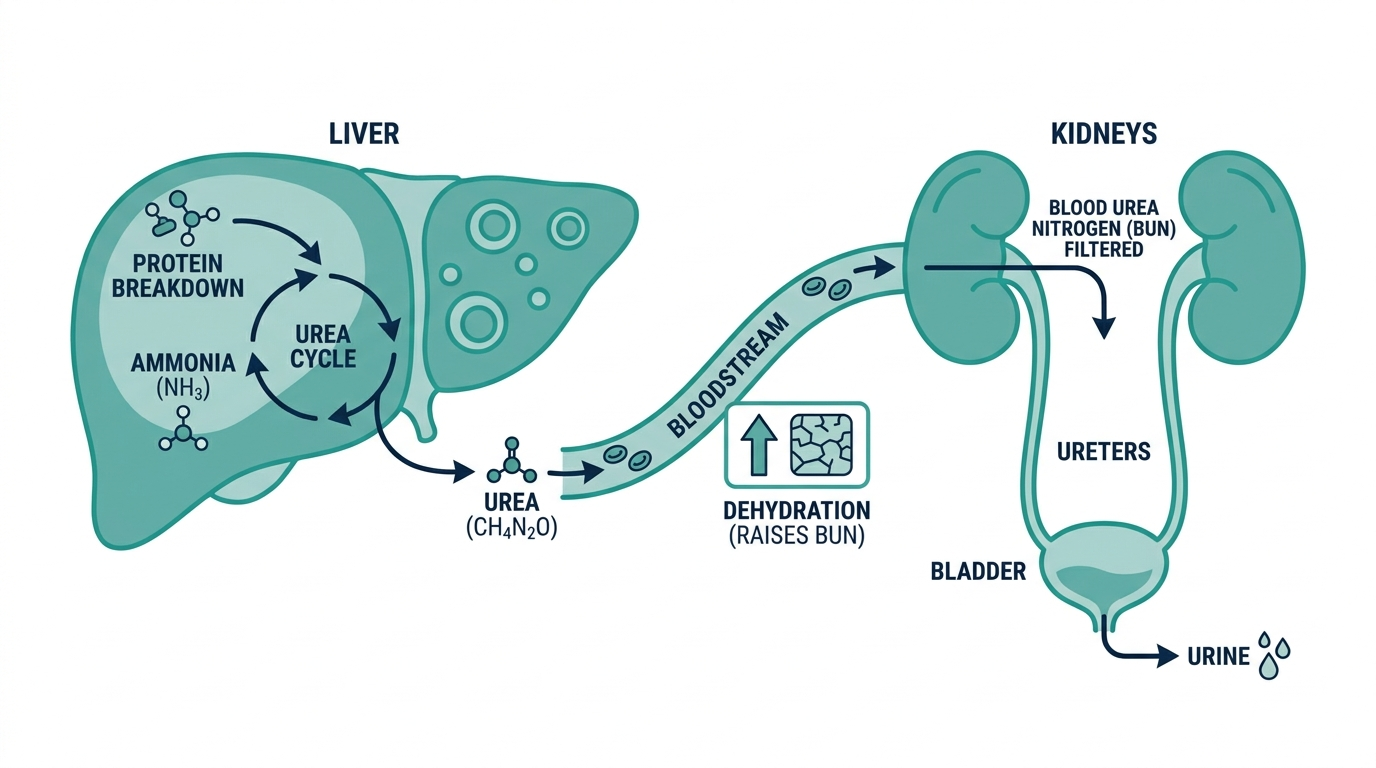
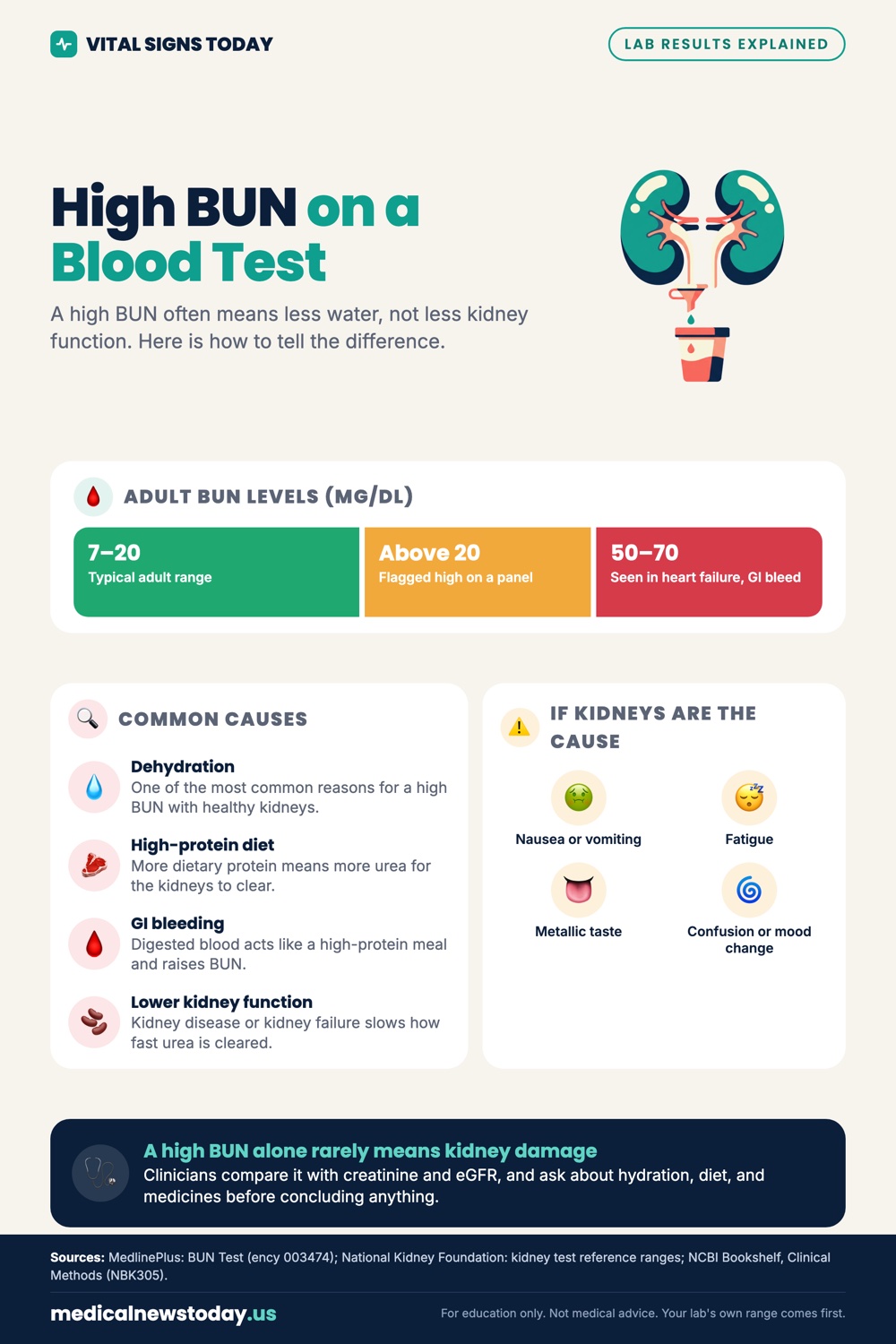
A high BUN means there is more urea nitrogen circulating in your blood than expected. Urea nitrogen is the waste product your liver makes when your body breaks down protein, and your kidneys are supposed to filter it out into your urine (Cleveland Clinic). When the number climbs, it usually means one of three things: you are dehydrated, you are producing extra urea, or your kidneys are not clearing it as fast as they should.
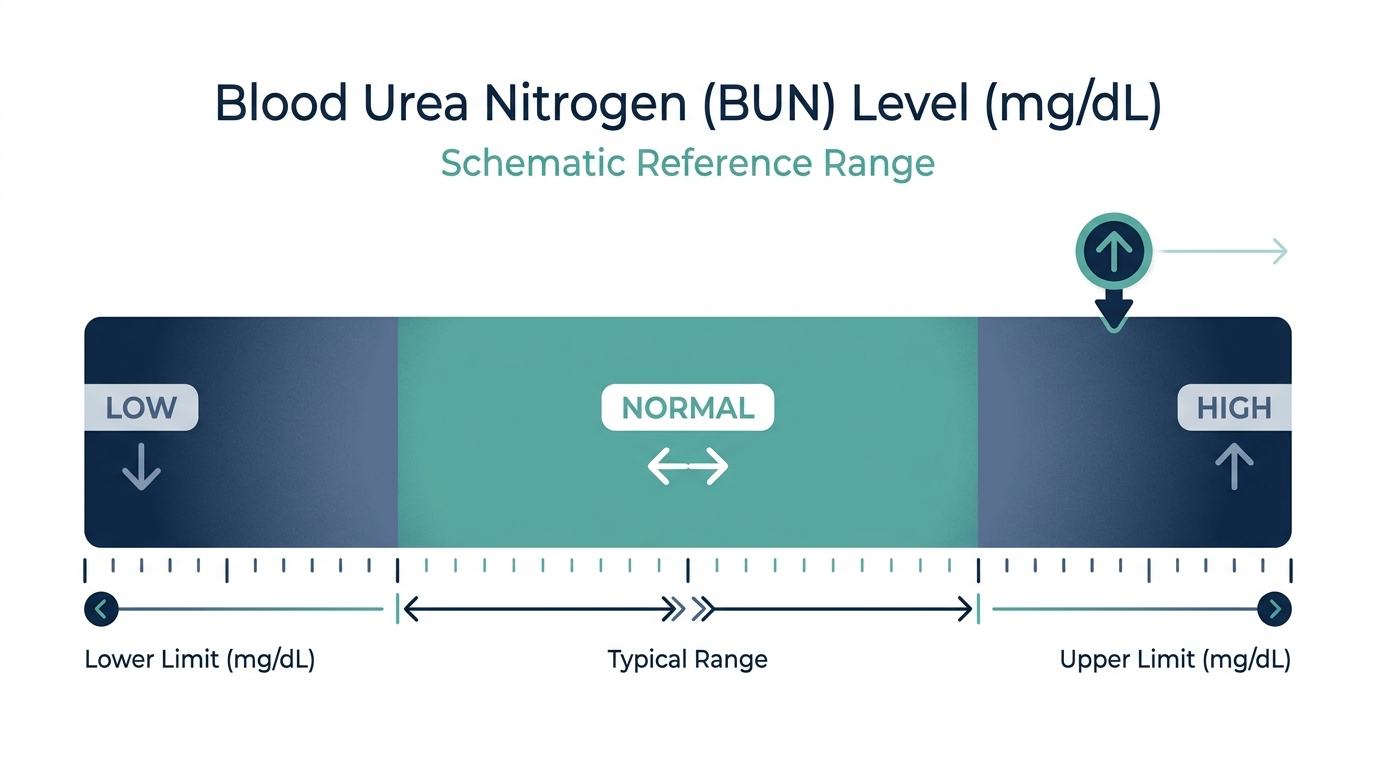
So what counts as high? A normal adult BUN generally sits around 6 to 24 mg/dL, and the exact cutoff shifts with age and sex. Cleveland Clinic lists roughly 6 to 21 mg/dL for adult women and 8 to 24 mg/dL for adult men, with children landing around 7 to 20 mg/dL (Cleveland Clinic). The National Kidney Foundation uses a simple 7 to 20 mg/dL benchmark for adults (National Kidney Foundation). Anything above the top of your own lab’s printed range is flagged as high. The single most important habit you can build: read your number against the reference range on your own report, not against a number you found online, because labs calibrate differently.
The honest headline is this. BUN by itself is a weak number. As the National Kidney Foundation puts it bluntly, checking your BUN level is usually not very helpful on its own, which is why your provider compares it to creatinine and eGFR before drawing any conclusion (National Kidney Foundation).
What causes a high BUN?
The causes of a high BUN fall into a clean differential, and the most common ones have nothing to do with kidney damage. Here they are, roughly in order of how often they show up in everyday practice (MedlinePlus, Cleveland Clinic):
- Dehydration. This is the big one. When you are low on fluids, your kidneys hold onto water and reabsorb more urea along with it, so BUN rises even though your kidneys are perfectly healthy. Rehydrate and the number often drifts right back down.
- A high-protein diet. More protein in means more urea out. Someone eating well over 100 grams of protein a day can run a higher BUN with completely normal kidneys (NCBI Clinical Methods).
- Reduced kidney clearance. This is the cause everyone fears. Acute kidney injury or chronic kidney disease slows urea removal, and BUN climbs. But this rarely travels alone, creatinine usually rises with it.
- Gastrointestinal bleeding. Blood in your gut is, in effect, a high-protein meal. The digested blood gets converted to urea and pushes BUN up, sometimes dramatically (NCBI Clinical Methods).
- Heart failure. A weak heart means less blood flow to the kidneys, which slows filtration. Patients with congestive heart failure and otherwise intact kidneys commonly run a BUN in the 50 to 70 mg/dL range (NCBI Clinical Methods).
- Certain medications. Corticosteroids like prednisone, some antibiotics such as tetracyclines, and others can nudge BUN upward (National Kidney Foundation).
- Other drivers: severe burns, urinary tract blockage, physical or emotional stress, advancing age, and a recent heart attack (Cleveland Clinic).
Notice the theme. Of the seven categories above, only one is true kidney disease. That is exactly why a single high BUN should make you curious, not panicked.
What are the symptoms of a high BUN?
Here is the part that surprises most people. A mildly high BUN usually has no symptoms at all. You feel completely normal. The number on the paper is the only sign, which is precisely why it gets caught on routine bloodwork rather than because you felt unwell.
Symptoms only appear when BUN climbs very high and waste products genuinely build up in the blood, a state called uremia. At that point the early signs tend to be nausea, vomiting, and loss of appetite, often followed by fatigue, trouble concentrating, unexplained weight loss, a metallic taste in the mouth, muscle cramps, and itchy skin (Cleveland Clinic). If you have those symptoms, the issue is no longer the lab value, it is what the lab value is pointing to.

When is a high BUN dangerous or a medical emergency?
A slightly elevated BUN, say in the high 20s or 30s with a normal creatinine, is rarely an emergency. The danger zone is uremia, which is a buildup of waste in the blood from untreated kidney failure (Cleveland Clinic).
Importantly, there is no single magic BUN number that defines uremia. As Cleveland Clinic notes, BUN can be very high in uremia, but there is no fixed cutoff, and some people develop uremia even when BUN is not dramatically elevated (Cleveland Clinic). What matters is the whole clinical picture, not a threshold.
Treat these as red flags and seek urgent care, especially if you have known kidney disease: confusion or abnormal behavior, drowsiness, chest pain, difficulty breathing, or persistent nausea and vomiting (Cleveland Clinic). A very high BUN combined with black or tarry stools, vomiting blood, or lightheadedness can also signal gastrointestinal bleeding, which is its own emergency.
What should you do about a high BUN?
The first move is almost never treatment. It is context. A high BUN is a starting question, not a diagnosis (MedlinePlus). Here is the sensible sequence.
- Look at creatinine and eGFR alongside it. BUN is interpreted in a trio. If your BUN is high but creatinine and eGFR are normal, kidney disease is unlikely, and dehydration or diet is the more probable story (National Kidney Foundation). If both BUN and creatinine are high together, that combination points more firmly toward reduced kidney function (Cleveland Clinic).
- Hydrate and recheck. Because dehydration is such a common and reversible cause, your provider may simply have you drink more fluids and repeat the test. Many mildly high BUN results resolve on their own.
- Review your intake and medications. A weekend of heavy protein, a new steroid, or certain antibiotics can all lift the number. Tell your clinician what you are taking.
- Adjust diet if appropriate. For people without kidney disease, leaning toward lower-protein foods and adequate fluids can bring BUN down (Cleveland Clinic). Do not crash your protein intake on your own, talk to your clinician first.
- Treat the cause, not the number. If the real issue is kidney disease, heart failure, or a GI bleed, the BUN normalizes when that underlying problem is managed.

The insider read: the BUN-to-creatinine ratio tells you why
Here is the clinical nuance that almost never makes it into the patient handout, and it is the most useful thing on this page. A high BUN in isolation is nearly meaningless. The real signal is the BUN-to-creatinine ratio, and it is what lets a clinician separate “you are just dehydrated” from “your kidneys are in trouble.”
A normal ratio sits around 10:1 to 20:1, often cited near 15:1. When the ratio climbs above 20:1, it strongly suggests a prerenal cause, meaning the kidneys themselves are fine but something upstream, usually dehydration or blood loss, has reduced blood flow to them (NCBI Clinical Methods). The mechanism is elegant: during dehydration or bleeding, your body reabsorbs more urea but handles creatinine the same way, so BUN rises out of proportion to creatinine.
This is also why an unexplained high BUN with a high ratio can be the first hint of a hidden gastrointestinal bleed, even before you notice dark stools. Digested blood floods the gut with protein, which converts to urea (NCBI Clinical Methods). A sharp BUN spike with a normal-ish creatinine in someone with anemia is a pattern that makes an experienced clinician ask about the stomach, not the kidneys. So if your BUN is flagged high, the question to bring to your appointment is not “is my BUN bad,” it is “what is my BUN-to-creatinine ratio, and what does it point to.”
When should you see a doctor?
If a high BUN shows up on routine bloodwork and you feel fine, you do not need the emergency room, but you should not ignore it either. Bring it to your primary care provider so it can be read in context with creatinine and eGFR (National Kidney Foundation). Make a prompt appointment if the number is significantly elevated, if it is rising on repeat tests, or if you have risk factors like diabetes, high blood pressure, or known kidney or heart disease.
Seek urgent or emergency care if a high BUN comes with the warning signs of uremia or bleeding: confusion, drowsiness, chest pain, shortness of breath, relentless nausea and vomiting, or signs of GI bleeding such as black stools or vomiting blood (Cleveland Clinic).

Want to check your BUN?
Three ways to get it measured. Pick whichever fits you.
Affiliate links: we may earn a commission at no extra cost to you. A lab test does not replace a visit with your clinician.
How to prepare for the test and what can skew your BUN
BUN is measured from a standard blood draw, usually as part of a basic or comprehensive metabolic panel. It is worth knowing what can move the number, because a surprising share of high results come from the conditions around the test rather than from your kidneys.
- Hydration status at the moment of the draw. This is the single biggest swing factor. If you skipped fluids the morning of the test, or the blood was drawn after an overnight fast without water, your BUN can read higher than your true baseline. Being well hydrated the day before gives a more representative number.
- Fasting itself. Many panels are drawn fasting for other markers like glucose and lipids. Fasting does not require fluid restriction, so you can and should keep drinking water unless told otherwise. Water does not affect the fasting glucose result but does help your BUN reflect reality.
- A heavy protein meal beforehand. A large steak dinner or a protein-shake-heavy day can lift urea production and push the number up transiently.
- Medications and supplements. Corticosteroids, some antibiotics, and certain diuretics can raise BUN. Creatine supplements and very high protein intake are common in gym-focused people and can nudge the number without any kidney problem.
- Recent intense exercise. A hard training session or endurance event increases protein breakdown and can temporarily elevate BUN.
The takeaway is that one high value taken on a dehydrated, post-workout, high-protein morning is a weak data point. If your result surprised you, the fix is often as simple as repeating the test on a normal, well-hydrated day.
Reading your own BUN: worked scenarios
The same BUN value can tell completely different stories depending on what sits beside it. These illustrative patterns show how a clinician moves from a flagged number to a likely explanation. They are not a diagnosis, and your provider always interprets your full panel.
- BUN 28 mg/dL, creatinine normal, you skipped water before the draw. A mildly high BUN with a normal creatinine and a high BUN-to-creatinine ratio is the classic dehydration picture. Rehydration and a recheck usually settle it.
- BUN 45 mg/dL, creatinine also elevated, ratio near 15:1. When both numbers rise together and the ratio stays in the normal band, attention shifts toward the kidneys themselves rather than dehydration.
- BUN 60 mg/dL, creatinine near normal, you feel lightheaded and notice dark stools. A sharp BUN spike out of proportion to creatinine, paired with anemia signs, is the pattern that makes a clinician ask about the gut, because digested blood behaves like a protein load.
- BUN 32 mg/dL, you eat a very high-protein diet and lift heavily. In an otherwise healthy person with normal creatinine, diet and training are often the whole explanation, and the number tends to ease with more balanced intake and hydration.
The recurring lesson is that BUN is a supporting actor. It earns meaning from creatinine, the ratio, your symptoms, and your habits, not from the isolated value on the page.
Which markers to read alongside BUN
Because BUN is a weak solo signal, it belongs to a small cluster of kidney and metabolic markers that give it context. When you look at your metabolic panel, these are the lines that turn a number into a picture.
- Creatinine. The most important partner. Creatinine is a more direct reflection of filtration, and the BUN-to-creatinine ratio is what separates a prerenal cause like dehydration from true kidney impairment.
- eGFR. This estimated filtration rate is the single best everyday snapshot of kidney function. A normal eGFR alongside a high BUN is strongly reassuring that the kidneys are working.
- Electrolytes, especially sodium and potassium. Dehydration that lifts BUN often disturbs sodium too, and impaired kidneys can let potassium rise, which is one of the more urgent things a clinician watches for.
- Hemoglobin and hematocrit. Low values here alongside a high BUN can flag the gastrointestinal bleeding scenario, or the anemia that accompanies chronic kidney disease.
- Urine albumin or a urinalysis. Protein leaking into the urine is an early marker of kidney stress that a blood BUN alone will miss, which is why kidney workups usually add a urine test.
Read together, these markers answer the real question behind a high BUN, which is not “is my BUN high” but “is my hydration off, or are my kidneys actually struggling.”
Common misconceptions about a high BUN
A few persistent myths make a high BUN scarier than it usually is. Clearing them up changes how you react to the flag on your report.
- “High BUN means kidney failure.” This is the most common overreaction. Kidney disease is only one of many causes, and it rarely raises BUN alone without also lifting creatinine and lowering eGFR. An isolated high BUN with normal creatinine points elsewhere.
- “There is a target BUN number I should hit.” There is no universal ideal value to chase. What matters is your number against your lab’s range, your trend over time, and the context of creatinine and symptoms.
- “A high BUN means I need to slash all protein.” For a healthy person, moderating a very high protein intake and hydrating well is reasonable, but crash-cutting protein on your own can do more harm than good. Diet changes for kidney concerns should be guided by a clinician or dietitian.
- “One high reading is a diagnosis.” A single value taken on a dehydrated or post-exercise morning is a snapshot, not a verdict. The pattern that matters is a number that stays high on a well-prepared repeat test.
Reframing a high BUN as a question rather than a sentence is the healthiest way to read it, and the next step is almost always a calm conversation with your provider about the fuller picture.
How age and pregnancy shift what a high BUN means
The same BUN number carries a different weight depending on who it belongs to, and two groups deserve their own read: older adults and pregnant patients. In both cases the physiology behind the number moves, so a value that looks off against a generic range can be entirely normal in context.
BUN tends to drift upward with age. Kidney filtering capacity declines gradually across the decades, and muscle and dietary patterns change, so the typical result in someone in their seventies runs higher than in a young adult. Population data show the median BUN climbing from roughly the low teens in younger adults to the high teens in people over seventy (Medscape reference ranges). A modestly elevated BUN in an older person is therefore often a reflection of age and hydration rather than new kidney disease. It still deserves attention, especially paired with a rising creatinine, but it should not trigger alarm on its own.
Pregnancy pushes the number the other way. Blood volume expands and the kidneys filter faster during pregnancy, which clears urea more efficiently and drives BUN below the standard adult range. A result that would prompt questions in a non-pregnant adult can be perfectly ordinary in the third trimester. The practical lesson in both directions is the same one that runs through this entire guide: read the number against the right reference for that person and that life stage, and always alongside creatinine and hydration, not against a single one-size-fits-all cutoff.
Frequently asked questions
What is considered a high BUN level?
A BUN above the top of your lab’s reference range is flagged high. Typical adult ranges run about 6 to 24 mg/dL, with Cleveland Clinic listing roughly 6 to 21 mg/dL for women and 8 to 24 mg/dL for men, and the National Kidney Foundation using 7 to 20 mg/dL (Cleveland Clinic, National Kidney Foundation). Always compare to your own report’s range.
Does a high BUN always mean kidney disease?
No. A high BUN often reflects dehydration, a high-protein diet, certain medications, or GI bleeding rather than kidney damage (MedlinePlus). Kidney disease is more likely when BUN and creatinine are both elevated together (Cleveland Clinic).
Can dehydration cause a high BUN?
Yes, and it is one of the most common causes. When you are low on fluids, your kidneys reabsorb more urea, so BUN rises even with healthy kidneys. Rehydrating often brings it back to normal (Cleveland Clinic).
How do I lower a high BUN?
Treat the cause. For people without kidney disease, drinking enough fluids and moderating protein intake can help (Cleveland Clinic). If the cause is kidney disease, heart failure, or bleeding, BUN improves when that condition is managed. Do not make major diet changes without your clinician.
Why is BUN checked with creatinine?
BUN on its own is a weak signal, so providers read it alongside creatinine and eGFR (National Kidney Foundation). The BUN-to-creatinine ratio helps separate dehydration and blood loss, which raise the ratio above 20:1, from true kidney problems (NCBI Clinical Methods).
This article is for general educational purposes and is not medical advice. It cannot diagnose or treat you and does not replace your clinician. Always discuss your lab results and any health decisions with a qualified healthcare professional.
Vital Signs Today may earn a commission if you buy through links on this page. It does not affect our editorial assessments.