
You scanned your blood work, found albumin near the top, and right under it sat a word you have probably never thought about: globulin. No flashing alert, no asterisk, so you moved on. Here is what almost no one explains. Globulin is not one protein. It is a whole bucket of them, including the antibodies your immune system makes, and the number on your report is a running tally of your body’s defense and maintenance crew.
Most lab printouts reduce globulin to a single line and a reference range. That single line, read correctly, can hint at everything from a quiet infection to an overworked immune system. Let me show you how to read it.
Part of our Comprehensive Metabolic Panel guide.
What is globulin in a blood test?
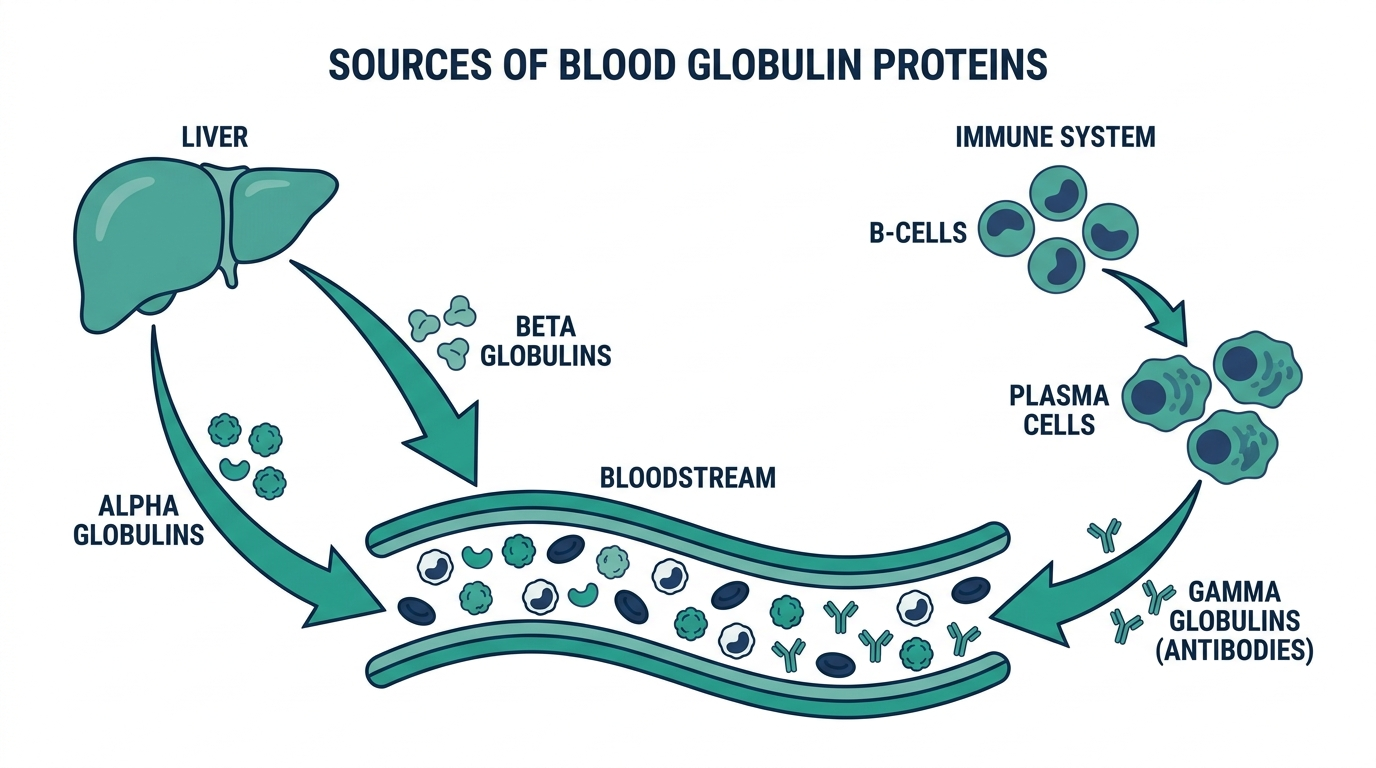
Globulin in a blood test is a group of proteins in your blood serum, measured to screen for liver problems, kidney problems, immune disorders, and certain cancers. Some globulins are made by your liver and others are made by your immune system, and together they help with blood clotting, fighting infection, and carrying substances around the body (Cleveland Clinic). So when someone asks what is globulin on blood test results, the short answer is this: it is the total weight of your non-albumin proteins, and a typical adult value sits around 2.0 to 3.5 g/dL.
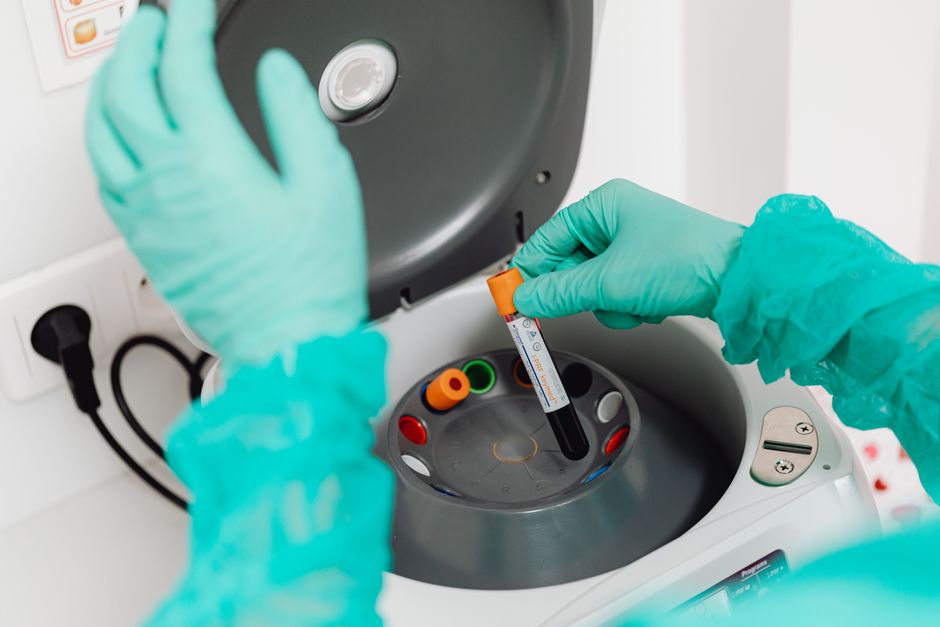
The lab almost never measures globulin directly. It measures your total protein and your albumin, then subtracts albumin from total protein, and what is left is globulin. That detail matters more than it sounds, and I will come back to it.

What does globulin mean in a blood test, and what are the types?
What globulin means in a blood test depends on which globulins are involved, because the bucket holds four distinct families. Routine panels lump them into one number, but a serum protein electrophoresis test can split them apart (MedlinePlus). The four groups are:
- Alpha-1 globulins, made largely by the liver, including proteins that rise with inflammation.
- Alpha-2 globulins, also mostly liver-made, involved in transport and inflammation.
- Beta globulins, which include transport proteins such as those that carry iron.
- Gamma globulins, which are your immunoglobulins, the antibodies your immune system produces to fight infection (MedlinePlus).
That last group is the reason globulin is so interesting. Gamma globulins are antibodies, so a meaningful chunk of your globulin number is a direct readout of how busy your immune system has been. When you hear blood test globulin discussed in the context of infection or autoimmune disease, gamma globulins are usually the part doing the talking.
What is a normal globulin level?
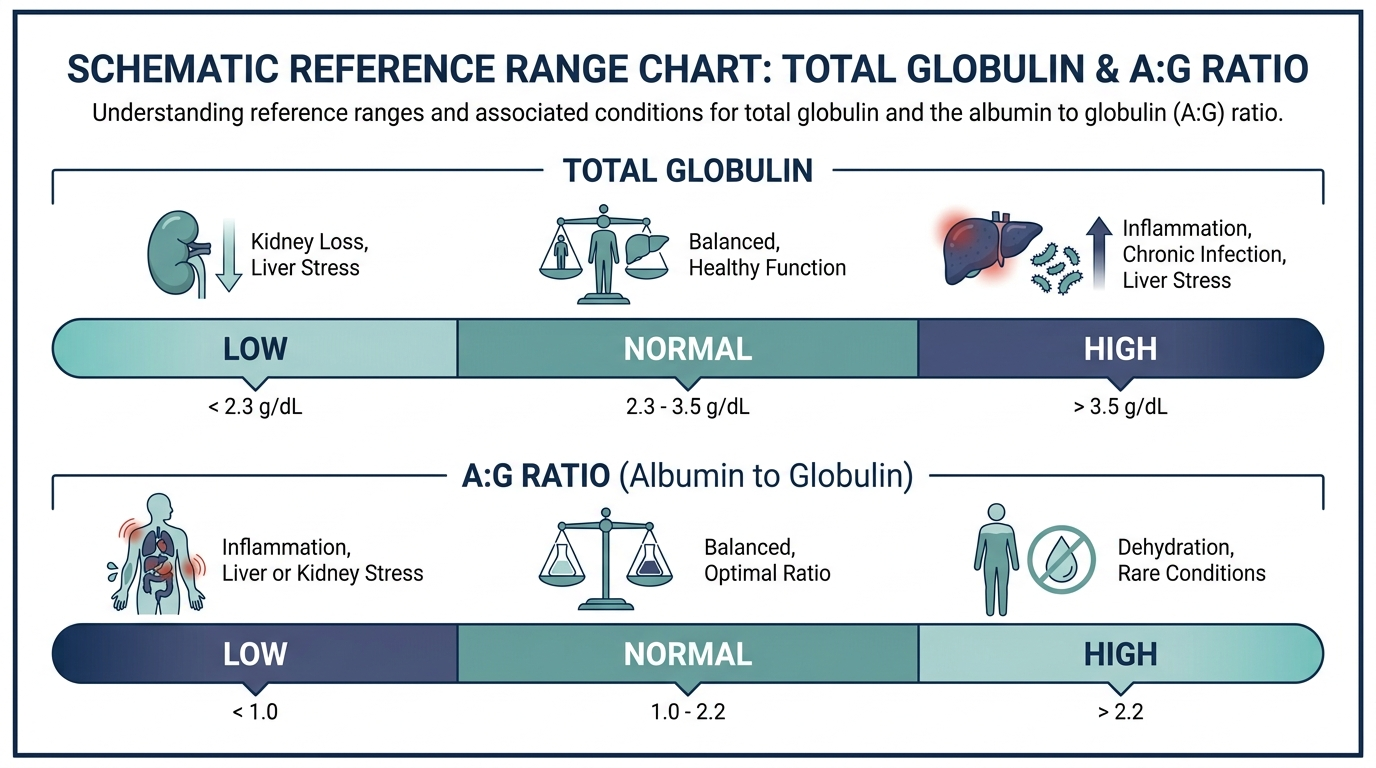
A normal globulin level in adults is generally about 2.0 to 3.5 g/dL, though the exact cutoff varies slightly by laboratory and instrument (Cleveland Clinic). For context, globulin is reported alongside total protein, which typically runs about 6.3 to 8.0 g/dL, and albumin, which runs about 3.9 to 4.9 g/dL on the same Cleveland Clinic scale.
Your report may also show an albumin to globulin ratio, written as the A/G ratio. A normal A/G ratio is slightly more than 1, meaning you normally carry a bit more albumin than globulin (MedlinePlus). Always read your own value against the reference range printed on your report, because that is the range your specific lab calibrated.
What does a high globulin mean?
A high globulin means your body is carrying more of these proteins than expected, and the most common reasons are an active immune response or inflammation. Because gamma globulins are antibodies, an elevated globulin often reflects your immune system working overtime. Common culprits include chronic infections, inflammatory and autoimmune diseases, and certain cancers of immune cells such as multiple myeloma (MedlinePlus).
Clinicians find it useful to sort high globulin into two patterns, and this is where a knowledgeable reader pulls ahead:
- Polyclonal increase. Many different antibody-producing cells ramp up at once, raising globulin broadly. This is the typical signature of chronic infection, liver disease, and autoimmune conditions like lupus or rheumatoid arthritis (Cleveland Clinic).
- Monoclonal increase. One abnormal clone of cells churns out a single antibody, producing a sharp spike. This pattern raises concern for multiple myeloma and related disorders (MedlinePlus).
Here is the insider point that rarely reaches the patient version. The plain globulin number on a basic metabolic panel cannot tell those two patterns apart. It just says high. The test that separates a benign reactive rise from something that needs urgent attention is serum protein electrophoresis, which splits globulin into its bands and shows whether the increase is a broad hill (polyclonal) or a narrow spike (monoclonal) (MedlinePlus). So an isolated high globulin is not a diagnosis. It is a prompt to ask which kind of high.

What does a low globulin mean?
A low globulin means you have fewer of these proteins than normal, and it most often points to a problem with how proteins are made or kept in the body. Because the liver builds many globulins and the kidneys are supposed to keep proteins from leaking out, low globulin can flag liver disease, kidney disease, or malnutrition (MedlinePlus). It can also appear with malabsorption conditions where the gut fails to take in enough protein.
A low globulin can also reflect an immune system that is not producing enough antibodies, which leaves a person more vulnerable to repeated infections. As with a high result, a low globulin on its own is a clue rather than a conclusion, and your clinician will read it next to albumin, total protein, and your symptoms (Cleveland Clinic).
Why is globulin measured with albumin and the A/G ratio?
Globulin is measured with albumin because the two together describe the entire protein content of your blood, and their balance is often more revealing than either number alone. Albumin keeps fluid inside your vessels and ferries hormones, medicines, and vitamins, while globulins fight infection and carry nutrients. A total protein test reports both, then derives the albumin to globulin ratio (MedlinePlus).
The A/G ratio is the part many people skip, and that is a mistake. Two people can have an identical, perfectly normal globulin number while their ratios tell opposite stories, because the ratio captures the relationship between the two proteins. A simplified guide to how clinicians read it:
- Low A/G ratio: can reflect autoimmune disease, liver disease, kidney disease, or the antibody overproduction seen in multiple myeloma (MedlinePlus).
- High A/G ratio: may point to certain genetic disorders or some blood cancers such as leukemia (MedlinePlus).
This is why a globulin blood test shows more than a single protein level. It shows the shape of your whole protein picture, and the ratio is the cheapest way to see whether albumin and globulin have drifted out of their normal relationship.
The part most people never hear: globulin as a quiet risk signal
This is where globulin steps out of the shadow of albumin. Over the last decade, researchers have found that the globulin fraction, long treated as a leftover number, carries independent information about how sick someone is and how they will do over time.
In a study of 1,767 patients with inflammatory bowel disease followed for four years, those with an elevated globulin fraction above 4 g/dL were independently more likely to be hospitalized, visit the emergency department, need surgery, and require biologic medication, even after accounting for other severity markers (PMC, elevated globulin and IBD severity). The researchers concluded that a high globulin fraction may serve as a routinely available biomarker of a more severe future disease course. In other words, a number already sitting on the standard panel was flagging trouble that nobody was reading.
The signal extends to survival. In a cohort of patients starting hemodialysis, serum globulin was independently associated with all-cause mortality, supporting the idea that globulin reflects the underlying burden of inflammation and immune activation a person is carrying (PMC, serum globulin and mortality in hemodialysis). Why would a simple protein sum predict outcomes? The leading explanation is that a chronically raised globulin is a quiet mirror of ongoing inflammation, and inflammation is one of the engines that wears the body down. You will not get a diagnosis from one globulin value, but it is a fair reason to look closer rather than scroll past.
The immunoglobulins hiding inside your gamma globulins
The most clinically active slice of globulin is the gamma fraction, which is made up of antibodies called immunoglobulins. When a globulin result is abnormal in a way that points toward the immune system, the next step is often to measure the individual immunoglobulin classes. Knowing what each class does helps you understand why a follow-up test looks the way it does.
- IgG. The most abundant antibody in your blood and the workhorse of long-term immunity. It carries the memory of past infections and vaccinations, and it is the class that crosses the placenta to protect a newborn. A monoclonal IgG spike is the most common finding in multiple myeloma.
- IgA. Concentrated at mucosal surfaces such as the gut, airways, and saliva, where it forms a first line of defense against invaders trying to enter the body.
- IgM. The first antibody your immune system produces in a brand new infection, which is why a high IgM can suggest a recent or acute exposure.
- IgE. Tied to allergic responses and to defense against parasites, and usually measured separately when allergy is the question.
This breakdown explains a great deal. A broad rise across several classes fits the polyclonal pattern of chronic infection or autoimmune disease, where many different antibody-producing cells are active at once. A sharp rise in a single class, such as an isolated IgG or IgA spike, fits the monoclonal pattern that raises concern for a plasma cell disorder. And low levels across the classes describe an immunodeficiency, where the body cannot mount enough antibody defense and infections keep returning. The plain globulin number on a metabolic panel is a summary of all of this, which is exactly why an abnormal value so often leads to more specific antibody testing.
Symptoms that travel with an abnormal globulin, and the red flags
Globulin itself causes no sensation. What you feel comes from the underlying process driving it up or down. Knowing which symptoms tend to accompany an abnormal result helps you and your clinician decide how hard to look.
With a high globulin, the surrounding picture often reflects chronic inflammation or immune activation: lingering fatigue, low-grade or recurrent fevers, joint pain or swelling in autoimmune disease, or the specific symptoms of a chronic infection. When a monoclonal process is the cause, watch for a cluster that deserves prompt evaluation:
- Bone pain, especially in the back or ribs, or an unexplained fracture.
- Unintended weight loss and drenching night sweats.
- Frequent infections despite a high antibody number, because the abnormal antibody does not defend well.
- Fatigue from anemia, or symptoms of high calcium such as excessive thirst and confusion.
With a low globulin, the tell is a pattern of repeated or unusually severe infections, since too few antibodies leaves the body underdefended. Swelling and fatigue can also appear when low globulin travels with the low albumin of liver or kidney disease. Any of these clusters, especially unexplained bone pain with weight loss, is a reason to move from watchful waiting to active investigation.
Reading globulin alongside the rest of the panel
Globulin gains meaning from the numbers drawn with it. The combinations below show how the surrounding markers reframe a globulin result.
| Globulin finding paired with | The direction it points |
|---|---|
| High globulin, low albumin, low A/G ratio, anemia, high calcium | A pattern that raises concern for multiple myeloma and prompts electrophoresis. |
| High globulin with high liver enzymes | Chronic liver disease, which can drive a polyclonal rise. |
| High globulin with joint symptoms and positive autoimmune markers | An autoimmune process such as lupus or rheumatoid arthritis. |
| Low globulin with low albumin and protein in the urine | Kidney disease letting protein escape into the urine. |
| Low globulin with recurrent infections | An antibody deficiency, warranting immunoglobulin level testing. |
Albumin is the constant companion, because globulin is calculated from total protein minus albumin, and the A/G ratio ties the two together. When globulin moves, the first questions are always what albumin is doing and which direction the ratio has shifted.
Worked examples: the same globulin, different meanings
A globulin value only makes sense in context. These scenarios show how a clinician reasons from the same kind of result to very different next steps.
Scenario one: mildly high globulin during a lingering infection, everything else stable. A likely polyclonal, reactive rise as the immune system works. Often it settles once the infection resolves, and a recheck confirms it.
Scenario two: high globulin with a low A/G ratio, anemia, and bone pain. This cluster is the classic prompt for serum protein electrophoresis to look for a monoclonal spike, because the combination raises concern for a plasma cell disorder.
Scenario three: high globulin with high liver enzymes and a history of hepatitis. Chronic liver disease can drive a broad, polyclonal increase, so attention turns to the liver rather than the marrow.
Scenario four: low globulin in someone with repeated sinus and chest infections. The pattern suggests the immune system is not making enough antibodies, and measuring the individual immunoglobulin classes is the logical next move.
Scenario five: low globulin with low albumin and swollen legs. Here the whole protein picture is low, pointing toward liver disease, kidney protein loss, or malnutrition rather than an isolated antibody problem.
Who should pay attention to globulin, and how it is tested
Globulin arrives automatically on the comprehensive metabolic panel, so most people get it without asking. It deserves closer attention in a few situations.
- Recurrent or unusual infections. These make a low globulin and low immunoglobulins worth checking, since an antibody deficiency may be behind the pattern.
- Symptoms of a plasma cell disorder. Unexplained bone pain, weight loss, or anemia with a high globulin and low A/G ratio calls for electrophoresis.
- Known chronic inflammatory, autoimmune, or liver disease. Here globulin can be tracked as one reflection of ongoing immune activity.
- An abnormal A/G ratio on a routine panel. A shifting ratio can justify a closer look even when the individual numbers seem unremarkable.
No special preparation is usually required for globulin itself, since it is derived from total protein and albumin measured on the same standard draw. When the plain number is abnormal, the more specific follow-up tests are serum protein electrophoresis, which separates the globulin bands, and quantitative immunoglobulins, which measure IgG, IgA, and IgM individually.
Common misconceptions about globulin
Globulin is easy to misread because it is a derived number covering a diverse mix of proteins. Correcting the frequent errors makes it far more useful.
- “High globulin means cancer.” Usually not. The most common cause is a reactive, polyclonal rise from infection, inflammation, or autoimmune disease. A plasma cell cancer is one possibility among several, which is why the pattern on electrophoresis matters.
- “A high antibody number means strong immunity.” Not always. In a monoclonal disorder, the body overproduces one abnormal antibody that does not defend well, so infections can still recur despite a high globulin.
- “Globulin is measured directly.” It is usually calculated as total protein minus albumin. To see the actual globulin types, a clinician orders electrophoresis or specific immunoglobulin tests.
- “A normal globulin means my immune proteins are all fine.” A normal total can hide offsetting changes, which is why the A/G ratio and, when warranted, class-specific antibody testing add information the single number misses.
- “Globulin has nothing to do with how sick I am.” Research links a persistently high globulin fraction to more severe disease courses and worse outcomes in some settings, likely because it mirrors ongoing inflammation. It is a supporting signal worth reading, not noise.
Frequently asked questions
Is a high globulin level something to worry about?
Not on its own. A high globulin is a clue, not a diagnosis. It most often reflects infection, inflammation, autoimmune disease, or sometimes a blood cancer like multiple myeloma, and it is interpreted alongside albumin, total protein, and your symptoms (MedlinePlus). If it is clearly elevated, your clinician may order serum protein electrophoresis to find out why.
What is a normal globulin level?
A normal globulin level in adults is generally about 2.0 to 3.5 g/dL, though ranges vary slightly by laboratory (Cleveland Clinic). Compare your result to the reference range printed on your own report.
What does a low globulin mean?
A low globulin can point to liver disease, kidney disease, malnutrition, or an immune system that is not making enough antibodies (MedlinePlus). Like a high result, it is a signal to look further rather than a diagnosis by itself.
What is the albumin to globulin (A/G) ratio?
The A/G ratio compares how much albumin you have to how much globulin, and a normal ratio is slightly more than 1 (MedlinePlus). A low ratio can suggest autoimmune, liver, or kidney disease, while a high ratio can point to some genetic disorders or blood cancers.
How is globulin measured if labs do not test it directly?
Most panels calculate globulin by subtracting albumin from total protein, so both of those are measured directly and globulin is derived (MedlinePlus). To see the individual globulin types, a clinician orders serum protein electrophoresis.
This article is for general educational purposes and is not medical advice. It cannot diagnose or treat you and does not replace your clinician. Always discuss your lab results and any health decisions with a qualified healthcare professional.
Vital Signs Today may earn a commission if you buy through links on this page. It does not affect our editorial assessments.