Disclosure: Vital Signs Today may earn a commission if you buy through links on this page, at no extra cost to you. This does not influence our evidence-based assessments. We are not a medical provider; talk to a clinician before acting on test results.
You opened your lab results, scanned past the cholesterol and the blood sugar, and landed on a word that sounds vaguely chemical: bilirubin. Maybe there was a number next to it, maybe a word like “total” or “direct,” and maybe a flag telling you it was high. Here is the part most people never get explained to them. Bilirubin is one of the most honest windows into how your liver and your red blood cells are doing, and the story it tells depends entirely on which type is elevated.
Most explainers stop at “it has to do with your liver.” That is true, but it is the least interesting part. Read on and you will know more about your own bilirubin result than most people who have stared at one for years.
Part of our Liver Function Tests guide.
What is bilirubin in a blood test?
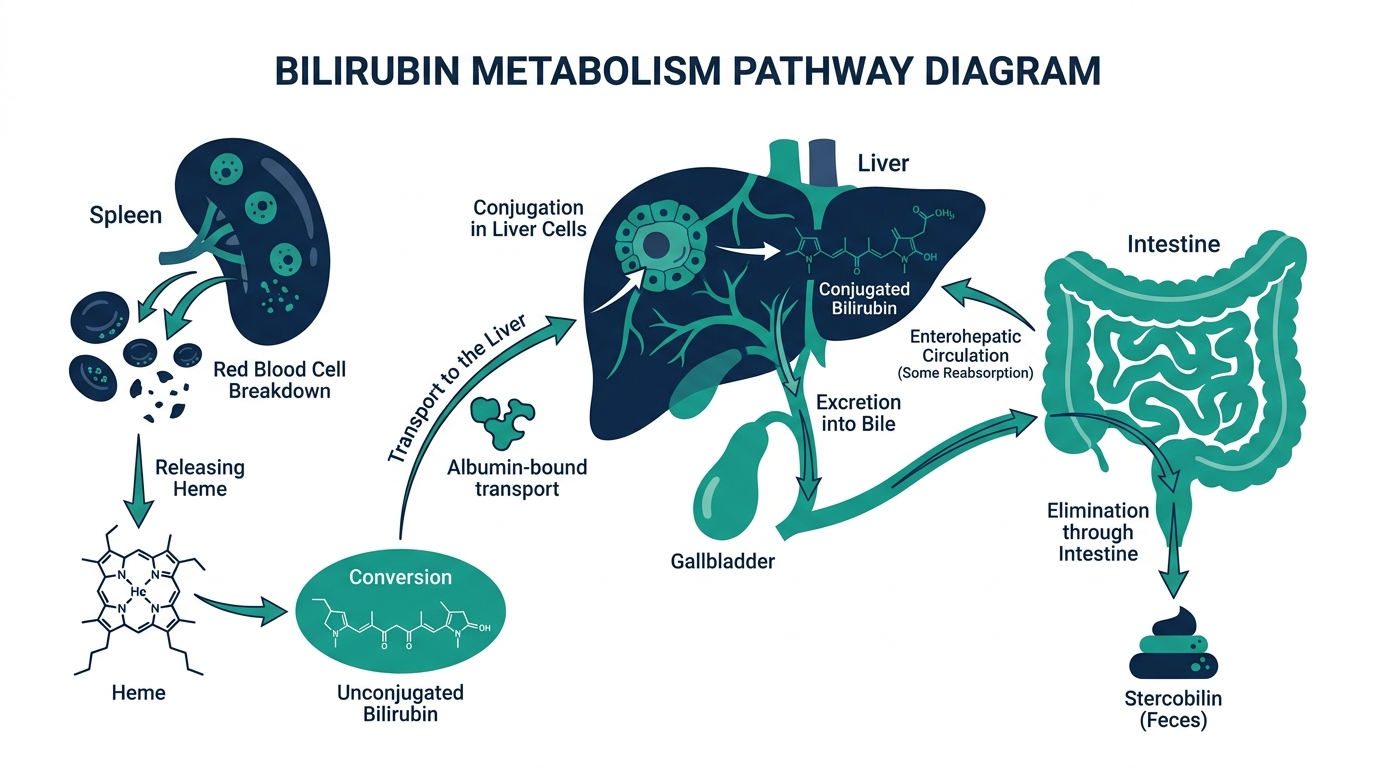
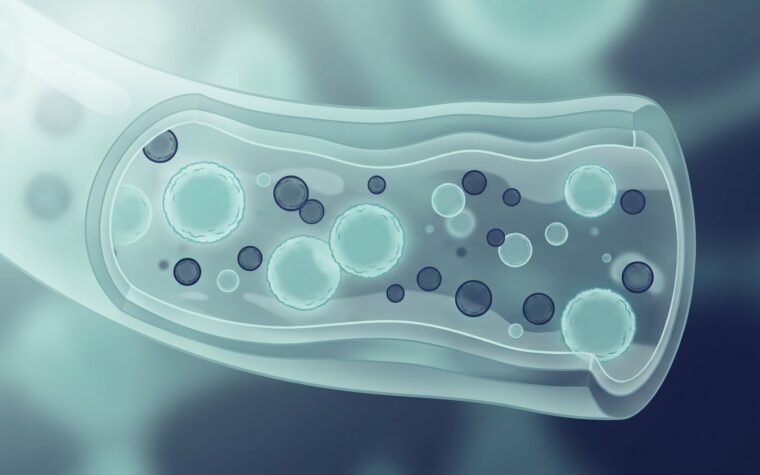
Bilirubin is a yellowish-orange waste product your body makes when it breaks down old red blood cells, and a bilirubin blood test measures how much of it is circulating in your blood (MedlinePlus). Every day your body retires worn-out red cells, and the hemoglobin inside them gets dismantled. Bilirubin is one of the leftover pieces. Your liver is supposed to grab that bilirubin, process it, and route it out through your bile and stool. So the question “what is bilirubin in a blood test” really has a two-part answer: it is a marker of red blood cell turnover on one end and a marker of liver and bile-duct function on the other.
That yellow pigment is also why bruises turn yellowish as they heal and why your stool is brown. When bilirubin backs up in the blood instead of leaving the body, it stains your skin and the whites of your eyes yellow, which is the condition called jaundice (Cleveland Clinic).
What does bilirubin mean in a blood test, and what does it actually measure?
When you see bilirubin on a blood test, it means the lab measured the pigment from red blood cell breakdown to check two systems at once: how fast your red cells are being destroyed and how well your liver is clearing the resulting waste. The test almost always reports more than one number, and the breakdown is the whole point.
There are two main forms, and understanding the difference is what separates a useful reading from a confusing one (Cleveland Clinic):
- Indirect (unconjugated) bilirubin. This is the raw form, freshly made from red cell breakdown, on its way to the liver. It has not been processed yet. Labs do not usually measure it directly. They calculate it by subtracting the direct value from the total.
- Direct (conjugated) bilirubin. This is bilirubin after your liver has chemically packaged it so it can be excreted in bile. It is the processed, water-soluble form.
- Total bilirubin. The sum of the two. This is the headline number most reports lead with.
The reason this matters: which fraction is elevated points to where the problem sits. A high indirect bilirubin usually means too much is being made or the liver has not processed it yet. A high direct bilirubin usually means the liver processed it fine but it cannot get out, often a bile-duct issue. Same total number, completely different stories.
What blood test is bilirubin, and what blood test shows bilirubin levels?
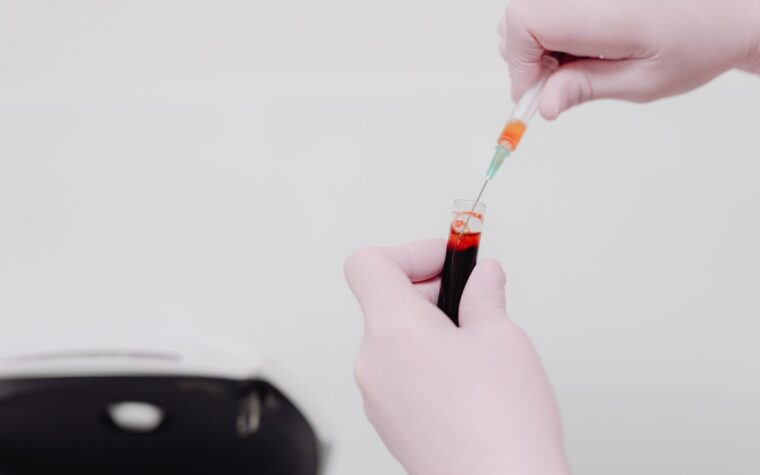
Bilirubin is most often measured as part of a liver panel, also called liver function tests or a comprehensive metabolic panel, and that is the blood test that shows your bilirubin levels (MedlinePlus). It can also be ordered on its own as a standalone bilirubin test. The sample is a simple blood draw, usually from a vein in your arm, and no special fasting is typically required unless your provider is running other tests that need it.
So if you are wondering what blood test is bilirubin, the short version is: it lives inside the same routine panels your doctor uses to screen the liver, sitting alongside the enzymes ALT, AST, and alkaline phosphatase. When all of those are read together, bilirubin helps tell whether a liver problem is one of inflammation, blockage, or red cell breakdown.

What is a normal bilirubin level?
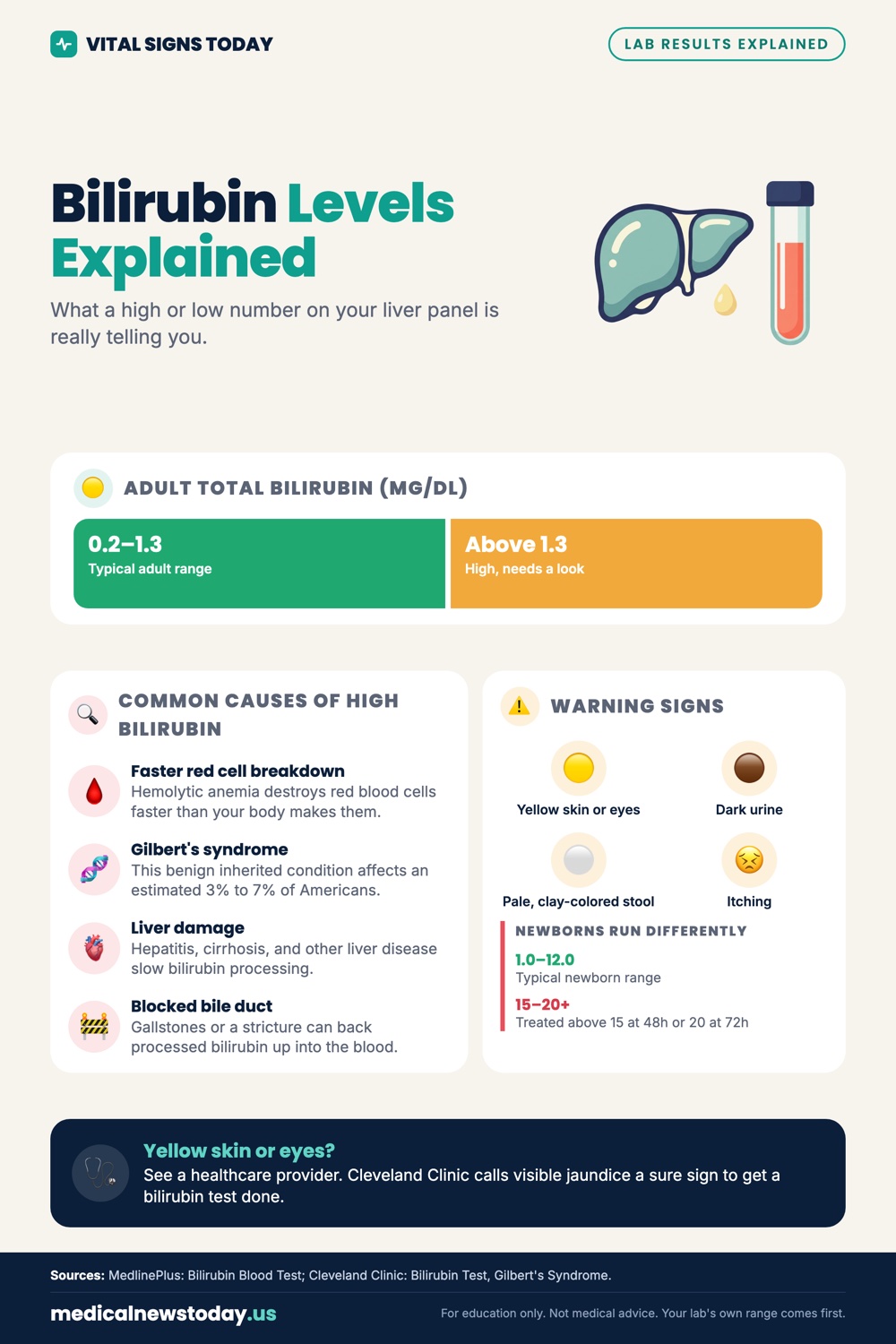
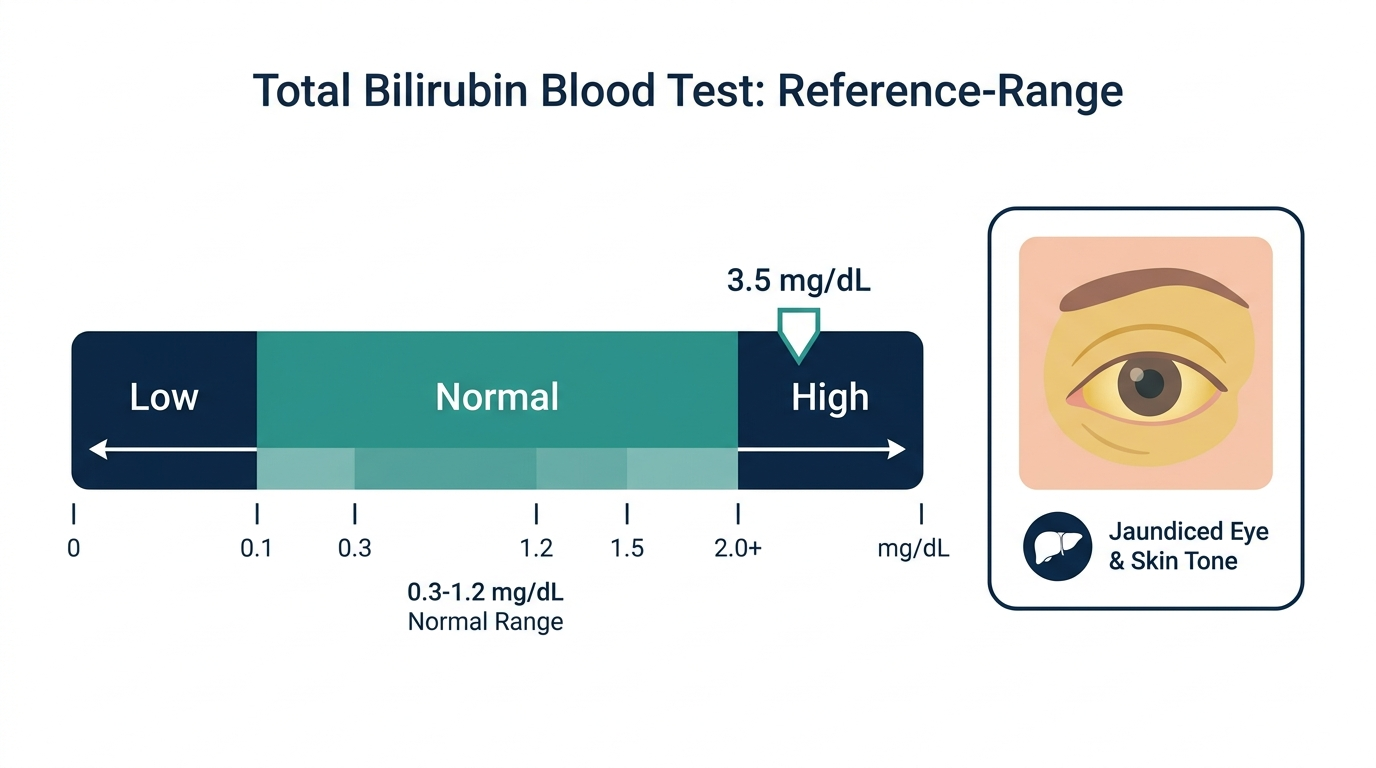
For adults, a normal total bilirubin is roughly 0.1 to 1.2 mg/dL, and a normal direct (conjugated) bilirubin is less than 0.3 mg/dL (MedlinePlus). Cleveland Clinic lists a comparable typical total range of about 0.2 to 1.3 mg/dL for children and adults (Cleveland Clinic). Ranges vary slightly between labs because they calibrate their own instruments, so the most reliable comparison is the reference range printed on your own report.
Newborns are a separate category entirely. Healthy infants normally run much higher in their first days of life, with Cleveland Clinic noting normal newborn levels can range from about 1.0 to 12.0 mg/dL, which is why newborn jaundice is so common and usually harmless (Cleveland Clinic).
What does a high bilirubin level mean?
A high bilirubin means more of the pigment is in your blood than your body is clearing, and the cause falls into one of three buckets depending on which fraction is raised (MedlinePlus). This is the single most useful framework for reading an elevated result:
- Too much being made (mostly indirect bilirubin up). When red blood cells are destroyed faster than normal, bilirubin floods in. This happens in hemolytic anemia, sickle cell disease, and transfusion reactions (Cleveland Clinic).
- The liver cannot process it (mixed or indirect up). Hepatitis, cirrhosis, and other liver damage slow the liver’s ability to handle bilirubin (MedlinePlus).
- It cannot get out (mostly direct bilirubin up). A blocked bile duct from gallstones, a stricture, or a tumor backs processed bilirubin up into the blood (MedlinePlus).
Visible jaundice, yellow skin and eyes, generally appears once levels climb meaningfully above normal. Dark urine and pale, clay-colored stools alongside a high bilirubin are classic signs that bile flow is obstructed and deserve prompt medical attention (Cleveland Clinic).
Now the insider point that almost never makes the patient handout. The most common reason for a mildly high total bilirubin in an otherwise healthy adult is not liver disease at all. It is Gilbert’s syndrome, a benign inherited quirk affecting an estimated 3 to 7 percent of Americans, where a partially dialed-down liver enzyme (UGT1A1) lets unconjugated bilirubin drift a little high (Cleveland Clinic). People with Gilbert’s make only about 30 percent of the enzyme they otherwise would, and their bilirubin tends to bump up during fasting, illness, dehydration, or hard exercise, then settle back down. About a third never have a single symptom and only discover it because a routine blood test flagged a high bilirubin (Cleveland Clinic). If your bilirubin is mildly elevated, your liver enzymes are normal, and only the indirect fraction is up, Gilbert’s is often the explanation, and it needs no treatment.

What does a low bilirubin level mean?
A low bilirubin is generally not a cause for concern and is not considered a sign of disease (Cleveland Clinic). There is no recognized illness defined by an abnormally low bilirubin. A below-range result can sometimes simply reflect certain medications, including some antibiotics, seizure medicines, and birth control pills, which can lower the value (Cleveland Clinic). If your bilirubin is low and the rest of your panel looks fine, it is usually nothing to chase.
The part most people never hear: a little extra bilirubin may be protective
Here is where bilirubin flips from “waste product to clear out” to “something researchers are genuinely intrigued by.” Bilirubin is a potent antioxidant, and a growing body of work suggests that people who run a touch high, like those with Gilbert’s syndrome, may actually carry a health advantage rather than a liability.
The associations are striking. A 2025 review reports that individuals with Gilbert’s syndrome have been observed to have all-cause mortality rates nearly half those of people without it, and that each 1 mmol/L rise in serum bilirubin has been linked to roughly a 6.5 percent decrease in cardiovascular disease risk (PMC, Gilbert’s syndrome review). The leading explanation is that mildly elevated bilirubin boosts the blood’s antioxidant capacity, dampening the oxidative stress and inflammation that quietly age the cardiovascular system.
The honest caveat is that researchers admit the underlying mechanisms are still far from settled (PMC, Gilbert’s syndrome review). This does not mean you should want a high bilirubin, and it certainly does not apply to high direct bilirubin or to anyone with actual liver or bile-duct disease. But it should reframe how you react to a mildly elevated, indirect-heavy reading with normal liver enzymes. That number is not automatically bad news, and in the Gilbert’s context it may be the opposite. The lesson that holds for every bilirubin result: the type that is elevated matters far more than the total alone.
Want to check your bilirubin?
Three ways to get it measured. Pick whichever fits you.
Affiliate links: we may earn a commission at no extra cost to you. A lab test does not replace a visit with your clinician.
How bilirubin is read alongside your liver enzymes
Bilirubin almost never travels alone on a report. It sits inside a liver panel next to a handful of enzymes, and it is the pattern across all of them, not bilirubin by itself, that points to a cause. Here is what each companion adds:
- ALT and AST: enzymes that leak out of liver cells when those cells are inflamed or injured. When bilirubin is high and ALT and AST are also high, the pattern points toward liver cell damage, such as hepatitis or a drug or alcohol effect.
- Alkaline phosphatase (ALP): rises when bile flow is obstructed. A high bilirubin, especially the direct fraction, paired with a high ALP suggests the problem is a blockage of the bile ducts rather than the liver cells themselves.
- GGT: often added to confirm that a high ALP is coming from the liver and bile system rather than from bone. A high GGT alongside high ALP and direct bilirubin strengthens the case for a bile-flow problem.
- Albumin and prothrombin time: reflect how well the liver is doing its manufacturing jobs. If these are abnormal too, it signals more established liver dysfunction rather than a passing blip.
The practical shortcut clinicians use: high indirect bilirubin with normal enzymes points to red cell breakdown or Gilbert’s syndrome, high bilirubin with high ALT and AST points to the liver cells, and high direct bilirubin with high ALP and GGT points to the bile ducts. Same headline number, three very different roads.
Symptoms and red flags to watch for
A mildly high bilirubin often produces no symptoms and is found only because a routine panel flagged it. Symptoms appear as the level climbs or when there is an underlying liver or bile problem. Know the signs, and know which ones mean call a doctor promptly.
- Jaundice: yellowing of the skin and the whites of the eyes, usually the first visible sign, appearing once bilirubin rises well above normal.
- Dark urine and pale, clay-colored stools: a classic pairing that suggests bile is not reaching the gut, which points to an obstruction and deserves prompt attention.
- Itching: generalized itch without a rash can accompany bile backup.
- Right upper abdominal pain, fever, or chills: especially with jaundice, can signal a blocked bile duct or infection and is a reason to seek care the same day.
- Unusual fatigue, nausea, or loss of appetite: nonspecific but worth mentioning if they appear alongside a high bilirubin.
Any new jaundice in an adult should be evaluated by a clinician. The combination of jaundice with severe abdominal pain, fever, confusion, or dark urine and pale stools is a signal to be seen urgently rather than waiting.
How to prepare and what can skew a bilirubin result
A bilirubin test does not usually require special preparation, but several everyday factors can move the number, particularly the indirect fraction, so it helps to know what can nudge a reading:
- Fasting and skipped meals: going without food, even overnight before a fasting panel, can raise indirect bilirubin, especially in people with Gilbert’s syndrome. This is a normal physiological bump, not liver injury.
- Dehydration and strenuous exercise: both can transiently raise bilirubin in Gilbert’s-type individuals.
- Recent illness or infection: can push bilirubin up temporarily.
- Medications: some drugs raise bilirubin while others, including certain antibiotics, seizure medicines, and birth control pills, can lower it. Bring your medication list so the result is read in context.
- Sample handling: bilirubin is light-sensitive, and a sample left exposed to light can read falsely low. This is a lab-side factor, but it explains occasional odd results.
Because a fast or a hard workout can lift bilirubin on its own, a single mildly high value with otherwise normal liver enzymes is often rechecked under ordinary conditions before anyone concludes anything is wrong.
What happens after a high bilirubin result
A high bilirubin is a starting point for investigation, and the workup follows the fraction that is elevated. A typical path looks like this:
- Look at the split. The first question is whether the indirect or direct fraction is driving the total, because that decides which direction to investigate.
- Read it with the enzymes. ALT, AST, ALP, and GGT, as described above, narrow the cause to liver cells, bile ducts, or red cell breakdown.
- Add targeted tests if needed. A rise in indirect bilirubin with anemia may prompt tests of red cell breakdown. A direct-heavy rise with high ALP often leads to imaging, such as an ultrasound, to look at the bile ducts and gallbladder.
- Recheck when the picture is benign. A mild, indirect-only rise with normal enzymes, especially one that fluctuates with fasting or illness, is often simply Gilbert’s syndrome and is confirmed by repeating the test rather than by aggressive workup.
The single most useful habit for anyone reading their own bilirubin is to look past the total and find the direct and indirect numbers, then check whether the liver enzymes on the same report are normal or not. That two-step read tells you more about your result than the flagged total ever will, and it is exactly how a clinician approaches the same page.
Common misconceptions about bilirubin
Because bilirubin sounds technical and shows up on a liver panel, it collects more than its share of myths. A few worth clearing up:
- A high bilirubin means liver disease. Not necessarily. The most common reason for a mild bump in a healthy adult is benign Gilbert’s syndrome, not a diseased liver. The type of bilirubin and the state of the enzymes decide the story.
- Jaundice always means something serious. In newborns, mild jaundice in the first days of life is extremely common and usually resolves on its own. In adults it warrants evaluation, but the cause is not always dangerous.
- You can flush bilirubin out with a detox or cleanse. There is no supplement or cleanse that meaningfully lowers bilirubin. The number reflects red cell turnover, liver processing, and bile flow, and it responds to fixing the underlying cause, not to a detox product.
- A low bilirubin is a problem to fix. There is no recognized disease defined by low bilirubin, and a low value with an otherwise normal panel is generally not something to chase.
Keeping these straight saves a lot of unnecessary worry. The recurring theme is that bilirubin is a context number: it means what it means only when you read it alongside the fraction split, the liver enzymes, and how you feel.
Frequently asked questions
What does a bilirubin blood test show?
It shows how much bilirubin, the yellow waste product from red blood cell breakdown, is in your blood, which helps check liver health, find the cause of jaundice, and detect problems with red cell breakdown or bile flow (MedlinePlus). Reports usually break it into total, direct, and indirect bilirubin.
What is a normal bilirubin level in adults?
Total bilirubin is generally about 0.1 to 1.2 mg/dL and direct bilirubin is usually less than 0.3 mg/dL, though ranges vary slightly by lab (MedlinePlus). Always compare your result to the reference range printed on your own report.
What does high bilirubin mean?
It means bilirubin is building up faster than your body clears it, from increased red cell breakdown, liver damage, or a blocked bile duct (MedlinePlus). A mildly high level with normal liver enzymes is often benign Gilbert’s syndrome (Cleveland Clinic).
What is the difference between direct and indirect bilirubin?
Indirect (unconjugated) bilirubin is the raw form before the liver processes it, while direct (conjugated) bilirubin is the form the liver has packaged for excretion (Cleveland Clinic). Which fraction is high helps pinpoint whether the issue is red cell breakdown, the liver, or the bile ducts.
Should I worry about low bilirubin?
Generally no. A low bilirubin is not considered a sign of disease and can sometimes reflect certain medications such as some antibiotics, seizure drugs, or birth control pills (Cleveland Clinic).
This article is for general educational purposes and is not medical advice. It cannot diagnose or treat you and does not replace your clinician. Always discuss your lab results and any health decisions with a qualified healthcare professional.
Vital Signs Today may earn a commission if you buy through links on this page. It does not affect our editorial assessments.