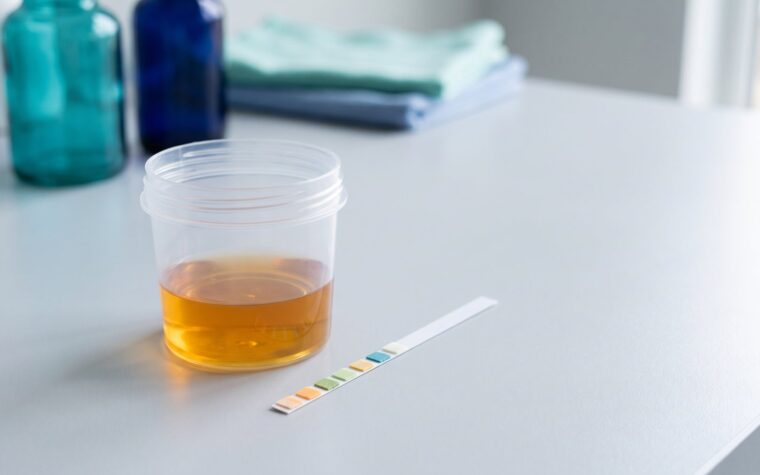
Quick answer: Protein in urine (proteinuria) means the dipstick or lab found protein above the normal range, roughly 0 to 14 mg/dL on a random sample or 30 to 150 mg over a full 24-hour collection. A single positive result is often temporary, caused by exercise, fever, or dehydration. A repeated positive result, or a urine albumin-to-creatinine ratio (ACR/uACR) over 30 mg/g, is what actually points toward kidney disease and needs follow-up.
Key takeaways
- Normal is roughly 0 to 14 mg/dL on a random dipstick sample, or 30 to 150 mg over a full 24-hour collection.
- Urine ACR under 30 mg/g is normal to mildly increased, 30 to 299 mg/g is moderately increased, and 300 mg/g or higher is severely increased, under the KDIGO albuminuria categories (A1, A2, A3).
- Exercise, fever, dehydration, and standing for long periods can all cause a temporary positive protein result that clears on repeat testing.
- A protein-to-creatinine ratio of 0.3 or higher, or 300 mg or more of protein over 24 hours, is one of the numbers ACOG uses to diagnose preeclampsia in pregnancy.
- Reference ranges vary slightly by lab and by collection method. The scale printed on your own report applies to your result.
| Result on the report | What it usually means | What typically happens next |
|---|---|---|
| Negative or trace (dipstick) | No or minimal protein detected. Usually normal. | Usually no action; a clinician may repeat it if you have diabetes, high blood pressure, or are pregnant. |
| 1+ to 2+ (dipstick, roughly 30 to 100 mg/dL) | Mild to moderate protein. Can be transient (exercise, fever, dehydration) or an early sign of kidney stress. | Repeat the test on a fresh sample; if it repeats, your clinician may order an ACR or 24-hour collection. |
| 3+ to 4+ (dipstick, higher concentration) | Larger amount of protein, more likely to reflect true kidney involvement, especially with other abnormal findings. | Further testing: ACR, 24-hour urine protein, blood work for kidney function. |
| ACR under 30 mg/g | Normal, low risk of kidney disease progression. | No specific follow-up beyond routine care. |
| ACR 30 to 299 mg/g | Moderately increased albuminuria, an early marker of kidney and cardiovascular risk. | Repeat testing to confirm; blood pressure and blood sugar management; possible ACE inhibitor or ARB. |
| ACR 300 mg/g or higher | Severely increased albuminuria, associated with more advanced kidney disease. | Nephrology referral is common, along with repeat testing and kidney function blood work. |
What does protein in urine mean on a lab report?
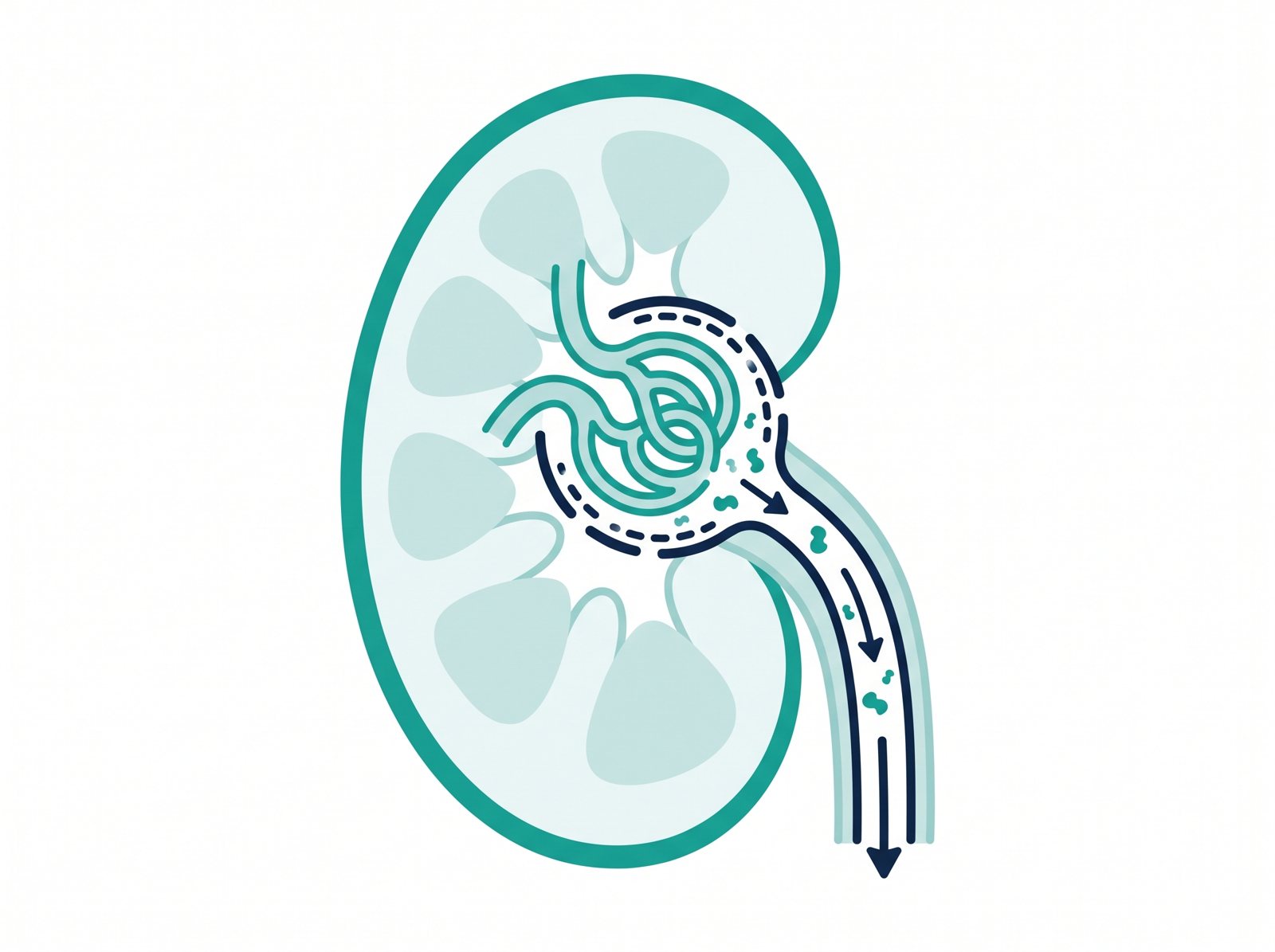
Protein in urine means the test detected more protein, usually albumin, than the small amount that is normally allowed to pass into urine. Healthy kidneys filter blood while keeping most protein in the bloodstream where it belongs, so any meaningful amount showing up in urine can mean the kidney’s filters (the glomeruli) are letting protein leak through, or it can mean something temporary is pushing protein output up for a short time. For context on everything else a routine urine test screens, see our full urinalysis guide.
Dipstick protein vs ACR vs 24-hour urine: what is the difference?
A dipstick protein test is the fastest and least precise option, giving a rough negative-to-4+ estimate mainly sensitive to albumin. The urine albumin-to-creatinine ratio (ACR, sometimes written uACR) uses a single spot urine sample and divides the albumin result by the creatinine result, which corrects for how concentrated or dilute that particular sample happens to be, making it far more reliable than a one-off dipstick reading. A 24-hour urine collection, where you save every void for a full day, is the most thorough option and gives a true total protein output in mg per 24 hours, but it is inconvenient and mostly reserved for confirming a diagnosis or monitoring more advanced kidney disease. For most screening purposes today, an ACR from a morning spot sample has replaced the 24-hour collection as the everyday test, with our microalbumin test guide covering how that specific test is ordered and read.
What does a normal vs high ACR result mean?
An ACR under 30 mg/g is normal and reflects a very low risk. KDIGO labels 30 to 299 mg/g moderately increased albuminuria, and Cleveland Clinic ties that range to a higher risk of kidney failure, heart failure, or stroke. KDIGO labels 300 mg/g or higher severely increased; Cleveland Clinic notes that at this level, confirmed on a repeat test, you may have kidney disease. Chronic kidney disease is only diagnosed when an ACR of 30 mg/g or more persists on repeated measurements for at least 3 months, so a single elevated ACR is usually rechecked a few months later before it is treated as diagnostic.
What causes protein in urine that is not kidney disease?
Many things push urine protein higher for a short time without any underlying kidney disease. Cleveland Clinic and other clinical sources list dehydration, fever, and intense or prolonged exercise as common triggers of transient proteinuria, all of which typically resolve once the trigger passes and the test is repeated on a calmer day. Standing upright for long stretches can cause a specific pattern called orthostatic proteinuria, most often seen in younger people, where protein shows up in daytime samples but not in a first-morning sample. Urinary tract infections, heart failure, and pregnancy-related conditions can also raise urine protein temporarily or as part of a separate underlying problem rather than primary kidney disease. Because of how many benign explanations exist, a single positive dipstick is rarely acted on right away. It is the pattern on repeat testing that guides next steps.
When does protein in urine mean kidney disease?
Protein in urine points toward kidney disease when it persists on repeat testing, especially when paired with a reduced eGFR, high blood pressure, or diabetes. Diabetic kidney disease is one of the most common causes of persistent albuminuria, since years of high blood glucose gradually damage the small filtering vessels in the kidney. Chronic conditions such as high blood pressure, glomerulonephritis, and polycystic kidney disease can also produce ongoing proteinuria. If your ACR stays elevated on more than one test, your clinician will typically also check kidney function directly; see what blood test shows kidney function, egfr normal range by age, and bun creatinine egfr for how those blood results are interpreted alongside a urine protein finding.
Protein in urine during pregnancy: what number matters?
During pregnancy, protein in urine is one of the numbers used to help diagnose preeclampsia, a high blood pressure condition that needs close monitoring. Under ACOG criteria (also summarized by the Preeclampsia Foundation), 300 mg or more of protein in a 24-hour urine collection, or a protein-to-creatinine ratio of 0.3 or more, counts as proteinuria for that diagnosis, with a dipstick reading of 2+ used only when those quantitative tests are not available. ACOG also notes that proteinuria is not strictly required to diagnose preeclampsia if other signs of organ involvement, such as low platelets or abnormal liver tests, are present. A single trace or 1+ result on a routine prenatal dipstick is common and often not significant by itself. Your prenatal care team will look at the trend alongside your blood pressure at each visit.
When should I call my doctor today, and when is it an emergency?
Call your doctor for a repeated positive protein result, new swelling in your legs, ankles, or around your eyes, foamy or bubbly urine that persists, or protein in urine found alongside high blood pressure or diabetes. In pregnancy, contact your obstetric team the same day for new or worsening high blood pressure, protein in urine, sudden swelling, a bad headache, or vision changes, since these can be signs of worsening preeclampsia. Seek emergency care (call 911 for a seizure, fainting, or severe shortness of breath) for pregnancy with a blood pressure of 160/110 mm Hg or higher, which ACOG classes as severe range, or with a severe headache that does not respond to medication, vision changes, right-upper-abdominal pain, or shortness of breath, or for anyone with known kidney disease who develops very little urine output, significant shortness of breath, or confusion, since these can point to a rapid decline in kidney function. There is no single urine protein number that on its own defines a 911 emergency outside of these broader symptom patterns.
How to read this on your report
Random urine protein is usually reported as a word or symbol (negative, trace, 1+, 2+, 3+, sometimes 4+) or as a number in mg/dL. ACR results are typically printed as a single number in mg/g, sometimes with the lab’s own cutoff for normal listed beside it. A 24-hour urine protein result is reported in mg per 24 hours, alongside the total urine volume collected, since an incomplete collection can make the result look falsely low. An “H” flag next to any of these results means the number is above that lab’s cutoff for normal, which carries the same meaning as trace, positive, or elevated wording. Because normal ranges shift slightly by lab, method, and sometimes age, always compare your number to the reference range printed directly on your own report.
What most articles get wrong about protein in urine
Many pages treat any positive dipstick protein as a sign of kidney disease, when in reality a single positive result is common and often clears with rest, hydration, or simply repeating the test on a different day. Other pages blur together three different tests, dipstick protein, ACR, and 24-hour urine protein, as if they were interchangeable, when they actually answer slightly different questions and are ordered at different points in a workup. Finally, most pages skip the confirmation step that guidelines actually call for: a single elevated ACR is not treated as a kidney disease diagnosis until it repeats on a second test, which is a detail that changes how worried a reader should be about one abnormal number.
FAQ
What could protein in urine mean if I feel completely fine?
It often means nothing serious, especially if it is a single trace or 1+ result. Exercise, fever, dehydration, or a sample collected after standing for hours can all cause a temporary positive result in someone with no underlying kidney problem.
Testing for protein in urine: how is the sample collected?
Most tests use a single clean-catch urine sample dipped with a reagent strip or sent for an ACR. A 24-hour test requires saving every urination in a container over a full day, then returning it to the lab, and is used less often now that ACR is available.
What does protein in urine indicate in someone with diabetes?
In diabetes, persistent protein or albumin in urine often signals early diabetic kidney disease, which is why diabetes guidelines recommend checking ACR at least once a year, since catching it early allows treatment to slow further kidney damage.
Check for protein in urine at home: do test strips work?
Over-the-counter urine protein strips work on the same chemistry as clinical dipsticks and can flag a positive result, but they are not a substitute for a lab-confirmed ACR when your doctor needs an accurate number to track over time.
What does a protein in urine result of 30 mg/g mean?
An ACR right around 30 mg/g sits at the boundary between normal and moderately increased albuminuria. Because results can vary day to day, a value near that line is usually rechecked before being called abnormal.
Can a urinary tract infection cause protein in urine?
Yes. Inflammation from a urinary tract infection can cause a temporary positive protein result along with leukocytes and sometimes blood, and it typically resolves once the infection is treated.
What is the significance of protein in urine that keeps coming back?
Protein that shows up on more than one test, especially alongside high blood pressure, diabetes, or a reduced eGFR, is the pattern that most reliably points to true kidney disease rather than a one-time transient cause.
Sources
- MedlinePlus: Protein – Urine
- Cleveland Clinic: Urine Albumin-Creatinine Ratio
- Cleveland Clinic: Protein in Urine (Proteinuria)
- Cleveland Clinic Journal of Medicine: Managing CKD According to KDIGO Risk Categories
- ACOG Practice Bulletin 222: Gestational Hypertension and Preeclampsia
- Preeclampsia Foundation: Preeclampsia Tests